
Choosing a campsite is not just about finding a flat patch of ground with a good view. The best-looking spot can become a poor choice once the wind picks up, rain moves through, the temperature drops, or you realize there is nowhere convenient to move around camp.
Before you unpack your tent, take a few minutes to read the site as a whole. Look at the ground, the slope, the way water could move through the area, what is above and around you, how exposed the site is to weather, and whether it actually works for the way you are camping.
In this guide, we’ll walk through how to choose a campsite by looking at the things that matter before you commit to a spot. The goal is not to find a perfect campsite. It is to find one that is safe, practical, comfortable enough for your trip, and still makes sense after the sun goes down and the weather changes.
Table of Contents
Quick Answer: How Do You Choose a Campsite?
The best campsite is one that is legal, safe, well-drained, reasonably level, and suited to your camping setup and the conditions you expect overnight. Before unpacking, check the ground, drainage, overhead hazards, wind exposure, nearby water, available space, access, shade, noise, and signs of wildlife or other activity.
A useful way to think about how to choose a campsite is to eliminate problems before you start looking for comforts. First rule out unsafe or unsuitable locations. Then compare the remaining spots for shelter, space, privacy, convenience, and how well they will work if the weather changes. Taking a few minutes to walk around the site before pitching your tent can prevent problems that are much harder to solve once camp is set up.
Why Campsite Selection Matters More Than It Seems
A campsite does more than give you a place to pitch a tent. It becomes the foundation for everything that happens around camp: where you sleep, where you cook, how your gear stays dry, how exposed you are to wind and weather, and how easily you can move around after dark.
A poor site can create problems that your camping gear cannot completely solve. Water can collect under a tent, wind can make an otherwise comfortable night miserable, and a site that looks convenient in daylight can become awkward once you need to find the bathroom, cook dinner, or pack up in the morning. These same factors are important because campsite conditions can change quickly, especially when weather, terrain, and access are involved.
There is also a difference between a site that looks good and a site that works well. A scenic location beside a lake may be attractive but exposed to insects, rising water, or heavy foot traffic. A sheltered spot beneath trees may seem comfortable until you notice dead branches overhead. Even two nearby campsites can offer very different levels of privacy, shade, wind protection, and convenience.
That is why campsite selection is best treated as a short assessment rather than a quick visual decision. Safety comes first, then ground and weather conditions, followed by the practical details that determine how comfortable the site will be for your particular trip. Once those basics check out, you can start worrying about the view.
The 12 Things to Check Before You Set Up Camp
Before you commit to a campsite, take a few minutes to look beyond the obvious. A site that seems comfortable at first glance may have poor drainage, too much wind exposure, hazards overhead, or simply not enough usable space for the way you plan to camp.
The most reliable approach is to assess the site in a consistent order: rule out places that are illegal or unsafe first, then evaluate the ground, water, weather, space, and practical details that affect your stay.
The twelve checks below are not meant to suggest that every campsite needs to be perfect. They give you a practical way to compare the available options and recognize when a seemingly attractive spot is better left unused.
1. Make Sure You Are Allowed to Camp There
Before judging the ground, the view, or the amount of shade, make sure you are actually allowed to camp in the location you are considering. Camping rules can vary between national parks, state parks, forests, private campgrounds, and dispersed camping areas, and some locations require a reservation or permit. Established campgrounds may also have designated sites rather than allowing you to choose any open patch of ground.
If you are camping in an established campground, check the site number, occupancy information, reservation requirements, and any posted restrictions before settling in. For dispersed or backcountry camping, confirm that camping is permitted in that particular area and follow local rules about where tents can be placed.
Also check for restrictions that could affect your setup, including:
- seasonal or temporary camping closures;
- fire restrictions;
- group-size limits;
- vehicle or RV restrictions;
- food-storage requirements;
- protected vegetation or wildlife areas;
- required permits or reservations.
This is the first filter because an otherwise excellent location is not a good campsite if you are not permitted to use it.
2. Check the Ground Before You Unpack
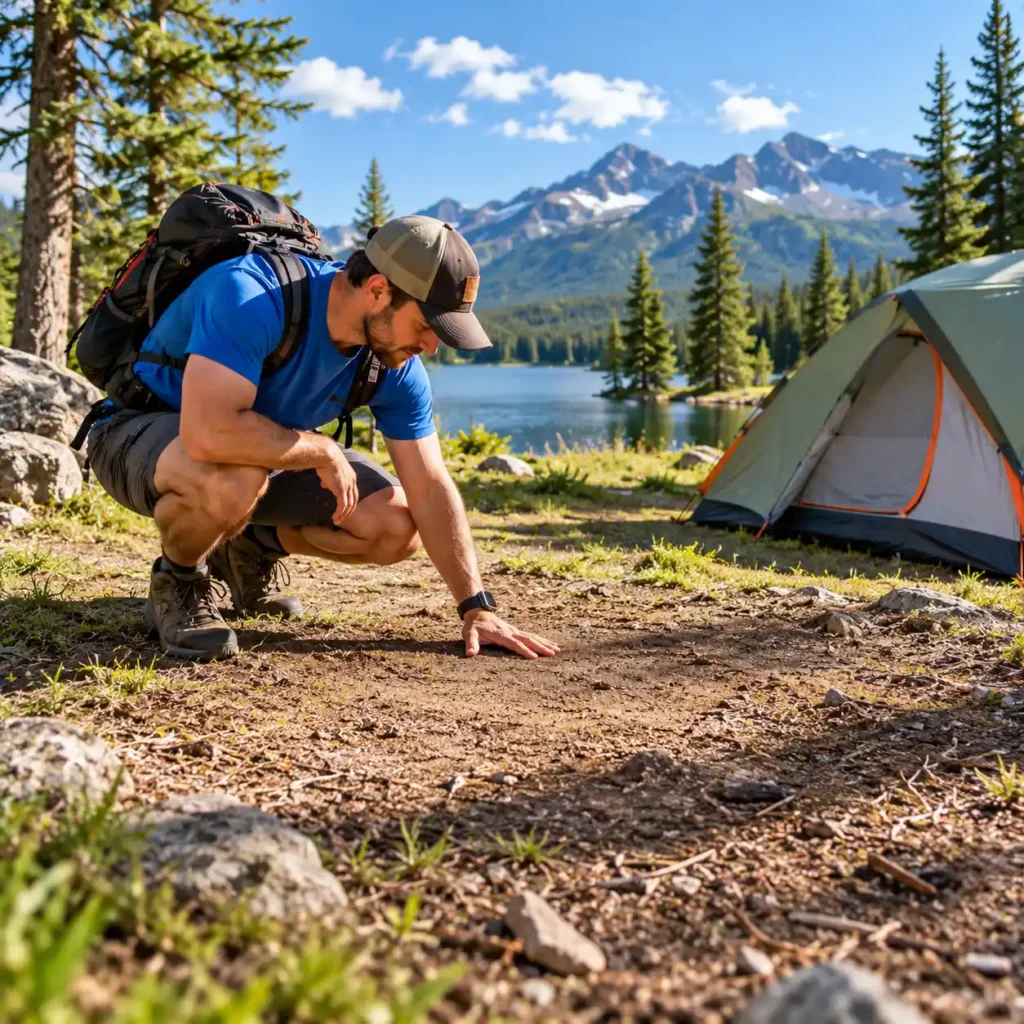
Once you know you are allowed to camp there, look closely at the ground before unloading your gear. The best tent area is generally reasonably level, firm, dry, and naturally well drained. A site can look flat from a distance while still having depressions, rocks, roots, or soft patches that become obvious once you walk across it.
Walk over the entire area where your tent would actually sit. Look and feel for:
- large rocks, exposed roots, and sharp sticks;
- deep ruts, holes, or uneven patches;
- soft, muddy, or waterlogged ground;
- loose soil that may make tent stakes unreliable;
- fragile vegetation that should not be disturbed;
- enough usable space for the full tent footprint, including its doors and guy lines.
Drainage is especially important. Avoid obvious depressions, ravines, dry streambeds, and other places where water could naturally collect or flow during rain. A slightly raised area with water able to move away from the tent is generally a better choice than the lowest flat-looking spot in a clearing.
Pay attention to signs of previous water movement. Erosion marks, exposed pebbles, channels in the soil, flattened vegetation, or patches of sediment can tell you that water regularly passes through the area. You do not need to predict exactly where a storm will send every drop; you simply want to avoid putting your tent in an obvious drainage path.
The surface itself matters too. Where camping rules and conditions allow, use an established campsite or durable, already-impacted ground rather than clearing vegetation to create a new tent pad. Leave No Trace guidance recommends durable surfaces such as compacted soil, rock, sand, or dry grass in appropriate backcountry situations.
If you use a footprint or ground tarp, remember that it does not turn a poor campsite into a good one. It can help protect the tent floor, but it will not solve standing water, a pronounced slope, or large rocks underneath. For more on the role of this layer, see our guide to what a tent footprint actually protects.
A useful final check is to spend a minute imagining the same ground after several hours of rain and after a full night of sleeping on it.
3. Look Above and Around You for Natural Hazards
A campsite can have excellent ground and still be unsafe because of what is above or around it. Before setting up, look beyond the exact patch where your tent will stand and inspect the surrounding terrain for hazards that could affect the site during the night.
Start by looking up. Avoid camping beneath dead trees, broken limbs, heavily damaged branches, or trees that are leaning significantly. Wind, rain, or snow can bring down branches even when conditions seem calm when you arrive. The National Park Service specifically recommends checking for dead trees and branches before choosing a campsite. (nps.gov)
Then scan the terrain around you. Depending on where you are camping, potential hazards can include:
- unstable slopes or loose rocks above the campsite;
- cliffs or steep drop-offs;
- narrow gullies or channels that could carry water;
- avalanche terrain in snowy mountain environments;
- exposed ridges during periods of strong wind;
- signs of falling rocks, erosion, or recent flooding.
Do not assume that a natural windbreak is automatically a safe location. A group of trees, rock outcrop, or hillside may reduce wind exposure, but it can also introduce falling-branch, rockfall, or drainage risks. The goal is to find protection without placing your tent directly in another hazard zone.
It is also worth checking for signs that animals or people regularly use the area. Well-worn tracks, concentrated animal activity, or a location directly beside a busy trail can make an otherwise attractive spot less suitable. You do not need to investigate every footprint, but obvious activity should influence your decision.
This is one of the most important steps in how to choose a campsite because many hazards are easy to miss when you focus only on the tent-sized piece of ground in front of you. Take a few seconds to look up, across, and behind the site before deciding that you have found your spot.
4. Assess Wind Exposure Before Choosing the Spot
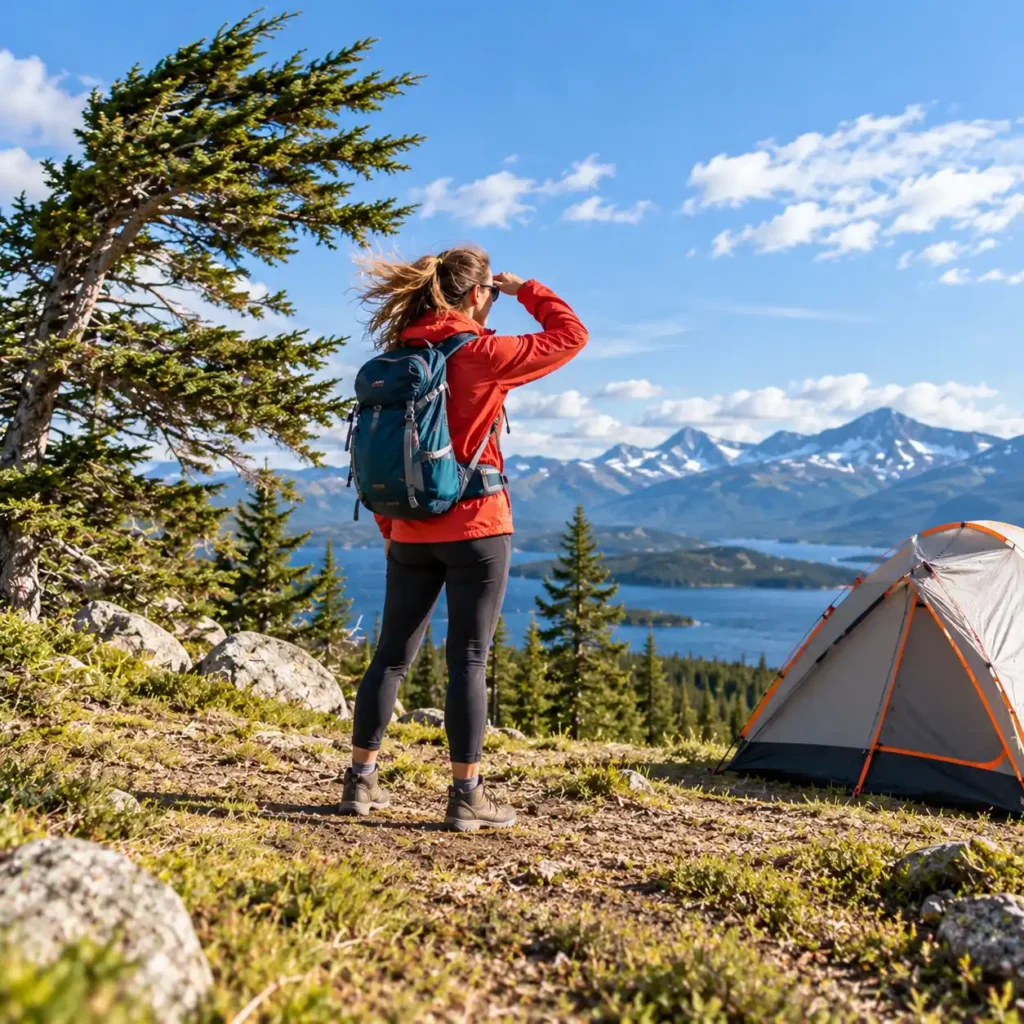
Wind can change a comfortable campsite very quickly. A location that feels calm when you arrive may become exposed later in the evening, particularly on open ground, ridgelines, hilltops, or broad clearings. Before setting up, spend a moment looking at the surrounding terrain and thinking about where the wind is likely to come from.
Look for partial natural protection from healthy trees, dense vegetation, large rocks, or the sheltered side of a suitable landform. You want to reduce direct wind exposure without placing your tent beneath unstable trees or in another hazardous location. A completely exposed site can mean more tent movement, noise, heat loss, and stress on the shelter during gusty conditions. (nps.gov)
Before choosing the exact position, check:
- which direction the wind is currently coming from;
- whether the campsite is exposed on several sides;
- whether nearby terrain provides meaningful shelter;
- whether the forecast calls for stronger winds overnight;
- whether your tent can be oriented with a smaller surface facing the prevailing wind.
Do not assume that the closest trees are automatically the best windbreak. Healthy, stable vegetation can provide useful protection, but dead or damaged trees create a different kind of risk. If the only available shelter puts your tent underneath questionable branches, choose a safer position rather than trading wind exposure for a falling-object hazard.
There is also a comfort trade-off. A completely enclosed, stagnant location may have less wind but can feel warmer, more humid, or more buggy. A campsite with some protection and some natural airflow is often a better compromise than either extreme.
If you regularly camp in exposed areas, your tent choice becomes part of the equation as well. Our guide to the best camping tents for windy conditions covers the shelter side of that decision.
When choosing your final position, think beyond the wind you feel at the moment you arrive. Look at the terrain, check the forecast, and imagine what the site will be like if the wind becomes stronger after dark.
5. Check Your Distance From Water
Camping near a lake, river, or stream can make a site feel more attractive, but the closest spot to the water is rarely the best one. Before setting up, look at the shoreline and surrounding terrain and consider what could happen if the water level rises or heavy rain moves through the area.
Avoid low ground immediately beside rivers, streams, and lakes, particularly where you can see signs of previous flooding or water movement. Even a dry-looking channel can become a route for fast-moving water after storms farther upstream. A site set slightly farther back and on naturally higher ground usually gives you a better safety margin.
Distance from water also matters for environmental reasons. In many backcountry settings, 200 feet (about 60 meters) from natural water sources is a commonly used Leave No Trace guideline, although local regulations may require a different distance. Always follow the rules for the specific area rather than treating 200 feet as a universal legal requirement. Being too close to water can also affect comfort:
- shorelines can be more exposed to wind;
- damp ground may make the campsite colder and less comfortable;
- mosquitoes and other insects may be more noticeable;
- wildlife may use the same water source;
- morning mist or moisture can make gear feel damp.
This does not mean you should avoid water entirely. A nearby water source can be extremely convenient when you need to collect or filter water, cook, or spend time around the lake or river. The better approach is to stay close enough for practical access while leaving enough distance for safety, privacy, and environmental protection.
If water availability is important to your setup, plan how you will carry and store it rather than assuming the campsite itself will provide convenient access. Our guide to the best camping water containers covers practical options for transporting water at camp.
When choosing a site near water, treat the shoreline as part of the surrounding environment rather than as the boundary of your campsite.Look at the water, the terrain between the site and the water, and the conditions that could change overnight before choosing your final position.
6. Think About Sun and Shade Throughout the Day
Sun and shade can make a significant difference to how comfortable a campsite feels, particularly during warm-weather trips. The important point is that the shade you see when you arrive may not be the shade you have later in the day. Trees, hills, and other terrain change the pattern of sunlight as the sun moves.
Instead of simply looking for the darkest spot, think about when you actually want protection from the sun. For summer camping, afternoon shade can be especially valuable because that is often when heat becomes most noticeable. In cooler conditions, however, some direct sunlight may be useful for warming the campsite and helping damp gear dry.
Before choosing the site, consider:
- where the sun will be during the hottest part of the day;
- whether your tent will be exposed to direct afternoon sunlight;
- whether morning sun would help dry dew or condensation;
- whether the seating or cooking area will have useful shade;
- whether trees or terrain provide shade at the times you actually need it;
- whether dense shade could leave the area damp or poorly ventilated.
There is a practical balance here. A campsite with some morning sun and useful afternoon shade can be more versatile than one that stays completely shaded all day. In colder weather, you may deliberately prefer the opposite arrangement and choose a more open position that receives sunlight earlier.
Also consider what the sun means for your specific setup. If you are camping with an RV, canopy, solar equipment, or a large family tent, the useful shade may need to fall over a particular part of the campsite rather than simply somewhere nearby.
If you want a broader understanding of how temperature changes affect campsite comfort and gear choices, see our guide to camping temperature and what gear you actually need.
The key is to judge the campsite as it will function throughout the day, not just at the moment you arrive. Look at the sun’s path, the season, and the activities you plan to do before deciding whether a sunny or shaded position is actually better.
7. Consider Privacy, Noise, and How Busy the Site Will Feel
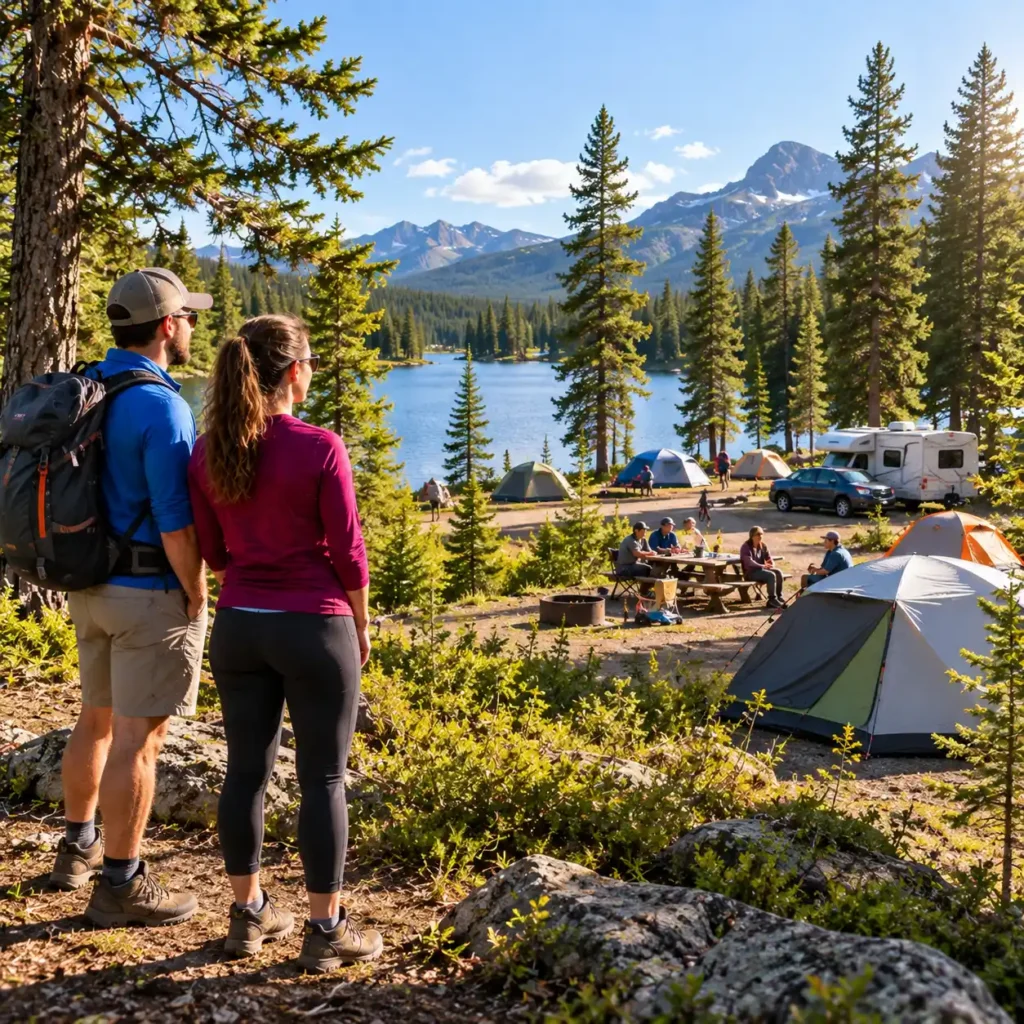
A campsite can be safe, level, and well protected from the weather and still be a poor choice if it puts you in the middle of constant activity. Noise and privacy are easy to underestimate during the day, when people are arriving, moving around, and enjoying the campsite. The same location can feel very different after dark.
If you are choosing between several available sites, look at what surrounds each one. Roads, bathrooms, playgrounds, communal areas, parking areas, and heavily used paths can all mean more people passing nearby. A site farther from these activity points may offer a quieter night, while a site close to facilities may be more convenient for families or campers who value easy access.
Also look at the physical separation between your site and neighboring campers. Trees, shrubs, small changes in elevation, and the layout of the campground can provide useful visual separation even when the actual distance between sites is not large.
Before choosing the spot, ask yourself:
- How close are the nearest tents, RVs, or vehicles?
- Is the site beside a road or frequently used walking path?
- Is it close to bathrooms, dumpsters, playgrounds, or communal areas?
- Can you see directly into neighboring campsites?
- Are there natural features that provide some privacy?
- Does the area appear likely to become busy later in the evening?
There is no universally best answer here. Convenience and privacy often compete with each other. A site close to the bathroom may be excellent for a family with young children but frustrating for someone looking for a quiet morning. Likewise, a secluded site may feel peaceful but require more walking for water, facilities, or vehicle access.
Pay attention to the type of campers the location is likely to attract as well. A family campground, a busy RV loop, and a remote backcountry site can have completely different expectations around noise and activity. Reviews can sometimes reveal this better than the campground’s official description, particularly when several people independently mention noise, crowding, or a quiet atmosphere.
When choosing between sites, do not judge privacy only by the distance to your nearest neighbor. Think about what happens around the site after dark, where people will walk, where vehicles will move, and whether the surrounding layout matches the kind of camping experience you want.
8. Check Access, Space, and How You Will Use the Site
A campsite can look spacious until you start placing the tent, vehicle, chairs, cooking equipment, and other gear. Before choosing it, think about how the entire campsite will function, not just whether the tent itself fits.
Walk the site and identify the practical areas you will need. For a tent campsite, that may include the tent, entrance and guy lines, a place to sit, cooking and food-preparation space, and enough room to move around without constantly stepping over equipment. If you are camping with a vehicle or RV, access becomes even more important because the site needs to accommodate the vehicle as well as your living area.
Pay particular attention to:
- whether your tent or shelter will fit without extending into a road or neighboring site;
- where the tent doors will open;
- whether guy lines can be positioned safely;
- whether your vehicle can enter, park, and leave without difficulty;
- whether there is enough room for chairs, tables, or a cooking area;
- how far you will need to carry equipment from the vehicle;
- whether the site remains practical once all of your gear is unpacked.
Do not judge usable space by the size of the cleared area alone. Trees, picnic tables, fire rings, rocks, slopes, drainage channels, and access roads can make part of a site effectively unusable. This is particularly important when comparing individual campground sites, because two sites advertised within the same campground can have very different layouts and practical space.
Think about your normal routine, too. If you cook outdoors, you need somewhere to prepare food without blocking the tent entrance. If you have children or a dog, open space for movement may matter more than a secluded corner. If you are staying several nights, having enough room to keep sleeping, cooking, storage, and relaxation areas separate can make the campsite much easier to live in.
Access also matters when you are tired, carrying equipment, or arriving late. A beautiful site that requires a long carry over uneven ground may be less practical than a slightly less scenic location close to your vehicle or established facilities.
Before committing, ask one simple question: Where will everything go once we are actually set up? If you cannot picture a comfortable layout without blocking entrances, walking paths, or essential access, the site may be smaller or less usable than it first appears.If you cannot picture a comfortable layout without blocking entrances, walking paths, or essential access, the site may be smaller or less usable than it first appears.
9. Check the Weather and How the Site Will Handle It
A campsite that works in calm, dry weather may become a completely different place when conditions change. Before you set up, check the forecast for the whole period you expect to be there, not just the weather at the time of arrival.
Pay particular attention to conditions that can change how the site behaves:
- strong or shifting winds;
- heavy rain or thunderstorms;
- overnight temperature drops;
- extreme heat;
- snow or freezing conditions;
- lightning risk in exposed terrain.
Then compare the forecast with the physical characteristics of the campsite. If rain is expected, a slightly elevated site with obvious drainage is preferable to a low depression. If strong wind is forecast, an exposed ridge or completely open clearing may be a poor choice. During hot weather, the amount and timing of shade become more important. In colder conditions, morning sunlight can become a useful source of warmth and help dry moisture from the tent.
Do not separate the weather forecast from the campsite itself. The same forecast can produce very different conditions depending on the terrain. A moderate wind on sheltered ground may be manageable, while the same wind on an exposed ridge can make sleeping uncomfortable and put considerably more stress on a tent.
Also think about how quickly the site could become difficult to leave. Heavy rain can make unpaved access roads muddy, while snow or flooding can affect routes that seemed completely straightforward when you arrived. For remote camping, this matters even more because changing conditions may limit your ability to relocate.
The forecast should not necessarily tell you to abandon a campsite, but it should influence which available site you choose. If several legal and suitable options are available, give preference to the one whose terrain provides a reasonable margin against the conditions you expect.
This matters because you are not choosing a photograph of a place at one particular moment. You are choosing where you will spend time while the weather continues to change. A site that looks merely acceptable in good weather can become the wrong choice once rain, wind, heat, or cold arrives.
10. Look for Signs of Wildlife and Other Activity
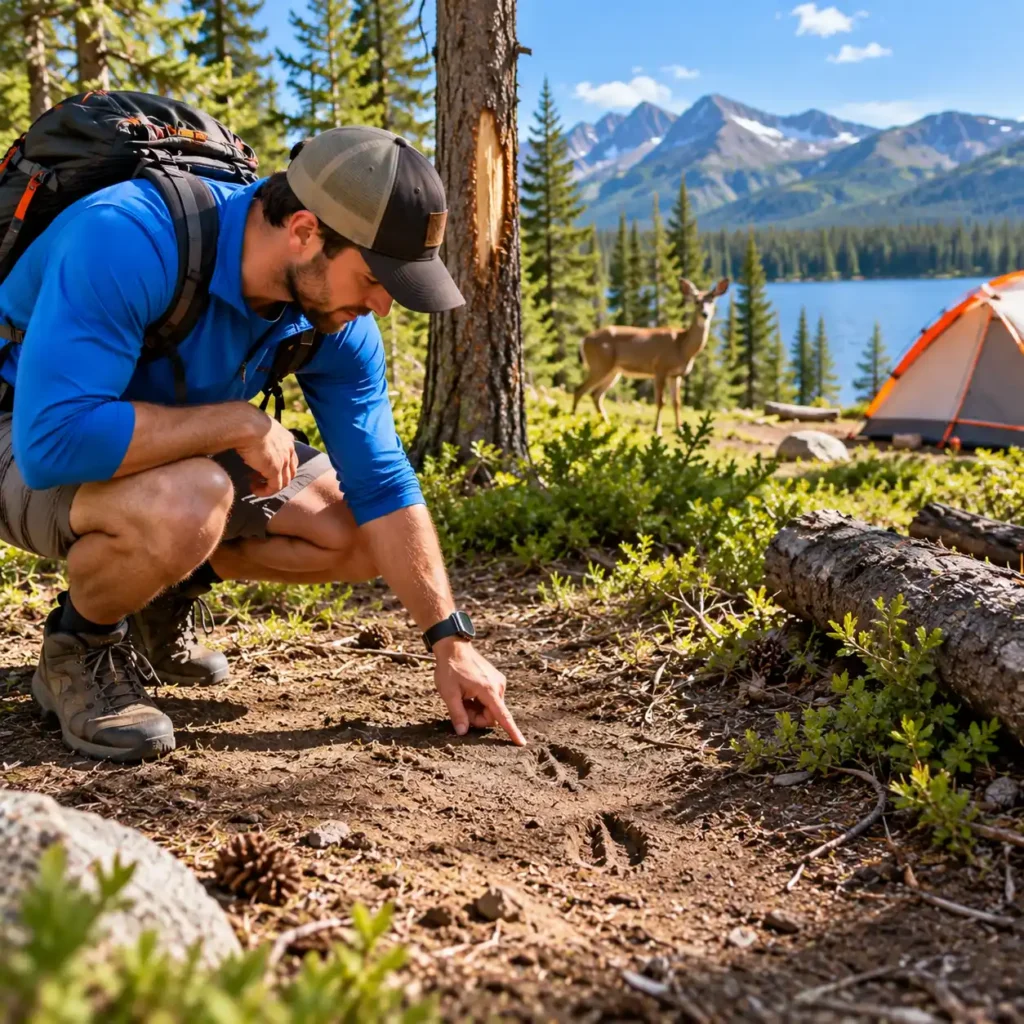
A campsite is part of an environment that animals may already be using. Before setting up, take a slow look around for signs that animals are regularly traveling, feeding, nesting, or accessing water. You do not need to identify every animal you might encounter; the goal is to recognize when a particular spot may be a poor place to spend the night.
Look for signs such as:
- well-worn animal trails or repeated tracks;
- fresh droppings;
- burrows, nests, or other obvious animal shelter;
- scratched or damaged tree trunks;
- concentrated feeding activity;
- strong animal odors or other obvious signs of recent activity.
A trail through vegetation can be particularly useful information. If an animal path leads directly through the area where you would place your tent, choosing another nearby location may be the better decision. Similarly, avoid camping directly beside obvious feeding areas or other places where wildlife regularly concentrates. The National Park Service specifically advises campers to avoid obvious animal paths and areas showing signs of wildlife activity.
Water is another reason to pay attention to animal movement. A campsite can be perfectly comfortable for people while also sitting directly on a route animals use to reach a lake, stream, or food source. This is one reason why being near water does not mean being right beside it.
Your own campsite also becomes part of this equation once you start cooking. Food, rubbish, toiletries, and other scented items can attract wildlife, so your choice of campsite should work together with a proper food-storage system. Local regulations may also require specific storage methods, particularly in areas with bears or other large wildlife. For practical guidance, see our Camping Food Storage Guide: How to Keep Bears & Critters Away.
If you are camping with a dog, wildlife activity deserves additional attention. A campsite that looks quiet may be close to an animal trail, feeding area, or water access route that could create unnecessary interaction between your pet and wildlife.
The point is not to look for a campsite completely free of wildlife. You are looking for a site that does not appear to interfere with an obvious animal route or place you unnecessarily close to concentrated wildlife activity.
When considering how to choose a campsite, try looking at the area from the perspective of the animals that use it. If the spot appears to be an obvious path to water, food, or shelter, it is usually better to let them keep using it and choose another place for your tent.
11. Check the Facilities, Access, and Emergency Options
Once the campsite itself passes the basic safety checks, look at the practical details that will shape your daily routine. A site can be physically excellent but inconvenient if it is far from the facilities you actually need or difficult to reach with your equipment.
Before committing to a site, check:
- the location of toilets and showers;
- drinking-water availability;
- whether there is a suitable place to wash dishes or dispose of wastewater;
- vehicle and parking access;
- electrical hookups if you need them;
- rubbish and food-storage facilities;
- whether the route to the site remains accessible for your vehicle or equipment;
- where you would go or how you would leave if conditions suddenly deteriorate.
The right distance from facilities depends on how you camp. Being close to bathrooms can be useful for families with children or when facilities are needed frequently. A site farther away may be preferable if quiet and privacy matter more. The National Park Service specifically suggests weighing convenience against the quieter and darker conditions that can come with greater distance from shared facilities.
Emergency access deserves separate attention. You do not need to camp beside a road, but you should understand how you would leave the area if someone became injured, severe weather developed, or the site had to be evacuated. In remote locations, knowing the nearest access route before dark is considerably more useful than trying to work it out during an emergency.
For vehicle camping, also consider whether the site works with the actual dimensions and maneuverability of your vehicle. A narrow approach, steep access road, soft shoulder, or awkward parking position can turn a seemingly convenient campsite into a difficult one.
The facilities themselves should be judged against your trip rather than against a generic idea of a “good” campground. A site with fewer amenities may be perfectly suitable for a self-contained camper, while the same site may be a poor choice for someone depending on toilets, showers, drinking water, or electrical hookups.
When deciding how to choose a campsite, treat facilities and access as part of the campsite rather than as separate conveniences. The best location is one where the physical site and the services you depend on work together without creating unnecessary walking, carrying, or emergency-access problems.
12. Think About How the Site Will Work in the Morning
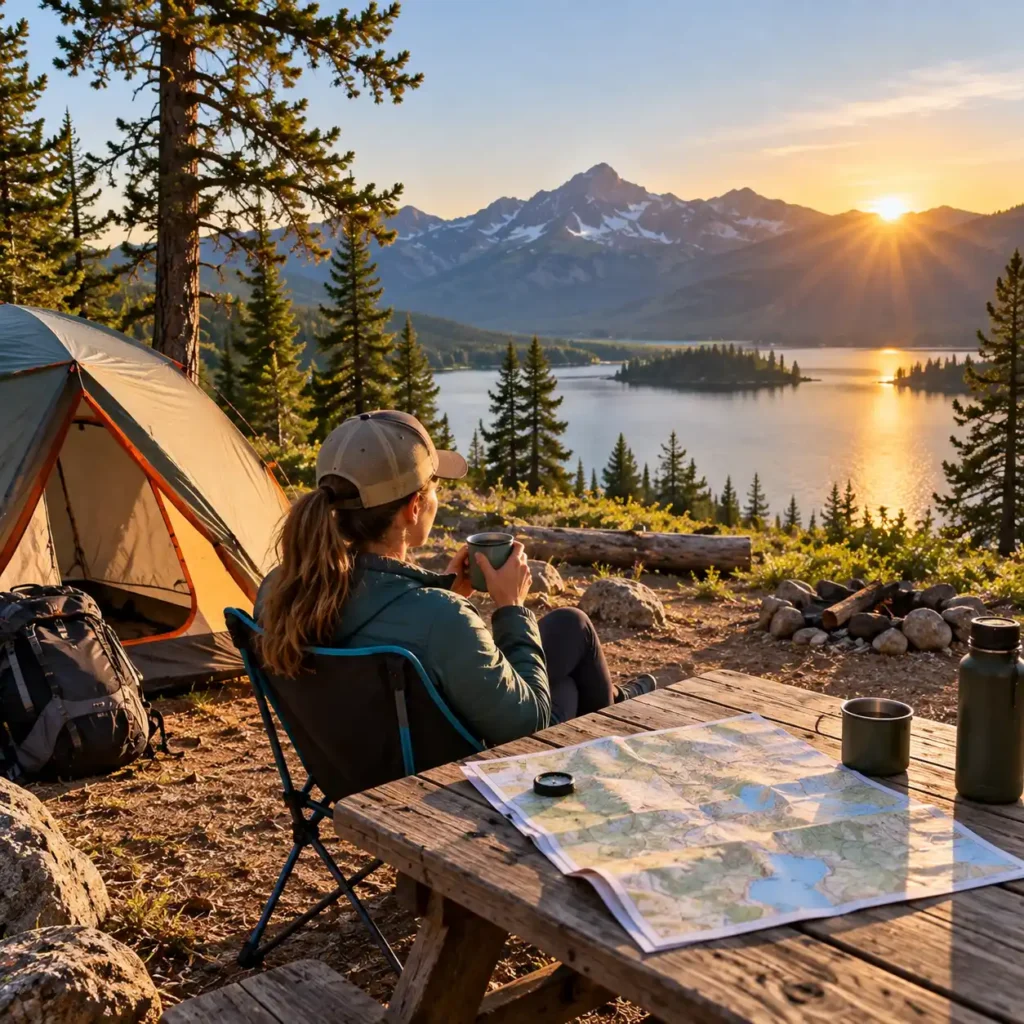
One of the easiest mistakes when choosing a campsite is judging it only by how it feels when you arrive. After a long day of driving or hiking, a quiet corner with a decent view can seem perfect. But the real test is whether the site will still work when you wake up, pack your gear, and leave.
Before committing, take a moment to picture the next morning:
- Where will the sun be when you wake up?
- Will your tent or gear still be damp?
- Can you move around the campsite easily while packing?
- Will your vehicle be easy to access?
- Is there a clear route out of the site?
- Will rain, mud, or overnight conditions make departure more difficult?
- Are you likely to disturb neighboring campers while getting ready?
This matters particularly when you arrive late in the day. If daylight is disappearing, it can be tempting to take the first acceptable patch of ground and start setting up immediately. But spending even a few minutes inspecting the area can reveal problems that would otherwise become obvious only the following morning.
Think about the entire stay, not just the first night. A site that requires you to squeeze between trees to reach your vehicle may be manageable once, but frustrating if you need to make several trips. Likewise, a beautiful shaded location may become inconvenient if everything is still wet when you need to pack.
There is also a low-impact consideration. A good campsite should allow you to use the area without continually expanding beyond its established footprint or damaging surrounding vegetation. In established or previously impacted areas, concentrating your activities on durable surfaces helps prevent unnecessary expansion of the campsite.
This final check brings the previous eleven considerations together. A campsite is not just a place where you can put your tent; it is the place where you will sleep, cook, move around, store equipment, respond to changing weather, and eventually pack everything back into your vehicle or backpack.
When deciding how to choose a campsite, ask yourself one final question before unpacking: “Will this site still seem like a good decision tomorrow morning?” If the answer is yes after considering the ground, weather, hazards, access, privacy, and practical setup, you have probably made a much better choice than simply selecting the first attractive spot you saw.
How to Choose a Campsite for Different Types of Camping
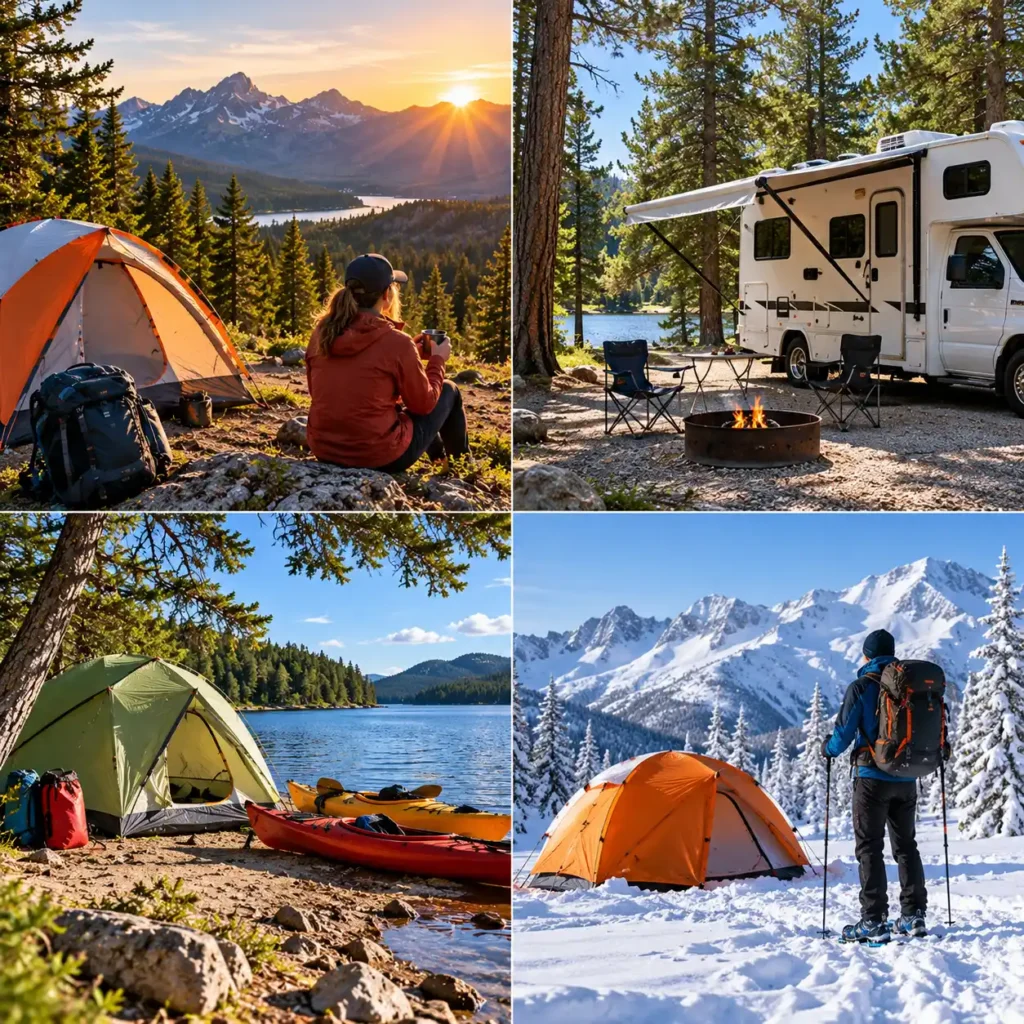
There is no single campsite that is ideal for every camper. The priorities change depending on how you travel, what equipment you bring, how long you are staying, and who is with you. A secluded backcountry site may be excellent for a backpacker but unnecessarily inconvenient for a family with young children. Likewise, an RV site that offers easy vehicle access and hookups may have little appeal to someone carrying everything in a backpack.
The twelve checks above give you the basic framework, but your camping style determines which of those checks deserve the most attention.
Tent Camping
For traditional tent camping, ground quality, drainage, overhead hazards, wind exposure, and usable space are usually among the highest priorities. You need enough room for the complete tent footprint and guy lines without moving onto fragile vegetation or an awkward slope.
If you are staying several nights, also think about where you will cook, sit, store equipment, and dry wet gear. A campsite that is barely large enough for the tent may become frustrating once you start living in it.
Family Camping
With children, convenience becomes much more important. A reasonably level site with easy vehicle access, useful shade, enough room to move around, and sensible proximity to bathrooms can be worth choosing over a more secluded or scenic location.
Think about the parts of the campsite that will be used repeatedly. If children need frequent bathroom trips, for example, a site that looks peaceful but requires a long walk may not be the most comfortable choice.
RV and Vehicle Camping
For RVs and larger vehicle-based setups, access and site dimensions move much higher on the priority list. Check the actual length and width available, turning space, parking position, hookups, and obstacles such as low branches or narrow approaches. Not every site designated for RV camping will necessarily work for every RV size or configuration.
Also consider what happens after parking. You still need usable space around the vehicle for awnings, chairs, cooking, storage, and movement.
Dispersed and Backcountry Camping
When there are no clearly defined pitches or facilities, campsite selection requires more judgment. You need to verify that camping is permitted, identify a durable surface, assess drainage and hazards, manage your own water and waste, and understand how you would leave if conditions change.
In these situations, the absence of facilities means the campsite itself has to provide more of what you need. A beautiful isolated location is not necessarily a good choice if reaching water, managing waste, or getting back to the access route becomes difficult. Rules also vary significantly between land managers and locations, so never assume that a site that looks suitable is automatically legal.
Camping With a Dog
With a dog, add another layer to the site assessment. Look for a practical place for the dog to move around without immediately entering a road, steep drop-off, dense vegetation, or another campsite. Wildlife activity, nearby water, and the behavior of neighboring campers can also influence whether a particular site will work well.
The best approach is not to search for a campsite designed for one specific type of camper. Use the same safety-first assessment, then give extra weight to the factors that directly affect your particular group and equipment.
That is the real advantage of knowing how to choose a campsite: you can evaluate the same location differently depending on what you need from it, rather than assuming that the most scenic or popular site is automatically the best one.
A Simple Campsite Selection Process
Knowing what to check is useful, but it is even more helpful to have a repeatable order for checking a campsite. Otherwise, it is easy to notice the view first and only think about drainage, wind, or access after the tent is already standing.
A simple process is to work from elimination to comparison. First remove locations that are illegal, unsafe, or obviously unsuitable. Then compare the remaining options based on comfort, convenience, and how well they fit your particular camping setup. This approach is consistent with campsite guidance that recommends assessing hazards and site conditions before unpacking.
Step 1: Eliminate Unsafe or Unsuitable Locations
Start by asking whether there is any reason not to camp there.
Check the rules, then look for obvious hazards such as:
- flood-prone ground or drainage channels;
- dead or damaged trees overhead;
- unstable slopes, cliffs, or falling-rock areas;
- exposed ridges during dangerous weather;
- obvious animal trails or concentrated wildlife activity;
- ground that is too soft, steep, or unstable for your setup.
If a location fails one of these basic checks, do not try to compensate for it because the view is good or because it is closer to the water.
Step 2: Find the Best Usable Ground
Once the obvious hazards are eliminated, focus on the actual camping surface.
Walk around rather than judging the site from one position. Find the area that is reasonably level, firm, dry, and large enough for your tent and the rest of your setup.
Then look for signs of how water moves through the area. A slightly elevated part of the site with natural drainage is generally preferable to a perfectly flat depression where water could collect.
Where camping rules allow, favor existing durable campsites or established camping areas rather than creating a new site by clearing vegetation.
Step 3: Check Weather Exposure
Now consider what the site will be like after the weather changes.
Look at wind exposure, available natural shelter, sun and shade, and the surrounding terrain. Check the forecast before committing, but also read the physical landscape because the forecast cannot tell you exactly how a particular campsite will behave.
A site that is comfortable in calm conditions may be unnecessarily exposed during strong wind. Conversely, moving too deeply into vegetation for shelter can introduce overhead hazards or excessive dampness.
Step 4: Test the Site Against Your Actual Setup
At this point, stop evaluating the campsite as an abstract “good spot” and imagine your camp actually sitting there.
Ask:
- Will the tent fit without blocking access?
- Where will the vehicle go?
- Where will you cook and eat?
- Where will wet gear go?
- Is there enough space for everyone in your group?
- How far will you carry equipment?
- Are bathrooms, water, or other facilities conveniently accessible?
- Will the site still work if you need to move around after dark?
This is where a campsite that looked excellent from a distance can lose its appeal. The best site is not necessarily the largest or most scenic; it is the one that accommodates the way you actually camp.
Step 5: Compare Before You Commit
If you have more than one reasonable option, do not automatically choose the first acceptable site.
Take a final look at the remaining choices and compare them on the factors that matter most for your trip. One may have better drainage, another better shade, and another easier access. Decide which trade-off you would rather live with.
A useful final question is:
“Which site gives me the fewest problems if conditions change tonight?”
That question is often more useful than asking which site looks best right now.
Once you have chosen the location, the next stage is organizing the actual camp layout. Our guide to how to organize a campsite covers how to position your tent, cooking area, storage, and other equipment after you have selected the site.
The important principle is simple: eliminate danger first, find suitable ground second, then optimize for comfort and convenience. That sequence makes how to choose a campsite much less subjective and helps prevent a good-looking location from becoming a bad campsite.
Common Campsite Selection Mistakes
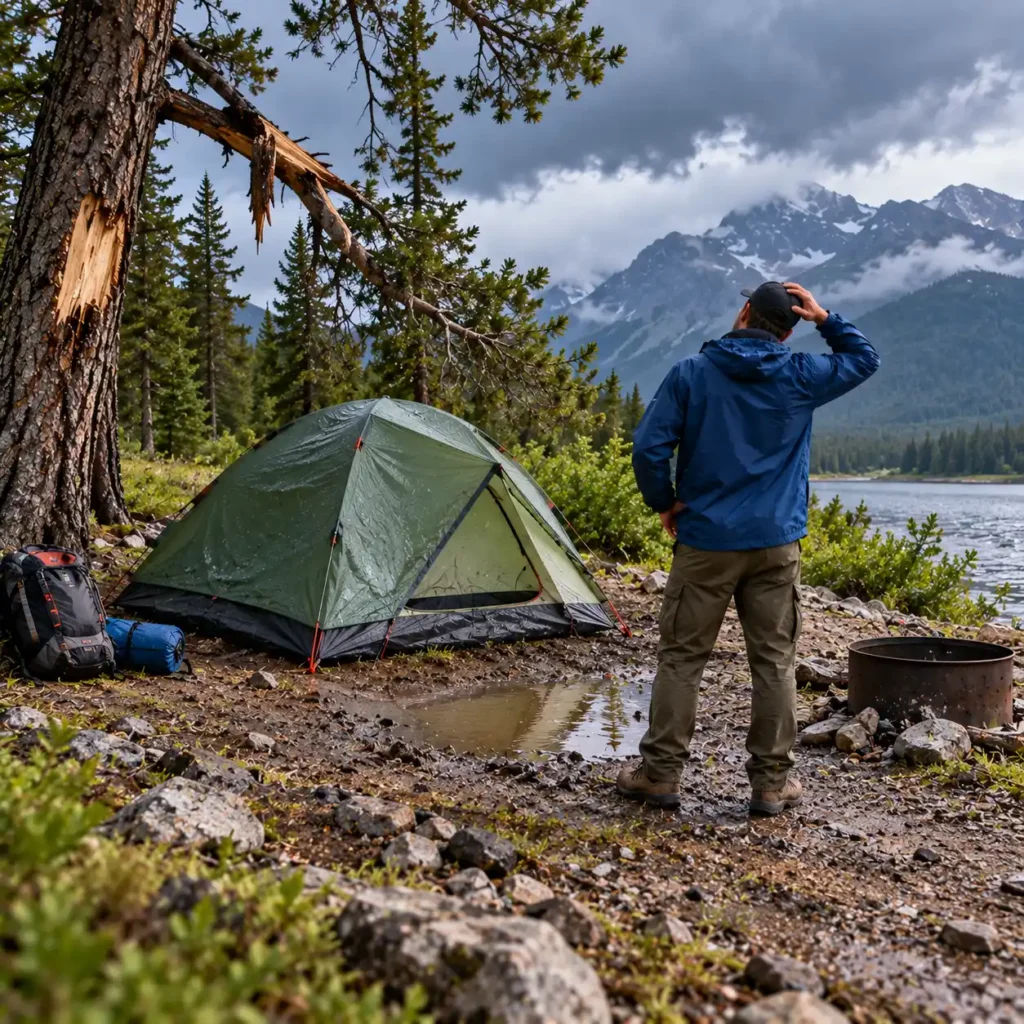
Even when you know what to look for, it is easy to make a poor campsite choice when you are tired, arriving late, or focused on finding a scenic location. Most campsite-selection mistakes happen because a single attractive feature—flat ground, shade, a lake view, or proximity to facilities—gets more attention than the overall suitability of the site.
Choosing the First Flat Spot You See
A flat area can look like the obvious answer, particularly after a long drive or hike. But flat does not necessarily mean dry, safe, or comfortable.
Before setting up, walk around and compare the available ground. A slightly raised, firm site with good drainage may be a much better choice than a perfectly flat depression.
Choosing the Best View Instead of the Best Site
A campsite with an impressive view can be tempting, but scenery should come after the basic safety and practicality checks.
An exposed viewpoint may receive more wind. A beautiful position beside a stream may be vulnerable to rising water. A shaded spot beneath trees may have overhead hazards.
The view is a bonus, not a campsite-selection criterion that should override safety.
Ignoring What Happens When It Rains
One of the easiest mistakes is looking at the campsite only under current conditions.
Before pitching, imagine where rainwater would travel. Look for depressions, channels, erosion, sediment, and other signs of previous water movement. If the site would collect water or direct runoff toward the tent, choose somewhere else.
This is especially important when weather can change quickly. A site that looks perfectly dry when you arrive can become uncomfortable or unsafe later.
Treating Shade as Automatically Good
Shade can make a campsite more comfortable in hot weather, but choosing shade without checking the surrounding trees is a mistake.
Look for dead branches, damaged trees, and other overhead hazards before placing your tent beneath a canopy. You may also want some morning or afternoon sunlight depending on the season, temperature, and how quickly you need wet gear to dry.
Staying Too Close to Water
Being beside a lake or stream can feel convenient, but the shoreline is not automatically the best camping area.
Consider flooding, dampness, insects, wildlife activity, wind exposure, and local camping-distance rules. A site that is slightly farther away can often provide a better combination of access, safety, and comfort.
Forgetting About the Next Morning
A campsite can feel perfect at sunset and become frustrating when it is time to leave.
Think about where the vehicle is parked, how you will carry your equipment, whether the ground could become muddy, and whether the route out remains practical after rain or overnight conditions.
This is particularly important when you are staying only one night. The easier the site is to set up, the easier it should ideally be to pack up as well.
Letting Convenience Override the Overall Fit
A campsite close to the bathroom, parking area, or water source can be extremely convenient, but convenience is not always the same as suitability.
A busy location may mean more noise and less privacy. A remote site may provide a better experience but require more carrying. A large campsite may be comfortable for a family but unnecessarily spacious for one or two campers.
The right choice depends on your actual camping style.
When learning how to choose a campsite, the goal is not to eliminate every possible inconvenience. It is to avoid making a decision that creates an obvious problem you could have spotted before unpacking.
Final Campsite Selection Checklist
After working through the individual factors, it helps to reduce the decision to one quick routine. You do not need to spend ten minutes evaluating a site that is obviously unsuitable, but a deliberate final check before unpacking can prevent problems that become much harder to solve once camp is set up.
Use this checklist when you have narrowed your options to a campsite that appears suitable.
Location and Rules
- Is camping permitted at this exact location?
- Do you need a reservation or permit?
- Are there restrictions on fires, vehicles, group size, or food storage?
- Is this a designated or established campsite where you are required to camp?
Ground and Drainage
- Is the ground reasonably level and comfortable?
- Is it firm enough for your tent and stakes?
- Are there rocks, roots, holes, or other problems beneath the tent area?
- Is the site naturally drained rather than sitting in a depression?
- Are there signs of previous flooding or water movement?
Hazards and Weather
- Are there dead or damaged trees or branches overhead?
- Is there unstable terrain, falling-rock risk, or another obvious hazard nearby?
- Is the site too exposed to the expected wind?
- Does the surrounding terrain provide useful shelter without introducing new risks?
- Will the site remain suitable if the weather changes overnight?
Water, Wildlife, and Surroundings
- Is the campsite safely separated from nearby water?
- Are there obvious animal trails, tracks, droppings, or feeding areas?
- Is the site too close to a busy road, trail, or neighboring campsite?
- Will you have enough privacy for the type of camping experience you want?
Practical Setup
- Does the tent actually fit?
- Is there enough room for your vehicle and other equipment?
- Can you comfortably position your cooking and sitting areas?
- Can you reach important facilities without unnecessary difficulty?
- Can you see how you will pack everything up and leave in the morning?
Your vehicle and the way you have packed it can also affect how practical a campsite is once you arrive. If you are car camping, our guide to how to pack a car for camping covers ways to keep frequently needed equipment accessible and make unloading more manageable.
A useful final test is to ask four questions:
- Is this site safe?
- Will it remain practical if conditions change?
- Does it fit the way I am camping?
- Can I use it without unnecessarily damaging the surrounding area?
If the answer is yes, you can start setting up with considerably more confidence.
The goal of how to choose a campsite is not to find a flawless location. It is to recognize the difference between a campsite that merely looks good and one that will actually work for the entire stay. Recent campsite-selection guidance reaches the same basic conclusion: assess the site systematically before pitching rather than letting the first attractive spot make the decision for you.
How to Choose a Campsite in Different Weather Conditions
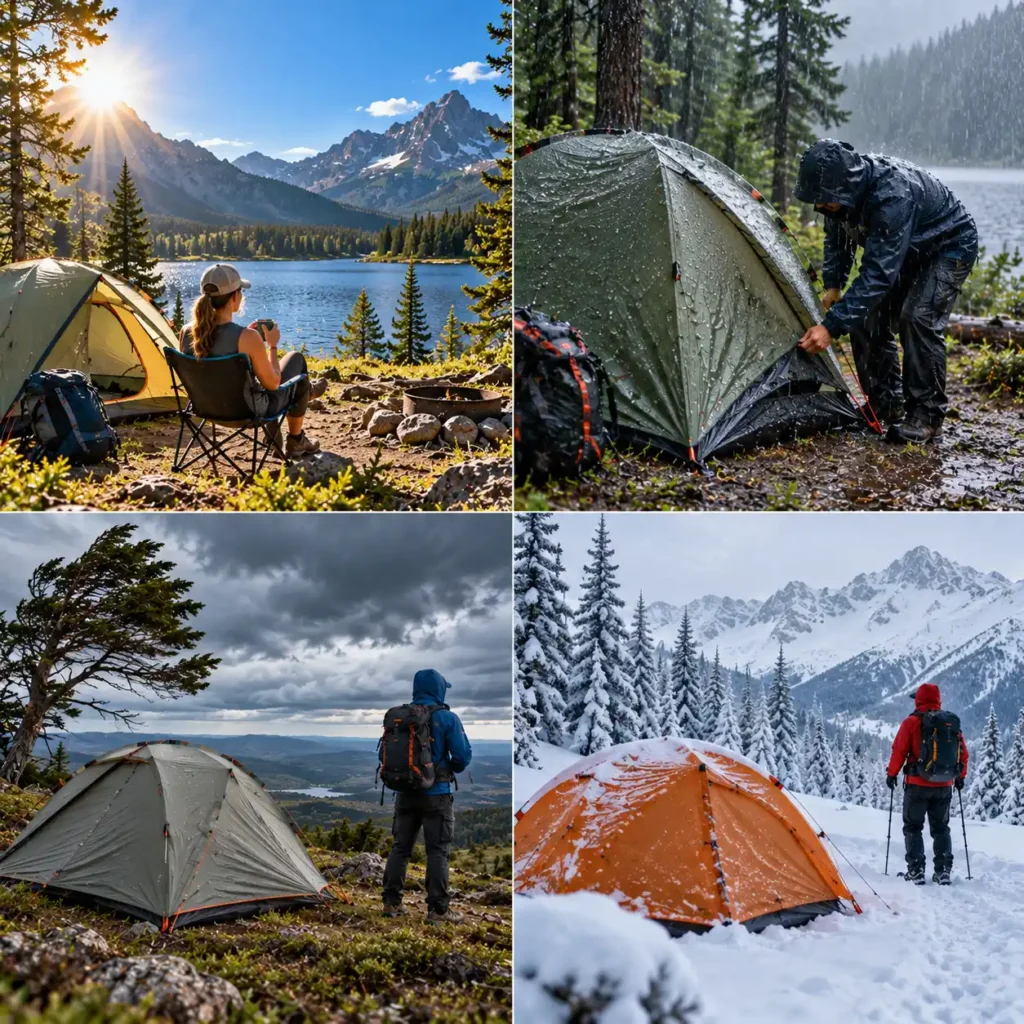
Weather should influence your campsite decision before you unpack. A location that works perfectly on a calm, mild afternoon may become uncomfortable when rain, strong wind, heat, or cold arrives overnight.
You do not need to predict every change in weather. Instead, choose a site that has some margin for the conditions you are likely to experience. The same basic campsite can therefore be a good choice in one situation and a poor choice in another. Recent campsite-selection guidance similarly emphasizes choosing for the conditions you may experience later, rather than judging the site only by how it feels when you arrive.
Camping When Rain Is Expected
When rain is likely, drainage becomes one of your highest priorities.
Look for slightly elevated, naturally well-drained ground and avoid depressions, dry channels, ravines, and areas showing signs of previous flooding. Pay attention to the direction water would travel across the site rather than simply asking whether the ground is dry right now.
Also consider how you will move around camp after the rain starts. A campsite with good drainage but nowhere practical to stand, cook, or store wet equipment may still become frustrating.
If rain is expected for several days, think beyond the first night. Your tent, clothing, footwear, and other equipment may need somewhere to dry between periods of use. Our guide to how to dry camping gear fast after rain covers that part of the problem.
Camping in Strong Wind
In windy conditions, avoid unnecessarily exposed locations such as open ridges, broad clearings, and hilltops when a safer alternative is available.
Look for partial natural protection from healthy trees, terrain, or suitable rock formations, while still checking carefully for falling branches, unstable slopes, or other hazards. Wind protection should never mean placing your tent directly beneath damaged trees or in an area where water could collect.
Think about the direction of the expected wind as well. A site with protection on the windward side may be considerably more comfortable than one that appears equally sheltered from another direction.
Camping in Hot Weather
In hot conditions, shade and airflow become more important.
A site with afternoon shade can reduce how much heat builds up around your tent and living area, while some natural airflow can make the campsite feel more comfortable. However, do not choose the shadiest possible location without checking the trees and surrounding terrain for hazards.
Also consider when the shade will actually occur. A campsite that is shaded when you arrive may receive direct afternoon sun, while another location may remain shaded during the hottest part of the day. The position of the sun changes with time and season, so look at the entire period you expect to spend at camp rather than judging the shade at one moment.
Camping in Cold Weather
When temperatures are low, campsite elevation and exposure can make a noticeable difference.
Avoid unnecessarily exposed locations where cold wind can pass directly through the campsite. At the same time, do not automatically choose the lowest point in the terrain. Cold air can settle in low areas overnight, while damp ground can make an already cold campsite feel less comfortable.
Where conditions and local rules allow, consider how much sunlight the site will receive during the day. Morning and daytime sun can be useful in colder conditions, particularly when you need to warm the campsite or dry condensation and damp gear.
Camping When Weather May Change
The most difficult conditions are often not extreme weather at arrival but weather that changes after you have already committed to the site.
Before setting up, ask:
- What happens here if heavy rain arrives?
- Where will the wind come from?
- Will the site become too exposed?
- Could water move toward the tent?
- Will the campsite remain comfortable if temperatures rise or fall?
- Is there a safer nearby alternative if conditions deteriorate?
If the forecast is uncertain, give yourself more margin rather than choosing a site that only works under ideal conditions.
This is one of the most useful principles in how to choose a campsite: choose for the conditions you might experience, not only the conditions you can see when you arrive.
A campsite does not have to provide perfect protection from every type of weather. It simply needs to avoid obvious weaknesses and give you enough room to manage the conditions you are reasonably likely to encounter.
Frequently Asked Questions About Choosing a Campsite
What Makes a Good Campsite?
A good campsite is legal, safe, reasonably level, well drained, and suitable for your camping setup. It should also provide enough usable space, reasonable protection from expected weather, and practical access to the facilities or resources you need.
The best campsite is not necessarily the flattest, most scenic, or most secluded location. It is the site that creates the fewest problems during the entire stay.
Where Is the Safest Place to Set Up a Tent?
The safest place to set up a tent is generally firm, reasonably level ground away from flood-prone areas, dead trees, unstable slopes, steep drop-offs, and obvious wildlife paths.
Look beyond the tent footprint itself. Check what is above you, what is uphill from you, where water could flow, and how exposed the site is to weather.
Should You Camp on Flat or Sloped Ground?
Choose reasonably level ground whenever possible. A very steep slope can make sleeping uncomfortable and can cause you or your sleeping gear to slide during the night.
If completely level ground is unavailable, a gentle slope may be workable depending on your tent and sleeping system. The important thing is to avoid a pronounced slope, particularly one that directs water toward the tent.
How Far Should You Camp From Water?
In many backcountry settings, 200 feet (about 60 meters) from lakes, rivers, and streams is a commonly used Leave No Trace guideline, but it is not a universal legal requirement. Local land-management rules can specify different distances, so always follow the regulations for the area where you are camping.
The distance also provides a practical buffer from rising water, damp ground, insects, wildlife activity, and heavily used shoreline areas.
Is It Safe to Camp Under Trees?
Not automatically. Trees can provide useful shade and some protection from wind, but dead, damaged, or unstable trees and branches create an overhead hazard.
Before placing a tent underneath a tree canopy, inspect the branches and surrounding trees. If you see significant dead limbs, broken branches, leaning trees, or other obvious signs of instability, choose another location.
Where Should You Camp When It Is Windy or Rainy?
When wind is expected, look for partial protection from healthy vegetation, terrain, or other stable natural features, while avoiding exposed ridges and locations with overhead hazards.
When rain is expected, prioritize well-drained, slightly elevated ground and avoid depressions, dry channels, ravines, and areas showing signs of previous water movement.
For broader weather planning, our Camping Temperature Guide can help you think about how temperature and conditions affect the rest of your camping setup.
How Close Should a Campsite Be to Bathrooms and Trails?
There is no universal distance that makes a campsite “correct.” In an established campground, use the designated site or tent pad and consider how much convenience versus privacy you want.
A site close to bathrooms can be useful for families or campers who need frequent access to facilities. A site farther away may be quieter and experience less foot traffic. You should also avoid placing your tent directly on a heavily used trail or in a location where people regularly walk through your camping area.
How Do You Choose Between Two Campsites?
First eliminate the site with the greater safety or drainage problem. Then compare the remaining options for weather exposure, usable space, privacy, access, facilities, and how well each site fits your equipment.
If both sites appear safe, ask which one would create fewer problems if the weather changes or you need to pack up early the next morning.
This is more reliable than choosing based solely on the view or whichever site looks most attractive at first glance.
Should You Camp Near a River or Lake?
Being near water can be convenient, but right beside the water is usually not the best position for a tent. Consider flooding, changing water levels, damp ground, wind exposure, insects, wildlife activity, and local camping-distance requirements.
A site somewhat farther from the shoreline can still provide convenient access while giving you a better safety and comfort margin.
What Should You Check Before Setting Up a Tent?
Before unpacking, check the rules, ground, drainage, overhead hazards, surrounding terrain, wind exposure, water proximity, wildlife activity, usable space, access, and expected weather.
Then walk around the site once more and imagine the entire camp already set up. If the tent fits but there is nowhere sensible to cook, store equipment, move around, or leave in the morning, the site may not be as practical as it first appeared.
Final Thoughts: How to Choose a Campsite With Confidence
Choosing a campsite well is less about finding a perfect location and more about recognizing problems before you commit to a location. A beautiful view, convenient facilities, or a flat patch of ground can all be valuable, but none of them should outweigh basic safety, drainage, weather exposure, or the practical needs of your camping setup.
The most reliable approach is to make campsite selection a short routine rather than an instinctive decision. First eliminate locations that are illegal or obviously unsafe. Then check the ground, drainage, surrounding hazards, weather exposure, water, wildlife, privacy, access, and available space. Finally, imagine the site after dark, during bad weather, and the next morning when you need to pack everything away.
It is also worth remembering that the best campsite depends on the way you camp. A family may value bathrooms and easy access more than solitude. A backpacker may prioritize durable ground and low environmental impact. An RV camper may need sufficient space and a practical approach for the vehicle. There is no universal “best” site—there is only a site that fits your particular trip well.
Over time, these checks become much faster. You start noticing drainage patterns, wind exposure, overhead hazards, usable space, and the practical layout of a campsite almost automatically. What initially feels like a long checklist eventually becomes a quick walk around the site before you unpack.
Most importantly, do not let fatigue or excitement rush the decision. Spending a few extra minutes choosing the campsite is usually easier than spending the rest of the night dealing with a poor choice. If a location passes the safety checks, works with your equipment, and still looks sensible when you imagine the conditions changing, you have probably found a good place to camp.
That is ultimately what how to choose a campsite is about: not finding the most impressive spot, but choosing a location that remains safe, practical, comfortable, and responsible throughout the entire stay.