
Learning how to dry camping gear fast after rain can make the difference between a comfortable camping trip and a vehicle full of damp equipment that smells musty for days afterward.
Hi, I’m Anthony.
A few years ago during a rainy shoulder-season trip near the Oregon coast, I made the mistake of packing a wet tent directly into the back of the SUV after a cold overnight storm. At the time, the goal was simply getting home before the weather worsened.
Two days later, the inside of the vehicle smelled like mildew.
The rainfly still felt damp, moisture had spread into a sleeping bag stored beside it, and part of the tent floor had already started developing that sour “wet fabric” smell campers usually recognize immediately once mold begins forming.
That trip completely changed how I handle wet camping gear after rain.
Since then, I’ve tested different drying methods across rainy campground weekends, cold-weather trips, humid summer camping, and multi-day road travel where gear sometimes stays wet far longer than expected. Some methods dried equipment surprisingly well. Others trapped moisture so badly that even expensive gear started smelling musty within a day or two.
After enough wet trips, a clear pattern started showing up:
Most camping gear does not get ruined by rain itself.
Most long-term damage starts once damp gear stays packed too long after the trip.
This guide breaks down the practical drying systems I now use for tents, sleeping bags, rain gear, backpacks, clothing, and campsite equipment after wet-weather camping trips — both at camp and after returning home.
For campers frequently dealing with rainy trips, our guide on 10 Tips for Camping in the Rain pairs especially well with better post-rain gear management.
And if moisture problems continue showing up inside your shelter overnight, our guide on How to Stop Condensation in a Tent explains why airflow and humidity control matter long before gear starts drying at home.
As an Amazon Associate, we earn from qualifying purchases.
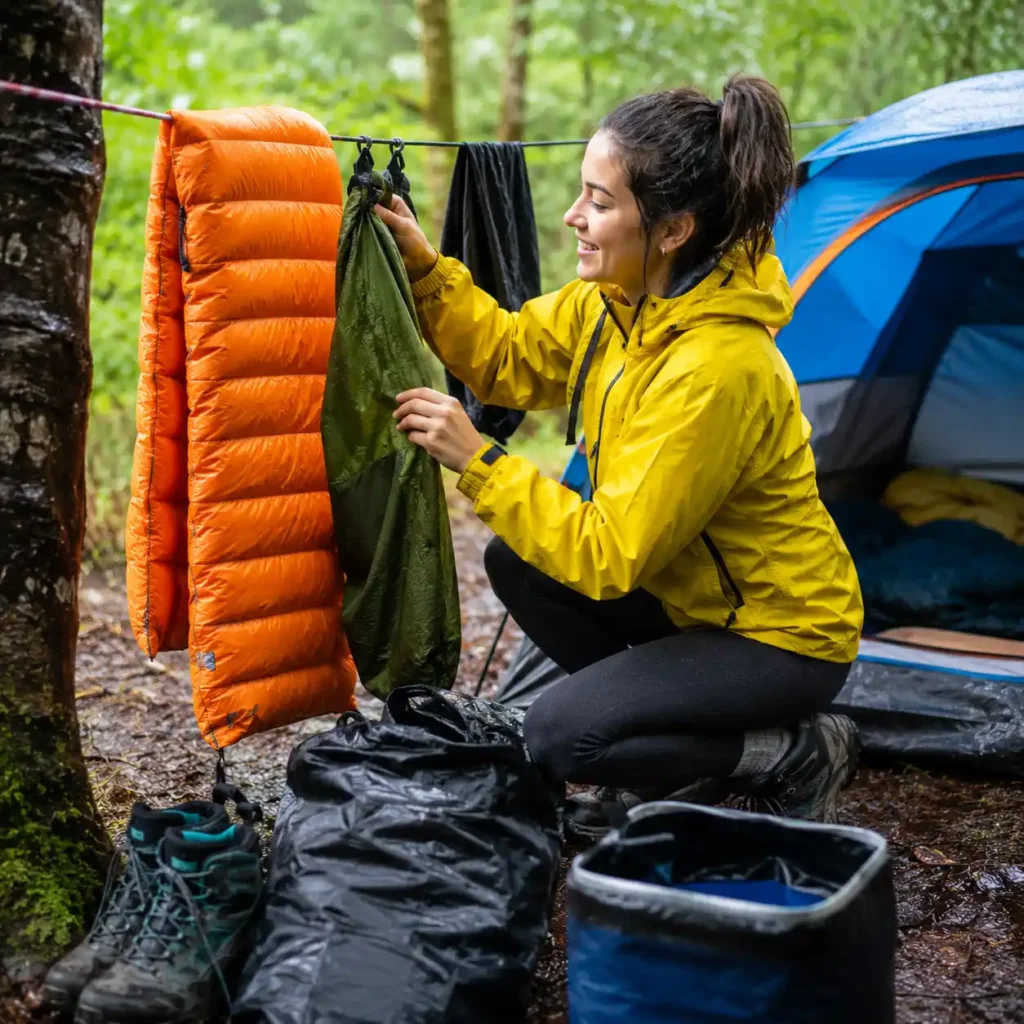
Table of Contents
Why Wet Camping Gear Becomes a Problem So Fast
Wet camping gear rarely gets dangerous immediately after the rain stops.
The real problems often begin later — once moisture becomes trapped inside folded fabric, compressed insulation, packed storage bins, or poorly ventilated vehicles during the drive home.
Many campers assume gear is “mostly dry” simply because the outer surface no longer feels soaked. In reality, hidden moisture inside seams, insulation, tent flooring, and fabric layers can stay trapped for many hours after a rainy trip ends.
That trapped moisture creates the conditions mold and mildew need surprisingly fast.
We noticed this most often during:
- humid summer camping
- cold-weather campground trips
- multi-day rain exposure
- vehicle camping with limited airflow
- gear packed immediately after breakdown
Tents are usually the first problem.
Even when the rainfly appears dry, moisture often remains inside:
- folded corners
- stake loops
- tent flooring
- mesh seams
- storage sacks
Sleeping bags create another issue entirely.
Down insulation absorbs moisture gradually, while synthetic insulation tends to trap humidity deeper inside compressed fabric layers after repeated damp nights outdoors.
The outcome is often the same:
- sour fabric smells
- mildew buildup
- damp insulation
- sticky tent coatings
- long-term material breakdown
Warm vehicles can actually make the problem worse.
A packed SUV sitting in sunlight after a rainy trip often turns into a humid storage chamber where damp gear stays warm, compressed, and poorly ventilated for hours.
For campers frequently dealing with wet overnight conditions, our guide on Why Tents Condense at Night explains why interior moisture often starts building long before gear ever gets packed away.
And if your equipment already smells damp after storage, our guide on How to Clean a Moldy Tent covers the safest ways to remove mildew without damaging waterproof coatings or technical fabrics.
How We Tested Wet Camping Gear Drying Methods
Woman in rain jacket drying wet camping gear beside a blue tent in a rainy forest campsite after heavy rain
We tested these drying methods during rainy campground weekends, humid summer trips, cold-weather camping, and multi-day road travel where gear stayed wet for extended periods after breakdown.
Instead of relying on quick backyard drying tests, we focused on how real camping equipment behaved after repeated exposure to:
- heavy rain
- overnight condensation
- damp vehicle storage
- muddy campground conditions
- limited airflow environments
Some drying methods worked well for lightweight clothing but failed completely once thicker equipment like sleeping bags or tent flooring stayed compressed for too long.
Some methods dried gear efficiently while still preventing the musty smells that often develop after wet trips.
Tent Drying & Moisture Retention
Tents became one of the easiest ways to spot hidden moisture problems.
We evaluated how quickly different drying setups removed trapped humidity from:
- rainflies
- tent flooring
- mesh panels
- pole sleeves
- reinforced corners
- packed storage sacks
Certain tents felt dry on the surface while still holding noticeable moisture deep inside folded fabric seams several hours later.
That became far more noticeable after packing gear into warm vehicles with limited ventilation.
Sleeping Bag & Insulation Testing
Wet insulation behaves very differently depending on the material.
We tested both down and synthetic sleeping bags after exposure to:
- overnight tent condensation
- wet clothing contact
- humid campground air
- direct rain exposure
- damp vehicle storage
Down insulation generally required more airflow and drying time, while synthetic fill handled temporary moisture better but sometimes trapped odor faster after repeated damp packing.
For campers struggling with moisture buildup overnight, our guide on How to Wash a Sleeping Bag Without Ruining It explains why insulation damage often begins long before visible mold appears.
Vehicle Drying & Airflow Testing
One of the biggest surprises during testing was how poorly camping gear dried inside closed vehicles.
We monitored moisture buildup inside:
- SUVs
- compact crossovers
- rooftop cargo boxes
- truck bed storage systems
Even partially damp gear raised interior humidity quickly once airflow became restricted.
Vehicles parked in sunlight often created heavy condensation inside packed cargo areas by afternoon.
Fast-Drying Campsite Methods
We also tested practical campsite drying systems during active trips where fully drying gear immediately was not realistic.
That included:
- tarp airflow setups
- tree-line drying
- partial sun exposure
- elevated gear placement
- camp-chair ventilation drying
- vehicle-assisted airflow
Some methods dried equipment surprisingly efficiently without direct sunlight, while others trapped humidity badly despite warmer weather conditions.
The biggest factor was rarely heat alone.
Consistent airflow mattered far more than most campers initially expected.
Why You Can Trust This Guide
CampComfortGuide is fully independent. We do not recommend drying methods based on sponsorships, gear partnerships, or unrealistic “perfect weather” camping conditions where equipment never actually gets wet in the first place.
Everything in this guide comes from real trips where rain, condensation, humidity, and poor drying conditions became genuine problems after camp breakdown.
Over the years, I’ve dealt with wet gear during:
- coastal rainstorms
- freezing shoulder-season trips
- humid summer campgrounds
- multi-day vehicle camping
- muddy forest campsites
- long drives with packed damp equipment
And one thing became obvious very quickly:
Most moisture damage happens after the trip ends.
Not during the rain itself.
A tent can survive heavy weather surprisingly well. The real damage usually starts once wet equipment gets compressed into storage bags, packed into warm vehicles, or left without airflow for too long afterward.
That is where campers usually begin noticing:
- mildew smells
- sticky waterproof coatings
- damp insulation
- mold spots
- sour fabric odor
- moisture trapped deep inside seams
This guide focuses heavily on the practical side of drying gear properly in realistic situations where campers may have:
- limited sunlight
- ongoing rain
- crowded vehicles
- small apartments
- cold weather
- restricted airflow
- no immediate drying space at home
We also tested different drying approaches across multiple gear categories because not all camping equipment handles moisture the same way.
A wet tent behaves very differently from:
- down sleeping bags
- synthetic insulation
- waterproof jackets
- camp chairs
- foam sleeping pads
- rooftop storage systems
For campers trying to improve long-term gear protection, our guide on How to Store Camping Gear Properly pairs especially well with better post-trip drying habits.
And if wet-weather camping constantly leaves your shelter damp overnight, our guide on How to Keep a Tent Warm explains why airflow balance and condensation control matter just as much as external rain protection.
The goal of this guide is simple:
Help campers dry wet gear faster, prevent mold before it starts, and avoid the frustrating cycle of opening stored camping equipment weeks later only to discover it still smells damp from the last trip.
Which Camping Gear Should You Dry First?
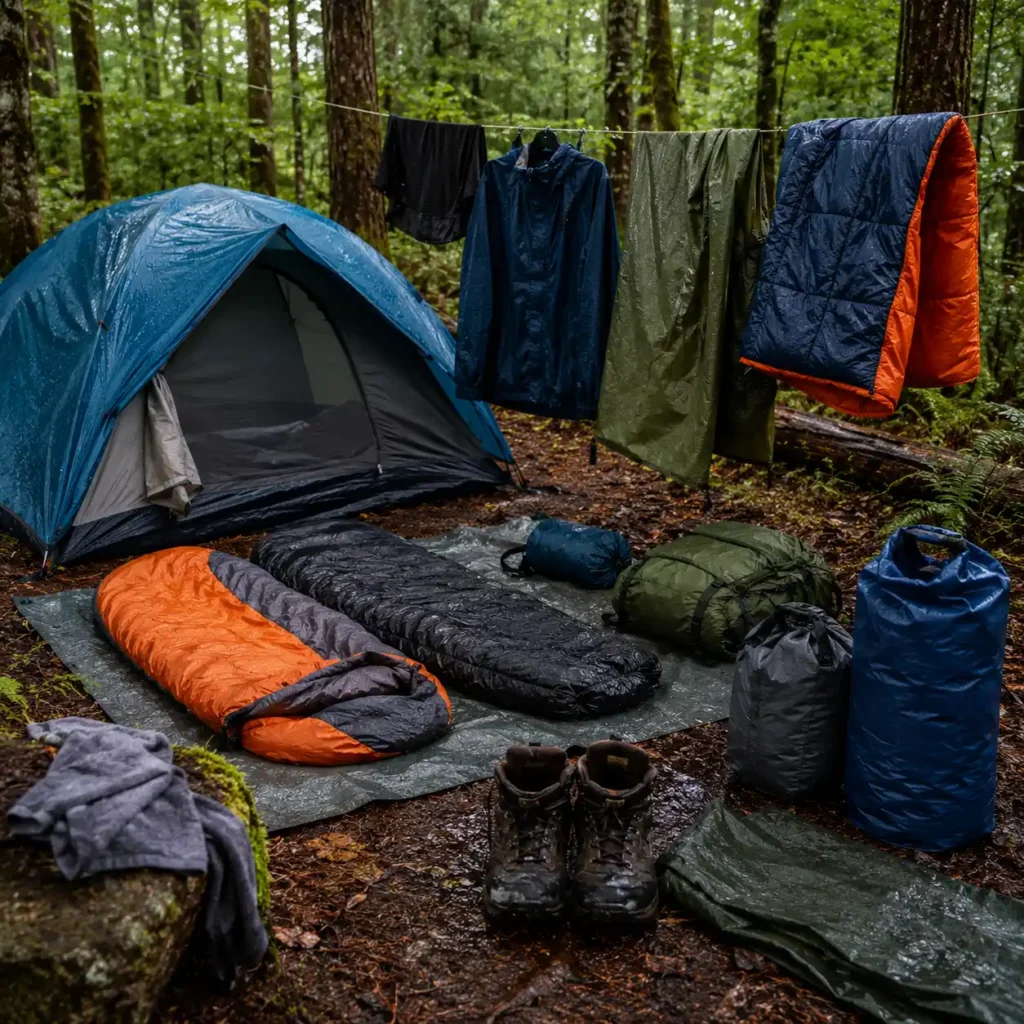
Not all wet camping gear creates the same level of risk after a rainy trip.
Some equipment can stay damp for several hours without major problems. Other items start trapping moisture deep inside fabric layers almost immediately once airflow disappears.
The smartest approach is drying gear based on moisture sensitivity, not convenience.
1. Sleeping Bags & Insulated Bedding
Sleeping systems should almost always be the first priority.
Even slightly damp insulation can quickly develop:
- musty odors
- insulation clumping
- reduced warmth retention
- trapped internal moisture
- mildew buildup during storage
Down sleeping bags are especially sensitive because wet down loses loft rapidly once moisture settles into compressed insulation chambers.
Synthetic fill handles moisture better short term, but repeated damp packing can still create unpleasant odor buildup surprisingly fast.
The biggest mistake many campers make is leaving sleeping bags compressed inside stuff sacks “until tomorrow” after getting home.
That delay often becomes the start of long-term odor problems.
For campers already noticing reduced overnight warmth, our guide on Why Sleeping Bags Feel Colder Near Morning explains how trapped moisture gradually affects insulation performance over time.
2. Tent Rainflies & Tent Flooring
Rainflies often look dry much earlier than they actually are.
Moisture usually stays hidden inside:
- folded seams
- reinforced corners
- stake loops
- vestibule edges
- floor material folds
Tent flooring is another common problem area because mud and groundwater exposure keep moisture trapped underneath even after surface water disappears.
Packing a damp tent into sealed storage is one of the fastest ways to create mildew smells inside camping gear.
3. Clothing Layers & Rain Gear
Wet clothing spreads humidity through vehicles and storage bins extremely quickly.
That becomes more noticeable during:
- humid summer trips
- cold-weather camping
- long road travel
- family camping with limited cargo space
Rain jackets and waterproof shells also need airflow after wet trips because trapped moisture gradually affects breathable membrane performance over time.
We noticed this most often with gear repeatedly stuffed into sealed duffel bags without proper drying afterward.
4. Backpacks & Storage Bags
Backpacks absorb more moisture than many campers realize.
Even water-resistant materials often trap dampness inside:
- shoulder padding
- hip belts
- bottom panels
- internal seams
- zipper areas
Soft storage cubes and duffel bags create similar problems because moisture gets sealed inside compressed fabric once gear is packed tightly after rain.
5. Camp Furniture & Foam Gear
Camp chairs, foam sleeping pads, and ground mats usually tolerate moisture better than insulated equipment, but they still collect hidden dampness after prolonged rain exposure.
We noticed this most often around:
- chair fabric seams
- folded leg joints
- foam pad undersides
- muddy ground-contact surfaces
These items rarely become the first source of mildew, but they often spread moisture into cleaner gear when packed carelessly after wet campground breakdowns.
The priority is straightforward:
Dry the gear that traps internal moisture first — not the gear that merely looks wet on the surface.
The Fastest Ways to Dry Camping Gear at a Campsite
Drying wet camping gear at a campsite is rarely about making everything completely dry before the next night.
Most of the time, the real goal is reducing trapped moisture enough to prevent mildew, odor buildup, and soaked insulation from getting worse during the trip.
Learning how to dry camping gear fast after rain becomes much easier once airflow starts becoming the priority instead of direct heat alone.
Airflow Matters More Than Sunlight
Many campers immediately search for direct sun after rain.
In reality, consistent moving air often dries equipment faster than weak sunlight trapped beneath humid campground trees.
We noticed this repeatedly with:
- damp rainflies
- wet jackets
- sleeping bag shells
- camp towels
- tent flooring
Even cloudy campsites dried gear far better than expected once equipment stayed elevated and exposed to steady airflow.
The worst thing campers can do is leave wet gear compressed inside storage bags while waiting for “better weather later.”
Use Elevated Drying Whenever Possible
Gear dries much faster once moisture can escape from both sides of the fabric.
At camp, we had the best results using:
- clotheslines between trees
- tent guylines
- camp chairs
- roof racks
- elevated tarps
- open tailgates
Sleeping bags and jackets placed directly on wet picnic tables or muddy ground often stayed damp underneath for hours longer than expected.
Even a simple raised tarp setup dramatically improved airflow around larger equipment.
Separate Damp Gear Immediately
One wet item can slowly spread humidity into everything packed beside it.
That becomes especially noticeable inside:
- packed duffel bags
- vehicle cargo areas
- rooftop boxes
- crowded family camping setups
Whenever possible, isolate:
- wet boots
- soaked rain gear
- damp rainflies
- muddy ground tarps
away from clean sleeping systems and dry clothing.
Use Partial Drying Cycles During Longer Trips
Multi-day camping rarely gives perfect drying conditions every day.
Instead of waiting for gear to become “fully dry,” focus on reducing moisture gradually whenever conditions improve.
We had the best results rotating equipment through short drying cycles during:
- lunch stops
- sunny trail breaks
- afternoon campsite downtime
- vehicle ventilation breaks
Even 20–30 minutes of airflow exposure helped reduce internal moisture inside sleeping bags and tent fabrics noticeably.
Avoid High Heat on Technical Fabrics
Trying to dry gear too aggressively often creates new problems.
Direct campfire heat, heaters, and prolonged high-temperature drying can damage:
- waterproof coatings
- seam tape
- synthetic insulation
- ultralight tent fabrics
- breathable rain shells
Fast drying should still stay controlled.
The goal is removing moisture safely — not cooking the fabric.
For campers frequently dealing with soaked shelter systems, our guide on 10 Tips for Camping in the Rain explains how smarter campsite positioning can reduce post-rain drying problems before they even start.
How to Dry Wet Camping Gear Inside a Vehicle
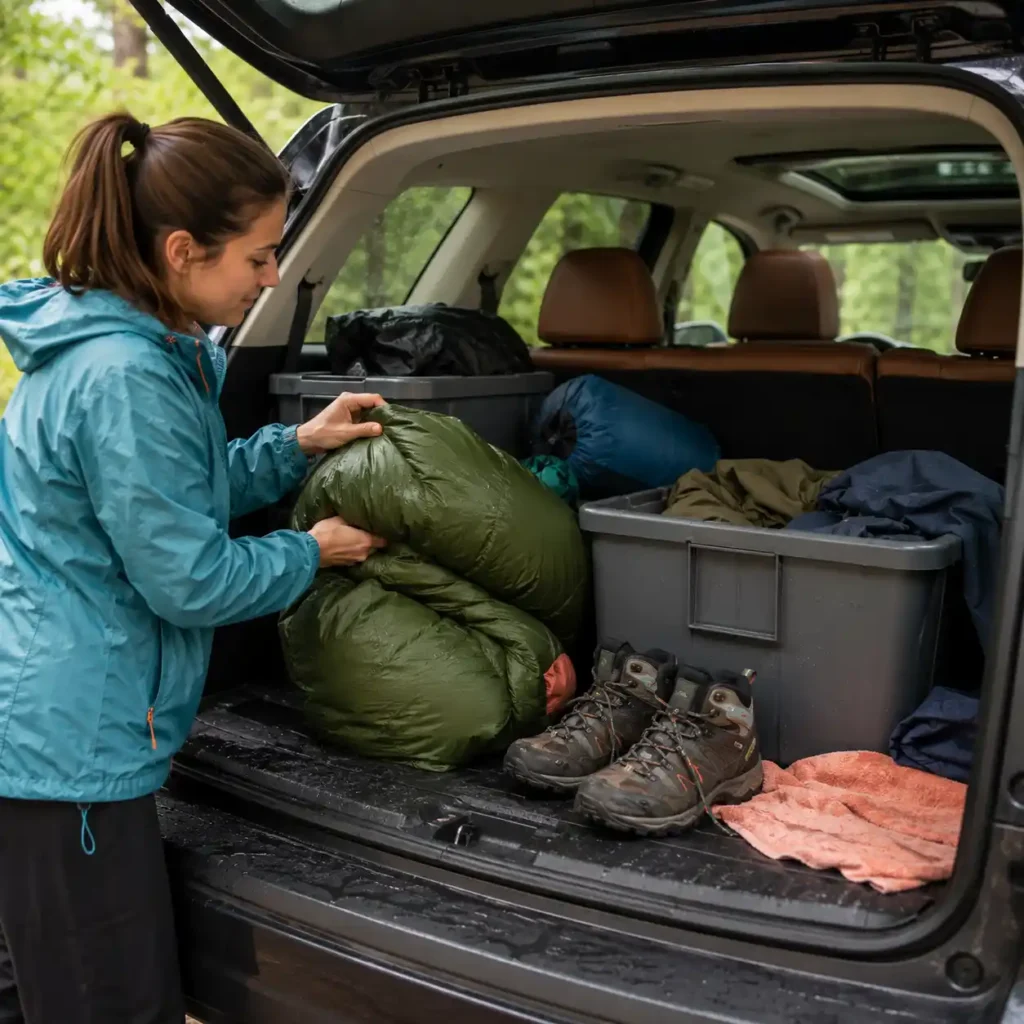
Drying camping gear inside a vehicle is possible, but it becomes much harder once airflow disappears and damp equipment starts trapping humidity inside a sealed cargo area.
This is where many campers accidentally create the perfect conditions for:
- mildew smells
- condensation buildup
- damp insulation
- sticky tent coatings
- lingering moisture inside fabric seams
Learning how to dry camping gear fast after rain inside a vehicle depends almost entirely on ventilation management and gear separation.
Never Leave Wet Gear Compressed
The worst place for damp equipment is inside tightly packed storage sacks buried beneath other cargo.
Moisture trapped without airflow spreads surprisingly fast through:
- sleeping bags
- jackets
- soft storage cubes
- tent flooring
- clothing piles
We noticed this most often during long drives after rainy campground breakdowns where gear stayed compressed for several hours without ventilation.
Even partially damp equipment should stay as loose and open as possible during transport.
Crack Windows Whenever Conditions Allow
Small airflow changes make a massive difference inside vehicles.
Even slightly opened windows helped reduce humidity buildup during testing far more effectively than many campers expect.
This became especially noticeable inside:
- SUVs
- compact crossovers
- rooftop sleeping setups
- truck canopies
Warm vehicles parked in sunlight can trap heavy moisture quickly once damp gear fills the cargo area.
Fresh airflow matters far more than interior heat alone.
Keep Wet Gear Away From Insulated Equipment
Moisture spreads gradually through packed fabric systems during road travel.
Sleeping bags, blankets, and insulated clothing absorb that humidity much faster than hard-sided gear.
Whenever possible, separate wet equipment from:
- bedding
- pillows
- clean clothing
- electronics
- dry food storage
Waterproof bins and washable cargo liners helped significantly during multi-day trips where fully drying gear immediately was not realistic.
Roof Racks & Exterior Storage Help More Than Most Campers Expect
Exterior airflow can dramatically improve temporary drying during travel.
We had surprisingly good results using:
- roof racks
- hitch cargo carriers
- partially ventilated truck beds
- exterior drying lines at rest stops
Even damp rainflies dried noticeably faster once exposed to moving air outside the vehicle instead of trapped humidity inside the cabin.
The biggest improvement usually came from reducing interior moisture concentration overall.
Avoid “Drying” Gear With Vehicle Heat Alone
Many campers assume blasting heat through the cabin solves the problem.
Usually it only hides it temporarily.
Warm air without ventilation often creates:
- humid cabin air
- window condensation
- trapped moisture inside insulation
- stronger mildew odors later
Heat helps most when combined with airflow and space between damp gear layers.
The goal is not simply warming wet equipment.
It is allowing moisture to escape completely before long-term storage begins.
For campers already dealing with lingering damp smells after trips, our guide on How to Store Camping Gear Properly explains why moisture trapped during transport often becomes a much bigger problem later at home.
How to Dry Camping Gear Properly After Returning Home
The most important drying stage usually starts after the trip ends.
Even gear that feels “mostly dry” during the drive home can still hold hidden moisture deep inside insulation, folded fabric, storage sacks, and reinforced seams once unpacked indoors.
This is where many campers accidentally create long-term mildew problems without realizing it.
Learning how to dry camping gear fast after rain at home is less about speed alone and more about giving trapped moisture enough airflow and time to fully escape before storage.
Unpack Everything Immediately
One of the worst mistakes after a rainy trip is leaving damp gear packed overnight inside:
- vehicle cargo areas
- duffel bags
- rooftop boxes
- plastic storage bins
- compressed stuff sacks
Even a few extra hours trapped without ventilation can intensify:
- mildew smells
- condensation
- fabric odor
- insulation moisture
- waterproof coating damage
The first priority after arriving home should always be unpacking wet gear completely.
I’ve made the mistake before of leaving damp gear in the vehicle “until morning,” and it never ends well.
Use Open-Air Drying Whenever Possible
We consistently had the best results drying equipment in:
- garages with airflow
- covered patios
- shaded outdoor areas
- open rooms with fans
- laundry areas with ventilation
Direct sunlight can help temporarily, but long exposure sometimes weakens:
- waterproof coatings
- ultralight tent materials
- seam tape adhesives
- synthetic shell fabrics
Steady airflow usually produced safer long-term drying results than aggressive heat.
Sleeping Bags Need More Time Than Most Campers Expect
Sleeping bags often feel dry long before the insulation fully dries internally.
This becomes especially noticeable with:
- down insulation
- thicker cold-weather bags
- tightly baffled designs
- compressed storage after rain
We found that partially damp insulation sometimes remained hidden for an entire day after surface fabric already felt dry.
Whenever possible:
- hang sleeping bags loosely
- rotate them periodically
- avoid tight compression
- keep airflow moving around both sides
For campers maintaining insulated gear long term, our guide on How to Wash a Sleeping Bag Without Ruining It explains why improper drying damages insulation performance faster than most people realize.
Tents Should Dry Fully Before Long-Term Storage
Tent flooring and rainflies often trap moisture inside folds even after several hours indoors.
Pay close attention to:
- corner reinforcements
- pole sleeves
- vestibule seams
- stuff sacks
- floor material folds
We noticed mildew problems developing most often when tents were repacked “almost dry” after rainy trips.
A few extra hours of drying time usually prevents weeks of odor problems later.
Fans Help More Than Heat
Many campers immediately reach for heaters after returning home.
Fans often worked better during testing.
Moving air continuously through damp fabric reduced:
- trapped humidity
- condensation pockets
- sour fabric odor
- insulation moisture retention
Simple box fans or ceiling fans improved drying speed noticeably without exposing technical fabrics to excessive heat stress.
The goal is simple:
Never store camping gear until every hidden moisture pocket has fully dried — even if the outer fabric already feels dry to the touch.
Common Gear Drying Mistakes That Cause Mold & Smells
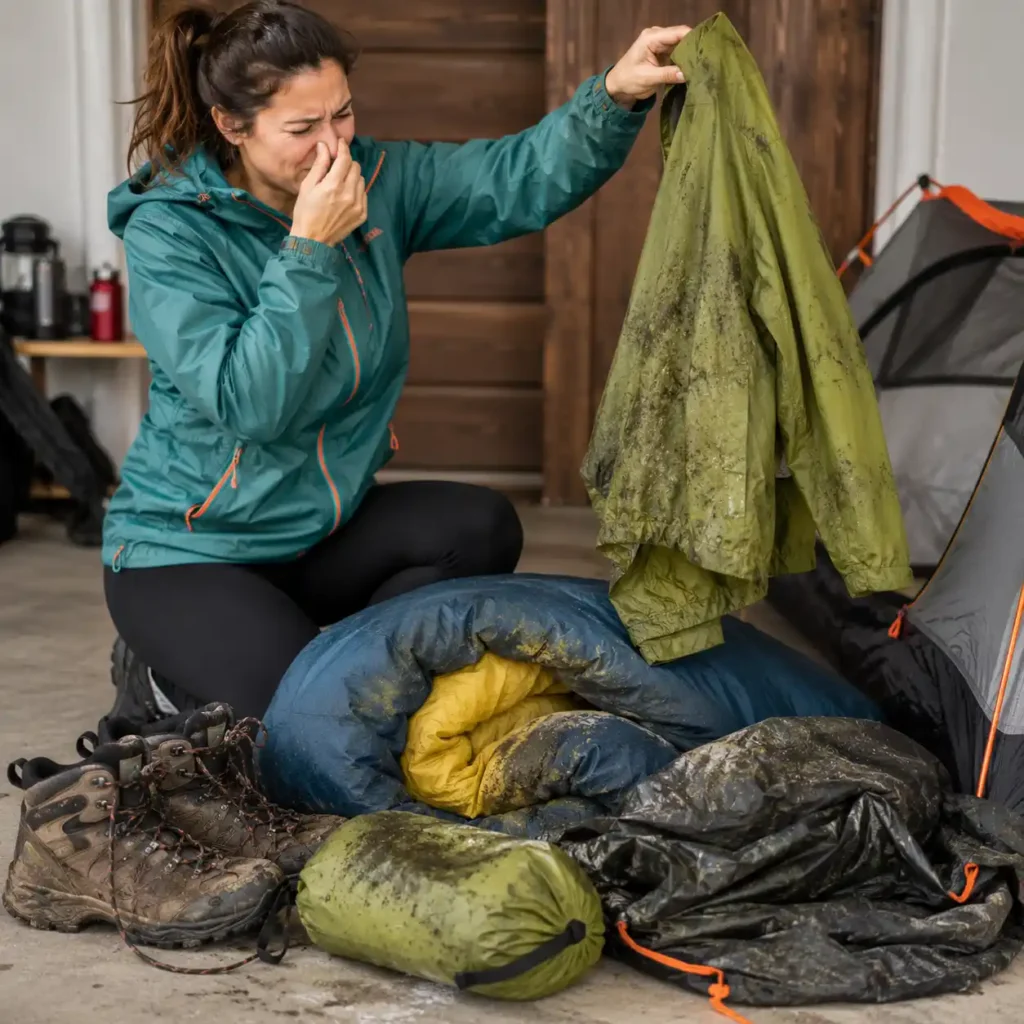
Most camping gear does not start smelling bad because of one rainy trip.
The real problems usually come from small drying mistakes repeated over time until moisture slowly builds inside fabric, insulation, and storage systems.
We saw this happen repeatedly with campers who believed gear was “dry enough” simply because the outer material no longer felt wet.
In reality, hidden moisture often remained trapped deep inside seams, folded fabric, and compressed insulation long after the trip ended.
Leaving Gear Packed Too Long
This is easily the most common mistake.
Wet gear sealed inside:
- storage bins
- vehicle cargo areas
- stuff sacks
- rooftop boxes
- laundry piles
can begin developing mildew odor within hours.
Even expensive technical gear struggles once airflow disappears completely.
The worst situations usually involved equipment left packed overnight after late campground arrivals or long rainy drives home.
Drying Gear Inside Poorly Ventilated Rooms
Indoor drying only works well when air continues moving around the fabric.
According to the National Park Service, damp outdoor equipment stored without proper ventilation can quickly develop mold, mildew, and long-term fabric odor problems.
Small apartments, closed garages, laundry rooms, and basements often trap humidity instead of removing it.
That creates the perfect environment for:
- musty smells
- condensation buildup
- damp insulation
- lingering fabric odor
We noticed this especially during colder months when campers tried drying equipment indoors without fans or ventilation.
Using Excessive Heat
Trying to dry camping gear too aggressively often damages it faster than rain itself.
Direct heaters, fireplaces, radiators, and prolonged high dryer temperatures can weaken:
- waterproof membranes
- seam tape
- tent coatings
- synthetic insulation
- ultralight shell materials
Heat should support airflow — not replace it.
Moderate temperatures with consistent ventilation almost always produced safer drying results during testing.
Forgetting About Storage Bags & Stuff Sacks
Many campers dry the main gear but forget the storage systems holding that moisture afterward.
Stuff sacks, duffel bags, and tent storage bags frequently stay damp inside after rainy trips.
Once reused later, they can transfer old moisture smells directly back into otherwise clean equipment.
We found this surprisingly common with:
- tent sacks
- sleeping bag compression sacks
- rooftop cargo liners
- soft-sided storage cubes
Storing Gear Before Checking Hidden Moisture Areas
Some of the worst mildew problems started in places campers rarely inspect carefully.
That included:
- tent floor folds
- sleeping bag foot boxes
- jacket cuffs
- backpack padding
- reinforced corner seams
These areas dry slower because airflow reaches them poorly once gear stays folded or compressed.
The biggest lesson from testing was simple:
Camping gear usually smells musty because moisture stayed hidden somewhere campers forgot to fully dry.
How to Prevent Wet Camping Gear From Smelling Musty
Musty camping gear rarely happens because equipment got wet once.
The smell usually develops when moisture stays trapped long enough for bacteria, mildew, and humid fabric buildup to settle into the material after the trip.
Once that odor starts spreading through sleeping gear, tents, backpacks, or storage bins, it becomes surprisingly difficult to remove completely.
The good news is that preventing the smell is usually much easier than fixing it later.
Prioritize Airflow Immediately After Rain
The fastest way to prevent musty odor is allowing moisture to escape before gear stays compressed for too long.
Even short airflow exposure after rain helps reduce:
- trapped humidity
- damp insulation
- condensation buildup
- fabric odor
- mildew risk
We consistently noticed that campers who unpacked and ventilated gear early had far fewer long-term smell problems than campers who waited until “later.”
Learning how to dry camping gear fast after rain is really about controlling moisture before it has time to settle deeply into the fabric.
Never Store Gear Slightly Damp
This is one of the most common reasons camping equipment starts smelling bad weeks later.
Many fabrics feel dry on the surface while still holding moisture inside:
- insulation chambers
- tent seams
- padded backpack straps
- folded rainfly corners
- sleeping bag foot boxes
Even a small amount of trapped dampness can slowly create that sour mildew smell once the gear sits inside storage.
When in doubt, give the equipment extra drying time.
Separate Dirty Gear From Clean Storage
Mud, wet clothing, soaked towels, and damp footwear spread odor surprisingly fast once packed together with clean gear.
We had much better results keeping wet equipment isolated inside:
- waterproof bins
- washable bags
- ventilated storage totes
- exterior cargo areas
This became especially important during multi-day trips where fully drying gear immediately was not realistic.
Wash Gear Before Long-Term Storage When Necessary
Sometimes airflow alone is not enough.
If equipment already smells damp after drying, it usually means bacteria or mildew residue remains trapped inside the fabric.
That becomes more common after:
- repeated rainy trips
- humid campground conditions
- muddy camping
- long-term packed storage
- vehicle condensation buildup
Sleeping bag liners, rain gear, camp towels, and synthetic clothing often benefit from gentle cleaning before storage.
Storage Conditions Matter Long After the Trip Ends
Perfectly dried gear can still develop musty odor later if stored in poor conditions.
We saw recurring smell problems most often in:
- humid garages
- sealed plastic containers
- damp basements
- hot vehicle trunks
- poorly ventilated storage rooms
Camping gear lasts much longer when stored somewhere:
- cool
- dry
- ventilated
- temperature stable
The biggest lesson from testing was simple:
Moisture problems rarely start all at once. They build gradually from small amounts of dampness campers fail to notice after rainy trips.
FAQ: Drying Wet Camping Gear After Rain
How long does camping gear take to dry after rain?
Drying time depends on:
- humidity
- airflow
- temperature
- fabric thickness
- insulation type
Lightweight clothing and rain shells may dry within a few hours, while tents, sleeping bags, and padded gear can hold hidden moisture much longer.
During testing, some sleeping bags still contained damp insulation nearly a full day after the outer shell already felt dry.
Can you store camping gear if it feels slightly damp?
No — even slightly damp gear can slowly develop:
- mildew
- musty odor
- insulation damage
- sticky waterproof coatings
This becomes especially common when equipment stays compressed inside storage bags or poorly ventilated containers.
When drying gear after rainy trips, extra airflow time is almost always safer than storing it too early.
What is the fastest way to dry camping gear?
The fastest method usually combines:
- steady airflow
- elevated drying
- loose fabric positioning
- low humidity
- partial sunlight
Most campers overestimate the importance of direct heat.
During testing, moving air consistently dried gear more effectively than high temperatures alone.
Learning how to dry camping gear fast after rain becomes much easier once airflow becomes the priority.
Is it bad to dry camping gear in direct sunlight?
Short sun exposure usually helps, especially during wet campground trips.
But prolonged direct sunlight can eventually weaken:
- waterproof coatings
- seam tape
- ultralight fabrics
- synthetic shell materials
We had the best results combining moderate sunlight with strong airflow instead of prolonged heat exposure.
Why does camping gear still smell after drying?
Gear often smells musty because hidden moisture remains trapped inside:
- seams
- insulation
- storage sacks
- folded fabric areas
- backpack padding
Sometimes bacteria or mildew residue also remains even after the fabric feels dry.
For persistent odor problems, washing and fully ventilating the equipment before storage usually helps significantly.
Can wet camping gear dry inside a vehicle?
Partially, yes — but only with airflow.
Closed vehicles trap humidity quickly once damp gear fills the cargo area.
Cracked windows, separated wet-storage zones, and exterior airflow exposure helped dramatically during testing.
Without ventilation, warm vehicles often made moisture buildup worse instead of better.
Should you dry tents before sleeping bags?
Usually, sleeping bags and insulated bedding should become the first priority because trapped moisture affects warmth retention surprisingly fast.
Tents tolerate temporary moisture better short term, but both should fully dry before long-term storage begins.
How do you prevent mildew smell in camping gear?
The most effective prevention methods are:
- drying gear immediately after rain
- avoiding long compression storage
- improving airflow
- separating wet equipment
- storing gear in cool dry spaces
Most mildew problems start gradually after repeated exposure to trapped moisture rather than one single rainy trip.
Final Verdict
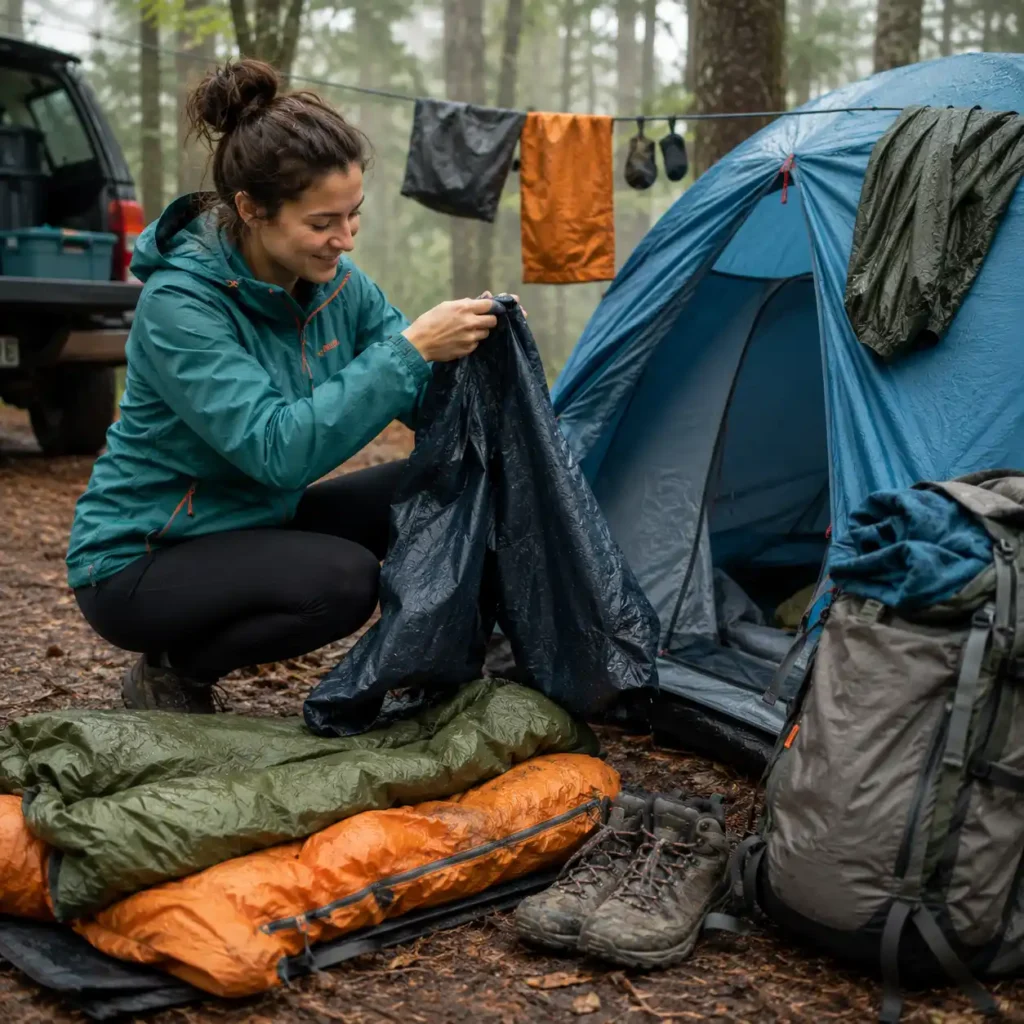
Woman drying wet camping gear beside a blue tent in a rainy forest campsite after heavy rain
Rain itself rarely ruins camping gear.
The bigger problem is what happens afterward once damp equipment stays trapped without airflow inside storage bags, vehicles, garages, or crowded camping setups for too long.
Over time, even small amounts of hidden moisture can slowly lead to:
- mildew smells
- damp insulation
- sticky waterproof coatings
- fabric breakdown
- lingering odor inside storage systems
The campers who avoid these problems are usually not the ones carrying the most expensive equipment.
They are the ones who manage moisture early and consistently after wet trips.
Learning how to dry camping gear fast after rain is really about building simple habits:
- unpacking gear immediately
- prioritizing airflow
- separating wet equipment
- avoiding long-term compression
- checking hidden moisture areas before storage
Those small habits make a massive difference over time.
A properly dried tent lasts longer, sleeping bags retain insulation better, and the entire vehicle feels cleaner after rainy trips.
And future campsite setups become much easier once gear no longer carries trapped dampness from the previous adventure.
Whether you camp from a small crossover, rooftop tent setup, truck bed, or large family SUV, the goal stays the same:
Keep moisture moving out of the gear before mildew has time to settle in.
Because once camping equipment starts smelling musty, fixing the problem is always harder than preventing it in the first place.
About the Author
Anthony is the lead editor of CampComfortGuide.com and focuses on practical camping comfort, wet-weather gear management, campsite organization, and real-world outdoor systems built around actual field experience rather than controlled product demos.
Over the years, he has tested camping equipment across:
- rainy forest campgrounds
- cold-weather camping trips
- humid summer travel
- vehicle-based camping setups
- multi-day road camping
- wet coastal environments
His guides focus heavily on the small real-world problems campers usually notice only after repeated trips outdoors:
- trapped moisture inside gear
- condensation buildup
- mildew prevention
- damp sleeping systems
- wet vehicle storage
- campsite drying challenges
- long-term gear maintenance
For wet-weather camping specifically, Anthony pays close attention to how moisture affects:
- insulation performance
- waterproof fabrics
- storage systems
- airflow management
- drying efficiency
- long-term gear durability
His focus is straightforward:
Help campers keep their gear cleaner, drier, longer-lasting, and far easier to manage after difficult weather conditions outdoors.