
Choosing the best camping generator isn’t just about wattage. The right model should be quiet enough for campground neighbors, powerful enough to run your essential gear, and reliable enough to keep working long after the sun goes down.
Whether you’re brewing coffee before sunrise, charging camera batteries after a day on the trail, or keeping a portable refrigerator running during a weekend getaway, a dependable inverter generator can make camping far more comfortable. The challenge is finding one that balances power, portability, fuel efficiency, and low noise without paying for features you’ll never use.
After comparing today’s most popular portable generators, we narrowed the field to five models that stand out for different types of campers. Some are perfect for first-time buyers on a budget, while others are built for frequent RV travelers or campers who want premium reliability for years of adventures.
If you’re still deciding whether a fuel-powered generator is the right choice, compare it with our guide to the Best Portable Power Stations for Camping in 2026, especially if quiet, maintenance-free operation is your top priority.
In this guide, you’ll find our top generator recommendations, learn how to choose the right output for your camping style, understand the trade-offs between gasoline, propane, and inverter technology, and avoid the common mistakes that lead to buying a generator that’s either too small—or much larger than you actually need.
As an Amazon Associate, I earn from qualifying purchases.
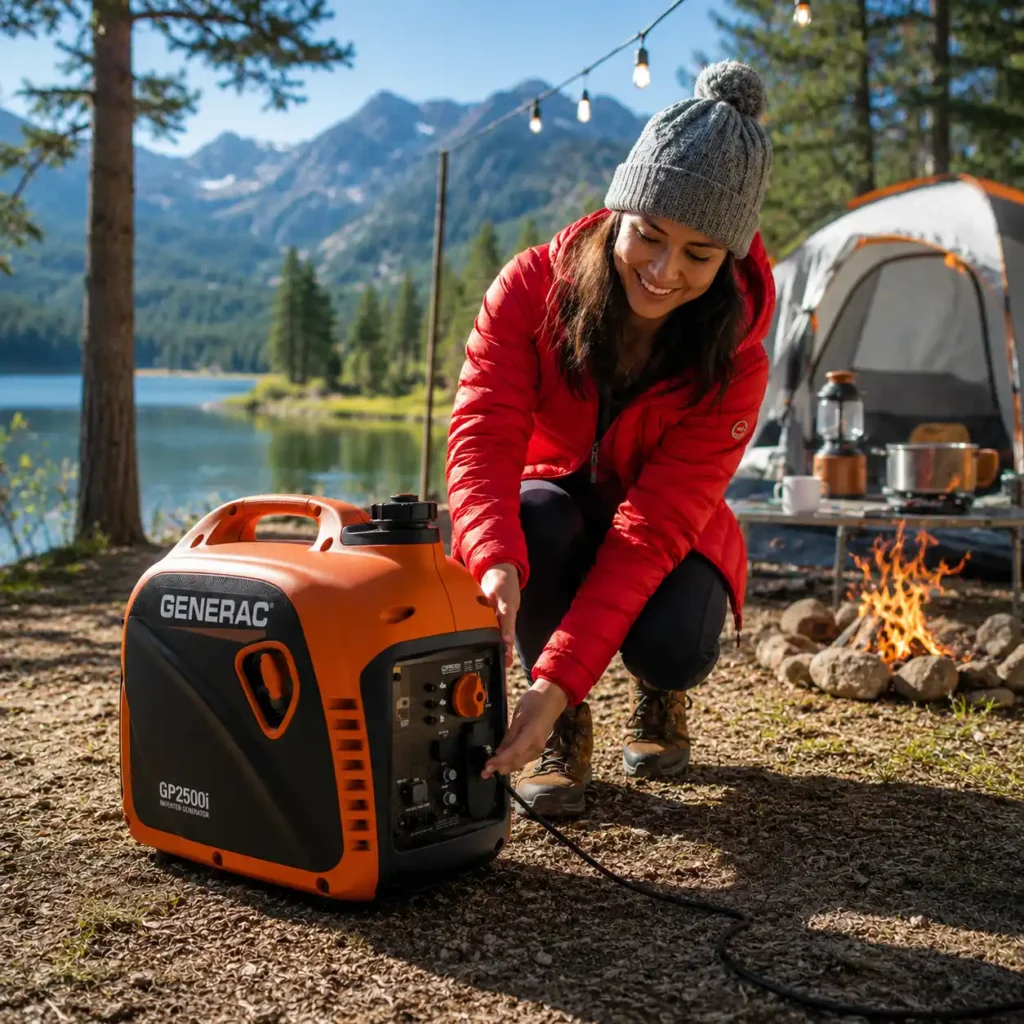
Table of Contents
Quick Answer
If you want the best camping generator overall, the Honda EU2200i remains the benchmark thanks to its exceptional reliability, quiet operation, clean inverter power, and impressive fuel efficiency. It’s an excellent choice for campers who want dependable electricity for lights, cooking appliances, portable refrigerators, laptops, and other everyday essentials.
For campers looking to spend less, the WEN 3600W Inverter Generator offers excellent value without sacrificing the features that matter most. If fuel flexibility is your priority, the Champion 2500 Dual Fuel and Westinghouse iGen2550DF can run on either gasoline or propane, making them especially useful for RV camping and extended trips. Meanwhile, the Generac GP2500i is a great companion for weekend campers who want portable, hassle-free power in a compact package.
The best camping generator isn’t necessarily the most powerful one. The ideal model depends on what you plan to run, how much noise your campsite allows, how often you camp, and whether portability is more important than maximum output.
If you’re unsure how much electricity your camping setup actually requires, our What Size Portable Power Station Do I Need for Camping? guide can help you estimate your real power needs before choosing a generator.
Why You Can Trust This Guide
Camping generators are a long-term investment, and choosing the wrong one can lead to noisy campsites, wasted fuel, or not having enough power when you need it most. That’s why we focused on the factors that matter in real camping conditions—not just manufacturer specifications.
For this guide, we compared inverter generators from the most trusted brands in the outdoor power industry, evaluating noise levels, fuel efficiency, portability, runtime, reliability, ease of transport, and the ability to safely power sensitive electronics. We also considered how each generator performs in common camping scenarios, from weekend tent camping to extended RV travel and off-grid adventures.
Rather than rewarding the generator with the highest wattage, we looked at overall camping experience. A quieter, lighter model that starts easily and runs efficiently is often a better choice than a larger generator that’s difficult to move and unnecessary for most campers.
Our recommendations are based on extensive product research, manufacturer specifications, long-term owner feedback, and practical camping use cases. We also considered how each generator fits different budgets and camping styles, ensuring every recommendation serves a specific purpose instead of simply filling a spot on the list.
As with every buying guide on CampComfortGuide, we recommend products we’d confidently take on our own camping trips, prioritizing reliability, ease of use, and long-term value over unnecessary features or marketing claims.
What Makes This Guide Different?
Most camping generator roundups focus almost entirely on maximum wattage and technical specifications. While those numbers matter, they don’t tell you what it’s actually like to live with a generator at a campsite.
In this guide, we looked beyond the spec sheet. We considered how easy each generator is to carry from the vehicle to the campsite, how noticeable the noise becomes during quiet evenings, how long it can run on a single tank, and whether it delivers clean, stable power for laptops, CPAP machines, portable refrigerators, and other sensitive electronics.
We also selected products for different camping styles, not just different price points. A lightweight generator for weekend tent camping has very different requirements than one supporting an RV for several days, and neither should be judged by the same criteria.
Another difference is that every recommendation has a specific purpose. Instead of ranking generators from “good” to “better,” each model earned its place because it solves a particular problem—whether that’s maximizing fuel flexibility, minimizing noise, staying within a budget, or providing dependable power for extended trips.
Finally, we designed this guide to help you make the right purchase the first time. If a portable power station, solar setup, or smaller generator would better match your camping style, we’ll tell you that as well. Buying more power than you need is just as wasteful as buying too little.
How We Selected the Best Camping Generators
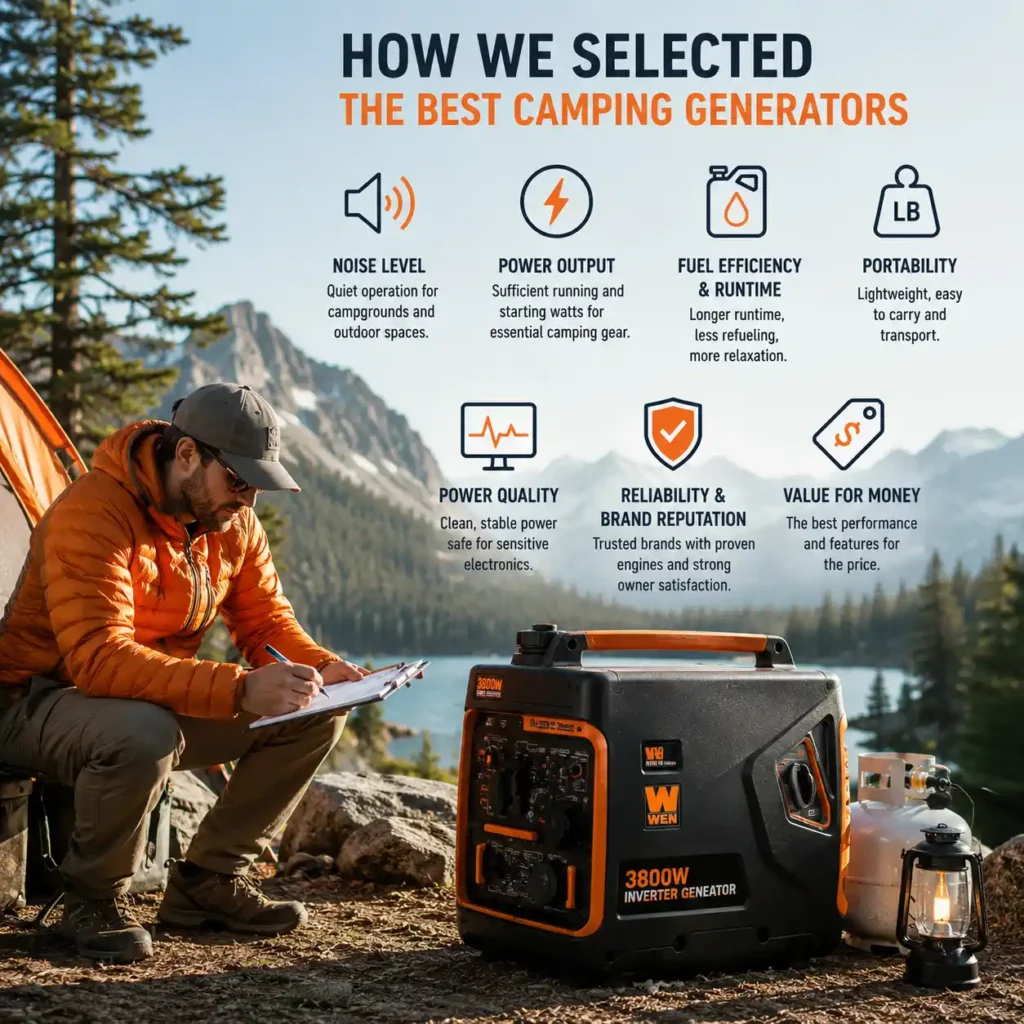
Choosing the best camping generator isn’t about finding the highest wattage or the longest feature list. We evaluated every model based on the factors that have the biggest impact during real camping trips, where quiet operation, dependable performance, and practical usability matter far more than raw power alone.
During our research, we compared generators using the following criteria:
- Noise Level – A generator should blend into the campsite, not dominate it. We prioritized inverter models designed for quieter operation, making them more suitable for campgrounds, RV parks, and shared outdoor spaces.
- Power Output – We looked at both running and starting watts to determine which appliances each generator can realistically handle, from portable refrigerators and coffee makers to CPAP machines and battery chargers.
- Fuel Efficiency & Runtime – Longer runtime means fewer refueling stops and a more relaxing camping experience. Models that deliver excellent efficiency without sacrificing performance scored higher.
- Portability – Weight, built-in handles, and overall ease of transport were all important. A generator that’s difficult to carry quickly becomes a burden, especially for tent campers.
- Power Quality – Every recommendation produces clean inverter power suitable for sensitive electronics such as laptops, smartphones, cameras, and portable medical devices.
- Reliability & Brand Reputation – We favored manufacturers with a proven history of dependable engines, readily available replacement parts, and strong long-term owner satisfaction. We also considered how each generator integrates with modern camping equipment, including portable refrigerators, battery power stations, and solar charging systems that are becoming increasingly common in today’s campsites.
- Value for Money – The most expensive generator isn’t always the best investment. We looked for products that deliver meaningful performance improvements relative to their price.
By weighing these factors together instead of focusing on a single specification, we created a list that reflects how people actually camp, helping you choose a generator that fits your needs rather than simply buying the largest model available.
Who Should Buy a Camping Generator?
A camping generator isn’t essential for every outdoor adventure, but it’s one of the most valuable upgrades for campers who rely on electricity away from home. If you regularly use powered equipment or spend multiple days off-grid, a portable inverter generator can significantly improve both comfort and convenience.
A camping generator is an excellent choice if you:
- Camp for several days without electrical hookups.
- Travel with an RV, camper van, or overlanding vehicle.
- Need reliable power for portable refrigerators, coffee makers, fans, or cooking appliances.
- Use a CPAP machine or other essential medical equipment while camping.
- Charge camera batteries, drones, laptops, or multiple electronic devices.
- Prefer dependable power regardless of weather or available sunlight.
However, not every camper needs a gasoline-powered generator.
If your primary needs are charging phones, LED lanterns, cameras, or a laptop, a portable power station may be a quieter and lower-maintenance solution. Pairing one with a portable solar panel is often enough for weekend camping trips, especially where generator use is restricted.
Likewise, campers who backpack or hike into remote campsites should prioritize lightweight battery-powered equipment instead of carrying a fuel-powered generator.
The right choice depends less on your campsite and more on the equipment you plan to power. Understanding your daily energy needs before buying will help you avoid spending money on a generator that’s larger, heavier, and noisier than necessary.
⭐ Quick Summary: Our Top Picks
Not every camping generator is built for the same kind of camper. Some prioritize whisper-quiet operation for campground comfort, while others focus on fuel flexibility, long-term reliability, budget-friendly performance, or dependable power for RV adventures.
The generators below earned their awards based on our evaluation of noise levels, power quality, runtime, fuel efficiency, portability, reliability, campsite usability, and overall long-term value.
Honda EU2200i
Award: Best Overall
Why It Won: Delivers the best overall combination of quiet operation, exceptional reliability, fuel efficiency, and clean inverter power, making it the generator we’d confidently recommend to most campers.
Choose This If:
- You camp several times each year.
- You want a generator built to last for many seasons.
- Quiet operation is one of your highest priorities.
Best For:
- Car camping
- National park campgrounds
- Couples
- Long-term ownership
Champion 2500 Dual Fuel Inverter Generator
Award: Best Dual Fuel
Why It Won: Offers the flexibility of running on either gasoline or propane while maintaining quiet inverter performance, making it an excellent choice for RV owners and extended camping trips.
Choose This If:
- You already carry propane for camping.
- You want flexible fuel options.
- You frequently camp off-grid for several days.
Best For:
- RV camping
- Extended camping trips
- Off-grid campsites
- Multi-day adventures
WEN 3600W Inverter Generator
Award: Best Budget
Why It Won: Provides dependable inverter power and practical everyday performance at an affordable price, making it an excellent first camping generator.
Choose This If:
- You’re buying your first generator.
- You want reliable power without overspending.
- Most of your trips last one to three nights.
Best For:
- First-time buyers
- Weekend camping
- Car camping
- Budget-conscious campers
Westinghouse iGen2550DF Dual Fuel
Award: Best for RV Camping
Why It Won: Combines clean inverter power, dual-fuel convenience, and dependable runtime, making it especially well suited for campers who spend extended time traveling with an RV or camper van.
Choose This If:
- You travel with an RV or camper van.
- You need dependable power every day.
- You value fuel flexibility and easy operation.
Best For:
- RV camping
- Camper vans
- Road trips
- Family camping
Generac GP2500i
Award: Best for Weekend Camping
Why It Won: Compact, portable, and easy to transport, the GP2500i offers dependable power for short camping trips without adding unnecessary weight or complexity.
Choose This If:
- You mostly camp on weekends.
- You want a lightweight, portable generator.
- You need reliable power for basic camping appliances.
Best For:
- Weekend camping
- Tent camping
- Fishing trips
- Short outdoor getaways
Still not sure which camping generator is right for you? The detailed reviews below explain how each model performed during our evaluation, where it excels, and which type of camper will benefit most from choosing it.
Camping Generator Comparison Table
Comparing camping generators side by side is the fastest way to narrow down your options. The table below highlights our top recommendations based on power output, fuel type, runtime, portability, and the camping style each generator is best suited for. Use it as a quick reference before exploring the detailed reviews that follow.
| Generator | Award | Best For | Running Watts | Fuel Type | Key Strength |
|---|---|---|---|---|---|
| Honda EU2200i | Best Overall | Most Campers | 1,800 W | Gasoline | Quiet, reliable & fuel-efficient |
| Champion 2500 Dual Fuel | Best Dual Fuel | RV Camping | 1,850 W | Gas / Propane | Flexible dual-fuel operation |
| WEN 3600W | Best Budget | Budget Buyers | 3,600 W | Gasoline | Excellent value for money |
| Westinghouse iGen2550DF | Best for RV Camping | RV & Camper Vans | 1,900 W | Gas / Propane | Clean inverter power |
| Generac GP2500i | Best for Weekend Camping | Weekend Trips | 2,200 W | Gasoline | Compact & easy to carry |
Best Camping Generators Reviewed
Finding the best camping generator comes down to more than comparing specifications. We evaluated each model based on real camping priorities, including noise level, portability, fuel efficiency, power quality, reliability, and overall value. The reviews below explain where each generator excels, who it’s best suited for, and the trade-offs you should consider before making your purchase.
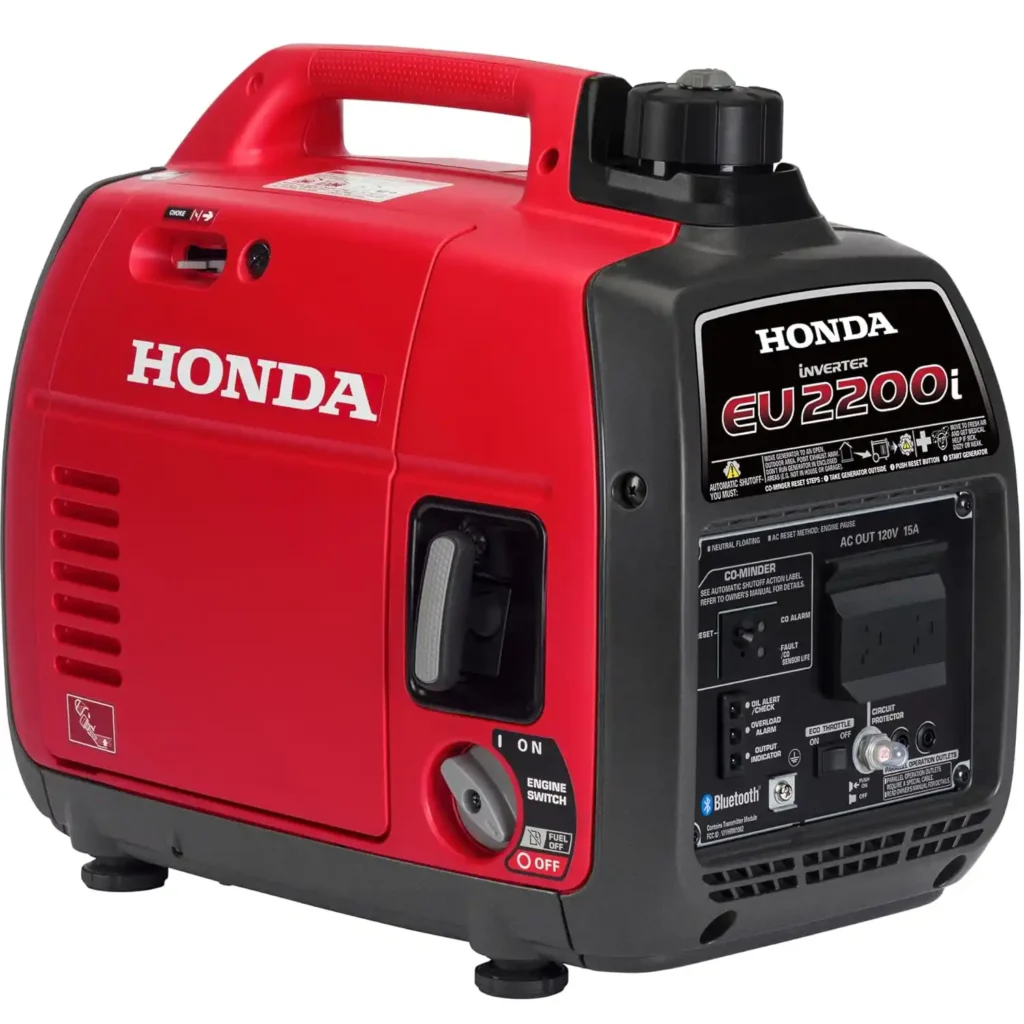
1. Honda EU2200i
Best Overall Camping Generator
Quick Verdict
The Honda EU2200i earns our Best Overall award because it delivers the most balanced combination of quiet operation, proven reliability, fuel efficiency, and clean inverter power available in its class. Whether you’re spending a relaxing weekend at a lakeside campground or relying on dependable electricity during frequent camping trips, it’s the generator we’d recommend to the widest range of campers.
What makes the EU2200i stand out isn’t simply its reputation—it’s how effortless it feels to own. It starts easily, runs quietly enough for most campgrounds, and produces stable power that’s safe for everything from portable refrigerators and coffee makers to laptops and camera batteries. While it isn’t the least expensive generator in this guide, its long-term reliability makes it one of the smartest investments for campers who head outdoors year after year.
Camp Snapshot
| Camping Style | Car Camping • RV Camping • Weekend Trips |
|---|---|
| Fuel Type | Gasoline |
| Running Power | 1,800 Watts |
| Noise Level | Ultra-Quiet Inverter |
| Best For | Campers wanting one generator for almost every trip |
| Investment Level | Premium |
| CampComfortGuide Verdict | 🥇 Best Overall |
Why We Chose It
Finding the best camping generator isn’t about choosing the most powerful model—it’s about finding the one that consistently performs well in real camping conditions. The Honda EU2200i stood out because it excels in the areas campers notice every single day: low noise, dependable starting, excellent fuel economy, and exceptional build quality.
During a typical weekend at a developed campground, this generator quietly handles the essentials without becoming the center of attention. It easily powers a portable refrigerator, keeps batteries charged, runs a coffee maker in the morning, and provides enough electricity for lights and small appliances throughout the day. Its inverter technology also produces clean, stable power that’s safe for sensitive electronics, making it an excellent companion for photographers, remote workers, and campers traveling with CPAP machines.
Another reason this model earned our top recommendation is its long-term ownership experience. Many generators perform well when they’re new, but Honda has built a reputation for engines that continue starting reliably after years of regular use with proper maintenance. For campers who would rather buy once than upgrade later, that level of dependability carries real value.
Campers building a well-organized base camp will also find our How to Organize a Campsite (Efficient Setup That Actually Works) guide helpful, especially when planning where to position a generator safely while keeping cooking, seating, and sleeping areas comfortable and efficient.
Check today’s price and latest customer reviews on Amazon.
Living With It at Camp
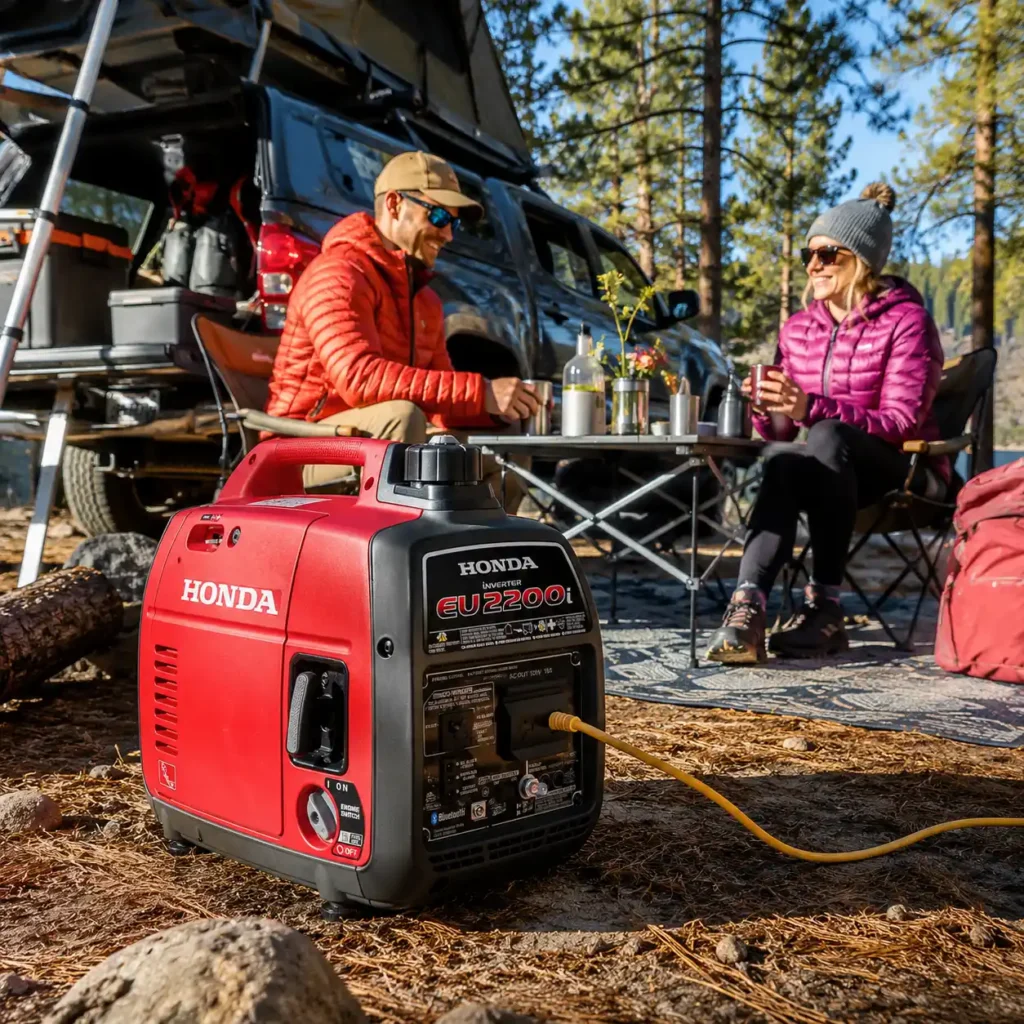
The Honda EU2200i feels most at home at a quiet family campsite where comfort matters just as much as reliability. Imagine arriving at a lakeside campground on Friday afternoon. After pitching the tent and setting up camp chairs beneath the trees, the generator quietly powers a portable refrigerator, charges everyone’s phones, and brews fresh coffee the following morning—all without dominating the peaceful atmosphere.
Throughout the weekend, it becomes one of those pieces of equipment you rarely think about because it simply works. While the kids inflate paddleboards and recharge action cameras after a day on the water, the refrigerator stays cold, batteries continue charging, and evening lighting keeps the campsite comfortable long after sunset.
Its quiet inverter design is especially appreciated in established campgrounds, where excessive generator noise can quickly become a nuisance. Instead of constantly worrying about disturbing neighboring campers, you can focus on enjoying the trip.
For families who camp several times each season, the EU2200i gradually becomes less of a luxury and more of a dependable part of the camping routine—ready whenever reliable power makes outdoor life easier.
CampComfortGuide Evaluation
| Noise Performance | Exceptionally quiet inverter operation makes it one of the easiest generators to use in campgrounds where keeping noise to a minimum is important. |
|---|---|
| Power Delivery | Produces clean, stable electricity that's safe for refrigerators, laptops, cameras, CPAP machines, and other sensitive electronics. |
| Fuel Efficiency | Delivers impressive runtime from a compact fuel tank, reducing refueling stops during weekend camping trips. |
| Ease of Ownership | Reliable starting, straightforward maintenance, and Honda's long-standing reputation make ownership simple and stress-free. |
| Campground Experience | Runs quietly enough to support morning coffee, lighting, and battery charging without disrupting the relaxed atmosphere around camp. |
| Build Quality | Premium engineering, durable construction, and excellent fit and finish inspire confidence for years of regular outdoor use. |
| Long-Term Value | Although it costs more upfront, its reliability, resale value, and dependable performance make it an outstanding long-term investment. |
Who Should Buy This
- Campers looking for one generator that performs exceptionally well in almost every situation.
- Families who camp regularly throughout the year.
- RV owners needing dependable, clean power for everyday camping essentials.
- Anyone willing to invest more upfront for proven long-term reliability and excellent resale value.
Who Should Skip This
- Campers shopping on a tight budget.
- Those who only need to charge a few small electronic devices.
- Backpackers or campers who prioritize the lightest possible gear.
- Users who specifically want the flexibility of running on propane.
Final Verdict
The Honda EU2200i remains the benchmark that many other camping generators are measured against. It isn’t the cheapest option in this guide, nor is it the most powerful, but it consistently delivers where it matters most: quiet operation, dependable performance, fuel efficiency, and long-term reliability.
For campers who expect to spend many weekends outdoors over the coming years, this is one of those purchases you’ll appreciate on every trip. Rather than replacing it after a few seasons, you’re investing in a generator that’s built to become a dependable part of your camping setup for years to come.
Check today’s price and latest customer reviews on Amazon.
Related Guide: If you’re planning to camp with children, our Car Camping Essentials Checklist: The Ultimate Guide for Families covers the gear, packing tips, and campsite essentials that pair perfectly with a reliable generator for comfortable family weekends outdoors.
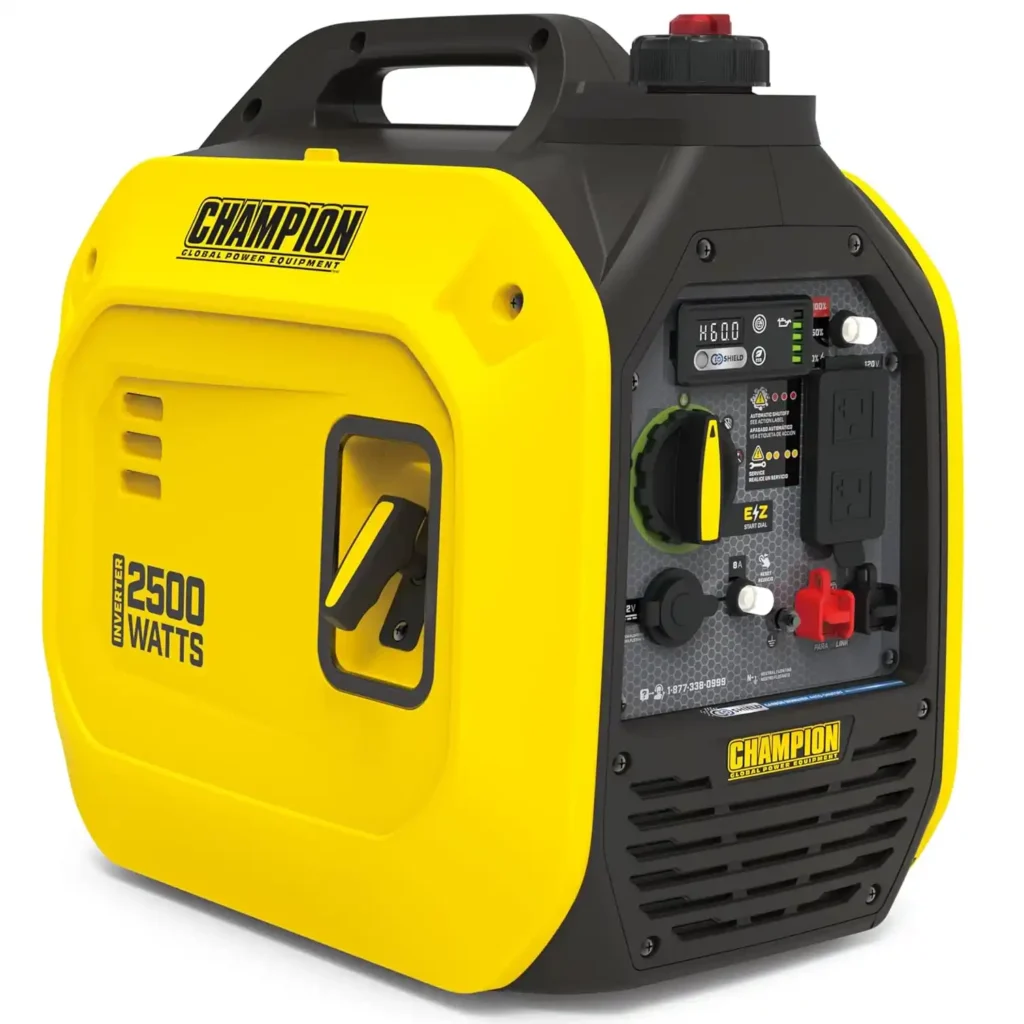
2. Champion 2500 Dual Fuel Inverter Generator
Best Dual Fuel Camping Generator
Quick Verdict
The Champion 2500 Dual Fuel Inverter Generator earns our Best Dual Fuel award by giving campers the flexibility to run on either gasoline or propane without sacrificing the quiet performance expected from a modern inverter generator. That versatility makes it especially appealing for RV owners, overlanders, and campers who already carry propane for cooking or heating.
Instead of planning every trip around one fuel source, you can choose whichever is easier to store, transport, or refill. That added flexibility can make a real difference during longer camping trips, where convenience often matters just as much as maximum power output.
While it doesn’t offer the legendary reputation of the Honda EU2200i, the Champion delivers an excellent balance of performance, portability, and value, making it one of the strongest all-around choices for campers who want more than a traditional gasoline generator.
Camp Snapshot
| Camping Style | RV Camping • Overlanding • Extended Camping |
|---|---|
| Fuel Type | Gasoline • Propane |
| Running Power | 1,850 Watts (Gasoline) |
| Noise Level | Quiet Inverter Operation |
| Best For | Campers who value dual-fuel flexibility |
| Investment Level | Mid-Range |
| CampComfortGuide Verdict | ⭐ Best Dual Fuel |
Why We Chose It
Many campers already carry propane cylinders for camp stoves, grills, or portable heaters. The Champion 2500 Dual Fuel takes advantage of that existing setup by giving you the option to power your campsite without relying exclusively on gasoline.
That flexibility becomes particularly valuable during multi-day RV trips. If one fuel source runs low, you aren’t limited to a single option before heading out again. Switching between gasoline and propane is straightforward, allowing you to adapt to changing conditions without disrupting your trip.
We also liked how well this generator balances portability with practical power. It comfortably handles everyday camping essentials such as portable refrigerators, coffee makers, battery chargers, lighting, and small appliances while maintaining the quieter operation expected from an inverter generator.
For campers who appreciate flexibility and like building a campsite that’s prepared for different situations, the Champion 2500 Dual Fuel offers capabilities that many single-fuel generators simply can’t match.
Check today’s price and latest customer reviews on Amazon.
Living With It at Camp
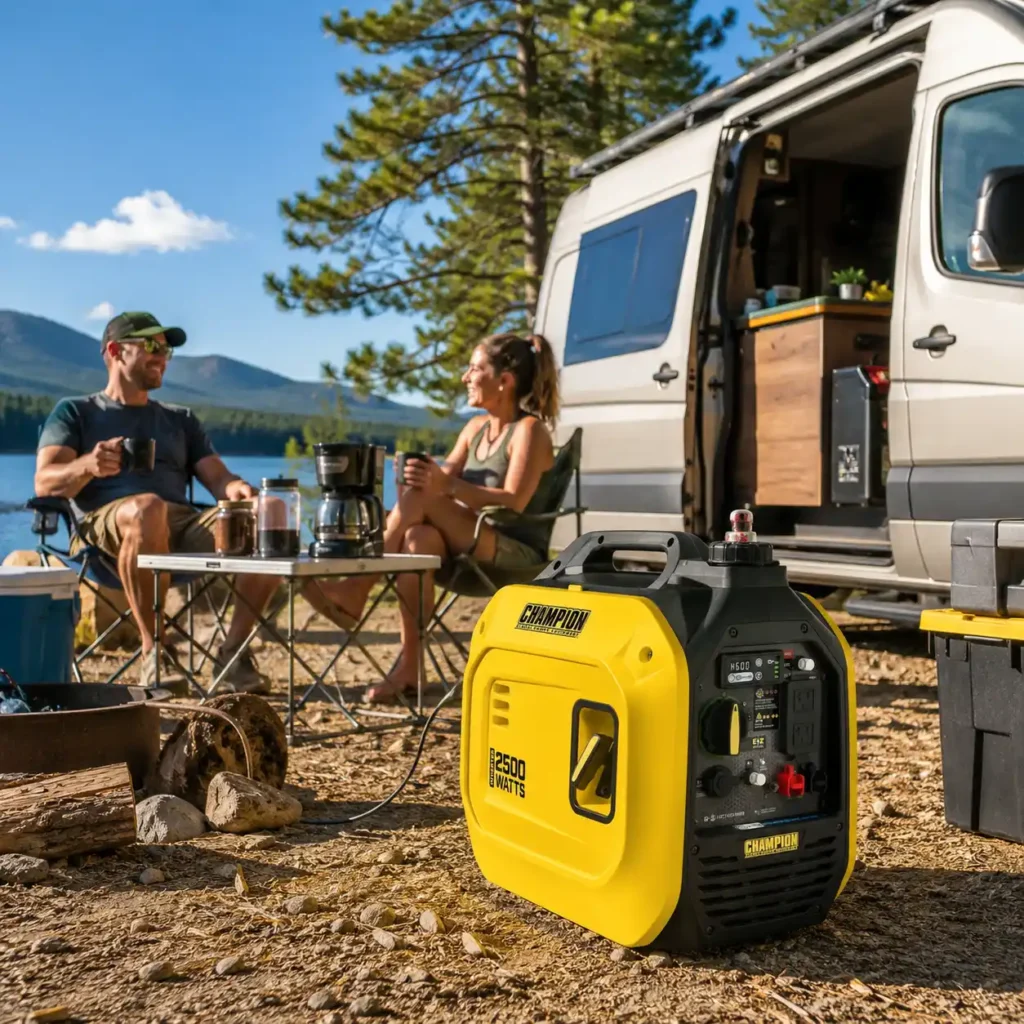
The Champion 2500 Dual Fuel really proves its value on longer RV trips where convenience matters just as much as reliable power. Picture arriving at a remote campground after several hours on the road. The awning is extended, dinner is already simmering on the propane stove, and the refrigerator has been keeping food cold since morning.
Instead of carrying extra gasoline simply because the generator requires it, you can connect the same propane cylinder that’s already part of your camping setup. Fewer fuel containers mean less clutter around the campsite and one less thing to think about before leaving home.
As the trip continues over several days, that flexibility becomes increasingly useful. If propane runs low, switching to gasoline takes only a few moments. If a nearby store has gasoline but no propane exchange—or the opposite—you still have options. That extra layer of flexibility is difficult to appreciate until you’re several hours away from the nearest town.
For RV campers who enjoy exploring different campgrounds without worrying about power availability, the Champion feels less like a backup generator and more like a dependable part of the entire camping system.
CampComfortGuide Evaluation
| Fuel Flexibility | The ability to run on either gasoline or propane gives campers more freedom when planning longer trips and adapting to changing conditions. |
|---|---|
| Power Quality | Clean inverter output safely powers portable refrigerators, laptops, lighting, battery chargers, and other sensitive camping electronics. |
| Portability | Compact dimensions and manageable weight make it easy to move between your vehicle, campsite, and RV storage compartment. |
| RV Compatibility | Well suited for RV owners who already rely on propane for cooking or heating, creating a more streamlined camping setup. |
| Everyday Convenience | Simple controls and straightforward fuel switching help reduce hassle during multi-day camping trips. |
| Build Quality | Solid construction and dependable overall fit make it well suited for regular recreational camping throughout the season. |
| Long-Term Value | An excellent balance of versatility, performance, and price for campers who want dual-fuel capability without moving into premium pricing. |
Who Should Buy This
- RV campers who already carry propane cylinders for cooking or heating.
- Campers taking multi-day trips where fuel availability may vary.
- Travelers who value flexibility over maximum power output.
- Anyone looking for a dependable inverter generator without paying premium-brand prices.
Who Should Skip This
- Campers who only take occasional overnight trips and don’t need dual-fuel capability.
- Buyers seeking the quietest premium generator available regardless of price.
- Users who need substantially higher running wattage for large appliances.
- Backpackers or minimalist campers who only charge small electronic devices.
Final Verdict
The Champion 2500 Dual Fuel Inverter Generator stands out because it solves a practical problem that many campers eventually encounter: fuel flexibility. Rather than locking you into a single fuel source, it gives you options that become increasingly valuable on longer trips, especially when traveling with an RV or camper trailer.
For campers who already rely on propane as part of their outdoor setup, this generator integrates naturally into that system while still providing the clean inverter power needed for modern camping equipment. It offers an excellent balance of convenience, performance, and value, making it one of the strongest choices for extended camping adventures.
Check today’s price and latest customer reviews on Amazon.
Related Guide: Planning meals for several days off-grid? Our How to Keep Food Cold While Camping Without Constant Ice Runs (2026) guide explains practical ways to keep food fresh while reducing ice consumption and making the most of your camping power setup.
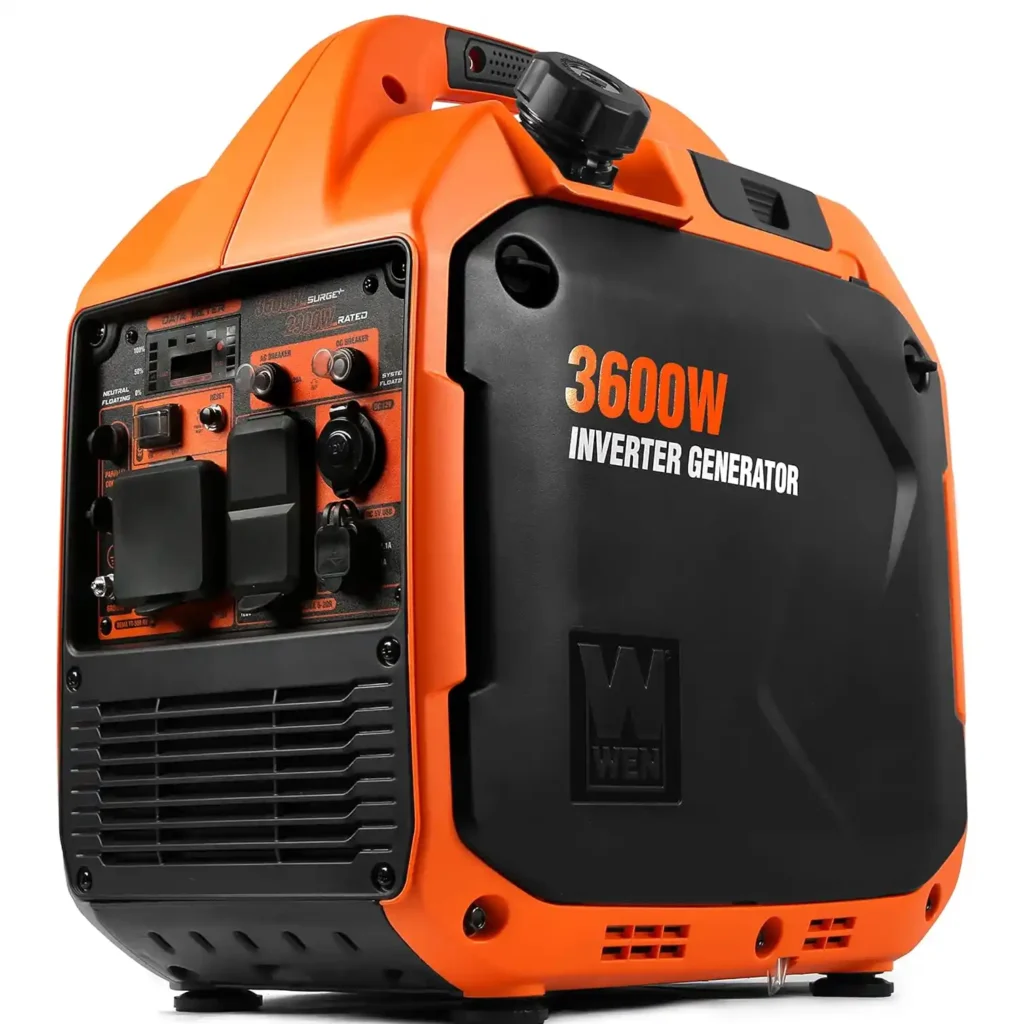
3. WEN 3600W Inverter Generator
Best Budget Camping Generator
Quick Verdict
The WEN 3600W Inverter Generator earns our Best Budget award because it offers far more capability than many campers expect at its price point. It delivers dependable inverter power, enough output for most everyday camping appliances, and a user-friendly design that makes it an excellent entry into portable generators.
For many campers, buying a generator is a balance between performance and budget. Spending premium-level money doesn’t always make sense, especially if you’re still discovering how often you’ll camp or what equipment you’ll actually use. The WEN 3600W removes much of that uncertainty by delivering practical performance without the premium price tag.
It may not have the decades-long reputation of Honda or the fuel flexibility of Champion, but it succeeds where many budget generators fall short: providing reliable power, straightforward operation, and excellent overall value for campers who want to spend more time outdoors without overspending on equipment.
Camp Snapshot
| Camping Style | Car Camping • Weekend Camping • First Generator |
|---|---|
| Fuel Type | Gasoline |
| Running Power | 3,600 Watts |
| Noise Level | Quiet Inverter Design |
| Best For | Campers looking for the best value |
| Investment Level | Budget-Friendly |
| CampComfortGuide Verdict | 💰 Best Budget |
Why We Chose It
Every camping setup starts somewhere, and not every camper needs a premium generator from day one. The WEN 3600W stood out because it focuses on delivering the features most campers actually use, rather than charging extra for a premium badge.
Its higher running wattage provides useful flexibility around camp. Instead of carefully choosing which appliance to plug in next, there’s enough capacity for many common camping tasks, including running a portable refrigerator, charging multiple devices, preparing breakfast with a coffee maker, or powering campsite lighting after sunset.
We also appreciated how approachable this generator feels for first-time buyers. The controls are easy to understand, routine operation is straightforward, and there’s no sense that you’re paying for features you’ll rarely need. For campers moving beyond battery packs and looking for their first fuel-powered generator, the WEN offers an accessible step without feeling like a compromise.
If you’re still building your camping gear collection, our Camping Temperature Guide (What Gear You Actually Need) can also help you prioritize the equipment that makes the biggest difference across different seasons before investing in additional accessories.
Check today’s price and latest customer reviews on Amazon.
Living With It at Camp
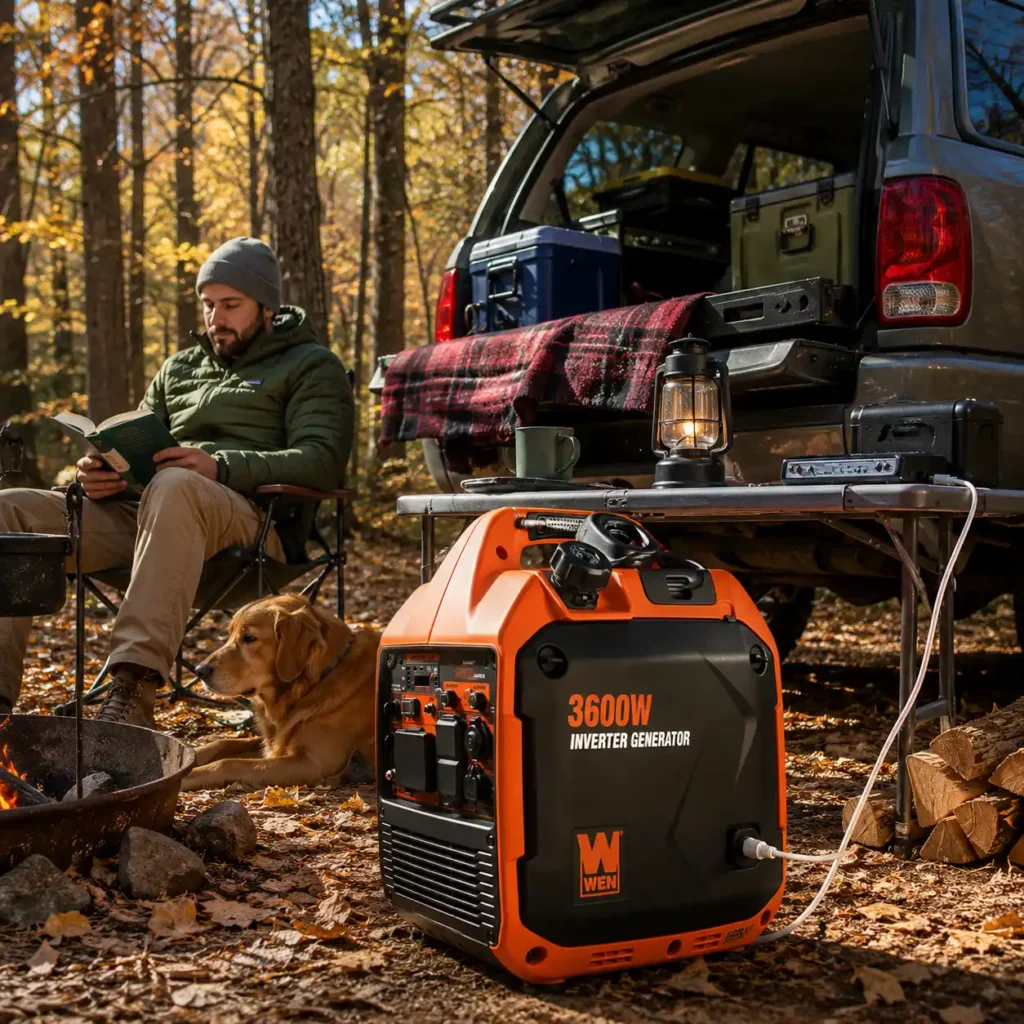
For many campers, the WEN 3600W becomes the generator that changes how they experience weekends outdoors. Instead of limiting meals to a small camp stove and worrying about every battery percentage, there’s enough dependable power to make camp feel far more comfortable without making it feel less adventurous.
Picture your first long weekend at a state park after upgrading from basic camping gear. Breakfast starts with freshly brewed coffee instead of instant packets, the portable refrigerator keeps food safely chilled for the entire trip, and everyone’s phones and cameras stay charged without rationing outlets or constantly checking battery levels.
As confidence grows, so does the camping setup. A fan makes warm summer nights more comfortable, lights stay on well after sunset, and meal preparation becomes easier because you’re no longer planning around limited power. The generator quietly becomes part of the routine rather than the center of attention.
For campers moving beyond the basics, the WEN delivers the kind of everyday convenience that encourages more frequent trips. It doesn’t feel like buying luxury—it feels like removing small frustrations that used to interrupt an otherwise enjoyable weekend.
CampComfortGuide Evaluation
| Overall Performance | Delivers dependable inverter power that comfortably handles the electrical needs of most weekend camping setups. |
|---|---|
| Value for Money | One of the strongest combinations of performance and affordability in this category, making it an excellent first generator. |
| Ease of Operation | Simple controls and an approachable design make it easy for first-time generator owners to use with confidence. |
| Power Capacity | Provides enough output to run multiple everyday camping appliances without constantly managing electrical priorities. |
| Camping Practicality | Well suited for campers gradually expanding their gear collection and looking for reliable power without unnecessary complexity. |
| Build Quality | Solid overall construction inspires confidence for regular recreational use while maintaining an attractive price point. |
| Long-Term Value | A smart investment for campers who want dependable performance today while leaving room to grow their camping setup over time. |
Who Should Buy This
- First-time generator buyers looking for dependable inverter power.
- Campers who want excellent performance without paying premium prices.
- Families taking regular weekend camping trips.
- Anyone upgrading from battery packs to a fuel-powered camping generator.
Who Should Skip This
- Campers who specifically want dual-fuel capability.
- RV owners planning to power larger electrical loads for extended periods.
- Buyers who prioritize the quietest premium generators regardless of cost.
- Those who only need to charge phones and a few small electronic devices.
Final Verdict
The WEN 3600W Inverter Generator proves that buying on a budget doesn’t have to mean settling for disappointment. It offers the features most campers genuinely need, delivers dependable inverter power, and provides enough capacity to support a comfortable campsite without pushing buyers into a much higher price bracket.
For anyone purchasing their first camping generator, this is one of the easiest recommendations in the guide. It strikes an impressive balance between affordability, usability, and everyday performance, making it a generator that many campers can enjoy for years before feeling the need to upgrade.
Check today’s price and latest customer reviews on Amazon.
Related Guide: If you’re preparing for your first overnight trips with more equipment, our How to Pack a Car for Camping (Efficient Gear Layout Guide 2026) explains how to organize your gear efficiently while keeping frequently used items easy to access throughout your journey.
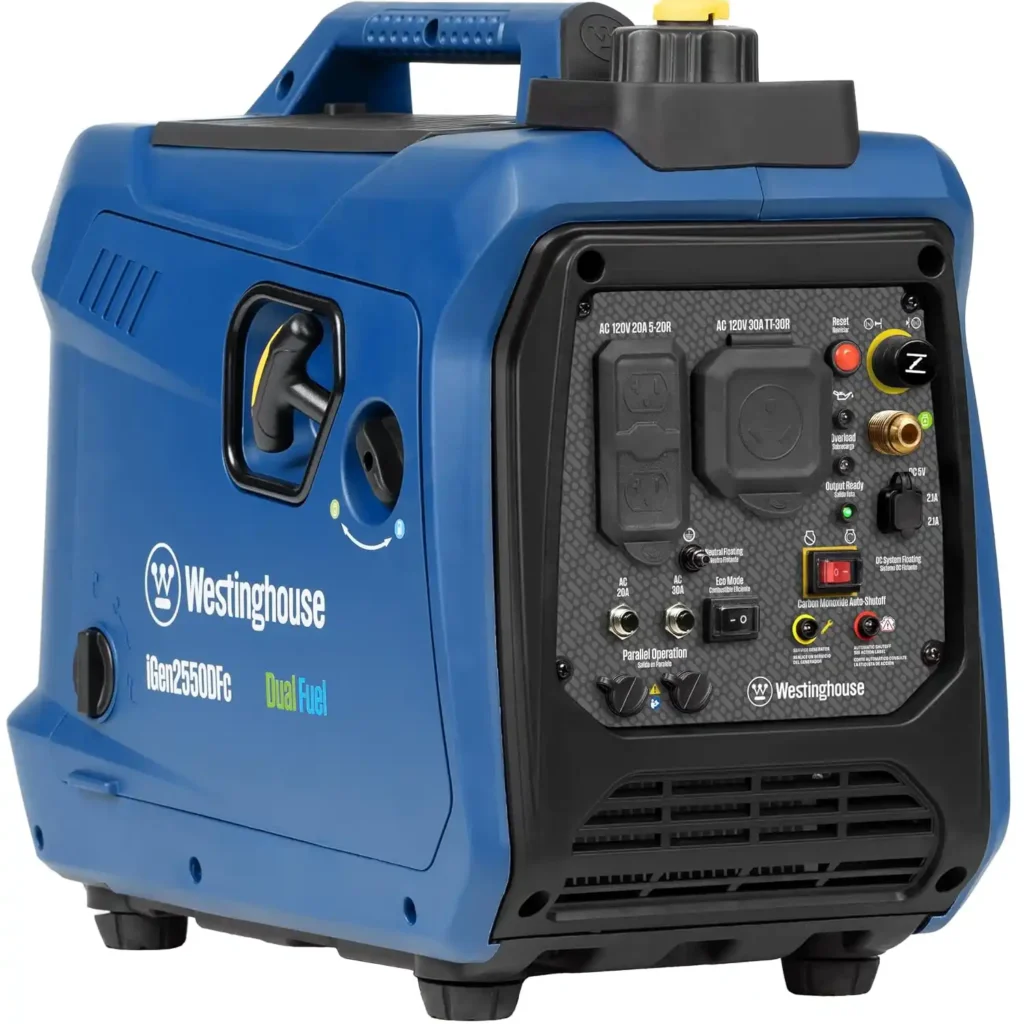
4. Westinghouse iGen2550DF Dual Fuel
Best Camping Generator for RV Camping
Quick Verdict
The Westinghouse iGen2550DF Dual Fuel earns our Best for RV Camping award by combining dependable inverter performance with the everyday convenience that long-distance travelers appreciate. Quiet operation, dual-fuel capability, and a compact footprint make it particularly well suited for campers who spend extended time exploring from one destination to the next.
Unlike generators that are only used occasionally, the iGen2550DF feels designed for regular use. Whether you’re stopping at a mountain campground for a single night or spending an entire week at an RV park, it delivers the kind of consistent performance that helps daily camp life run smoothly.
While its specifications may look similar to other inverter generators on paper, the overall ownership experience is what sets it apart. For campers who view their RV as a home away from home, it provides dependable power without adding unnecessary complexity to everyday travel.
Camp Snapshot
| Camping Style | RV Camping • Camper Vans • Road Trips |
|---|---|
| Fuel Type | Gasoline • Propane |
| Running Power | 1,900 Watts |
| Noise Level | Quiet Inverter Operation |
| Best For | Frequent RV travelers |
| Investment Level | Mid-Range |
| CampComfortGuide Verdict | 🚐 Best for RV Camping |
Why We Chose It
The Westinghouse iGen2550DF isn’t simply another dual-fuel generator. What impressed us most was how naturally it fits into daily RV living, where reliable power becomes part of the routine rather than an occasional convenience.
During extended road trips, campers often rely on electricity from morning until evening. Coffee makers, laptops, battery chargers, portable refrigerators, fans, and campsite lighting all become part of everyday life. The iGen2550DF provides clean inverter power for those essentials while remaining compact enough to transport and store without taking over valuable cargo space.
We also appreciated its balanced design. It avoids unnecessary complexity while still offering the flexibility to run on gasoline or propane, allowing RV owners to adapt their fuel choice to the supplies they already carry. For campers who spend weeks—not just weekends—on the road, that balance makes everyday travel noticeably easier.
If you’re planning longer journeys through different climates, our How to Dry Camping Gear Fast After Rain (Without Mold or Smells) guide offers practical tips for managing wet clothing, tents, and equipment between campsites.
Check today’s price and latest customer reviews on Amazon.
Living With It at Camp
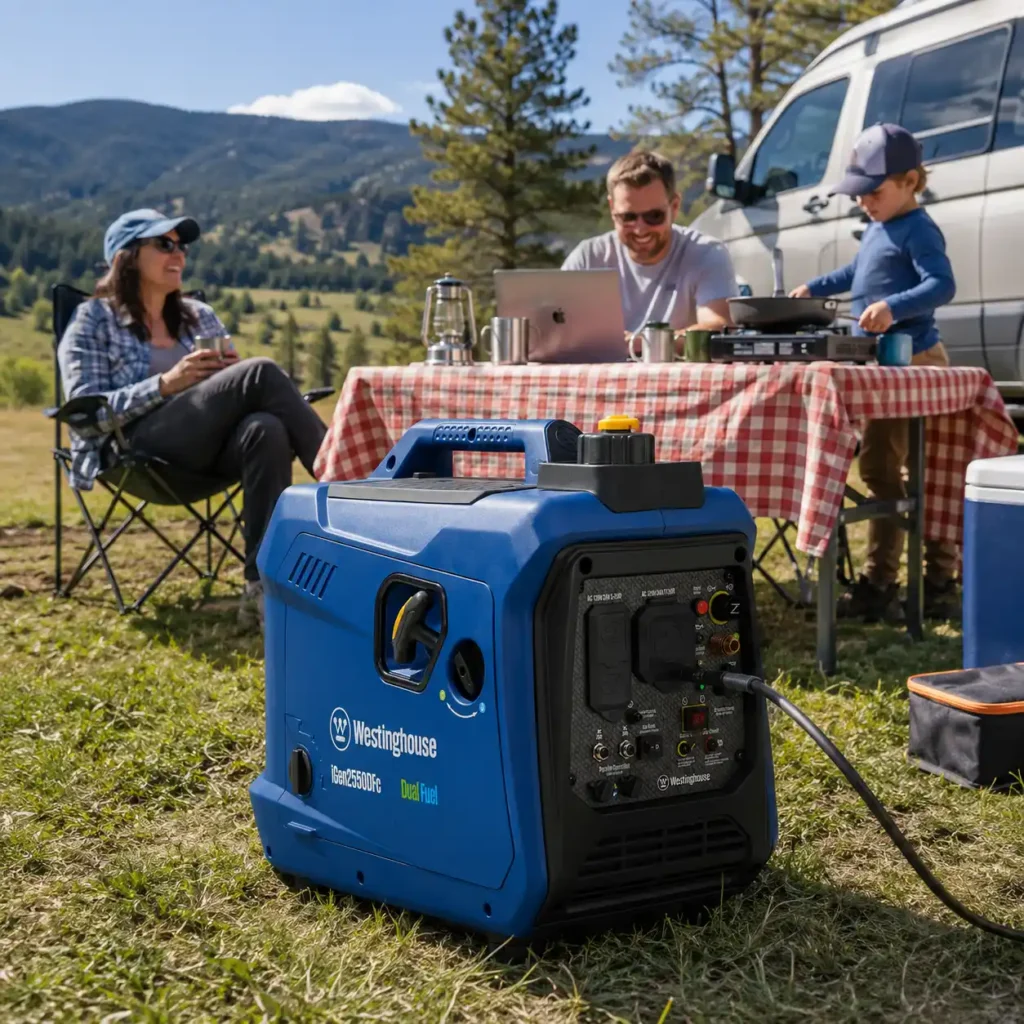
The Westinghouse iGen2550DF is the kind of generator you appreciate more with each passing day on the road. Imagine spending two weeks exploring national parks, moving from one campground to another every few days. Instead of unpacking a complicated power setup every time you arrive, you simply connect the generator, organize camp, and continue enjoying the journey.
Mornings begin with fresh coffee while laptops and camera batteries recharge for the day’s adventure. By afternoon, the refrigerator continues running efficiently, portable fans help keep the RV comfortable during warmer weather, and there’s enough dependable power for the small conveniences that gradually become part of everyday life.
Because the generator remains compact and easy to store, packing up each morning feels quick and organized rather than time-consuming. That matters when you’re changing locations frequently and want more time exploring than managing equipment.
For campers who spend extended periods traveling instead of staying in one place, the iGen2550DF quietly becomes part of the daily routine. Reliable power isn’t the highlight of the trip—it simply removes another potential source of stress, allowing you to focus on the places you’re there to experience.
CampComfortGuide Evaluation
| Daily RV Use | Designed for frequent use, providing dependable inverter power that fits naturally into everyday RV travel. |
|---|---|
| Fuel Versatility | Supports both gasoline and propane, making it easier to adapt when fuel availability changes during longer road trips. |
| Power Quality | Produces stable electricity suitable for portable refrigerators, laptops, lighting, battery chargers, and other sensitive electronics. |
| Storage & Transport | Compact size makes loading, unloading, and storing the generator much easier than many larger alternatives. |
| Travel Convenience | Simple operation and dependable performance reduce daily campsite setup time during multi-stop journeys. |
| Build Quality | Well-finished construction and thoughtful design make it a dependable companion for regular RV adventures. |
| Long-Term Value | A practical investment for campers who spend significant time on the road and want reliable performance season after season. |
Who Should Buy This
- RV owners who travel frequently throughout the camping season.
- Camper van travelers moving between multiple destinations.
- Campers who value compact equipment that’s easy to store.
- Anyone looking for dependable inverter power with the flexibility of two fuel options.
Who Should Skip This
- Campers who only take occasional overnight trips.
- Buyers looking for the lowest possible purchase price.
- Users needing significantly higher power output for larger electrical loads.
- Backpackers and minimalist campers who don’t require a fuel-powered generator.
Final Verdict
The Westinghouse iGen2550DF Dual Fuel is an excellent choice for campers who treat the road as part of the adventure rather than simply the journey to camp. Its combination of quiet inverter performance, compact dimensions, and dual-fuel flexibility makes it particularly well suited for RV owners and camper van travelers who depend on reliable power day after day.
Instead of focusing on headline specifications, the iGen2550DF succeeds by making everyday camping simpler. It’s a generator that integrates naturally into an efficient travel routine, allowing you to spend less time managing equipment and more time enjoying the destinations ahead.
Check today’s price and latest customer reviews on Amazon.
Related Guide: If your camping schedule includes changing locations every few days, our Best Camping Dry Bags for Rain, Kayaking & Wet Weather (2026) guide explains how to keep clothing, electronics, and essential gear protected during unpredictable weather and frequent travel.
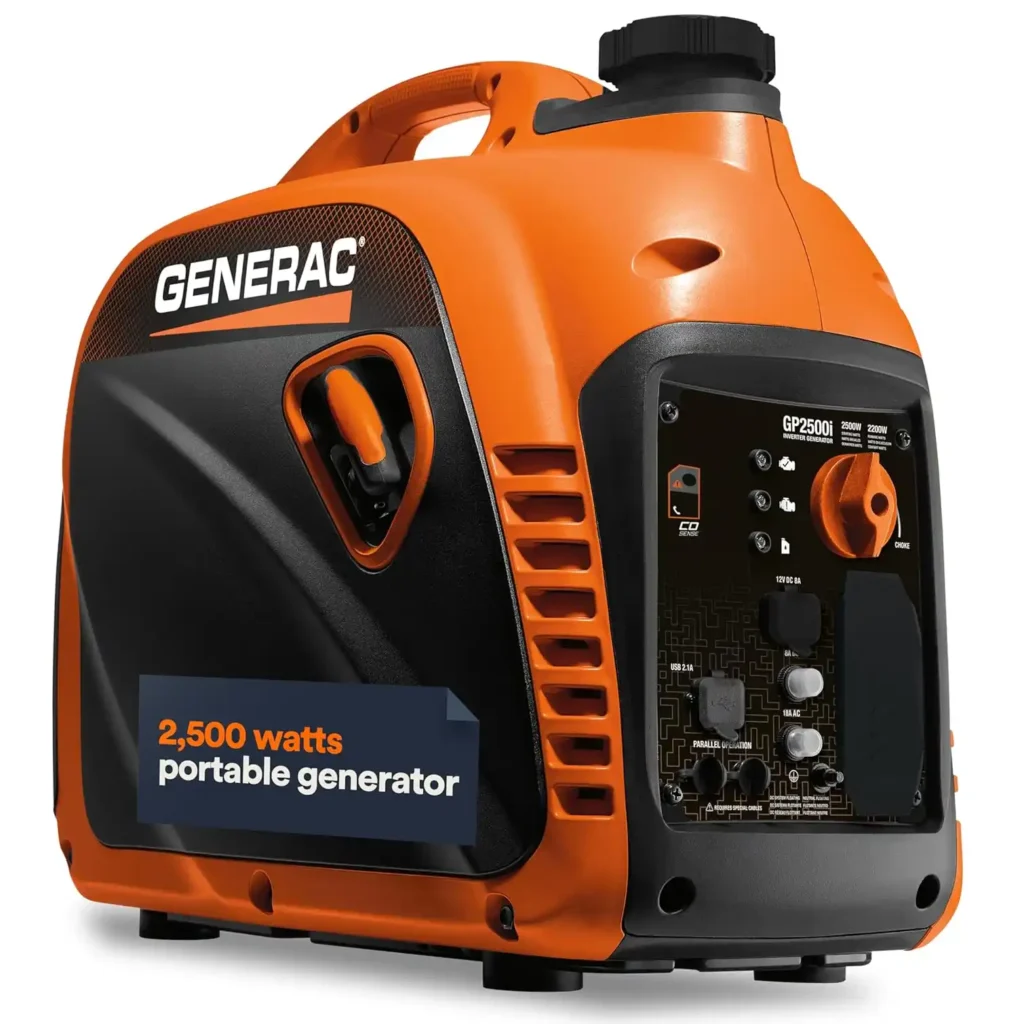
5. Generac GP2500i
Best Camping Generator for Weekend Camping
Quick Verdict
The Generac GP2500i earns our Best for Weekend Camping award by focusing on what short outdoor trips need most: portability, dependable inverter power, and straightforward operation. Rather than trying to be the biggest or most feature-packed generator available, it delivers exactly what many campers are looking for—a compact, reliable source of electricity that’s easy to transport and simple to use.
Weekend campers often have different priorities than long-term travelers. They want to spend less time loading heavy equipment, less time setting up camp, and more time enjoying the outdoors. The GP2500i fits that approach exceptionally well, providing enough clean power for essential camping appliances without adding unnecessary size or complexity.
It isn’t designed to power an entire RV for extended stays, but that’s precisely why it works so well. Its compact design, dependable performance, and user-friendly operation make it an excellent companion for campers who prefer quick escapes into nature whenever the opportunity arises.
Camp Snapshot
| Camping Style | Weekend Camping • Car Camping • Fishing Trips |
|---|---|
| Fuel Type | Gasoline |
| Running Power | 2,200 Watts |
| Noise Level | Quiet Inverter Operation |
| Best For | Campers who value portability and simplicity |
| Investment Level | Mid-Range |
| CampComfortGuide Verdict | 🌲 Best for Weekend Camping |
Why We Chose It
Not every camping trip requires a generator capable of running everything at once. Many campers simply want reliable power for the essentials while keeping their gear compact, organized, and easy to manage. That’s exactly where the Generac GP2500i stands out.
Its size makes loading and unloading noticeably easier, especially for campers who pack everything into an SUV or crossover. Instead of dedicating a large portion of the cargo area to a generator, there’s still plenty of room for chairs, coolers, cooking equipment, and sleeping gear.
We also liked how naturally it fits into shorter camping trips. It comfortably powers campsite lighting, portable refrigerators, battery chargers, coffee makers, and other everyday essentials without feeling oversized for the job. For campers who head outdoors several weekends each month, that balance between portability and practical performance is often more valuable than simply having the highest wattage available.
If you’re planning quick overnight escapes throughout the season, our 10 Tips for Camping in the Rain: How to Stay Dry & Happy (2026) guide is worth reading before your next trip, especially when the weekend forecast looks unpredictable.
Check today’s price and latest customer reviews on Amazon.
Living With It at Camp
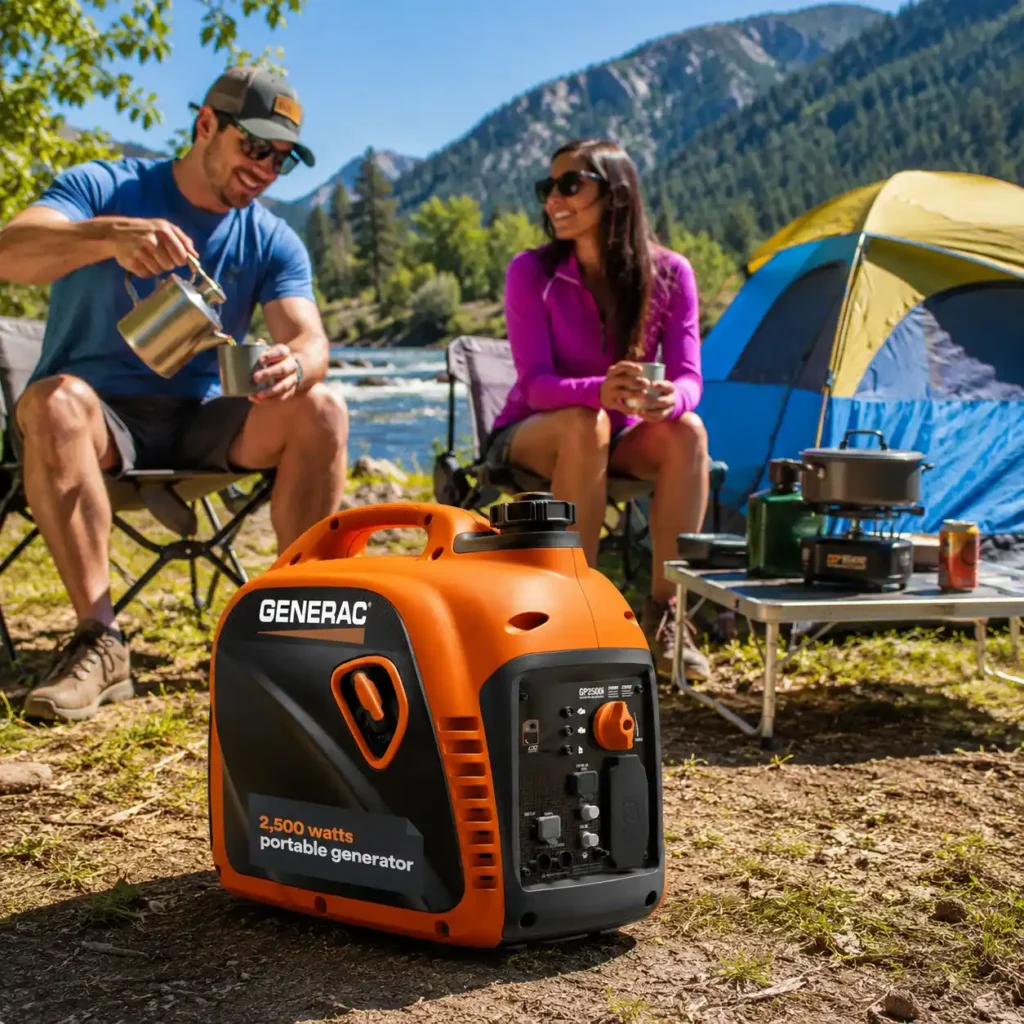
The Generac GP2500i feels perfectly suited to those weekends when the decision to go camping happens almost at the last minute. By Friday evening the gear is already loaded, and early Saturday morning you’re pulling into a quiet forest campground with just enough time to enjoy the entire day outdoors.
Setting up camp is refreshingly straightforward. While the tent goes up and breakfast is prepared, the generator quietly powers the coffee maker, keeps the portable refrigerator running, and charges a few devices that will be used throughout the weekend. There’s no need for an oversized power system or complicated setup—just dependable electricity for the equipment that genuinely improves the camping experience.
As the evening settles in, campsite lights create a comfortable place to relax, phones and cameras recharge for the next day’s adventure, and there’s still enough power available for the small conveniences that make short trips feel far more enjoyable.
For campers who value simplicity over excess, the GP2500i strikes an appealing balance. It delivers reliable inverter power without encouraging you to carry more equipment than you actually need, making spontaneous weekend escapes easier to plan and even easier to enjoy.
CampComfortGuide Evaluation
| Weekend Practicality | Compact size and dependable inverter performance make it an excellent companion for short camping trips where quick setup is a priority. |
|---|---|
| Portability | Easy to load, unload, and transport without taking up unnecessary cargo space inside most SUVs and crossover vehicles. |
| Power Delivery | Provides clean, stable electricity for refrigerators, coffee makers, battery chargers, campsite lighting, and other everyday camping essentials. |
| Ease of Use | Simple controls and straightforward operation allow campers to spend more time enjoying the outdoors and less time managing equipment. |
| Packing Efficiency | Its compact footprint leaves valuable room for additional camping gear, food, and recreational equipment. |
| Build Quality | Well-built overall with solid construction that inspires confidence for regular recreational camping throughout the season. |
| Long-Term Value | A dependable choice for campers seeking reliable inverter performance without carrying more generator than their typical trips require. |
Who Should Buy This
- Campers who primarily take weekend trips throughout the year.
- SUV and crossover owners with limited cargo space.
- Outdoor enthusiasts looking for dependable inverter power in a compact package.
- Campers who prefer lightweight, practical equipment over maximum power output.
Who Should Skip This
- RV owners running multiple high-demand appliances for extended periods.
- Campers who specifically want dual-fuel capability.
- Users planning long off-grid stays with substantial daily power requirements.
- Buyers who need the highest running wattage available in this category.
Final Verdict
The Generac GP2500i proves that a camping generator doesn’t need to be oversized to be genuinely useful. It focuses on portability, dependable inverter performance, and the everyday convenience that makes weekend camping more comfortable without overcomplicating your setup.
If most of your adventures last one or two nights, this generator offers an excellent balance of capability and practicality. It’s easy to transport, simple to operate, and powerful enough for the equipment that matters most, making it an outstanding companion for spontaneous escapes into the outdoors.
Check today’s price and latest customer reviews on Amazon.
Related Guide: Heading out on short trips throughout the season? Our 5 Best Camping Water Containers in 2026 (Easy Carry & No Leaks) guide will help you choose a reliable water storage solution that complements a compact, efficient weekend camping setup.
Camping Generator Buying Guide: How to Choose the Right Model
Choosing the best camping generator isn’t simply about buying the model with the highest wattage or the lowest price. The right generator should match how you camp, what equipment you use, how often you travel, and how much power you actually need.
A lightweight inverter generator may be perfect for weekend tent camping, while RV owners or campers spending several days off-grid often benefit from additional runtime or dual-fuel flexibility. Understanding these differences before you buy can save money, reduce frustration, and help you choose a generator you’ll still be happy with years from now.
The sections below explain the key features that matter most, highlight common buying mistakes, and show how to compare generators based on real camping needs rather than marketing claims.
Inverter vs. Conventional Generators: Which Is Better for Camping?
If you’re buying a generator specifically for camping, an inverter generator is almost always the better choice. While conventional generators can produce more power for the money, they’re typically louder, heavier, less fuel-efficient, and generate electricity that’s not always suitable for sensitive electronics.
Modern campers rarely power only lights anymore. Portable refrigerators, CPAP machines, laptops, cameras, drones, smartphones, and battery chargers all benefit from the clean, stable electricity that inverter generators provide. That cleaner power helps protect sensitive devices while reducing the risk of unexpected shutdowns or electrical damage.
Noise is another major advantage. Most campgrounds, RV parks, and public camping areas encourage quiet operation, especially during the early morning and evening hours. A quieter inverter generator allows you to enjoy modern conveniences without becoming the loudest campsite in the area.
Conventional generators still have their place, particularly on construction sites or when powering large tools and heavy electrical loads. For camping, however, portability, quiet operation, fuel efficiency, and clean inverter power are usually far more valuable than maximum wattage alone.
If your camping needs are limited to charging electronics, running a portable refrigerator, or powering small appliances, investing in an inverter generator will almost always provide a better overall camping experience.
| Feature | Inverter Generator | Conventional Generator |
|---|---|---|
| Noise Level | Quiet operation, ideal for campgrounds and RV parks | Noticeably louder and better suited for job sites |
| Power Quality | Clean, stable electricity for laptops, CPAP machines, and other sensitive electronics | Power output may fluctuate and is less suitable for delicate devices |
| Fuel Efficiency | Consumes less fuel under changing electrical loads | Typically uses more fuel during operation |
| Portability | Usually lighter and easier to transport | Often larger, heavier, and more difficult to move |
| Best Use | Camping, RV travel, tailgating, and outdoor recreation | Construction sites, workshops, and heavy-duty applications |
| Overall Recommendation | ★★★★★ Best choice for nearly all camping situations | Best reserved for high-power work applications |
How Much Generator Power Do You Actually Need?
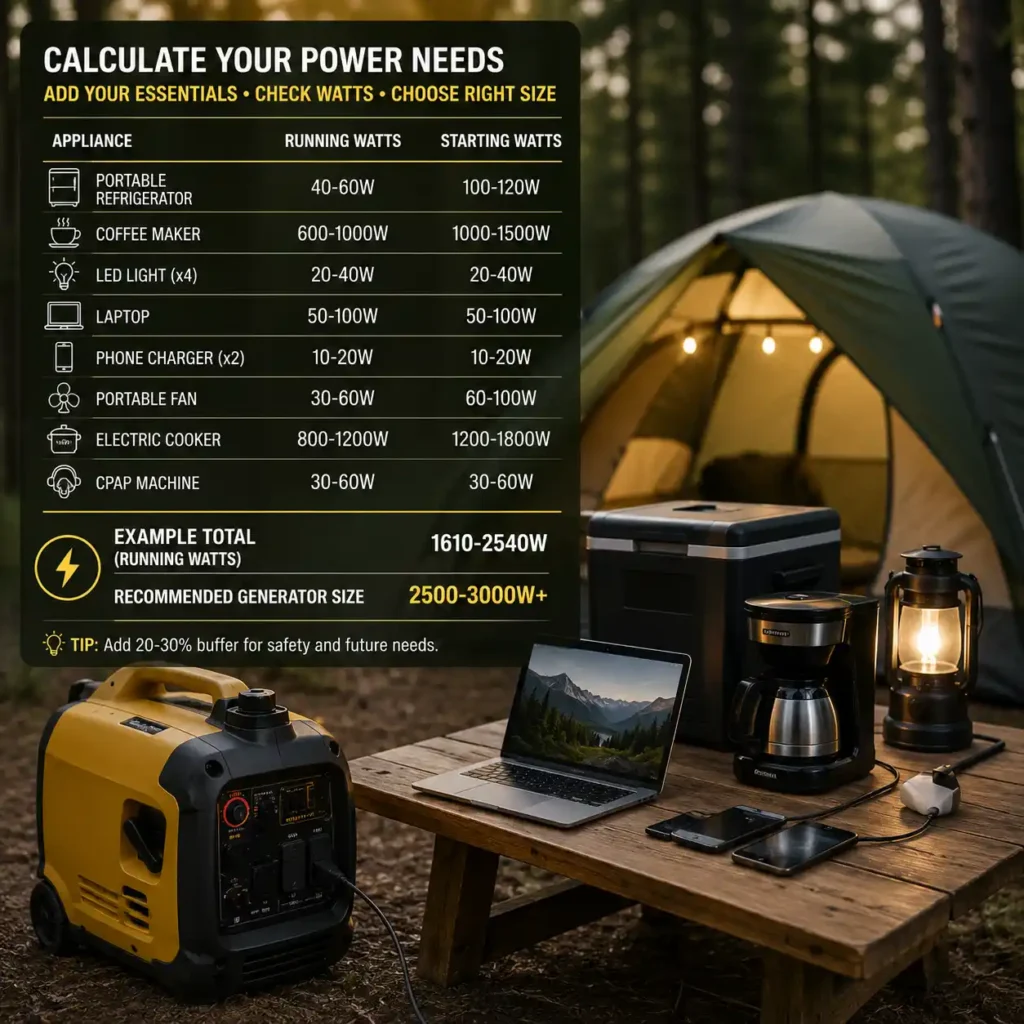
One of the most common mistakes campers make is assuming that more watts automatically mean a better generator. In reality, buying significantly more power than you need often results in higher costs, increased fuel consumption, and extra weight without providing any meaningful benefit at the campsite.
Before comparing generator specifications, make a list of the equipment you actually plan to use. A portable refrigerator, LED campsite lights, phone chargers, and a coffee maker require far less power than an RV air conditioner or an electric space heater. Choosing a generator based on your real electrical needs helps you avoid paying for capacity you’ll rarely use.
For most campers, an inverter generator producing 2,000 to 2,500 running watts is enough for everyday essentials, including a portable refrigerator, lighting, battery chargers, a laptop, and small kitchen appliances. If you’re traveling with a larger RV or expect to run multiple high-demand devices simultaneously, you’ll likely benefit from a model offering 3,000 watts or more.
It’s also important to understand the difference between running watts and starting watts. Many appliances require a brief surge of additional power when they first switch on. Your generator must be capable of handling that temporary startup demand while still supplying enough continuous power for everything else connected at the same time.
Rather than buying the biggest generator available, focus on choosing one that comfortably supports your camping style today while leaving a little room for future gear upgrades.
Gasoline vs. Dual Fuel: Which Fuel Option Is Worth Buying?
One of the biggest decisions when shopping for a camping generator is whether to choose a traditional gasoline model or invest in a dual-fuel generator that can also run on propane. Both options have clear advantages, and the better choice depends on how—and where—you camp.
Gasoline generators are widely available, easy to refuel, and often provide slightly higher power output. For campers who primarily take weekend trips close to home, a gasoline-only generator is usually the simplest and most cost-effective solution.
Dual-fuel generators, on the other hand, offer greater flexibility during longer adventures. Many RV owners and experienced campers already carry propane cylinders for cooking, grilling, or heating. Using the same fuel source for your generator reduces the number of separate fuel containers you need to transport and gives you an alternative if gasoline is difficult to find.
Propane also has practical storage advantages. Unlike gasoline, it doesn’t degrade over time, making it an excellent option for generators that may sit unused between camping trips. That longer shelf life can be particularly valuable for seasonal campers who only travel a few times each year.
There are trade-offs to consider. Generators typically produce slightly less power when running on propane, and dual-fuel models usually cost more than comparable gasoline-only units. However, for campers who value flexibility and already rely on propane at the campsite, those compromises are often well worth making.
If your camping style revolves around short weekend getaways, gasoline remains an excellent choice. If you frequently travel in an RV, enjoy extended off-grid camping, or already carry propane for other equipment, a dual-fuel generator can simplify your entire camping setup.
If you’re building a complete off-grid power system, our Best Camping Solar Panels for Low Light (Morning & Evening Sun Guide) explains how portable solar panels can work alongside a generator to reduce fuel consumption and extend your time away from electrical hookups.
| Camping Situation | Gasoline Generator | Dual Fuel Generator |
|---|---|---|
| Weekend camping near home | ✅ Excellent Choice | Good Choice |
| Family campground trips | ✅ Excellent Choice | ✅ Excellent Choice |
| RV camping | Good Choice | ⭐ Best Choice |
| Extended off-grid camping | Good Choice | ⭐ Best Choice |
| Overlanding adventures | Good Choice | ⭐ Best Choice |
| Already using propane for cooking or heating | Less Practical | ⭐ Best Choice |
| Lowest upfront cost | ⭐ Best Choice | Higher Initial Cost |
| Long-term fuel storage | Fuel stabilizer recommended | ⭐ Propane stores for years |
How Quiet Should a Camping Generator Be?
Noise is one of the first things you’ll notice about a generator—and one of the first things your neighbors will notice too. A generator that seems reasonably quiet in a store parking lot can feel surprisingly loud in the peaceful surroundings of a campground.
Most experienced campers quickly discover that quieter operation is often more valuable than higher wattage. If your generator spends most of its time powering a refrigerator, charging batteries, or brewing morning coffee, there’s little benefit in carrying a louder machine designed for construction sites.
Inverter generators are typically the preferred choice because they automatically adjust engine speed to match the electrical load. When you’re only charging a few devices or running LED lights, the engine slows down, reducing both fuel consumption and noise. Conventional generators usually operate at a constant engine speed, producing noticeably more sound even when very little power is being used.
It’s also worth remembering that campground etiquette matters. Many public campgrounds and RV parks have designated quiet hours, and excessive generator noise can quickly become a source of frustration for nearby campers. Choosing a quieter model isn’t just about your own comfort—it’s also about respecting the outdoor experience of everyone around you.
As a general guideline, a camping generator producing around 50–60 dB under light to moderate loads is considered comfortable for most recreational camping situations. While every campsite is different, quieter generators create a more relaxing atmosphere and are less likely to interrupt conversations, meals, or evenings around the campfire.
If quiet evenings around camp are important to you, our 5 Best Camping Fans for Tents in 2026 (Keep Cool & Sleep Better) guide highlights several low-noise fans that pair well with inverter generators for comfortable overnight camping.
| Noise Level | What to Expect | Best For |
|---|---|---|
| 45–55 dB | Very quiet, similar to a normal conversation | Campgrounds, family camping, and quiet hours |
| 56–65 dB | Noticeable but comfortable for most campers during the day | General camping and RV parks |
| 66–75 dB | Louder operation that may disturb nearby campsites | Remote campsites and dispersed camping |
| 75+ dB | Very loud and generally unsuitable for recreational camping | Construction sites and heavy-duty work |
Portability Matters More Than You Think
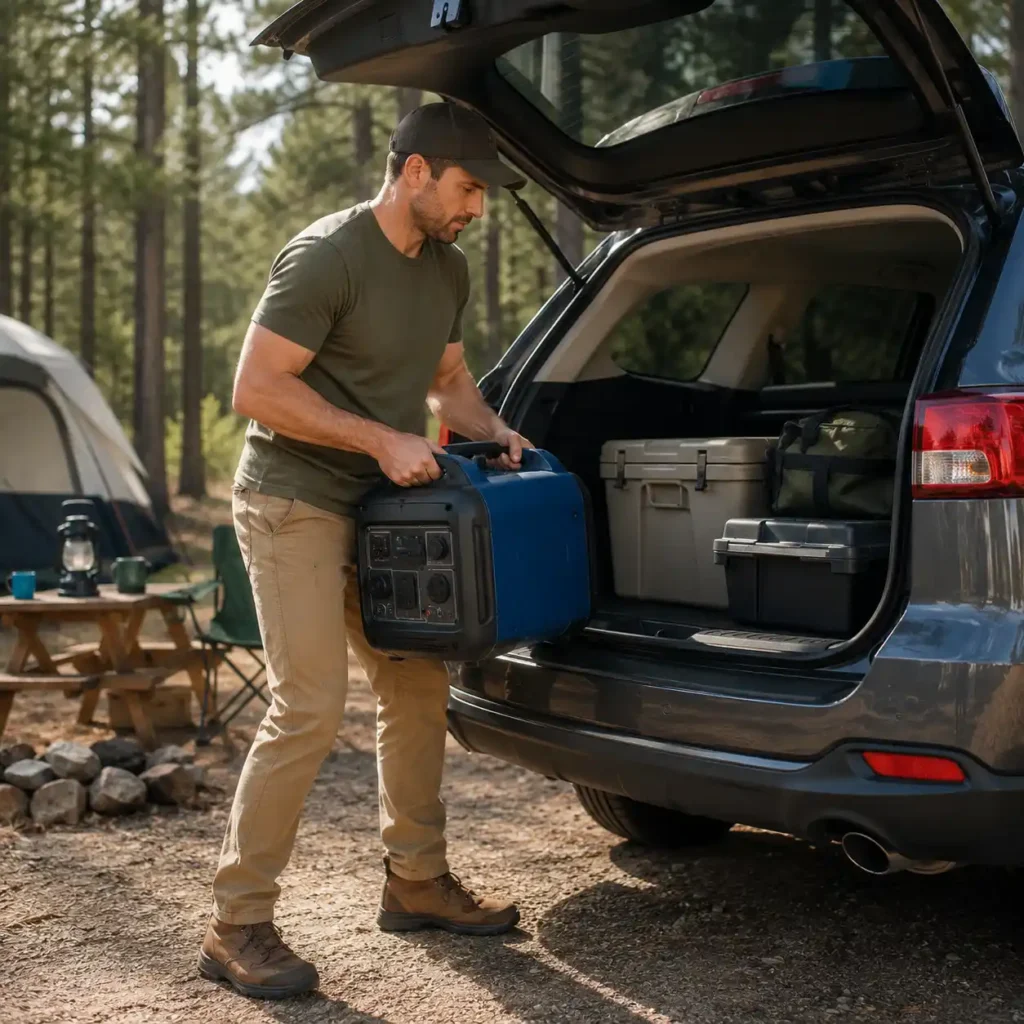
Many first-time buyers focus almost entirely on power output, but the size and weight of a generator often have a bigger impact on everyday camping. A model that looks perfect on paper can quickly become frustrating if it’s awkward to lift, difficult to store, or takes up too much valuable cargo space.
Think about how you’ll actually use your generator. Will you lift it into the back of an SUV before every trip? Carry it across a campground to reach your campsite? Move it in and out of an RV storage compartment several times during a vacation? Those small tasks quickly add up over the course of a camping season.
For most campers, portability is about more than just weight. Comfortable carrying handles, a balanced design, and compact dimensions often make a generator feel much easier to transport than a slightly lighter model with poor ergonomics. It’s one of those details that’s easy to overlook until you’re unloading gear after a long drive.
A compact generator also leaves more room for the equipment that makes camping enjoyable. Extra space can be used for larger coolers, additional food, camping chairs, water containers, or recreational gear instead of being occupied by oversized power equipment.
Unless you regularly need high-output electrical power, choosing the smallest generator that comfortably meets your needs usually results in a more enjoyable camping experience. It’s easier to transport, quicker to pack, and far less likely to become a burden during every trip.
🏕️ Pro Tip
Before buying a generator, check its weight and dimensions just as carefully as its wattage. If you’ll be loading it into your vehicle for every trip, a model that’s even 10–15 pounds lighter can feel significantly easier to live with over an entire camping season.
Runtime and Fuel Efficiency: What Really Matters?
When comparing camping generators, it’s easy to focus on advertised runtime alone. However, how long a generator operates depends just as much on what you’re powering as it does on the size of the fuel tank.
Most manufacturers measure runtime at 25% load, which represents light electrical use. In real camping situations, adding a coffee maker, portable refrigerator, electric grill, or battery chargers will increase fuel consumption and reduce the number of hours you can expect from a full tank.
Fuel efficiency becomes especially important during multi-day camping trips. A generator that uses less fuel not only saves money over time but also means carrying fewer fuel containers and making fewer refueling stops. That’s a noticeable advantage when camping far from the nearest gas station.
Fortunately, inverter generators naturally improve fuel efficiency by adjusting engine speed to match the electrical demand. Instead of running at full speed all day, the engine slows down when powering lighter loads, reducing both fuel consumption and noise. Over the course of an entire camping season, those savings can add up.
If you expect to spend several days off-grid, think beyond the advertised runtime. Consider how much electricity you’ll realistically use throughout the day, whether you’ll be running multiple appliances at once, and how easy it will be to refuel during your trip. Choosing an efficient generator often provides more long-term value than simply choosing one with the largest fuel tank.
If your goal is to reduce generator runtime and fuel consumption, our Best Portable Power Stations for Vehicle Camping Setup (2026) guide explains how many campers combine battery storage with a generator to enjoy quieter mornings, lower fuel use, and a more efficient off-grid power system.
💡 Expert Tip
Instead of running your generator continuously, charge high-capacity batteries or a portable power station during the day and use that stored energy to power lights, phones, and small electronics in the evening. This approach reduces fuel consumption, minimizes noise around camp, and helps extend the generator’s service life.
Essential Camping Generator Safety Tips
A camping generator can make outdoor adventures far more comfortable, but safe operation should always come before convenience. Carbon monoxide, hot engine components, and improper placement are responsible for most generator-related accidents, many of which are entirely preventable.
Following a few simple safety practices will help protect both your family and nearby campers while extending the life of your generator.
✅ Camping Generator Safety Checklist
- Never operate a generator inside a tent, RV, camper van, or enclosed shelter. Even with doors or windows open, dangerous carbon monoxide can build up quickly.
- Keep the generator at least 20 feet (6 meters) away from sleeping and living areas. Position the exhaust so it points away from tents, RVs, and neighboring campsites.
- Allow the engine to cool completely before refueling. Spilled gasoline on hot engine components can ignite unexpectedly.
- Protect your generator from standing water and heavy rain. If bad weather moves in, use a purpose-built generator cover or move it to a dry, well-ventilated location without blocking airflow.
- Use only outdoor-rated extension cords that are properly sized for the electrical load you’re supplying.
- Never overload the generator. Calculate the combined running and starting wattage of your appliances before connecting them.
- Turn off connected appliances before starting or shutting down the generator. This helps prevent unnecessary electrical surges and protects sensitive electronics.
- Perform basic maintenance before every camping season. Check the oil level, inspect the air filter, examine fuel lines, and test the generator before leaving home.
⚠️ Safety Reminder
A quieter inverter generator is still a gasoline- or propane-powered engine that produces carbon monoxide. No matter how compact or modern the generator may be, it should never be used inside enclosed or partially enclosed spaces.
Camping Generator vs. Portable Power Station: Which One Should You Choose?
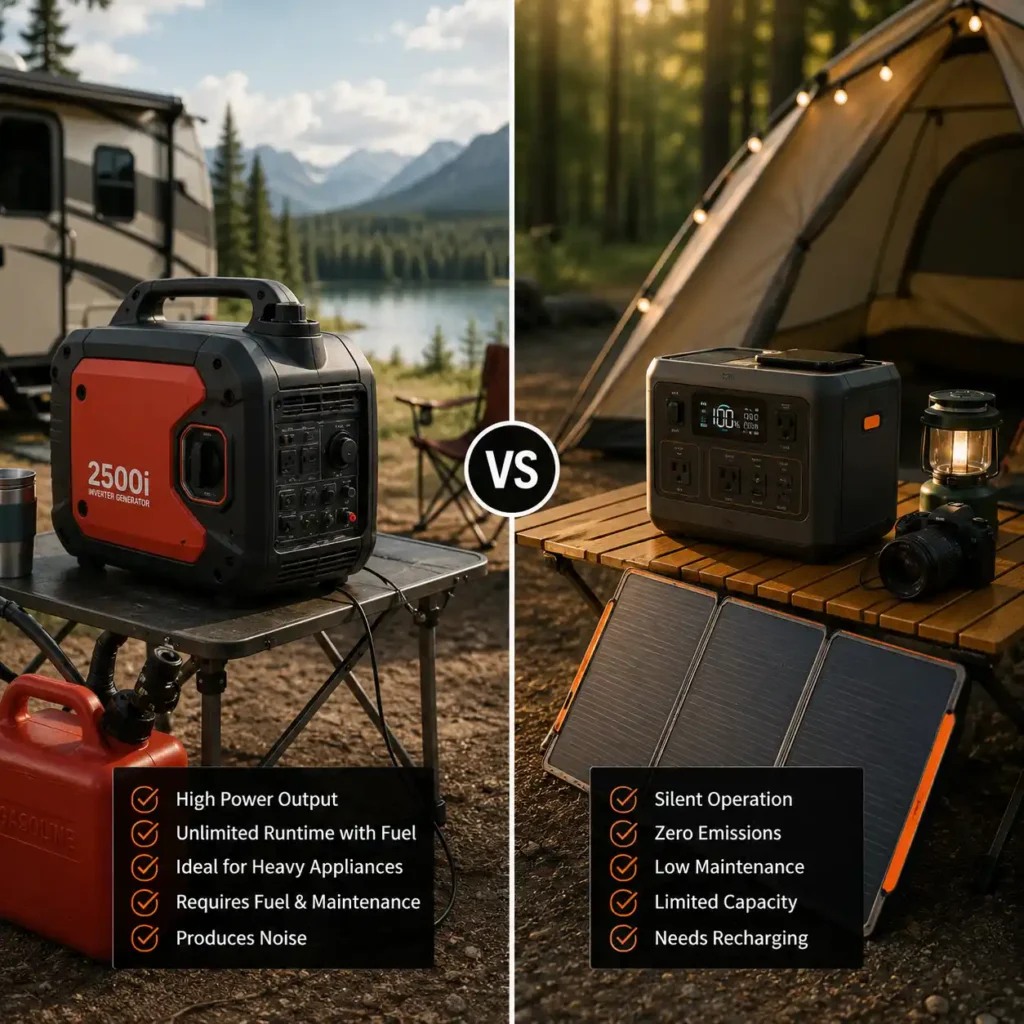
Camping generators and portable power stations solve the same problem—providing electricity away from home—but they do it in very different ways. Neither option is universally better. The right choice depends on how you camp, how much power you need, and whether you value runtime, silence, or convenience.
A camping generator produces electricity by running a gasoline or propane engine. That makes it an excellent choice for powering higher-demand appliances over long periods, especially when refueling is easy. Portable power stations, by contrast, store electricity in rechargeable batteries. They operate silently, require virtually no maintenance, and can safely be used in situations where engine-powered generators are impractical.
For many campers, the decision isn’t about choosing one over the other. In fact, experienced campers often combine both systems. A portable power station handles lights, phones, cameras, and other small electronics throughout the day, while the generator is used only when it’s time to recharge the battery or operate larger appliances. This hybrid approach reduces fuel consumption, minimizes campsite noise, and provides reliable power during longer off-grid adventures.
If your camping style revolves around weekend trips with modest electrical needs, a portable power station may be all you need. If you regularly power refrigerators, coffee makers, multiple devices, or spend several days away from hookups, a camping generator remains the more practical long-term solution.
| If You... | Best Choice | Why |
|---|---|---|
| Camp mostly on weekends | Portable Power Station | Quiet, maintenance-free, and ideal for light electrical needs. |
| Need to power a portable refrigerator for several days | Camping Generator | Long runtime with easy refueling during extended trips. |
| Stay at quiet campgrounds or family campsites | Portable Power Station | Silent operation keeps the campsite peaceful and neighbor-friendly. |
| Travel off-grid for multiple days | Camping Generator | Provides continuous power without relying on battery capacity alone. |
| Want the lowest maintenance solution | Portable Power Station | No fuel, oil changes, or engine maintenance required. |
| Need maximum flexibility for extended adventures | Generator + Power Station | Use the generator to recharge the battery while enjoying quiet power the rest of the day. |
Common Camping Generator Mistakes to Avoid
Even the best camping generator won’t perform well if it’s used incorrectly. Many common problems—such as excessive fuel consumption, unnecessary noise, overloaded circuits, and poor campsite placement—are caused by simple mistakes that are easy to avoid.
Whether you’re buying your first generator or replacing an older model, keeping the following points in mind will help you enjoy safer, quieter, and more reliable camping trips.
1. Buying More Generator Than You Actually Need
One of the most common mistakes is assuming that more power is always better. In reality, an oversized generator is often heavier, uses more fuel, and costs significantly more without providing meaningful benefits for most campers.
For weekend camping, a quality inverter generator with around 2,000 to 2,500 running watts is sufficient for powering common essentials like portable refrigerators, lighting, battery chargers, and small kitchen appliances.
2. Ignoring Noise Levels
Many buyers compare wattage but overlook noise ratings. A generator that seems acceptable at home can feel surprisingly loud once you’re surrounded by the quiet atmosphere of a campground.
Choosing a quieter inverter generator improves your own camping experience while showing consideration for nearby campers, especially during the early morning and evening hours.
3. Forgetting About Starting Watts
Many appliances require a brief surge of additional power when they first start. Looking only at continuous running watts may result in a generator that struggles when multiple devices start simultaneously.
Always compare both running watts and starting watts before making your final decision.
4. Poor Fuel Planning
Running out of fuel in the middle of a trip can quickly become frustrating, particularly at remote campsites. Before leaving home, estimate your daily fuel consumption based on how many hours you expect the generator to operate and the appliances you’ll be powering.
If you choose a gasoline generator, always transport fuel in approved containers and store it safely away from heat sources.
5. Unsafe Generator Placement
A generator should never be operated inside a tent, RV, camper van, enclosed shelter, or any area where exhaust gases can accumulate.
Place the generator on a stable, level surface well away from sleeping and living areas, making sure the exhaust is directed away from your campsite and neighboring campers.
6. Skipping Routine Maintenance
A generator that sits unused for months may not be ready when your next camping trip begins. Simple maintenance—checking the oil, inspecting the air filter, testing the engine, and verifying fuel quality—helps prevent unexpected problems when you’re away from home.
Taking a few minutes to inspect your generator before each trip is one of the easiest ways to improve reliability and extend its service life.
Frequently Asked Questions About Camping Generators
Choosing a camping generator often raises practical questions that go beyond product specifications. Below are clear, experience-based answers to the questions campers ask most often before buying or using a portable generator.
Can I Use a Camping Generator in the Rain?
Most portable camping generators are not designed to operate in direct rain or standing water. Moisture can damage electrical components and create serious safety hazards.
If wet weather is expected, place the generator under a purpose-built generator cover or in a well-ventilated shelter that protects it from rain without restricting airflow. Never operate a generator inside a tent, RV, garage, or any enclosed space.
How Far Should a Generator Be from My Tent?
A generator should be positioned at least 20 feet (6 meters) away from tents, RVs, campers, and other occupied areas. Always point the exhaust away from people and neighboring campsites to reduce the risk of carbon monoxide exposure.
What Size Generator Do I Need for Camping?
For most campers, an inverter generator producing 2,000–2,500 running watts is sufficient for powering a portable refrigerator, lights, battery chargers, laptops, coffee makers, and other common camping equipment.
If you plan to run larger appliances or multiple high-demand devices simultaneously, consider a generator rated for 3,000 watts or more.
Can a Camping Generator Power a Portable Refrigerator?
Yes. In fact, portable refrigerators are one of the most common reasons campers buy generators. Most compressor refrigerators consume relatively little electricity, making them an excellent match for modern inverter generators.
Are Inverter Generators Worth the Extra Cost?
For camping, yes. Inverter generators provide cleaner electricity for sensitive electronics, operate much more quietly, use less fuel under light loads, and are generally more portable than conventional generators. Those advantages make them the preferred choice for most recreational campers.
How Long Will a Camping Generator Run on One Tank?
Runtime varies depending on the generator’s fuel tank capacity and the amount of electricity being used. Under light loads, many inverter generators operate for 6 to 12 hours on a full tank. Running larger appliances continuously will reduce that operating time.
Is a Dual-Fuel Generator Better Than a Gasoline Generator?
Neither option is universally better. A gasoline generator is often the most economical choice for occasional weekend camping, while a dual-fuel generator offers greater flexibility for RV owners and campers who already carry propane for cooking or heating.
Can I Charge a Portable Power Station with a Generator?
Yes. Many campers use a generator to recharge a portable power station during the day, then rely on stored battery power during the evening. This combination reduces campsite noise while providing reliable electricity for longer off-grid trips.
Are Camping Generators Allowed in National Parks?
Generator rules vary between parks and campgrounds. Many locations allow generators only during designated hours and require campers to keep noise to a minimum. Always check the campground’s regulations before your trip to avoid disturbing other visitors.
What's the Biggest Mistake First-Time Generator Buyers Make?
The most common mistake is buying a generator that’s far larger than necessary. Many campers assume higher wattage always provides better value, but oversized generators are typically heavier, louder, consume more fuel, and cost significantly more. Choosing a generator based on your actual power requirements usually leads to a better overall camping experience.
Final Verdict: Which Camping Generator Should You Buy?
Choosing the best camping generator ultimately comes down to how you camp rather than simply comparing specifications. Every model in this guide earned its place by excelling in a different real-world camping scenario, making the right choice highly dependent on your travel style, power needs, and budget.
If you’re looking for the best overall camping generator, the Honda EU2200i continues to set the benchmark with its outstanding reliability, quiet operation, fuel efficiency, and long-term durability. It’s the generator we’d confidently recommend to the widest range of campers.
For RV owners and campers who appreciate greater flexibility, the Champion 2500 Dual Fuel offers the convenience of running on either gasoline or propane, making it an excellent companion for extended trips and off-grid adventures.
If value is your highest priority, the WEN 3600W Inverter Generator delivers impressive performance at a price that’s especially attractive for first-time buyers building their camping setup.
Frequent RV travelers who spend weeks on the road will appreciate the balanced design and dependable everyday performance of the Westinghouse iGen2550DF, while weekend campers looking for a compact and practical solution will find the Generac GP2500i to be an excellent fit.
Rather than asking which generator is objectively the best, ask which one best matches the way you actually camp. A generator that fits your camping style will almost always provide a better experience than simply buying the model with the highest wattage or the biggest price tag.
Whichever model you choose, prioritizing quiet operation, clean inverter power, realistic power capacity, and safe operation will help you enjoy more comfortable, more reliable, and more enjoyable camping trips for years to come.
The CampComfortGuide Promise
At CampComfortGuide, we believe camping gear should be chosen based on real outdoor use—not marketing claims or specification sheets alone.
Every guide we publish is built around practical camping scenarios, careful product research, and the questions real campers ask before spending their money. Rather than recommending the most expensive option, our goal is to help you find the equipment that genuinely fits your camping style, travel habits, and long-term needs.
As new generators are released and existing models are updated, we’ll continue reviewing this guide to keep our recommendations accurate, relevant, and useful for every type of camper—from first-time weekend adventurers to experienced off-grid travelers.
If this guide helped you choose the right camping generator, then we’ve achieved exactly what CampComfortGuide was created to do: help you spend less time researching gear and more time enjoying the outdoors.