
A sleeping bag liner can make a sleeping bag warmer, but not every liner provides the same amount of insulation. A lightweight silk liner and a thick fleece or thermal liner serve very different purposes, and the warmth you actually gain depends on the material, construction, fit, and the rest of your sleep system.
That is where many camping guides become confusing. Manufacturers may advertise a liner as adding a specific number of degrees, but that figure is not a universal temperature guarantee. Your sleeping bag, sleeping pad, clothing, body temperature, and overnight conditions all affect how much additional warmth you feel.
In this guide, we look at what sleeping bag liners actually do, how much extra warmth different types can realistically provide, and when a liner is a useful upgrade rather than a substitute for a warmer sleeping bag. We’ll also cover when a liner is better for hygiene and comfort than for insulation.
Table of Contents
Quick Answer: Do Sleeping Bag Liners Really Add Warmth?
Yes, sleeping bag liners can add warmth, but the amount varies by material and design. Thin silk and cotton liners generally provide a modest insulating effect, while fleece and purpose-built thermal liners can provide a more noticeable increase. Outdoor retailers commonly describe liner warmth gains in broad ranges rather than as a single guaranteed temperature increase.
The important point is that a liner adds insulation to an existing sleep system; it does not change the sleeping bag’s tested temperature rating. A liner can be useful when your bag is slightly short of the warmth you want, but it should not be relied on to turn an unsuitable sleeping bag into a cold-weather bag.
For most campers, the decision comes down to what you need from the liner. Choose a thermal or fleece liner when extra warmth is the priority; choose a lightweight liner when hygiene, comfort, and packability matter more. Your sleeping pad still plays a major role in overall warmth, particularly in colder conditions.
What Does a Sleeping Bag Liner Actually Do?
A sleeping bag liner can serve several different purposes, and adding warmth is only one of them. Its actual effect depends on the material, thickness, shape, and how closely it works with the sleeping bag itself. A lightweight silk liner, for example, is very different from a fleece or insulated thermal liner designed specifically to increase warmth.
Adds an Extra Insulating Layer
The simplest thermal benefit is the additional layer between your body and the sleeping bag. A liner can trap some warm air close to your body and reduce heat loss, but the effect varies considerably between materials. Thin liners generally provide a smaller increase, while fleece and insulated designs can provide more substantial insulation. REI currently lists typical liner gains in the range of about 5–15°F depending on material, while some specialized insulated liners advertise higher manufacturer claims.
Helps Protect the Sleeping Bag
A liner also acts as a washable barrier between your body and the sleeping bag. Sweat, body oils, skin debris, and dirt can accumulate inside a bag over time, so using a liner can reduce how often the sleeping bag itself needs to be washed. This is particularly useful for down bags, which generally benefit from less frequent laundering and careful maintenance.
For more guidance on protecting and cleaning your sleeping bag, see our guide to how to wash a sleeping bag without ruining it.
Changes Comfort Inside the Bag
The fabric next to your skin can make a noticeable difference in how the sleeping bag feels. Silk is lightweight and smooth, fleece is warmer and softer, while synthetic fabrics can emphasize moisture management and breathability. Some modern liners also use stretch panels or shaped designs to give you more freedom of movement without making the sleeping bag feel as restrictive.
Can Help With Moisture and Odor
Certain synthetic liners are designed to move moisture away from the skin, while others incorporate odor-control treatments. That can be useful during multi-day trips when washing the sleeping bag is impractical. The benefit is not the same for every material, however: a liner designed primarily for warmth may behave differently from one intended for humid conditions or extended travel.
A Thicker Liner Is Not Automatically Better
More insulation can mean more warmth, but it also means more weight, bulk, and potentially less usable space inside the sleeping bag. The liner needs to fit without unnecessarily compressing the bag’s insulation or restricting your movement. That is why choosing a liner should start with its intended purpose—not simply with the largest temperature claim on the package.
How Much Warmth Can a Sleeping Bag Liner Actually Add?
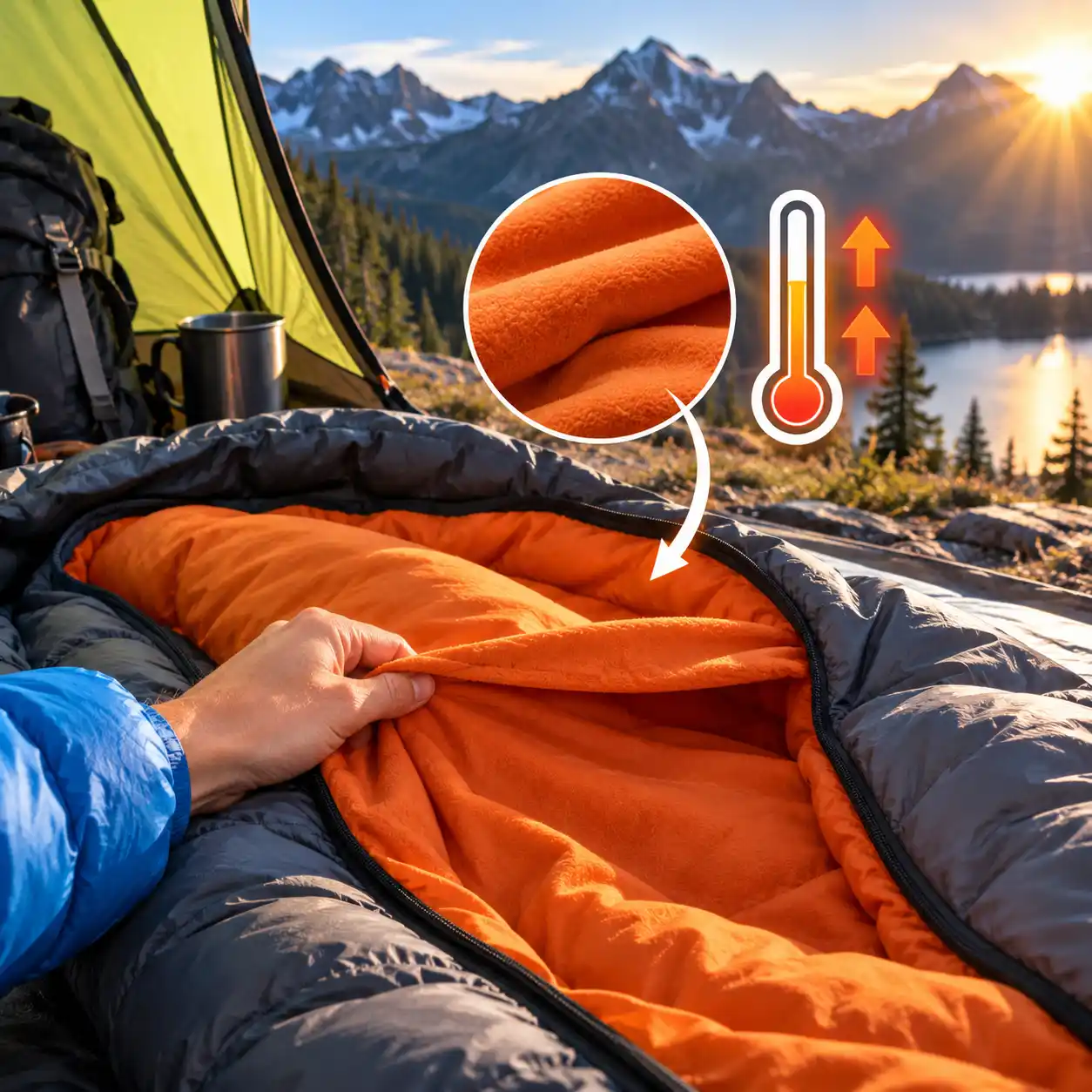
There is no single temperature increase that applies to every sleeping bag liner. The amount of additional warmth depends on the liner’s material, thickness, construction, fit, and how it interacts with the sleeping bag and sleeping pad underneath you. A lightweight liner may make only a subtle difference, while a thick fleece or purpose-built thermal liner can provide a much more noticeable boost.
This is also why temperature claims on liner packaging need some context. Unlike sleeping bags, sleeping bag liners do not have one universally applied temperature-rating system that allows every model to be compared under the same standardized conditions. Manufacturer claims can therefore describe potential warmth rather than a guaranteed increase that every camper will experience.
Because sleeping bag liners do not have a universal standardized warmth rating, we treat manufacturer temperature claims as product-specific figures and compare them with documented field experience rather than presenting one number as a guaranteed result.
Why There Is No Universal Temperature Increase
A liner does not simply add a fixed number of degrees to the rating of your sleeping bag. A 30°F sleeping bag does not automatically become a 20°F bag because you put a liner inside it.
Your starting point matters. A high-quality insulated sleeping bag with plenty of loft already provides substantial insulation, so a thin liner may produce only a small additional effect. A simpler or older sleeping bag with less effective insulation may respond differently, particularly when the liner helps reduce unused space inside the bag.
Your body also matters. Two people can use the same sleeping bag and liner at the same temperature and report very different results because of differences in metabolism, sleep position, clothing, moisture, and how sensitive they are to cold.
Material Makes a Major Difference
Not all sleeping bag liners are designed to add meaningful insulation.
Silk liners are mainly valued for their low weight, compact size, comfortable feel, and ability to protect the sleeping bag from body oils and dirt. They can add some warmth, but they should not be treated like a thick insulating layer.
Cotton liners can make a sleeping bag feel more comfortable and provide a washable barrier, but their weight and moisture absorption make them less attractive when maximum warmth-to-weight performance is the goal.
Fleece liners are substantially thicker and can create a more noticeable insulating layer. The tradeoff is increased bulk and weight, which can matter on backpacking trips even when they are perfectly reasonable for car camping.
Thermal synthetic liners are specifically designed to increase insulation while remaining relatively lightweight. Some manufacturers advertise substantial temperature improvements with these products, but the advertised figure should be treated as a product-specific claim rather than a guaranteed result.
Why Manufacturer Warmth Claims Can Be Misleading
A claimed temperature increase is useful as a point of comparison, but it should not be read as an exact extension of your sleeping bag’s rating.
Real-world discussions among campers show why. People using similar liners often report anything from a barely noticeable difference to several degrees of additional warmth, while thicker fleece or thermal designs can feel considerably warmer. In a 2026 Rokslide discussion about a Thermolite liner, users estimated the benefit anywhere from negligible to roughly 5°F, illustrating how variable the perceived result can be.
Reddit discussions show a similar pattern. Some campers report a noticeable increase with fleece or thermal liners, while others say thin liners provide little warmth beyond improving comfort and protecting the sleeping bag. Users also frequently report that the real-world benefit falls short of the largest number printed on the packaging.
That does not mean a manufacturer’s claim is necessarily false. It means that the advertised figure should not be treated as a guaranteed new comfort rating for your entire sleep system.
What Affects the Warmth You Actually Feel?
Several factors can change the result:
- Sleeping bag insulation: A liner works in combination with the insulation already present in the bag.
- Liner thickness and construction: More substantial insulation generally provides a greater thermal effect than a very thin fabric liner.
- Fit: A liner should add insulation without compressing the sleeping bag’s loft or restricting movement.
- Sleeping pad insulation: Heat can be lost rapidly into the ground, so a warm liner cannot compensate for an inadequately insulated pad.
- Clothing: Base layers, socks, and other clothing can change how warm you feel inside the bag.
- Moisture: Damp clothing, sweat, condensation, or wet insulation can reduce overall thermal performance.
- Individual cold sensitivity: Some campers naturally sleep colder than others, making the same setup feel very different from person to person.
- Weather and campsite conditions: Wind, humidity, and the actual overnight temperature all influence the final result.
What Type of Sleeping Bag Liner Adds the Most Warmth?
The material is the biggest factor in whether a sleeping bag liner feels like a meaningful insulation layer or simply a comfortable inner sheet. In general, thicker and more insulating liners provide more warmth, while lightweight silk and cotton liners are better suited to comfort, hygiene, and modest temperature increases.
Silk Sleeping Bag Liners
Silk is popular because it adds very little weight and packs down extremely small. It also feels comfortable against the skin and can help keep sweat and body oils away from the sleeping bag.
For warmth, however, a silk liner should be viewed as a small addition rather than a major insulation upgrade. Campers commonly report that thin silk liners provide some extra warmth, but not necessarily the dramatic temperature increase sometimes suggested in product descriptions. A 2026 Reddit discussion specifically questioning a 10°F increase from a silk liner produced a largely skeptical response, with users describing the claimed increase as optimistic.
Cotton Sleeping Bag Liners
Cotton liners are inexpensive, comfortable, and useful when keeping a sleeping bag clean is the main priority. They can provide another layer between your body and the bag, but cotton is relatively heavy and can hold moisture, making it less attractive when warmth-to-weight efficiency matters.
For car camping, that may not be a major concern. For backpacking or colder conditions, however, the extra weight and moisture retention make cotton a less compelling choice than a purpose-built thermal liner.
Fleece Sleeping Bag Liners
Fleece provides a much more substantial insulating layer than thin silk or cotton. The thicker fabric can trap more air and noticeably change how warm the sleeping bag feels.
That additional insulation comes with an equally important tradeoff: fleece liners are heavier and bulkier. This makes them more practical when vehicle weight and packed volume are secondary concerns. User reports also consistently distinguish thicker fleece liners from lightweight fabric liners, with several campers describing fleece as substantially warmer.
Synthetic Thermal Liners
Purpose-built thermal liners sit between ordinary fabric liners and a complete sleeping-bag upgrade. They use synthetic insulation or specially engineered fabrics to provide additional warmth without requiring the same bulk as some fleece designs.
These liners are particularly interesting for campers who already own a suitable sleeping bag but occasionally need more insulation during colder shoulder-season trips. However, the manufacturer’s advertised temperature increase still should not be treated as a guaranteed extension of the bag’s rating. In a 2026 Rokslide discussion, users with a Thermolite-style liner estimated the real benefit at roughly a few degrees, while others considered the effect negligible—illustrating how much the result can vary between users and setups.
Which Liner Is Best for Warmth?
If additional insulation is the main objective, thicker fleece and purpose-built thermal liners are the categories to consider first. Silk and cotton can make a sleeping bag more comfortable and easier to keep clean, but they should not be chosen primarily because you expect a large increase in warmth.
The important distinction is that warmth, weight, and packability move in different directions. A thicker liner may provide more insulation, but it also occupies more space and adds more weight to your camping system. For car camping, that tradeoff can be easy to accept; for backpacking, a warmer sleeping bag or better-insulated sleeping pad may provide a more efficient solution.
So the right question is not simply “Which liner is warmest?” It is “How much additional insulation do I need, and is carrying a liner the best way to get it?” That distinction becomes especially important when a sleeping bag is already close to its practical limit.
Can a Sleeping Bag Liner Make a Cold Sleeping Bag Warm Enough?
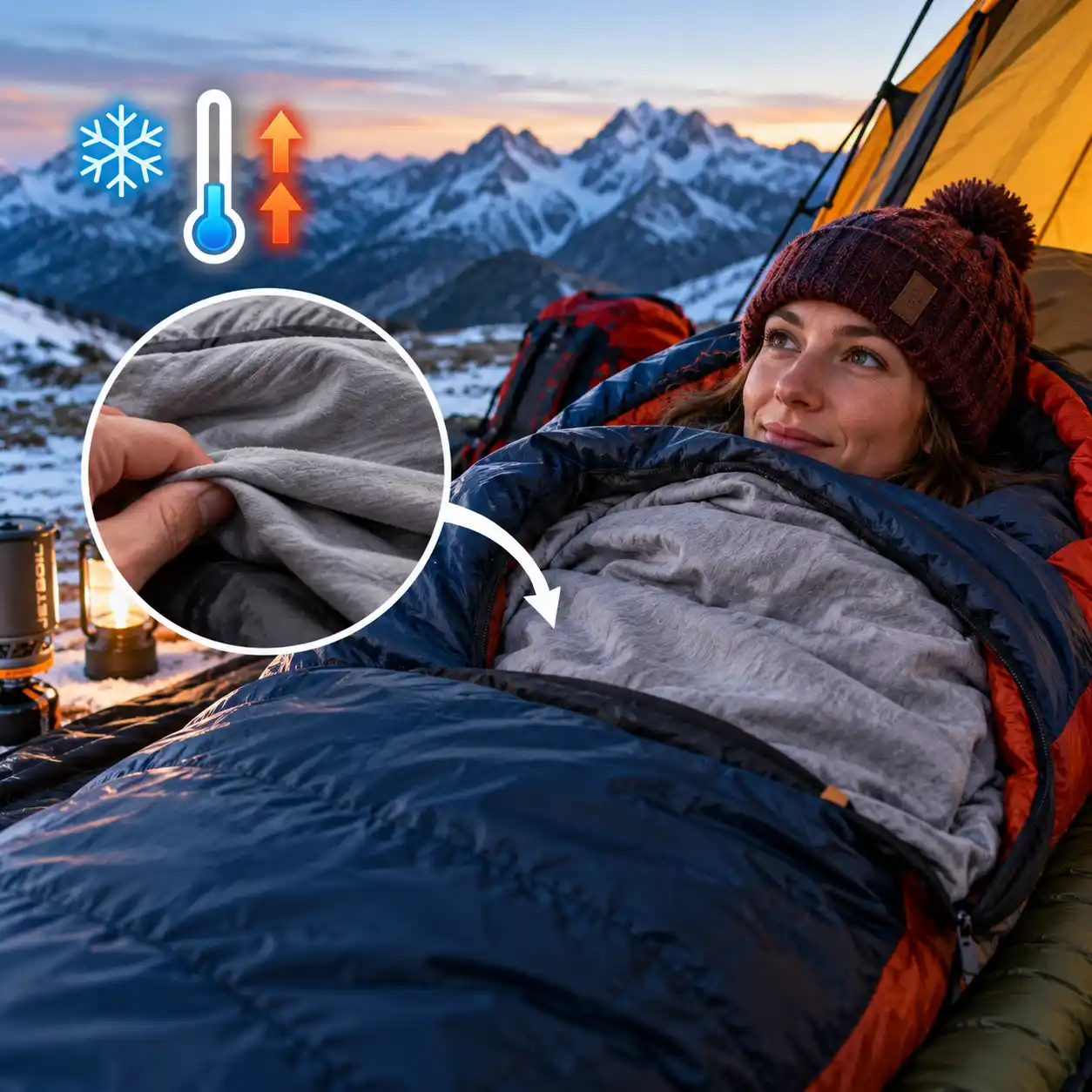
A sleeping bag liner can help when your sleeping bag is only slightly short of the warmth you need, but it is not a reliable substitute for a sleeping bag designed for colder conditions. How much difference it makes depends on the liner itself and on the rest of your sleep system.
A useful way to think about it is as adding a small layer of insulation rather than changing the bag’s temperature rating. A thin silk liner may provide little more than a modest comfort margin, while a fleece or purpose-built thermal liner can make a more noticeable difference. Real-world reports are highly variable: in a 2026 Rokslide discussion, users generally described a Thermolite-style liner as adding only a few degrees, although one user reported a larger increase with a custom fleece liner.
When a Liner Can Help
A liner makes the most sense when your existing sleeping bag is already reasonably close to the conditions you expect. For example, you might be comfortable in the bag under normal conditions but want a little additional insulation for a colder shoulder-season night.
It can also be useful when you want more flexibility from one sleeping bag. A thermal liner can extend the range of situations in which you feel comfortable without requiring you to carry a completely separate cold-weather bag. This is particularly practical for car camping, where a little extra bulk is less significant than it would be for a lightweight backpacking setup.
The benefit can also be noticeable when the liner addresses a specific comfort problem. A warmer fabric around your body, fewer drafts, or a more comfortable next-to-skin surface may make the sleeping system feel warmer even when the actual insulation increase is modest.
When a Liner Is Not Enough
The equation changes when the sleeping bag is clearly too cold for the conditions. A liner cannot compensate indefinitely for inadequate insulation.
If you expect temperatures significantly below what your sleeping bag is designed to handle, relying on a liner alone is a poor strategy. Experienced campers discussing liners frequently recommend improving the primary insulation system instead—such as moving to a warmer sleeping bag, increasing sleeping-pad insulation, or adding appropriate clothing.
This distinction is particularly important because adding layers inside a sleeping bag can also affect its usable space. A very bulky liner, heavy clothing, or another insulating layer can make a close-fitting bag restrictive and potentially interfere with its insulation.
The National Park Service recommends choosing a sleeping bag that matches the temperature and weather conditions expected at your destination, reinforcing the importance of treating a liner as supplemental insulation rather than a substitute for an appropriately warm sleeping bag.
For a broader look at how expected temperatures affect your camping setup, see our Camp’ing Temperature Guide.
Liner vs. a Warmer Sleeping Bag
When you need a substantial increase in cold-weather performance, a warmer sleeping bag is generally the more direct solution. A sleeping bag is engineered as an integrated insulation system, whereas a liner is an accessory added inside an existing bag.
For genuinely cold conditions, compare purpose-built options in our guide to 5 Best Winter Sleeping Bags for Extreme Cold.
A liner becomes more attractive when the temperature gap is relatively small, you already like your current sleeping bag, or you value its additional hygiene and comfort benefits. A new sleeping bag makes more sense when you regularly camp in conditions beyond the practical range of your current one.
This is also why a claimed liner temperature increase should never be simply added to your sleeping bag’s rating. A “20°F bag + 10°F liner” should not automatically be treated as a new 10°F or 10°F-plus system. The real result depends on the materials, fit, sleep system, and conditions.
The practical rule is simple: use a liner to fine-tune a sleeping system, not to rescue one that is fundamentally under-insulated. For a small warmth boost, a suitable liner can be useful. For a major change in temperature range, improve the sleeping bag and sleeping pad first.
Does a Sleeping Bag Liner Work With Every Sleeping Bag?
A liner can be used with most sleeping bags, but the fit and shape of the liner matter more than many campers realize. The liner should sit comfortably inside the bag without pulling against the shell, restricting your movement, or compressing the insulation.
A good match preserves the sleeping bag’s loft while adding the amount of fabric or insulation the liner is designed to provide. A poor match can do the opposite: a bulky liner inside a narrow mummy bag may feel restrictive, while an oversized liner can bunch up and become uncomfortable during the night.
Mummy Sleeping Bags
Mummy bags are generally the easiest place to use a fitted liner. A mummy-shaped liner follows the narrower footbox and tapered body of the bag, so there is less excess material to shift around while you sleep.
This is particularly important with insulated sleeping bags because the bag needs room to loft. A liner should not be so tight that it compresses the insulation or prevents you from using the bag normally.
For a close-fitting mummy bag, a liner specifically designed for mummy-shaped sleeping bags is usually the better choice than a generic rectangular liner.
Rectangular Sleeping Bags
Rectangular sleeping bags provide more interior room, so they can accommodate a wider range of liners. A rectangular liner can also make sense for car camping, where pack size and weight are usually less critical.
The extra space comes with a tradeoff, though. A loose liner can move independently inside the sleeping bag, bunch around your legs, or create areas of extra fabric that are more annoying than useful. Choosing a liner with a similar shape to the sleeping bag generally gives you a more predictable fit.
Roomy and Oversized Sleeping Bags
A liner can work particularly well in a roomy sleeping bag because there is enough space for an insulating layer without creating excessive compression. This can be useful for campers who prefer freedom of movement or use rectangular and semi-rectangular bags.
However, more interior space is not automatically an advantage for warmth. The goal is to create a comfortable, efficient sleep system rather than simply filling empty space with as much material as possible.
Sleeping Bag Liner vs. Sleeping Pad: Which Matters More for Warmth?
A sleeping bag and sleeping pad work together as a sleep system, but they protect you from heat loss in different ways. The liner adds insulation inside the sleeping bag, while the pad separates your body from the cold ground and provides the insulation beneath you.
For overall cold-weather performance, the sleeping pad can be the more important component than adding a liner. Modern sleeping bag temperature ratings are generally based on use with an adequately insulated pad, and REI’s current guidance treats the pad’s R-value as a key part of reaching the bag’s stated temperature range.
Why the Sleeping Pad Still Matters
When you lie down, the insulation underneath your body is compressed. A sleeping bag cannot provide the same loft underneath you as it does around your sides and above you, which makes the sleeping pad responsible for much of the insulation between your body and the ground.
That becomes increasingly important as temperatures fall. REI currently recommends higher R-values as conditions get colder, with an R-value of 5.5 or higher for extremely cold weather. Its sleep-system guidance also pairs colder expected nighttime temperatures with both warmer sleeping bags and more insulating pads rather than treating either component in isolation.
To better understand the insulation value of a sleeping pad, see our guide to what camping R-value means
This is also reflected in real camper discussions. When people compare adding a liner with improving the pad, several report that an inadequately insulated pad can be the larger source of heat loss and that upgrading the pad may produce a more noticeable improvement in cold conditions.
When Adding a Liner Makes Sense
A liner makes more sense when your sleeping pad is already appropriate for the conditions and you are looking for additional insulation inside the bag. This is particularly useful when you are only slightly short of your preferred warmth, want a more comfortable next-to-skin layer, or would like one accessory that can make an existing sleeping system more versatile.
For example, a camper with a properly insulated pad and a sleeping bag that is generally suitable for the expected temperature may get useful additional comfort from a fleece or thermal liner. In that situation, the liner is supplementing an already functional system rather than trying to compensate for a major insulation deficiency.
A liner can also make sense when its other benefits matter. Keeping sweat and body oils out of the sleeping bag, improving next-to-skin comfort, and making cleanup easier can justify carrying one even when the warmth increase is relatively modest.
What Should You Upgrade First?
If you are cold at night, identify where the insulation problem actually is before buying another layer.
If the sleeping pad has inadequate insulation for the ground temperature, improving the pad can be the more effective change. For colder trips, our guide to 5 Best Sleeping Pads for Cold Ground covers sleeping-pad options designed to reduce heat loss from the ground. If the pad is already appropriate but the sleeping bag is still too cold for the expected conditions, a warmer sleeping bag is the more direct upgrade. A liner is best considered when those two core components are already reasonably matched to the conditions.
This is why it is misleading to think of a sleeping system as a simple calculation such as:
sleeping bag rating + liner rating = new temperature rating
There is no reliable formula like that. The bag, pad, liner, clothing, sleeper, and environmental conditions all interact.
The practical takeaway: a sleeping bag liner can add useful warmth, but it should complement a properly insulated sleeping pad rather than compensate for one that is inadequate. For a small boost in comfort, a suitable liner can be a smart addition; when you are genuinely under-insulated from below or using a sleeping bag that is too cold for the conditions, upgrading the primary insulation is usually the better solution.
Are Sleeping Bag Liners Worth It for Camping?
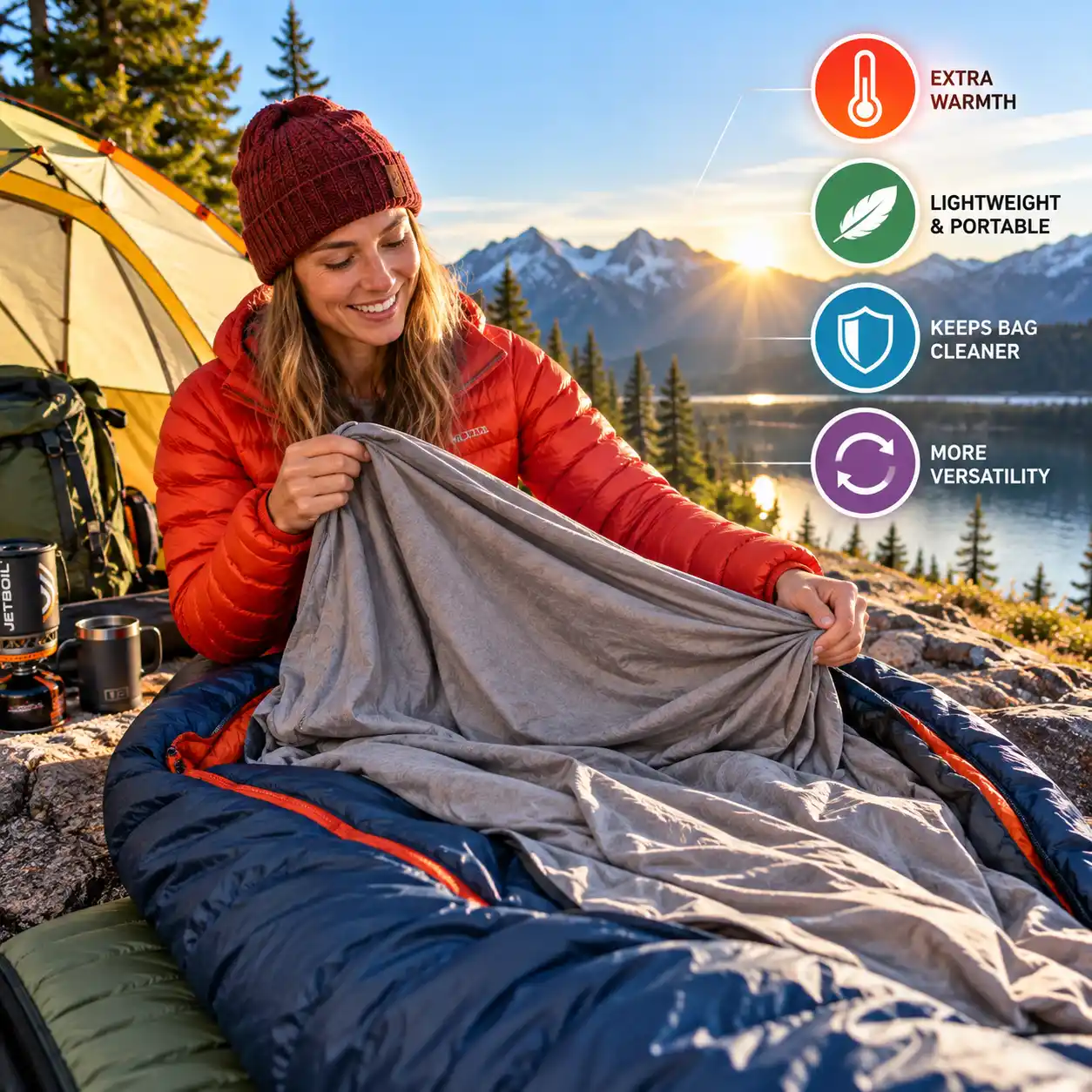
Whether a sleeping bag liner is worth carrying depends on what you expect it to accomplish. For some campers, the extra weight is justified by a combination of warmth, cleanliness, comfort, and versatility. For others, a liner adds bulk without solving the main reason they are cold at night.
The clearest case is when a small increase in warmth is all you need. A thermal or fleece liner can provide an additional insulating layer when your sleeping bag is already close to being adequate for the conditions. Recent camper discussions also show that this is how many people actually use liners: as a way to fine-tune a sleep system rather than as a replacement for a colder-rated bag.
A Liner Is Worth It If You:
- Need a modest warmth boost. This is where an insulating liner makes the most sense. It can add some warmth when your existing bag is only slightly short of your preferred comfort level.
- Want to protect an expensive sleeping bag. The liner takes much of the direct contact with your skin, reducing the amount of sweat, body oils, and dirt reaching the sleeping bag.
- Want more flexibility from one sleeping bag. A removable liner can make the same sleep system more adaptable across different seasons and temperatures.
- Primarily car camp or RV camp. Extra weight and packed volume are less consequential when you are not carrying your entire sleep system on your back.
- Care about next-to-skin comfort. A liner can change the feel of the inside of the bag considerably, especially when the sleeping bag fabric itself is not particularly comfortable.
- Want one accessory with several practical uses. Depending on the material, a liner can provide warmth, hygiene, comfort, and a lightweight sleeping option for warmer nights.
A Liner May Not Be Worth It If You:
- Already have an appropriately warm sleeping system. Carrying an additional layer may provide little noticeable benefit if your bag and sleeping pad already match the conditions well.
- Are focused on minimum pack weight. A thicker thermal or fleece liner can add considerable weight and bulk, which may make a warmer primary bag a better long-term solution.
- Dislike restrictive or shifting layers. Some campers find that liners bunch, twist, or reduce usable space inside a close-fitting sleeping bag. These concerns appear repeatedly in outdoor community discussions.
- Are buying one only because of an advertised temperature number. There is no reason to carry a liner simply because the packaging claims a large temperature increase if your actual camping conditions do not require it.
How to Choose a Sleeping Bag Liner
Choosing a sleeping bag liner starts with deciding what you want it to do. A liner designed mainly for warmth is a very different product from one chosen for hygiene, comfort, or warm-weather use. Material, thickness, weight, packed size, shape, and moisture management all affect whether it will be useful once you take it camping.
Start With Your Main Goal
For extra warmth, look for a fleece or purpose-built thermal liner. These provide a thicker insulating layer and make more sense when your sleeping bag is already close to the conditions you expect.
For hygiene and sleeping-bag protection, a lightweight silk, synthetic, or cotton liner may be enough. These liners are easier to wash than the sleeping bag and reduce direct contact with sweat, body oils, and dirt.
For warm-weather camping, a lightweight liner can sometimes be used on its own or with a lightly insulated sleeping bag. In this situation, low weight, breathability, and packability are usually more important than maximum insulation.
Choose the Material for the Conditions
Material determines much of the liner’s character.
Silk is a strong choice when low weight, compact packing, and a smooth feel against the skin matter most. It can provide some additional warmth, but it is better suited to campers who want a lightweight liner rather than a major insulation layer.
Cotton is comfortable and inexpensive, but it is heavier and can retain more moisture. It makes more sense for car camping and general hygiene than for trips where every ounce matters.
Fleece provides more insulation and a warmer feel, but the tradeoff is additional weight and packed bulk. It is particularly suitable when you are driving to camp and want a noticeable increase in warmth.
Synthetic thermal liners are designed specifically to improve insulation while controlling weight and bulk. They are worth considering when warmth is the main reason you are buying a liner and you want something more purpose-built than an ordinary fabric liner.
Consider Weight and Packed Size
A liner becomes part of your sleep system, so its weight matters just like the weight of the sleeping bag itself.
For backpacking, a lightweight silk or thin synthetic liner may be preferable because the warmth gained from a heavy liner can come at a significant weight and volume penalty. For car camping and RV camping, a heavier fleece or thermal liner can be easier to justify because transportation is less demanding.
Do not compare the liner’s weight in isolation. Consider what you are gaining for those extra ounces: additional warmth, easier cleaning, improved comfort, or a combination of benefits.
Match the Shape to Your Sleeping Bag
The liner should work with the shape of the sleeping bag rather than fight it.
A mummy-shaped liner is usually the natural choice for a mummy sleeping bag because it reduces excess fabric and follows the tapered shape of the bag.
A rectangular liner gives you more room and can be a better fit for rectangular or roomy sleeping bags. It can also be useful for campers who want to use the liner independently in warmer conditions.
Before buying, compare the liner’s dimensions with the sleeping bag’s interior. A liner that is too narrow can make the bag restrictive, while one that is excessively large may bunch up during the night.
Think About Moisture and Breathability
Warmth is not the only thermal consideration. A liner that becomes damp or traps excessive moisture can make the sleeping system less comfortable.
For humid environments, active sleepers, or longer trips, consider how the fabric handles sweat and moisture transfer. A liner that feels comfortable when dry but holds moisture against your skin may be less useful over several nights.
This is also where the intended purpose matters. A thin liner designed primarily as a washable barrier does not need the same thermal construction as a fleece or synthetic liner intended to add insulation.
Choose Based on How You Actually Camp
Your camping style should influence the final choice as much as the material.
| Camping Situation | Best Liner Type | What to Prioritize |
|---|---|---|
| Cold-weather car camping | Fleece or thermal synthetic | Warmth and comfort |
| Shoulder-season camping | Thermal synthetic or fleece | Added insulation without excessive bulk |
| Backpacking | Lightweight silk or synthetic | Low weight and compact size |
| Warm-weather camping | Lightweight silk or synthetic | Breathability, comfort, packability |
| Multi-day trips | Lightweight washable synthetic or silk | Hygiene, drying, odor management |
| Protecting an expensive sleeping bag | Silk, synthetic, or cotton | Washability and fit |
| Maximum warmth | Insulating thermal liner or fleece | Insulation first, then weight |
The best liner is therefore not necessarily the thickest or the one with the largest advertised temperature increase. Choose the material, shape, and weight according to the problem you are trying to solve. A lightweight liner can be the better choice when hygiene and packability matter, while a thicker thermal liner makes more sense when a modest increase in insulation is the main goal.
Can You Use a Sleeping Bag Liner on Its Own?
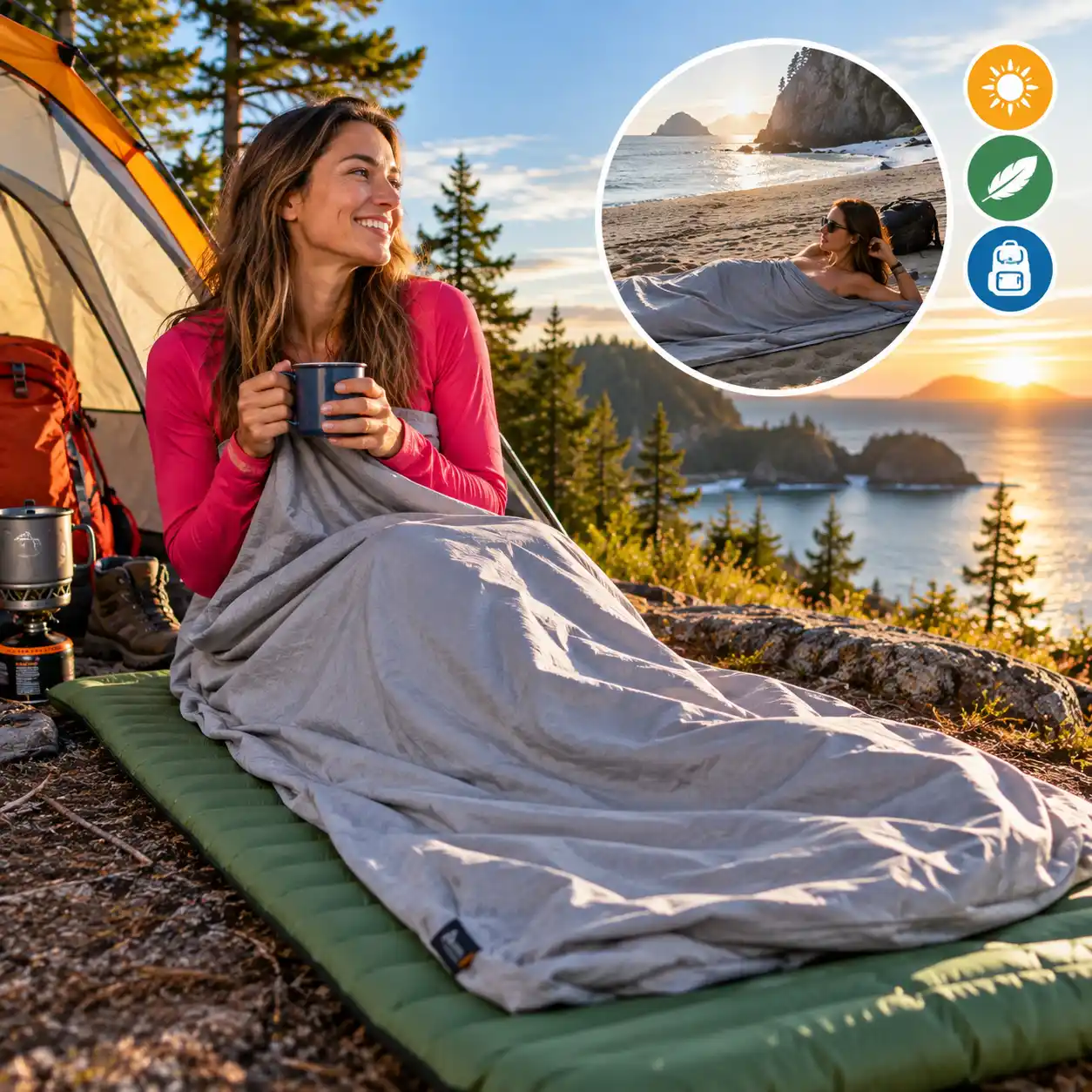
A sleeping bag liner can be used by itself in some situations, but it depends heavily on the temperature, wind, and type of liner. A standalone liner is best thought of as a light sleep layer for warm conditions, not as a replacement for an insulated sleeping bag when temperatures are low.
Lightweight silk, cotton, and synthetic liners can work well when the weather is warm enough that you do not need the insulation of a sleeping bag. They can also be useful when traveling, staying in hostels, or sleeping indoors where the main purpose is comfort and a clean layer between you and the bedding. REI specifically recommends using a liner or travel sheet by itself in hot climates, while Sea to Summit distinguishes lightweight travel liners from warmer thermal liners designed for colder outdoor use.
When a Liner Alone Makes Sense
A liner can be a practical standalone option when:
- The nighttime temperature is comfortably warm. You need a breathable covering rather than substantial insulation.
- You are traveling light. A liner takes up considerably less room than a sleeping bag and can be useful for warm-weather trips where a full bag would be excessive.
- You are staying in hostels or other shared accommodations. A liner provides a personal washable layer between you and the bedding.
- You are camping in consistently warm conditions. A lightweight liner can provide basic coverage without the bulk and heat retention of a sleeping bag.
The type of liner matters here as well. A thin silk or lightweight synthetic liner is generally more comfortable in warm conditions than a heavy fleece liner designed to add insulation inside a sleeping bag.
When a Liner Alone Is Not Enough
A liner by itself provides far less insulation than a sleeping bag because it does not contain the same integrated lofted insulation. Moving air is another important limitation: a lightweight liner that feels comfortable inside a sheltered tent can provide much less protection when wind can pass directly through the fabric. Sea to Summit specifically warns that liners designed primarily for use inside sleeping bags allow air to pass through them, so outdoor standalone use is more sensitive to breezes and drafts.
That distinction becomes especially important as temperatures fall. Even a relatively warm thermal liner should not be treated as equivalent to an insulated sleeping bag simply because its manufacturer advertises a particular temperature range. A liner used alone lacks the full insulation structure of a sleeping bag and should not be relied on for conditions where substantial thermal protection is required.
Can You Use a Thermal Liner as a Summer Sleeping Bag?
Some warmer, insulated liners are specifically designed to be versatile enough for standalone use in mild conditions. Sea to Summit, for example, identifies several Reactor and fleece models as suitable for warmer-weather standalone use, while lighter travel-oriented liners are intended primarily for comfort and hygiene.
The key is to treat a standalone liner as weather-dependent sleep gear, not as a universal substitute for a sleeping bag. Check the expected overnight temperature, consider wind exposure, and remember that your sleeping pad is still providing the insulation underneath your body.
For warm summer nights, hostels, huts, and travel, a suitable liner can be an efficient lightweight alternative to carrying a full sleeping bag. Once conditions become genuinely cool or windy, however, an insulated sleeping bag remains the more dependable choice.
Common Sleeping Bag Liner Mistakes
A sleeping bag liner can be useful, but it is easy to expect more from it than it can realistically provide. The most common problems come from treating every liner as a warmth-focused product, relying too heavily on advertised temperature gains, or choosing a liner without considering how it interacts with the sleeping bag and the rest of the sleep system.
Choosing a Liner Based Only on the Warmth Claim
A large temperature claim can make a liner look attractive, but warmth is not the only factor that determines whether it is useful.
A liner also adds weight and packed volume, and a thicker model may be less comfortable inside a close-fitting sleeping bag. Some campers choose liners primarily for hygiene and comfort and accept that the thermal benefit will be modest. That remains a valid reason to carry one.
Look at the entire product rather than the biggest number on the packaging: material, weight, packed size, shape, breathability, and intended use all matter.
Choosing a Liner That Is Too Bulky
More fabric does not automatically mean a better result. A very thick liner can reduce the usable space inside the sleeping bag, particularly in a mummy-style bag.
If the liner makes the bag feel tight, restricts your movement, or interferes with the insulation’s ability to loft normally, its additional warmth may not justify the compromise. This is especially important when choosing a thermal or fleece liner for a close-fitting sleeping system.
Using a Liner to Fix the Wrong Sleeping Bag
A liner is an accessory, not a replacement for adequate primary insulation.
If your sleeping bag is fundamentally too cold for the conditions, adding a liner may provide some improvement without making the setup genuinely appropriate. Recent discussions repeatedly compare a liner with simply using a warmer sleeping bag, a better-insulated pad, or additional clothing, particularly when the expected temperatures are well below the existing system’s comfort range.
The more significant the temperature gap, the less sensible it becomes to rely on a liner as the main solution.
Assuming a Liner Is Only for Cold Weather
Not every useful liner needs to be a thermal liner.
A lightweight silk or synthetic liner can be valuable on warm trips when you want a comfortable standalone layer, easier cleaning, or protection for the sleeping bag without adding substantial bulk. A recent 2026 Reddit discussion specifically described a silk liner being chosen primarily for cleanliness, comfort, and use on warm nights rather than for extra warmth.
That makes the liner’s value highly dependent on how you camp. A product that provides only modest insulation can still be worthwhile if you use it frequently for other reasons.
The Better Approach
Before buying a liner, decide which problem you are trying to solve.
If the goal is a small warmth increase, look for an insulating liner whose added weight and bulk fit your camping style. If cleanliness is the priority, a lightweight liner may be the better choice. If you are consistently cold despite using an appropriate liner, look at the sleeping bag, sleeping pad, clothing, and campsite conditions rather than continuing to add layers.
The mistake is not using a sleeping bag liner. The mistake is expecting one accessory to solve a sleep system that is poorly matched to the conditions.
Final Verdict: Do Sleeping Bag Liners Really Add Warmth?
Yes, sleeping bag liners can add real warmth, but they should be viewed as an additional layer rather than a fixed extension of your sleeping bag’s temperature rating. The actual benefit depends on the liner’s material and thickness, how well it fits inside the bag, and how the rest of your sleep system performs.
For a noticeable warmth increase, fleece and purpose-built thermal liners are the most appropriate choices. Lightweight silk and synthetic liners can still be useful, but their strengths are often comfort, packability, and protecting the sleeping bag rather than providing substantial insulation.
The most important point is to avoid treating a liner as a replacement for adequate primary insulation. If your sleeping bag is fundamentally too cold for the conditions, or your sleeping pad does not provide enough protection from the ground, adding a liner is unlikely to solve the underlying problem. A warmer sleeping bag or better-insulated pad is the more dependable upgrade in that situation.
For campers who already have a suitable sleep system and want a little more warmth, better comfort, easier hygiene, or greater versatility, a liner can be a worthwhile addition. The right choice depends less on the largest temperature claim on the package and more on what you need the liner to accomplish on your trips.
Bottom line: a sleeping bag liner can make a sleeping bag warmer, but there is no universal temperature boost. Choose the liner for its material, insulation, fit, weight, and intended use—not simply for the number of degrees advertised.