
What is camping R-value and how it determines your sleep quality is the single most important technical detail you need to master before heading into the wild.
Hi, I’m Anthony.
For years, I thought my sleeping bag was the problem. I owned a premium 0°F bag, yet I still woke up cold on nights that weren’t even extreme. I kept layering clothes, tightening the hood, and blaming the weather.
The truth was simpler — and more expensive in the long run.
The real problem wasn’t above me.
It was under me.
I was sleeping on a low-insulation pad with almost zero resistance to ground cold. The earth was pulling heat from my body all night long. Once I finally understood what camping R-Value actually means, I upgraded my pad — and for the first time, I slept warm.
As an Amazon Associate, we earn from qualifying purchases.
If you’ve ever asked yourself what is camping R-Value and why it matters, this guide exists for one reason:
👉 If your R-Value is too low, you will freeze — no matter how good your sleeping bag is.
🧊 What Is Camping R-Value? (Plain English Explanation)
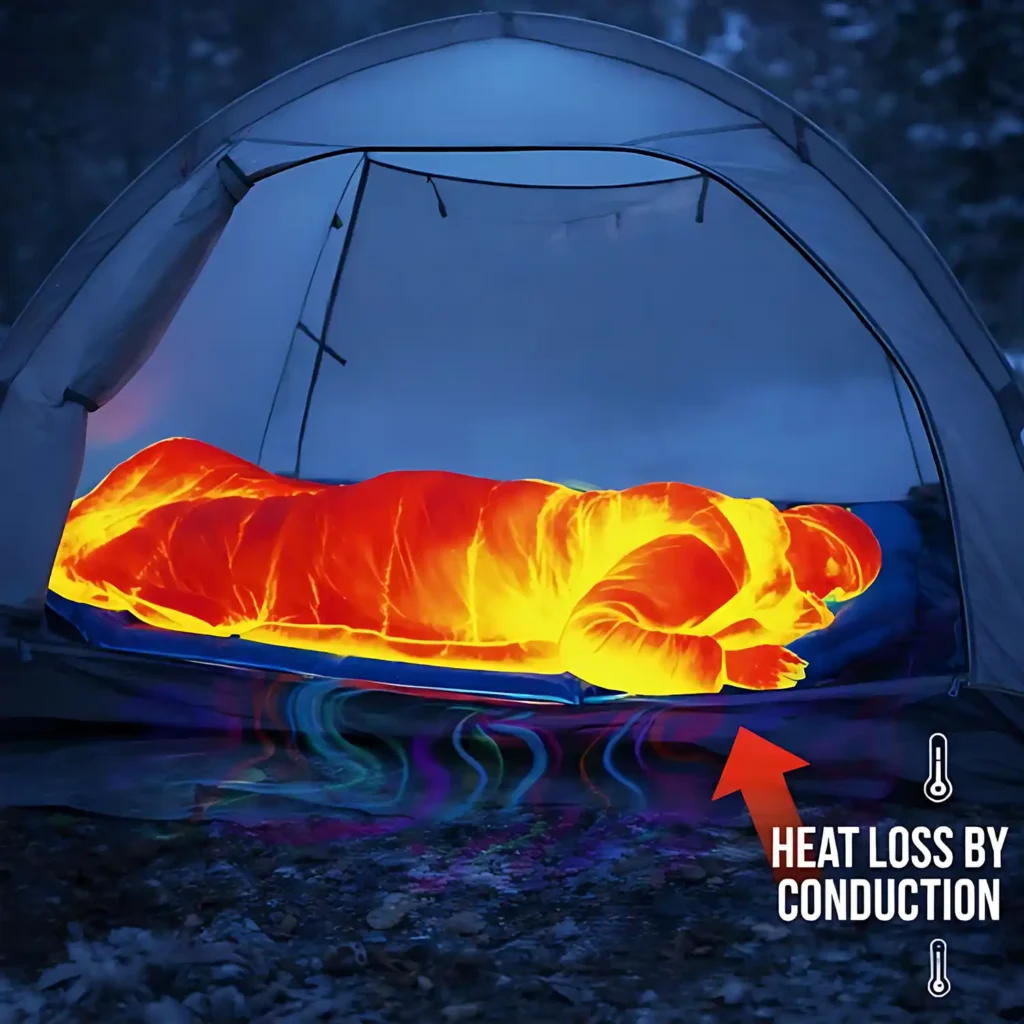
Camping R-Value stands for Resistance to Heat Flow.
It measures how effectively a sleeping pad prevents your body heat from escaping into the cold ground.
High R-Value → Strong insulation → You stay warm
This concept of thermal resistance is a universal scientific standard; according to the U.S. Department of Energy, R-value measures how well insulation resists the conductive flow of heat, which is exactly why your choice of sleeping pad is the most critical factor in tent warmth.
Low R-Value → Heat escapes → You feel the cold earth beneath you
Unlike sleeping bags, which rely on loft and air, sleeping pads fight conduction — the fastest form of heat loss in camping.
The ground doesn’t care how expensive your sleeping bag is.
If there’s no insulation between you and the earth, your body heat disappears.
📊 Camping R-Value Scale (Real-World Cheat Sheet)
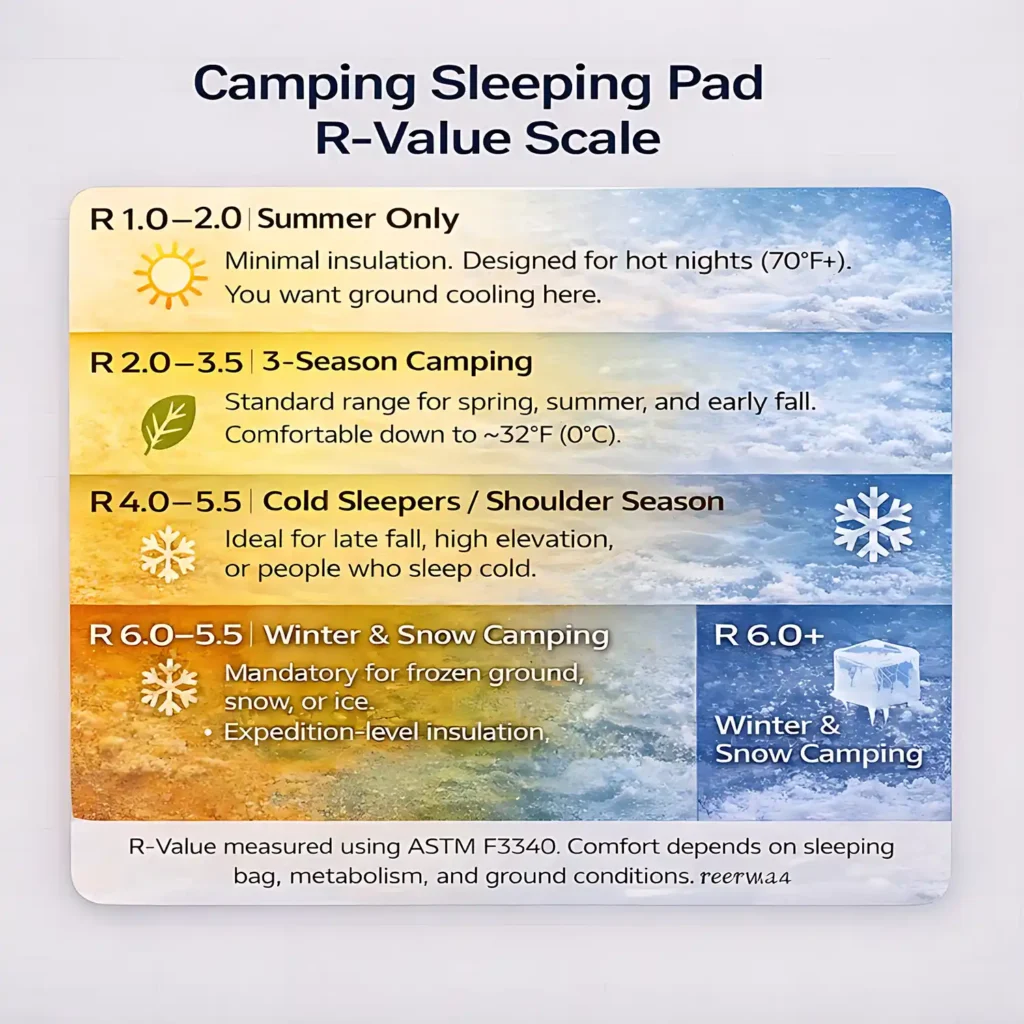
Here’s how R-Values translate into actual camping conditions:
R 1.0 – 2.0 | Summer Only
Minimal insulation. Designed for hot nights (70°F+).
You want ground cooling here.R 2.0 – 3.5 | 3-Season Camping
Standard range for spring, summer, and early fall.
Comfortable down to ~32°F (0°C).R 4.0 – 5.5 | Cold Sleepers / Shoulder Season
Ideal for late fall, high elevation, or people who sleep cold.R 6.0+ | Winter & Snow Camping
Mandatory for frozen ground, snow, or ice.
Expedition-level insulation.
Rule of thumb:
If conditions are unpredictable — round up, not down.
❌ Common R-Value Myths That Make Campers Freeze
Many campers misunderstand R-Value. These myths cause more cold nights than bad weather.
❌ Myth #1: “A warmer sleeping bag fixes a low R-Value pad.”
False. Your body compresses the insulation under you. Once compressed, it provides almost zero warmth.
❌ Myth #2: “R-Value is just a marketing number.”
Wrong. Since 2020, R-Value is standardized across brands (ASTM testing). It’s real, measurable insulation.
❌ Myth #3: “R-Value only matters in winter.”
Cold ground drains heat even on cool summer nights — especially at altitude.
🧠 Why R-Value Matters More Than Your Sleeping Bag
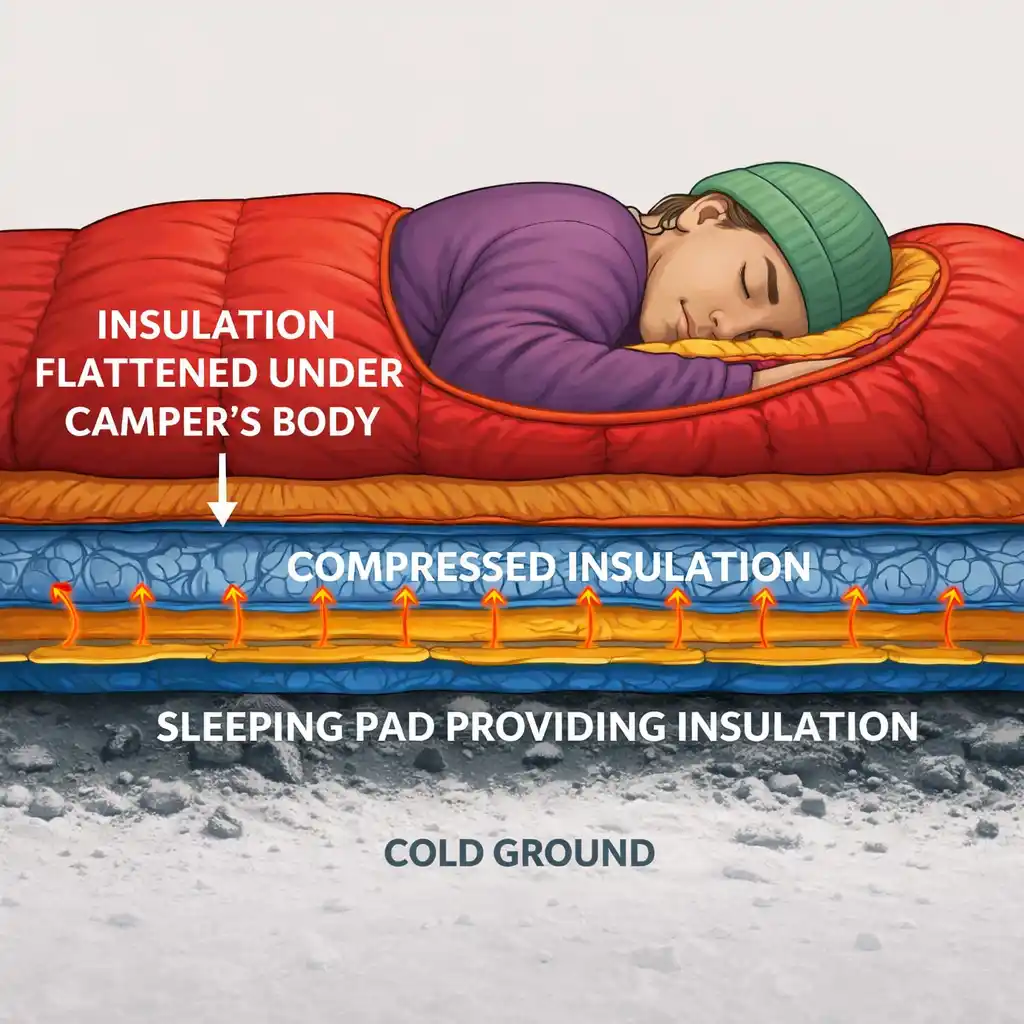
When you lie on a sleeping bag, the insulation underneath you is crushed flat.
Crushed insulation = no warmth.
At that point, only your sleeping pad is insulating you.
If this article teaches you one thing, remember this:
A great sleeping bag cannot compensate for a bad sleeping pad.
Understanding what camping R-Value means fundamentally changes how you build a sleep system.
Check out our field-tested guide to the 5 Best Camping Mattresses & Sleeping Mats for Car Camping in 2026 to find the perfect high R-value match for your next trip.
🧱 What R-Value Does NOT Do
R-Value is critical — but it isn’t magic.
❌ It does not measure softness or comfort
❌ It does not block wind above ground
❌ It does not fix bad campsite selection
While R-value handles ground insulation, you can tackle air temperature by following our 9 Essential Tips on How to Keep a Tent Warm during winter nights.
R-Value handles ground insulation only.
Everything else comes from your tent, bag, and site choice.
🧩 Can You Stack Sleeping Pads?
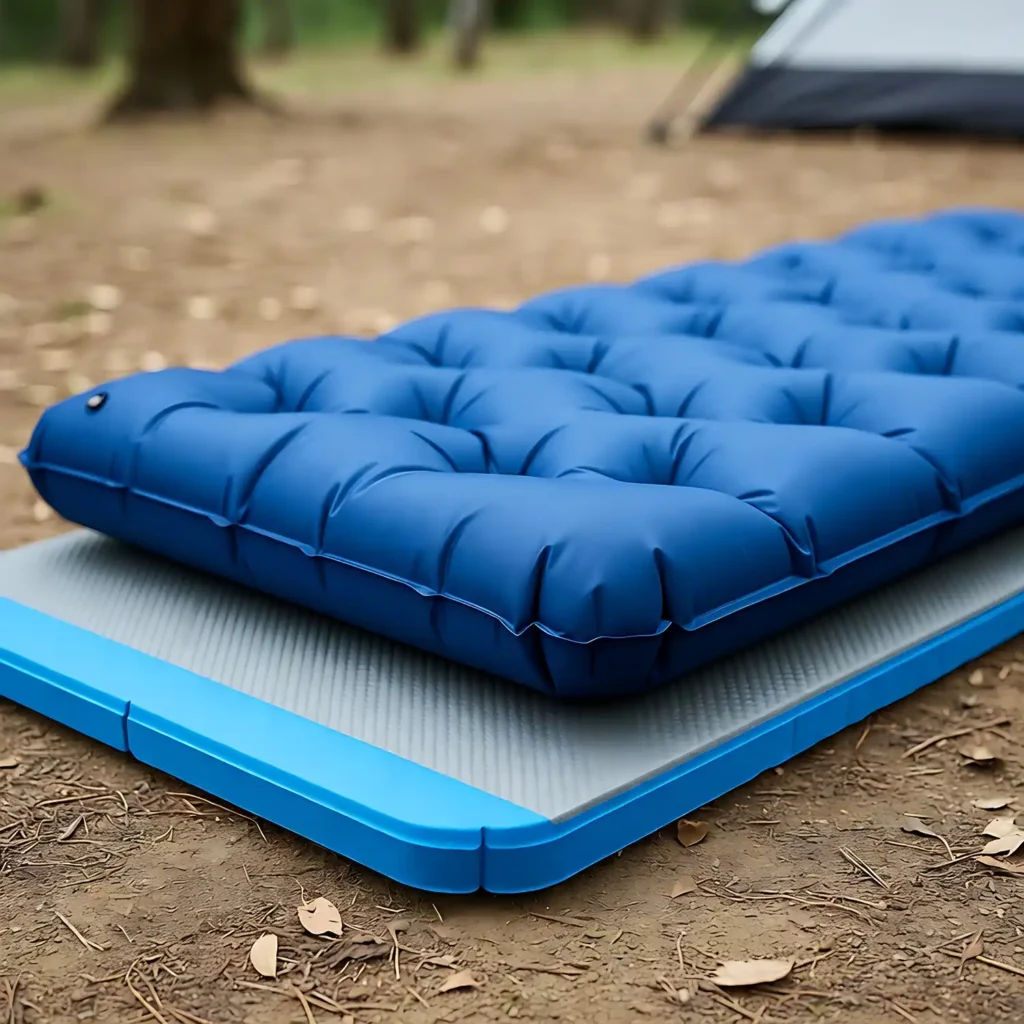
Yes — and it’s one of the smartest budget strategies in camping.
R-Values are additive.
Foam pad (R 2.0)
Inflatable pad (R 3.0)
= Combined R-Value of 5.0
This technique is widely used in winter camping and shoulder seasons. Foam pads also protect inflatables
🧍♀️ Women & Cold Sleepers Need Higher R-Values
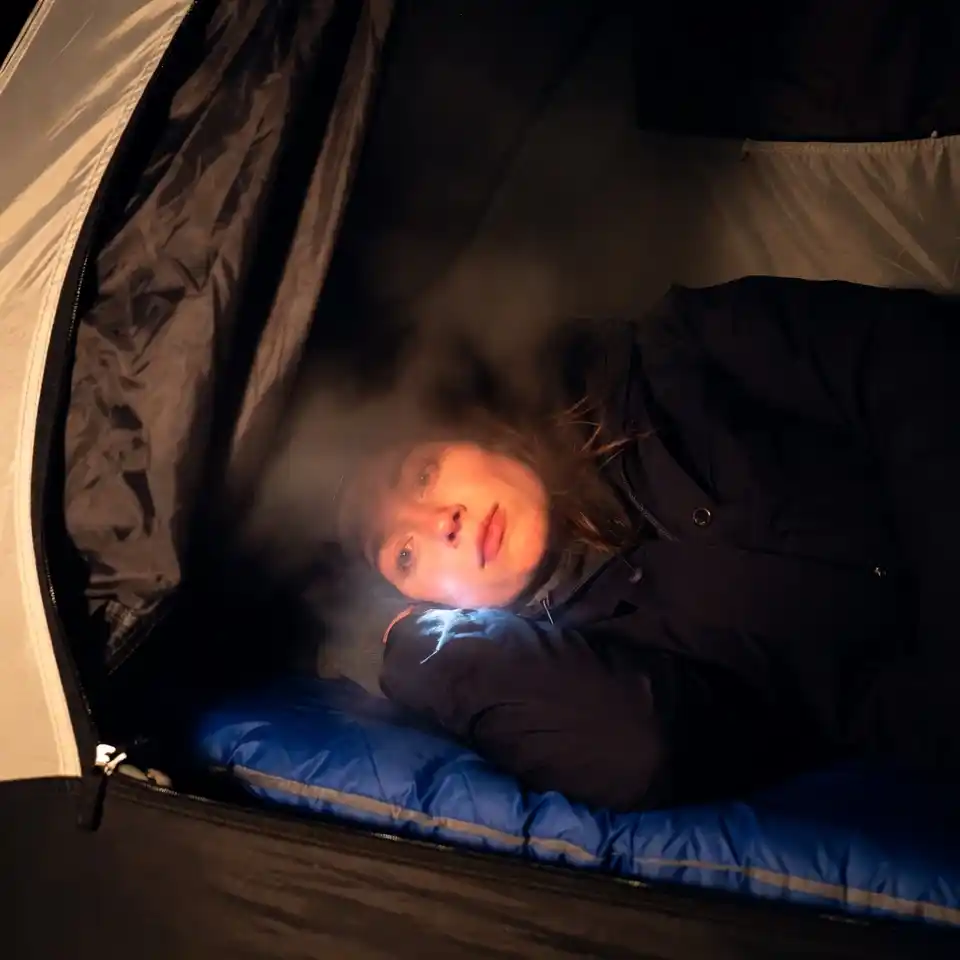
Field data and physiology both show the same result:
women generally sleep colder than men.
If you’re shopping for a female partner — or you know you sleep cold — add +1 R-Value to the minimum recommendation.
Example:
Standard target: R 3.5
Cold sleeper target: R 4.5–5.0
This small difference often determines whether a trip is comfortable or miserable.
If you’re a cold sleeper, consider adding an extra layer of protection with the 5 Best Camping Blankets in 2026 to supplement your pad’s R-value.
🏕️ Choosing the Right R-Value for Real Camping
Use this as a practical guide:
Car Camping (Spring–Fall): R 4.0–5.0
3-Season Backpacking: R 3.5–4.5
Late Fall / High Elevation: R 5.0–6.0
Winter / Snow Camping: R 6.5+
If your trip includes unknown weather, elevation, or frozen ground — higher R-Value wins.
❓ Camping R-Value FAQ
Is higher R-Value always better?
For versatility, yes. Excess warmth can be vented; missing insulation cannot be fixed.
Can I replace a high R-Value pad with two cheap ones?
Yes. R-Values stack and are commonly combined for winter setups.
Does thickness equal warmth?
No. Thickness improves comfort. Insulation determines warmth.
🏁 Final Thoughts
Now that you understand what camping R-Value is, guessing should stop.
For most campers, an R-Value between 4.0 and 6.0 is the safest, most flexible choice. It protects you from unexpected cold snaps while remaining usable year-round.
Cold nights outdoors aren’t caused by bad luck or weak sleeping bags.
They’re caused by heat loss to the ground.
Choose the right R-Value — and the cold stops being a problem.
New to the outdoors? Don’t break the bank on your first shelter—read our review of the 5 Best Budget Camping Tents Under $200 That Actually Work to start your journey.
Sleep warm,
— Anthony