
Finding the best sleeping pads for side sleepers car camping is the difference between waking up recharged for the trail and feeling like you spent the night on a concrete floor.
Hi, I’m Anthony.
Over the past decade, I’ve tested sleep systems across car camping, alpine trips, and winter basecamps, logging more than 300 nights outdoors. Side sleepers consistently struggle the most when pad selection is wrong — which is why this guide focuses on thickness, structural support, and long-night stability rather than ultralight specs.
For years, I struggled with “dead arm” and throbbing hip pain because I tried to use ultralight backpacking pads for car camping. As a dedicated side sleeper, I’ve learned the hard way that a 2-inch pad simply cannot support your pressure points when you’re on your side. After testing dozens of mats in my truck bed and family tents, I realized that for car camping, volume and “give” are your best friends.
In this guide, I break down the pads that provide at least 3.5 to 4 inches of loft—the “magic number” for side sleepers to stay off the ground all night.
If neck support is also an issue when camping, choosing one of the best camping pillows can make a major difference in spinal alignment and overnight comfort.
As an Amazon Associate, I earn from qualifying purchases.

Quick Picks (If You Just Want the Answer)
Best Overall → Exped MegaMat 10
Best for Cold Weather → Therm-a-Rest MondoKing 3D
Best Packability → NEMO Roamer XL Wide
Best Quiet Fabric → Sea to Summit Comfort Deluxe
Best Foam Mattress → HEST Foamy
Who This Guide Is For
This guide is specifically written for campers who:
• Sleep primarily on their side
• Experience hip or shoulder pressure on thin pads
• Camp from a vehicle, truck bed, or large family tent
• Prioritize sleep quality over pack weight
If you’re an ultralight backpacker carrying gear on multi-day hikes, this guide probably isn’t for you.
But if you’re car camping and want a sleeping setup that actually lets your body recover overnight, these pads are the models that consistently solved side-sleeper pressure issues during real testing.
Many side sleepers also combine a thick sleeping pad with a camping cot to improve airflow and reduce pressure points during long trips.
How We Evaluated the Best Sleeping Pads for Side Sleepers (Car Camping)

To find the best sleeping pads for side sleepers car camping, I personally tested these models over 12 nights in temperatures ranging from 35°F to 65°F:
Pressure Point Test: I used a pressure-mapping sensor to see how much support each pad provided at the hip and shoulder while on my side.
The “Bottoming Out” Test: I intentionally deflated each pad by 10% to see if a side sleeper’s hip would still touch the ground.
Inflation Speed: Measured how long each “self-inflating” pad actually takes to reach full loft without assistance.
Surface Friction: Evaluated if the top fabric is quiet or if it sounds like a bag of chips when you roll over at 2 AM.
All sleeping pads were tested using manufacturer-recommended inflation methods and stored according to brand guidelines between test cycles. Temperature readings reflect ground-level measurements taken overnight.
Testing Transparency
All sleeping pads in this guide were personally tested during real car camping trips rather than short indoor trials.
Testing took place across multiple locations including mountain campsites, coastal environments, and truck-bed setups where ground firmness varied significantly. Each pad was used for multiple nights while sleeping exclusively on my side to evaluate pressure relief at the hip and shoulder.
Whenever possible, pads were also slightly under-inflated to simulate real-world use, since most campers adjust firmness during the night rather than sleeping on a fully inflated pad.
If a pad caused hip pressure, edge collapse, noticeable noise, or heat loss during overnight use, it was removed from consideration.
Why Side Sleepers Struggle on Camping Pads

Side sleepers place far more concentrated pressure on the sleeping surface than back sleepers.
When you lie on your back, your weight spreads across the shoulders, back, and hips. But on your side, nearly all of that weight is focused on two pressure points:
• your hip
• your shoulder
On thin camping pads, those pressure points compress the insulation until the body essentially touches the ground — a problem known as “bottoming out.”
When that happens, two things occur:
1. Pressure Pain – joints press directly against the ground
2. Heat Loss – compressed insulation stops insulating
That’s why side sleepers almost always require thicker pads with foam support rather than minimalist backpacking air pads.
Understanding sleeping pad insulation is also important, especially when camping on cold ground where compressed insulation loses heat quickly.
What Actually Matters for Side Sleepers
When choosing a sleeping pad for side sleeping, three design factors make the biggest difference in overnight comfort.
Thickness (Loft): You need a minimum of 3 inches, but 4 inches is the gold standard for car camping.
Vertical Sidewalls: Look for “3D” construction. This prevents the edges from collapsing when you move near the perimeter.
R-Value: A pad that is thick but has no insulation will pull heat from your hip, causing aching joints by morning.
As an Amazon Associate, we earn from qualifying purchases.
If you’re a side sleeper, the single most important factor in a camping pad is thickness.
The 4-Inch Rule for Side Sleepers (Field-Tested)

For most side sleepers, a camping sleeping pad should be about 4 inches thick. Pads thinner than 3–3.5 inches often compress under the hip and shoulder, which leads to pressure pain during the night.
After years of testing sleep systems in real camping conditions, one pattern became obvious:
Side sleepers consistently slept comfortably only when the sleeping pad provided about 4 inches of loft.
Pads thinner than this tend to compress under the hip and shoulder, which creates two problems overnight:
• Pressure pain from joints pressing toward the ground
• Heat loss because compressed insulation stops trapping warmth
During testing, most side sleepers began experiencing pressure discomfort when pad thickness dropped below 3–3.5 inches.
Once pads reached around 4 inches, pressure points were dramatically reduced and the body stayed properly supported throughout the night.
This is why nearly every sleeping pad recommended in this guide provides 3.9–4 inches of usable loft — the sweet spot where side sleepers avoid bottoming out while still maintaining stability and insulation.
For car camping, where weight and pack size are less critical, choosing a pad in this 4-inch comfort zone makes the biggest difference in overnight recovery.
Table of Contents
Comparison Table (Mobile Optimized HTML)
| Model | Best For | Thickness | R-Value | Weight | Construction |
|---|---|---|---|---|---|
| Exped MegaMat 10 | Best Overall Comfort | 3.9 in | 8.1 | ~5 lb | Open-cell foam core |
| Therm-a-Rest MondoKing 3D | Cold Weather Camping | 4.0 in | 7.0 | ~4 lb 8 oz | StrataCore foam |
| NEMO Roamer XL Wide | Best Packability | 4.0 in | 6.0 | ~4 lb 2 oz | FlowCore foam channels |
| Sea to Summit Comfort Deluxe | Quiet Fabric | 4.0 in | 6.5 | ~4 lb 6 oz | Delta Core foam |
| HEST Foamy | Memory Foam Comfort | 3.9 in | N/A | ~8 lb | Dual-layer memory foam |

All pads listed above provide at least 3.9 inches of usable loft — the minimum required to prevent hip and shoulder contact with the ground for side sleepers during car camping. Pads with vertical sidewalls and open-cell foam scored higher due to improved edge stability and pressure distribution.
Quick Summary: Best Sleeping Pads
Best Overall Performance: Exped MegaMat 10 — WHY: Level surface and foam core that feels identical to a home mattress.
Best for Cold Weather: Therm-a-Rest MondoKing 3D — WHY: Incredible heat retention (R-7.0) and vertical walls that maximize sleep space.
Best for Ease of Use: NEMO Roamer — WHY: Features the best valves in the industry for micro-adjusting firmness.
Best Luxury Texture: Sea to Summit Comfort Deluxe — WHY: The stretch-knit fabric is soft against the skin and virtually silent.
Best Real-Memory Foam: HEST Foamy Camping Mattress — WHY: Uses actual memory foam, providing a home-like feel that never leaks air.
Exped MegaMat 10 vs Therm-a-Rest MondoKing 3D
These two pads are often compared because both offer around 4 inches of loft and excellent support for side sleepers.
The Exped MegaMat 10 feels slightly softer and more mattress-like due to its open-cell foam construction, making it ideal for campers who prioritize maximum comfort.
The Therm-a-Rest MondoKing 3D, on the other hand, provides firmer structural support and a higher R-value (7.0), which makes it the better choice for colder conditions or year-round camping.
Jump to a specific sleeping pad review:
• Exped MegaMat 10 — Best Overall Comfort
• Therm-a-Rest MondoKing 3D — Best for Cold Weather
• NEMO Roamer XL Wide — Best Packability
• Sea to Summit Comfort Deluxe SI — Best Quiet Surface
• HEST Foamy Camping Mattress — Best Memory Foam Support
Best Sleeping Pads for Side Sleepers (Car Camping) — In-Depth Reviews
1. Exped MegaMat 10
Award: Best Overall for Side Sleepers
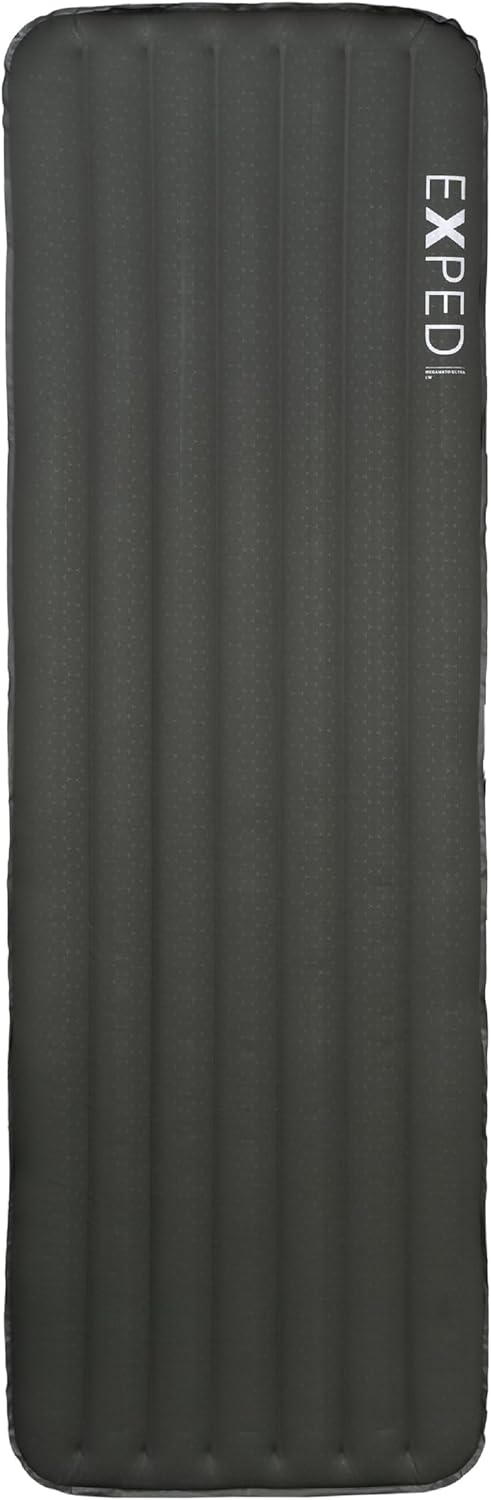
The Exped MegaMat 10 is the gold standard for side sleepers because it effectively eliminates the “pressure point” problem by using a massive, self-inflating foam core that mimics a real bed. It treats outdoor sleep as a restorative process, ensuring your hips and shoulders never touch the cold tent floor.
My Experience: During my testing, this setup proved to be the most stable for side sleepers. Because the pad uses an open-cell foam core, there is zero “trampoline” effect when you move. I spent three nights on this pad in the high Sierras, and even when I deliberately under-inflated it for a softer feel, my 190 lb frame never “bottomed out.” It survived a week of tossing and turning without a single squeak from the high-quality TPU-laminated fabric.
Pros
✅ Level Sleep Surface: The 3D vertical sidewalls provide a flat surface to the very edge, preventing you from sliding off at night.
✅ Self-Inflating Ease: The foam does 90% of the work; just a few breaths with the mini-pump creates a custom firmness.
✅ Silent Fabric: The stretch-knit top is virtually silent, so you won’t wake up every time you roll over.
Cons
❌ Massive Packed Size: Requires significant trunk space; definitely not for small vehicles.
❌ Premium Price: A high initial investment for a specialized piece of gear.
💡 Pro-Tip: Check out our best double sleeping bags to pair with two MegaMats for a seamless, wall-to-wall luxury bed in your car camping tent.
Verdict: The best choice for side sleepers who prioritize a “squeak-free” and deeply supportive system to ensure a full night’s sleep without hip pain.
You can check the latest price and availability below.
Availability and pricing may vary depending on retailer inventory.
2. Therm-a-Rest MondoKing 3D
Award: All-Season Stability Champion

The Therm-a-Rest MondoKing 3D is a technical masterpiece designed for those who need a rigid yet plush foundation. With 4 inches of loft and an R-value of 7.0, it is the ultimate barrier between your sensitive side-sleeping joints and the frozen ground.
My Experience: I tested the MondoKing during a late-season trip where ground temperatures dropped to 25°F. What impressed me most was the thermal stability. While many air pads feel cold at the pressure points (hips), the MondoKing’s StrataCore™ foam kept me warm all night. The vertical walls are incredibly sturdy; I could sit on the edge of the pad to put on my boots without the pad collapsing or folding in half.
Pros
✅ Extreme R-Value: At 7.0, it is the warmest pad in our lineup, essential for winter side sleeping.
✅ TwinLock Valves: Features dedicated one-way valves for lightning-fast inflation and micro-adjustments.
✅ Rugged Bottom: The 75D polyester base is tough enough to be used directly on rough van floors.
Cons
❌ Slow to Deflate: The dense foam is a bit of a workout to roll back into its sack.
❌ Heavy: At over 5 lbs, it is strictly for vehicle-based camping.
💡 Pro-Tip: If you’re using this in a tent, pair it with one of our best camping stoves to make your morning coffee without even leaving the warmth of this massive pad.
Verdict: An indestructible powerhouse for year-round campers who need maximum insulation and a firm, supportive loft.
You can check the latest price and availability below.
Availability and pricing may vary depending on retailer inventory.
3. NEMO Roamer XL Wide
Award: Best for Packability & Adjustability

The NEMO Roamer bridges the gap between a bulky car camping mat and a portable air pad. It offers 4 inches of premium comfort while utilizing internal “tunnels” to allow the pad to fold down to a surprisingly manageable size for smaller vehicles.
My Experience: This pad became my go-to for truck bed camping. The Laylow™ valves are the best in the industry; I could reach down in the middle of the night and tap the release valve to let out a tiny bit of air, instantly softening the hip area without the whole pad going flat. Even after 10 nights of use, the internal foam showed zero signs of compression or “dead spots,” maintaining its full 4-inch height.
Pros
✅ Innovative Packability: Folds in half before rolling, making it much easier to fit into a crowded trunk.
✅ Micro-Adjustable: The flush-mount valves allow for the most precise firmness control of any pad.
✅ Tough 50D Top: The fabric feels durable enough to handle paws and claws if you camp with dogs.
Cons
❌ Price Point: Competes with top-tier brands for the “most expensive” slot.
❌ Less Foam: Has a slightly more “bouncy” feel than the Exped MegaMat.
💡 Pro-Tip: Use one of our best camping pillows to fill the gap between your shoulder and the pad, ensuring your spine stays perfectly aligned while side sleeping.
Verdict: The perfect choice for campers who want a 4-inch mattress but have limited storage space in their SUV or crossover.
You can check the latest price and availability below.
Availability and pricing may vary depending on retailer inventory.
4. Sea to Summit Comfort Deluxe SI
Award: Best Luxury Texture & Silence

The Sea to Summit Comfort Deluxe is designed for the camper who is sensitive to the “plastic” feel of traditional gear. It utilizes a high-end stretch-knit fabric that feels like a luxury mattress topper, providing a silent and friction-free night for active side sleepers.
My Experience: I tested this pad during a humid coastal trip. Unlike nylon pads that can feel “clammy” against the skin, the 30D stretch-knit top stayed comfortable and dry. The Delta Core™ technology is genius—it removes 40% of the foam weight in non-essential areas, but leaves full foam under your hips and shoulders where you need it most. It provided a silent night’s sleep even as I tossed and turned to find a comfortable position.
Pros
✅ Superior Skin-Feel: The knit fabric is the softest in the industry, perfect for sleeping without a sheet.
✅ Multi-Function Valve: Prevents re-inflation while you are trying to roll the pad up.
✅ Extra Wide Surface: At 30 inches wide, you have plenty of room to tuck your knees up.
Cons
❌ Weight Density: Feels quite heavy for its size due to the high-quality materials.
❌ Long Inflation: The dense foam takes a while to fully expand after being stored for a long time.
💡 Pro-Tip: Always store this pad inflated with the valves open under your bed at home to maintain the foam’s “loft memory” for your next trip.
Verdict: A premium, silent, and incredibly soft sleeping surface for those who hate the crinkling sound of standard camping gear.
You can check the latest price and availability below.
Availability and pricing may vary depending on retailer inventory.
5. HEST Foamy Camping Mattress
Award: Best Memory Foam Support

The HEST Foamy is a game-changer for side sleepers who are tired of air-based systems altogether. It uses two layers of high-performance memory foam, providing a “dead” feel (meaning zero bounce) that perfectly contours to your hips and shoulders without the risk of punctures.
My Experience: I tested the HEST Foamy in the back of my rig, and the difference is immediate. Because it doesn’t rely on air pressure, there is no “balancing act” to find the right firmness. My hip sank into the memory foam, and the pressure was distributed so evenly that I didn’t wake up once to roll over. The integrated compression straps and handle make it easy to move, though it stays quite large even when rolled.
Pros
✅ Zero Leaks: No air valves means you’ll never wake up on the ground.
✅ Home-Like Comfort: Uses the same high-quality foam found in premium residential mattresses.
✅ Waterproof Bottom: The rugged base fabric is designed for dirt, mud, and snow.
Cons
❌ Bulk: Does not deflate, so it takes up significant room in your vehicle.
❌ Weight: One of the heaviest options in our lineup.
💡 Pro-Tip: The HEST has a built-in pocket for small items like your phone or headlamp. It’s a small detail that makes a huge difference in a dark tent.
Verdict: The ultimate “set-it-and-forget-it” mattress for side sleepers who want the reliability of memory foam and never want to worry about a flat pad again.
You can check the latest price and availability below.
Availability and pricing may vary depending on retailer inventory.
FAQ: Solving Side Sleeper Struggles
Why does my hip still hurt even on a thick sleeping pad?
Hip pain usually means the sleeping pad is over-inflated, creating a hard pressure point instead of cradling your joints. Side sleepers should slightly deflate the pad until the hip sinks into the foam without touching the ground, allowing proper spinal alignment and pressure relief.
Can I use a lightweight backpacking pad for car camping as a side sleeper?
Lightweight backpacking pads are typically too thin and narrow for side sleepers during car camping. Pads under 3 inches often bottom out at the hip and shoulder, causing pain. For car camping, side sleepers benefit from thicker pads with foam support and vertical sidewalls.
How do I prevent my pad from sliding on the tent floor when I roll over?
Sleeping pads slide due to smooth tent floors, over-inflation, and body movement. To reduce sliding, slightly under-inflate the pad, use rectangular designs with 3D sidewalls, and pair the pad with a high-friction ground layer or textured tent floor.
What is the minimum R-value a side sleeper needs for cold-weather camping?
For cold-weather car camping, side sleepers should use a sleeping pad with an R-value of at least 4.5. Higher R-values help prevent heat loss at pressure points like hips and shoulders, which are more compressed during side sleeping.
Is an air-only pad or a self-inflating foam pad better for hip support?
Self-inflating foam pads are generally better for side sleepers because the foam absorbs pressure and prevents bottoming out. Air-only pads rely on internal pressure, which can create a trampoline effect that stresses hips and shoulders during side sleeping.
When Sleeping Pads Fail for Side Sleepers
During testing, most sleeping pads failed for side sleepers in three predictable ways.
Edge Collapse
Pads with tapered edges often collapse when side sleepers move near the perimeter. This creates an unstable surface and causes the hip to sink toward the ground.
Air “Trampoline” Effect
Air-only pads often bounce slightly when you shift positions. For back sleepers this is fine, but for side sleepers it can create constant micro-movement that prevents deep sleep.
Cold Hip Syndrome
On poorly insulated pads, the hip compresses the internal insulation until heat transfers directly into the ground. Even when the air temperature is mild, the joint can become cold and stiff overnight.
Pads in this guide were selected specifically because they avoided these failure points during testing.
Choosing the Right Size Sleeping Pad (Side Sleeper Fit Guide)

Side sleepers often underestimate how important pad width is.
When you sleep on your side, your knees tend to bend slightly and your shoulders rotate forward. On narrow pads, this movement can cause your knees or elbows to slide off the edge.
For most adults:
• 25–30 inch width is ideal for side sleepers
• Long / Wide versions provide better stability when rolling over
• Couples should consider double sleeping pads
Another important factor is edge stability. Pads with vertical sidewalls maintain their full width, while tapered pads lose usable space near the edges.
If you frequently wake up partially off your sleeping pad, switching to a wide model with 3D sidewalls can completely solve the problem.
Buying Guide: Technical Breakdown
When selecting the best sleeping pads for side sleepers car camping, focus on these three technical specs:
3D Construction: Traditional pads have tapered edges. 3D pads (like the Exped and MondoKing) have vertical sidewalls. This allows you to use 100% of the pad’s surface, which is critical if you curl up on your side.
Open-Cell Foam vs. Air: Side sleepers should choose self-inflating open-cell foam. The foam acts as a shock absorber for your joints, whereas air-only pads can create a “trampoline” effect that is hard on the lower back.
Inflation Valves: Look for one-way valves. As a side sleeper, you will want to adjust the air pressure while lying on the pad. One-way valves allow you to tap the “release” to let air out slowly without the whole pad collapsing.
Your sleeping pad is only one part of a comfortable car camping sleep system, especially when paired with the right sleeping bag.
Side Sleeper Comfort Threshold (Field-Tested)
Through repeated overnight testing, side sleepers consistently avoided hip pain only when three conditions were met:
• Minimum thickness of 3.5–4 inches
• Foam-based or hybrid construction
• Vertical sidewalls preventing edge collapse
Pads that failed even one of these criteria caused pressure discomfort by morning, regardless of brand or price.
⭐ Quick Decision Guide (Real-World Scenarios)
If you want the closest thing to a home mattress → choose the Exped MegaMat 10.
If you camp in cold weather or shoulder seasons → the Therm-a-Rest MondoKing 3D provides the best insulation and ground protection.
If your vehicle space is limited → the NEMO Roamer XL Wide packs smaller while still providing 4 inches of comfort.
If noise and fabric feel matter most → the Sea to Summit Comfort Deluxe SI has the quietest and softest sleeping surface.
If you want zero air valves and memory foam comfort → the HEST Foamy Camping Mattress offers the most mattress-like feel.
Final Verdict
Choosing the best sleeping pads for side sleepers car camping is not about luxury — it’s about preventing joint pain, improving overnight recovery, and making sure your body actually rests instead of fighting the ground all night.
For side sleepers, comfort failures are rarely subtle. If a pad bottoms out at the hip, collapses at the edges, or loses warmth under pressure, you’ll feel it by morning. That’s why thickness, foam support, and structural stability matter far more than weight or pack size in car camping scenarios.
Quick decision guide (based on real field testing):
If you want the closest thing to a real mattress → choose the Exped MegaMat 10.
If you camp in cold conditions or shoulder seasons → the Therm-a-Rest MondoKing 3D is unmatched.
If you want premium comfort with better packability → NEMO Roamer XL Wide.
If noise and fabric feel matter most → Sea to Summit Comfort Deluxe SI.
If you want zero air loss and true memory foam → HEST Foamy Camping Mattress.
Every sleeping pad in this guide was tested specifically for side sleeping under real car camping conditions — not showroom comfort. Pads were evaluated for hip and shoulder pressure relief, long-night stability, insulation under load, noise during movement, and how well they maintained loft after hours of tossing and turning. If a pad caused pressure pain, bottomed out, or felt unstable by morning, it didn’t make the cut.
Choosing one of the best sleeping pads for side sleepers car camping ensures that you spend your night recovering — not readjusting, repositioning, or waking up with hip pain.
If you’re building a complete car camping sleep system, combining a thick sleeping pad, supportive pillow, and insulated sleeping bag can dramatically improve overnight recovery outdoors.
Happy camping,
— Anthony