
The best camping stoves for car camping make outdoor cooking dramatically easier — but only if they can handle real campground conditions instead of just looking impressive on a product page.
A stove that feels powerful during a quick backyard test can become frustrating fast once real camping variables show up: shifting wind, uneven burner control, weak simmer performance, greasy cleanup, cramped cooking space, or cold morning ignition problems.
I learned that the hard way after burning breakfast on a cheap two-burner stove during a rainy lakeside trip in northern Idaho. One burner blasted everything on high while the second struggled to keep coffee hot once the wind picked up. By the second morning, cooking felt more stressful than relaxing.
Hi, I’m Anthony.
Over the past several years, I’ve tested camping stoves during family campground trips, windy coastal campsites, cold mountain mornings, and extended car camping setups where cooking reliability matters a lot more than advertised BTU numbers.
Some camping stoves boil water incredibly fast but struggle with actual meal cooking. Others handle wind surprisingly well but become annoying to clean after several greasy campground dinners. And some compact stoves save cargo space while sacrificing the burner spacing needed for larger cookware and cast iron pans.
This guide focuses on camping stoves that work well for real-world car camping — especially for campers who actually cook outdoors instead of simply boiling water for freeze-dried meals.
If your camp cooking setup already feels cramped or disorganized, our guide to Best Camping Kitchen Tables for Cooking explains which table designs actually improve campsite workflow and food prep efficiency.
As an Amazon Associate, we earn from qualifying purchases.
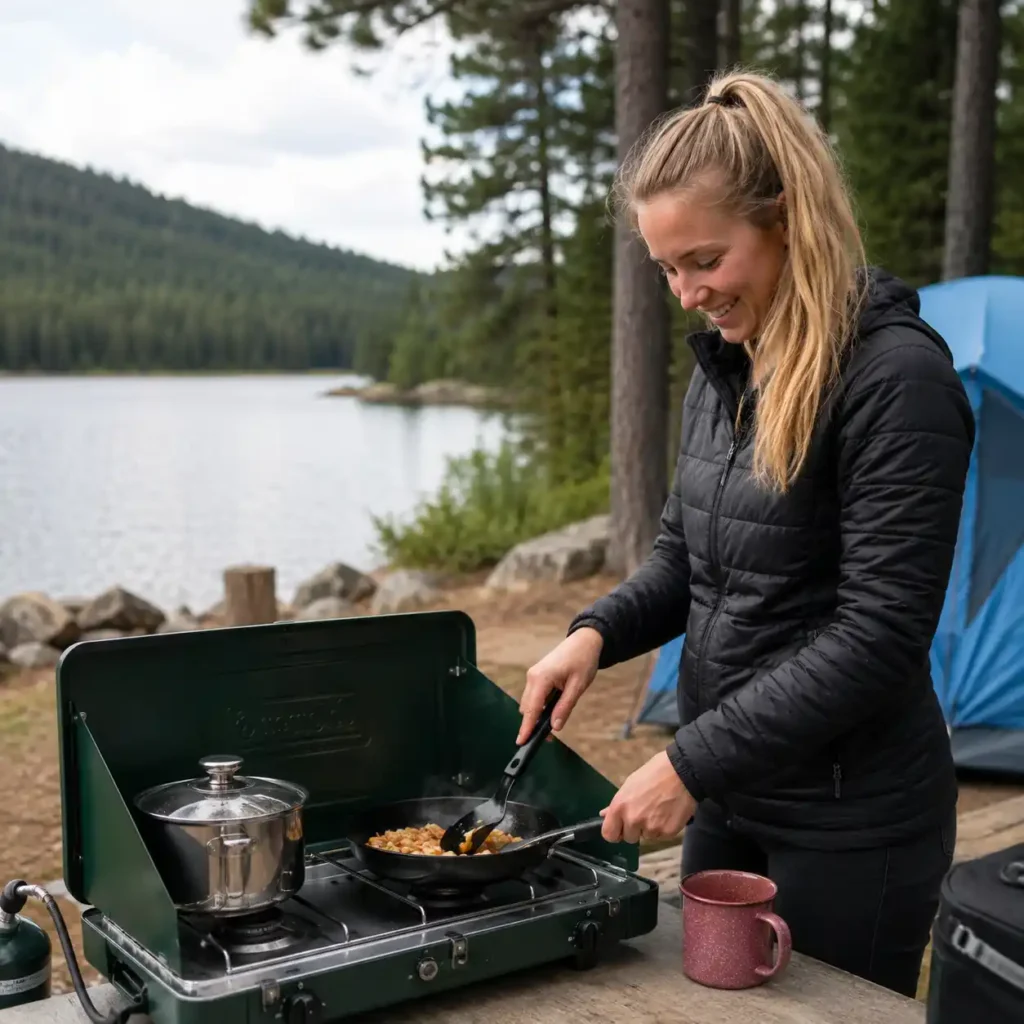
Table of Contents
How We Tested Camping Stoves for Car Camping
We tested these camping stoves during real campground cooking setups rather than quick backyard boil tests. Most propane stoves look fine when conditions are perfect. The real differences show up after several meals, changing weather, greasy cleanup, and repeated use across multiple camping trips.
Our testing focused heavily on the situations that actually frustrate campers outdoors:
– shifting wind during cooking
– uneven burner heat
– weak simmer control
– cold morning ignition
– greasy cleanup after cooking
– cramped burner spacing
– unstable cookware support
– fuel efficiency during longer trips
Wind Performance Testing
Wind changes camp cooking more than most campers expect.
We tested each stove in exposed campground conditions using side gusts, partially protected picnic-table setups, and open lakeside campsites where burners regularly lose heat efficiency.
Some stoves maintained stable flame control surprisingly well once the windscreens were fully extended. Others lost heat quickly the moment crosswind exposure increased.
For campers regularly cooking in exposed weather, our guide to Best Camping Stoves for Windy Campsites breaks down which burner designs actually stay usable once conditions stop being calm.
Real Cooking & Simmer Testing
Boiling water is easy. Cooking actual meals is where weak camp stoves become obvious.
We tested simmer control using foods that expose flame inconsistency quickly:
– eggs
– pancakes
– rice
– sausage
– oatmeal
– sauces
– coffee kettles
Several high-BTU stoves cooked aggressively on high heat but struggled with low-temperature precision. Others offered much smoother flame adjustment that felt noticeably easier during slower campground cooking.
One thing became obvious very quickly: good simmer control matters far more for real camp cooking than raw BTU numbers alone.
Cleanup & Camp Kitchen Usability
Cooking performance means very little if cleanup becomes annoying after every meal.
We evaluated:
– grease buildup around burners
– drip tray access
– grate stability
– surface wipe-down difficulty
– latch durability
– packed transport convenience
Some stoves cooked extremely well but became frustrating once grease and food debris accumulated after multiple campground meals.
If your camp kitchen already turns chaotic after dinner, our guide on How to Keep a Camp Kitchen Clean Overnight explains the organization mistakes that make campsite cleanup much harder than necessary.
Cold Morning Ignition & Fuel Consistency
Morning cooking tests exposed another major difference between camping stoves: ignition reliability.
We tested push-button ignitions and manual-light systems during colder early-morning campground temperatures where propane pressure and ignition consistency can become less reliable.
Some igniters worked flawlessly throughout repeated testing. Others became noticeably inconsistent after moisture exposure or repeated use.
Cookware Compatibility & Burner Space
Burner spacing affects real cooking usability much more than most product pages suggest.
Several compact stoves struggled to fit larger skillets and coffee kettles side-by-side without crowding handles or reducing usable cooking space.
We tested these stoves using:
– cast iron pans
– large skillets
– coffee makers
– Dutch ovens
– nesting cookware systems
For campers building a more complete camp cooking setup, our guide to Best Camping Cookware Sets covers which cookware designs actually pair well with larger two-burner propane stoves.
How We Evaluated Camping Stoves
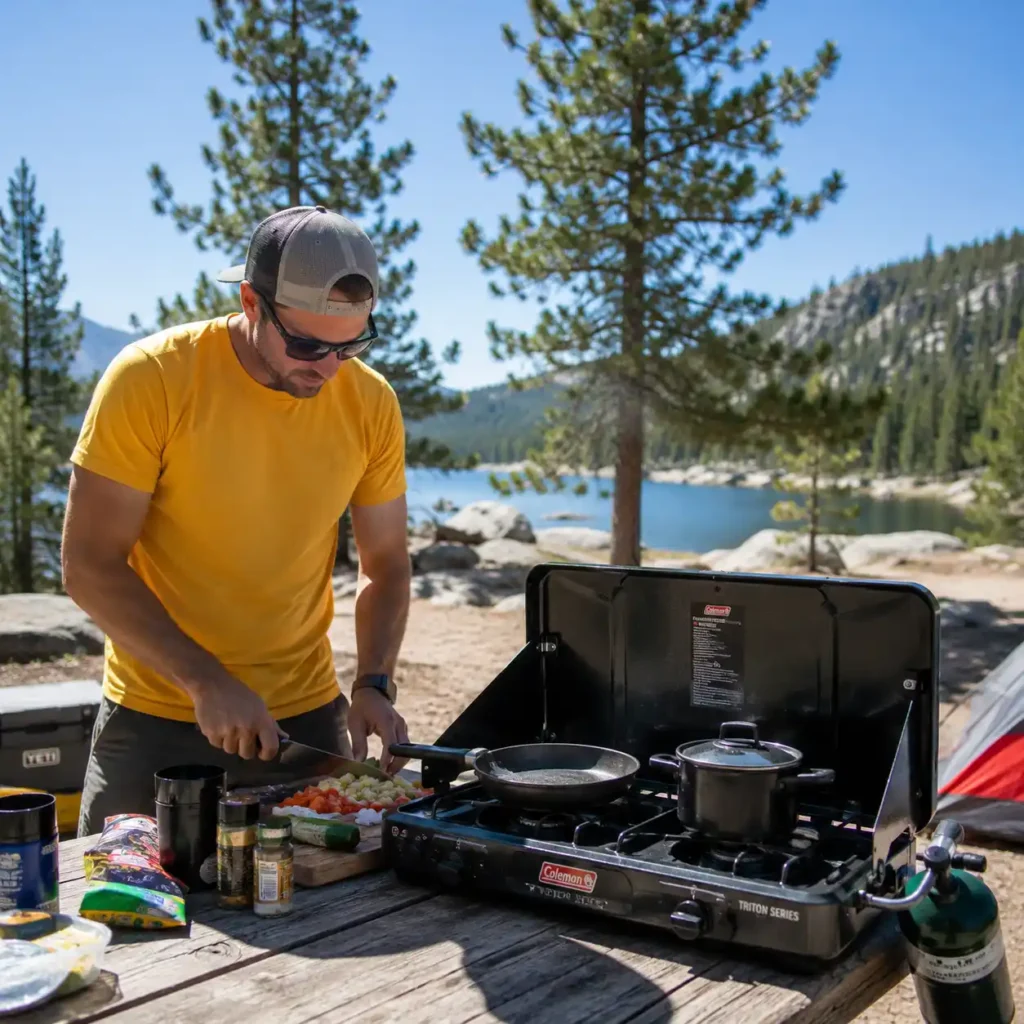
Not every camping stove fails in obvious ways.
Some boil water incredibly fast but make real cooking frustrating. Others feel stable during quick weekend trips but become annoying after several campground meals once grease buildup, burner crowding, and inconsistent flame control start adding up.
For this guide, we focused on the factors that actually affect long-term campsite cooking usability rather than relying heavily on spec-sheet marketing.
Flame Control & Simmer Precision
High heat output matters, but usable flame control matters far more during actual cooking.
We paid close attention to:
– low-flame stability
– flame adjustment smoothness
– simmer consistency
– burner responsiveness
– heat balance across cookware
Several stoves produced impressive heat on high settings but felt frustrating when cooking foods that required slower, controlled heat.
The best camping stoves maintained stable flame control without constantly jumping between weak simmer and aggressive overcooking.
Wind Resistance & Heat Retention
Even moderate wind can destroy cooking efficiency surprisingly quickly.
We evaluated:
– windscreen coverage
– burner protection
– flame stability during gusts
– heat retention around cookware
– fuel efficiency during exposed cooking
Some burners lost noticeable heat output the moment side wind increased, while better-designed stoves maintained much more stable cooking temperatures under the same conditions.
Real Camp Cooking Practicality
A camping stove can look excellent online while still feeling awkward during real campground use.
We evaluated:
– burner spacing
– pan stability
– handle clearance
– cooking comfort
– multi-pan usability
– setup convenience at crowded campsites
This became especially important when cooking full campground meals instead of simple one-pot water boils.
For campers building a more functional cooking setup overall, our guide to How to Organize a Campsite explains how layout efficiency dramatically improves campground cooking workflow.
Cleanup & Long-Term Usability
Greasy cleanup becomes one of the fastest ways to ruin camp cooking enjoyment.
We closely evaluated:
– removable drip trays
– wipe-down simplicity
– grease buildup around burners
– grate durability
– latch reliability
– transport convenience after use
Some stoves cooked well initially but became noticeably more frustrating after repeated campground meals and extended outdoor use.
Fuel Efficiency & Burner Consistency
Raw BTU numbers rarely tell the full story.
We looked at:
– fuel consumption consistency
– burner balance
– propane efficiency during longer cooking sessions
– cold-weather fuel behavior
– sustained cooking performance over multiple meals
A stove that burns through fuel aggressively without improving cooking control usually creates more frustration than convenience during multi-day camping trips.
If you’re still deciding between fuel systems, our guide to Propane vs. Butane Camping Stove explains how different fuel types behave in cold weather, wind, and longer campground setups.
Car Camping Compatibility
Some camping stoves technically cook well but simply feel impractical for real car camping.
We considered:
– packed shape
– trunk storage efficiency
– carrying comfort
– campsite footprint
– table stability
– ease of transport alongside larger camping gear
For car camping specifically, ease of setup and cooking comfort usually matter more than shaving a few pounds of weight.
Why You Can Trust This Guide
CampComfortGuide is built around real-world campground testing — not rewritten product listings or manufacturer marketing claims.
Every camping stove in this guide was evaluated from a practical car camping perspective where cooking comfort, wind performance, simmer control, and long-term usability matter far more than flashy BTU numbers on a box.
Over the past several years, I’ve cooked on campground picnic tables, muddy lakeside sites, exposed coastal campsites, and crowded family campgrounds where weather, limited prep space, and repeated meal cleanup quickly expose weak stove designs.
Some stoves looked impressive during the first meal but became frustrating after several days once grease buildup, unstable cookware support, and inconsistent burner control started becoming obvious.
Others performed surprisingly well despite lower advertised power because the flame control, burner spacing, and wind resistance were simply easier to cook on in real conditions.
That difference matters much more outdoors than most buyers initially realize.
This guide focuses heavily on:
– real simmer control
– burner consistency
– wind behavior
– cleanup simplicity
– campsite usability
– fuel efficiency
– long-term cooking comfort
—not just raw heat output.
We also paid close attention to the small frustrations many reviews ignore completely:
– weak ignition systems
– cramped burner layouts
– unstable grates
– hard-to-clean grease traps
– oversized packed designs
– poor latch durability
– awkward transport shape
Because after several campground trips, those details usually matter more than marketing claims.
For campers building a more complete outdoor cooking setup, our guides to Best Camping Kitchen Organizers & Chuck Boxes and Best Camping Frying Pans cover the gear that makes camp cooking dramatically less stressful during longer trips.
Our goal is simple:
Recommend camping stoves that still feel reliable, practical, and enjoyable to cook on after multiple campground meals — not just during a five-minute backyard demo.
What Actually Matters in a Camping Stove for Car Camping
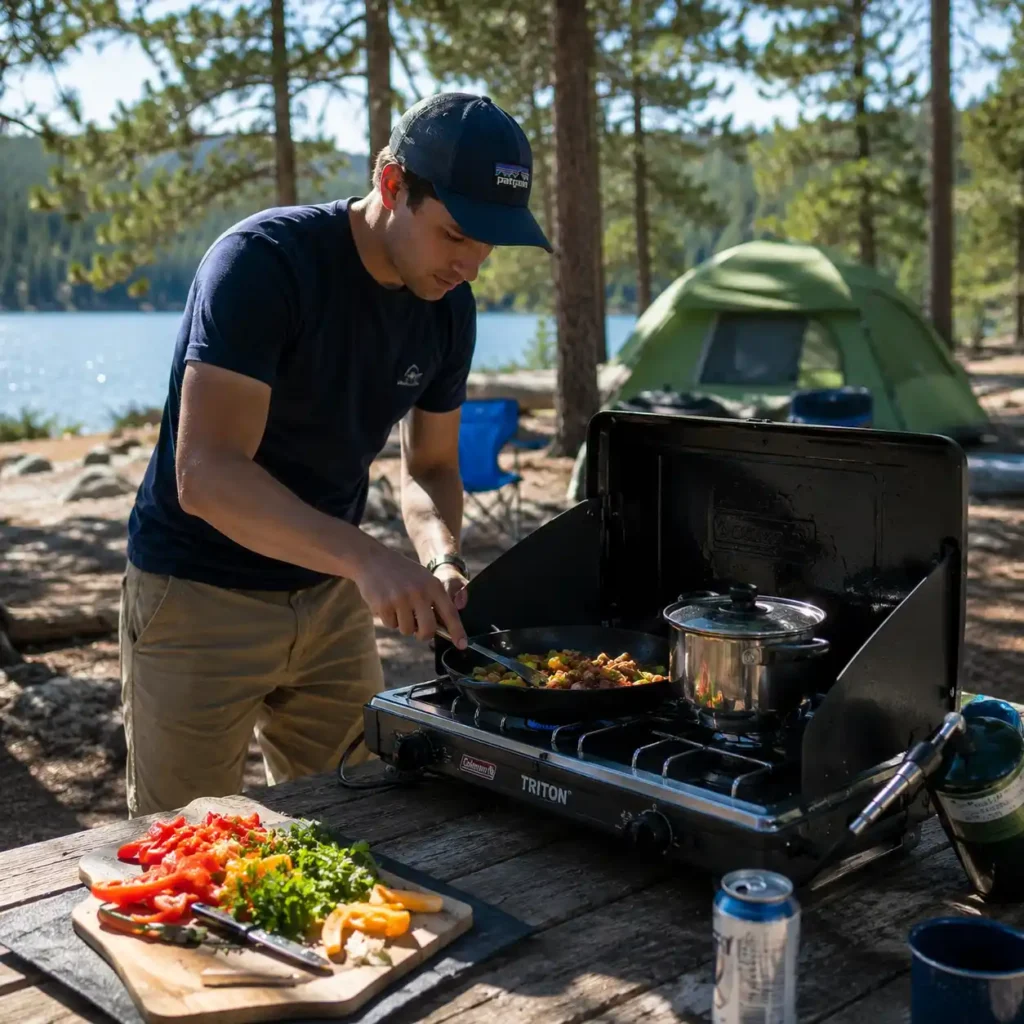
A lot of camping stove marketing focuses on BTU numbers, flashy burner output, and “fast boil” claims.
In real campground cooking, most of that matters far less than campers expect.
The biggest differences usually appear after several meals outdoors — especially once wind, greasy cookware, cold mornings, cramped picnic tables, and repeated cleanup start becoming part of the experience.
Simmer Control Matters More Than Maximum Heat
This is one of the biggest mistakes first-time buyers make.
Many cheap camping stoves produce aggressive high heat but almost no usable low-range control. That becomes frustrating immediately once you try cooking:
– eggs
– pancakes
– rice
– oatmeal
– sauces
– bacon
– coffee
A stove that only operates like a flamethrower quickly turns camp cooking into constant burner management.
For real campground cooking, stable low-heat control is usually far more valuable than extreme BTU output alone.
Wind Protection Changes Everything Outdoors
Wind is one of the biggest reasons campground cooking becomes frustrating.
Even moderate crosswinds can:
– reduce flame efficiency
– increase fuel consumption
– create uneven cooking
– dramatically slow boil times
That’s why burner protection and windscreen design matter so much for car camping stoves.
Large suitcase-style propane stoves often perform noticeably better outdoors because the side panels help retain heat around cookware instead of allowing wind to strip it away instantly.
Burner Spacing Affects Real Cooking Usability
A stove may technically have two burners while still feeling cramped once actual cookware gets involved.
Poor burner spacing becomes obvious fast when using:
– larger skillets
– coffee kettles
– Dutch ovens
– cast iron pans
– wider cookware handles
Some compact camping stoves force cookware into awkward positions that make simultaneous cooking surprisingly annoying.
The best camping stoves for car camping leave enough usable space to cook naturally without constantly rotating handles or shifting pans around.
Cleanup Gets More Important After Every Meal
This is something most product reviews barely mention.
A stove that becomes difficult to clean after greasy campground dinners eventually stops being enjoyable to use.
Grease buildup around burners, awkward drip trays, and textured surfaces all become much more noticeable after multiple days outdoors.
The easiest stoves to live with usually have:
– removable drip trays
– simple grate layouts
– wipe-clean surfaces
– accessible burner areas
For campers building a cleaner outdoor cooking setup overall, our guide to Why Camp Kitchens Get Dirty So Fast breaks down the habits that create most campground cooking mess in the first place.
Fuel Efficiency Matters on Longer Trips
High-output burners consume propane surprisingly quickly during extended campground cooking.
For shorter weekend trips, that usually is not a major issue.
But during multi-day family camping, inefficient burners can:
– burn through fuel faster
– create inconsistent cooking temperatures
– struggle more during cold mornings
– reduce long-term cooking consistency
A well-balanced burner system often feels noticeably better to cook on than raw high-output heat alone.
The Best Camping Stove Depends on How You Actually Camp
This is the part most buyers overlook completely.
A compact folding stove may work perfectly for minimalist weekend trips but feel frustrating during longer family campground stays.
Meanwhile, a large two-burner powerhouse may cook beautifully while taking up a huge amount of trunk space.
The best setup depends heavily on:
– group size
– campsite type
– cooking style
– trip length
– weather exposure
– available cargo space
That’s why real-world campground usability matters far more than spec-sheet comparisons alone.
Quick Summary: 5 Best Camping Stoves for Car Camping
Not every camping stove is designed for the same type of campground cooking.
Some prioritize raw heat output and fast boiling. Others focus more heavily on simmer control, compact storage, or easier long-term camp kitchen usability.
These are the camping stoves that stood out most during our evaluation process based on cooking performance, wind resistance, cleanup simplicity, and real-world campground practicality.
Camp Chef Everest 2X
Award: Best Overall Camping Stove for Car Camping
Why It Stands Out:
The Everest 2X delivers some of the strongest real-world cooking performance in this category thanks to its excellent wind resistance, powerful burners, and surprisingly usable flame control. It feels especially reliable during colder mornings, larger campground meals, and windy campsites where weaker burners quickly struggle.
Coleman Triton 2-Burner Stove
Award: Best Value Camping Stove
Why It Stands Out:
The Triton keeps things simple, reliable, and easy to transport without sacrificing everyday campground usability. It lacks premium simmer precision, but for most casual family camping trips, it offers one of the better balances between price, cooking space, and long-term reliability.
GSI Outdoors Selkirk 540
Award: Best Camping Stove for Real Cooking
Why It Stands Out:
The Selkirk 540 stood out immediately for its smoother flame adjustment and noticeably better simmer control. It feels far more comfortable for campers who actually cook full meals outdoors instead of simply boiling water or heating canned food.
If camp coffee matters as much as breakfast, our guide to Best Camping Coffee Makers for Car Camping covers the brewing systems that pair especially well with larger two-burner propane setups.
Jetboil Genesis Basecamp
Award: Best Compact Premium Stove
Why It Stands Out:
The Genesis Basecamp combines impressive cooking precision with one of the smartest space-saving designs in the category. It packs dramatically smaller than traditional suitcase stoves while still offering excellent burner consistency for more advanced campground cooking setups.
Coleman Classic Propane Stove
Award: Best Budget Camping Stove
Why It Stands Out:
The classic green Coleman remains popular for a reason: it is simple, dependable, and surprisingly durable for the price. It lacks refinement and modern convenience features, but for basic campground cooking, it still handles the fundamentals well after decades on the market.
These camping stoves approach outdoor cooking very differently. Some prioritize maximum cooking power, while others focus more on simmer precision, compact transport, or easier long-term campground usability.
Camping Stove Comparison Table
| Model | Wind | Simmer | Size | Testing Notes |
|---|---|---|---|---|
| Camp Chef Everest 2X | Excellent | Very Good | Bulky | Best overall wind performance during exposed campground cooking. |
| Coleman Triton | Good | Average | Moderate | Reliable everyday stove with simple setup and dependable burner output. |
| GSI Selkirk 540 | Very Good | Excellent | Heavy | Outstanding simmer control for real campground meal cooking. |
| Jetboil Genesis | Moderate | Excellent | Compact | Extremely compact folding design that saves major cargo space. |
| Coleman Classic | Good | Limited | Bulky | Simple old-school stove that still works reliably for casual camping. |
Not every camping stove performs the same once cookware, wind, grease buildup, and repeated campground meals start becoming part of the equation.
Some models prioritize raw burner output, while others feel noticeably better for slower campground cooking where flame consistency and simmer control matter more than maximum heat.
For campers building a more complete outdoor kitchen setup, our guide to Best Camping Cookware for One-Pot Meals covers cookware that works especially well with two-burner propane cooking systems.
Best Camping Stoves for Car Camping (In-Depth Reviews)
The biggest differences between camping stoves rarely show up during quick backyard tests.
Most propane stoves feel fine for boiling water once or twice. Real campground cooking is where weaker designs start becoming frustrating — especially after several meals, changing weather, greasy cleanup, crowded picnic tables, and repeated burner use over multiple days outdoors.
Some stoves struggle with proper simmer control the moment you try cooking anything more delicate than bacon. Others lose heat surprisingly fast once crosswinds pick up around the campsite.
A few models, however, consistently felt easier to cook on in real campground conditions because the burner spacing, flame stability, cleanup design, and overall usability simply worked better during longer trips.
These are the camping stoves that stood out most during real-world testing for campground cooking, family camping, and comfort-focused car camping setups.
1. Camp Chef Everest 2X
Award: Best Overall Camping Stove for Car Camping

Best for:
Campers who want strong burner power, better wind resistance, and enough cooking space for full campground meals without constantly fighting weak flames or cramped cookware layouts.
What Stood Out During Testing
The Everest 2X immediately felt more powerful than most two-burner camping stoves the moment real cooking started.
Not just for boiling water — but during actual campground meals where multiple pans, changing wind, and colder morning temperatures start exposing weaker burner systems.
The extra heat output becomes especially noticeable when cooking with cast iron or larger skillets that normally overwhelm lower-powered propane stoves.
During windy lakeside campground testing, this stove maintained stable cooking temperatures far better than most suitcase-style camp stoves we compared side-by-side.
My Experience Using It
One thing I noticed quickly was how much easier cooking became once the burners no longer struggled every time wind conditions changed.
Breakfast cooking felt dramatically smoother compared to weaker propane stoves I’ve used in the past. Water boiled quickly, bacon cooked evenly, and the burners recovered heat much faster after adding colder cookware to the surface.
That matters more outdoors than most campers initially expect.
Some stoves feel powerful until you actually start cooking multiple things at once.
The Everest handled:
– cast iron skillets
– coffee kettles
– larger frying pans
– heavier cookware loads
without feeling underpowered or unstable.
The wider cooking area also helped reduce the cramped “camp stove juggling” that smaller burners often create during family campground meals.
For campers cooking with heavier cookware, our guide to Best Camping Dutch Ovens covers which camp cooking setups pair especially well with higher-output propane burners.
🌬️ Wind & Heat Performance
This is easily one of the strongest wind-performing camping stoves in this guide.
The combination of:
– higher burner output
– recessed burner design
– larger side windscreens
helps retain heat much more effectively during exposed campground cooking.
Several weaker stoves lost noticeable cooking efficiency during crosswinds that barely affected the Everest.
That difference becomes very obvious during colder mornings or longer meal prep sessions.
🔥 Simmer Control Reality
Despite the aggressive burner power, the flame adjustment remained surprisingly usable.
That said, this is still a high-output stove first.
The Everest performs best for:
– faster cooking
– larger meals
– boiling water quickly
– colder-weather campground cooking
rather than delicate low-heat simmering for extended periods.
It handles normal campground cooking very well, but campers focused heavily on slower gourmet-style cooking may still prefer the finer flame control of the GSI Selkirk.
🧼 Cleanup & Everyday Usability
Cleanup was relatively straightforward compared to older suitcase-style camp stoves.
The grate layout allows easier wipe-down access, although grease still collects around the burner edges after several campground meals.
Packed size is definitely one of the trade-offs.
This stove occupies more trunk space than slimmer compact propane systems, especially once fuel canisters and cookware are added to the camp kitchen setup.
For campers already struggling with overloaded vehicle storage, our guide to Best Rooftop Cargo Boxes for Camping Gear explains which cargo systems actually help free up usable space for larger campground cooking equipment.
Pros
✅ Excellent wind resistance during real campground cooking
✅ Very strong burner output for larger meals
✅ Spacious cooking area fits larger cookware comfortably
✅ Faster boil times than most two-burner stoves
✅ Stable cooking performance during colder mornings
Cons
❌ Bulkier than compact propane stoves
❌ Slightly heavier transport weight
❌ Not the best choice for ultra-precise simmer cooking
Real-World Trade-Off
You gain noticeably better outdoor cooking performance and wind stability, but sacrifice some portability and cargo efficiency.
💡 Pro Tip
Keep the windscreens fully extended even during moderate weather. Small side gusts affect campground cooking more than most campers realize once larger pans start absorbing burner heat.
Verdict
The Camp Chef Everest 2X earns its place as the best overall camping stove for car camping because it consistently feels easier and less frustrating to cook on once real campground conditions enter the equation.
For family campground trips, windy campsites, larger meals, and comfort-focused camp cooking setups, it delivers a level of burner performance and outdoor usability that many cheaper propane stoves simply cannot match.
(Prices may vary depending on availability)
2. Coleman Triton 2-Burner Stove
Award: Best Value Camping Stove

Best for:
Campers who want a dependable two-burner propane stove that balances affordability, cooking space, and simple everyday campground usability without taking up excessive cargo room.
What Stood Out During Testing
The Triton immediately felt more practical than flashy.
It does not try to overpower everything with massive BTU numbers or oversized construction. Instead, it focuses on the things that actually matter during normal campground cooking:
– reliable burner performance
– manageable packed size
– easy transport
– straightforward setup
– dependable everyday cooking
That balance makes a much bigger difference during repeated camping trips than many campers expect.
My Experience Using It
The biggest strength of the Coleman Triton is how easy it feels to live with during normal car camping.
Setup is simple. Burner ignition is fast. The stove fits comfortably on most campground picnic tables without dominating the entire cooking area.
And unlike many bulkier camp stoves, the slimmer design stores much more easily inside crowded vehicle setups.
During testing, the Triton handled:
– breakfast cooking
– coffee prep
– pasta meals
– burgers
– one-pan campground dinners
without creating major frustrations.
The burners heated consistently enough for most casual campground cooking, although the flame adjustment definitely felt more aggressive compared to premium simmer-focused stoves like the Selkirk 540.
That became especially noticeable during slower cooking where lower heat precision matters more.
For campers building a more efficient campground cooking setup overall, our guide to Best Camping Kitchen Tables for Cooking explains which table layouts work best with two-burner propane stoves and larger meal prep setups.
🌬️ Wind & Burner Performance
Wind performance was decent overall, although clearly less controlled than the Camp Chef Everest.
The side windscreens help during moderate campground breezes, but stronger crosswinds still affect burner efficiency more noticeably than higher-end wind-focused designs.
That said, for normal campground cooking conditions, the Triton remained perfectly usable once the windscreens were fully extended.
🔥 Simmer Control Reality
This is probably the biggest compromise with the Triton.
The burners perform well for:
– boiling water
– frying food
– general campground meals
– faster cooking
but the low-end flame adjustment feels less refined during delicate cooking.
Small flame adjustments sometimes changed heat levels more aggressively than expected, especially when cooking foods that require slower simmering.
It is not terrible — just less precise than more cooking-focused propane stoves.
🧼 Cleanup & Everyday Practicality
One area where the Triton performs surprisingly well is transport convenience.
The slimmer profile stores much more easily than oversized suitcase-style camping stoves, especially inside already crowded car camping setups.
Cleanup was also relatively manageable after greasy campground meals. The cooking surface wipes down fairly easily, although grease still builds up around the burner edges after repeated use.
If your vehicle already feels overloaded during camping trips, our guide to Car Camping Essentials Checklist covers the gear that actually deserves cargo space — and the equipment that usually creates unnecessary clutter.
Pros
✅ Great balance between price and usability
✅ Slimmer design stores easily in vehicles
✅ Reliable ignition and burner consistency
✅ Simple setup for everyday campground cooking
✅ Durable steel construction feels dependable
Cons
❌ Simmer control feels less precise
❌ Windscreens struggle more in heavier gusts
❌ Burner output is less aggressive than premium models
Real-World Trade-Off
You sacrifice some flame precision and stronger wind resistance, but gain a much more affordable stove that still handles most campground cooking extremely well.
💡 Pro Tip
Use slightly heavier cookware with the Triton whenever possible. Lightweight pans tend to exaggerate the burner hot spots during higher heat cooking.
Verdict
The Coleman Triton remains one of the strongest value-focused camping stoves for car camping because it gets the fundamentals right without becoming overly bulky or unnecessarily expensive.
For family campground trips, weekend camping, and casual outdoor cooking, it delivers reliable real-world usability at a price point that makes far more sense for most campers than premium high-end stove systems.
(Prices may vary depending on availability)
3. GSI Outdoors Selkirk 540
Award: Best Camping Stove for Real Cooking

Best for:
Campers who actually enjoy cooking at camp and want smoother flame control, better simmer precision, and a stove that feels noticeably easier to cook on during longer campground stays.
What Stood Out During Testing
The Selkirk 540 immediately felt more refined than most propane camping stoves in this category.
Not necessarily more powerful — but much more controlled.
That difference becomes obvious the moment you stop simply boiling water and start cooking meals that require stable low heat and gradual temperature adjustment.
During testing, this stove handled:
– eggs
– pancakes
– rice
– sauces
– oatmeal
– slower skillet meals
far more comfortably than most burners that jump aggressively between low and high flame output.
My Experience Using It
This was easily one of the most enjoyable stoves in the guide for actual cooking.
The flame adjustment feels smoother and more predictable than cheaper propane systems that constantly force you to overcorrect burner heat.
That matters a lot outdoors.
Many campground stoves technically “work,” but still make cooking frustrating because small temperature adjustments feel inconsistent or unstable.
The Selkirk avoided most of those problems.
During several campground meals, the burners maintained steady heat surprisingly well without constantly overheating pans or creating aggressive hot spots.
The heavier grate system also helped larger cookware feel more stable during cooking compared to thinner wire-style burner supports found on many lower-cost stoves.
For campers cooking more elaborate campground meals, our guide to Best Camping Cookware Sets covers cookware that pairs especially well with controlled simmer-focused propane burners like the Selkirk.
🌬️ Wind & Burner Performance
Wind protection was noticeably stronger than expected.
The wraparound windscreens helped stabilize burner heat effectively during moderate campground gusts, especially when cooking with wider skillets and cast iron cookware.
It still cannot fully match the raw wind resistance of the Camp Chef Everest, but the overall heat consistency remained impressively controlled throughout testing.
🔥 Simmer Control Reality
This is where the Selkirk separates itself from most camping stoves.
The burner valves allow much finer flame adjustment than typical campground propane systems.
Instead of:
– weak simmer
– sudden high flame
– overcorrection
the Selkirk transitions between heat levels much more naturally.
That creates a noticeably less stressful cooking experience during slower campground meals.
For campers who enjoy making coffee outdoors without scorching smaller kettles, our guide to How to Make Coffee Camping explains why stable burner control matters more than maximum heat output.
🧼 Cleanup & Long-Term Usability
The powder-coated body and heavier construction make the stove feel extremely durable during repeated campground use.
Cleanup was also relatively straightforward after greasy cooking sessions, although the heavier overall build definitely adds transport weight compared to slimmer compact camp stoves.
This is not a lightweight minimalist setup.
It is a cooking-focused campground stove designed more for comfort and usability than aggressive space savings.
Pros
✅ Excellent simmer control for real meal cooking
✅ Stable flame adjustment feels much more refined
✅ Strong windscreens improve heat consistency
✅ Heavy-duty construction feels extremely durable
✅ Larger cookware feels stable during cooking
Cons
❌ Heavier than slimmer propane stoves
❌ Bulkier transport weight for smaller vehicles
❌ More expensive than entry-level camp stoves
Real-World Trade-Off
You gain dramatically better cooking control and a more comfortable camp kitchen experience, but sacrifice some portability and compact storage convenience.
💡 Pro Tip
The Selkirk performs especially well with cast iron and heavier cookware because the burner control makes gradual heat adjustments much easier during longer cooking sessions.
Verdict
The GSI Outdoors Selkirk 540 is one of the best camping stoves for car camping if real cooking performance matters more to you than raw burner power alone.
For campers who actually enjoy cooking outdoors instead of simply heating basic meals, it delivers a noticeably smoother and more controlled campground cooking experience than most propane stoves in this category.
(Prices may vary depending on availability)
4. Jetboil Genesis Basecamp
Award: Best Compact Premium Camping Stove

Best for:
Campers with limited cargo space who still want strong cooking performance, excellent simmer control, and a much more compact camp kitchen setup.
What Stood Out During Testing
The Genesis Basecamp feels completely different from traditional suitcase-style camping stoves.
The folding clamshell design immediately stands out once you start packing a real vehicle camping setup with:
– coolers
– cookware
– sleeping gear
– camp kitchen storage
– chairs
– power stations
Most two-burner propane stoves become surprisingly bulky once the rest of your camping gear starts competing for cargo space.
The Genesis solves that problem better than almost anything else in this category.
My Experience Using It
The biggest surprise during testing was how little cooking performance was sacrificed despite the dramatically smaller packed design.
Many compact camping stoves feel cramped once real cookware enters the picture.
The Genesis handled:
– larger frying pans
– coffee kettles
– breakfast cooking
– one-pan campground meals
much more comfortably than I expected from a folding compact stove.
Setup also feels fast and clean compared to larger suitcase-style propane systems.
The folding design creates a much more organized cooking setup without the oversized metal box shape that dominates picnic tables on many campground stoves.
For campers building tighter vehicle-based camping setups, our guide to How to Build a Vehicle Camping Setup explains how compact gear choices dramatically improve campsite organization and cargo efficiency.
🌬️ Wind & Burner Performance
This is probably the Genesis Basecamp’s biggest compromise.
The burner performance itself is excellent, but the lower-profile folding design provides less natural wind protection than traditional suitcase stoves with larger wraparound side panels.
During moderate campground wind, the burners still performed well overall, but stronger gusts affected flame consistency faster than stoves like the Camp Chef Everest.
For calmer campground cooking and organized car camping setups, however, the performance remained very strong.
🔥 Simmer Control Reality
The flame adjustment is excellent.
This stove handles:
– slower cooking
– sauces
– eggs
– oatmeal
– controlled simmering
far better than most compact propane systems.
The burner response feels smooth, predictable, and much easier to manage during real campground cooking where constant flame adjustments become annoying quickly.
This was one of the easiest stoves in the guide for low-temperature control.
🧼 Cleanup & Everyday Usability
The ceramic-coated drip tray made cleanup surprisingly easy after greasy campground meals.
That became more noticeable after several consecutive cooking sessions where grease buildup normally starts becoming frustrating on cheaper camp stoves.
Transport convenience is also excellent.
The compact packed shape fits far more naturally into organized vehicle camping systems compared to bulky suitcase-style stoves that consume awkward cargo space.
Pros
✅ Extremely compact folding design
✅ Excellent simmer control for real cooking
✅ Easy cleanup after greasy campground meals
✅ Premium build quality feels very refined
✅ Saves significant cargo space during travel
Cons
❌ Very expensive compared to traditional camp stoves
❌ Wind protection is less effective in exposed campsites
❌ Smaller overall cooking footprint than larger suitcase stoves
Real-World Trade-Off
You gain dramatically better portability and compact storage, but sacrifice some wind resistance and cooking space compared to larger campground-focused propane stoves.
💡 Pro Tip
The Genesis performs best in partially protected cooking setups rather than fully exposed picnic-table cooking during heavy wind.
Verdict
The Jetboil Genesis Basecamp is one of the smartest compact camping stove systems currently available for car campers who care heavily about cargo efficiency and organized campground cooking.
It is expensive, but for smaller vehicles, tighter storage setups, and campers who want premium cooking control without hauling a bulky metal suitcase stove, it solves a lot of real campground frustrations surprisingly well.
(Prices may vary depending on availability)
5. Coleman Classic Propane Stove
Award: Best Budget Camping Stove

Best for:
Campers who want a simple, affordable propane stove that still handles basic campground cooking reliably without unnecessary features or premium pricing.
What Stood Out During Testing
The Coleman Classic feels old-school in the best possible way.
No flashy design.
No premium compact folding system.
No oversized BTU marketing.
It simply does the basics consistently well.
And honestly, that reliability still matters a lot during normal campground camping.
While testing newer premium propane stoves, I kept noticing how many modern designs try to reinvent simple camp cooking while introducing extra complexity at the same time.
The Classic avoids almost all of that.
My Experience Using It
This stove immediately reminded me why so many campers still keep one around for years.
Setup is straightforward. The controls are simple. And despite the older design, the burners still produce enough usable heat for:
– breakfast cooking
– coffee
– burgers
– pasta
– basic skillet meals
– campground dinners
The biggest strength here is predictability.
Nothing feels fancy, but nothing feels overly complicated either.
During testing, the Classic handled normal campground cooking surprisingly well once the windscreens were fully opened and the stove was positioned correctly on the picnic table.
That said, the limitations become obvious once you compare it directly against more modern propane stoves.
Simmer control is fairly rough, and cooking delicate foods requires much more attention to avoid overheating pans.
For campers building a simple budget-friendly camp kitchen setup, our guide to Best Camping Frying Pans covers cookware that performs especially well on more aggressive burner systems like the Coleman Classic.
🌬️ Wind & Burner Performance
The traditional suitcase-style windscreens still work surprisingly well during moderate campground breezes.
Heat retention remained fairly stable in normal campground conditions, although the burners lose efficiency faster during stronger exposed gusts compared to premium wind-focused camp stoves.
For casual campground cooking, however, the overall performance remained dependable throughout testing.
🔥 Simmer Control Reality
This is definitely the weakest area.
The burners perform best for:
– boiling water
– frying food
– higher-heat cooking
– basic campground meals
rather than slow precision cooking.
Low-temperature flame control feels limited, and small adjustments can change burner intensity more aggressively than expected.
Campers focused heavily on gourmet-style outdoor cooking will likely outgrow this stove fairly quickly.
🧼 Cleanup & Everyday Practicality
Cleanup is functional but not especially refined.
Grease tends to collect around the burners more than on newer premium camp stove designs, and the older layout takes a little more effort to wipe down after heavier cooking sessions.
Still, the overall durability remains impressive.
One thing that became obvious during testing is how many older Coleman stoves are still functioning after years of campground use. That long-term reliability remains one of the strongest reasons these stoves continue selling so well.
Pros
✅ Very affordable price point
✅ Simple and dependable design
✅ Good windscreen protection for casual camping
✅ Durable long-term construction
✅ Easy setup for beginner campers
Cons
❌ Weak simmer control for delicate cooking
❌ Cleanup feels more outdated and basic
❌ Bulkier than modern compact stove systems
Real-World Trade-Off
You sacrifice refinement, compactness, and cooking precision, but gain one of the simplest and most dependable budget camping stoves still widely used today.
💡 Pro Tip
Use medium heat more often than maximum burner output. The Classic tends to cook more evenly when the burners are not pushed aggressively on high heat.
Verdict
The Coleman Classic Propane Stove remains one of the best budget camping stoves for car camping because it focuses on reliability instead of complexity.
It is not the most refined stove in this guide, but for casual campground cooking, beginner campers, and affordable family camping setups, it still delivers dependable real-world performance without requiring a major investment.
(Prices may vary depending on availability)
Wind Performance vs Simmer Control (What Actually Matters?)
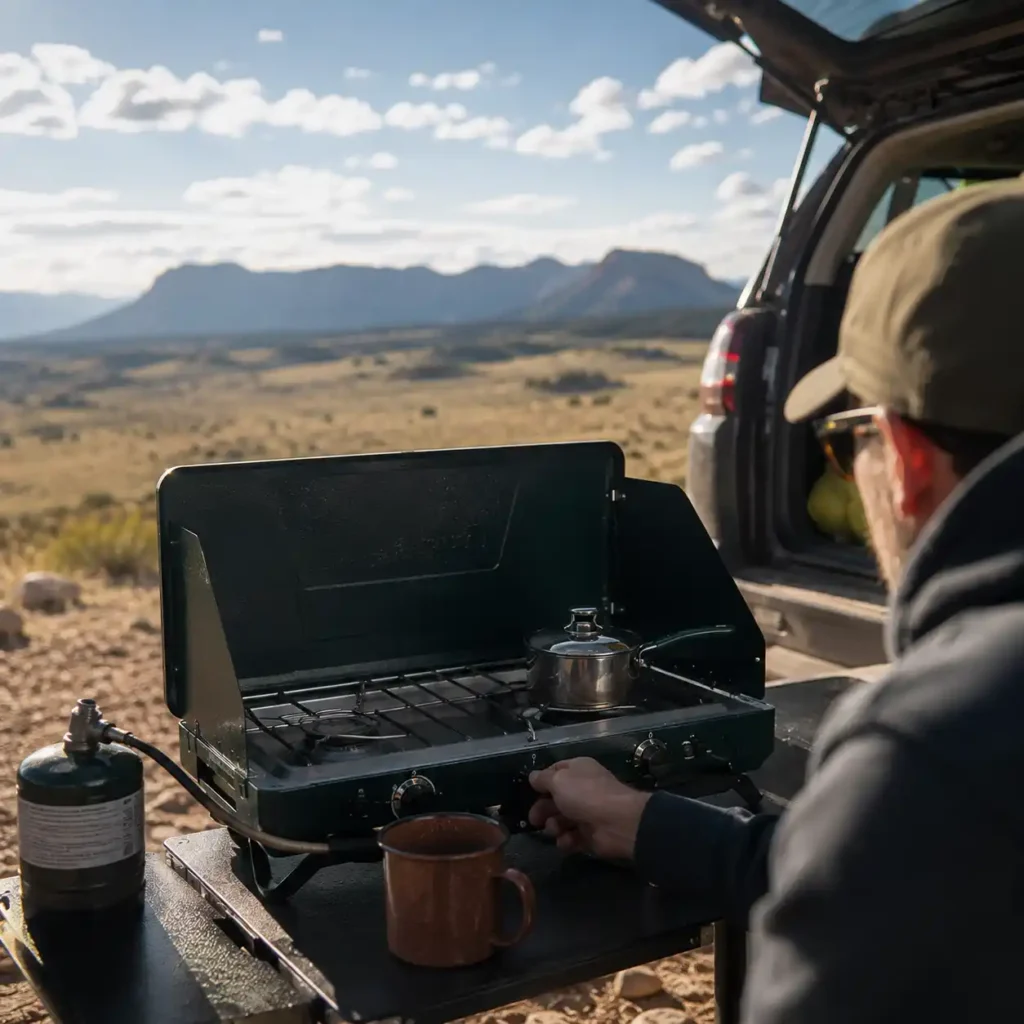
Most campers assume burner power is the most important part of a camping stove.
In real campground cooking, the balance between wind resistance and flame control usually matters much more than raw BTU output alone.
A stove that blasts massive heat but struggles in wind or overheats every pan quickly becomes frustrating during longer camping trips.
🔥 High BTU Numbers Don’t Automatically Mean Better Cooking
This is one of the most misleading parts of camping stove marketing.
Some high-output burners boil water extremely fast but create:
– uneven pan heating
– aggressive hot spots
– difficult simmer control
– wasted propane during normal cooking
That becomes obvious quickly once you try cooking:
– pancakes
– eggs
– rice
– sauces
– oatmeal
– coffee
instead of simply heating water.
For most campground cooking, stable flame adjustment usually matters more than extrestme burner power.
🌬️ Wind Destroys Cooking Efficiency Faster Than Most Campers Expect
Even moderate campground wind can:
– reduce heat transfer
– increase boil times
– waste propane
– cool cookware unevenly
– create unstable flames
That’s why windscreen design matters so much on two-burner camping stoves.
During testing, several lower-cost burners lost cooking performance immediately once exposed crosswinds hit the picnic table.
The better stoves maintained:
– steadier flame patterns
– more consistent pan temperatures
– faster heat recovery
– improved fuel efficiency
even during gusty campground conditions.
For exposed campground cooking setups, our guide to Best Portable Shade Canopies for Camping explains how campsite positioning and wind blocking dramatically improve outdoor cooking comfort.
🍳 The Best Camping Stove Depends on How You Actually Cook
Different campers need very different burner behavior.
Some campers prioritize:
– fast boiling
– large meals
– high heat
– cold-weather cooking
Others care much more about:
– simmer control
– delicate cooking
– coffee preparation
– quieter slower meals
– fuel efficiency
That’s why the “best” camping stove depends heavily on your actual campground cooking habits rather than marketing specs alone.
⚖️ What We Learned During Testing
After repeated campground cooking sessions, one thing became very obvious:
The most enjoyable camping stoves were not always the most powerful.
The best real-world performers combined:
– usable flame control
– stable wind performance
– manageable cleanup
– comfortable burner spacing
– reliable everyday usability
Those factors consistently mattered more than raw BTU numbers once real campground cooking started replacing simple product-page comparisons.
Don’t forget to keep your ingredients fresh. Check out our guide to the Best Camping Coolers for Ice Retention.
Common Camping Stove Mistakes Buyers Make
A lot of campground cooking frustrations start long before the first meal.
Most campers do not buy a “bad” stove — they buy the wrong stove for the way they actually camp.
After testing camp cooking setups across windy campgrounds, crowded family sites, rainy weekends, and longer multi-day trips, the same mistakes kept showing up over and over again.
🔥 Prioritizing BTU Numbers Over Real Cooking Control
This is easily the most common mistake.
Many buyers assume the highest BTU stove automatically cooks better.
In reality, some ultra-high-output burners become frustrating because:
– flame control feels too aggressive
– pans overheat quickly
– simmering becomes difficult
– propane disappears faster than expected
For real campground cooking, controlled heat is usually more valuable than maximum heat.
🌬️ Ignoring Wind Protection Completely
A camping stove that works perfectly at home can struggle badly once campground wind starts affecting burner performance.
Weak wind protection often leads to:
– uneven cooking
– slower boil times
– wasted fuel
– unstable flames
– overheated cookware handles
Campers cooking regularly in exposed sites should prioritize windscreen design much more heavily than most product listings suggest.
🍳 Buying a Stove That’s Too Small for Real Meals
Compact stoves save space — until you actually try cooking breakfast for multiple people.
Several smaller burners we tested struggled once larger cookware entered the setup:
– cast iron pans
– coffee kettles
– larger skillets
– Dutch ovens
Cramped burner spacing quickly becomes annoying during longer campground trips where cooking comfort matters more than minimal packed size.
🚙 Underestimating Packed Size
This becomes especially important for car camping.
Larger suitcase-style propane stoves often cook beautifully while also consuming a surprising amount of:
– trunk space
– camp kitchen storage
– picnic-table surface area
Meanwhile, some ultra-compact systems sacrifice cooking comfort too aggressively just to save a little cargo space.
The best setup usually depends on:
– vehicle size
– trip length
– cooking style
– family size
– campsite organization
🧼 Ignoring Cleanup Practicality
This is something most buyers overlook completely.
A stove that becomes greasy, difficult to wipe down, or awkward to clean eventually stops being enjoyable to use.
After several campground meals, poor cleanup design becomes much more noticeable than flashy marketing features.
⚠️ Assuming All Camping Stoves Cook the Same
They absolutely do not.
Some stoves feel:
– smoother
– quieter
– easier to manage
– more predictable
while others constantly require burner adjustments and cooking workarounds.
That difference becomes very obvious after multiple campground meals — especially during colder mornings, windy conditions, and family campground cooking where reliability matters far more than product-page marketing.
Camping Stoves We Wouldn’t Recommend for Most Car Campers
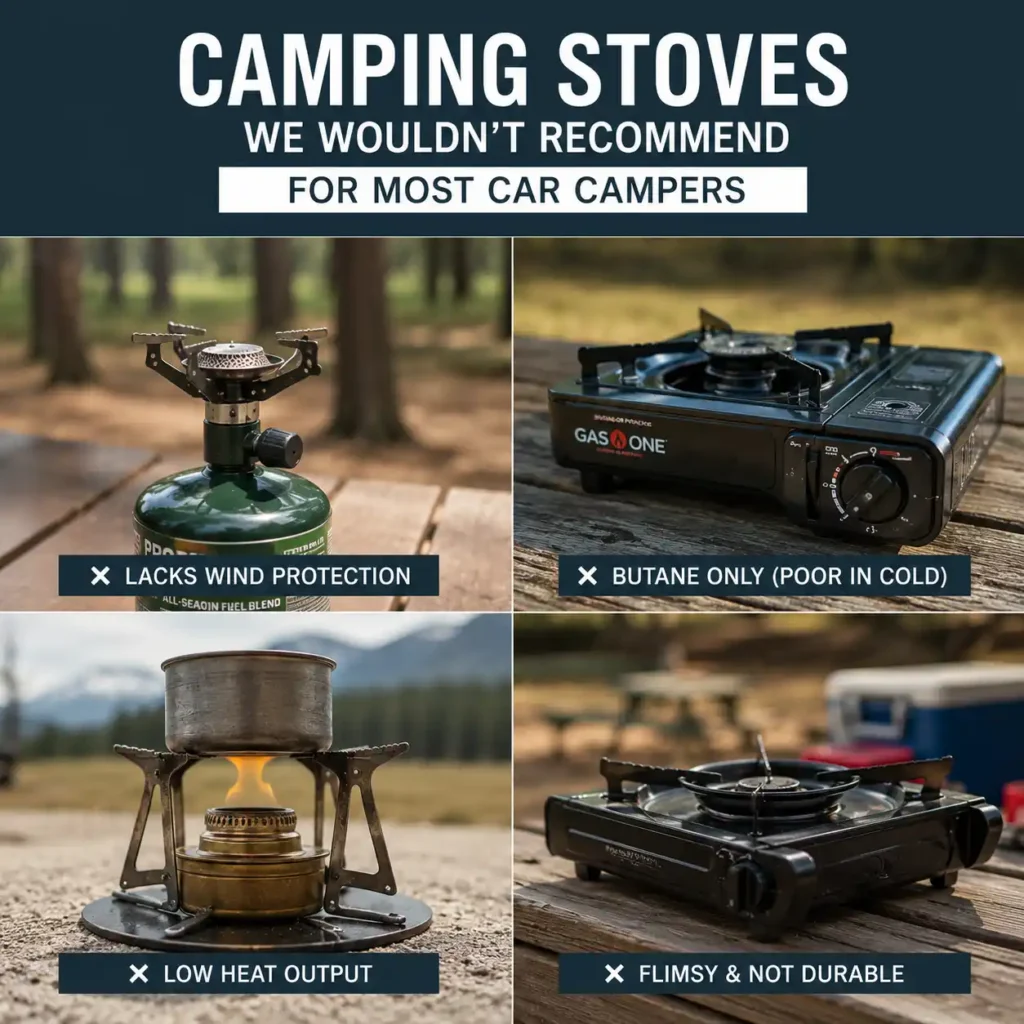
Not every camping stove that looks impressive online actually performs well during real campground cooking.
A few common stove designs repeatedly created the same frustrations during testing — especially once wind, multiple meals, greasy cleanup, and longer camping trips became part of the experience.
❌ Tiny Backpacking Stoves for Family Camp Cooking
Ultralight backpacking burners work well for:
– boiling water
– freeze-dried meals
– minimalist solo trips
But they become frustrating very quickly for normal car camping.
Most struggle with:
– larger cookware
– multi-person cooking
– wind exposure
– simmer control
– campsite stability
Trying to cook full campground meals on a tiny backpacking burner usually creates more stress than convenience.
❌ Cheap High-BTU “Flamethrower” Stoves
Some budget propane stoves advertise huge burner output while offering almost no usable flame control.
These stoves often:
– overheat pans aggressively
– burn food easily
– waste propane quickly
– struggle with simmer cooking
– create uneven heat patterns
During testing, several cheaper high-output burners felt exhausting to cook on after only a few meals.
❌ Ultra-Compact Stoves With Cramped Burner Spacing
Compact designs save cargo space, but some reduce usable cooking space too aggressively.
This becomes frustrating once you try using:
– cast iron pans
– coffee kettles
– wider skillets
– multiple pots simultaneously
Several smaller stoves technically supported two pans — but only barely.
The result was awkward handle positioning and uncomfortable campground cooking.
❌ Weak Windscreen Designs
Wind performance separates good campground stoves from frustrating ones very quickly.
Poor wind protection creates:
– inconsistent heat
– wasted fuel
– slower boil times
– unstable flames
– uneven cooking
This becomes especially noticeable during:
– lakeside camping
– coastal campgrounds
– open desert sites
– colder shoulder-season trips
For campers dealing with exposed weather regularly, our guide to 10 Tips for Camping in the Rain explains how campground setup decisions dramatically affect cooking comfort and outdoor usability.
❌ Oversized Camp Kitchen Setups for Short Trips
Some campers overbuild their cooking setup far beyond what they actually need.
Massive multi-burner systems can become:
– bulky to transport
– annoying to organize
– difficult to clean
– inefficient for short weekend camping
For most campers, a reliable two-burner propane stove provides the best balance between:
– cooking comfort
– portability
– fuel efficiency
– campsite practicality
without turning campground cooking into a full outdoor kitchen production.
What We Learned After Testing Camping Stoves in Real Campgrounds
After multiple campground trips, changing weather conditions, and repeated outdoor cooking sessions, a few patterns became very clear.
The camping stoves that performed best were not necessarily the ones with:
– the biggest BTU numbers
– the flashiest marketing
– the most aggressive burner output
The best real-world performers were the stoves that consistently made campground cooking feel easier, calmer, and less frustrating over time.
🔥 Stable Flame Control Matters More Than Most Campers Realize
This showed up during almost every cooking session.
A stove with smoother burner adjustment simply creates a much better outdoor cooking experience:
– fewer burned meals
– less pan overheating
– easier breakfast cooking
– better coffee preparation
– more consistent campground meals
Several cheaper stoves technically cooked “hotter,” but felt noticeably more stressful once real cooking started.
🌬️ Wind Resistance Changes Everything Outdoors
Even moderate campground wind affected weaker burners far more than expected.
The best camping stoves maintained:
– stable heat
– consistent flames
– faster recovery times
– more usable cooking temperatures
without forcing constant burner adjustments.
That difference became especially noticeable during:
– lakeside camping
– exposed picnic-table cooking
– colder mornings
– shoulder-season campground trips
🍳 Cooking Comfort Matters More on Longer Trips
After several days outdoors, small frustrations become much bigger.
Things like:
– cramped burner spacing
– awkward cookware positioning
– poor cleanup access
– unstable grates
– inconsistent ignition
start affecting the entire campground cooking experience.
The stoves that felt easiest to live with were usually the ones that balanced:
– burner usability
– practical layout
– manageable cleanup
– reliable everyday cooking
instead of focusing only on maximum burner power.
🚙 The “Best” Stove Depends on Your Camping Style
After several meals outdoors, the difference was hard to ignore.
Some campers need:
– maximum cooking power
– stronger wind performance
– larger cooking surfaces
Others care more about:
– compact storage
– cargo efficiency
– simmer control
– organized camp kitchen setups
That’s why no single camping stove works perfectly for every type of car camping.
🏕️ Final Testing Takeaway
The best camping stoves for car camping are the ones that continue feeling dependable after:
– multiple campground meals
– greasy cleanup
– changing weather
– repeated use
– crowded cooking setups
– longer outdoor trips
Because once real campground conditions replace product-page marketing, usability matters far more than flashy specs.
FAQ: Best Camping Stoves for Car Camping
What is the best camping stove for car camping?
For most campers, a two-burner propane stove offers the best balance between cooking space, flame control, wind resistance, and campground usability.
Models like the Camp Chef Everest 2X work especially well for larger meals and windy campsites, while simmer-focused stoves like the GSI Selkirk feel noticeably better for slower campground cooking.
Are 2-burner camping stoves worth it?
Yes — especially for family camping, longer campground trips, and campers who cook actual meals outdoors.
A proper two-burner setup makes it much easier to:
– boil water while cooking
– manage multiple pans
– cook breakfast faster
– prepare larger meals comfortably
Single-burner stoves quickly become limiting once real meal prep starts.
What camping stove works best in wind?
Camping stoves with:
– recessed burners
– wraparound windscreens
– stronger burner output
– tighter flame protection
perform much better during exposed campground cooking.
For consistently windy campsites, our guide to Best Camping Stoves for Windy Campsites covers the propane stoves that maintained stable flame performance during real outdoor testing.
How many BTUs do I need for a camping stove?
For most campground cooking, 10,000–20,000 BTUs per burner is more than enough.
Higher BTU numbers help with:
– boiling water faster
– colder weather cooking
– larger cookware
– windy conditions
But extremely high output becomes less useful if the stove lacks proper simmer control.
What is the easiest camping stove to clean?
Camping stoves with:
– removable drip trays
– open burner layouts
– smooth cooking surfaces
– simpler grate systems
are dramatically easier to clean after greasy campground meals.
Cleanup becomes much more important during multi-day camping trips than most buyers initially expect.
Are expensive camping stoves actually better?
Usually — but mostly in refinement, not just raw power.
Premium camping stoves often offer:
– smoother flame control
– better wind resistance
– stronger ignition systems
– easier cleanup
– more stable cookware support
That difference becomes more noticeable during frequent campground cooking and longer camping trips.
What size camping stove is best for family camping?
For most families, a full-size two-burner propane stove works best.
Larger cooking surfaces make it much easier to use:
– cast iron skillets
– coffee kettles
– larger frying pans
– multiple pots simultaneously
Smaller compact burners often feel cramped once real cookware enters the setup.
Is propane or butane better for camping stoves?
Propane performs much better for campground camping because it handles:
– colder temperatures
– longer cooking sessions
– changing weather
– wind exposure
more reliably than butane.
For a full comparison, our guide to Propane vs. Butane Camping Stove explains how both fuel systems behave in real camping conditions.
Why do camping stoves struggle in cold weather?
Cold temperatures reduce propane pressure and affect fuel efficiency.
Cheaper camping stoves often show:
– weaker flame output
– inconsistent ignition
– slower heat recovery
during colder mornings.
Higher-quality burner systems usually maintain more stable performance during temperature drops.
What cookware works best with camping stoves?
Camping cookware with:
– flat stable bottoms
– medium weight
– wider heat distribution
– durable handles
usually performs best on propane camping stoves.
For campground cooking specifically, our guide to Best Camping Cookware Sets covers cookware that fits properly on two-burner camp stove layouts.
Can you use cast iron on a camping stove?
Yes — but burner strength and grate stability matter a lot.
Higher-output stoves handle cast iron much better because heavier pans absorb significant heat during cooking.
Lower-powered burners often struggle to recover temperature once larger cast iron cookware heats up.
Final Verdict: Which Camping Stove Is Best for Car Camping?
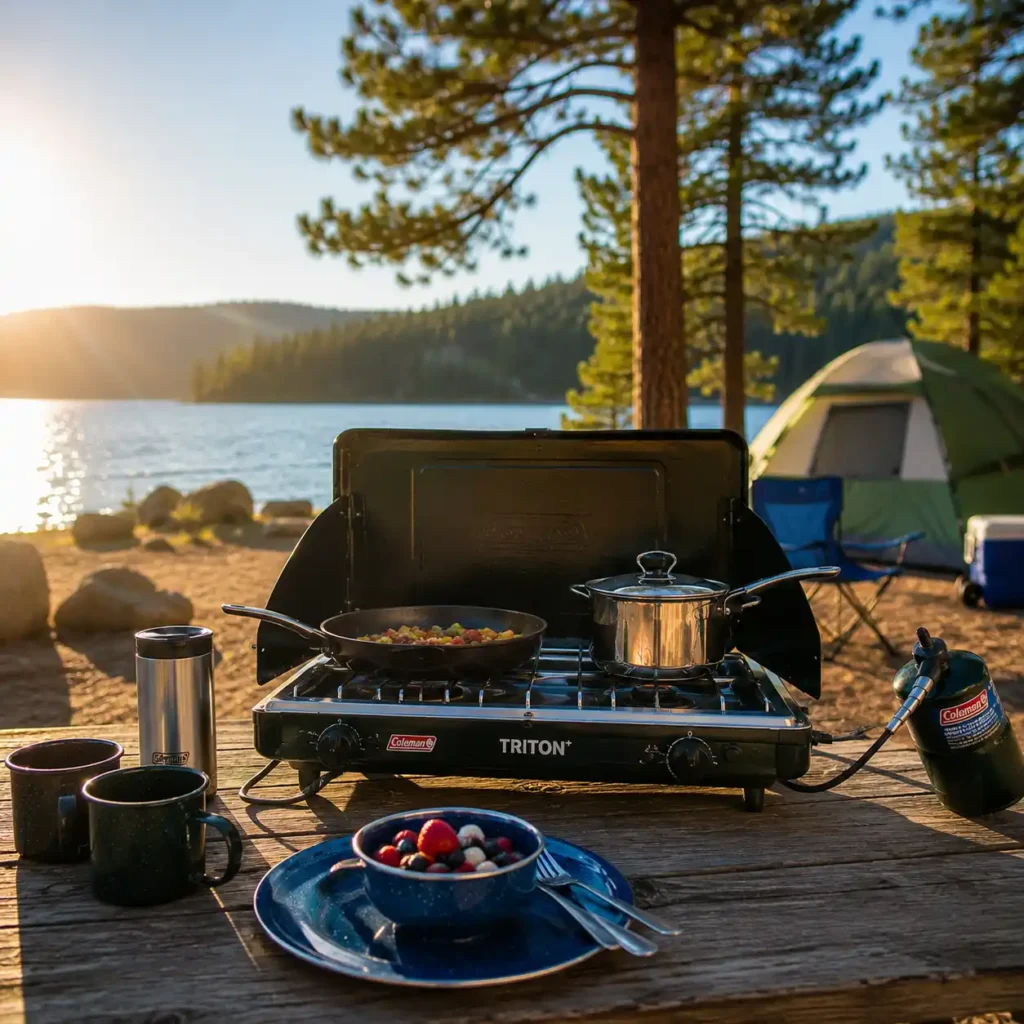
The best camping stove for car camping depends much more on how you actually cook outdoors than on raw burner specs alone.
After repeated campground testing, one thing became very obvious:
The stoves that felt best to live with were not always the most powerful — they were the ones that combined:
– stable flame control
– practical wind resistance
– comfortable burner spacing
– manageable cleanup
– reliable everyday usability
without constantly creating small frustrations during normal campground cooking.
🏆 Best Overall: Camp Chef Everest 2X
The Everest 2X delivered the strongest overall balance between:
– cooking power
– wind resistance
– burner consistency
– real campground usability
It performed especially well during:
– windy campground cooking
– colder mornings
– larger family meals
– cast iron cooking
– longer campground stays
For most campers who want a dependable long-term two-burner propane stove, this is the strongest all-around option in the guide.
💰 Best Value: Coleman Triton
The Triton remains one of the easiest camping stoves to recommend for casual campground camping.
It is:
– affordable
– dependable
– easy to transport
– simple to use
while still handling most real-world campground cooking surprisingly well.
For weekend campers and family campground trips, it delivers excellent overall value without feeling overly cheap or flimsy.
🍳 Best for Real Cooking: GSI Outdoors Selkirk 540
The Selkirk stood out immediately for its smoother flame control and much more refined simmer performance.
Campers who actually enjoy cooking outdoors — instead of simply boiling water — will appreciate how much easier this stove feels during:
– slower meals
– breakfast cooking
– sauces
– rice
– coffee preparation
– longer campground dinners
It sacrifices some portability, but the cooking experience itself feels noticeably more controlled and enjoyable.
🚙 Best Compact Premium Option: Jetboil Genesis Basecamp
The Genesis solves one of the biggest frustrations in vehicle camping:
bulky cooking gear consuming too much cargo space.
It packs dramatically smaller than traditional suitcase-style camp stoves while still offering excellent simmer control and strong real-world cooking usability.
For organized vehicle camping setups and smaller SUVs, it makes a lot of sense despite the premium price.
If you’re building a more complete vehicle-based camping setup, our guide to Best Portable Power Stations for Vehicle Camping Setup explains how to organize compact campground systems more efficiently.
💵 Best Budget Option: Coleman Classic
The Coleman Classic remains popular because simplicity still works.
It lacks:
– refined simmer control
– premium construction
– compact portability
but it still handles normal campground cooking reliably at a very affordable price point.
For beginner campers and casual weekend trips, it remains one of the safest low-cost propane stove choices available.
At the end of the day, the best camping stoves for car camping are the ones that make outdoor cooking feel easier instead of more complicated once real campground conditions show up.
And after testing these stoves across multiple camping trips, the biggest difference always came down to the same thing:
A stove that feels predictable and easy to cook on outdoors will almost always outperform one that only looks impressive on a spec sheet.
About the Author
CampComfortGuide was created for campers who care less about marketing hype — and more about gear that actually works once real campground conditions show up.
Every guide is built around practical outdoor use:
– family campground trips
– rainy weekends
– cold mornings
– windy campsites
– overloaded vehicles
– messy camp kitchens
– long car camping setups
because those are the situations where camping gear either becomes genuinely useful — or incredibly frustrating.
The goal of this site is simple:
Create camping guides that feel honest, experience-driven, and genuinely helpful for real campers instead of sounding like rewritten product descriptions.
That means focusing heavily on:
– long-term usability
– comfort
– weather performance
– campsite practicality
– realistic trade-offs
– and the small details most reviews completely ignore
because those details are usually what matter most after several days outdoors.
Thanks for reading CampComfortGuide and supporting independent outdoor content.