
Hi, I’m Anthony.
For years, I made the classic mistake of carrying an entire nesting cookware set into the backcountry, only to discover that I cooked almost every meal in the same single pot. I’ve scrubbed burnt oatmeal off thin titanium at sunrise, dealt with frustrating hot spots that ruined simple stews, and learned firsthand that the wrong cookware can make camp cooking far more difficult than it needs to be.
One-pot cooking isn’t just about packing lighter. It’s about saving fuel, simplifying cleanup, and preparing satisfying meals with minimal effort after a long day outdoors. The right pot should distribute heat evenly, resist scorching, and remain easy to clean whether you’re making pasta, chili, rice dishes, or slow-simmered soups.
In this guide, I’ve selected the best camping cookware for one-pot meals based on heat performance, durability, fuel efficiency, and real-world usability. Whether you’re a backpacker looking to minimize pack weight or a car camper who values gourmet camp meals, these cookware options will help you cook more efficiently and eat better outdoors.
If you’re building a complete camp kitchen setup, our guides to 5 Best Camping Cookware Sets in 2026 and 5 Best Camping Stoves for Car Camping in 2026 can help you choose compatible gear for your cooking style.
As an Amazon Associate, we earn from qualifying purchases.

Table of Contents
🔥 Why One-Pot Cooking Requires Specialized Camp Cookware
One-pot meals place very different demands on camping cookware than simple boil-only tasks like making coffee or rehydrating freeze-dried meals. While almost any pot can boil water, not every pot can simmer chili, cook rice evenly, or prepare pasta without creating frustrating hot spots and difficult cleanup.
The biggest challenge with one-pot cooking is heat management. Thin titanium cookware heats extremely quickly but often distributes heat unevenly, increasing the risk of burnt food. Narrow pots designed primarily for boiling water can also make stirring difficult and lead to food sticking to the bottom.
For successful one-pot meals, cookware should provide:
- Even heat distribution to reduce scorching and improve cooking consistency.
- Adequate cooking volume for soups, stews, pasta dishes, and rice-based meals.
- Comfortable, secure handles that remain stable when lifting heavier meals.
- Easy cleanup features, such as ceramic coatings or hard-anodized surfaces.
- Efficient fuel usage, especially during longer trips where every gram of fuel matters.
The right cookware doesn’t just improve meal quality—it can also save fuel, simplify camp kitchen cleanup, and make outdoor cooking significantly more enjoyable.
If you’re building a complete campsite cooking system, our guide to 5 Best Camping Stoves for Windy Campsites (2026) can help you choose equipment that works efficiently together.
Ultimately, specialized one-pot cookware allows you to prepare more satisfying meals with less frustration, helping you spend less time managing your gear and more time enjoying the outdoors.
🔬 How We Evaluated & Tested
Finding the best camping cookware for one-pot meals requires much more than boiling water a few times. One-pot cooking places unique demands on cookware, including heat distribution, simmer control, cleanup efficiency, and fuel consumption during extended use.
To identify the best options for backpackers and campers who regularly prepare soups, pasta dishes, rice meals, and stews, each cookware model was evaluated using a series of practical field tests designed to simulate real outdoor cooking conditions.
Our testing focused on the following criteria:
- Heat Distribution: We used an infrared thermometer to identify hot spots while simmering thick meals such as chili and oatmeal.
- Non-Stick Performance and Durability: Coated cookware was tested through repeated cooking and cleaning cycles to evaluate how well surfaces resisted sticking and wear over time.
- Scorch Resistance: We intentionally cooked foods that commonly burn during camping, including cheese-based meals and rice dishes, to assess how easily cookware handled low-and-slow cooking.
- Fuel Efficiency: We monitored boil times and fuel consumption under identical stove settings to identify cookware that maximized fuel savings during multi-day trips.
- Weight-to-Usable Capacity Ratio: We evaluated whether each pot provided enough cooking volume to justify the space and weight added to a backpack or camp kitchen setup.
- Real-World Usability: Handle comfort, lid functionality, pouring control, and overall ease of cleanup were assessed during routine campsite meal preparation.
Because this guide focuses specifically on one-pot camp cooking, cookware was judged not only on how quickly it boiled water but also on how effectively it handled the types of meals campers actually prepare outdoors.
Our goal was simple: identify cookware that helps campers cook more efficiently, waste less fuel, simplify cleanup, and enjoy better meals in the backcountry and at the campsite.
🛡️ Why You Can Trust This Guide
Choosing camping cookware for one-pot meals isn’t as simple as selecting the lightest pot or the cheapest option. Different materials, coatings, and designs perform very differently once you move beyond boiling water and start preparing real meals outdoors.
This guide was created using a practical, experience-based approach focused on the factors that matter most during actual camping trips. Rather than relying solely on manufacturer specifications, the cookware in this guide was evaluated based on heat distribution, fuel efficiency, durability, cleanup performance, and overall usability during one-pot cooking scenarios.
Special consideration was given to the unique demands of preparing soups, pasta dishes, rice meals, stews, and other camp-friendly recipes that require simmering and active cooking rather than simple water boiling.
Our recommendations prioritize cookware that offers:
- Consistent cooking performance with minimal hot spots.
- Reliable durability for repeated outdoor use.
- Efficient fuel consumption during extended trips.
- Practical features that simplify cooking and cleanup at camp.
- Long-term value, regardless of whether you’re backpacking or car camping.
No single pot is perfect for every camper. The goal of this guide is to help you choose cookware that matches your cooking style, camping preferences, and trip requirements, so you can spend less time struggling with gear and more time enjoying great meals outdoors.
⚖️ What Actually Matters in One-Pot Cookware?

Choosing the best camping cookware for one-pot meals isn’t about finding the lightest pot or the most expensive option. Success with one-pot cooking depends on several practical factors that directly affect meal quality, fuel efficiency, and overall campsite convenience.
Here are the features that matter most.
Material and Heat Distribution
The material of your cookware has the biggest impact on cooking performance.
- Hard-anodized aluminum: The best all-around choice for one-pot meals. It provides excellent heat distribution, reduces scorching, and offers a strong balance between durability and weight.
- Stainless steel: Extremely durable and ideal for gourmet camp cooking, but significantly heavier than aluminum options.
- Titanium: Outstanding for ultralight backpacking but often performs poorly for simmering because it heats unevenly and creates hot spots.
- Ceramic-coated cookware: Offers excellent non-stick performance and easier cleanup, although coatings require more careful handling.
For most campers, hard-anodized aluminum provides the best overall balance of performance and practicality.
Pot Shape and Geometry
Many campers overlook pot shape, but it plays a major role in one-pot cooking success.
Wider pots generally:
- Distribute heat more evenly.
- Make stirring easier.
- Reduce the risk of food sticking to the bottom.
- Work better for rice dishes, pasta, soups, and stews.
Tall, narrow pots are often optimized for boiling water rather than preparing complete meals.
Handle Security and Stability
One-pot meals are often heavier than simple boil-only cooking.
Look for cookware with:
- Locking or secure folding handles.
- Comfortable grips that remain stable while pouring.
- Designs that minimize accidental spills when moving hot food.
Reliable handles improve both safety and cooking confidence at camp.
Lid Functionality
A good lid adds much more value than simply trapping heat.
Useful features include:
- Integrated strainers for pasta and vegetables.
- Steam vents for simmer control.
- Secure fit to improve fuel efficiency.
These small details can significantly improve the overall cooking experience.
Ease of Cleanup
After a long day outdoors, nobody wants to spend excessive time scrubbing cookware.
Features that simplify cleanup include:
- Ceramic or non-stick coatings.
- Rounded interior corners.
- Smooth cooking surfaces.
- Dishwasher-safe components for car campers.
If camp kitchen cleanup is a priority, our guide to 5 Best Camping Dishwashing Stations in 2026 offers practical solutions for simplifying post-meal cleanup.
Ultimately, the best camping cookware for one-pot meals should help you cook efficiently, minimize fuel use, simplify cleanup, and consistently produce enjoyable meals wherever your adventures take you.
🏆 Quick Summary: Top Picks for One-Pot Cooking
Don’t have time to read the full guide? Here are our top recommendations for the best camping cookware for one-pot meals, based on different cooking styles, trip types, and priorities.
🥇 Best Overall (Best Balance of Weight & Performance): Sea to Summit Alpha Pot 1.8L
Why we picked it: Excellent heat distribution, a secure Pivot-Lock handle, lightweight construction, and outstanding versatility make it the best all-around choice for most campers and backpackers.
🥈 Best for Fuel Efficiency: Jetboil FluxRing 1.5L Cook Pot
Why we picked it: Jetboil’s FluxRing technology maximizes heat transfer and minimizes fuel consumption, making it ideal for longer trips where efficiency matters.
🥉 Best for Fast Cooking: GSI Outdoors Pinnacle Dualist HS
Why we picked it: The integrated heat exchanger significantly reduces boil times while improving fuel efficiency, making it perfect for cold-weather camping and quick meal preparation.
🍳 Best Non-Stick Performance: MSR Ceramic Solo Pot
Why we picked it: The durable ceramic coating offers exceptional food release and effortless cleanup without relying on traditional non-stick chemicals.
🏕️ Best for Gourmet Camp Cooking: Stanley Even-Heat Camp Pro
Why we picked it: Its multi-layer stainless steel construction provides outstanding heat distribution, allowing campers to prepare more advanced meals without worrying about hot spots.
Each of these cookware options excels in different situations, but all were selected because they deliver reliable real-world performance, practical usability, and better one-pot cooking experiences outdoors.
📊 Comparison: Top One-Pot Cookware
Choosing the best camping cookware for one-pot meals becomes much easier when you compare the features that matter most side by side. The cookware below was selected based on heat distribution, fuel efficiency, durability, ease of cleanup, and real-world cooking performance.
Whether you’re looking for an ultralight backpacking pot, a fuel-efficient cooking system, or cookware capable of gourmet campsite meals, this comparison will help you identify the best option for your cooking style.
| Model | Verdict Score | Best For | Weight | Material | Capacity |
|---|---|---|---|---|---|
| Sea to Summit Alpha Pot 1.8L | 9.8/10 | Best Overall Performance | 8.1 oz | Hard-Anodized Aluminum | 1.8L |
| Jetboil FluxRing 1.5L Cook Pot | 9.7/10 | Maximum Fuel Efficiency | 12 oz | FluxRing Aluminum | 1.5L |
| GSI Outdoors Pinnacle Dualist HS | 9.6/10 | Fast Cooking & Cold Weather | 21.4 oz | Teflon® Non-Stick Aluminum | 1.8L |
| Stanley Even-Heat Camp Pro | 9.4/10 | Gourmet Camp Cooking | 2.0 lbs | 18/8 Stainless Steel | 3.7 qt |
| MSR Ceramic Solo Pot | 9.3/10 | Easy Cleanup & Solo Trips | 7.5 oz | Ceramic-Coated Aluminum | 1.3L |
🥘 Best Camping Cookware for One-Pot Meals (2026): In-Depth Reviews
1. Sea to Summit Alpha Pot 1.8L
Award: Best Overall One-Pot Performance
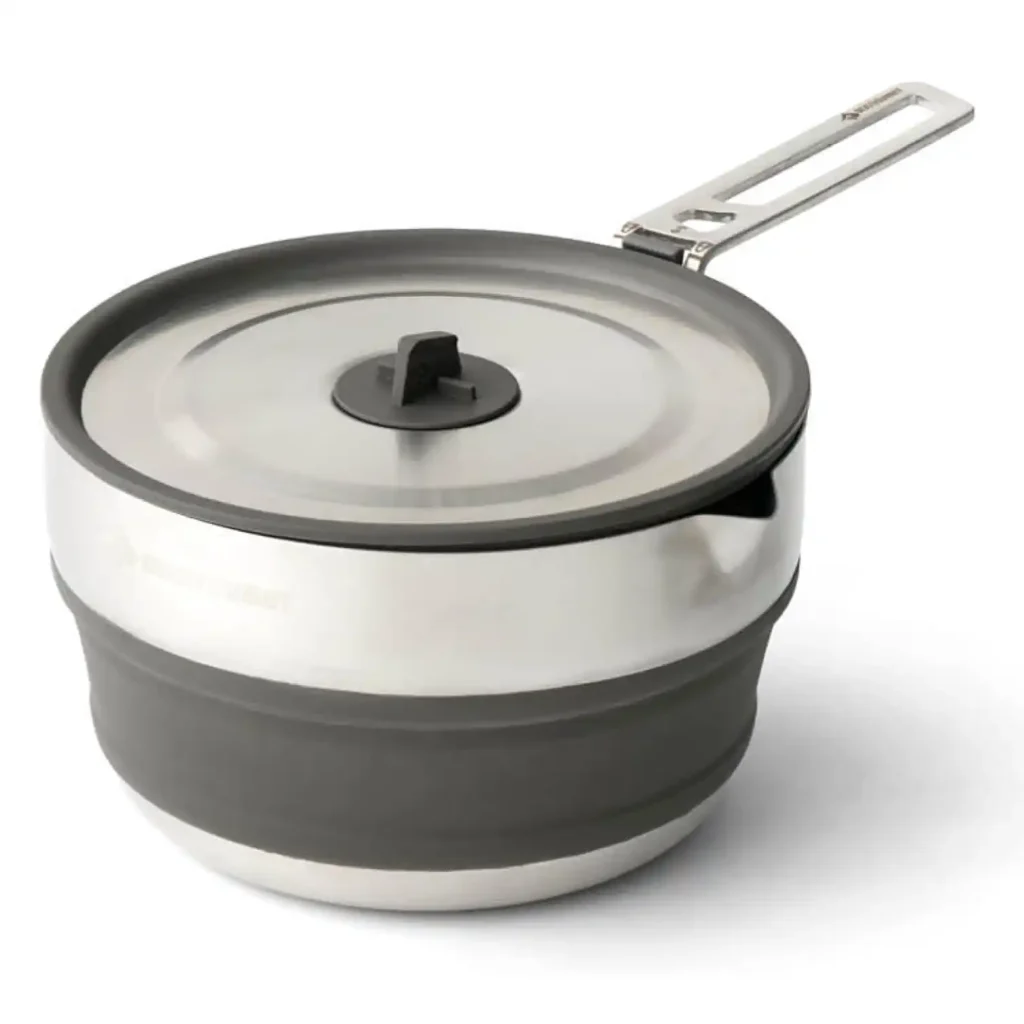
The Sea to Summit Alpha Pot 1.8L strikes an impressive balance between weight, cooking performance, and practical design, making it our top recommendation for campers who regularly prepare one-pot meals. Its hard-anodized aluminum construction distributes heat evenly, helping prevent the scorching and hot spots that often plague ultralight cookware.
During testing, the Alpha Pot performed exceptionally well when preparing thicker meals such as oatmeal, soups, and rice dishes. The standout feature is Sea to Summit’s Pivot-Lock™ handle, which locks securely into place during cooking and folds away neatly for packing. This simple but effective design inspires confidence when handling hot meals at camp.
The integrated strainer lid and textured base further improve usability, making the Alpha Pot one of the most thoughtfully designed camping pots available.
Why We Chose It
The Sea to Summit Alpha Pot earned our top recommendation because it offers the best combination of heat distribution, packability, safety, and real-world cooking performance. It performs equally well for backpackers and minimalist car campers who prioritize efficient one-pot cooking.
Quick Specs
- Material: Hard-Anodized Aluminum
- Capacity: 1.8 Liters
- Weight: 8.1 oz
- Best For: Backpackers and campers seeking the best all-around performance
- Lid Features: Integrated strainer holes and Lid Keep system
What We Like
✅ Excellent heat distribution reduces hot spots and scorching
✅ Secure Pivot-Lock™ handle improves safety and confidence
✅ Lightweight without sacrificing durability
✅ Integrated strainer lid adds versatility
✅ Textured base improves stove stability
What Could Be Better
❌ Hard-anodized surfaces can scratch when used with metal utensils
❌ More expensive than basic aluminum alternatives
❌ Capacity may feel limiting for larger groups
Why It Earned This Award
Many camping pots excel in only one area—they’re either ultralight, highly durable, or inexpensive. The Sea to Summit Alpha Pot stands out because it delivers consistent performance across all the areas that matter most for one-pot cooking.
Its excellent heat control makes simmering far easier than with titanium cookware, while its lightweight design remains backpack-friendly. Combined with thoughtful features like the Pivot-Lock handle and integrated strainer lid, it provides one of the most complete one-pot cooking experiences available.
Final Verdict
If you’re looking for the best camping cookware for one-pot meals, the Sea to Summit Alpha Pot 1.8L is the strongest all-around option in this guide. It balances weight, durability, and cooking performance better than almost any competing pot.
For campers who value reliable meal preparation without unnecessary compromises, this is the pot we’d confidently recommend first.
Availability and pricing may change over time.
2. GSI Outdoors Pinnacle Dualist HS
Award: Best for High-Speed Cooking
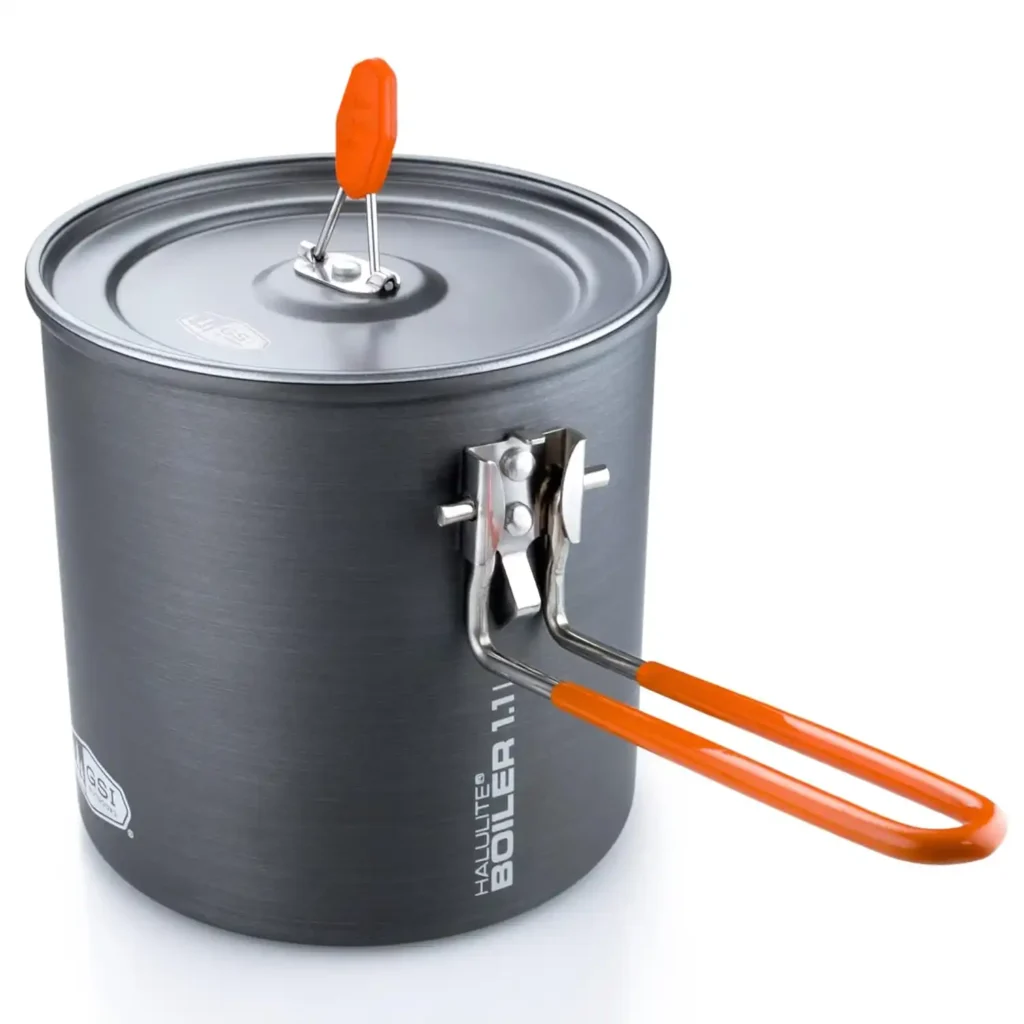
The GSI Outdoors Pinnacle Dualist HS is designed for campers who value speed, fuel efficiency, and practical all-in-one functionality. Its standout feature is the integrated Heat Exchanger (HS) technology, which captures and redirects heat that would otherwise escape around the sides of the pot. The result is faster boil times and reduced fuel consumption—an important advantage during longer trips or cold-weather camping.
During testing, the Pinnacle Dualist HS consistently delivered some of the fastest cooking times in this guide. Thick meals such as risotto and oatmeal cooked evenly without significant scorching, while the non-stick surface simplified cleanup considerably.
Beyond the cookware itself, the Dualist system nests bowls, insulated mugs, and utensils into a compact package, making it an appealing option for couples or campers looking for an organized cooking setup.
Why We Chose It
The GSI Outdoors Pinnacle Dualist HS earned this award because it combines excellent fuel efficiency, rapid cooking performance, and an integrated cooking system design that simplifies camp meal preparation.
Quick Specs
- Material: Hard-Anodized Aluminum with Non-Stick Coating
- Capacity: 1.8 Liters
- Weight: 21.4 oz
- Best For: Campers prioritizing speed and fuel savings
- Special Feature: Integrated Heat Exchanger Technology
What We Like
✅ Heat exchanger significantly improves fuel efficiency
✅ Faster boil times compared to traditional cookware
✅ Excellent nesting system keeps gear organized
✅ Non-stick coating simplifies cleanup
✅ Well-suited for couples and two-person trips
What Could Be Better
❌ Heavier than minimalist cookware alternatives
❌ Bulkier design due to heat exchanger base
❌ Non-stick coating requires more careful utensil selection
Why It Earned This Award
When fuel efficiency and cooking speed matter, few systems perform as well as the Pinnacle Dualist HS. The integrated heat exchanger provides measurable improvements in boil times while helping conserve fuel over multi-day trips.
Its combination of cooking performance and organizational convenience makes it particularly attractive for campers who value efficiency without sacrificing functionality.
Final Verdict
If your priorities include faster cooking times, improved fuel efficiency, and a well-organized cooking system, the GSI Outdoors Pinnacle Dualist HS is an excellent choice.
While slightly heavier than minimalist alternatives, its performance advantages are especially valuable during cold-weather trips, extended adventures, or situations where conserving fuel is important.
For campers who appreciate efficiency and convenience, this system delivers outstanding real-world value.
Availability and pricing may change over time.
3. Stanley Even-Heat Camp Pro (Pot Only)
Award: Best for Gourmet Camp Cooking
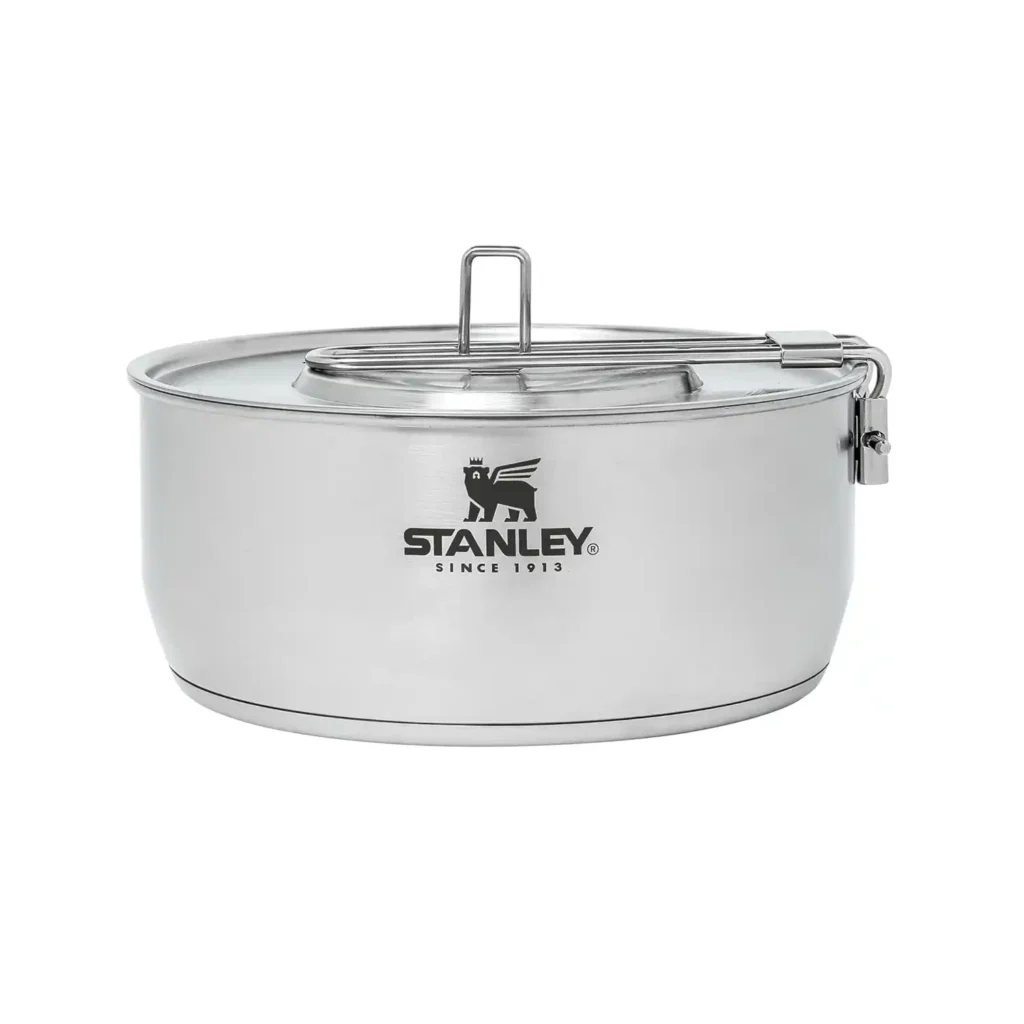
The Stanley Even-Heat Camp Pro is built for campers who believe outdoor meals should be just as satisfying as those prepared at home. Unlike lightweight backpacking cookware, this heavy-duty stainless steel pot prioritizes superior heat distribution, durability, and cooking precision over minimizing pack weight.
During testing, the Even-Heat Camp Pro excelled when preparing meals that require longer simmer times and consistent temperatures. Thick stews, pasta sauces, and rice dishes cooked evenly with virtually no hot spots. The multi-layer bottom performed much more like premium home cookware than traditional camping pots.
Its robust stainless steel construction also allows the use of metal utensils without concern for damaging coatings, making it an excellent choice for campers who value longevity and versatility.
Why We Chose It
The Stanley Even-Heat Camp Pro earned this award because it delivers the best overall cooking performance for campers who prioritize food quality over ultralight packing. Its exceptional heat control makes it ideal for preparing more advanced one-pot meals.
Quick Specs
- Material: 18/8 Stainless Steel with Multi-Layer Base
- Capacity: 3.7 Quarts
- Weight: 2.0 lbs
- Best For: Car campers, van lifers, and camp chefs
- Special Feature: Even-Heat multi-layer construction
What We Like
✅ Outstanding heat distribution minimizes scorching
✅ Extremely durable stainless steel construction
✅ Safe to use with metal utensils
✅ Large capacity works well for families and groups
✅ Dishwasher safe for easy cleanup at home
What Could Be Better
❌ Significantly heavier than backpacking cookware
❌ Longer boil times compared to aluminum alternatives
❌ Too bulky for weight-conscious hikers
Why It Earned This Award
Most camping cookware is designed primarily around saving weight. The Stanley Even-Heat Camp Pro takes a different approach by focusing on cooking performance and long-term durability.
Its multi-layer base distributes heat exceptionally well, reducing the risk of burning delicate meals that require simmering. Combined with rugged stainless steel construction, it offers a cooking experience that closely resembles using quality cookware in a home kitchen.
For campers who genuinely enjoy preparing elaborate meals outdoors, few options perform better.
Final Verdict
If you’re looking for the best camping cookware for gourmet one-pot meals, the Stanley Even-Heat Camp Pro is an outstanding choice.
While its weight makes it unsuitable for backpacking, car campers and van lifers who value cooking performance will appreciate its exceptional heat control, durability, and versatility.
For campers who believe great food is an essential part of the outdoor experience, this pot is well worth the extra weight.
Availability and pricing may change over time.
4. MSR Ceramic Solo Pot
Award: Best Non-Stick Performance
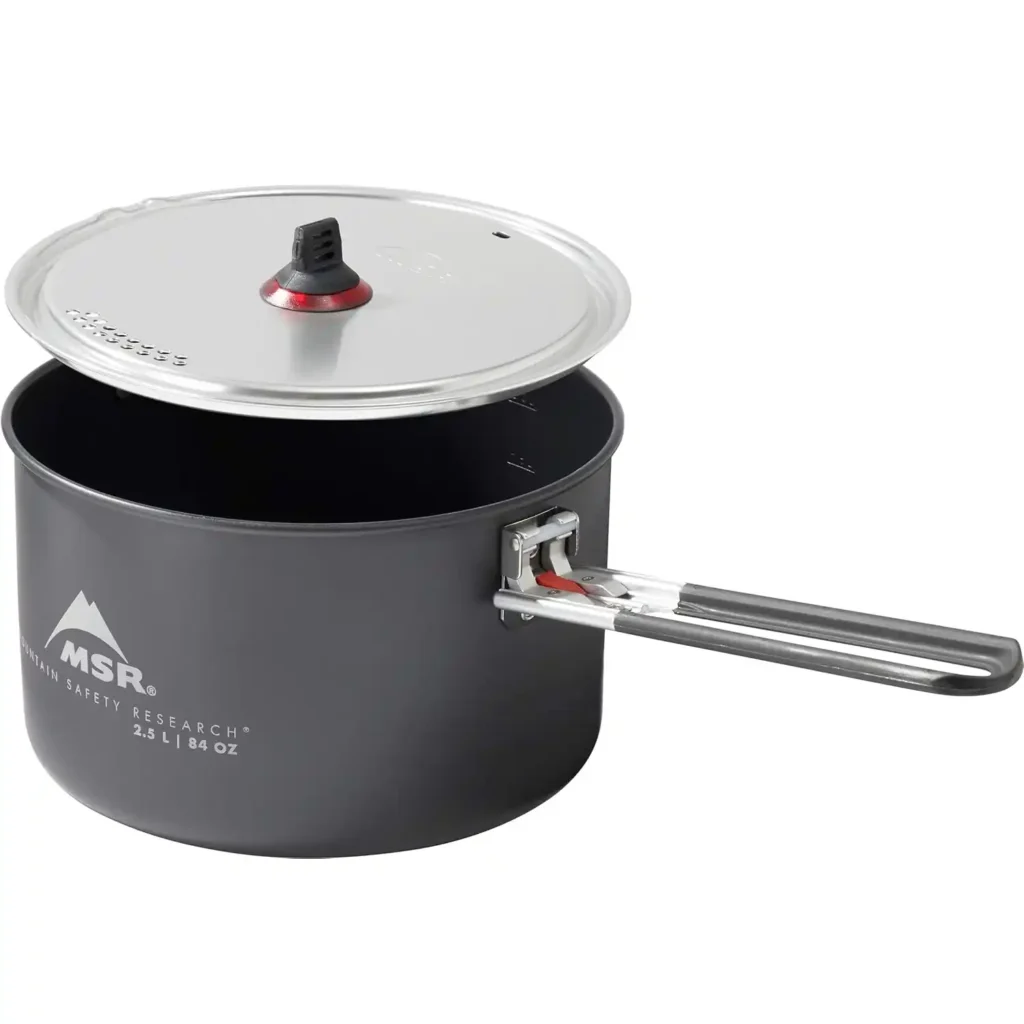
The MSR Ceramic Solo Pot is an excellent option for solo backpackers who want to simplify camp cooking and minimize cleanup time. Featuring MSR’s Fusion® ceramic coating, this pot provides outstanding non-stick performance without relying on traditional PFAS-based coatings, making it an attractive choice for campers who prioritize both convenience and healthier cooking surfaces.
During testing, the Ceramic Solo Pot handled sticky meals such as oatmeal, mac and cheese, and rice dishes exceptionally well. Food residue released easily, requiring very little water and effort to clean—a major advantage when water sources are limited in the backcountry.
Despite its excellent cooking performance, the pot remains impressively lightweight, making it ideal for solo hikers who want a dedicated one-pot solution without adding unnecessary pack weight.
Why We Chose It
The MSR Ceramic Solo Pot earned this award because it offers the best balance of lightweight performance and hassle-free cleanup. Its ceramic coating significantly reduces food sticking, making camp cooking more enjoyable and efficient.
Quick Specs
- Material: Ceramic-Coated Aluminum
- Capacity: 1.3 Liters
- Weight: 7.5 oz
- Best For: Solo backpackers and campers who prioritize easy cleanup
- Special Feature: Fusion® PFAS-free ceramic non-stick coating
What We Like
✅ Excellent non-stick performance with minimal food residue
✅ PFAS-free ceramic coating offers a more eco-conscious alternative
✅ Lightweight and backpack-friendly design
✅ High heat tolerance compared to traditional non-stick surfaces
✅ Requires very little water for cleaning
What Could Be Better
❌ Limited capacity makes it unsuitable for groups
❌ Ceramic coatings still require careful handling to maximize lifespan
❌ Talon™ handle design has a slight learning curve
Why It Earned This Award
For many campers, cleanup is one of the least enjoyable parts of preparing meals outdoors. The MSR Ceramic Solo Pot addresses this challenge exceptionally well by combining superior non-stick performance with ultralight portability.
Its ceramic surface allows campers to cook more diverse meals without worrying about stubborn residue or excessive scrubbing. Combined with its low weight, this pot provides one of the best overall experiences for solo one-pot cooking.
If minimizing camp cleanup is a priority, our guide to 5 Best Camping Dishwashing Stations in 2026 offers additional tips for keeping your camp kitchen efficient and organized.
Final Verdict
If you’re searching for the best camping cookware for one-pot meals that prioritizes easy cleanup, the MSR Ceramic Solo Pot is difficult to beat.
Its lightweight construction, outstanding ceramic coating, and solo-friendly capacity make it an excellent choice for backpackers who want to spend less time washing dishes and more time enjoying the outdoors.
For solo campers seeking maximum convenience without sacrificing cooking performance, this pot delivers exceptional value.
Availability and pricing may change over time.
5. Jetboil FluxRing 1.5L Cook Pot
Award: Best for Maximum Fuel Efficiency
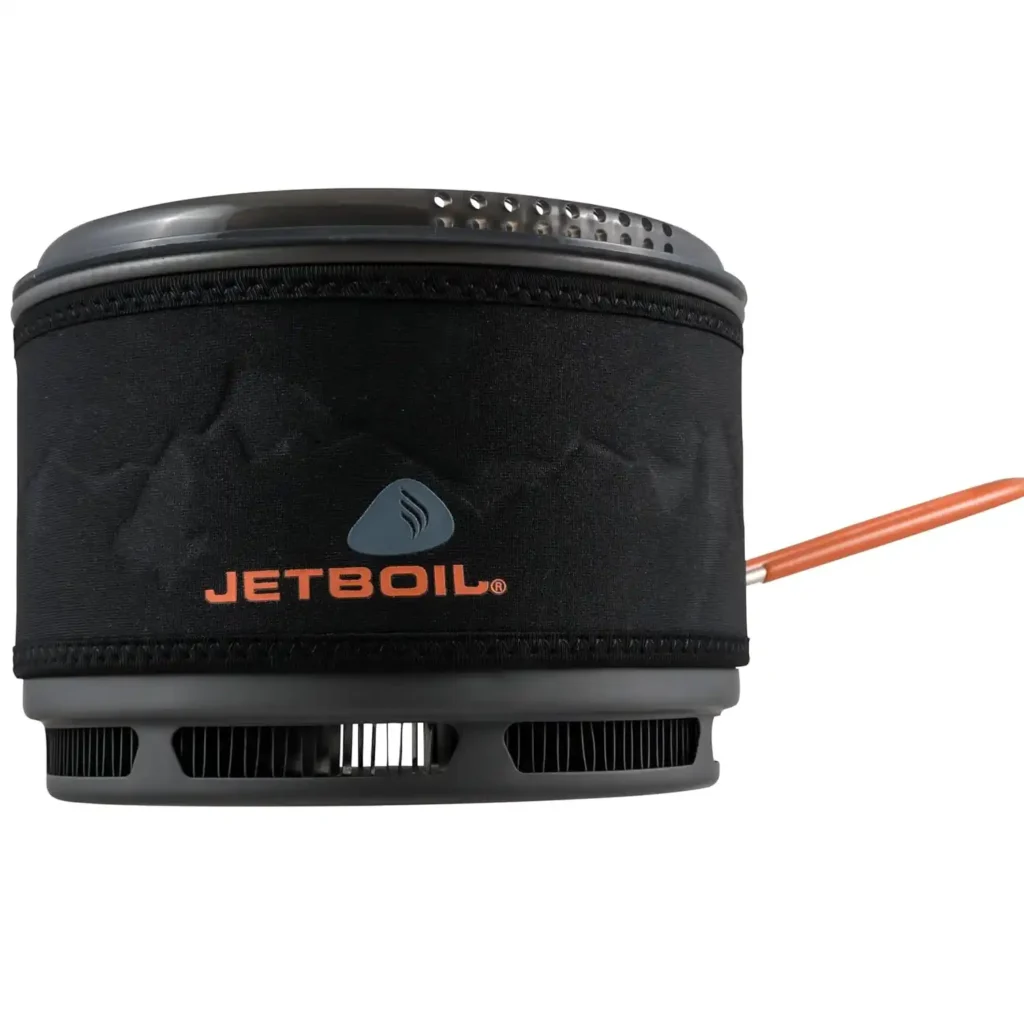
The Jetboil FluxRing 1.5L Cook Pot is designed for campers and backpackers who want to get the most out of every fuel canister. Its patented FluxRing® heat exchanger technology captures and redirects heat that would otherwise be lost, significantly improving fuel efficiency and reducing boil times.
During testing, the FluxRing Cook Pot consistently used less fuel than standard aluminum and titanium cookware when preparing one-pot meals. This advantage became especially noticeable during colder conditions and longer trips, where efficient fuel usage can reduce pack weight and extend time between resupplies.
The insulating cozy is another thoughtful feature, helping meals stay warm longer while also allowing the pot to be handled comfortably without additional pot grippers.
Why We Chose It
The Jetboil FluxRing Cook Pot earned this award because it delivers the best fuel efficiency and heat utilization in this guide. For campers focused on maximizing stove performance and minimizing fuel consumption, few systems perform better.
Quick Specs
- Material: FluxRing® Aluminum
- Capacity: 1.5 Liters
- Weight: 12 oz
- Best For: Backpackers prioritizing fuel efficiency
- Special Feature: Patented FluxRing® heat exchanger technology
What We Like
✅ Exceptional fuel efficiency reduces fuel consumption
✅ Faster boil times compared to conventional cookware
✅ Insulating cozy keeps meals warmer for longer
✅ Comfortable folding handles provide a secure grip
✅ Excellent performance in cold-weather conditions
What Could Be Better
❌ Performs best when paired with Jetboil stove systems
❌ Bulkier than minimalist cooking pots
❌ Higher price point than basic cookware options
Why It Earned This Award
For long-distance hikers and efficiency-focused campers, fuel usage matters just as much as cookware weight. The Jetboil FluxRing system excels because it maximizes heat transfer, helping campers prepare meals faster while carrying less fuel overall.
This advantage becomes increasingly important during extended trips, shoulder-season camping, and high-altitude environments where stove efficiency can directly impact meal preparation and trip planning.
Its combination of speed, efficiency, and practical features makes it one of the most technically advanced cookware options available for one-pot cooking.
Final Verdict
If your top priority is maximizing fuel efficiency during one-pot camp cooking, the Jetboil FluxRing 1.5L Cook Pot is an outstanding investment.
While it works best within the Jetboil ecosystem, its ability to conserve fuel and accelerate cooking times makes it an excellent choice for backpackers tackling longer adventures or camping in colder conditions.
For campers who value efficiency and want to get the absolute most from their stove system, the FluxRing Cook Pot stands out as one of the best options on the market.
Availability and pricing may change over time.
🛒 How to Choose the Best Camping Cookware for One-Pot Meals

Choosing the best camping cookware for one-pot meals isn’t simply about buying the lightest pot or the most expensive option. The right cookware should match your cooking style, trip length, and overall camping setup.
Here are the factors that matter most when making your decision.
Material: Balance Weight and Cooking Performance
The material of your cookware has the greatest impact on cooking results.
- Hard-anodized aluminum: The best all-around option for one-pot meals. It offers excellent heat distribution, moderate weight, and strong durability.
- Ceramic-coated aluminum: Ideal for campers who prioritize easy cleanup and non-stick performance.
- Stainless steel: Extremely durable and excellent for gourmet cooking but significantly heavier.
- Titanium: Outstanding for ultralight backpacking but generally a poor choice for simmering because it creates hot spots easily.
For most campers, hard-anodized aluminum provides the best balance between cooking performance and packability.
Choose the Right Capacity
Think about how many people you’ll regularly cook for.
- Solo backpackers: 1.0–1.5L cookware is usually sufficient.
- Couples: 1.5–2.0L pots provide enough flexibility for most meals.
- Families and groups: 2.0L+ cookware offers better meal preparation capacity.
Choosing the correct size improves efficiency and reduces unnecessary weight.
Consider Fuel Efficiency
If you frequently camp in colder temperatures or take longer trips, fuel consumption becomes increasingly important.
Heat exchanger systems, such as FluxRing® or radiator-style bases, can:
- Reduce boil times
- Improve stove efficiency
- Lower fuel consumption over multiple days
For extended trips, these benefits can significantly reduce the amount of fuel you need to carry.
Prioritize Ease of Cleanup
One-pot meals often involve sauces, starches, and ingredients that stick to cookware.
Features that simplify cleanup include:
- Ceramic coatings
- Rounded pot interiors
- Non-stick surfaces
- Dishwasher-safe construction for car campers
If maintaining a clean cooking area is important to you, our guide to How to Keep a Camp Kitchen Clean Overnight (No Smells) provides additional strategies for campsite organization and hygiene.
Match Cookware to Your Camping Style
Different types of campers have different priorities.
- Backpackers: Prioritize weight and fuel efficiency.
- Car campers: Focus on cooking performance and durability.
- Gourmet camp cooks: Choose cookware with superior heat distribution.
- Minimalists: Look for versatile pots that handle multiple meal types effectively.
Ultimately, the best camping cookware for one-pot meals is the cookware that fits your actual cooking habits—not necessarily the lightest or most expensive option available.
🔥 Hard-Anodized Aluminum vs Titanium: Which Is Better for One-Pot Cooking?
One of the biggest decisions campers face when choosing cookware is whether to prioritize ultralight weight or better cooking performance. Hard-anodized aluminum and titanium are two of the most popular materials used in camping cookware, but they excel in very different situations.
For campers who regularly prepare soups, pasta dishes, rice meals, oatmeal, or stews, hard-anodized aluminum is generally the superior choice. Its ability to distribute heat evenly reduces scorching and makes simmering much easier.
Titanium, on the other hand, excels when minimizing pack weight is the top priority. It performs exceptionally well for boiling water and preparing dehydrated meals but often struggles with more complex cooking due to uneven heat transfer.
Our Recommendation
- Choose hard-anodized aluminum if you enjoy preparing real one-pot meals and want the best overall cooking experience.
- Choose titanium if your primary focus is ultralight backpacking and most of your meals involve boiling water rather than active cooking.
For most campers reading this guide, hard-anodized aluminum offers the best balance of cooking performance, fuel efficiency, and ease of use.
⚠️ Common Mistakes When Choosing One-Pot Camping Cookware

Choosing the best camping cookware for one-pot meals isn’t just about finding the lightest pot or the lowest price. Many campers end up frustrated because they overlook factors that directly impact cooking performance, fuel efficiency, and overall enjoyment at camp.
Avoid these common mistakes before making your decision.
Choosing Titanium for Complex Meals
Titanium cookware is incredibly lightweight, making it popular among ultralight backpackers. However, it often performs poorly when preparing one-pot meals that require simmering.
Because titanium transfers heat unevenly, it can create hot spots that easily burn foods like rice, oatmeal, sauces, and stews.
If you primarily cook complete meals rather than simply boiling water, hard-anodized aluminum is usually the better choice.
Buying More Capacity Than You Need
Larger cookware isn’t always better.
Oversized pots:
- Add unnecessary weight.
- Require more fuel to heat efficiently.
- Take up valuable pack space.
Choose cookware based on your typical group size:
- Solo campers: 1.0–1.5L
- Couples: 1.5–2.0L
- Families: 2.0L+
Matching capacity to your actual needs improves both efficiency and convenience.
Ignoring Handle Design
Handles are often overlooked during the buying process.
Poorly designed handles can:
- Feel unstable when lifting heavy meals.
- Become uncomfortable to use.
- Increase the risk of spills and burns.
Look for cookware with locking or secure folding handle systems, especially if you frequently cook soups, stews, or pasta dishes.
Overlooking Cleanup Requirements
After a long day outdoors, few campers enjoy scrubbing burnt food from cookware.
Features that simplify cleanup include:
- Ceramic coatings
- Rounded pot interiors
- High-quality non-stick surfaces
- Durable anodized finishes
Choosing cookware that’s easy to clean can significantly improve the overall camping experience.
Prioritizing Weight Over Cooking Performance
Ultralight gear isn’t always the best solution.
While reducing pack weight is important, sacrificing cooking performance can lead to:
- Burnt meals
- Higher fuel consumption
- Increased frustration during meal preparation
For most campers, finding the right balance between weight, durability, and cooking performance leads to the best results.
If you’re trying to optimize your entire camp kitchen setup, our guide to How to Organize a Campsite (Efficient Setup That Actually Works) can help streamline meal preparation and improve campsite efficiency.
Avoiding these common mistakes will help you choose cookware that supports better meals, easier cleanup, and a more enjoyable outdoor cooking experience.
❓ Frequently Asked Questions About One-Pot Camping Cookware
What is the best material for one-pot camping cookware?
For most campers, hard-anodized aluminum offers the best balance of heat distribution, durability, and weight. It performs much better than titanium when simmering meals and is significantly lighter than stainless steel.
Is titanium cookware good for one-pot meals?
Titanium cookware is excellent for boiling water and ultralight backpacking, but it is generally not ideal for one-pot meals. Because titanium transfers heat unevenly, it can create hot spots that easily burn foods like rice, pasta, and sauces.
What size camping pot do I need for one-pot meals?
The ideal pot size depends on your group size:
- Solo campers: 1.0–1.5L
- Couples: 1.5–2.0L
- Families or groups: 2.0L+
Choosing the correct capacity improves fuel efficiency and prevents carrying unnecessary weight.
Do heat exchanger pots actually save fuel?
Yes. Heat exchanger systems such as Jetboil FluxRing® technology can significantly improve heat transfer efficiency. In real-world conditions, they often reduce boil times and lower fuel consumption, especially during longer trips and colder weather.
What cookware is easiest to clean while camping?
Ceramic-coated cookware generally offers the easiest cleanup because food is less likely to stick to the cooking surface. Hard-anodized aluminum with quality non-stick coatings also performs very well.
Can I use camping cookware over a campfire?
It depends on the cookware material and manufacturer recommendations. Stainless steel cookware usually handles direct campfire use best. Non-stick coatings and some lightweight aluminum cookware may be damaged by prolonged exposure to open flames.
How can I prevent food from burning in camping cookware?
To reduce scorching:
- Use low to medium heat whenever possible.
- Stir meals regularly.
- Choose cookware with good heat distribution, such as hard-anodized aluminum.
- Avoid thin titanium pots for meals that require simmering.
These simple techniques can dramatically improve one-pot cooking results outdoors.
🎯 Quick Decision Guide (No Guesswork)
Still unsure which cookware is right for you? Use this quick guide to find the best camping cookware for one-pot meals based on your camping style and priorities.
- Choose the Sea to Summit Alpha Pot 1.8L if you want the best overall balance of weight, heat distribution, durability, and versatility for both backpacking and minimalist camping.
- Choose the Jetboil FluxRing 1.5L Cook Pot if fuel efficiency and faster cooking times are your top priorities, especially during longer trips or cold-weather adventures.
- Choose the GSI Outdoors Pinnacle Dualist HS if you want an all-in-one cooking system that combines excellent fuel savings with convenient organization for two people.
- Choose the Stanley Even-Heat Camp Pro if you’re a car camper or camp chef who prioritizes superior cooking performance and enjoys preparing more elaborate outdoor meals.
- Choose the MSR Ceramic Solo Pot if you value easy cleanup, lightweight performance, and excellent non-stick cooking during solo adventures.
The Bottom Line
- Best Overall: Sea to Summit Alpha Pot 1.8L
- Best Fuel Efficiency: Jetboil FluxRing 1.5L Cook Pot
- Best for Couples: GSI Outdoors Pinnacle Dualist HS
- Best for Gourmet Camp Cooking: Stanley Even-Heat Camp Pro
- Best for Easy Cleanup: MSR Ceramic Solo Pot
No matter which option you choose, selecting cookware that matches your actual cooking habits and camping style will lead to a better outdoor cooking experience than simply choosing the lightest or least expensive pot.
🏁 Final Verdict
The best camping cookware for one-pot meals isn’t necessarily the lightest pot or the most expensive option—it’s the cookware that best matches your cooking style, camping habits, and meal preferences.
If you want the best overall balance of performance, durability, and versatility, the Sea to Summit Alpha Pot 1.8L remains our top recommendation. Its excellent heat distribution, thoughtful design, and lightweight construction make it an outstanding choice for most campers.
For backpackers focused on maximizing fuel efficiency, the Jetboil FluxRing 1.5L Cook Pot delivers exceptional performance and can significantly reduce fuel consumption during longer trips.
If you enjoy preparing more elaborate campsite meals and prioritize cooking performance over pack weight, the Stanley Even-Heat Camp Pro provides one of the best outdoor cooking experiences available.
Campers seeking fast cooking and an efficient all-in-one system should consider the GSI Outdoors Pinnacle Dualist HS, while solo adventurers who value easy cleanup and non-stick convenience will appreciate the MSR Ceramic Solo Pot.
Ultimately, the right cookware should make outdoor cooking simpler, more enjoyable, and less frustrating. Choosing a pot that supports the way you actually cook will help you prepare better meals, use fuel more efficiently, and spend less time cleaning up at camp.
Great camping meals don’t require complicated equipment—just cookware that performs reliably when you need it most.
Happy camping,
— Anthony
👋 About the Author
Camping has been a significant part of my life for many years, particularly backpacking trips and car camping adventures where preparing satisfying meals outdoors becomes an important part of the overall experience.
Through countless mornings making oatmeal before sunrise, evenings cooking hearty stews after long hikes, and plenty of trial and error with different cookware materials, I’ve learned that the right pot can dramatically improve camp cooking, while the wrong one can quickly turn meal preparation into a frustrating chore.
My goal is to provide practical, experience-based recommendations that help campers choose gear based on real-world performance rather than marketing claims. Every product featured in this guide was selected with a focus on the factors that genuinely matter during one-pot cooking: heat distribution, fuel efficiency, durability, ease of cleanup, and overall usability.
No single piece of cookware is perfect for every camper. The best choice always depends on how you camp, what you cook, and the type of outdoor experience you want to create.
When I’m not testing camping gear, I’m usually exploring new campsites, refining my camp kitchen setup, and looking for ways to make outdoor adventures simpler, more comfortable, and more enjoyable for fellow campers.