
Getting lost in the backcountry isn’t just inconvenient—it can quickly become a serious safety issue. While smartphones are useful for everyday navigation, they often struggle in remote areas where cellular coverage disappears, batteries drain quickly, or harsh weather makes them unreliable. That’s where a dedicated handheld GPS becomes one of the most valuable pieces of camping gear you can carry.
Whether you’re driving forest service roads to a dispersed campsite, hiking to a remote alpine lake, or exploring unfamiliar trails for several days, a quality handheld GPS provides accurate off-grid navigation, dependable satellite reception, and the confidence to travel beyond the limits of mobile networks.
For this guide, we compared the best handheld GPS for hiking and camping based on navigation accuracy, battery life, mapping capabilities, ease of use, durability, and overall value for campers. Since Garmin continues to lead the handheld GPS market, every model in this guide represents a different type of outdoor adventure—from lightweight weekend camping trips to demanding multi-day backcountry expeditions.
By the end of this guide, you’ll know which Garmin handheld GPS best matches your camping style, budget, and navigation needs, helping you explore farther while staying safe and confident wherever your next adventure takes you.
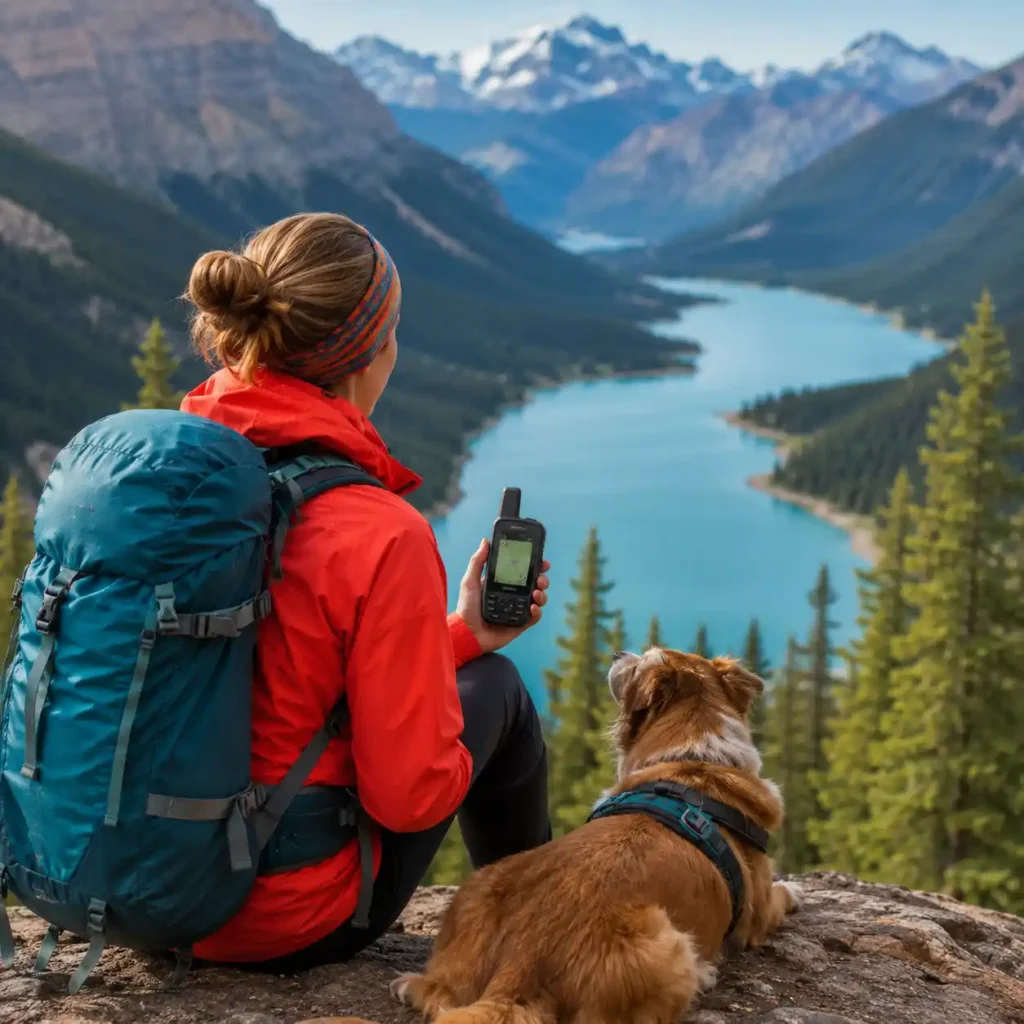
Table of Contents
⚡ Quick Answer
If you frequently camp, hike, overland, or explore areas without reliable cell service, a handheld GPS is one of the most dependable navigation tools you can carry. Unlike smartphones, dedicated GPS devices continue working in remote locations, offer long battery life, rugged weather-resistant construction, and accurate navigation using multiple global satellite systems.
If you’re searching for the best handheld GPS for hiking and camping, you’ll find an option here for every type of outdoor adventure and budget.
For most campers, the Garmin GPSMAP 67i is the best overall choice thanks to its outstanding navigation accuracy, excellent battery performance, satellite messaging capabilities, and dependable operation during extended off-grid trips. Campers looking for maximum battery life may prefer the Garmin eTrex Solar, while the Garmin Montana 710 is ideal for vehicle camping and overlanding with its large, easy-to-read touchscreen display.
In this guide, we’ll compare the five best handheld GPS units for hiking and camping, explain which model fits different camping styles, and show what features actually matter before investing in an off-grid navigation device.
Planning longer off-grid adventures? Our Camping Temperature Guide (What Gear You Actually Need) explains how to choose the right clothing, shelter, and sleep system for changing weather conditions before heading into remote areas.
🧭 Why You Can Trust This Guide
Choosing a handheld GPS isn’t simply about comparing specifications or selecting the newest model. The right device depends on how you camp, where you travel, and how far you’re willing to venture beyond reliable cell coverage. A GPS that’s perfect for vehicle-based camping may not be the best choice for multi-day backpacking trips, while advanced satellite features aren’t necessary for every outdoor adventure.
For this guide, we evaluated each handheld GPS based on the factors that matter most in real camping environments, including navigation accuracy, battery life, mapping capabilities, durability, ease of use, display visibility, and long-term reliability. We also considered how each model performs during common camping scenarios such as navigating forest service roads, locating dispersed campsites, exploring unfamiliar trails, and traveling through remote backcountry areas.
Rather than focusing on technical specifications alone, our recommendations emphasize practical performance, overall ownership experience, and value for different types of campers. Whether you’re planning weekend camping trips, extended overlanding adventures, or multi-day hikes far from civilization, this guide is designed to help you invest in a GPS you’ll trust every time you head off the grid.
Building a complete off-grid camping setup? Our How to Build a Vehicle Camping Setup (Step-by-Step Guide 2026) walks through the essential gear, organization tips, and equipment needed for safe and efficient adventures beyond paved roads.
🔎 How We Selected the Best Handheld GPS Units

Choosing the best handheld GPS for hiking and camping starts with understanding that not every GPS is built for the same type of outdoor adventure. Some models prioritize lightweight portability for hikers covering long distances, while others focus on large displays, advanced mapping, satellite communication, or maximum battery life for extended off-grid travel.
To identify the best handheld GPS units for camping, we compared each model using the criteria that have the greatest impact on real-world navigation and long-term ownership.
We evaluated every GPS based on:
- Navigation Accuracy – Multi-band GNSS support, satellite reception, and reliable positioning under tree cover, in canyons, and mountainous terrain.
- Battery Performance – Real-world runtime during multi-day camping trips and extended backcountry adventures.
- Mapping & Navigation – Preloaded topographic maps, route planning, waypoint management, and ease of navigating unfamiliar terrain.
- Display & Ease of Use – Screen visibility in bright sunlight, button layout, touchscreen responsiveness, and overall usability outdoors.
- Durability – Water resistance, rugged construction, and the ability to withstand harsh camping environments.
- Camping Value – How well each GPS meets the needs of campers, overlanders, and hikers while offering long-term value for its price.
Rather than choosing the model with the longest feature list, we focused on which handheld GPS provides the best overall experience for different types of campers, from occasional weekend trips to demanding multi-day expeditions far beyond cellular coverage.
Many GPS adventures begin long before you reach the trailhead. Our How to Pack a Car for Camping (Efficient Gear Layout Guide 2026) explains how to organize navigation gear, emergency equipment, and camping essentials for safer and more efficient travel.
📋 Quick Summary: Our Top Picks
Not every handheld GPS is designed for the same type of camper. Some models prioritize maximum navigation accuracy for remote backcountry travel, while others focus on battery life, larger displays, lightweight portability, or overall value.
The handheld GPS units below earned their awards based on our evaluation of navigation performance, mapping capabilities, battery endurance, durability, campsite usability, and long-term ownership value.
Garmin GPSMAP 67i
Award: Best Overall
Why It Won:
Delivers the best overall combination of navigation accuracy, satellite messaging, battery life, premium mapping features, and rugged reliability, making it the top choice for most campers and outdoor adventurers.
Choose This If:
- You regularly camp in remote areas.
- You want dependable navigation beyond cell coverage.
- You value satellite communication for additional safety.
Best For:
- Car camping
- Backpacking
- Overlanding
- Multi-day expeditions
Garmin Montana 710
Award: Best for Overlanding
Why It Won:
Its large touchscreen display, intuitive interface, and excellent vehicle navigation capabilities make it ideal for campers exploring forest roads and extended off-grid routes.
Choose This If:
- You primarily travel by SUV or 4×4.
- You prefer a large, easy-to-read display.
- You frequently explore remote vehicle-accessible campsites.
Best For:
- Vehicle camping
- Overlanding
- Off-road travel
- Long road trips
Garmin GPSMAP 65s
Award: Best Navigation Accuracy
Why It Won:
Multi-band GNSS technology provides exceptionally accurate positioning, even under dense tree cover and in rugged mountain terrain where standard GPS units may struggle.
Choose This If:
- Navigation accuracy is your highest priority.
- You hike in challenging environments.
- You frequently camp in forests or mountainous regions.
Best For:
- Backcountry camping
- Mountain hiking
- Dense forests
- Technical navigation
Garmin eTrex Solar
Award: Best Battery Life
Why It Won:
Solar charging technology dramatically extends battery life, making it an excellent companion for long camping trips where access to electricity is limited.
Choose This If:
- You spend multiple days off the grid.
- Battery longevity matters more than advanced features.
- You want minimal charging requirements.
Best For:
- Weekend camping
- Long-distance hiking
- Off-grid adventures
- Minimalist camping
Garmin eTrex SE
Award: Best Budget Choice
Why It Won:
Offers dependable navigation, impressive battery efficiency, and Garmin reliability at a more accessible price, making it an excellent entry-level handheld GPS.
Choose This If:
- You’re buying your first handheld GPS.
- You camp a few times each year.
- You want reliable navigation without paying for premium extras.
Best For:
- Weekend camping
- Beginner campers
- Day hiking
- Budget-conscious buyers
Still not sure which handheld GPS is right for you? The detailed reviews below explain how each model performed during our evaluation, where it excels, and which type of camper will benefit most from its features.
Before heading into remote areas, make sure the rest of your gear is equally prepared. Our Camping First Aid Kits in 2026 (Safety & Essentials) guide covers the emergency supplies every camper should carry alongside a reliable handheld GPS.
📊 Handheld GPS Comparison Table
Choosing the right handheld GPS becomes much easier when you compare the features that matter most during real camping trips. The table below highlights the best use case, battery performance, navigation strengths, and standout advantage of each Garmin model to help you narrow your options before reading the full reviews.
| Product | Award | Best For | Battery Life | Standout Feature |
|---|---|---|---|---|
| Garmin GPSMAP 67i | Best Overall | Most Campers | ★★★★★ | Satellite messaging & premium mapping |
| Garmin Montana 710 | Best for Overlanding | Vehicle Camping | ★★★★☆ | Large touchscreen display |
| Garmin GPSMAP 65s | Best Navigation Accuracy | Backcountry Hiking | ★★★★★ | Multi-band GNSS precision |
| Garmin eTrex Solar | Best Battery Life | Long Off-Grid Trips | ★★★★★+ | Solar-assisted charging |
| Garmin eTrex SE | Best Budget | Beginners | ★★★★★ | Affordable Garmin reliability |
🎯 Which Handheld GPS Is Right for You?

Choosing the right handheld GPS depends less on the number of features and more on how and where you camp. Use the quick recommendations below to identify the model that best matches your outdoor adventures before reading the detailed reviews.
Choose the Garmin GPSMAP 67i if…
You want the best all-around handheld GPS for camping, hiking, backpacking, and overlanding, with premium navigation and satellite communication in one device.
Choose the Garmin Montana 710 if…
You spend most of your time vehicle camping or overlanding and prefer a large touchscreen that’s easy to read while navigating forest roads and remote campsites.
Choose the Garmin GPSMAP 65s if…
Your top priority is maximum navigation accuracy, especially when hiking through dense forests, deep valleys, or rugged mountain terrain.
Choose the Garmin eTrex Solar if…
You regularly take extended off-grid trips where long battery life matters more than advanced communication features.
Choose the Garmin eTrex SE if…
You’re purchasing your first handheld GPS and want dependable Garmin navigation without paying for features you may never use.
🏆 Our Top Handheld GPS Picks Reviewed
After comparing the best handheld GPS for hiking and camping, we selected five Garmin models that excel in different camping styles, hiking environments, budgets, and outdoor adventures. The Garmin models below were selected for their outstanding navigation accuracy, battery performance, durability, and real-world usability, helping every type of camper find the GPS that best matches their outdoor adventures.
1. Garmin GPSMAP 67i
Best Overall Handheld GPS for Hiking and Camping

Quick Verdict
The moment your phone loses signal miles away from the nearest paved road, you realize just how valuable a dedicated handheld GPS can be. That’s exactly where the Garmin GPSMAP 67i earns its place as our Best Overall recommendation.
Rather than standing out because of one impressive feature, it consistently performs well across every category that matters during real camping trips. Navigation remains accurate under dense tree cover, battery life is exceptional for multi-day adventures, and the built-in satellite communication adds reassurance whenever you’re traveling far beyond reliable cell service.
For campers who regularly explore national forests, dispersed campsites, or remote backcountry destinations, this is the handheld GPS we’d recommend before any other model. While the upfront investment is higher than entry-level alternatives, its long-term reliability, premium navigation features, and emergency communication capabilities make it one of those purchases you’ll continue appreciating every time you head off the grid.
Camp Snapshot
| Camping Style | Car Camping • Backpacking • Overlanding |
| Trip Length | Weekend Trips to Multi-Day Expeditions |
| Navigation System | Multi-Band GNSS with inReach® Satellite Messaging |
| Ideal For | Campers • Hikers • Overlanders • Remote Travel |
| Investment Level | Premium Long-Term Purchase |
| CampComfortGuide Verdict | Best Overall Handheld GPS |
Why We Chose It
Many handheld GPS units are easy to recommend for one specific reason. Some excel because they offer remarkable battery life. Others focus on navigation precision or provide a larger display for vehicle-based travel.
The Garmin GPSMAP 67i earned our Best Overall award for a different reason.
It never feels like you’re making a meaningful compromise.
Its navigation remains dependable in forests, mountain valleys, and remote camping areas where smartphones often struggle. The battery lasts long enough for extended trips without becoming a constant concern, while satellite messaging provides an additional level of confidence whenever you’re exploring beyond cellular coverage.
Perhaps more importantly, everything about the GPSMAP 67i feels purpose-built for outdoor travel. The interface is intuitive, maps are easy to follow, and waypoint management becomes second nature after only a short time in the field. Instead of demanding your attention, the device quietly does exactly what it’s supposed to do—help you stay on course.
If you’re putting together a complete off-grid camping kit, it also pairs naturally with our Best Portable Camping Refrigerators in 2026, allowing you to build a self-sufficient campsite where reliable navigation and dependable food storage work hand in hand during longer adventures.
Many handheld GPS units specialize in one area.
The GPSMAP 67i specializes in making remote camping feel more confident.
That’s ultimately why it became our top recommendation.
Check today’s price and latest customer reviews on Amazon.

Living With It at Camp
The real value of the Garmin GPSMAP 67i isn’t something you fully appreciate when you’re standing in your backyard learning the menus.
You notice it the first time your phone quietly displays “No Service.”
Imagine arriving late at a dispersed campsite after following miles of winding forest roads. Daylight is fading, the weather is changing, and every intersection seems to lead deeper into the woods. Instead of wondering whether you’ve taken a wrong turn, the GPSMAP 67i calmly guides you to the waypoint you saved before leaving home, allowing you to reach camp without unnecessary stress.
The following morning, you decide to explore nearby trails that disappear into dense pine forest. Even beneath heavy tree cover, the GPS maintains a reliable position, records your track, and makes it easy to retrace your route whenever you’re ready to return. Rather than constantly checking your surroundings or worrying about losing your bearings, you simply enjoy the hike.
As the trip continues, battery life becomes something you barely think about. The GPS remains ready every morning without demanding frequent charging, making it particularly well suited for multi-day camping trips and extended off-grid adventures where power is limited.
Perhaps the greatest advantage, however, is peace of mind. Knowing that you can navigate accurately, share your location through satellite messaging when necessary, and always find your way back to camp changes the way you approach remote travel.
A premium handheld GPS doesn’t just tell you where you are.
It gives you the confidence to explore places you might otherwise avoid.
CampComfortGuide Evaluation
| Navigation Accuracy | Outstanding multi-band GNSS performance with dependable positioning under dense forest canopies and rugged mountain terrain. |
| Battery Performance | Exceptional battery life designed for multi-day camping trips and extended off-grid adventures. |
| Mapping Experience | Detailed topographic maps, intuitive waypoint management, and reliable route planning for remote travel. |
| Ease of Use | Simple controls and well-organized menus make navigation straightforward even for first-time Garmin users. |
| Emergency Preparedness | Built-in satellite messaging provides an additional level of safety when traveling beyond cellular coverage. |
| Build Quality | Rugged, weather-resistant construction designed to withstand demanding outdoor environments. |
| Long-Term Value | Premium investment that delivers excellent reliability and performance for campers who regularly explore remote destinations. |
Who Should Buy This
The Garmin GPSMAP 67i is an outstanding choice for campers who regularly travel beyond reliable cell service and want one handheld GPS that performs exceptionally well in almost every situation.
It’s an especially strong fit if you:
- Camp several weekends each year or frequently explore remote public lands.
- Combine car camping, hiking, and overlanding throughout the season.
- Value dependable navigation and emergency communication in one device.
- Prefer investing once in premium outdoor equipment rather than upgrading later.
- Want a GPS that will remain reliable for many years of camping adventures.
Who Should Skip This
As impressive as the GPSMAP 67i is, it won’t be the right choice for everyone.
If you only visit developed campgrounds a few times each year, rarely leave marked trails, or mainly rely on your smartphone for navigation, its advanced capabilities may be more than you actually need.
Likewise, campers shopping on a tighter budget or looking for a simple backup navigation device may find better value in the Garmin eTrex SE, which covers the essentials at a considerably lower price.
Final Verdict
Some camping gear only proves useful once in a while.
Other equipment quietly earns your trust on every trip.
The Garmin GPSMAP 67i firmly belongs in the second category.
Rather than chasing flashy features, it delivers dependable navigation, outstanding battery life, satellite communication, and the kind of everyday reliability that experienced campers quickly come to appreciate.
If you’re looking for one handheld GPS that can confidently handle everything from weekend camping trips to extended off-grid expeditions, this is the model we’d recommend first.
Ready to check today’s price and customer reviews?
Before You Buy
The GPSMAP 67i is designed for campers who spend enough time outdoors to benefit from premium navigation and satellite communication. If your adventures are limited to occasional day hikes or developed campgrounds, one of the more affordable Garmin models later in this guide may be a better match for your needs.
Check today’s price and latest customer reviews on Amazon.
Related Guide: If your adventures regularly take you beyond paved roads, our How to Pack a Car for Camping (Efficient Gear Layout Guide 2026) explains how to organize navigation equipment, emergency supplies, and camping gear for safer and more efficient off-grid travel.
2. Garmin Montana 710
Best Handheld GPS for Overlanding & Vehicle Camping

Quick Verdict
Some camping destinations begin where the pavement ends. After hours of driving through national forests, logging roads, and remote desert tracks, navigating becomes less about finding the fastest route and more about confidently reaching the campsite you planned weeks ago. That’s where the Garmin Montana 710 truly shines.
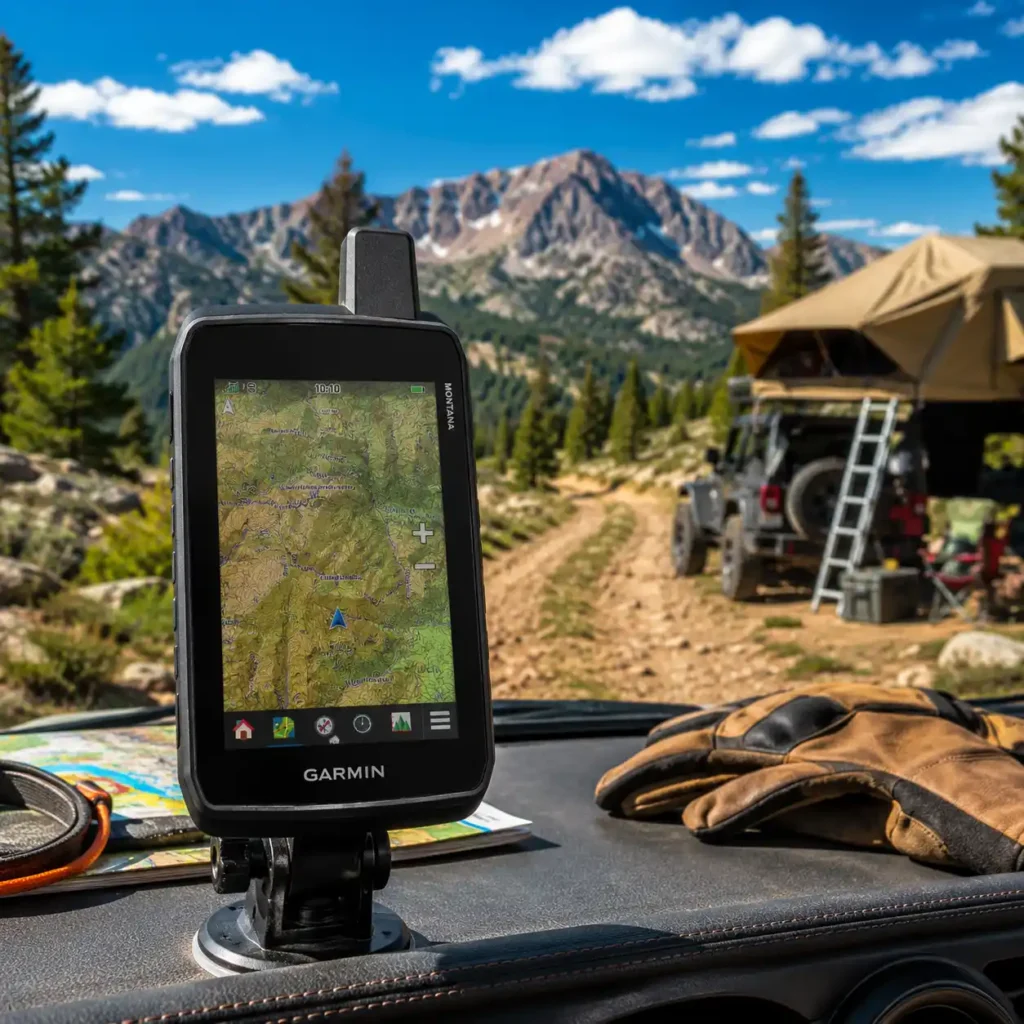
Unlike compact handheld GPS units designed primarily for hikers, the Montana 710 combines a large, easy-to-read touchscreen, premium mapping, and intuitive navigation into a device that’s exceptionally well suited for vehicle camping and overlanding. Whether it’s mounted inside your vehicle or carried on foot around camp, its display remains clear and easy to read without constantly zooming or scrolling across the map.
For campers who spend more time exploring remote roads than marked hiking trails, this is the GPS we’d confidently recommend. While it’s larger and heavier than Garmin’s compact handheld models, its outstanding visibility, intuitive interface, and excellent mapping experience make those trade-offs well worth it for vehicle-based adventures.
Camp Snapshot
| Camping Style | Vehicle Camping • Overlanding • RV Travel |
| Trip Length | Weekend Trips to Extended Road Adventures |
| Navigation System | Advanced Multi-GNSS Navigation |
| Ideal For | SUVs • Trucks • 4×4 Vehicles • Overlanders |
| Investment Level | Premium |
| CampComfortGuide Verdict | Best for Overlanding & Vehicle Camping |
Why We Chose It
Many handheld GPS units are designed with backpackers in mind, where minimizing weight takes priority over everything else.
The Garmin Montana 710 follows a different philosophy.
It prioritizes visibility, comfort, and effortless navigation throughout long days behind the wheel.
Its large touchscreen makes planning routes, reviewing maps, and locating campsites noticeably easier than on smaller handheld devices. That extra screen space becomes especially valuable when navigating complex networks of forest service roads or deciding between multiple route options without constantly zooming in and out.
We also appreciated how naturally the Montana 710 integrates into a complete overlanding setup. Whether your vehicle is equipped with a rooftop tent, awning, recovery gear, or camp kitchen, this GPS feels like another essential piece of expedition equipment rather than simply another navigation device.
If you’re building a capable overlanding vehicle, our Best Rooftop Cargo Boxes for Camping Gear (2026 Field-Tested: Quiet, Durable, Spacious) guide explains how to maximize storage while keeping essential gear organized and easy to access during longer road trips.
Many GPS units are excellent for hiking.
The Montana 710 is built for the journey that gets you to the trailhead.
That’s exactly why it earned our Best for Overlanding award.
Check today’s price and latest customer reviews on Amazon.
Living With It at Camp
The Garmin Montana 710 proves its value long before you pitch your tent.
Imagine leaving the highway before sunrise and spending the next several hours following narrow forest service roads toward a campsite marked only by a set of saved GPS coordinates. Instead of repeatedly stopping to zoom in on a small screen or wondering whether you’ve taken the correct fork in the road, the Montana 710’s large touchscreen display lets you see upcoming turns, surrounding terrain, and alternative routes at a glance.
Once camp is established, the GPS continues earning its place. Whether you’re driving to a nearby trailhead, scouting another dispersed campsite, or planning tomorrow’s route through unfamiliar public lands, reviewing maps feels quick and effortless. The generous display makes route planning far more comfortable than on smaller handheld devices, especially after a full day behind the wheel.
As the trip continues, the Montana 710 naturally becomes part of your daily routine. Before leaving camp each morning, you check your planned route, save interesting viewpoints, and mark campsites worth returning to in the future. Instead of relying on memory or handwritten notes, every destination is stored and ready for your next adventure.
For overlanders and vehicle campers, that’s the biggest advantage of the Montana 710.
It doesn’t simply help you reach camp—it helps you confidently explore everything beyond it.
CampComfortGuide Evaluation
Every handheld GPS in this guide is evaluated using the CampComfortGuide Editorial Framework, which focuses on practical camping performance rather than specifications alone.
| Navigation Experience | Large touchscreen makes route planning and map reading exceptionally comfortable during vehicle travel. |
| Display Visibility | Bright, spacious screen remains easy to read in changing outdoor lighting conditions. |
| Vehicle Integration | Excellent choice for dashboard mounting and navigating remote forest roads. |
| Mapping & Route Planning | Detailed maps and intuitive navigation tools simplify planning multi-day overlanding trips. |
| Ease of Use | Touchscreen interface makes zooming, waypoint management, and route adjustments quick and intuitive. |
| Build Quality | Rugged construction built to withstand dust, vibration, and demanding outdoor conditions. |
| Long-Term Value | A premium investment that rewards frequent vehicle campers with excellent usability and dependable navigation. |
Who Should Buy This
The Garmin Montana 710 is an outstanding choice for campers who spend most of their time traveling by SUV, truck, or 4×4 and value a navigation experience that’s easy to read while on the move.
It’s an especially strong fit if you:
- Frequently explore remote forest service roads and dispersed campsites.
- Prefer a large touchscreen over compact button-operated devices.
- Plan extended overlanding or road-based camping trips.
- Regularly create and save custom routes, campsites, and waypoints.
- Want premium mapping with outstanding screen visibility.
Who Should Skip This
As capable as the Montana 710 is, it won’t be the best choice for every outdoor enthusiast.
If you primarily hike long distances, carry all your gear in a backpack, or simply want the lightest handheld GPS possible, its larger size and weight may become unnecessary. Likewise, campers who rarely leave established campgrounds probably won’t take full advantage of its expansive display and advanced navigation features.
Final Verdict
Some handheld GPS units are designed to disappear into your backpack.
The Garmin Montana 710 is designed to become the navigation hub of your entire camping vehicle.
Its large display, intuitive touchscreen, excellent mapping, and dependable performance make every stage of the journey—from planning routes to discovering new campsites—more enjoyable and less stressful.
If your adventures revolve around vehicle camping, overlanding, and exploring remote backroads, this is the handheld GPS we’d recommend before any other model.
Ready to check today’s price and customer reviews?
Before You Buy
The Montana 710 is best suited for campers who prioritize screen size and route planning over minimum weight. If your adventures are primarily on foot, one of Garmin’s smaller handheld GPS units later in this guide may be a more practical option.
Check today’s price and latest customer reviews on Amazon.
Related Guide: If your vehicle carries more gear with every trip, our How to Build a Vehicle Camping Setup (Step-by-Step Guide 2026) explains how to organize navigation equipment, roof storage, camp kitchen gear, and recovery essentials into an efficient and reliable overlanding setup.
3. Garmin GPSMAP 65s
Best Handheld GPS for Maximum Navigation Accuracy

Quick Verdict
Some outdoor adventures don’t leave much room for navigation errors.
Whether you’re hiking through dense evergreen forests, crossing deep valleys, or following faint backcountry trails where landmarks quickly disappear, precise positioning becomes far more important than having the biggest display or the longest feature list. That’s exactly where the Garmin GPSMAP 65s earns our Best Navigation Accuracy award.
Unlike handheld GPS units built primarily around convenience or touchscreen operation, the GPSMAP 65s focuses on one essential job—delivering dependable, highly accurate navigation in environments where satellite reception can become challenging. Thanks to its multi-band GNSS technology, it maintains reliable positioning in places where many standard GPS receivers begin to struggle.
For campers and hikers who regularly venture into rugged terrain, this is the handheld GPS we’d confidently recommend. It may not offer the largest screen in this guide, but when staying precisely on course matters most, few devices inspire more confidence.
Camp Snapshot
| Camping Style | Backpacking • Hiking • Wilderness Camping |
| Trip Length | Day Hikes to Multi-Day Backcountry Trips |
| Navigation System | Multi-Band GNSS Technology |
| Ideal For | Mountain Hikers • Hunters • Wilderness Explorers |
| Investment Level | Upper Mid-Range |
| CampComfortGuide Verdict | Best Navigation Accuracy |
Why We Chose It
Many handheld GPS units attempt to balance navigation with larger displays, entertainment features, or additional connectivity.
The Garmin GPSMAP 65s takes a more focused approach.
Its priority is simple: keep you accurately positioned wherever the trail leads.
During hikes through dense forests, steep mountain terrain, and narrow valleys, dependable positioning becomes more valuable than almost any other specification. The GPSMAP 65s consistently delivers the kind of precision experienced hikers appreciate when following faint trails, locating remote campsites, or safely retracing their route before nightfall.
Its physical buttons are another advantage that shouldn’t be overlooked. Unlike touchscreen devices, they remain easy to operate while wearing gloves or during wet weather, making the GPS especially dependable throughout changing outdoor conditions.
Many handheld GPS units are designed to do a little of everything.
The GPSMAP 65s is designed to do one thing exceptionally well—help you stay exactly where you intend to be.
That’s precisely why it earned our Best Navigation Accuracy award.
Check today’s price and latest customer reviews on Amazon.

Living With It at Camp
The real strength of the Garmin GPSMAP 65s isn’t measured by how many features it offers.
It’s measured by the moments when precision becomes the difference between confidence and uncertainty.
Picture yourself hiking toward a remote alpine lake on a trail that gradually fades into rocky terrain. Tree cover becomes denser, several faint paths split in different directions, and the landscape offers very few obvious landmarks. Instead of second-guessing every turn, the GPSMAP 65s keeps your position locked with impressive accuracy, allowing you to continue without unnecessary hesitation.
Later that afternoon, dark clouds begin building over the mountains. Rather than extending the hike, you decide it’s time to head back to camp before the weather changes. Retracing your recorded track is quick and reassuring, even as visibility begins to decrease and familiar surroundings start to look surprisingly different.
Back at camp, the GPS becomes more than a navigation tool. You save the location of a scenic overlook, mark a productive fishing spot, and create waypoints for future trips. By the end of the weekend, you’ve built a personal collection of places worth returning to instead of relying on memory alone.
That’s what makes the GPSMAP 65s stand out.
It doesn’t simply guide today’s adventure—it helps you navigate every adventure that follows.
CampComfortGuide Evaluation
| Navigation Accuracy | Outstanding multi-band GNSS performance delivers highly reliable positioning in forests, valleys, and mountainous terrain. |
| Trail Navigation | Excellent for following faint trails, recording tracks, and safely retracing routes. |
| Ease of Operation | Responsive physical buttons remain easy to use with gloves and in wet weather. |
| Battery Performance | Reliable battery life for full-day hikes and multi-day backcountry camping trips. |
| Outdoor Durability | Rugged construction designed to withstand harsh weather and demanding terrain. |
| Navigation Confidence | Exceptional positional accuracy reduces uncertainty when exploring unfamiliar wilderness. |
| Long-Term Value | An excellent investment for campers and hikers who prioritize dependable navigation over extra features. |
Who Should Buy This
The Garmin GPSMAP 65s is an excellent choice for outdoor enthusiasts who place navigation accuracy above everything else.
It’s an especially strong fit if you:
- Frequently hike in forests, mountains, or remote backcountry areas.
- Prefer physical buttons that work reliably in all weather conditions.
- Regularly record tracks and save waypoints for future trips.
- Want dependable navigation without relying on a touchscreen.
- Value precise positioning in challenging terrain.
Who Should Skip This
Although the GPSMAP 65s excels in demanding environments, it isn’t necessarily the best fit for every camper.
If your adventures are primarily vehicle-based, you may appreciate the larger display of the Garmin Montana 710. Likewise, if satellite communication is a top priority for remote expeditions, the Garmin GPSMAP 67i offers additional safety features that may better match your needs.
Final Verdict
The Garmin GPSMAP 65s doesn’t try to be the flashiest handheld GPS in this guide.
Instead, it focuses on doing one thing exceptionally well.
Helping you stay exactly where you intend to be.
Its outstanding navigation accuracy, dependable operation, rugged design, and intuitive button controls make it one of the best choices available for campers and hikers who regularly venture into demanding terrain where precision truly matters.
If your confidence outdoors depends on knowing your exact location, this is the handheld GPS we’d recommend without hesitation.
Ready to check today’s price and customer reviews?
Before You Buy
The GPSMAP 65s is built for campers and hikers who prioritize precision over premium extras. If your trips usually involve established campgrounds or simple day hikes, one of Garmin’s more affordable models later in this guide may provide everything you need.
Check today’s price and latest customer reviews on Amazon.
Related Guide: If you regularly camp in rugged mountain environments, our How to Sleep Comfortably While Camping (Stay Warm, Supported & Pain-Free All Night) guide explains how to recover better after long hiking days and wake up ready for the next adventure.
4. Garmin eTrex Solar
Best Handheld GPS for Battery Life
Quick Verdict
The longer you stay off the grid, the more every percentage of battery matters.
Whether you’re hiking for several days, camping far from power sources, or exploring remote wilderness where charging simply isn’t an option, the Garmin eTrex Solar offers something few handheld GPS units can match—extra runtime powered by the sun.
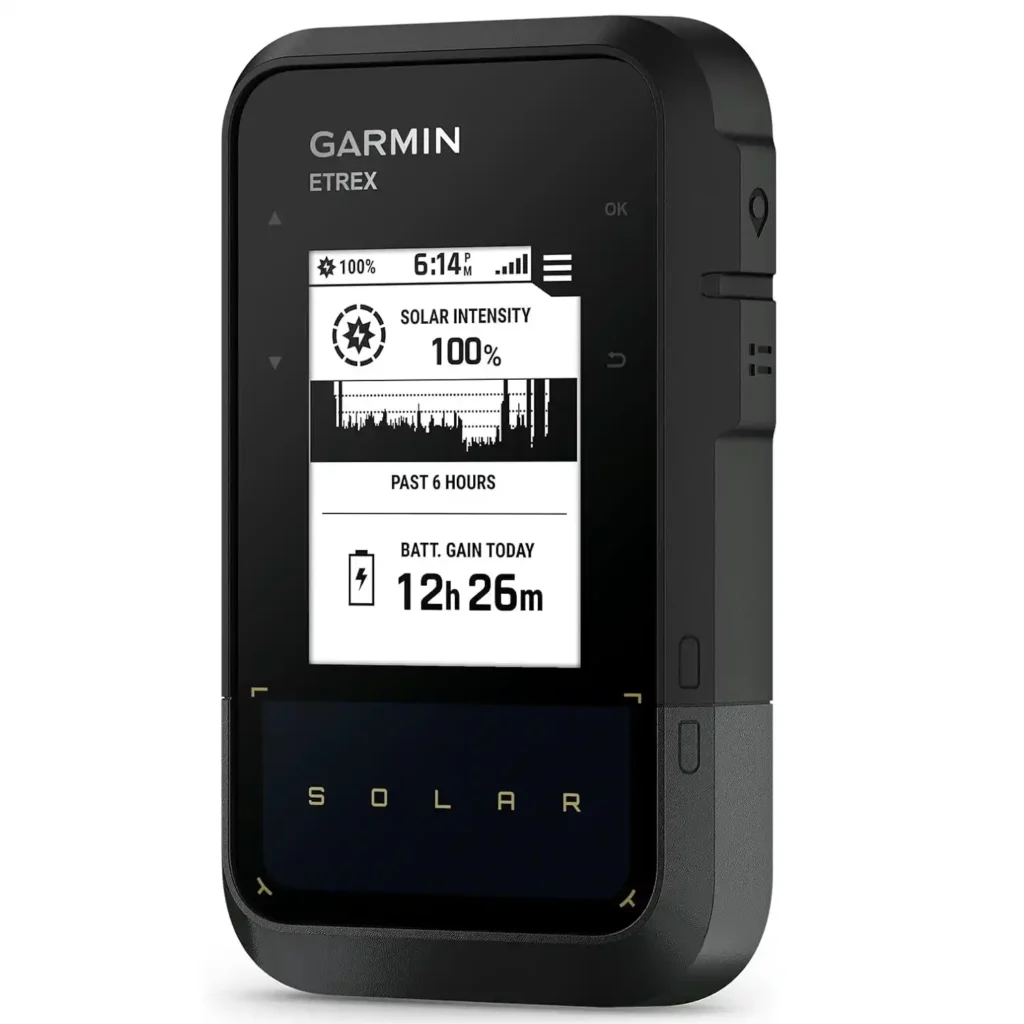
Rather than relying solely on a rechargeable battery, the eTrex Solar uses solar-assisted charging to extend operating time during daylight hours. While it won’t replace conventional charging entirely, the additional energy collected throughout the day can significantly reduce battery anxiety during extended trips where every hour of navigation counts.
For campers who value simplicity, reliability, and exceptional endurance over premium communication features, this is easily the best long-distance companion in Garmin’s lineup. It isn’t designed to be the most feature-packed GPS in this guide—it’s designed to keep working long after many other devices are looking for their next charge.
Camp Snapshot
| Camping Style | Backpacking • Thru-Hiking • Wilderness Camping |
| Trip Length | Multi-Day to Week-Long Adventures |
| Power Source | Rechargeable Battery with Solar-Assisted Charging |
| Ideal For | Long-Distance Hikers • Minimalists • Off-Grid Campers |
| Investment Level | Mid to Premium |
| CampComfortGuide Verdict | Best Battery Life |
Why We Chose It
Most handheld GPS units compete by adding more features, larger displays, or increasingly sophisticated mapping tools.
The Garmin eTrex Solar follows a refreshingly different philosophy.
It focuses on lasting longer than almost anything else in your backpack.
During extended camping trips, battery life often becomes just as important as navigation itself. Every device you carry competes for limited power from battery banks or portable solar panels. By harvesting additional energy throughout the day, the eTrex Solar reduces that dependence and allows you to spend more time exploring instead of worrying about charging schedules.
Its lightweight design is another advantage. Backpackers covering long distances quickly appreciate equipment that performs reliably without adding unnecessary weight or complexity. The eTrex Solar quietly does exactly that, making it an excellent companion for hikers who value efficiency above all else.
If you’re building an energy-independent campsite, our Best Solar Chargers for Car Camping under $500 (Panels That Actually Work in 2026) guide explains how portable solar panels and efficient electronics can work together to keep essential gear powered throughout longer off-grid adventures.
Many handheld GPS units compete with more features.
The eTrex Solar competes with more days on the trail.
That’s exactly why it earned our Best Battery Life award.
Check today’s price and latest customer reviews on Amazon.

Living With It at Camp
The biggest advantage of the Garmin eTrex Solar isn’t something you’ll notice during a single overnight camping trip.
It becomes obvious on day three, day four, and beyond.
Imagine hiking from one remote campsite to another with everything you need packed into your backpack. Every evening you check your remaining food, refill your water, and think carefully about how much battery is left in your headlamp, phone, and power bank. With most electronics, that daily routine becomes part of life off the grid.
The eTrex Solar quietly changes that routine.
As you hike through open valleys, cross sunny ridgelines, and spend long hours outdoors, the device continues collecting supplemental solar energy. You stop checking the battery indicator every few hours because it simply isn’t demanding your attention the way other electronics often do.
By the end of the trip, that freedom becomes surprisingly valuable. Instead of rationing battery life or turning features off to conserve power, you focus on the trail, your campsite, and tomorrow’s destination. The GPS simply keeps doing its job while you enjoy the journey.
That’s the real appeal of the eTrex Solar.
It doesn’t just extend battery life—it reduces one more thing you have to think about while camping.
CampComfortGuide Evaluation
Every handheld GPS in this guide is evaluated using the CampComfortGuide Editorial Framework, emphasizing real-world outdoor performance instead of marketing specifications.
| Battery Performance | Outstanding endurance with solar-assisted charging for extended off-grid adventures. |
| Power Independence | Reduces reliance on power banks and frequent recharging during multi-day trips. |
| Navigation Reliability | Dependable GPS performance for backpacking, wilderness camping, and remote exploration. |
| Packability | Compact, lightweight design that's easy to carry over long distances. |
| Ease of Use | Simple interface designed for reliable navigation without unnecessary complexity. |
| Outdoor Durability | Built to withstand changing weather and demanding backcountry conditions. |
| Long-Term Value | An excellent choice for campers who spend multiple days away from reliable power sources. |
Who Should Buy This
The Garmin eTrex Solar is an excellent investment for campers and hikers who value maximum battery life and long-term reliability over advanced communication features.
It’s an especially strong choice if you:
- Regularly take multi-day backpacking or wilderness camping trips.
- Spend long periods away from electrical power.
- Prefer lightweight gear that keeps your pack manageable.
- Want to reduce dependence on power banks and charging cables.
- Appreciate simple, dependable navigation that just works.
Who Should Skip This
While the eTrex Solar offers exceptional endurance, it isn’t the best fit for every camper.
If you want built-in satellite messaging for emergencies, the Garmin GPSMAP 67i is the stronger choice. Likewise, if you prefer a large touchscreen for vehicle navigation, the Garmin Montana 710 will provide a more comfortable experience.
Final Verdict
The Garmin eTrex Solar proves that innovation isn’t always about adding more features.
Sometimes it’s about removing limitations.
Its solar-assisted charging, lightweight design, dependable navigation, and remarkable battery endurance make it one of the most practical handheld GPS units for campers who spend days away from power.
If your adventures are measured in days instead of hours, the eTrex Solar is one of the smartest navigation companions you can carry.
Ready to check today’s price and customer reviews?
Before You Buy
The eTrex Solar is ideal for hikers and campers who prioritize endurance over premium extras. If most of your trips last only a day or two and charging is readily available, another Garmin model in this guide may offer features that better suit your style of camping.
Related Guide: If your goal is to stay self-sufficient for several days, our Best Portable Power Stations for Vehicle Camping Setup (2026) guide explains how to build a dependable off-grid power system for navigation devices, lighting, refrigeration, and other essential camping equipment.
5. Garmin eTrex SE
Best Budget Handheld GPS for Camping

Quick Verdict
Not every camper needs satellite messaging, advanced mapping, or a premium touchscreen.
Sometimes, what you really need is a simple, dependable GPS that always knows where you are.
That’s exactly why the Garmin eTrex SE earned our Best Budget award.
Rather than competing with Garmin’s flagship handheld GPS units feature for feature, the eTrex SE focuses on delivering the fundamentals exceptionally well. Navigation remains reliable, the interface is straightforward, battery life is excellent, and the lightweight design makes it easy to carry on everything from short hikes to weekend camping trips.
For many campers, that’s actually the smarter investment. Instead of paying for advanced capabilities that may only be used once or twice a year, you get a dedicated navigation device that’s dependable whenever cell service disappears and far more trustworthy than relying solely on a smartphone.
If you’re purchasing your first handheld GPS or simply want an affordable backup for camping adventures, the Garmin eTrex SE delivers outstanding value without sacrificing the reliability that has made Garmin one of the most respected names in outdoor navigation.
Camp Snapshot
| Camping Style | Weekend Camping • Hiking • Family Camping |
| Trip Length | Day Trips to Weekend Adventures |
| Navigation System | Reliable Multi-GNSS Navigation |
| Ideal For | Beginners • Casual Campers • Budget Buyers |
| Investment Level | Budget-Friendly |
| CampComfortGuide Verdict | Best Budget Handheld GPS |
Why We Chose It
Many budget handheld GPS units reduce costs by cutting corners where it matters most. They may use slower processors, less intuitive software, or lower-quality construction that becomes noticeable after only a few trips outdoors.
The Garmin eTrex SE takes a much smarter approach.
It doesn’t try to be a cheaper version of Garmin’s premium GPS units.
Instead, it concentrates on delivering the features that most campers actually depend on every weekend: dependable navigation, long battery life, straightforward operation, and the confidence that comes from carrying a dedicated GPS built specifically for outdoor use.
That simplicity becomes one of its greatest strengths. New users can learn the interface quickly without feeling overwhelmed, while experienced campers will appreciate how little time is spent navigating complicated menus. The eTrex SE simply starts, acquires satellites quickly, and gets on with its job.
We also like the value it brings to a complete camping setup. Choosing a more affordable handheld GPS leaves room in your budget for equipment that may have an even greater impact on comfort and safety, such as a better sleeping system, lighting, or emergency gear.
If you’re assembling your first camping kit, our Car Camping Essentials Checklist: The Ultimate Guide for Families (2026) explains which items deserve your budget first and where it’s perfectly reasonable to save money.
Many entry-level GPS units feel like compromises.
The Garmin eTrex SE feels like a well-balanced camping tool that happens to be affordable.
That’s ultimately why it earned our Best Budget award.
Check today’s price and latest customer reviews on Amazon.
Living With It at Camp
The Garmin eTrex SE doesn’t try to impress you with dozens of advanced features.
Instead, it quietly solves one simple problem.
It gives you a dependable way to find your way back to camp.
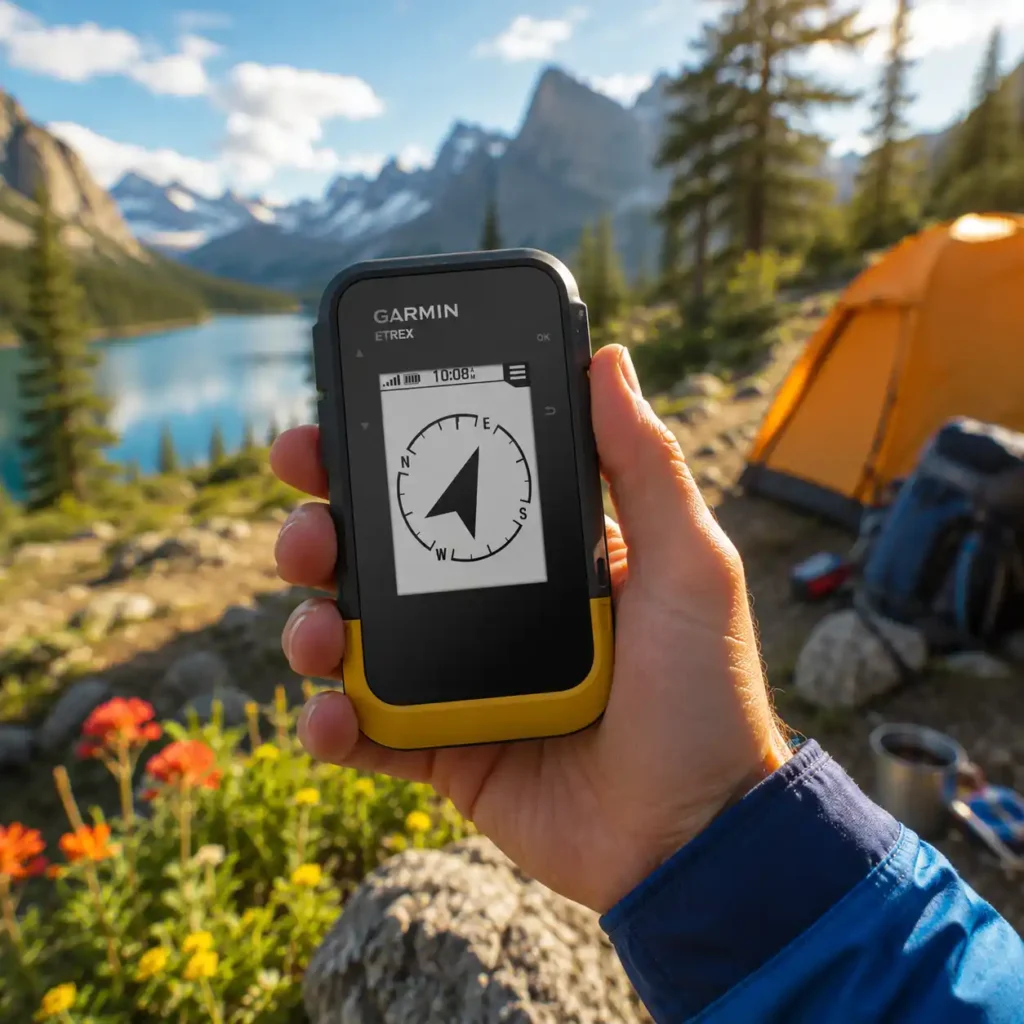
Imagine arriving at a state park or national forest for a long weekend. After setting up your campsite, you decide to spend the afternoon exploring nearby trails, scenic overlooks, and fishing spots. Rather than wondering whether your phone will lose signal or your battery will last until evening, you simply carry the eTrex SE and enjoy the hike.
Throughout the day, you begin marking useful locations almost without thinking. The trailhead where you parked, a quiet picnic area beside the lake, a scenic viewpoint worth visiting again, and, of course, your campsite. Those saved waypoints quickly become part of your camping routine and make returning surprisingly effortless.
By the second or third trip, the device feels completely natural to use. Instead of checking your phone every few minutes, you glance at a GPS built specifically for outdoor navigation. It quietly does its job while allowing you to focus on the experience rather than the technology.
That’s the real strength of the Garmin eTrex SE.
It makes dedicated GPS navigation feel approachable, practical, and easy to trust from your very first camping trip.
CampComfortGuide Evaluation
Every handheld GPS in this guide is evaluated using the CampComfortGuide Editorial Framework, which focuses on real-world camping performance instead of technical specifications alone.
| Navigation Reliability | Dependable GPS performance for camping, hiking, and everyday outdoor adventures. |
| Ease of Learning | Simple controls and intuitive menus make it an excellent first handheld GPS. |
| Battery Performance | Long-lasting battery suitable for weekend trips and regular outdoor use. |
| Portability | Compact, lightweight design fits comfortably into any backpack or daypack. |
| Outdoor Durability | Built to withstand rain, dust, and the everyday demands of camping. |
| Overall Simplicity | Focuses on dependable navigation without unnecessary complexity or distractions. |
| Long-Term Value | Excellent value for beginners seeking reliable Garmin quality at an affordable price. |
Who Should Buy This
The Garmin eTrex SE is an excellent choice for campers who want their first dedicated handheld GPS without spending premium-level money.
It’s an especially strong fit if you:
- Camp a few weekends each season and want more reliable navigation than a smartphone.
- Enjoy hiking, fishing, or exploring new campsites.
- Prefer simple controls and a device that’s easy to learn.
- Need a lightweight GPS for day hikes and weekend adventures.
- Want trusted Garmin quality at an affordable price.
Who Should Skip This
Although the eTrex SE offers excellent value, it isn’t designed for every type of camper.
If your trips regularly take you deep into remote wilderness where satellite communication is an important safety feature, the Garmin GPSMAP 67i is the better investment. Likewise, overlanders who want a large display for vehicle navigation will likely be happier with the Garmin Montana 710.
Final Verdict
The Garmin eTrex SE proves that buying your first handheld GPS doesn’t have to be complicated—or expensive.
It focuses on the essentials that matter most: dependable navigation, excellent battery life, lightweight portability, and the reliability that has made Garmin a trusted name among outdoor enthusiasts for decades.
If you’re looking for the best budget-friendly handheld GPS for camping, hiking, and weekend adventures, the eTrex SE is the model we’d recommend first.
Ready to check today’s price and customer reviews?
Before You Buy
The eTrex SE is ideal for campers who value simplicity and affordability. If you expect to spend weeks off the grid or require advanced satellite communication, consider one of Garmin’s higher-end models featured earlier in this guide.
Related Guide: Reliable navigation is even more valuable when you’re exploring unfamiliar terrain. Our Best Camping Dry Bags for Rain, Kayaking & Wet Weather (2026) guide explains how to protect essential gear like handheld GPS units, electronics, and emergency equipment from water, mud, and unexpected weather.
🧭 How to Choose the Right Handheld GPS for Camping
Buying a handheld GPS isn’t about choosing the model with the longest feature list.
The best GPS is the one that matches how and where you actually camp.
Some campers spend weekends at developed campgrounds and only need dependable navigation for nearby hiking trails. Others travel hundreds of miles into public lands where satellite communication or exceptional battery life can become essential.
Before comparing specifications, ask yourself these five questions.
1. How far from cell service do you usually camp?
If you regularly explore remote wilderness or dispersed campsites, a GPS with satellite communication, such as the Garmin GPSMAP 67i, provides an extra layer of safety.
For campground camping or well-marked trails, a simpler handheld GPS may be all you need.
2. Do you camp on foot or from your vehicle?
Backpackers usually benefit from lightweight handheld GPS units that fit easily into a backpack.
Vehicle campers and overlanders often appreciate larger displays that make route planning and map reading much easier while traveling.
3. How long are your typical camping trips?
Weekend adventures rarely push battery life to its limits.
However, multi-day expeditions can quickly change your priorities, making long battery life and efficient power management far more valuable than additional features.
4. Will you use it for hiking only?
Many campers purchase one handheld GPS and use it for hiking, fishing, hunting, kayaking, road trips, and overlanding throughout the year.
Choosing a model that supports multiple outdoor activities often provides better long-term value than buying the least expensive option available.
5. What’s your realistic budget?
A premium GPS only makes sense if you’ll regularly use its advanced features.
For occasional camping trips, an affordable model like the Garmin eTrex SE can deliver everything many campers actually need while leaving room in the budget for other essential gear.
The best handheld GPS isn’t necessarily the most expensive one.
It’s the one that gives you the confidence to explore farther while matching the way you actually camp.
🏕️ Camping Handheld GPS Buying Guide

Choosing the best handheld GPS for hiking and camping isn’t just about comparing specifications.
The right device should match your camping style, the environments you explore, and the level of navigation confidence you expect when you’re away from cell service. Understanding a few key features before buying will help you choose a GPS that remains useful for years rather than one that quickly feels limiting.
Satellite Reception & Navigation Accuracy
Reliable positioning is the primary reason to carry a dedicated handheld GPS.
Modern Garmin units support multiple global satellite systems, allowing them to maintain accurate positioning even in dense forests, narrow canyons, or mountainous terrain where smartphones often struggle. If you regularly camp in remote areas, prioritizing navigation accuracy is far more important than choosing the largest display.
Battery Life
Battery performance becomes increasingly important as trips get longer.
A weekend camper may never notice the difference between two GPS units, but hikers spending several days in the backcountry quickly appreciate devices that require less frequent charging. Models with exceptionally long battery life—or solar-assisted charging—can significantly reduce dependence on power banks and charging cables.
If you’re planning longer off-grid adventures, our Best Portable Power Stations for Vehicle Camping Setup (2026) guide explains how to keep navigation devices and other camping electronics powered throughout your trip.
Display Size & Ease of Use
The best screen size depends entirely on how you camp.
Backpackers generally prefer compact devices that save weight and fit comfortably in a pocket. Vehicle campers and overlanders often benefit from larger displays that make route planning, waypoint management, and map reading much easier while traveling unfamiliar roads.
An intuitive interface is equally important. A GPS should help you navigate—not require constant trips through complicated menus.
Durability & Weather Resistance
Camping equipment should continue working regardless of changing weather conditions.
Look for a handheld GPS designed to handle rain, dust, vibration, and accidental drops without compromising reliability. Rugged construction becomes especially valuable during multi-day trips where replacing damaged equipment simply isn’t an option.
Mapping Features
Not every camper needs the same level of mapping detail.
Some GPS units focus on straightforward navigation with essential maps, while others include detailed topographic mapping, route planning, waypoint management, and support for additional downloadable maps. Choosing the right level of mapping depends on whether you’re exploring established trails or regularly navigating unfamiliar backcountry terrain.
Satellite Communication
Some handheld GPS units do much more than navigation.
Models equipped with satellite messaging allow you to share your location, send text messages, and request emergency assistance even when there’s no cellular coverage. While these features increase the purchase price, they provide valuable peace of mind for solo campers, overlanders, and anyone exploring remote wilderness.
Weight & Portability
A few extra ounces may not matter inside a vehicle.
For backpackers, however, every piece of gear contributes to overall pack weight. Compact GPS units are easier to carry during long hikes and often feel less cumbersome when used throughout the day.
Choosing the lightest model isn’t always the best decision, but finding the right balance between portability and usability usually leads to greater long-term satisfaction.
Value for Money
The most expensive GPS isn’t automatically the best one.
Many campers will never need premium features such as satellite communication or oversized touchscreens. Others may rely on those capabilities during every trip. The best value comes from choosing a handheld GPS that fits your camping style rather than paying for features you’ll rarely use.
A dependable GPS should make every trip safer, simpler, and more enjoyable—not simply add another gadget to your backpack.
📱 Handheld GPS vs Smartphone: Which Is Better for Camping?

Many campers ask the same question before buying a dedicated GPS:
“Why should I carry another device if my phone already has GPS?”
The answer depends on where, how often, and how far from civilization you camp.
While modern smartphones are excellent navigation tools for everyday travel, dedicated handheld GPS units are built specifically for outdoor environments where reliability matters more than convenience.
Battery Life
Smartphones perform multiple tasks at once—navigation, photography, messaging, weather apps, and emergency communication—all of which drain the battery quickly.
A handheld GPS is designed primarily for navigation, allowing it to operate much longer on a single charge, especially during multi-day camping trips.
Navigation Reliability
Phones often struggle in dense forests, steep valleys, and remote mountain terrain where signal quality becomes inconsistent.
Dedicated handheld GPS units are optimized for outdoor navigation and typically maintain more reliable positioning under challenging conditions.
Durability
Camping equipment gets dropped, exposed to rain, covered in dust, and occasionally forgotten outside overnight.
Most handheld GPS units are built specifically to survive those conditions, while many smartphones require additional protective cases to achieve similar durability.
Offline Navigation
Although offline maps are available for smartphones, they usually require downloading in advance and still rely on a device designed primarily for everyday use.
A handheld GPS is built around offline navigation from the beginning, making it far more dependable when there’s no cellular coverage.
Ease of Use
Physical buttons remain easy to operate with wet hands or gloves, while dedicated outdoor interfaces are designed to provide quick access to maps, waypoints, and navigation tools without unnecessary distractions.
Which One Should You Choose?
If you mostly camp at developed campgrounds and take occasional day hikes, your smartphone may be all the navigation you need.
However, if you regularly explore national forests, dispersed campsites, mountain trails, or remote backcountry areas, a dedicated handheld GPS provides significantly greater reliability, longer battery life, and much greater confidence once cell service disappears.
The best solution for many experienced campers isn’t choosing one or the other.
It’s carrying both—a smartphone for convenience and a handheld GPS for dependable off-grid navigation.
⚠️ Common Mistakes to Avoid When Buying a Handheld GPS
Buying a handheld GPS can make camping trips safer and more enjoyable—but only if you choose a model that fits the way you actually explore the outdoors. Many buyers focus on impressive specifications while overlooking the features that matter most in real-world camping. Avoiding the mistakes below can help you make a smarter purchase and get more value from your investment.
Buying the Most Expensive GPS Instead of the Right One
A premium handheld GPS isn’t automatically the best choice.
Many campers pay for satellite messaging, advanced mapping, or oversized displays that they’ll rarely use. Choose the GPS that matches your camping style, not simply the one with the highest price tag.
Assuming Your Smartphone Can Replace a Handheld GPS
Modern smartphones are excellent tools, but they aren’t built specifically for remote wilderness navigation.
Battery life, durability, and dependable offline performance are where dedicated handheld GPS units continue to outperform most phones, especially once cell service disappears.
Ignoring Battery Life
Battery life may not seem important during a short afternoon hike.
It becomes critical on multi-day camping trips, backpacking adventures, or overlanding expeditions where charging opportunities are limited. Always think about how long your typical trips last before choosing a GPS.
Choosing a GPS Based Only on Screen Size
A larger display makes maps easier to read, but it also increases size, weight, and sometimes battery consumption.
Backpackers often benefit more from lightweight, compact devices, while vehicle campers usually appreciate larger screens for route planning.
Overlooking Satellite Communication
Not everyone needs emergency satellite messaging.
However, if you regularly camp alone or travel deep into remote backcountry areas, built-in satellite communication can become one of the most valuable safety features you own.
Not Learning the Device Before Your First Trip
Many new owners take a GPS into the wilderness without practicing at home.
Spend a little time learning how to create waypoints, follow tracks, zoom maps, and access navigation menus before your first adventure. Confidence comes from familiarity, not just owning the device.
Forgetting That Electronics Can Still Fail
Even the best handheld GPS should be part of a complete navigation strategy.
Experienced outdoor enthusiasts often carry a paper map, a compass, or an additional navigation backup, especially when traveling far from populated areas.
Focusing Only on Features Instead of Real Camping Needs
It’s easy to compare long specification lists.
What’s much more important is asking a simple question:
“Will this GPS make my camping trips easier, safer, and more enjoyable?”
If the answer is yes, you’ve probably found the right model—regardless of how many extra features it offers.
❓ Frequently Asked Questions About Handheld GPS for Camping
Do handheld GPS devices work without cell service?
Yes. A handheld GPS communicates directly with navigation satellites rather than cellular towers, so it continues working even when your phone shows no signal. That’s one of the biggest reasons campers carry a dedicated GPS in remote wilderness.
Is a handheld GPS more accurate than a smartphone?
In many outdoor environments, yes. Dedicated handheld GPS units generally maintain better positioning under dense tree cover, in deep valleys, and around steep mountains because they’re designed specifically for outdoor navigation and often support multiple satellite systems.
Do I need a subscription to use a handheld GPS?
Most handheld GPS devices require no subscription for normal navigation, maps, and waypoint tracking.
However, models with satellite messaging and SOS features, such as Garmin inReach-enabled devices, require an active subscription to send messages or contact emergency services.
Can I use a handheld GPS anywhere in the world?
Yes. Modern handheld GPS units receive signals from global satellite navigation systems, allowing them to work virtually anywhere with a clear view of the sky. Local map availability may vary depending on the region and the maps you install.
Is a handheld GPS worth buying if I already use my phone?
If your camping is limited to established campgrounds and short hikes, your smartphone may be enough.
If you regularly explore national forests, dispersed campsites, or remote backcountry areas, a dedicated GPS provides longer battery life, better durability, and more dependable navigation when cell service disappears.
Which Garmin handheld GPS is best for beginners?
The Garmin eTrex SE is one of the best options for new campers. It offers reliable navigation, excellent battery life, simple controls, and a lower price than Garmin’s premium handheld GPS models.
How long does the battery last on a handheld GPS?
Battery life depends on the model and how it’s used.
Many handheld GPS units operate for multiple days on a single charge, while expedition modes and solar-assisted charging can extend runtime significantly during longer trips.
Can a handheld GPS send an SOS in an emergency?
Only models equipped with satellite communication, such as Garmin’s inReach-enabled devices, can send SOS messages through satellite networks. Standard handheld GPS receivers provide navigation but do not include emergency messaging capabilities.
Do handheld GPS devices include maps?
Most modern Garmin handheld GPS units come with preloaded maps or support downloadable topographic maps. The available mapping features depend on the model you choose, so it’s worth checking before you buy.
Are handheld GPS units waterproof?
Most quality outdoor GPS devices are designed to withstand rain, splashes, and harsh weather conditions, making them suitable for camping, hiking, kayaking, and other outdoor activities. Always verify the waterproof rating for your chosen model before heading into extreme conditions.
Can I record my hiking route and return the same way?
Yes. Nearly all handheld GPS units allow you to record tracks, save waypoints, and navigate back along the same route. This is one of the most useful safety features for hikers exploring unfamiliar trails or remote camping areas.
What should I carry besides a handheld GPS?
A handheld GPS is an excellent navigation tool, but it shouldn’t be your only backup.
Experienced campers also recommend carrying a paper map, compass, emergency first aid kit, extra batteries or a power bank, and enough food and water for unexpected delays. Together, these essentials provide a much safer and more reliable backcountry setup.
What is the best handheld GPS for hiking and camping?
The Garmin GPSMAP 67i is our top overall recommendation because it combines outstanding navigation accuracy, excellent battery life, satellite communication, rugged durability, and long-term value for most outdoor enthusiasts. However, the best choice ultimately depends on your camping style, hiking plans, budget, and the type of terrain you explore most often.
🏆 Final Verdict: Which Handheld GPS Is Best for Camping?
Choosing the best handheld GPS for hiking and camping isn’t about finding the device with the most features.
It’s about finding the one that fits the way you actually explore the outdoors.
Throughout this guide, we’ve compared five Garmin handheld GPS units that each excel in a different type of camping. While all of them deliver dependable navigation far beyond the limits of a smartphone, each model is designed for a different kind of outdoor adventure.
If we had to recommend one handheld GPS for the widest range of campers, the Garmin GPSMAP 67i would be our top overall pick. Its combination of reliable navigation, impressive battery life, satellite communication, and rugged construction makes it the most versatile choice for anyone who regularly camps beyond cellular coverage.
That said, it isn’t automatically the best option for everyone.
If your adventures revolve around vehicle camping and overlanding, the Garmin Montana 710 offers a larger display that’s easier to read while planning routes and navigating unfamiliar roads.
Campers who spend most of their time hiking in forests, mountains, or backcountry terrain will appreciate the outstanding positional accuracy of the Garmin GPSMAP 65s, especially in challenging environments where navigation becomes more demanding.
For those planning multi-day backpacking trips with limited access to power, the Garmin eTrex Solar stands out thanks to its lightweight design and solar-assisted charging, helping reduce battery concerns during extended adventures.
And if you’re buying your first handheld GPS or simply want dependable navigation without spending premium-level money, the Garmin eTrex SE offers exceptional value while delivering the reliability that has made Garmin a trusted name among outdoor enthusiasts.
Ultimately, the best handheld GPS is the one that gives you confidence every time you leave the trailhead.
Whether you’re exploring remote national forests, building a complete overlanding setup, or simply enjoying weekend camping trips with your family, a dedicated handheld GPS provides dependable navigation, longer battery life, and greater peace of mind than relying on a smartphone alone.
It’s an investment you’ll appreciate long after you’ve forgotten its purchase price.
Editorial Note
Every handheld GPS in this guide was selected based on navigation performance, battery life, durability, ease of use, overall value, and suitability for real camping scenarios. Rather than simply comparing specification sheets, we focused on how each device performs in the situations campers are most likely to encounter in the field.
🤝 The CampComfortGuide Promise
At CampComfortGuide, we believe that great camping gear isn’t defined by the highest price or the longest specification sheet.
It’s defined by how well it performs when you’re miles from the nearest road, far beyond cell service, and relying on your equipment to help you enjoy the outdoors with confidence.
Every handheld GPS featured in this guide was selected using the same editorial principles we apply across all of our camping gear reviews. We focus on real-world usability, long-term value, reliability, and the overall camping experience—not simply manufacturer claims or marketing language.
Our recommendations are designed to help you:
- Choose gear that matches your camping style.
- Spend your money wisely by investing in equipment that delivers lasting value.
- Understand the strengths and limitations of every product before you buy.
- Build a camping setup that’s safer, more reliable, and more enjoyable for years to come.
As outdoor technology continues to evolve, we’ll keep this guide updated with new models, product improvements, and editorial recommendations so you can make informed decisions with confidence.
Our promise is simple:
Honest recommendations. Practical advice. Better camping experiences.
That’s what CampComfortGuide is built on.