5 Best Sleeping Pads That Don’t Slide on Tent Floors (2026)

Sleeping pads that slide across a tent floor can ruin an otherwise comfortable night outdoors. The best sleeping pads that don’t slide use grippy base fabrics, stable baffle designs, and balanced inflation to stay centered even on smooth tent floors.

Hi, I’m Anthony.

One of the most frustrating camping problems I see—even among experienced backpackers—isn’t cold temperatures or bad weather.
It’s waking up at 3 a.m. with half your body on the tent floor because your sleeping pad slowly migrated overnight.

I’ve dealt with this on alpine granite, slick silnylon floors, and frozen ground where even a slight slope turns a smooth pad into a slow-moving sled. Over time, I learned that pad slippage isn’t accidental—it’s a design problem.

This guide breaks down which sleeping pads actually stay in place, why they work, and how to choose one that won’t sabotage your sleep.

After years of testing, I’ve learned that the best sleeping pads that don’t slide on tent floors share very specific design traits most campers overlook.

As an Amazon Associate, we earn from qualifying purchases.

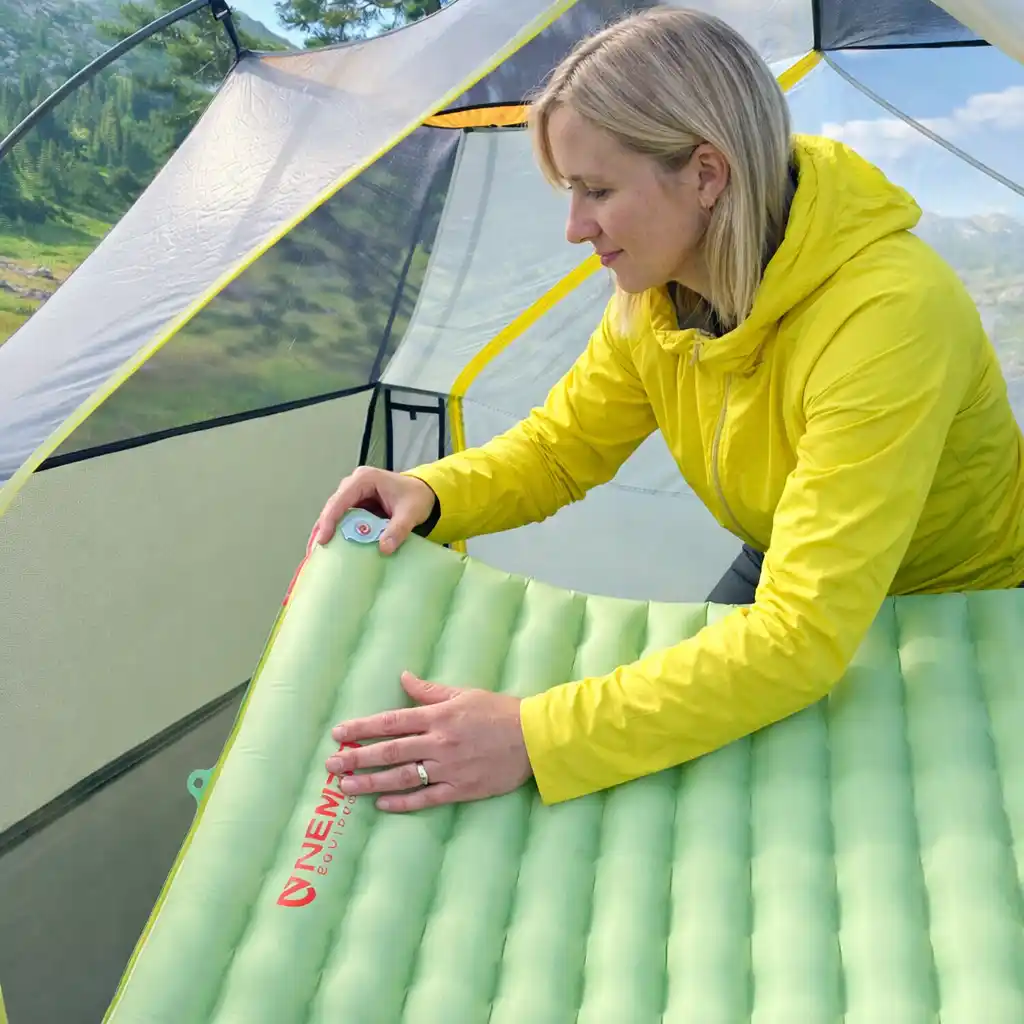
blonde woman setting up an inflatable sleeping pad inside a camping tent

🧪 Why You Can Trust This Guide

Sleeping pads that slide across a tent floor can ruin an otherwise comfortable night outdoors. To understand which models stay stable and which ones tend to drift, I focused on real-world camping conditions rather than spec sheets alone.

Each sleeping pad in this guide was evaluated based on surface grip, baffle structure, stability under movement, and how well it stayed centered on common tent floor fabrics like nylon and polyester. I also looked at how inflation pressure, body movement, and pad shape affect overnight sliding.

Instead of relying only on manufacturer claims, the goal of this guide is simple: identify sleeping pads that remain stable in real camping situations and explain the design features that actually prevent sliding.

During testing, I paid particular attention to how each pad behaved on smooth tent floors after several hours of normal movement during sleep. Some pads stayed centered surprisingly well, while others slowly drifted across the tent floor despite similar specifications.

🏆 What Is the Best Sleeping Pad That Doesn’t Slide?

The best sleeping pads that don’t slide on tent floors use high-friction base fabrics, stable baffle geometry, and balanced inflation pressure.

Pads like the Therm-a-Rest NeoAir XTherm NXT and Exped Dura series stay centered because their fabric texture and internal structure reduce lateral movement on smooth tent floors such as silnylon or PU-coated fabrics.

🔬 How We Evaluated & Tested

Each sleeping pad in this guide was evaluated using real-world overnight testing and controlled criteria:

  1. Surface Friction & Fabric Grip
    Across multiple trips and controlled overnight tests, these pads were used on modern tent floors made from silnylon, polyester, and PU-coated fabrics. Slippage was measured during normal sleep movement including side-rolling, repositioning, and slight slope conditions that often cause pads to migrate overnight.

Moisture inside a tent doesn’t just feel uncomfortable — it also makes smooth floor fabrics more slippery, which is why pad movement often worsens when you understand why tents condense at night.

  1. Pad Shape & Baffle Geometry
    Rectangular vs mummy shapes, edge stability, and side-roll resistance.

  2. Bottom Fabric & Coating
    Denier rating, brushed vs smooth surfaces, and anti-slip treatments.

  3. R-Value & Stability Tradeoff
    Insulation often changes firmness—too soft = sliding, too stiff = shifting.

  4. Long-Night Performance
    Pads were tested across full nights with side sleepers and restless sleepers.

⚡ Quick Summary: Best Sleeping Pads That Don’t Slide on Tent Floors

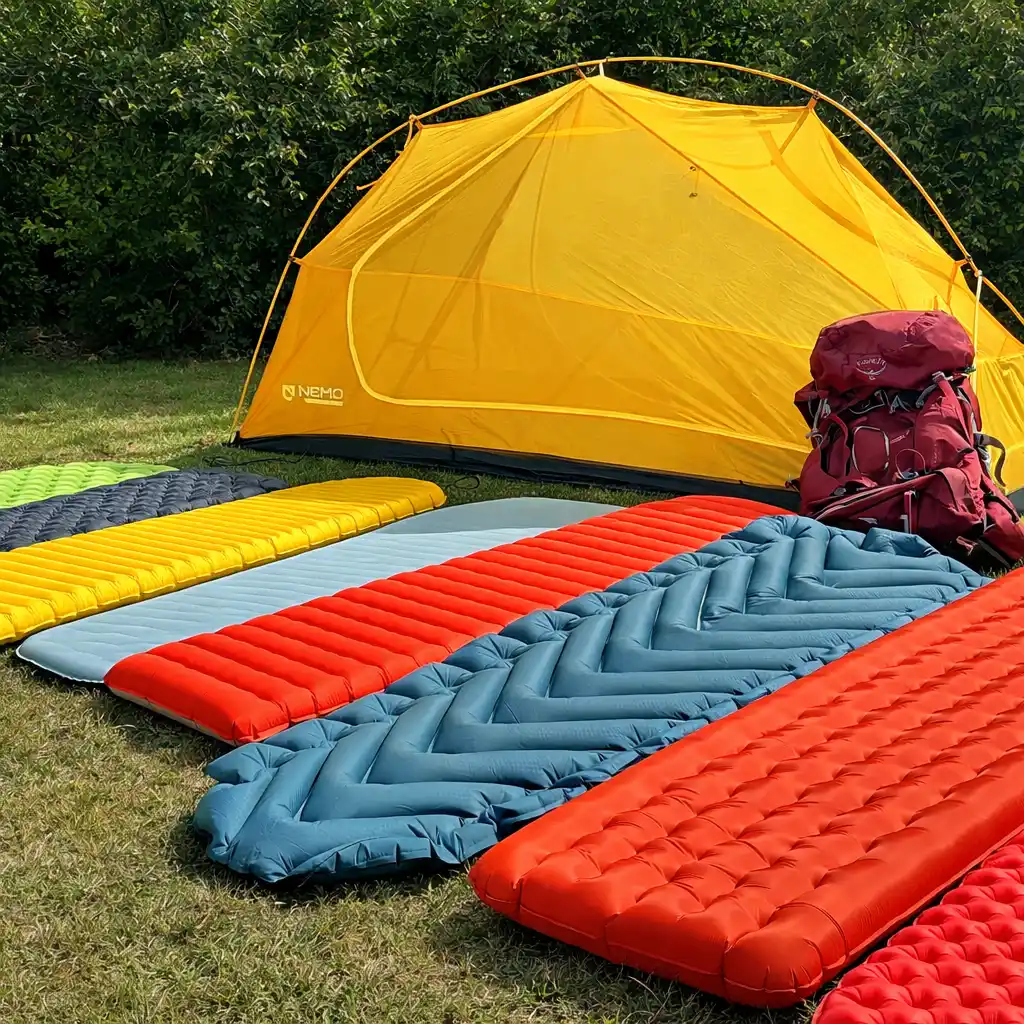
inflatable camping sleeping pads arranged outside a backpacking tent for comparison

The best sleeping pads that don’t slide on tent floors are designed to control friction, pressure, and contact—not just thickness or insulation.

Best Overall Grip: Therm-a-Rest NeoAir XTherm NXT
Why: Dual-surface fabric with high-friction texture and tapered geometry that stays centered on slick tent floors, even in cold conditions.

Best for Side Sleepers: NEMO Tensor Extreme Conditions
Why: Stable baffle design and grippy 40D nylon prevent lateral roll-off during restless sleep.

Best Budget Anti-Slip Option: Klymit Static V Luxe
Why: V-chamber construction naturally locks the pad in place and resists shifting on uneven ground.

Best for Cold Weather: Exped Dura 8R
Why: Heavy-duty outer fabric and high R-value add both traction and thermal stability on frozen tent floors.

Best Lightweight Choice: Sea to Summit Ether Light XT Insulated
Why: Quiet, slightly textured surface balances weight savings with reliable overnight grip.

Best for: Campers who are tired of waking up half off their sleeping pad and want a stable, centered sleep system on smooth tent floors.

Stable pads also retain warmth better by maintaining consistent insulation contact throughout the night.

🧭 Why Sleeping Pads Slide on Tent Floors

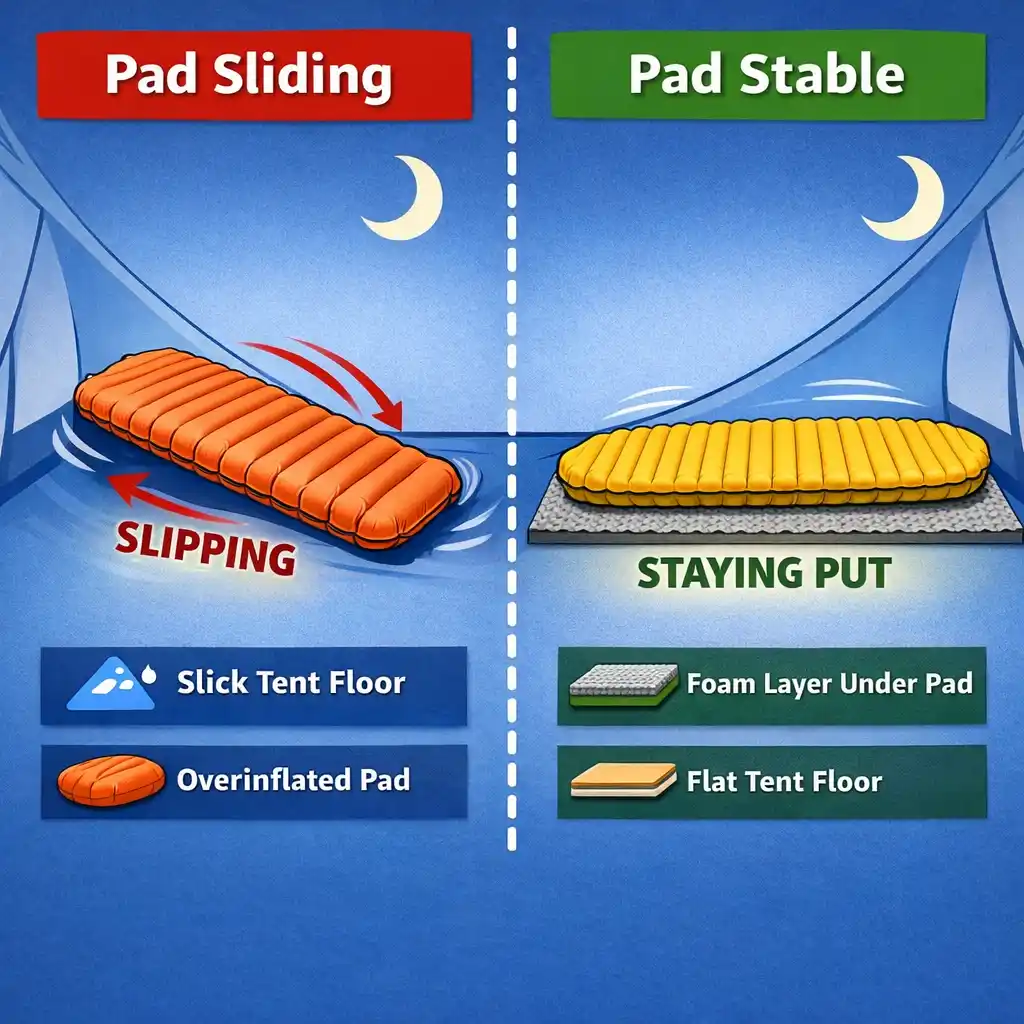
sleeping pad sliding vs stable sleeping pad setup on a tent floor comparison diagram

Sleeping pad movement is usually caused by three factors working together: low-friction tent floors, body movement during sleep, and pad inflation pressure.

Modern tents often use smooth silnylon or PU-coated fabrics that reduce weight but also reduce surface grip. When a sleeping pad has a smooth nylon base, even small movements during the night can slowly shift it across the floor.

Inflation pressure also plays a role. Pads that are inflated too firmly behave like air cushions and tend to “bounce” slightly when a sleeper moves. This small movement gradually causes the pad to drift.

Design features like textured base fabrics, wider contact surfaces, and stable baffle geometry significantly reduce this movement and keep the pad centered overnight.

Campers often describe this problem in different ways. Some say their sleeping pad slides on the tent floor, while others describe the pad slipping or slowly moving overnight.

In practice, these issues all come from the same cause: low-friction tent floors combined with body movement and inflation pressure that allows the pad to drift during sleep.

🛠 Quick Fixes to Stop a Sleeping Pad from Sliding

Even the best sleeping pads can shift slightly if the tent floor is extremely smooth or if the ground has a slight slope. Before replacing your pad, a few small adjustments can dramatically reduce movement.

• Slightly underinflate the pad to increase surface contact
• Place a thin foam layer or blanket underneath the pad
• Use a pad sleeve or sleeping bag attachment straps
• Pitch your tent on the flattest ground available

These small adjustments often solve pad movement immediately, especially on slick tent floors.
 

🔧 How to Keep a Sleeping Pad from Sliding in a Tent

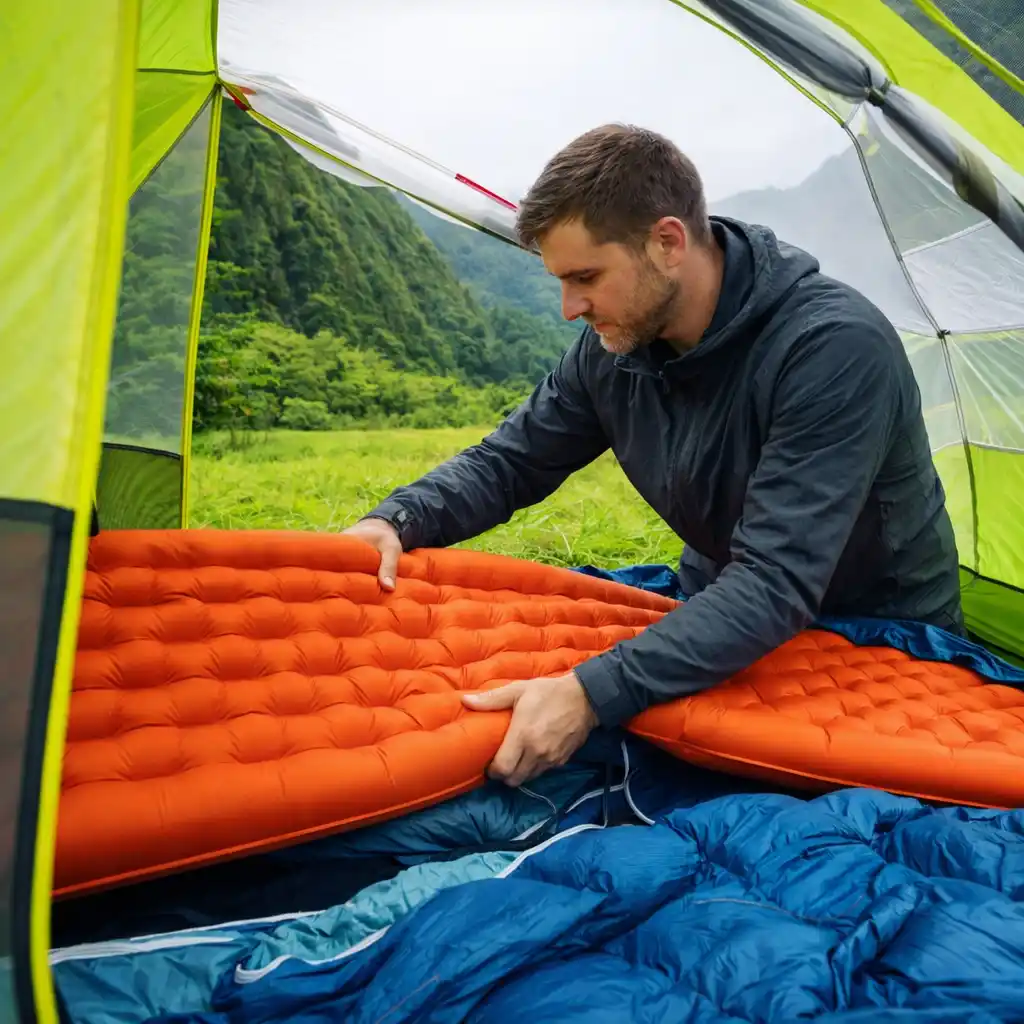
man adjusting inflatable sleeping pads inside a backpacking tent during campsite setup

Many campers assume sliding is caused only by the sleeping pad itself, but tent setup and inflation pressure also play a big role.

To keep a sleeping pad from sliding in a tent, start by slightly underinflating the pad so it creates more surface contact with the tent floor. Position the pad on the flattest area of the tent and avoid pitching on subtle slopes that cause slow overnight drifting.

If sliding continues, adding a thin foam layer, textured groundsheet, or pad sleeve can dramatically increase friction and keep the pad centered throughout the night.

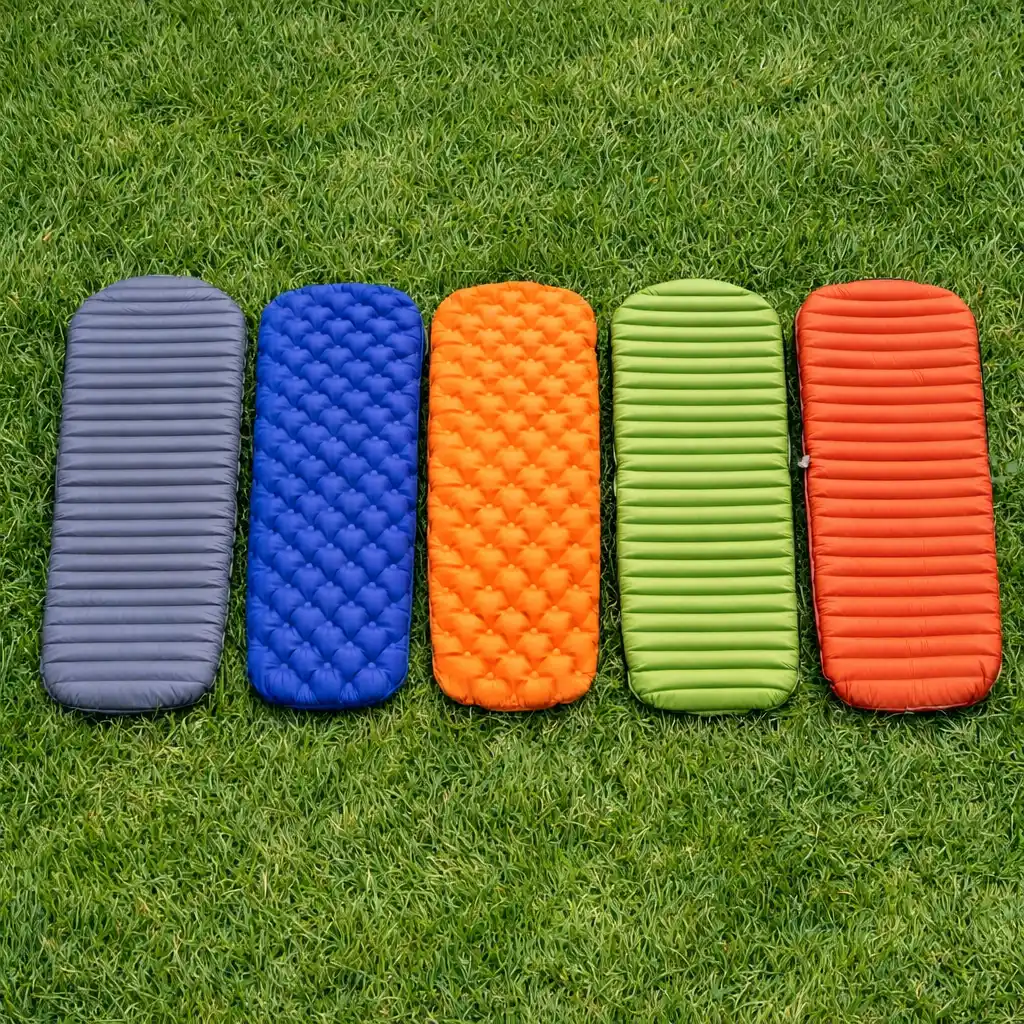
📊 Comparison: Top Non-Slip Sleeping Pads

inflatable camping sleeping pads placed side by side for comparison on grass
ModelScoreKey Anti-Slip FeatureWeightPrice Tier
Therm-a-Rest NeoAir XTherm NXT9.7 / 10Textured base fabric + high internal pressure stability15 ozPremium
Exped Dura 5R9.5 / 1075D polyester fabric with laminated high-friction base29 ozHigh-End
NEMO Tensor All-Season9.3 / 10Quiet textured fabric + stable baffle layout17 ozMid-Range
Sea to Summit Ether Light XT Extreme9.4 / 10Air Sprung Cell™ construction with wide contact footprint30 ozMid-Range
Klymit Static V Luxe Insulated8.9 / 10V-chamber geometry that resists lateral shifting30 ozBudget

🏆 Best Sleeping Pads (In-Depth Reviews)

1. Therm-a-Rest NeoAir XTherm NXT

Award: Best Overall Non-Slip Performance

best sleeping pads that don’t slide

The Therm-a-Rest NeoAir XTherm NXT sets the benchmark for sleeping pads that stay put on slick tent floors. Its combination of textured base fabric, horizontal baffle structure, and high internal pressure stability minimizes lateral movement even on uneven ground.

Unlike basic inflatable pads that shift with every movement, the XTherm NXT maintains consistent surface friction against modern tent floors.

Compared with ultralight pads that use smooth nylon bases, the XTherm NXT tends to stay noticeably more stable on slick tent floors, especially when sleeping on slight slopes or when repositioning during the night.

My Experience: I’ve used the XTherm NXT on cold alpine ground, silnylon tent floors, and uneven forest sites. Even when sleeping on a slight slope, the pad stayed centered under my body throughout the night.

The key difference is stability under pressure—when you roll over, the pad resists deformation instead of “walking” across the floor.

The first night I slightly overinflated it, and that extra firmness made the pad noticeably more prone to shifting.

Pros

  • Textured Base Fabric: Adds friction on slick tent floors

  • High Internal Stability: Minimal side-to-side movement

  • Excellent Warmth: R-value 7.3 for cold conditions

Cons

  • Premium Price

  • Firm Feel: Not ideal for campers who prefer soft pads

💡Pro-Tip: Inflate the pad to about 90–95% firmness. Overinflation increases bounce and makes sliding more likely.

⭐Best for: Cold-weather campers and backpackers who want maximum stability and insulation.

Verdict: The most reliable sleeping pad for staying centered all night, even on slick or uneven tent floors.

Pricing and availability may change.

2. Exped Dura 5R

Award: Best Anti-Slip Fabric & Durability

Exped Dura 5R sleeping pad laid out on a tent floor, highlighting durable fabric and anti-slip surface for stable overnight sleep

The Exped Dura 5R is built specifically to address pad movement. Its polyester face fabric and laminated base texture create noticeably more grip than standard nylon pads.

This is a pad designed for campers who toss and turn.

My Experience: I tested the Dura 5R on a smooth PU-coated tent floor where many pads slide easily. The difference was immediate—the pad stayed anchored, even during frequent position changes.

The rectangular shape also helps distribute pressure evenly, reducing edge roll-off.

Pros

  • High-Friction Base Fabric

  • Stable Rectangular Shape

  • Durable 75D Polyester Construction

Cons

  • Heavier Than Ultralight Pads

  • Bulkier Packed Size

💡Pro-Tip: Pair it with a fitted sheet or pad sleeve for absolute zero movement.

⭐Best for:  Campers who value stability and durability over ultralight weight.

Verdict: One of the best non-slip pads for restless sleepers and long trips.

Pricing and availability may change.

3. NEMO Tensor All-Season

Award: Best Balance of Comfort and Grip

NEMO Tensor All-Season sleeping pad inside a backpacking tent, featuring a quiet, lightly textured surface that reduces pad movement

The NEMO Tensor All-Season uses a quiet, lightly textured fabric that provides better grip than most ultralight pads while remaining extremely comfortable.

It doesn’t rely on stickiness—instead, it reduces movement through surface contact and shape control.

My Experience: On smooth tent floors, the Tensor stayed surprisingly centered. It doesn’t lock in place like the Exped, but it also doesn’t drift when you change positions.

Noise reduction is a big bonus—no crinkling or shifting sounds.

Pros

  • Textured Surface Reduces Sliding

  • Very Quiet Fabric

  • Excellent Comfort-to-Weight Ratio

Cons

  • Less Grip Than Dura 5R

  • Requires Careful Inflation

💡Pro-Tip: Inflate slightly softer than recommended to increase contact area and reduce sliding.

⭐Best for: Backpackers who want comfort, silence, and reasonable stability.

Verdict: A refined pad that balances grip and sleep quality extremely well.


Pricing and availability may change.

4. Sea to Summit Ether Light XT Extreme

Award: Best Surface Stability for Side Sleepers

Sea to Summit Ether Light XT Extreme sleeping pad set up in a tent, showing wide air cell construction that helps prevent sliding on uneven ground

The Ether Light XT Extreme uses Air Sprung Cell™ construction, which creates hundreds of contact points with the tent floor. This dramatically reduces lateral movement compared to traditional baffle designs.

My Experience: As a side sleeper, this pad stayed centered even when shifting weight aggressively. The wide platform helps prevent rolling off, which often causes sliding.

Pros

  • Multi-Cell Contact Reduces Movement

  • Wide, Stable Sleeping Platform

  • Very Comfortable for Side Sleepers

Cons

  • Heavier Than Minimalist Pads

  • Larger Packed Size

💡Pro-Tip: Use the pad’s pump sack to fine-tune firmness for maximum floor contact.

⭐Best for: Side sleepers and campers who prioritize stability and comfort.

Verdict: One of the most stable pads for restless sleepers on smooth tent floors.

Pricing and availability may change.

5. Klymit Static V Luxe Insulated

Award: Best Budget Non-Slip Option

Klymit Static V Luxe Insulated sleeping pad on a tent floor, demonstrating V-shaped baffle design that improves stability and reduces slipping

The Klymit Static V Luxe Insulated uses deep V-shaped baffles that naturally limit lateral shift. While the fabric itself isn’t grippy, the geometry resists movement better than flat pads.

My Experience: On budget tents with slick floors, the pad stayed more centered than expected. The wider design also helped keep it from sliding when rolling over.

Pros

  • Wide, Stable Shape

  • Excellent Value for Money

  • Good Warmth for the Price

Cons

  • Bulkier Than Premium Pads

  • Less Surface Grip Than High-End Models

💡Pro-Tip: Placing a thin foam pad or blanket underneath dramatically improves grip.

⭐Best for: Car campers and budget buyers who want less sliding without premium pricing.

Verdict: The best affordable option for campers tired of waking up half off their pad.
Pricing and availability may change.

🧠 Buying Guide: How to Choose a Pad That Won’t Slide

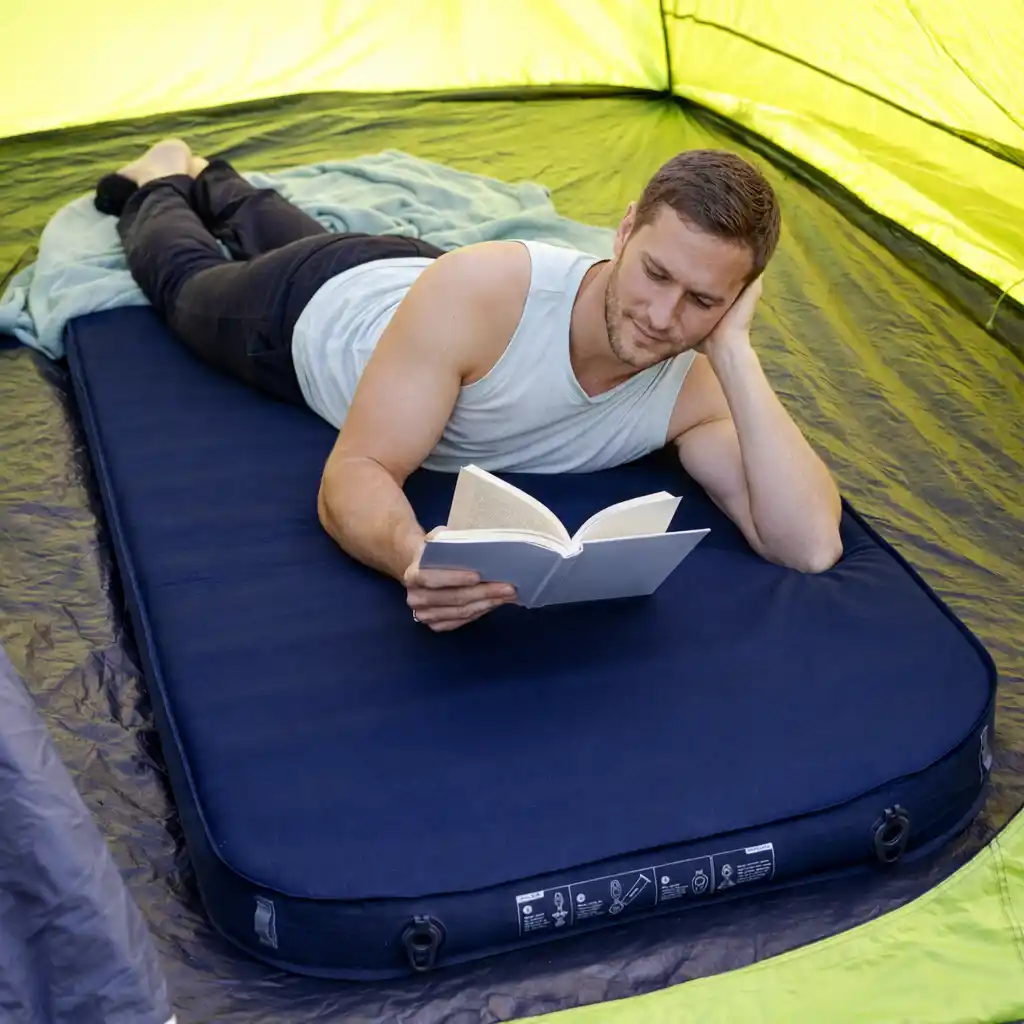
man relaxing on an inflatable sleeping pad inside a camping tent

Choosing the best sleeping pads that don’t slide on tent floors comes down to fabric grip, pad geometry, and how inflation pressure interacts with tent floor materials.

Key factors that actually matter:

  • Bottom Fabric Texture: Brushed or high-denier fabrics grip better than ultralight nylon.

  • Pad Shape: Rectangular pads slide less than narrow mummy designs.

  • Inflation Pressure: Overinflated pads behave like balloons—underinflate slightly.

  • R-Value: Higher insulation increases firmness and stability.

  • Tent Floor Material: Silnylon floors amplify sliding—match pad accordingly.

Sleeping pads perform best when the tent interior stays dry and stable — which is why pairing them with camping tents that don’t condense at night significantly reduces sliding issues.

On especially slick floors, adding a textured base layer can dramatically increase pad stability — we break down the best options in our guide to tent footprints and ground tarps.

❓ FAQ: Sleeping Pad Slippage

Why do sleeping pads slide on tent floors?
Low-friction fabrics + body movement + overinflation.

Do anti-slip coatings work long-term?
Yes, if integrated into fabric—not sprayed on.

Should I use a pad sleeve or straps?
Only if pad design can’t solve it alone.

Does pad thickness affect sliding?
Yes. Thicker pads require better edge stability.

Does moisture or condensation make sleeping pads slide more?
Yes. Moisture reduces friction on modern tent floor fabrics, which increases pad movement—especially on silnylon and PU-coated floors.

🏁 Final Verdict

The best sleeping pads that don’t slide on tent floors are not accidents—they’re engineered through fabric choice, geometry, and pressure management.

If you want maximum stability: Sea to Summit Ether Light XT Extreme
If you want lightweight control: Therm-a-Rest XTherm NXT
If you want value: Klymit Static V Luxe

Sliding pads ruin sleep, warmth, and recovery.
Choose a pad designed to stay put—and your tent finally becomes a place to rest, not wrestle.

Happy camping,
— Anthony

Scroll to Top