
Why tents condense at night is one of the most common and misunderstood problems campers face, especially in humid or cold conditions.
Hi, I’m Anthony.
One of my most frustrating camping nights wasn’t during a storm or freezing weather—it was a calm, quiet night when I woke up soaked from condensation inside the tent. No rain, no leaks, just moisture dripping from the ceiling.
That night taught me an important lesson: condensation isn’t about bad weather, it’s about how a tent handles moisture.
I’ve since seen the same pattern repeat on calm fall nights, shoulder-season trips, and cold lake camps where rain never fell. The common factor was always still air, cooling fabric, and trapped moisture.
Without the right tent design and setup, even a clear night can turn your shelter into a damp mess. But when you understand what causes condensation, it becomes predictable—and manageable.
If you’re choosing new shelter, start by understanding how to stop condensation in a tent before investing in gear that claims to be “fully waterproof.”
Here’s why tents condense at night, and why ventilation alone usually isn’t enough.
As an Amazon Associate, we earn from qualifying purchases.
🌙 Why Tents Condense at Night (And Why Venting Isn’t Enough)
Waking up to a damp tent interior is one of the most common—and misunderstood—problems in camping. Many campers assume condensation means their tent is leaking or that simply opening vents will solve the issue. In reality, tent condensation is a predictable physical process, and ventilation alone is often not enough to prevent it.
Understanding why tents condense at night is the first step toward staying dry.
💧 What Tent Condensation Actually Is

Tent condensation is not rain leaking through fabric. It is water vapor turning back into liquid when warm, moist air inside the tent contacts a colder surface.
At night, three things happen simultaneously:
Your body releases moisture through breathing and perspiration
Outside temperatures drop rapidly
Tent surfaces cool faster than the air inside
When warm air meets a cold surface, it reaches its dew point, and moisture forms as droplets on the tent walls and ceiling.
This process is unavoidable. The only variable is how much condensation forms and where it ends up.
🌡️ Why Condensation Is Worse at Night
Condensation peaks at night because temperature, airflow, and humidity all shift against you at the same time.
Temperature Drop
After sunset, ground and air temperatures fall. Tent fabric cools faster than the air inside, creating ideal conditions for condensation.
Reduced Air Movement
Winds often die down overnight. Without airflow, moisture lingers inside the tent instead of dispersing.
Trapped Humidity
Two adults can release over a liter of moisture into the air overnight. In a small tent, that humidity accumulates quickly.
Ground Moisture
Wet soil, grass, or snow releases moisture upward, increasing humidity inside the tent—especially if the floor is poorly insulated.
Moisture buildup becomes far more noticeable when paired with cold ground and poor insulation. This is why your sleep system setup matters as much as the tent itself.
If the floor feels damp in the morning, your mattress may be part of the problem — see our guide to the best camping mattresses & sleeping mats for car camping
🪟 Why Venting Alone Often Fails

Ventilation is necessary, but it is not sufficient on its own.
Vents Don’t Change Dew Point
Opening vents allows air exchange, but it does not prevent warm, moist air from contacting cold surfaces. If the temperature difference is large enough, condensation will still occur.
Small or Poorly Placed Vents
Many tents rely on low side vents or small mesh panels that do not create a true airflow path. Without high–low venting, moisture stagnates.
Calm Weather Limits Effectiveness
Vents rely on wind or thermal movement. On still nights, even fully open vents may move very little air.
Interior Contact Makes It Worse
When sleeping bags or gear touch tent walls, they transfer moisture directly onto fabric, accelerating condensation buildup.
This is why campers who rely on venting alone often feel frustrated. Without design features that manage temperature differences and moisture separation, vents simply cannot solve condensation on their own.
🏗️The Role of Tent Design (More Important Than Venting)

Condensation is controlled more by design geometry than by how many vents a tent has.
Double-Wall Construction
A proper air gap between the inner tent and rainfly allows moisture to dissipate before it reaches occupants.
Steep Wall Angles
Vertical or near-vertical walls reduce contact between condensation-prone surfaces and sleepers.
High–Low Vent Placement
Peak vents allow warm, moist air to escape naturally, while lower vents draw in cooler air to replace it.
Fabric Separation
Tents that maintain consistent spacing between layers perform better than those where the fly sags onto the inner tent.
🧊 Why Single-Wall Tents Condense More
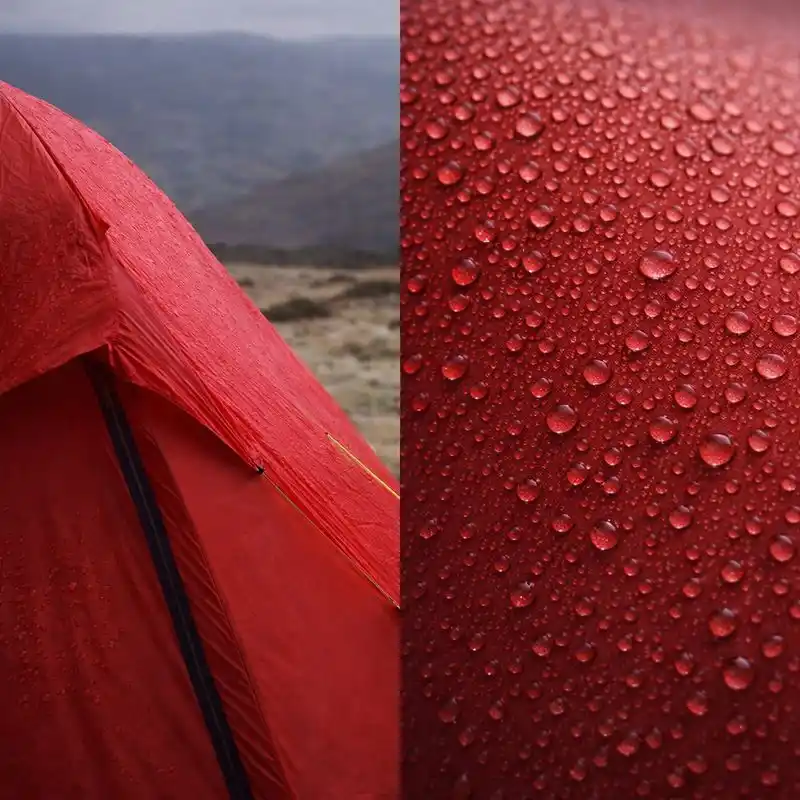
Single-wall tents combine weather protection and living space into one layer. This makes condensation almost unavoidable.
Moisture has nowhere to escape before reaching interior surfaces
Any condensation forms directly above sleepers
Ventilation must work perfectly to offset design limitations
Single-wall tents can work in cold, dry climates, but they are less forgiving in humid or mixed conditions.
🌍 Ground Moisture: The Hidden Contributor

Many campers focus on airflow but ignore what’s happening below them.
Moist ground releases water vapor upward throughout the night. Without proper floor insulation or a ground barrier, this moisture enters the tent interior and increases overall humidity.
This is why condensation is often worse:
near lakes or rivers
on wet grass
after rain
on snow or thawing ground
Ground moisture is one of the most overlooked contributors to tent condensation. Even the best-designed tent will struggle without proper floor protection.
Using a correctly sized barrier underneath can dramatically reduce overnight humidity — see our breakdown of the best tent footprints and ground tarps
❌ Common Condensation Myths
“More mesh means no condensation”
Mesh improves airflow but does not prevent dew point formation.
“Waterproof rating prevents condensation”
Waterproofing blocks rain, not vapor. Highly waterproof fabrics can trap moisture more effectively.
“Leaving the door open fixes it”
This helps only if airflow is strong and consistent, which is rare overnight.
⚠️ How Condensation Becomes a Problem (Not Just an Annoyance)
Condensation affects more than comfort:
Damp sleeping bags lose insulation efficiency
Moisture accelerates mold growth during storage
Repeated wetting shortens tent fabric lifespan
Cold condensation increases overnight heat loss
Managing condensation is essential for both sleep quality and gear longevity.
✅ What Actually Reduces Condensation in Real Use
While no tent can eliminate condensation entirely, these factors consistently reduce it:
Adequate interior volume for the number of occupants
Effective separation between inner tent and fly
High vent placement combined with low intake points
Ground insulation that blocks upward moisture
Avoiding direct contact with tent walls
Venting helps—but only when supported by proper design and setup.
From a scientific standpoint, tent condensation follows the same principles as dew formation. According to the U.S. National Weather Service, condensation occurs when warm, moisture-laden air cools to its dew point and turns back into liquid water.
🏁 Final Thoughts
Tent condensation is not a flaw—it is a physical reality. The mistake many campers make is assuming that vents alone can overcome basic physics.
This is why experienced campers evaluate airflow design and moisture management before looking at waterproof ratings or marketing claims.
Condensation forms when warm, moist air meets cold surfaces. The tents that perform best at night are those designed to manage airflow, temperature differences, and moisture separation—not those that simply advertise more vents.
If you consistently camp in humid, cold, or still conditions, condensation control should be a primary buying factor — not an afterthought.
Choosing gear designed around airflow, separation, and moisture management matters far more than chasing higher waterproof ratings alone.
Understanding this distinction allows campers to choose better shelters, set them up more effectively, and wake up drier regardless of conditions.
Happy camping,
— Anthony