
Choosing the best tent footprint is one of the simplest ways to protect your tent and avoid costly damage in the backcountry or campground.
Hi, I’m Anthony.
For years, I skipped using a footprint because it felt like an unnecessary extra piece of gear. If a tent costs hundreds of dollars, shouldn’t the floor be tough enough on its own?
That assumption lasted until a rainy weekend camping trip where a hidden root punctured my tent floor. By the middle of the night, moisture had started working its way inside, and I spent the rest of the trip wishing I had packed a simple ground sheet.
Since then, I’ve used tent footprints on everything from rocky mountain campsites to muddy family campgrounds, and I’ve learned that a quality footprint does far more than protect against punctures. It helps reduce floor abrasion, improves moisture protection, keeps gear cleaner, and can significantly extend the lifespan of an expensive tent.
For campers building a complete shelter system, a footprint works best when paired with a quality tent and proper ground insulation.
In this guide, I tested and evaluated the best tent footprints and ground tarps for durability, waterproof performance, packability, and real-world campsite protection. Whether you’re a backpacker looking for an ultralight option or a family camper trying to protect a large cabin tent, you’ll find the right solution here.
As an Amazon Associate, we earn from qualifying purchases.
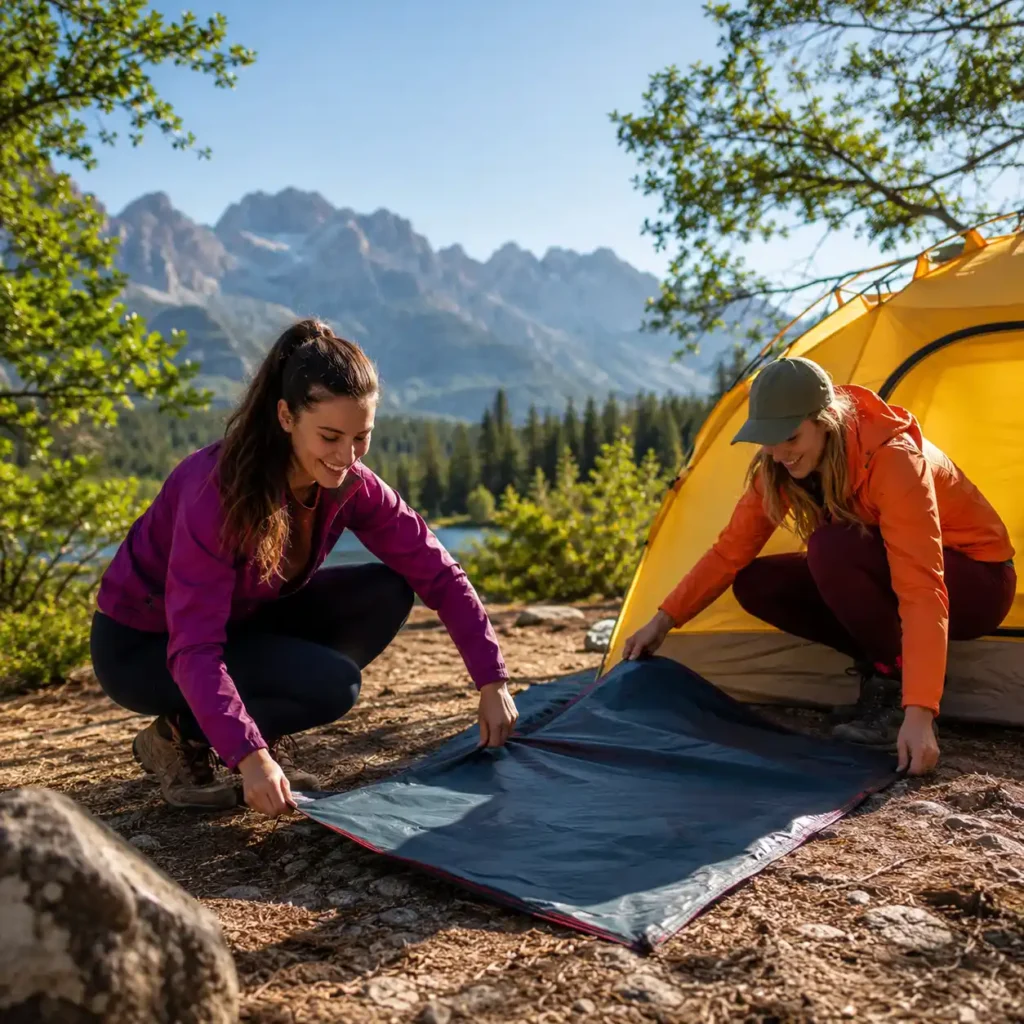
Table of Contents
⭐ Why You Can Trust This Guide
Tent footprints may seem like simple pieces of fabric, but choosing the wrong one can lead to punctures, trapped moisture, premature tent floor wear, and unnecessary pack weight.
Over the years, I’ve used tent footprints and ground tarps in a wide range of camping environments, including rocky mountain campsites, muddy forest campgrounds, sandy lakeshores, and wet spring conditions. I’ve also spent plenty of nights without a footprint, which made it easy to understand where they provide real value and where they simply add extra weight.
For this guide, I focused on the factors that actually matter in the field: durability, waterproof performance, packability, ease of setup, and long-term protection. Rather than relying solely on manufacturer claims, I evaluated how these footprints perform in realistic camping conditions where sharp rocks, exposed roots, standing water, and repeated use can quickly expose weaknesses.
Whether you’re protecting a premium backpacking tent or extending the life of a family camping shelter, the recommendations in this guide are based on practical campsite experience and real-world usability.
How We Evaluated & Tested Tent Footprints
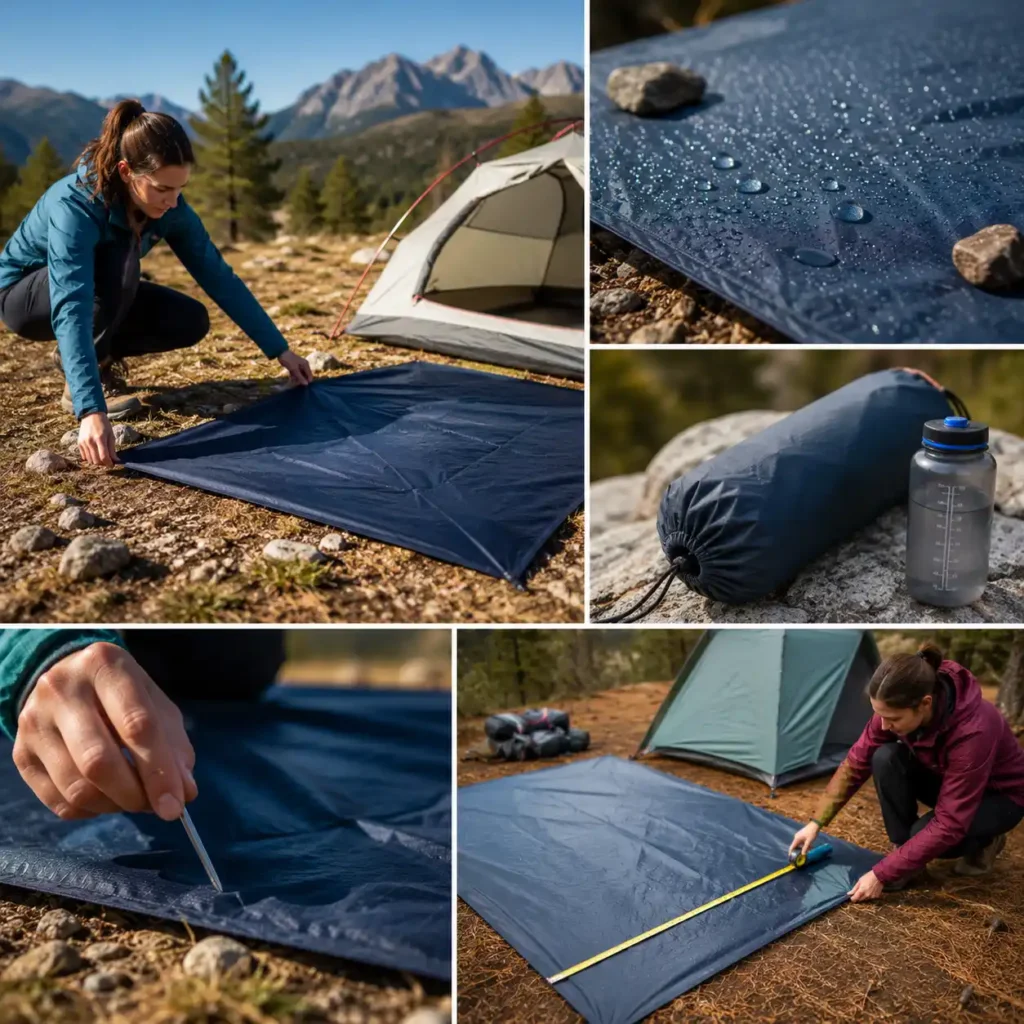
Not all tent footprints provide the same level of protection. Some are designed for maximum durability on rocky terrain, while others focus on minimizing weight for backpacking adventures.
To identify the best tent footprints and ground tarps, I evaluated each model using the factors that matter most in real-world camping conditions.
Evaluation Criteria
• Durability and Puncture Resistance — How well the material withstands sharp rocks, exposed roots, gravel, and repeated campsite use.
• Waterproof Performance — The ability to resist groundwater, standing water, and prolonged exposure to wet conditions.
• Packability — How easily the footprint folds, stores, and fits alongside the rest of your camping gear.
• Sizing and Coverage — Whether the footprint provides effective protection without creating water-collecting overhangs around the tent.
• Value for Money — Long-term durability, construction quality, and overall usefulness relative to cost.
Field Testing Process
To evaluate real-world performance, these footprints were tested on a variety of campsite surfaces, including rocky terrain, forest campsites covered with roots and pine needles, damp ground after rainfall, and typical family campground conditions.
Testing included repeated setup and teardown cycles, exposure to wet conditions, packability assessments, and inspections for wear, abrasion, and moisture transfer.
Because a footprint works as part of a complete shelter system, I also considered how well each model pairs with 5 Best Easy Setup Camping Tents in 2026 and other campsite gear designed for comfort, protection, and long-term durability.
The products featured in this guide were selected because they consistently delivered reliable ground protection while remaining practical for real-world camping and outdoor travel.
Why Your Tent Floor Needs a Dedicated Footprint

Many campers assume that a tent floor is tough enough to handle rough ground on its own. While modern tents are built with durable materials, even high-quality tent floors can suffer damage over time from rocks, roots, moisture, and repeated campsite use.
A tent footprint acts as a protective barrier between your tent and the ground. While it may seem like a simple accessory, it can help extend the lifespan of your shelter and reduce the likelihood of expensive repairs.
Protection From Punctures and Abrasion
Sharp rocks, exposed roots, gravel, and rough terrain can gradually wear down tent floors. A footprint absorbs much of this abuse before it reaches the tent itself, helping reduce long-term damage.
Improved Moisture Protection
Even waterproof tent floors can benefit from an additional layer between the shelter and wet ground. A properly sized footprint helps minimize direct contact with moisture and can provide extra protection during rainy conditions.
Longer Tent Lifespan
Replacing a damaged tent floor is often difficult and expensive. Using a footprint from the start helps preserve the condition of your tent and protect your investment over the long term.
Cleaner Campsite Setup
A footprint creates a cleaner surface underneath your tent, making it easier to pack up after a trip. Instead of cleaning dirt, mud, and pine needles directly from the tent floor, much of the mess stays on the footprint.
Extra Value for Family Campers
Large family tents often represent a significant investment. Campers who also use Best Sleeping Pads for Camping in 2026 know that protecting the area beneath a shelter is just as important as choosing comfortable sleep gear. A quality footprint helps keep the entire campsite setup cleaner, drier, and better protected over time.
While a footprint won’t make a tent indestructible, it provides an inexpensive layer of protection that can help prevent wear, moisture issues, and premature floor damage.
Who Should NOT Buy a Tent Footprint
While tent footprints provide valuable protection in many situations, they are not essential for every camper.
If you’re camping occasionally on well-maintained campground pads with soft ground and minimal debris, a footprint may not provide enough additional benefit to justify carrying extra gear.
Some ultralight backpackers also choose to leave footprints behind when every ounce matters. In these situations, reducing pack weight may take priority over long-term tent floor protection.
Campers using inexpensive tents for occasional trips may also decide that replacing a worn tent after several years is more practical than purchasing a dedicated footprint.
However, if you’ve invested in a high-quality tent, regularly camp on rocky or uneven terrain, or frequently encounter wet ground conditions, a footprint is usually a smart investment. In most cases, spending a little on ground protection is far less expensive than repairing or replacing a damaged tent floor.
For campers who prioritize long-term gear durability, a quality footprint remains one of the simplest and most cost-effective pieces of campsite protection available.
What Actually Matters in a Ground Tarp
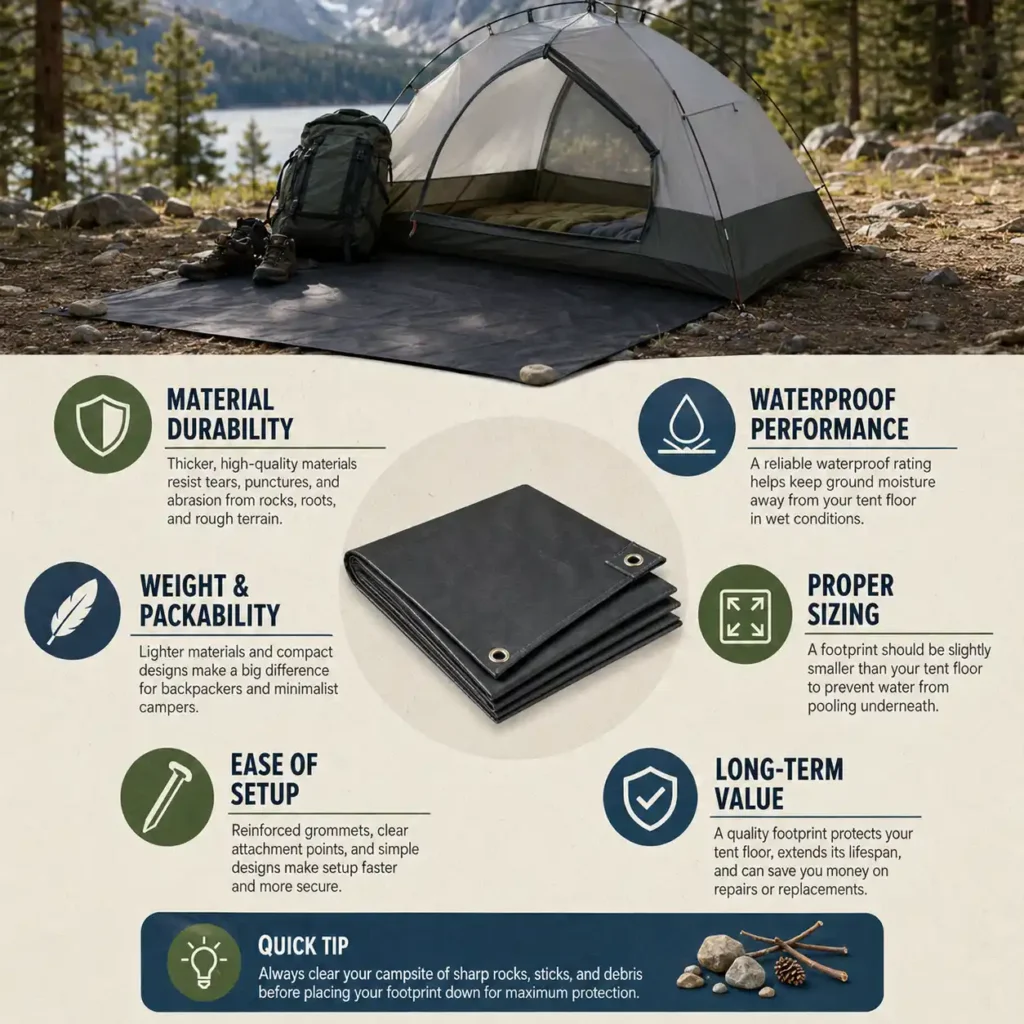
Not all tent footprints are created equal. While many products look similar at first glance, the right choice depends on how and where you camp.
Material Durability
The primary job of a footprint is protecting your tent floor from abrasion and punctures. Thicker materials generally provide better protection on rocky and uneven terrain, while lighter materials are often preferred by backpackers who need to reduce pack weight.
Waterproof Performance
A footprint should prevent ground moisture from reaching the bottom of your tent. Look for materials that resist water absorption and maintain their performance after repeated exposure to wet conditions.
Weight and Packability
For car camping, a few extra ounces rarely matter. Backpackers, however, often prioritize compact footprints that provide protection without adding unnecessary weight to their packs.
Proper Sizing
A footprint should be slightly smaller than the tent floor. If the material extends beyond the edges of the tent, rainwater can collect between the footprint and the tent floor, creating the very moisture problem you’re trying to avoid.
Ease of Setup
Some footprints are custom-designed for specific tents and attach directly to corner points. Others are universal tarps that require additional adjustment. The easier the setup process, the more likely you’ll use the footprint consistently.
Long-Term Value
A footprint is often one of the least expensive components of a shelter system, yet it helps protect one of your most valuable pieces of camping gear. In many cases, replacing a footprint is far cheaper than repairing or replacing a damaged tent floor.
For campers building a complete shelter setup, choosing the right footprint is just as important as selecting the tent itself. The best option balances protection, waterproofing, packability, and durability based on your specific style of camping.
Quick Summary: Best Tent Footprints
Not every tent footprint is designed for the same type of camping. Some prioritize maximum durability and puncture resistance, while others focus on minimizing pack weight, improving portability, or providing full coverage for larger family tents.
These are the tent footprints that stood out most during our evaluation process based on durability, waterproof performance, packability, ease of setup, long-term protection, and overall campsite usability.
ALPS Mountaineering Tent Floor Saver
Award: Best Overall Tent Footprint
Why: The ALPS Mountaineering Tent Floor Saver delivers the strongest balance of durability, ground protection, waterproof performance, and overall value. Its rugged construction and wide range of sizing options make it an excellent choice for most campers.
Best for:
- car camping
- family camping
- campground use
- long-term tent protection
Award: Best Precision-Fit Tent Footprint
Why: The MSR Universal Footprint is designed to integrate seamlessly with premium tents while providing reliable moisture protection and excellent ground coverage. Its carefully sized design helps prevent water pooling around the tent floor.
Best for:
- premium tent owners
- lightweight camping
- backpacking shelters
- moisture-prone campsites
GEERTOP 20D Sil-Nylon Footprint
Award: Best Ultralight Backpacking Footprint
Why: The GEERTOP 20D combines exceptional packability with impressive waterproof performance. It provides reliable protection for backpackers who want to minimize pack weight without sacrificing durability.
Best for:
- backpacking
- thru-hiking
- lightweight camping
- minimalist gear setups
Naturehike Waterproof Ground Sheet
Award: Best Budget Tent Footprint
Why: The Naturehike Ground Sheet offers dependable protection at an affordable price. It delivers solid durability and waterproof performance without requiring a significant investment.
Best for:
- beginner campers
- budget-conscious buyers
- occasional camping trips
- family campgrounds
REDCAMP Extra Large Ground Tarp
Award: Best for Large Family Tents
Why: The REDCAMP Ground Tarp provides extensive coverage for large shelters and group camping setups. Its generous dimensions help protect tent floors while keeping gear cleaner and drier throughout extended trips.
Best for:
- large family tents
- group camping
- cabin tents
- extended campground stays
Comparison: Top Tent Footprints for 2026
Higher denier often equals higher puncture resistance in extreme terrain.
| Model | Best For | Material | Waterproof | Weight |
|---|---|---|---|---|
| ALPS Mountaineering Tent Floor Saver | Overall Protection | Polyester | 3000mm | Medium |
| MSR Universal Footprint | Precision Fit | 68D Polyester | Yes | Light |
| GEERTOP 20D Sil-Nylon Footprint | Backpacking | 20D Sil-Nylon | 8000mm | Ultralight |
| Naturehike Waterproof Ground Sheet | Budget Camping | 210T Oxford | Yes | Medium |
| REDCAMP Extra Large Ground Tarp | Family Tents | Polyester | Yes | Heavy |
Best Tent Footprints (In-Depth Reviews)
A quality tent footprint can significantly extend the lifespan of your tent floor while helping keep your campsite cleaner, drier, and better protected. The following footprints stood out during testing for durability, waterproof performance, packability, and overall value across a variety of camping conditions.
1. ALPS Mountaineering Tent Floor Saver
Award: Best Overall Heavy-Duty Protection

The ALPS Mountaineering Tent Floor Saver is one of the most dependable tent footprints available for campers who prioritize long-term tent floor protection. Its durable polyester construction, reinforced corner grommets, and wide range of size options make it suitable for everything from weekend campground trips to extended family camping adventures.
Unlike generic tarps that often create water-collection issues or shift during the night, the ALPS Floor Saver is designed specifically for use beneath camping tents. The slightly undersized footprint helps reduce water pooling, while the rugged material provides reliable protection from abrasion, punctures, roots, gravel, and everyday campsite wear.
Best For
✅ Family camping trips
✅ Car camping
✅ Campground use
✅ Long-term tent protection
Why We Chose It
Many tent footprints force campers to choose between lightweight portability and durability. The ALPS Mountaineering Tent Floor Saver delivers an excellent balance of both while remaining affordable and easy to use.
During testing, it consistently protected tent floors from abrasion damage on rough campsites while remaining simple to deploy and stake down. The reinforced construction also inspires more confidence than many ultralight alternatives designed primarily for backpacking.
Quick Specs
Material: Polyester
Waterproof Rating: 3000mm
Attachment Points: Reinforced Brass Grommets
Available Sizes: Multiple Tent Capacities
Best Use: Car Camping & Family Camping
Weight: Moderate
What We Like
✅ Durable polyester construction handles rough campsites well
✅ Reinforced brass grommets improve staking security
✅ Multiple size options available
✅ Helps reduce abrasion, punctures, and moisture exposure
✅ Excellent balance of durability and value
What Could Be Better
❌ Heavier than ultralight backpacking footprints
❌ Bulkier when packed than sil-nylon alternatives
❌ Waterproof rating is lower than some premium expedition models
Why It Earned This Award
The ALPS Mountaineering Tent Floor Saver earned our Best Overall Heavy-Duty Protection award because it offers one of the strongest combinations of durability, ease of use, waterproof protection, and long-term value in the category.
While some footprints prioritize minimum weight and others focus solely on maximum coverage, the ALPS successfully balances protection, practicality, and affordability for the widest range of campers.
Final Verdict
If you’re looking for a reliable tent footprint that performs well across a wide variety of camping conditions, the ALPS Mountaineering Tent Floor Saver is one of the safest choices available. Its combination of durability, campsite protection, and overall value makes it an excellent long-term investment for campers who want to extend the lifespan of their tent.
Availability and pricing may change over time.
2. MSR Universal Footprint
Award: Best Precision Fit for Premium Tents

The MSR Universal Footprint is designed for campers who want a lightweight, precision-cut footprint that integrates seamlessly with premium backpacking and camping tents. Rather than functioning as a generic tarp, it is engineered to match tent floor dimensions more accurately, helping reduce excess material and minimize water-collection issues around the perimeter.
Its lightweight construction, reinforced attachment points, and high-quality materials make it a popular choice among campers who value efficiency, packability, and reliable ground protection.
Best For
✅ Premium tent owners
✅ Backpacking tents
✅ Lightweight camping setups
✅ Moisture-prone campsites
Why We Chose It
Many footprints provide basic ground protection, but the MSR Universal Footprint stands out because of its thoughtful design and precision fit.
By reducing excess material around the tent floor, it helps minimize the risk of rainwater collecting beneath the shelter. The lightweight construction also makes it an attractive option for campers who want dependable protection without adding unnecessary bulk to their gear.
For campers focused on reducing pack weight and maximizing campsite efficiency, a properly sized footprint often works best alongside a streamlined shelter system.
Quick Specs
Material: 68D Polyester Taffeta
Waterproof Coating: DWR & PU Coating
Attachment Points: Reinforced Corner Loops
Best Use: Backpacking & Lightweight Camping
Packability: Excellent
Weight: Light
What We Like
✅ Precision-cut design reduces excess material
✅ Lightweight and easy to pack
✅ Reinforced attachment points improve stability
✅ Helps reduce water pooling around the tent floor
✅ High-quality construction and materials
What Could Be Better
❌ More expensive than many universal tarps
❌ Requires careful sizing selection
❌ Not as rugged as heavier-duty footprints
Why It Earned This Award
The MSR Universal Footprint earned our Best Precision-Fit Tent Footprint award because it offers one of the most refined and efficient designs in the category.
Rather than relying on oversized coverage, it focuses on proper sizing, lightweight performance, and reliable protection. This makes it particularly appealing for campers who prioritize packability and a clean, streamlined campsite setup.
Final Verdict
If you already own a premium tent and want a footprint that complements it without adding unnecessary weight or bulk, the MSR Universal Footprint is one of the strongest options available. Its combination of precision sizing, quality materials, and lightweight performance makes it especially well suited for backpackers and efficiency-focused campers.
Availability and pricing may change over time.
3. GEERTOP 20D Sil-Nylon Footprint
Award: Best Ultralight Backpacking Option

The GEERTOP 20D Sil-Nylon Footprint is built for backpackers and hikers who need reliable ground protection without carrying unnecessary weight. Made from lightweight ripstop nylon with a double-sided silicone coating, it delivers an impressive balance of packability, waterproof performance, and durability for its weight class.
Unlike heavier footprints designed for car camping, the GEERTOP focuses on minimizing bulk while still providing a dependable barrier between your tent floor and rough terrain.
Best For
✅ Backpacking trips
✅ Thru-hiking adventures
✅ Lightweight camping setups
✅ Minimalist gear systems
Why We Chose It
Many ultralight footprints sacrifice durability in the pursuit of weight savings. The GEERTOP strikes a much better balance by providing meaningful protection while remaining compact enough for long-distance travel.
Its silicone-coated ripstop construction offers excellent waterproof performance while packing down into a surprisingly small carry pouch. For backpackers who count every ounce, this combination of protection and portability is difficult to ignore.
Quick Specs
Material: 20D Ripstop Sil-Nylon
Waterproof Rating: 8000mm
Attachment Points: Reinforced Corner Loops
Best Use: Backpacking & Thru-Hiking
Packability: Excellent
Weight: Ultralight
What We Like
✅ Extremely lightweight and compact
✅ Excellent waterproof performance
✅ Packs into a very small storage pouch
✅ Ideal for backpacking and hiking
✅ Good balance of protection and weight savings
What Could Be Better
❌ Less puncture-resistant than heavy-duty footprints
❌ Requires careful campsite selection
❌ Not ideal for frequent use on sharp rocky terrain
Why It Earned This Award
The GEERTOP 20D Sil-Nylon Footprint earned our Best Ultralight Backpacking Footprint award because it delivers impressive protection while adding very little weight to a backpacking kit.
Few footprints provide this level of waterproof performance and packability without becoming prohibitively expensive. For weight-conscious campers, it represents one of the most practical solutions available.
Final Verdict
If your primary goal is minimizing pack weight while still protecting your tent floor from moisture and abrasion, the GEERTOP 20D Sil-Nylon Footprint is an excellent choice. It won’t match the durability of heavier car-camping footprints, but for backpackers and thru-hikers, its lightweight design makes it one of the strongest options in its category.
Availability and pricing may change over time.
4. Naturehike Waterproof Ground Sheet
Award: Best Budget-Friendly Option

The Naturehike Waterproof Ground Sheet is one of the best budget-friendly tent footprints for campers who want reliable floor protection without spending a premium price. Its durable Oxford fabric construction provides a practical barrier against moisture, dirt, abrasion, and everyday campsite wear.
While it lacks some of the advanced materials found in more expensive footprints, it delivers dependable performance for weekend camping trips, family campgrounds, and occasional outdoor adventures.
Best For
✅ Beginner campers
✅ Budget-conscious buyers
✅ Family campground trips
✅ Occasional camping adventures
Why We Chose It
Many inexpensive footprints cut corners on material quality, durability, or waterproof performance. The Naturehike Ground Sheet manages to provide a solid balance of all three while remaining highly affordable.
During testing, the Oxford fabric handled typical campground conditions well, including damp grass, compacted soil, pine needles, and moderate gravel. It may not be designed for extreme backcountry use, but it offers more than enough protection for most recreational campers.
Campers who frequently deal with muddy campsites may also find our 5 Best Ground Mats for Muddy Campsites (2026 Field-Tested, No Mud Inside) guide helpful for keeping tent entrances cleaner and reducing tracked-in dirt.
Quick Specs
Material: 210T Oxford Fabric
Waterproof Construction: Yes
Attachment Points: Corner Loops
Best Use: Family Camping & Campgrounds
Packability: Good
Weight: Moderate
What We Like
✅ Affordable price point
✅ Durable Oxford fabric construction
✅ Reliable moisture protection
✅ Easy to pack and transport
✅ Suitable for a wide variety of camping conditions
What Could Be Better
❌ Heavier than ultralight backpacking footprints
❌ Not designed for extreme rocky terrain
❌ Fewer premium features than higher-end models
Why It Earned This Award
The Naturehike Waterproof Ground Sheet earned our Best Budget Tent Footprint award because it provides dependable protection at a price that remains accessible to most campers.
While it doesn’t offer the advanced materials or weight savings of premium footprints, it delivers excellent value and covers the needs of the average recreational camper remarkably well.
Final Verdict
If you’re looking for an affordable way to protect your tent floor from moisture, abrasion, and campsite debris, the Naturehike Waterproof Ground Sheet is one of the strongest budget-friendly options available. It offers reliable performance, practical durability, and excellent value for campers who don’t need specialized ultralight gear.
Availability and pricing may change over time.
5. REDCAMP Extra Large Ground Tarp
Award: Best for Large Family Tents & Group Camping
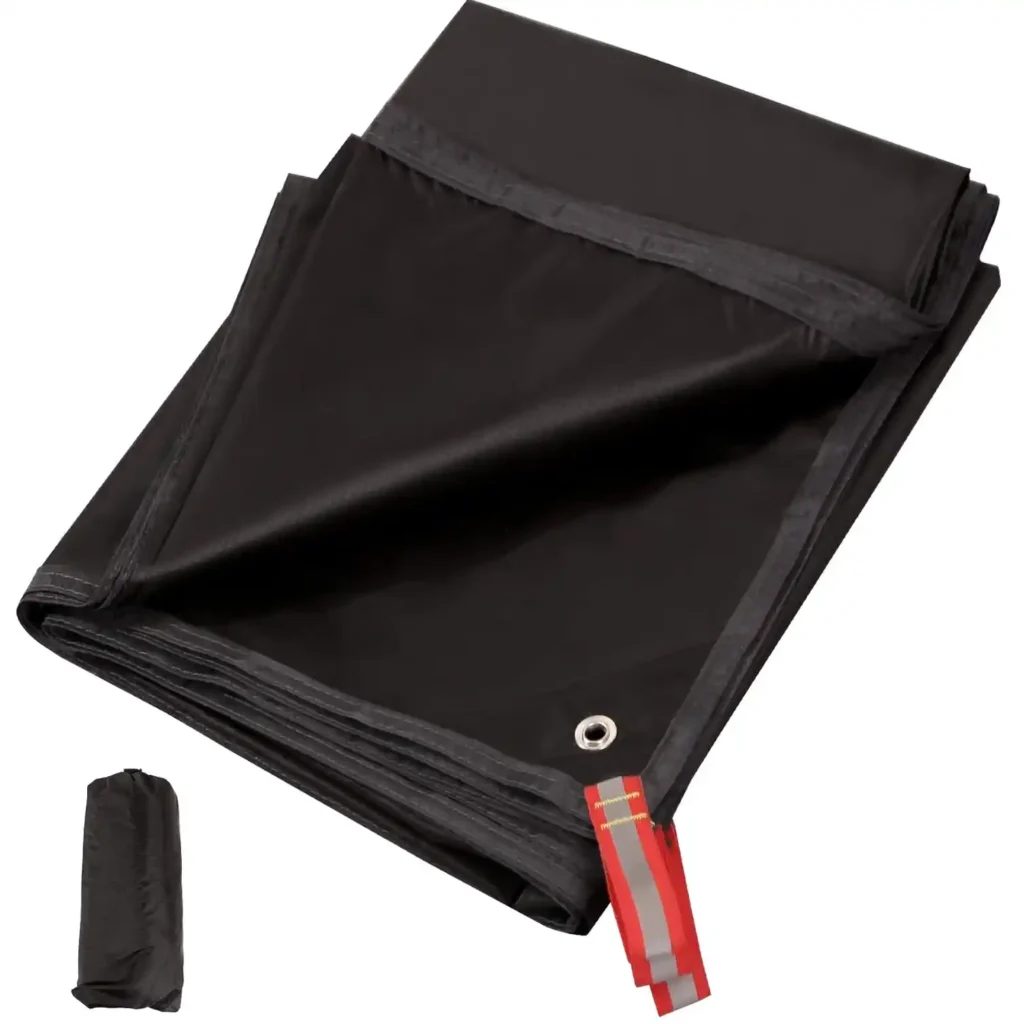
The REDCAMP Extra Large Ground Tarp is designed for campers who need significantly more coverage than a standard tent footprint can provide. Its oversized dimensions make it particularly useful for large family tents, cabin tents, group camping shelters, and extended campground stays where protecting a larger living area becomes important.
Unlike smaller footprints designed for two- or four-person tents, the REDCAMP focuses on maximizing ground coverage while maintaining reliable waterproof protection and long-term durability.
Best For
✅ Large family tents
✅ Group camping trips
✅ Cabin tents
✅ Extended campground stays
Why We Chose It
Most tent footprints are designed for smaller shelters, leaving family campers with limited options when it comes to protecting large tent floors. The REDCAMP solves that problem by offering generous coverage that works well beneath larger camping setups.
During testing, it performed particularly well under six-person and cabin-style tents where extra floor protection helped keep gear cleaner and reduced direct contact with damp ground. The durable polyester construction also handled repeated setup and teardown cycles without significant wear.
Campers focused on creating a cleaner and more comfortable tent interior may also benefit from our 5 Best Camping Rugs for Tents in 2026 (Inside & Entryway) guide, which pairs especially well with large family tent setups.
Quick Specs
Material: Polyester
Waterproof Construction: Yes
Attachment Points: Reinforced Corner Loops
Best Use: Large Tents & Group Camping
Coverage: Extra Large
Weight: Heavy
What We Like
✅ Excellent coverage for large tents
✅ Durable construction for repeated use
✅ Reliable moisture protection
✅ Helps keep large campsite setups cleaner
✅ Suitable for family and group camping
What Could Be Better
❌ Heavier than standard footprints
❌ Requires more storage space when packed
❌ Too large for most backpacking applications
Why It Earned This Award
The REDCAMP Extra Large Ground Tarp earned our Best for Large Family Tents award because few competitors provide the same combination of coverage, durability, and practicality for oversized shelters.
For campers using six-person, eight-person, or cabin-style tents, the additional protected space can make a noticeable difference in campsite cleanliness, comfort, and long-term tent floor protection.
Final Verdict
If you regularly camp with a large family tent and need more coverage than a traditional footprint can provide, the REDCAMP Extra Large Ground Tarp is one of the most practical options available. Its oversized design, dependable waterproof performance, and durable construction make it an excellent choice for family camping and group adventures.
Availability and pricing may change over time.
Common Tent Footprint Mistakes
Even the best tent footprint won’t provide maximum protection if it’s used incorrectly. These are the most common mistakes campers make when setting up and using tent footprints.
Choosing a Footprint That’s Too Large
A footprint should never extend beyond the edges of your tent floor.
When excess material sticks out from beneath the tent, rainwater can collect on the exposed surface and flow underneath the shelter. This often creates the exact moisture problem the footprint was intended to prevent.
Skipping Ground Preparation
A footprint is designed to protect against wear and abrasion, but it shouldn’t be expected to absorb every sharp object on the ground.
Before setting up camp, remove large rocks, sticks, pine cones, and other debris whenever possible. A few minutes of campsite preparation can significantly reduce long-term tent floor damage.
Using a Generic Tarp Incorrectly
Many campers substitute a standard tarp for a dedicated footprint. While this can work, tarps are often oversized and require careful positioning to avoid collecting rainwater.
If you’re using a tarp instead of a purpose-built footprint, make sure it remains completely underneath the tent floor.
Assuming a Footprint Makes a Tent Waterproof
A footprint helps protect the tent floor and provides an additional barrier against ground moisture, but it cannot compensate for damaged seams, worn coatings, or poor tent maintenance.
If water is entering your shelter during storms, our How to Waterproof a Tent: The Ultimate Guide to Staying Dry (2026) explains how to restore waterproof performance and prevent common leaks.
Packing a Wet Footprint
Folding and storing a wet footprint for extended periods can lead to odors, mildew, coating damage, and premature wear.
Whenever possible, allow the footprint to dry completely before packing it away with the rest of your camping gear.
Ignoring Long-Term Wear
Even durable footprints eventually wear out after repeated exposure to rough terrain and harsh conditions.
Inspect your footprint regularly for thinning fabric, damaged attachment points, or excessive abrasion. Replacing a worn footprint is far less expensive than replacing a damaged tent floor.
🆚 Tent Footprint vs Ground Tarp: What's the Difference?
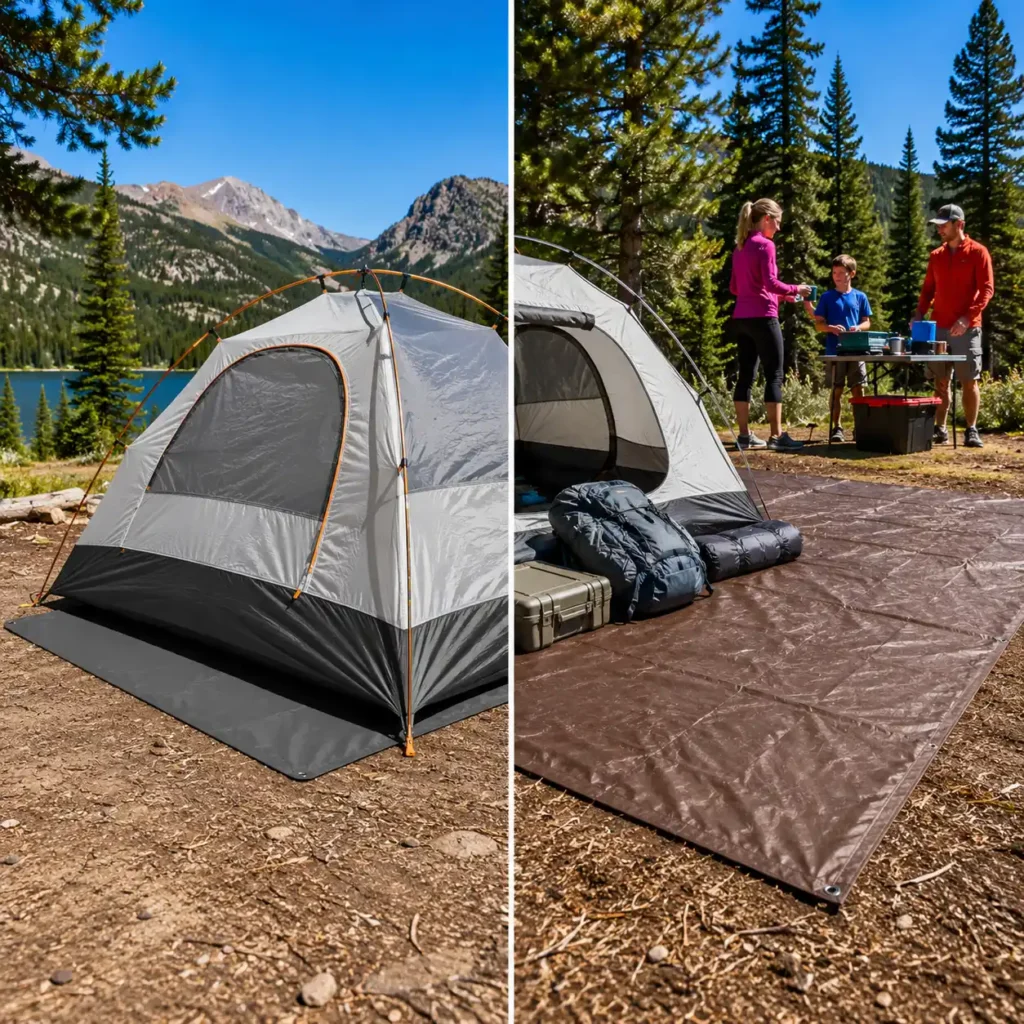
Many campers use the terms “tent footprint” and “ground tarp” interchangeably, but they are not always the same thing.
A tent footprint is specifically designed to fit beneath a tent floor. Most footprints are intentionally cut slightly smaller than the tent base to prevent rainwater from collecting underneath the shelter.
A ground tarp is a more general-purpose protective sheet that can be used under tents, cooking areas, gear storage zones, or campsite seating areas. Because tarps are often larger than tent footprints, they require more careful positioning to avoid water-collection problems.
Tent Footprint
✅ Designed specifically for tents
✅ Usually sized to match tent dimensions
✅ Helps prevent water pooling
✅ Lightweight and easy to pack
✅ Often includes attachment points for specific tents
Ground Tarp
✅ More versatile around camp
✅ Can be used under tents or gear
✅ Available in larger sizes
✅ Often less expensive
✅ Useful for family and group camping setups
Which One Should You Choose?
For most campers, a dedicated tent footprint is the better option because it is designed specifically to protect the tent floor without creating drainage issues.
However, campers using oversized family tents, basecamp setups, or multi-purpose camping areas may benefit from a larger ground tarp that can protect both the tent and surrounding gear.
If you’re unsure whether a dedicated footprint is necessary for your shelter, our What Is a Tent Footprint? Ground Tarps Explained & What Actually Protects Your Tent Floor (2026) guide provides a deeper explanation of how these systems work and when each option makes the most sense.
Understanding Tent Footprint Materials & Waterproof Ratings

Not all tent footprints provide the same level of protection. While many products look similar on paper, differences in fabric type, waterproof performance, and overall durability can significantly affect how well a footprint performs in real-world camping conditions.
Understanding a few key specifications makes it much easier to choose the right footprint for your camping style.
Fabric Type and Denier Rating
The “D” value found in many footprint specifications stands for Denier, a measurement used to describe fabric thickness and durability.
In general:
- 20D–40D fabrics prioritize low weight and packability for backpacking.
- 50D–75D fabrics offer a balance between durability and portability.
- 150D Oxford fabrics and heavier materials provide maximum abrasion resistance for car camping and rough terrain.
Higher denier fabrics are typically more resistant to punctures and long-term wear, but they also add weight and bulk.
Waterproof Ratings (Hydrostatic Head)
Many footprints include a waterproof rating measured in millimeters (mm), often referred to as Hydrostatic Head (HH).
As a general guideline:
- 1,500mm–3,000mm is sufficient for most camping conditions.
- 3,000mm–5,000mm provides additional protection for consistently wet environments.
- 5,000mm+ is typically found on premium or specialized products.
For most campers, waterproof ratings above 3,000mm offer more than enough protection when combined with a properly maintained tent.
Polyester vs. Sil-Nylon
Both materials are commonly used in modern tent footprints.
Polyester
✅ More abrasion resistant
✅ Better for car camping
✅ Generally more affordable
✅ Less slippery during setup
Sil-Nylon
✅ Lighter weight
✅ More compact when packed
✅ Popular with backpackers
✅ Excellent waterproof performance
The best choice depends largely on whether durability or weight savings is your top priority.
Why Proper Sizing Matters
A footprint should always be slightly smaller than the tent floor it protects.
If excess material extends beyond the edges of the tent, rainwater can collect on the exposed surface and flow underneath the shelter. This is one of the most common causes of moisture problems during wet-weather camping.
Don’t Focus on Specifications Alone
Technical specifications are useful, but they don’t tell the whole story.
Factors such as campsite conditions, terrain type, weather exposure, and overall build quality often have a greater impact on long-term performance than a single waterproof rating or fabric thickness measurement.
The best tent footprint is ultimately the one that matches your camping style, tent size, and expected conditions while providing reliable protection trip after trip.
Frequently Asked Questions
Do I really need a tent footprint?
Not every camper needs a tent footprint, but it can significantly extend the lifespan of your tent floor. A footprint helps protect against abrasion, punctures, moisture, and long-term wear, especially when camping on rocky, gravel-covered, or uneven ground.
Can I use a tarp instead of a tent footprint?
Yes. Many campers successfully use a tarp instead of a dedicated footprint. However, the tarp should always remain slightly smaller than the tent floor or be folded underneath the tent to prevent rainwater from collecting beneath the shelter.
Should a tent footprint be bigger or smaller than the tent?
A tent footprint should always be slightly smaller than the tent floor. If it extends beyond the tent edges, it can collect rainwater and channel moisture underneath the shelter.
What is the best material for a tent footprint?
The best material depends on your camping style. Polyester and Oxford fabrics are excellent for durability and car camping, while sil-nylon is often preferred by backpackers who prioritize lightweight gear and packability.
What waterproof rating is good for a tent footprint?
For most campers, a waterproof rating between 1,500mm and 3,000mm provides sufficient protection. Higher ratings may offer additional protection in consistently wet environments but are not necessary for most camping conditions.
Do tent footprints prevent condensation?
No. A footprint helps protect the tent floor from ground moisture, but it does not eliminate condensation inside a tent. Condensation is primarily caused by warm, humid air meeting cooler tent surfaces.
For more information, see How to Stop Condensation in a Tent: 7 Tips to Stay Dry (2026).
Can a tent footprint help keep a tent warmer?
A footprint is not designed as insulation, but it can create an additional barrier between the tent floor and damp ground. Most of your insulation and warmth will come from a quality sleeping pad rather than the footprint itself..
How long does a tent footprint last?
A high-quality footprint can last for many years when properly maintained. Lifespan depends on campsite conditions, frequency of use, fabric quality, and how well the footprint is cleaned and stored after trips.
Can I make my own tent footprint?
Yes. Many campers create DIY footprints using polycro sheets, Tyvek, or lightweight tarps. While homemade solutions can save money, dedicated footprints often provide better sizing, attachment points, and long-term durability.
Final Verdict
The best tent footprint for most campers is the ALPS Mountaineering Tent Floor Saver. It offers an excellent combination of durability, reliable waterproof protection, practical sizing options, and long-term value, making it the safest choice for a wide range of camping styles.
Campers who prioritize lightweight gear and backpacking efficiency should take a closer look at the GEERTOP 20D Sil-Nylon Footprint, while those seeking a precision-fit solution for premium shelters may prefer the MSR Universal Footprint.
Budget-conscious campers will find excellent value in the Naturehike Waterproof Ground Sheet, and families using larger shelters should strongly consider the REDCAMP Extra Large Ground Tarp for its generous coverage and campsite versatility.
Regardless of which model you choose, using a properly sized footprint is one of the simplest ways to protect your tent floor from abrasion, moisture, and long-term wear. Compared to the cost of replacing a damaged tent, a quality footprint is a small investment that can help extend the life of your shelter for years.
Before making a final decision, consider your tent size, typical campsite conditions, and whether durability, packability, or maximum coverage is your highest priority. Choosing the right footprint for your camping style will provide better protection and a more reliable camping experience trip after trip.
About This Guide
This guide was created using a combination of hands-on camping experience, product research, technical specification analysis, user feedback, and real-world campsite considerations.
At CampComfortGuide, every recommendation is evaluated with a focus on practical camping performance rather than marketing claims alone. Factors such as durability, waterproof protection, ease of use, packability, long-term value, and suitability for different camping styles are carefully considered during the evaluation process.
Because campsites, weather conditions, and camping preferences vary significantly, there is rarely a single product that works best for everyone. Our goal is to help campers understand the strengths and limitations of each option so they can choose the gear that best fits their own camping needs.
We regularly review and update our guides to reflect new products, changing availability, and the latest camping gear developments.