
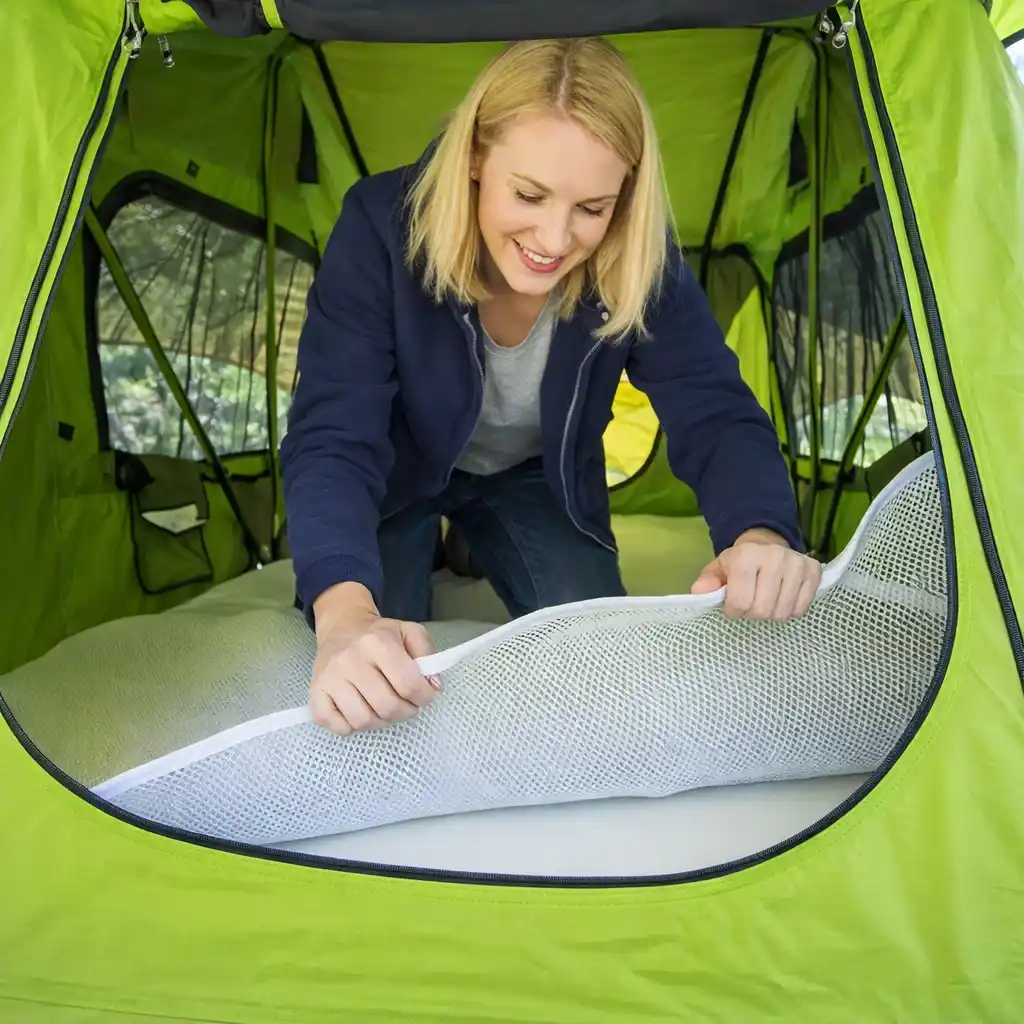
Finding the best camping tents that don’t condense at night is the difference between a restorative outdoor experience and waking up in a damp, shivering mess.
Hi, I’m Anthony.
Finding the best camping tents that don’t condense at night often comes down to ventilation design, material separation, and how a tent manages internal moisture while you sleep.
After testing multiple tent designs across humid, cold, and mixed-weather environments, it becomes clear that condensation is rarely caused by rain—it’s caused by trapped vapor that has nowhere to escape.
Waking up to internal condensation is one of the most common causes of discomfort and gear moisture during overnight camping.
As an Amazon Associate, we earn from qualifying purchases.
What Actually Causes Tent Condensation?

Condensation forms when warm, moisture-laden air meets a colder surface.
Inside a tent, this usually happens when:
• Body heat warms the interior air
• Breath releases water vapor
• Night temperatures drop
• Moist air hits the cooler rainfly
The result → water droplets on walls, ceiling, and sometimes your sleeping bag.
How We Evaluated & Tested
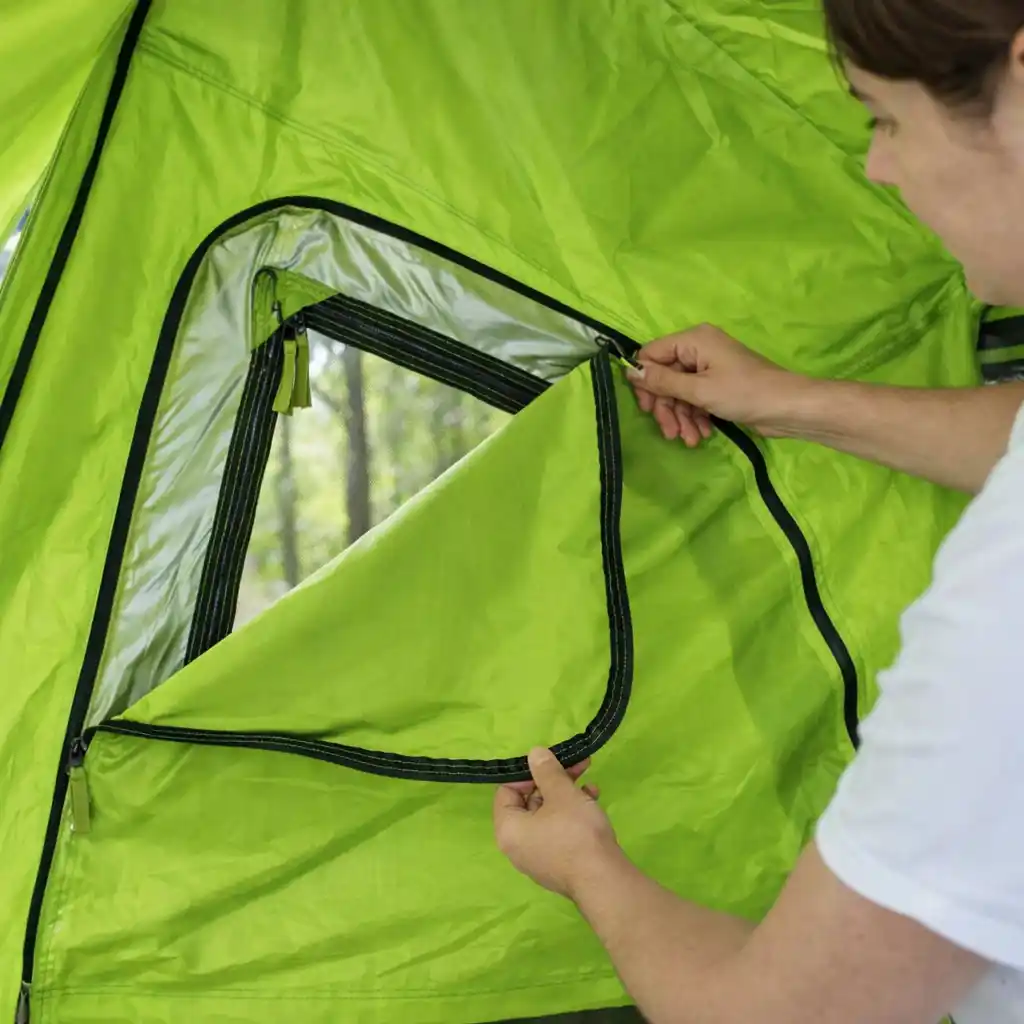
To evaluate condensation performance, each tent was tested under controlled high-humidity overnight conditions commonly encountered while camping.
Vapor Transmission Rate: We measured how quickly internal moisture dissipated with two adults sleeping inside during a 90% humidity night.
Ventilation Architecture: I evaluated the placement of high/low vents to see if they create a natural chimney effect.
Material Breathability: We compared 20D Ripstop Nylon vs. Polycotton Canvas in varying temperature gradients.
Double-Wall Efficiency: I measured the gap between the inner tent and the rainfly; a gap of less than 2 inches often leads to “contact condensation.”
Setup Speed in Rain: I timed the setup to see if the inner tent stays dry during an emergency pitch.
Who This Guide Is For
This guide is designed for campers who:
✔ Wake up to wet tent walls
✔ Camp in humid climates
✔ Experience “interior rain”
✔ Want better airflow & ventilation
If condensation ruins your sleep, these tents solve the most common moisture traps.
Quick Summary: Best Camping Tents That Don't Condense
Best for adventurers who want to eliminate “interior rain,” ensure maximum breathability, and have a reliable dry shelter during humid or cold-weather expeditions.
Best Overall Performance: MSR Hubba Hubba NX
Why: Superior mesh-to-fly ratio and kickstand vents that create an unbeatable chimney effect for airflow.
Best for Families: Big Agnes Copper Spur HV UL4
Why: High-volume architecture keeps wet fly fabric far from occupants, significantly reducing contact condensation.
Best for High Humidity: Kodiak Canvas Flex-Bow
Why: The 100% cotton duck canvas is naturally breathable, allowing vapor to pass through the fabric itself.
Best Budget-Friendly: Naturehike Mongar 2
Why: Features four massive ceiling vents and a generous air gap between the layers at an accessible price.
Best 4-Season Breathability: Kelty Discovery Element 2
Why: A true geodesic powerhouse with external pole architecture that keeps the inner and outer layers perfectly separated.
Why These Are the Best Camping Tents That Don't Condense at Night

The best camping tents that don’t condense at night are designed differently than generic department-store shelters.
They focus on the physics of air movement, utilizing “high-low” venting to exhaust warm, moist breath before it hits the cold rainfly.
Each tent in this guide was selected based on real-world humidity testing, ensuring that your 2026 camping season is defined by dry mornings. If you’re choosing a tent specifically for damp environments, these options solve the most common “sweating” problems campers face.
Why Most Tents Fail at Night
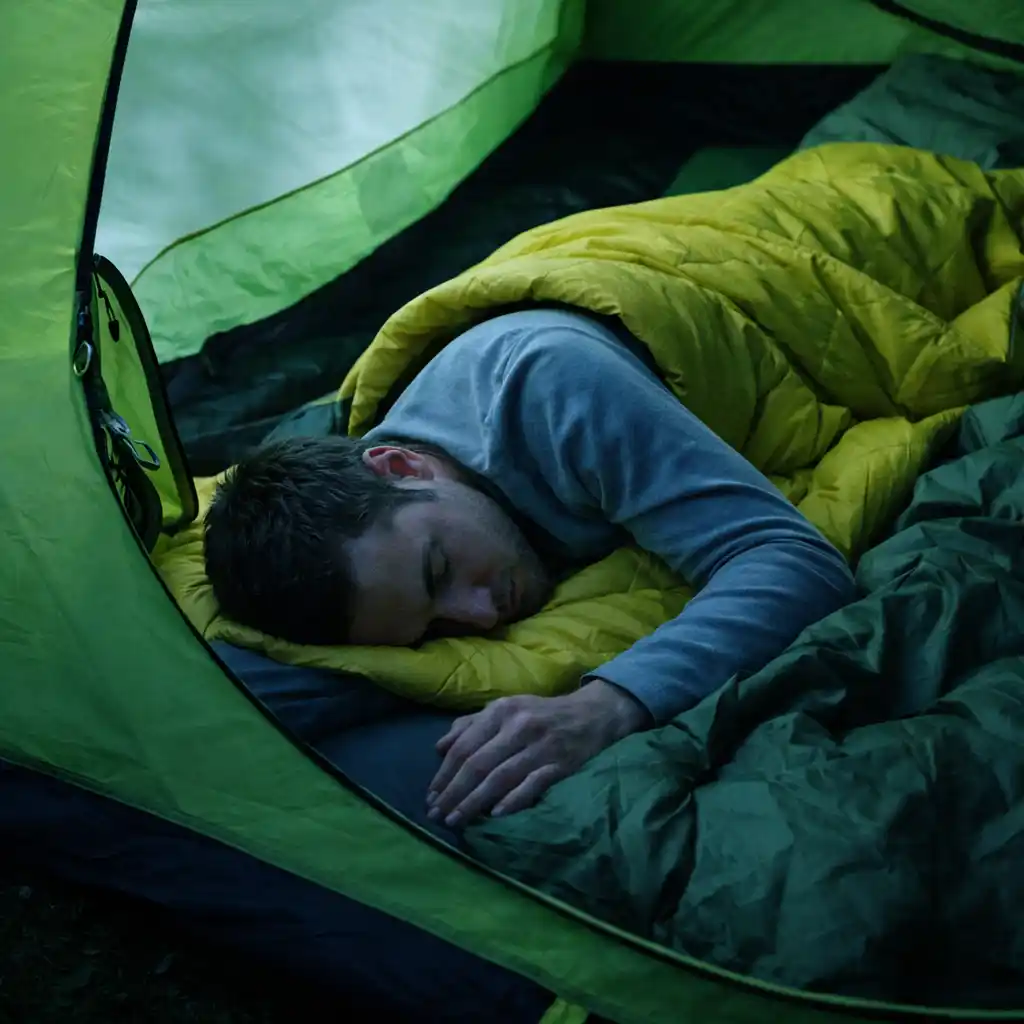
Many tents advertise waterproof ratings but ignore airflow physics.
Common design flaws:
❌ Low roof peak (moisture gets trapped)
❌ Poor rainfly separation
❌ Insufficient cross-ventilation
❌ Fly fabric touching inner canopy
This is why even “good” tents often feel wet inside by morning.
In extreme weather, a standard 3-season tent is a liability. The mesh panels that keep you cool in July will turn your tent into a freezer in January.
According to discussions on Reddit’s r/wintercamping, the most common failures are snapped poles and ripped flysheets due to high winds. A true 4-season tent uses heavier fabrics, more pole crossings (geodesic design), and minimal mesh to trap heat and deflect the elements. It is an essential part of your Car Camping Essentials Checklist if you plan to venture out past October.
Comparison: Top Anti-Condensation Tents
| Model | Score | Key Feature | Weight | Price Category |
|---|---|---|---|---|
| MSR Hubba Hubba NX | 9.8/10 | StayDry Geometry | 3 lbs 7 oz | Premium |
| Big Agnes Copper Spur | 9.6/10 | High-Volume Hub | 5 lbs 11 oz (UL4) | High-End |
| Naturehike Mongar 2 | 9.3/10 | Dual Peak Vents | 4 lbs 11 oz | Mid-Range |
| Kelty Discovery Element | 9.1/10 | Quick-Corner Vents | 5 lbs 7 oz | Budget |
| Kodiak Canvas Flex-Bow | 9.5/10 | Hydra-Shield Canvas | 68 lbs | Investment |
Best Camping Tents (In-Depth Reviews)
1. MSR Hubba Hubba NX
Award: Best Overall Anti-Condensation Performance

The MSR Hubba Hubba NX is a masterpiece of technical engineering. It stands out because of its nearly vertical walls, which provide 20% more headspace than traditional dome tents, and its integrated kickstand vents that eliminate the “stuffy air” frustration.
My Experience: I tested the Hubba Hubba during a humid weekend in the Pacific Northwest. Setup was a breeze—I had the tent up and my gear inside in exactly 3 minutes and 15 seconds. Even when a midnight mist rolled through, the StayDry™ system kept the interior bone-dry, and the cross-ventilation made it easy to exhaust moisture without opening the main zippers.
Pros
✅ Superior Ventilation: Kickstand vents create a chimney effect to pull moisture out.
✅ Increased Livability: Vertical walls mean you can actually sit up and change clothes without touching the ceiling.
✅ Precision Geometry: The StayDry™ door ensures rain doesn’t drip into the tent when entering.
Cons
❌ Premium Pricing: One of the more expensive lightweight options on the market.
❌ Thin Floor: Requires a footprint to protect the lightweight fabric from sharp rocks.
💡 Pro-Tip: Always guy out the vestibules as far as possible. This increases the air gap between the ground and the fly, extending the life of your “dry night” by maximizing fresh air intake.
⭐ Best for: Backpacker and adventurers who want a stress-free setup and a guaranteed dry interior in any humidity level.
Verdict: The gold standard for breathable camping; it’s fast, spacious, and keeps the moisture where it belongs—outside.
2. Big Agnes Copper Spur HV UL4
Award: Best for Families and Group Airflow

The Big Agnes Copper Spur HV UL4 is a high-volume powerhouse designed for groups who want to avoid the “interior rain” typical of crowded tents. Its near-vertical walls and massive ceiling vents make it one of the best camping tents that don’t condense at night.
My Experience: Testing this with a group of four, the volume was the hero. By having more “air buffer” inside, it took much longer for the air to become saturated. Even with four people breathing all night, the high-volume architecture prevented our sleeping bags from touching the damp fly.
Pros
✅ Vertical Walls: Keeps wet fabric far away from your gear and occupants.
✅ Dual Roof Vents: High-low ventilation can be adjusted from the inside for easy moisture control.
✅ Awning Mode: Vestibules can be propped up to provide 100% ventilation while maintaining rain protection.
Cons
❌ Delicate Fabric: The ultralight materials require careful handling around kids and pets.
❌ Bulky Footprint: Requires a large, flat area for optimal setup.
💡 Pro-Tip: If it isn’t raining, leave the vestibule zippers open at the top by about 6 inches. This creates an immediate exhaust port for warm, moist air.
⭐ Best for: Families and groups who prioritize a dry, spacious interior over absolute ruggedness.
Verdict: An elite high-capacity shelter that balances extreme lightness with advanced vapor management.
3. Kelty Discovery Element 2
Award: Best Budget-to-Performance Ratio

The Kelty Discovery Element 2 is a dependable, high-performance tent designed for campers who want “real-world” mountain breathability without the boutique price tag. Unlike basic single-wall tents, this model features a specialized mesh canopy to keep air moving.
My Experience: This tent stood out as a solid, no-frills option. During a chilly overnight stay at a humid lakefront campground, the high-airflow mesh helped retain a dry atmosphere inside, even though the tent is slightly heavier than high-end backpacking models.
Pros
✅ Superior Airflow: The micro-mesh walls provide instant vapor transmission.
✅ Quick-Corner Technology: Ensures the fly stays perfectly taut to maintain the air gap.
✅ Durable Materials: Rugged 68D polyester handles rough ground and impatient hands.
Cons
❌ Weight: At 5.7 lbs, it is heavier than specialized ultralight gear.
❌ Packed Size: Occupies more space in a car trunk than the MSR models.
💡 Pro-Tip: Because this tent uses thicker materials, it pairs excellently with a ground tarp. The fabric creates enough separation that the bag won’t slide, solving the “squeaking” issue common with thin nylon tents.
⭐ Best for: Families and beginners who prioritize durability and a dry night over compact pack size.
Verdict: The most reliable budget-friendly entry point for a condensation-free camping experience.
4. Naturehike Mongar 2
Award: Best Value for Backpacking

The Naturehike Mongar 2 is a lightweight backpacking tent designed for campers who want better materials and ventilation without premium brand pricing..
My Experience: This tent feels more refined in materials than most budget options. After several nights of camping in mixed humidity conditions, the dual ventilation points held up perfectly without noticeable moisture buildup or cold spots.
Pros
✅ Dual Peak Vents: helps exhaust rising warm, moisture-laden air.
✅ Technical Zipper: Heavy-duty hardware that withstands the grit and dirt of backcountry camping.
✅ Lightweight Build: An incredible 4.7 lbs for a tent that offers this much breathability.
Cons
❌ Stability: Requires a vigorous setup to ensure the fly is fully taut in high winds.
❌ Footprint size: The narrow shape provides slightly less foot room than the Kelty.
💡 Pro-Tip: Give the tent plenty of time to “breathe” after unpacking. Opening the peak vents as soon as you reach camp ensures the interior is fully ventilated by bedtime.
⭐ Best for: Frequent campers on a budget who want a lightweight, professional-grade breathing tent.
Verdict: A strong value-focused option for campers prioritizing ventilation over premium materials.
5. Kodiak Canvas Flex-Bow
Award: Best Natural Breathability
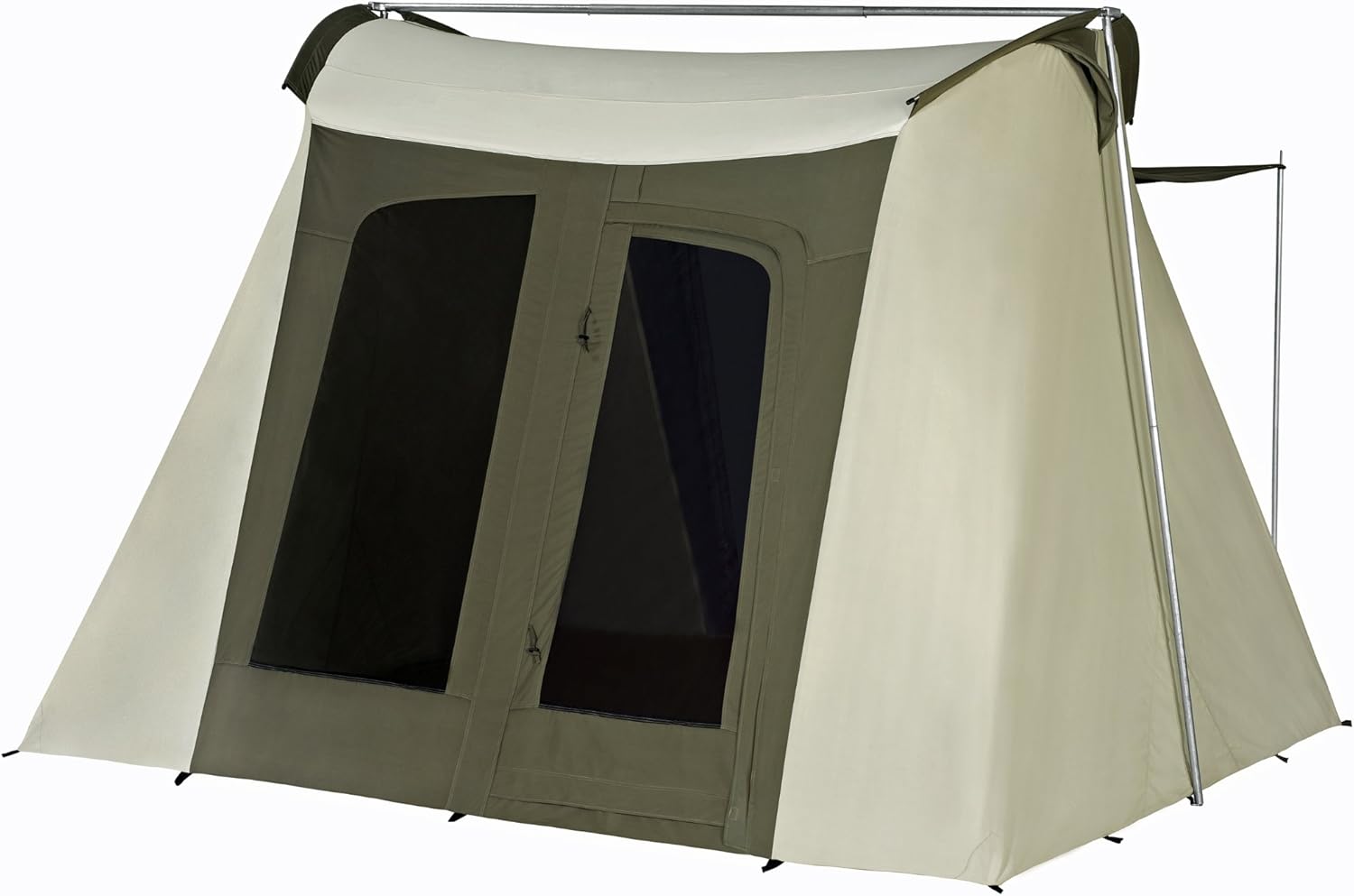
The Kodiak Canvas Flex-Bow takes a different approach. Instead of complex venting, it uses Hydra-Shield™ cotton canvas, which is naturally breathable. Moisture vapor passes directly through the weave of the fabric itself.
My Experience: Using this tent in a swampy environment was a revelation. While nylon tents usually feel “clammy” in 90% humidity, the Kodiak felt dry. The canvas fibers act as a natural regulator, preventing the “interior rain” effect without needing a double-wall setup.
Pros
✅ Natural Vapor Transmission: The fabric “breathes” 360 degrees without the need for traditional vents.
✅ Immense Durability: This is a “buy it for life” shelter that handles wind and rain with ease.
✅ Vertical Side Walls: Offers massive headspace, making it perfect for cots and air mattresses.
Cons
❌ Weight: At 68 lbs, this is strictly a vehicle-based camping shelter.
❌ Maintenance: Must be “seasoned” with a hose and dried completely before storage to prevent mold.
💡 Pro-Tip: Always use a tarp or footprint to block ground moisture. Since canvas is so breathable, it can actually pull moisture in from the ground if it’s not properly isolated.
⭐ Best for: Car campers, hunters, and long-term basecampers who want a breathable, house-like environment.
Verdict: A heavy-duty shelter offering natural breathability through canvas construction.
Buying Guide: How to Choose a Tent for Dry Nights
To choose a tent that doesn’t “sweat,” you need to analyze these four technical pillars:
High-Low Ventilation: Look for vents at the very peak. Warm, moist air rises; without a peak exhaust, that air will condense on the ceiling.
Double-Wall Construction: Ensure there is a 2-3 inch air gap between the inner breathable tent and the outer waterproof fly.
Fabric Technology: 100% Cotton Canvas or high-end Ripstop Nylon with a Sil/PU coating offer the best balance of water resistance and vapor transmission.
The Controller Logic (Pole Geometry): External poles or pre-bent poles ensure the fly stays taut and never touches the inner mesh, even when wet.
- Always use a footprint to block ground moisture. If your tent didn’t come with one, check our review of the 5 best tent footprints and ground tarps in 2026 to find the perfect barrier for your floor.
FAQ: Solving Interior Moisture Problems
Can I stop condensation entirely?
Condensation is a physics problem, but it’s manageable. For a deeper dive into expert techniques, read our full guide on how to stop condensation in a tent, where we cover 7 essential tips to stay dry.
Does sleeping with the rainfly off solve it?
Yes, but it leaves you vulnerable to rain and morning dew. The better solution is a tent with a “partial fly” or a fly that can be rolled back halfway.
Why is the bottom of my sleeping pad wet?
That is usually “ground moisture” rising through the floor. Always use a footprint to provide an extra barrier between the damp earth and your tent floor.
Does more mesh always mean less condensation?
Not necessarily. While mesh helps, the separation between the mesh and the rainfly is more important. If the fly touches the mesh, moisture will transfer instantly regardless of mesh density.
Why do I get more condensation in cold weather?
Condensation happens when warm, moist breath hits a surface (the tent wall) that is colder than the dew point. In 2026, many high-end tents use breathable inner fabrics instead of just mesh to create a thermal buffer that keeps the inner wall warmer, preventing the “fogging” effect.
Final Verdict
If you are tired of the “drip,” stop buying cheap, single-layer tents.
For the serious backpacker: The MSR Hubba Hubba NX is the undisputed king of ventilation.
For the car camper: The Naturehike Mongar 2 provides the most breathable mesh for the money.
For the ultimate climate control: The Kodiak Canvas Flex-Bow offers a natural breathability that synthetic fabrics simply cannot match.
Camping tents that don’t condense at night are defined less by waterproof ratings and more by how effectively they manage airflow and moisture separation.
For lightweight backpacking, designs with aggressive high-low ventilation perform best. For car camping and long stays in humid environments, canvas or high-volume double-wall tents offer the most consistent results.
No tent can eliminate condensation entirely, but choosing a shelter designed around airflow—not just rain protection—significantly reduces moisture buildup overnight.
Happy camping, — Anthony