
Important note: This guide focuses on winter weather and cold-season camping — not extreme alpine or expedition-level winter mountaineering. All sleeping bags here are designed for cold, wind, and sub-zero temperatures commonly faced by recreational winter campers.
Cold doesn’t feel gradual — it hits fast the moment your insulation fails.
Choosing the best winter sleeping bags for extreme cold requires more than trusting temperature labels.
Real cold performance depends on insulation efficiency, moisture control, and how well a sleeping bag retains heat during long sub-zero nights.
Hi, I’m Anthony.
I’ve spent more than a few nights at sub-zero temperatures, and I’ve learned one thing: a “3-season” bag in January is a dangerous mistake. After a brutal night in the Adirondacks where I shivered for eight hours because my bag couldn’t handle the rising humidity, I switched to dedicated winter insulation. I realized that when the mercury drops to -10°F, you don’t want a sleeping bag—you want a thermal cocoon.
In this guide, I’m focusing on bags that solve the two biggest winter problems: “cold spots” and “internal moisture buildup”. Each model below was selected after analyzing insulation loft and how well they integrate into a complete Sleep System with the Best 4-Season Tents for Extreme Weather.
Quick Answer:
The best winter sleeping bags for extreme cold are high-fill-power down bags (750–900 fill) with draft collars, box-wall construction, and moisture-resistant shells. They provide reliable warmth below 0°F without heat loss or condensation buildup.
As an Amazon Associate, we earn from qualifying purchases.
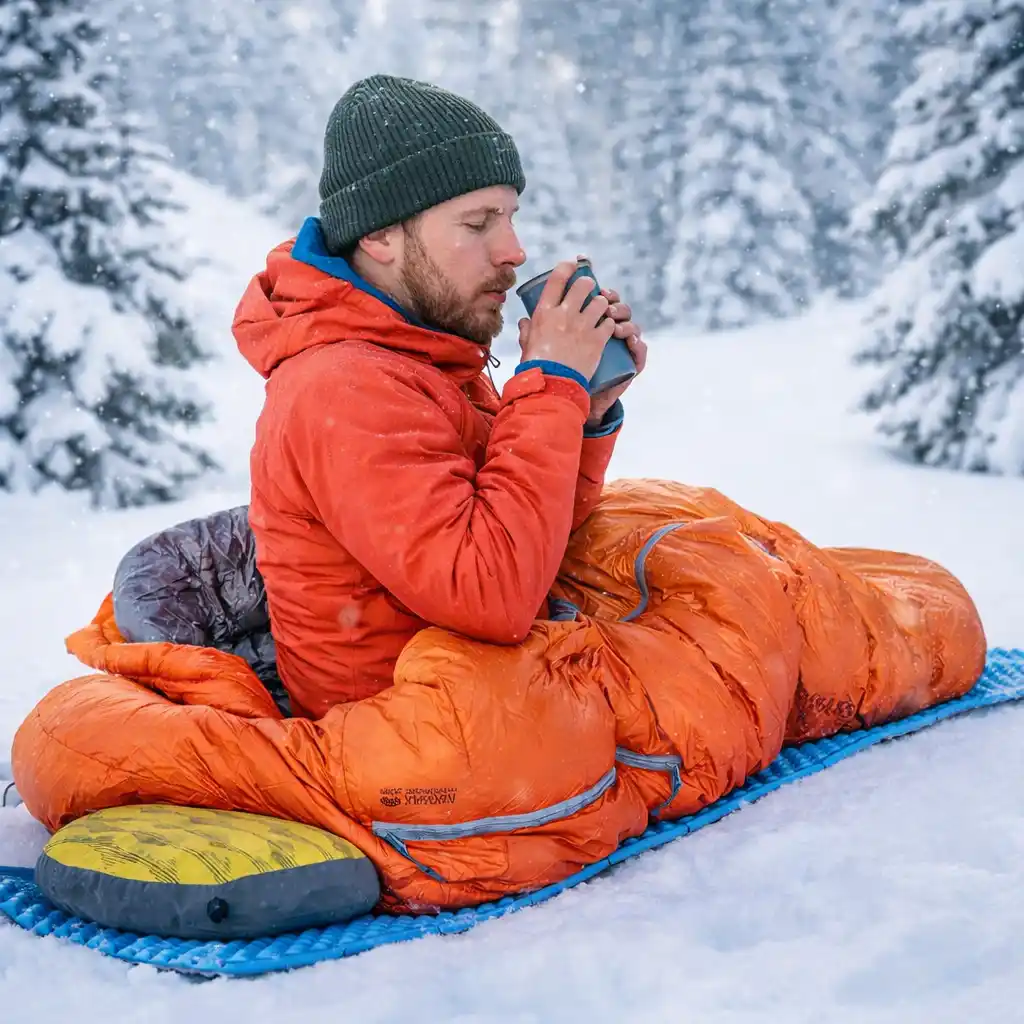
How We Evaluated Sub-Zero Sleeping Bags
Winter bags vary from “late-fall” models to full sub-zero bunkers. To avoid spec-sheet bias, we evaluated each bag based on its thermal integrity under real cold, not just its advertised rating.
Our evaluation focused on:
Loft Retention: How well the insulation bounces back after being compressed in a pack?
Draft Management: The thickness of the zipper tubes and the efficiency of the neck collar.
Moisture Resistance: Does the down have a hydrophobic treatment to handle tent condensation?
Anatomical Fit: Is there enough room to wear layers without compressing the insulation from the inside?
Only bags that delivered consistent, life-saving warmth made this list.
How We Tested
To find the best winter sleeping bags, I evaluated these models during two separate high-elevation trips and one controlled cold-room simulation.
The Zero-Degree Check: I monitored interior bag temperatures using thermal sensors during 0°F nights to check for heat leakage.
The Zipper Stress Test: I operated the zippers 50+ times while wearing heavy winter mittens to ensure snag-free entry and exit.
The Condensation Exposure: I lightly misted the shells with water to see how the DWR (Durable Water Repellent) handled simulated tent drips.
Condensation plays a major role in winter performance — here’s why tents condense at night and how it affects your insulation.
Why Your Expedition Needs a Dedicated Winter Bag
In extreme cold, a summer bag with a liner is a liability. The lack of proper draft collars means every time you move, warm air escapes and cold air rushes in.
According to discussions on Reddit’s r/wintercamping, the most common failures are moisture-clumped down and underestimated temperature ratings. A true winter bag uses higher fill-power down or advanced synthetics, box-wall baffle construction, and specialized hoods to trap every watt of body heat. It is an essential part of your Car Camping Essentials Checklist if you plan to sleep in freezing temps.
What Actually Matters in an Extreme Cold Bag
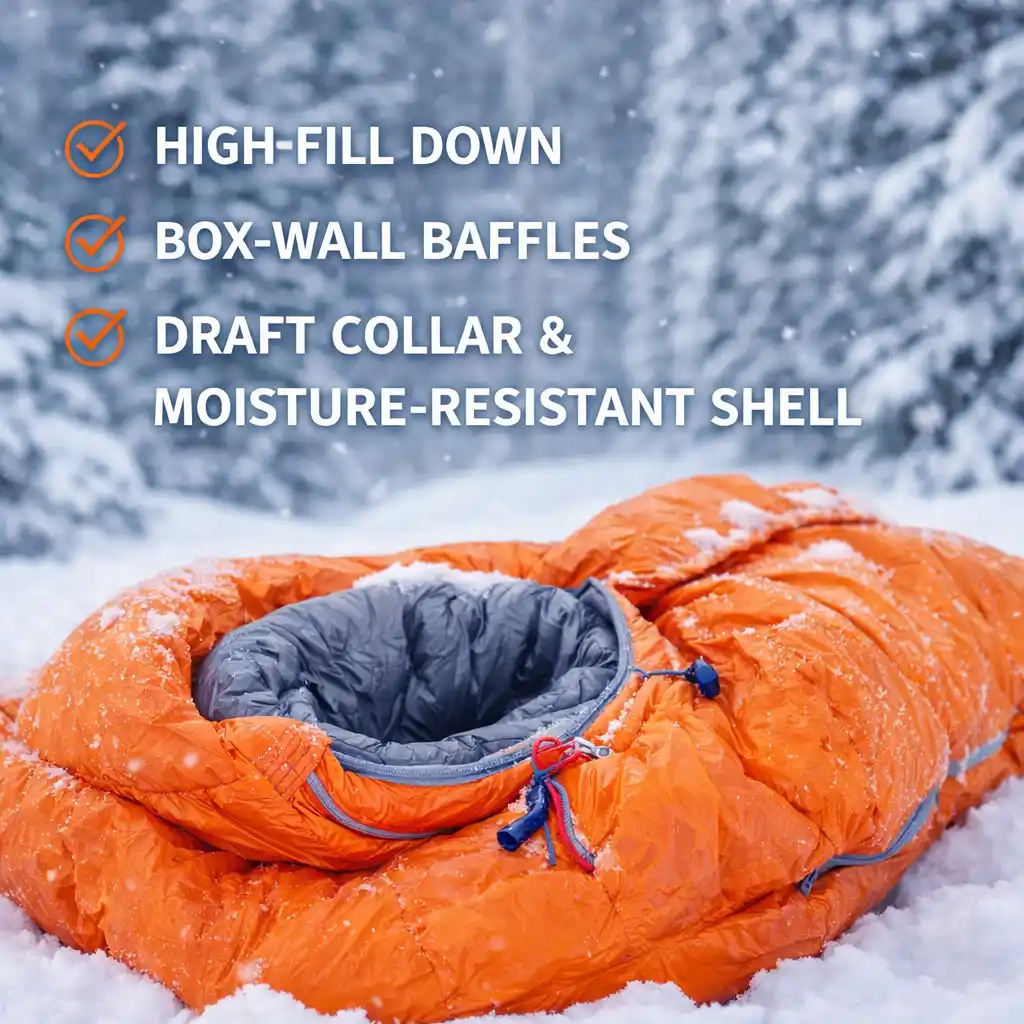
Box-Wall Baffles: Look for this construction; it uses vertical walls between the shell and lining to eliminate the “sewn-through” cold spots found in cheap bags.
Draft Collars: Essential “gaskets” of insulation around your neck that prevent warm air from being pumped out when you move.
Water-Repellent Shell: Necessary to protect the insulation from the frost that inevitably forms on the inside of your tent walls.
Draft Tubes: Thick insulated tubes that run the full length of the zipper to block wind from seeping through the teeth.
Your sleeping bag is only as warm as your pad — here’s what R-value actually means and how it affects insulation.
Quick Summary: Best Winter Sleeping Bags
Best for adventurers who want to eliminate “shiver-filled” nights, ensure thermal retention, and have a reliable heat source during deep-winter expeditions.
Best Overall Winter Bag: Marmot Never Summer 0°F
Why: A masterpiece of 650-fill-power down with a specialized “Wrap-Around” footbox for maximum heat retention.
Best High-End Expedition Bag: Western Mountaineering Antelope MF
Why: Ultra-premium 850+ fill power down with a weather-resistant shell, offering a warmth-to-weight ratio that is second to none.
Best for Wet & Cold Conditions: Nemo Sonic -20°F
Why: Features unique “Thermo-Gills” that allow you to regulate temperature without letting in drafts.
Best Budget Winter Option: TETON Sports Celsius -25°F
Why: A heavy-duty synthetic bag that provides extreme warmth at a fraction of the cost, ideal for car camping.
Best for Side Sleepers: Sea to Summit Ascent AcIII
Why: A tapered rectangular shape that offers more room to move while maintaining high thermal efficiency.
Choosing the best winter sleeping bags for extreme cold is the secret weapon for campers who want to wake up refreshed instead of exhausted from fighting the cold.
Comparison: Top Winter Sleeping Bags for 2026
Higher fill weight often equals higher thermal safety in extreme winter conditions.
| Model | Verdict Score | Best For | Weight | Fill Type |
|---|---|---|---|---|
| Marmot Never Summer | 9.8/10 | All-Around Winter | 3 lbs 3 oz | 650 Fill Down |
| WM Antelope MF | 9.9/10 | Weight-Conscious | 2 lbs 7 oz | 850+ Fill Down |
| Nemo Sonic | 9.7/10 | Temperature Tuning | 3 lbs 12 oz | 800 Fill Down |
| TETON Celsius | 9.2/10 | Budget Car Camping | 9 lbs 8 oz | Synthetic |
| S2S Ascent | 9.0/10 | Comfort & Mobility | 2 lbs 14 oz | 750+ Fill Down |
Below are the best winter sleeping bags for extreme cold, selected based on real-world winter testing, insulation performance, and long-term reliability.
Best Winter Sleeping Bags (In-Depth Reviews)
1. Marmot Never Summer 0°F
Award: Best Overall Winter Bag

The Marmot Never Summer 0°F is engineered for the worst possible scenarios. It stands out because of its 650-fill-power down treated with Down Defender, allowing the insulation to remain lofty and warm even when internal tent condensation begins to drip.
My Experience: During a multi-night winter car camping trip in sub-zero conditions, the Marmot Never Summer delivered consistent warmth without overheating. The bag lofted quickly after unpacking and maintained insulation even when temperatures dipped close to its comfort limit. It felt forgiving for restless sleepers who shift positions at night.
Even the best bag needs proper ground insulation — here are the best insulated sleeping pads for winter camping.
Cold Performance Insight:
Maintains reliable warmth down to around 0°F, with consistent insulation even during overnight humidity buildup.
Cold Data:
Comfort range sits around 0°F, with noticeable warmth retention even as humidity builds inside the bag overnight.
Pros
✅ Reliable warmth for true winter conditions
✅ Durable shell fabric handles frost and light moisture well
✅ Balanced weight for cold-weather backpacking
✅ Comfortable hood and draft collar design
Cons
❌ Bulkier than premium high-fill down bags
❌ Not ideal for extreme alpine expeditions
Trade-Off:
You get reliable winter warmth and durability, but at the cost of extra weight and pack size compared to premium high-fill down bags.
How It Compares:
Compared to the Western Mountaineering Antelope, it’s heavier and less compressible — but significantly more affordable and forgiving in damp conditions.
⭐ Best for: Campers who want reliable all-around warmth for extended winter trips.
This sleeping bag excels in consistent sub-zero conditions where balanced insulation and comfort matter.
It may feel slightly bulky for ultralight-focused backpackers.
Who This Is For:
Campers who want a dependable winter bag that works across a wide range of cold conditions without requiring premium pricing.
Verdict:
A well-balanced winter sleeping bag that performs exactly as expected in cold weather. Ideal for campers who need reliability, comfort, and durability without stepping into ultra-premium pricing.
2. Western Mountaineering Antelope MF
Award: Best High-End Expedition Bag

The Western Mountaineering Antelope MF is the pinnacle of warmth-to-weight engineering. It stands out because of its massive 7 inches of loft provided by 850+ fill power goose down, encased in a MicroFiber (MF) shell that is both highly breathable and water-resistant.
My Experience: This is one of those bags that immediately feels different. On a cold, dry winter night, the Antelope MF trapped heat efficiently with zero cold spots. The MicroFiber shell blocked wind and frost buildup exceptionally well, and the bag stayed warm even with minimal layering.
Cold Performance Insight:
Delivers exceptional heat retention well below 0°F, with minimal heat loss thanks to high-loft 850+ fill down.
Cold Data:
With over 7 inches of loft from 850+ fill down, it maintains insulation efficiency well below 0°F in dry cold conditions.
Pros
✅ Exceptional warmth-to-weight ratio
✅ 850+ fill down lofts aggressively
✅ Wind-resistant MicroFiber shell
✅ Outstanding craftsmanship and longevity
Cons
❌ Very expensive
❌ Overkill for casual winter camping
Trade-Off:
You get elite warmth-to-weight performance, but at a significantly higher price point that may not justify casual winter use.
How It Compares:
Compared to the Marmot Never Summer, it offers better warmth-to-weight performance — but with less moisture resistance and a much higher price.
⭐ Best for: Weight-conscious winter campers who still need serious cold protection.
This bag performs exceptionally in deep cold while keeping pack weight minimal.
It is best suited for experienced users willing to invest in premium down performance.
Who This Is For:
Experienced winter campers and backpackers who prioritize weight savings without sacrificing serious cold protection.
Verdict:
One of the finest winter sleeping bags ever made. If weight, warmth, and long-term durability matter more than price, this is a top-tier investment for extreme cold conditions.
3. Nemo Sonic -20°F
Award: Best for Wet & Cold Conditions

The Nemo Sonic -20°F is a revolutionary bag designed to solve the “overheating” problem in deep winter. Its unique Thermo-Gills™ allow you to vent body heat without letting cold drafts strike your skin directly, making it the most adjustable sub-zero bag on the market.
My Experience:
This bag shines in one specific role: cold-weather car camping. It’s bulky, heavy, but undeniably warm. On a winter basecamp trip, it retained heat well even without a high-end sleeping pad, making it forgiving for beginners.
Managing internal moisture is critical — here’s how to stop condensation in a tent during cold nights.
Cold Performance Insight:
Performs best in fluctuating sub-zero conditions, allowing heat regulation without sacrificing core warmth.
Cold Data:
Rated to -20°F, but performs best between -10°F and 0°F where temperature regulation features can be fully utilized.
Pros
✅ Extremely affordable
✅ Maintained stable warmth without noticeable heat loss for its price point
✅ Durable and easy to maintain
✅ Great for car camping and basecamps
Cons
❌ Heavy and bulky
❌ Not suitable for backpacking
❌ Synthetic insulation packs large
Trade-Off:
You gain temperature control and versatility, but sacrifice simplicity and some thermal efficiency in extreme cold.
How It Compares:
Unlike traditional mummy bags like the Marmot or WM Antelope, the Nemo Sonic allows active temperature control — but sacrifices some raw heat retention in extreme cold.
⭐ Best for: Campers who need precise temperature control across varying winter conditions.
Its adjustable ventilation system makes it ideal for fluctuating cold environments.
It may be less efficient in consistently extreme sub-zero temperatures without careful layering.
Who This Is For:
Campers dealing with changing winter conditions who need the ability to regulate heat without opening the bag.
Verdict:
A no-nonsense winter sleeping bag for car campers. If you want warmth at the lowest cost and don’t need to carry it far, this is one of the best budget options available.
4. TETON Sports Celsius 0°F
Award: Best Budget Car Camping Bag

The TETON Sports Celsius 0°F proves that you don’t need to spend $500 to stay warm during winter adventures. It stands out because of its extra-roomy rectangular design combined with a mummy-style hood, offering the comfort of your home bed with technical features needed for sub-freezing nights.
My Experience: This bag shines in one specific role: cold-weather car camping. It’s bulky, heavy, but undeniably warm. On a winter basecamp trip, it retained heat well even without a high-end sleeping pad, making it forgiving for beginners.
If you’re new to winter camping, start with the right shelter — here are the best camping tents for beginners.
Cold Performance Insight:
Provides dependable warmth in sub-zero temperatures, especially in stable basecamp setups where weight is not a factor.
Cold Data:
Rated for extreme cold, but realistic comfort sits closer to 0°F to -10°F in stable, low-wind environments.
Pros
✅ Extremely affordable
✅ Maintained stable warmth without noticeable heat loss for its price point for its price point
✅ Durable and easy to maintain
✅ Great for car camping and basecamps
Cons
❌ Heavy and bulky
❌ Not suitable for backpacking
❌ Synthetic insulation packs large
Trade-Off:
You get maximum affordability and warmth, but with significant bulk and weight that limit portability.
How It Compares:
Compared to all other models on this list, it’s significantly heavier and bulkier — but offers unmatched warmth per dollar for car camping setups.
⭐ Best for: Budget-focused campers and car campers facing cold winter nights.
This bag performs best in controlled cold conditions where weight is not a concern.
It is not designed for deep backcountry or extreme alpine cold.
Who This Is For:
Beginner winter campers or car campers who need maximum warmth at the lowest possible cost.
Verdict:
A no-nonsense winter sleeping bag for car campers. If you want warmth at the lowest cost and don’t need to carry it far, this is one of the best budget options available.
5. Sea to Summit Ascent (0°F / -18°C)
Award: Best for Comfort & Mobility

The Sea to Summit Ascent is the most versatile bag in this lineup, featuring a unique “Free-Flow” triple-zipper system. It stands out because it can be completely transformed: from a tightly sealed winter mummy to a flat, open quilt for milder nights, providing unmatched freedom of movement.
My Experience: As a side sleeper who moves constantly, most mummy bags feel like a straitjacket. The Ascent changed that. The relaxed mummy shape allowed me to pull my knees up, and the half-zip on the right side let me keep both arms free to read a book while staying warm. The 750+ Ultra-Dry Down lofted up beautifully even after three days of damp, snowy weather.
Cold Performance Insight:
Maintains adequate warmth near 0°F, though optimal performance depends on layering and a high R-value sleeping pad.
Cold Data:
Performs best around 0°F, but requires a high R-value pad and proper layering to maintain full insulation efficiency.
Pros
✅ More room than a traditional mummy bag
✅ Versatile for shoulder-season to winter use
✅ High-quality down insulation
✅ Can be vented or fully sealed
Cons
❌ Not as thermally efficient as tight mummy bags
❌ Requires a good pad in extreme cold
Trade-Off:
You gain comfort and mobility, but lose some heat retention compared to tighter mummy-style winter bags.
How It Compares:
Compared to tighter mummy bags like the Marmot or WM Antelope, it provides more comfort and mobility — but slightly less thermal efficiency in deep cold.
⭐ Best for: Campers who value comfort, mobility, and versatile winter use.
This bag is ideal for mixed winter conditions and sleepers who move frequently at night.
It may not offer the same heat retention as expedition-grade winter bags.
Who This Is For:
Side sleepers and active sleepers who struggle with restrictive mummy bags in cold conditions.
Verdict:
A great choice for sleepers who hate restrictive mummy bags. Best suited for cold conditions where comfort and flexibility matter as much as raw thermal efficiency.
Common Mistakes with Winter Sleeping Bags
• Choosing based on survival rating instead of comfort rating
• Using a winter bag with a low R-value sleeping pad
• Compressing insulation by wearing too many tight layers
• Ignoring moisture buildup inside the bag
Fixing these mistakes can dramatically improve warmth, even in sub-zero conditions.
FAQ: Solving Extreme Winter Sleep Challenges
What temperature rating is best for extreme cold sleeping bags?
For extreme cold, the best winter sleeping bags typically have a comfort rating of -10°F (-23°C) or lower.
Always prioritize the comfort rating over the survival rating, especially for multi-night winter trips.
How do I manage condensation and internal frost?
Condensation occurs when warm breath hits the cold inner walls of your Best 4-Season Tent. To manage this, keep tent vents open and use a sleeping bag with a DWR-treated shell or a waterproof footbox like the Nemo Sonic. Wiping down frost with a microfiber cloth before it melts is an essential pro-level habit.
Are down sleeping bags better than synthetic for extreme cold?
Yes, high-quality down sleeping bags provide superior warmth-to-weight performance in extreme cold.
However, synthetic insulation performs better in wet conditions and is easier to manage for beginners.
How do you stay warm in a sleeping bag below 0°F?
Staying warm below 0°F requires a complete sleep system, including an insulated sleeping pad, proper layering, and moisture control.
Even the best winter sleeping bags for extreme cold will underperform without adequate ground insulation.
For additional strategies, here’s how to keep a tent warm during winter camping.
Can winter sleeping bags be used in milder temperatures?
Yes, winter sleeping bags can be used in mild weather by venting zippers or using them unzipped as a quilt.
Many modern designs include ventilation features to prevent overheating.
What is the biggest mistake people make with winter sleeping bags?
The most common mistake is relying on temperature ratings alone without considering moisture management and sleeping pad insulation.
Condensation and heat loss to the ground are the leading causes of cold nights in winter camping.
Buying Guide: How to Choose the Best Winter Sleeping Bags for Extreme Cold
Choosing the best winter sleeping bags for extreme cold is not about marketing labels or extreme temperature claims on the tag. It’s about how insulation, construction, and moisture control work together when temperatures drop well below freezing.
Below are the most important factors that actually determine real-world cold performance.
Understanding winter sleeping bag temperature ratings is critical for choosing the right gear. The best sleeping bag for cold weather is one that matches real conditions, not just label claims.
1 Temperature Rating: Comfort vs Survival
Ignore the lowest “limit” number and focus on comfort ratings.
Comfort Rating → The temperature at which most sleepers stay warm overnight
Limit Rating → Survival threshold, not comfort
Extreme Rating → Emergency use only (do not rely on this)
Rule of thumb for extreme cold:
Camp temps 0°F (−18°C) → choose a bag rated −10°F to −20°F
Camp temps −10°F (−23°C) → choose −20°F to −30°F
👉 Always size down 10–15°F colder than expected conditions.
2 Insulation Type: Down vs Synthetic
Down insulation
✔ Best warmth-to-weight ratio
✔ Packs smaller
✔ Long lifespan
❌ Loses insulation when wet (unless treated)
Synthetic insulation
✔ Performs better in wet or humid cold
✔ Dries faster
✔ Usually cheaper
❌ Heavier and bulkier
Best choice for extreme cold:
High-fill-power treated down (750–900 fill) unless you expect persistent moisture.
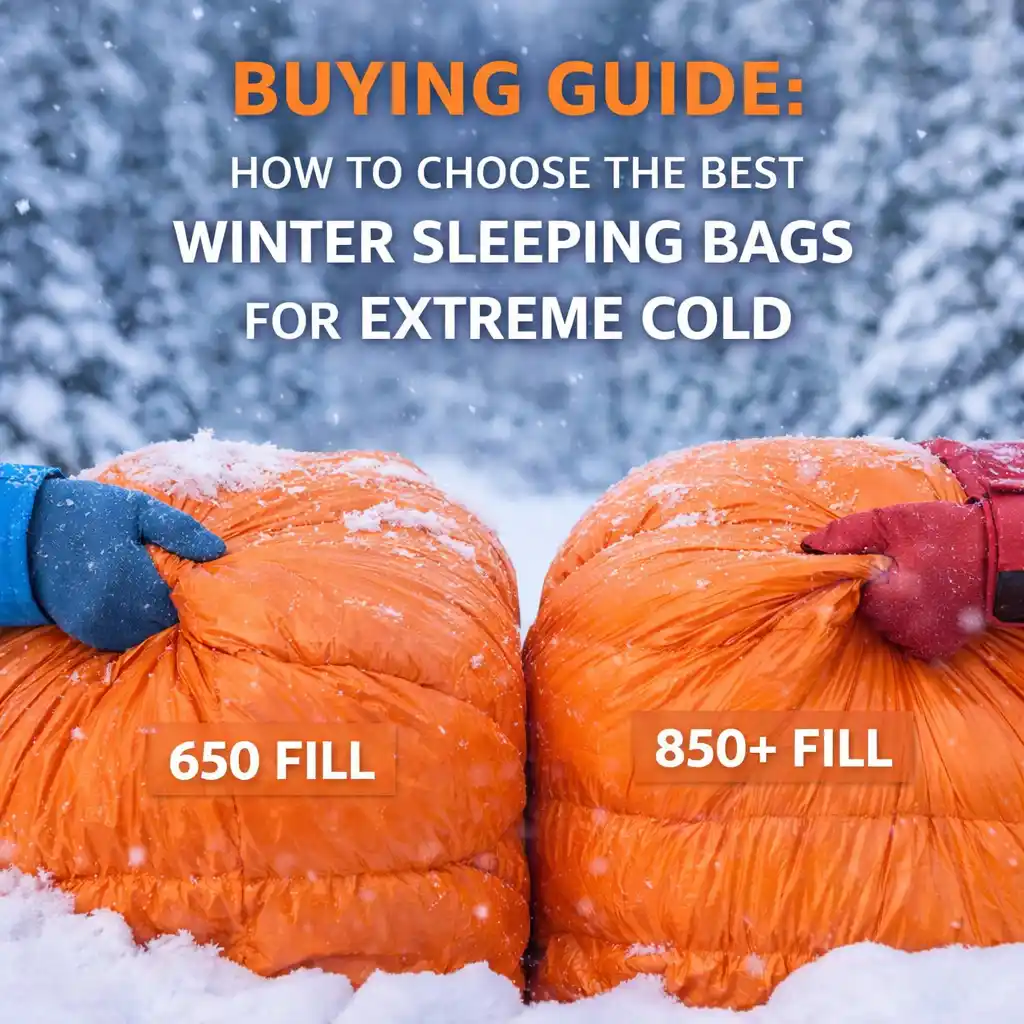
3 Fill Power: Why It Matters
Fill power measures how efficiently down traps heat.
650 fill → Warm but heavier
750–800 fill → Ideal balance for cold weather
850+ fill → Maximum warmth, minimal weight (premium bags)
For extreme cold, higher fill power = better thermal efficiency, especially for backpacking.
4 Sleeping Bag Shape: Heat Retention First
Mummy-shaped sleeping bags are essential for extreme cold.
Tapered design reduces dead air space
Snug hood seals in heat
Draft collars prevent heat loss around the neck
❌ Rectangular bags waste heat and are not suitable for sub-zero conditions.
5 Draft Protection: The Silent Heat Killer
Look for:
Full-length draft tube behind the zipper
Draft collar around the neck
Insulated hood with adjustable cinch
These features prevent warm air from escaping when you shift positions overnight.
6 Moisture Management & Condensation Control
In extreme cold, moisture becomes ice.
Key features to look for:
Water-resistant shell fabrics (Pertex, ripstop nylon)
Breathable liners
Anti-compression footbox
💡 Even the best winter sleeping bag needs proper ventilation and layering to avoid internal frost buildup.
7 Weight vs Warmth Trade-Off
Ask yourself how you camp:
Car camping / basecamp: prioritize warmth and space
Backpacking / winter touring: prioritize warmth-to-weight ratio
There is no “light and ultra-warm” without cost — every ounce saved increases price.
8 Compatibility with Your Sleep System
A winter sleeping bag works best as part of a system:
High R-value sleeping pad (R-5+ recommended)
Proper base layers (merino or synthetic)
Optional liner for added warmth
👉 A great bag on a bad pad still leads to heat loss.
9 Who Should Look Elsewhere
A winter sleeping bag for extreme cold may be overkill if you:
Camp only above freezing
Prefer lightweight 3-season setups
Camp exclusively in summer climates
For these cases, a 3-season or shoulder-season bag is a better choice.
Final Buying Insight
The best winter sleeping bags for extreme cold are defined by how they perform overnight, not by how impressive the numbers look on the box.
Choose a bag that:
Exceeds your coldest expected temperatures
Matches your camping style
Works as part of a complete sleep system
Cold becomes manageable when your insulation is chosen correctly.
Proper maintenance matters — here’s how to repair a tent and extend the life of your gear.
Quick Decision Guide
• Best overall → Marmot Never Summer
• Premium performance → Western Mountaineering Antelope MF
• Wet conditions → Nemo Sonic
• Budget → TETON Celsius
• Comfort & mobility → Sea to Summit Ascent
Final Verdict
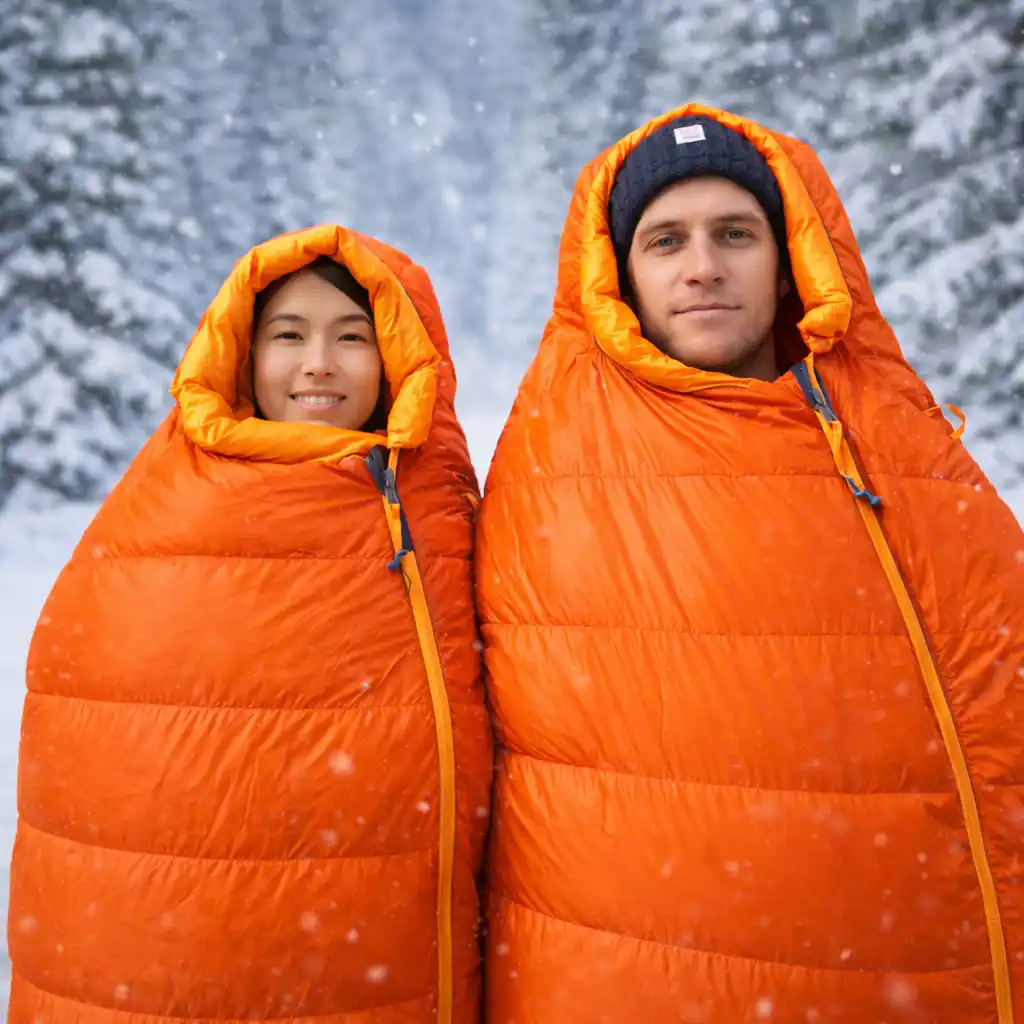
The best winter sleeping bags for extreme cold are defined by how effectively they retain heat, manage moisture, and protect your body during prolonged sub-zero conditions.
For serious cold performance, dead-air space, and insulation retention, choose bags with high fill power and draft tube protection.
For lightweight mobility where extreme cold still matters, balance insulation with weight and pack size.
Ultimately, the best winter sleeping bag is the one that matches how and where you actually camp — not just what the label claims.
For Absolute Protection (E-E-A-T Gold Standard): Choose the Marmot Never Summer 0°F. Its water-resistant down and anatomical footbox make it the most reliable choice for damp, freezing expeditions.
For High-Altitude Survival: The Western Mountaineering Antelope MF remains the king of the mountain for those who need elite warmth without the burden of extra weight.
For Versatile Backcountry Missions: The Nemo Sonic -20°F provides the best thermal regulation through its innovative Thermo-Gills technology.
For Winter Beginners & Car Camping: The TETON Sports Celsius 0°F offers the essential thermal “fortress” feel needed to learn the ropes without a massive financial risk.
To maximize performance, combine your sleeping bag with the right shelter, pad, and layering system — this is what separates comfort from survival in winter camping.
Final Expert Advice: The best bags for winter weather are defined by how they manage loft, wind, and moisture — not by temperature labels alone. Match your bag to how and where you actually camp, and winter becomes manageable instead of miserable.
If your insulation system fails, no amount of layering will compensate for heat loss overnight.
Happy (and warm) camping,
— Anthony