
Best camping tents for beginners make your first trip easier, safer, and far more enjoyable. A bad tent can ruin camping forever — a good one makes you want to go again next weekend.
Hi, I’m Anthony.
I’ve spent years testing camping gear in real-world conditions — from calm summer trips to nights with heavy rain, wind, and condensation challenges.
This guide focuses specifically on first-time campers, not experienced backpackers, because beginners face completely different problems when choosing their first tent.
I still remember my first camping trip. The tent took 45 minutes to set up, the rainfly was backwards, and I slept in a damp corner all night. That experience taught me something important: first-time campers need forgiving tents, not “advanced” gear.
In this guide, I break down the best camping tents for beginners — models that are easy to set up, comfortable, and reliable in real-world conditions.
As an Amazon Associate, we earn from qualifying purchases.
🧪 How We Tested Beginner Camping Tents
To choose the best camping tents for beginners, I focused on first-time camper mistakes rather than expert features.
Each tent was evaluated based on:
Setup difficulty (solo & first-time use)
Weather protection in rain and wind
Interior comfort and headroom
Durability vs. price
Long-term beginner reviews (not sponsored hype)
Only tents that consistently performed well for first-time campers earned a spot on this list.
🏕️ Why Beginner Camping Tents Are Different
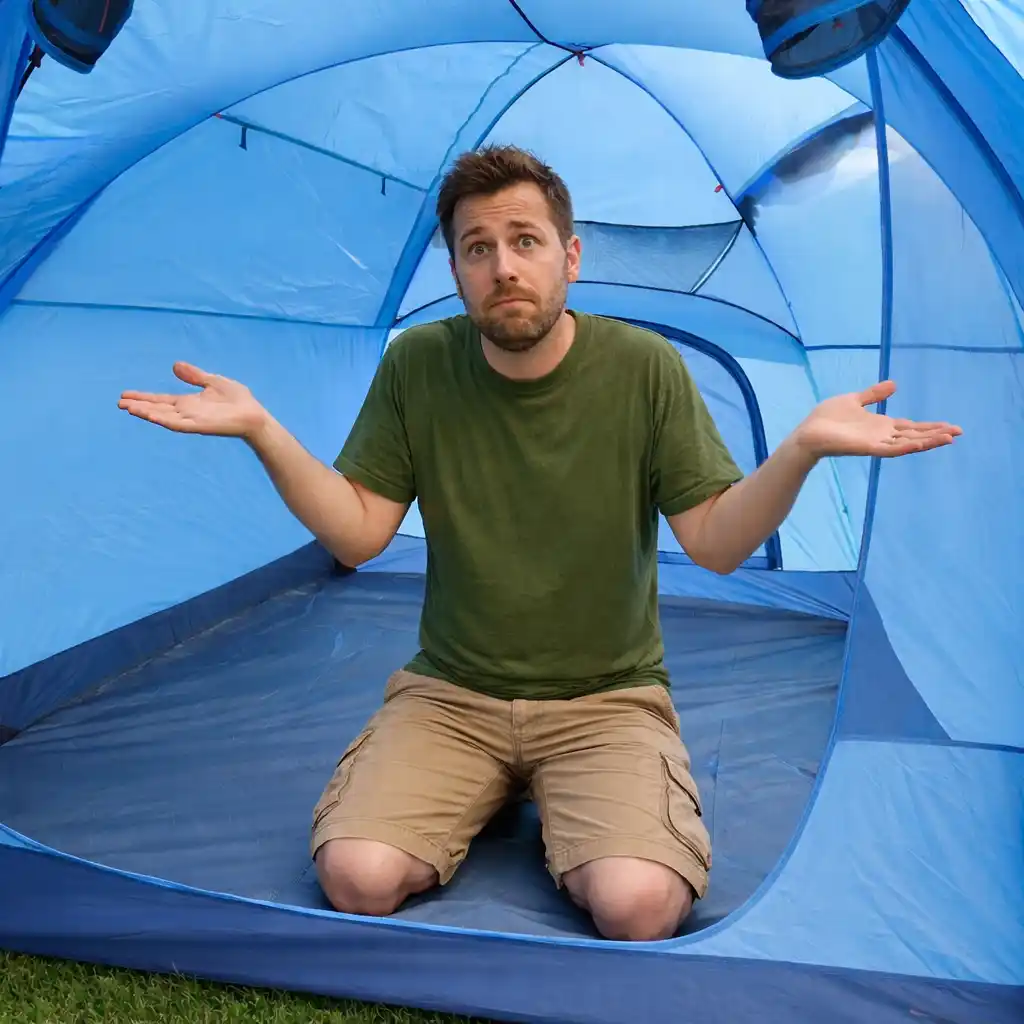
Beginner campers struggle with tents for a simple reason: most tents are designed for people who already know what they’re doing.
First-time campers often underestimate setup difficulty, overestimate their tolerance for tight spaces, and don’t realize how small mistakes — like poor staking or uneven ground — can turn into a frustrating first night.
Beginner-friendly tents are different. They prioritize forgiveness over performance, simple pole layouts over advanced geometry, and interior space over compact packing. These design choices don’t look impressive on paper, but they make the biggest difference during a first camping trip.
🧭 What Actually Makes a Tent Beginner-Friendly?
Not all “easy” tents are truly beginner-friendly. Based on real first-time camping mistakes, here’s what matters most:
✅ Simple pole structure – Fewer poles = fewer setup errors
✅ Forgiving design – Still works if staking isn’t perfect
✅ Clear rainfly orientation – Prevents incorrect setup
✅ Good interior space – Reduces claustrophobic feeling
✅ Weather tolerance – Handles unexpected rain & wind
Beginner tents are designed to reduce frustration, not maximize technical performance.
⛺ How Hard Is Tent Setup for Beginners?
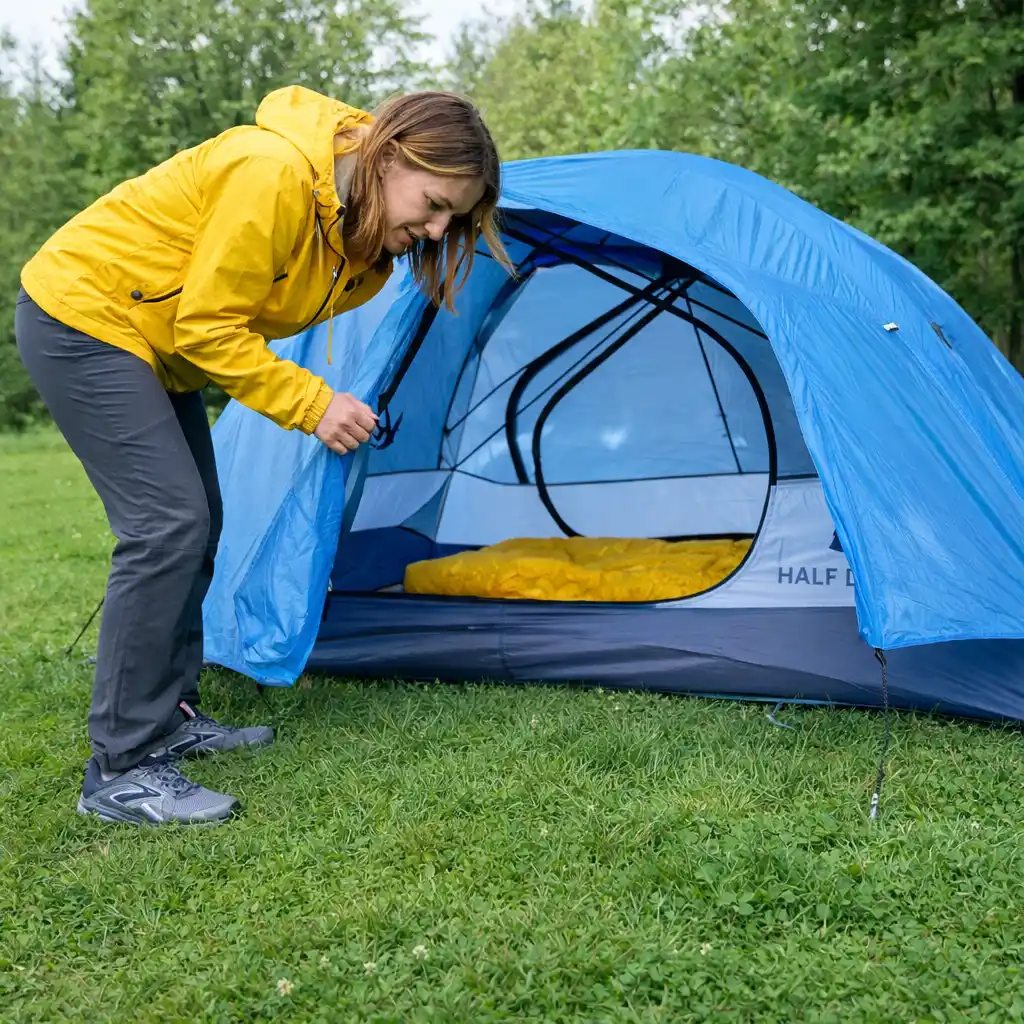
For most beginners, tent setup is harder than expected.
Even “easy setup” tents can become frustrating if pole orientation, rainfly placement, or staking order is unclear. This is why beginner-friendly tents focus on intuitive structures that reduce the chance of critical mistakes.
🏆 Quick Summary: Best Camping Tents for Beginners
Best for first-time campers who want an easy setup, forgiving design, and enough space to avoid feeling overwhelmed on their first trip.
Best Overall Beginner Tent:
CORE Instant Cabin
Why: Fast setup and upright structure reduce stress and prevent common beginner mistakes.
Best Budget Beginner Tent:
Coleman Sundome
Why: Simple pole layout and forgiving design make it easy to set up correctly the first time.
Best Easiest Setup Tent:
Gazelle T4
Why: Hub-style design eliminates nearly all setup errors, even for complete beginners.
📊 Beginner Tent Comparison (Quick View)
Choosing your first tent is easier when you can quickly compare the key differences.
| Tent | Setup Ease | Setup Time | Weight | Capacity | Weather | Best For |
|---|---|---|---|---|---|---|
| CORE Instant Cabin | ★★★★★ | ~2 min | 17.4 lbs | 6-Person | ★★★★☆ | Stress-free setup |
| Coleman Sundome | ★★★★☆ | ~10 min | 7.5 lbs | 2–4 Person | ★★★☆☆ | Budget beginners |
| Coleman WeatherMaster 6 | ★★★☆☆ | ~15 min | 18 lbs | 6-Person | ★★★★★ | Families |
| Gazelle T4 Hub Tent | ★★★★★ | ~90 sec | 30 lbs | 4-Person | ★★★★★ | Fastest setup |
| Browning Big Horn | ★★★☆☆ | ~12 min | 23 lbs | 5–8 Person | ★★★★★ | Bad weather |
⭐ Ratings reflect beginner usability, not expedition-level performance.
This quick comparison helps you narrow down your options before diving into the full reviews below.
🎯 Who Should Buy a Beginner Camping Tent?
This guide is for you if you:
Are camping for the first time
Want a stress-free setup
Camp with family or kids
Prefer comfort over ultralight gear
Camp mostly from a car or campground
If you’re backpacking long distances, beginner tents may be heavier than you need.
🚫 Who This Guide Is NOT For
This guide may not be ideal if you:
❌ Plan long-distance backpacking trips
❌ Need an ultralight tent
❌ Camp in extreme alpine conditions
❌ Already have advanced tent setup experience
Beginner-friendly tents prioritize ease, comfort, and forgiveness over technical minimalism.
🏕️ Best Camping Tents for Beginners (Full Reviews)
1. CORE 6 Person Instant Cabin Tent
Award: Best Overall Camping Tent for Beginners
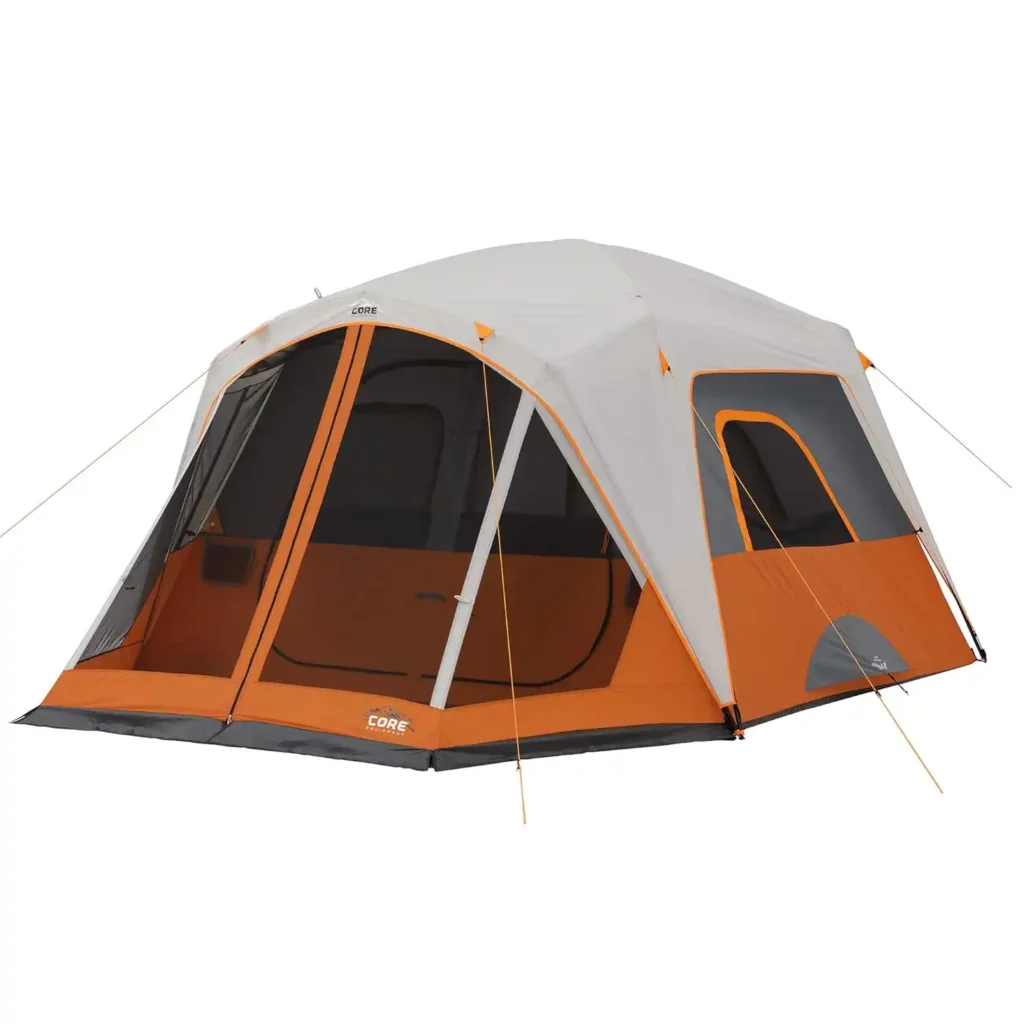
The CORE Instant Cabin is one of the most beginner-friendly tents ever made. Pre-attached poles allow true instant setup in about two minutes — even if you’ve never pitched a tent before.
The straight walls provide excellent headroom, making it easy to stand, change clothes, and move around without frustration.
This is the type of tent beginners appreciate most on their very first setup. Pre-attached poles remove the guesswork, and the tent stands upright before frustration sets in. For many first-time campers, this alone prevents a stressful start to the trip.
Pros ✅
Extremely easy setup
Tall cabin-style interior
Good ventilation
Great for car camping
Cons ❌
Bulky when packed
Not ideal for very strong wind
Verdict:
If you’re new to camping and want the least amount of stress, this is the safest choice.
2. Coleman Sundome
Award: Best Budget Beginner Camping Tent
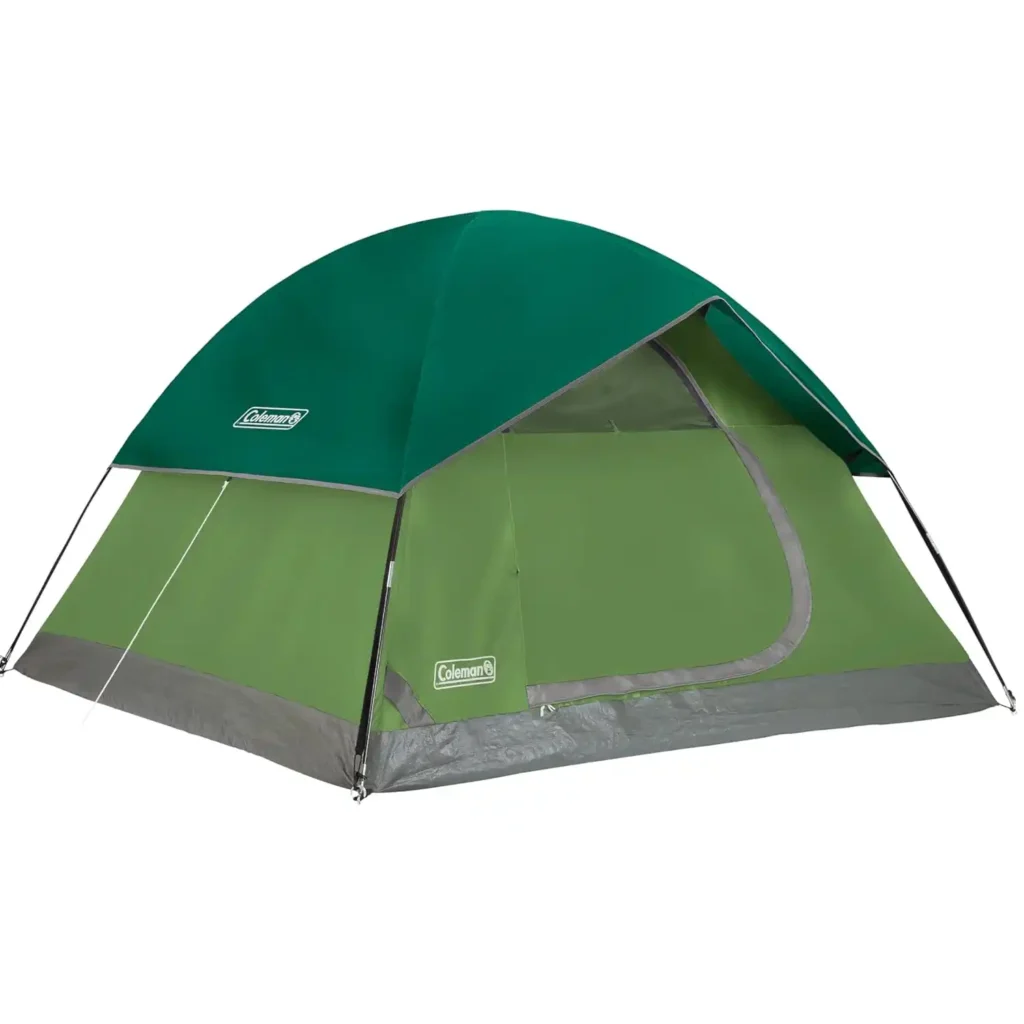
The Coleman Sundome has been a beginner favorite for decades. Its simple pole design is easy to understand, and Coleman’s WeatherTec system helps keep rain out.
It’s compact, affordable, and forgiving — perfect for first-time solo campers or couples.
What makes this tent beginner-friendly isn’t speed, but simplicity. The pole layout is intuitive, and mistakes are easy to fix without starting over. New campers often find they can set it up correctly on the first try, even without experience.
Most budget tent leaks show up overnight, not immediately. This tent avoids that problem by keeping water moving away from seams instead of letting it pool. Campers often notice that even after hours of rain, the interior remains dry where cheaper tents fail.
Pros ✅
Very affordable
Simple setup
Lightweight
Reliable rain protection
Cons ❌
Limited headroom
Basic ventilation
Verdict:
An excellent entry-level tent if you want to try camping without spending much.
3. Coleman WeatherMaster 6-Person Tent
Award: Best Family Camping Tent for Beginners
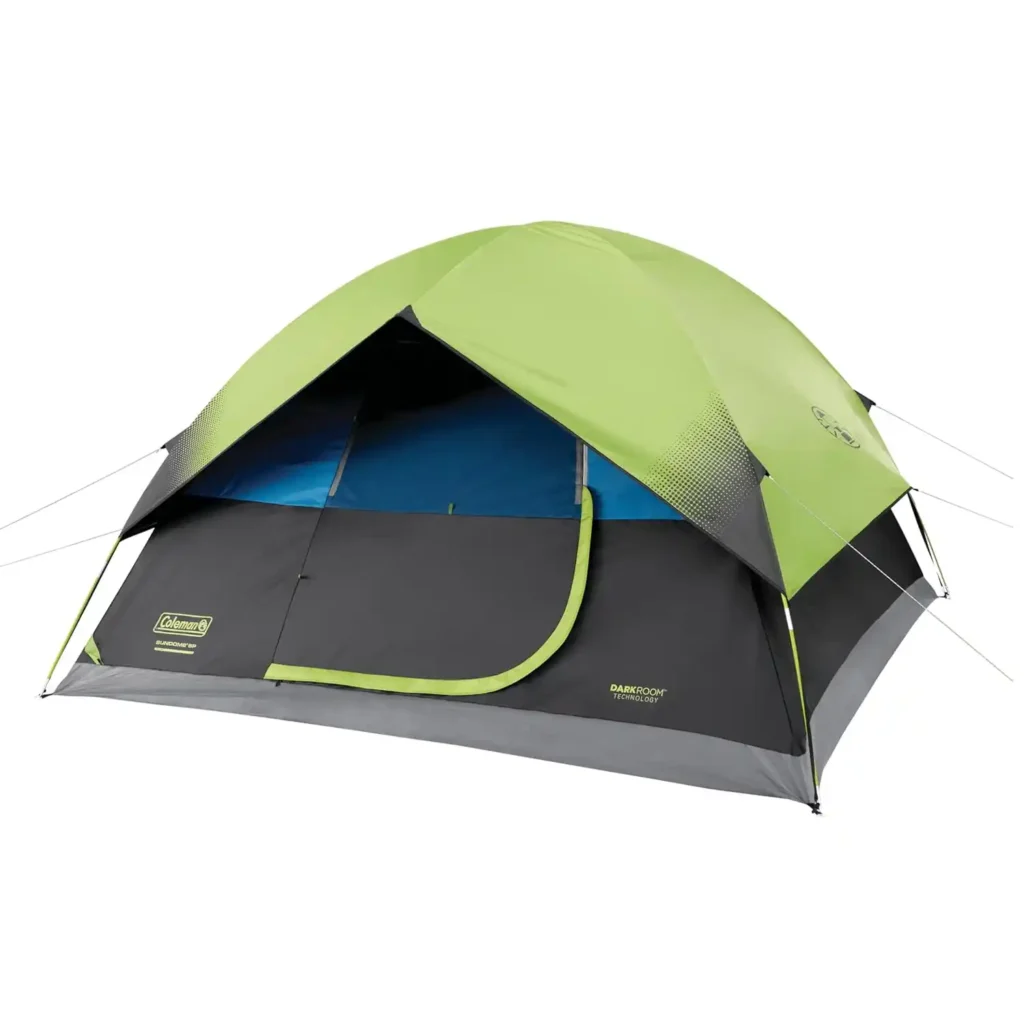
Family camping requires space, organization, and protection from weather. The WeatherMaster delivers all three.
The screened room is great for muddy shoes or gear, and the interior space keeps kids comfortable — even during rainy days.
Large budget tents often leak at corners and door seams during sustained rain. This model performs better because water is directed away from entry points, reducing the slow seepage that ruins sleep during long storms.
Pros ✅
Spacious interior
Screened room
Proven weather protection
Great value for families
Cons ❌
Longer setup time
Large footprint
Verdict:
One of the best beginner-friendly family tents available.
Family camping requires space, organization, and protection from weather. If you’re planning trips with kids, choosing the right tent size is critical — especially when you’re comparing layouts and floor space. We break this down in our guide to the best 6 person tents for family camping, where comfort and weather protection matter most.
4. Gazelle T4 Hub Tent
Award: Best Easy Setup Tent for Beginners
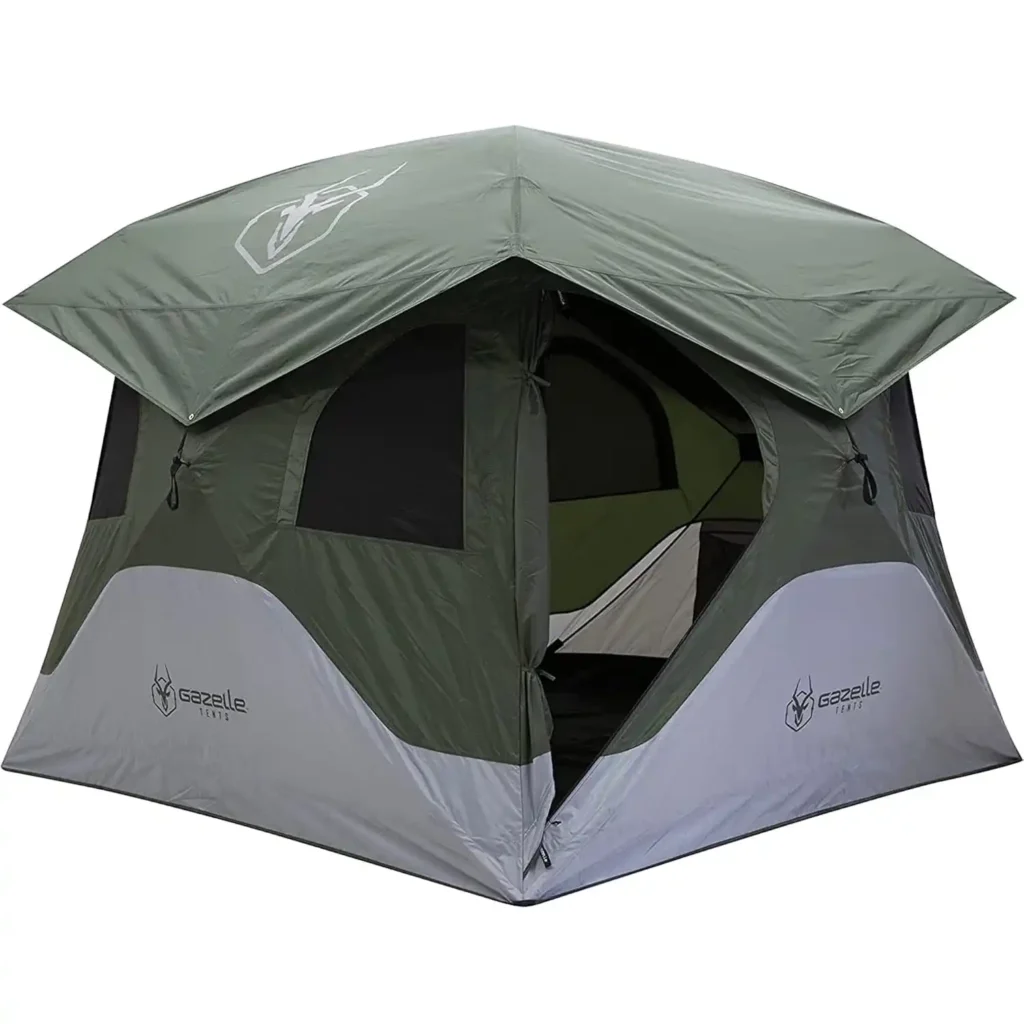
The Gazelle T4 uses a hub-style design that pops open in under 90 seconds. No poles, no confusion, no frustration.
It’s taller and sturdier than most instant tents, making it ideal for beginners who value comfort and speed.
This tent removes nearly every common beginner mistake. There are no crossed poles, no confusing sleeves, and no partial setups. Beginners often finish setup before fully understanding how the tent works — which is exactly the point.
Pros ✅
Ultra-fast setup
Excellent build quality
Tall interior
Great wind resistance
Cons ❌
Heavy
Premium price
Verdict:
If you hate setup and want instant comfort, this tent is worth it.
5. Browning Big Horn Camping Tent
Award: Best Beginner Tent for Bad Weather
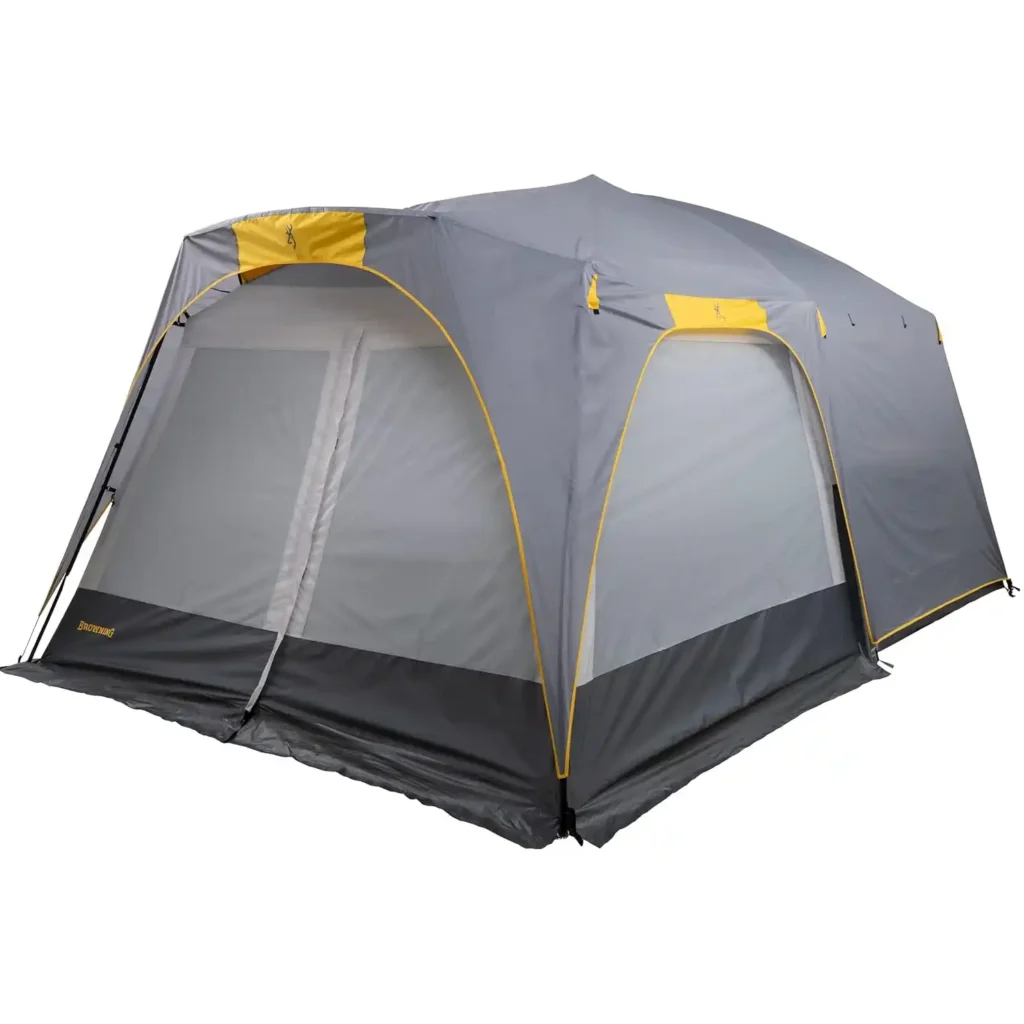
Bad weather can ruin a first camping experience. The Browning Big Horn offers excellent rain protection and stability without complex pitching.
It performs especially well in windy and wet conditions.
Pros ✅
Strong frame
Full rainfly
Reliable weather performance
Cons ❌
Heavier than average
Verdict:
A great choice if you expect unpredictable weather on your first trips.
Bad weather can easily ruin a first camping experience. Strong rain protection and proper setup make a huge difference when conditions turn wet. If you’re new to camping, it’s worth understanding how rain actually gets inside tents — and how to prevent it. Our guide on how to waterproof a tent explains what really works and what’s just marketing.
⚠️ Common Tent Mistakes First-Time Campers Make

Many beginners think they chose a “bad tent,” when the real issue is setup mistakes.
❌ Skipping proper staking
❌ Setting up on uneven ground
❌ Installing rainfly incorrectly
❌ Choosing a tent that’s too small
❌ Blocking ventilation → condensation buildup
A beginner-friendly tent reduces the impact of these mistakes, but learning basic setup habits makes a huge difference.
🧭 Buying Guide: Choosing Your First Camping Tent
🧩 Easy Setup Matters Most
Avoid complex pole systems. Instant or simple dome designs reduce frustration.
🌧️ Weather Protection
Look for:
Full rainfly
Sealed seams
Bathtub-style floor
Look for a full rainfly, sealed seams, and a bathtub-style floor. Many beginners think their tent is leaking, when the real problem is moisture buildup inside. We explain this common mistake in our guide on how to stop condensation in a tent.
📏 Size Up
A “4-person” tent is best for 2 adults with gear.
🎒 Don’t Stress Too Much About Tent Weight
Many beginners worry about tent weight. For car camping and campground trips, weight matters far less than setup ease and comfort.
A slightly heavier tent that’s easy to pitch is usually a better first choice than a lightweight model that’s frustrating to assemble.
🏕️ Cabin vs. Dome
Cabin tents offer more headroom. Dome tents handle wind better.
🎓 Beginner Tip Most People Learn Too Late
Practice setting up your tent at home.
This single step eliminates most first-trip frustration and helps you understand pole structure, rainfly orientation, and staking before you’re tired, cold, or losing daylight.
Cabin tents offer better headroom and feel more comfortable for beginners, while dome tents usually handle wind better. If you’re unsure which style fits your camping plans, our comparison of dome vs cabin tents breaks down the pros and cons in real camping conditions.
⏳ How Long Does a Beginner Camping Tent Last?
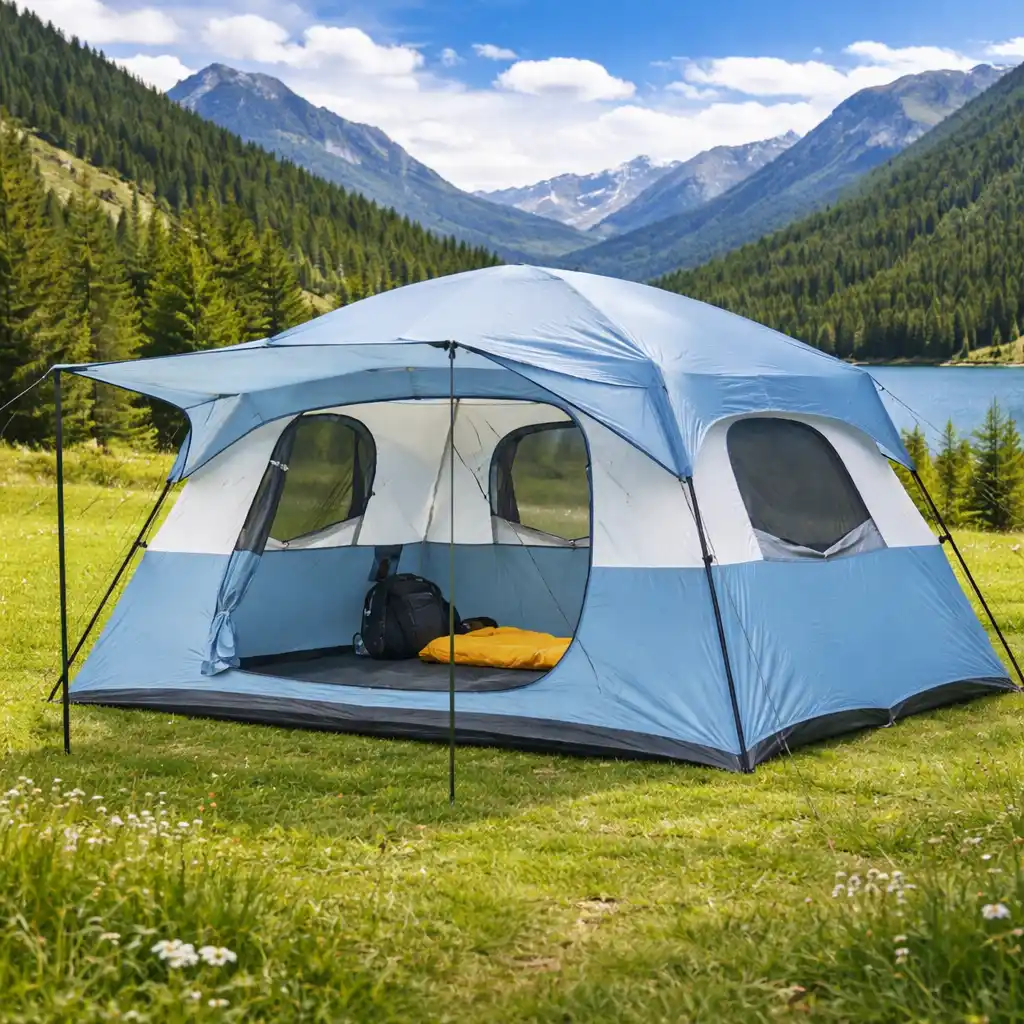
With proper care, most beginner camping tents last 3–7 years.
Lifespan depends on:
✅ Frequency of use
✅ Weather exposure
✅ Storage habits
✅ UV damage
Drying your tent before storage and avoiding prolonged sun exposure significantly extends durability.
❓ Camping Tents for Beginners: Common Questions
🏕️ Are instant tents good for beginners?
Yes — instant tents are often the best choice for beginners. Pre-attached poles or hub systems dramatically reduce setup time and eliminate common mistakes. First-time campers can usually pitch them in 1–2 minutes without prior experience, making camping far less stressful.
🌧️ Do beginners really need a waterproof tent?
Absolutely. Even short trips can bring unexpected rain or overnight moisture. Beginners should look for a tent with a full rainfly, sealed seams, and a bathtub-style floor. Proper weather protection prevents discomfort and protects gear during your first camping experiences.
📏 Is a 4-person tent better for beginners than a 2-person tent?
For most beginners, yes. A 4-person tent provides extra room for gear and movement, which greatly improves comfort. Many first-time campers underestimate how cramped smaller tents feel, especially when storing backpacks, shoes, and sleeping equipment inside.
💧 Why does my tent feel wet inside even when it didn’t rain?
This is usually condensation, not a leak. Warm air from breathing meets cooler tent surfaces, creating moisture inside. Proper ventilation, using the rainfly correctly, and avoiding blocked airflow help reduce condensation — a very common beginner issue.
🧩 What is the easiest tent type for first-time campers?
Hub-style and instant tents are typically the easiest. They remove pole threading and complex assembly. Simple dome tents also work well, while advanced multi-pole or ultralight backpacking tents may frustrate beginners due to precision setup requirements.
💰 Should beginners buy a cheap tent or invest more?
It depends on usage. Budget tents are fine for occasional fair-weather trips. However, beginners planning frequent camping benefit from investing in easier setup, better ventilation, and stronger weather protection — features that significantly improve early camping experiences.
👨👩👧👦 What tent size works best for beginner family camping?
Most families are happier sizing up. A 6-person tent is often ideal for two adults and children, allowing space for gear and comfort. Extra headroom and floor space reduce stress and make organization easier for first-time family trips.
🏕️ Build a Complete Beginner Camping Setup
Pairing your tent with the right gear improves comfort:
A good tent is only one part of a comfortable first camping trip. Proper sleeping gear, lighting, and basic campsite organization make a huge difference — especially for beginners. If you’re building your setup from scratch, our car camping essentials checklist helps make sure you don’t forget the basics.
🏆 Final Verdict
If this is your first camping trip, ease of setup matters more than advanced features.
If you want the least stressful experience possible, choose an instant or hub-style tent. If budget is your main concern, pick a simple dome with a forgiving layout. Avoid tents that look impressive but require precision to set up.
A beginner tent should help you enjoy camping — not test your patience.
For most first-time campers, reducing setup frustration is the single biggest factor in enjoying your first trip.
Want the easiest setup? → Gazelle T4
Camping with family? → Coleman WeatherMaster
On a budget? → Coleman Sundome
Want zero stress? → CORE Instant Cabin
Choose a tent that matches how you camp — not what looks impressive on paper.
Happy camping,
— Anthony