
Selecting the best tree tents for camping isn’t about picking a typical tent — it’s about understanding how tension, anchor points, and load distribution work together. A reliable setup must maintain strong, even tension across three or more anchor points to create a flat, stable sleeping platform without sagging or the common “roll-together” effect.
Hi, I’m Anthony.
For years, I camped exclusively on the ground — until a flash flood in the North Cascades turned my four-season tent into a water trap overnight. While I was dealing with soaked gear, a nearby group in a suspended Tentsile setup stayed completely dry, elevated well above the rising water.
Wet-weather failures are one of the biggest reasons campers start looking beyond ground shelters, especially after repeated bad nights in heavy rain. Our guide to camping in the rain breaks down the biggest mistakes that lead to soaked gear and poor sleep.
That moment changed how I approach sleep systems. Since then, I’ve spent hundreds of nights testing tree tents in real conditions — focusing on strap tension, anchor spacing, and load stability. A properly set up tree tent doesn’t just “hang” — it creates a stable, elevated platform that solves one of the biggest problems in camping: finding a flat, dry place to sleep.
This guide focuses on the best tree tents for camping, along with the strongest hammock-based alternatives for campers who want a flat, elevated sleep system.
As an Amazon Associate, we earn from qualifying purchases.
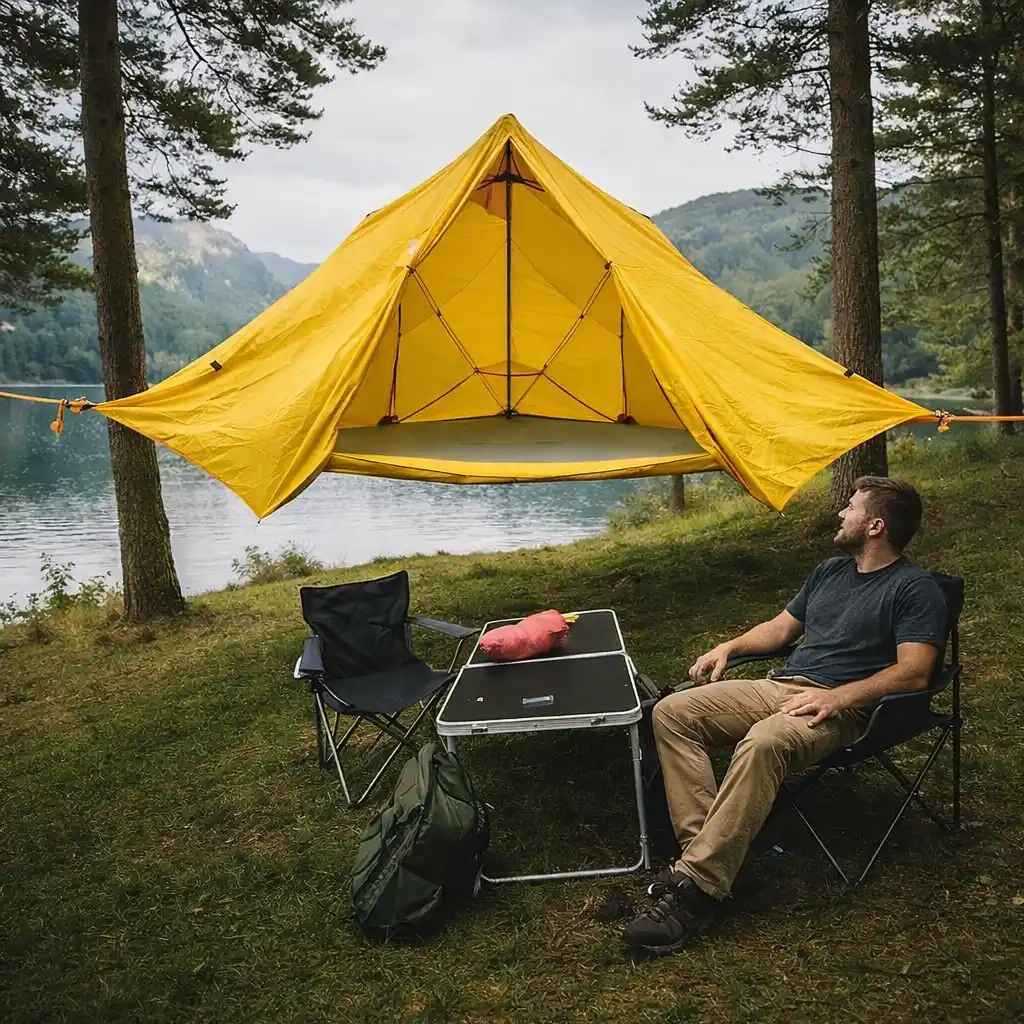
Table of Contents
How We Evaluated the Best Tree Tents for Camping
We didn’t judge these shelters by marketing claims alone. We evaluated them based on the factors that matter most in real-world suspended camping: flatness, tension stability, hardware reliability, and moisture control.
Flatness & Sleep Position Support
We looked at how well each system maintained a level, sag-resistant sleeping surface under realistic load. The goal was simple: identify which models actually support comfortable sleep instead of forcing users into a curved or collapsed position.
Tension System & Hardware Reliability
We assessed how effectively each shelter maintained tension over time, with close attention to ratchet security, strap hold, ease of adjustment, and long-term durability. A suspended shelter is only as reliable as its tension system.
Stability Under Movement & Wind
We evaluated how much each model shifted, swayed, or lost balance during normal movement, uneven load distribution, and moderate wind exposure. This helped us separate truly stable systems from designs that feel unsettled in real use.
If wind performance is your biggest concern, our review of the best camping tents for windy conditions is a useful benchmark for comparing suspended shelters against storm-ready ground tents.
Ventilation & Condensation Management
We compared how well each shelter handled airflow, trapped moisture, and interior dampness in humid conditions. In elevated sleep systems, poor condensation control can ruin an otherwise strong design.
Condensation can still become a problem in enclosed suspended shelters, especially in humid weather. If you want the deeper breakdown, read our guide on how to stop condensation in a tent.
How We Tested Tree Tents for Camping
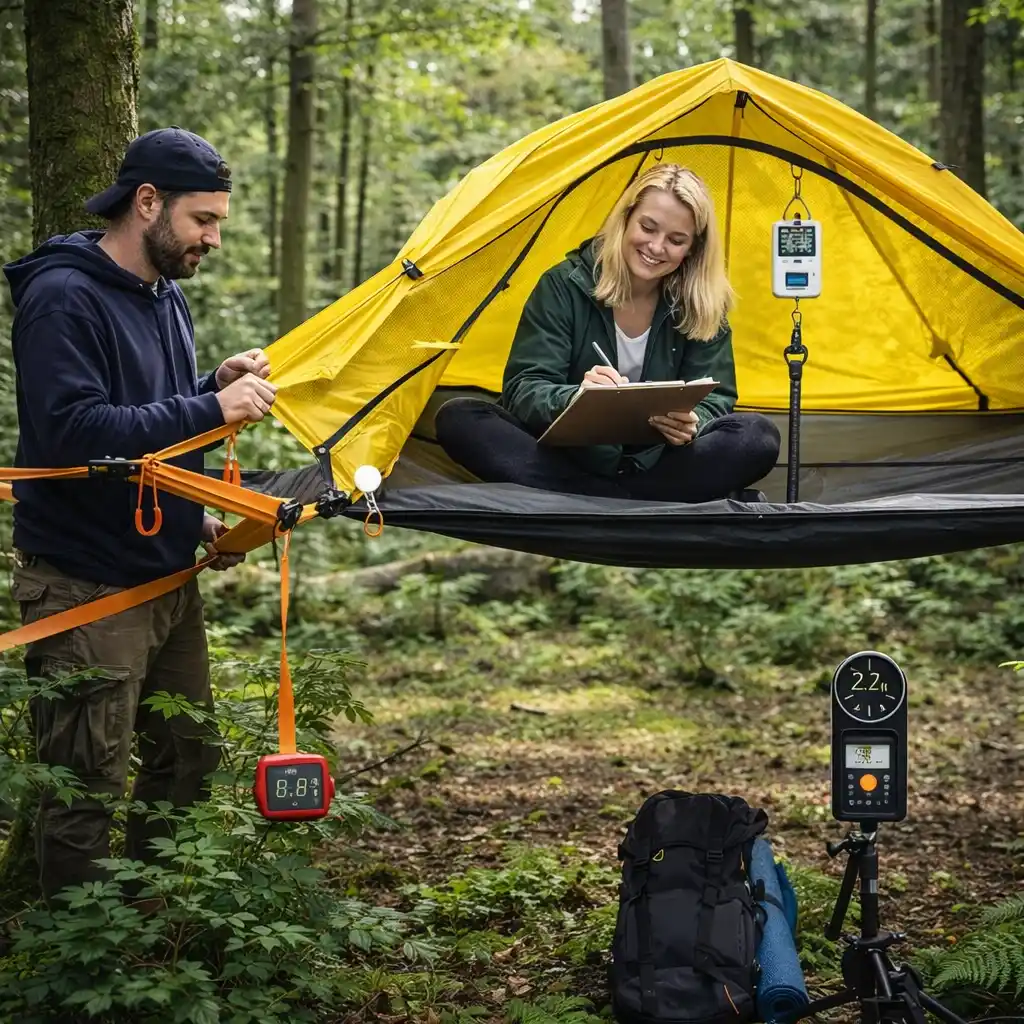
We tested each tent in real-world camping conditions, focusing on setup speed, noise, durability, and weather performance — not just brand specs.
Noise & Friction (Squeak Test)
We checked for squeaking and friction noise from straps, ratchets, and fabric during normal movement — especially when shifting position at night.
Setup Speed & Ease of Use
We timed setup in low-light conditions, focusing on how intuitive the tensioning system is for solo users.
Weather Resistance (Rain Test)
We exposed each tent to prolonged rain and moisture, checking for leaks, fabric saturation, and overall waterproof performance.
For campers still deciding between suspended shelters and traditional ground setups, our guide to how to waterproof a tent explains where standard tents usually fail first in prolonged wet conditions.
Stability Under Movement
We simulated a restless sleeper to evaluate strap tension stability and overall platform balance during real use.
Why You Can Trust This Review
CampComfortGuide is fully independent. Every tree tent in this guide was purchased at retail price, with no sponsored placements or brand influence.
We test gear in real conditions and report what actually matters — stability, durability, and long-term reliability. If a ratchet slips or a seam fails, it’s included in the review — no filtering, no exceptions.
Why a Suspended Tree Tent Setup Works Better Than Ground Camping
Ground camping is always a compromise — uneven terrain, moisture, and limited space. A tree tent removes those variables by lifting your sleeping system off the ground.
For some campers, a high-end ground shelter is still the better choice. If that’s your direction, start with our guide to the best waterproof camping tents for heavy-rain performance.
With a proper setup, you get a consistently flat and level sleeping surface, regardless of whether you’re camping on rocks, roots, or soft, wet ground. If you have solid anchor trees, you’re no longer dependent on finding the “perfect spot.”
Elevation also helps reduce heat loss. Instead of lying directly on cold, damp ground, a suspended setup improves airflow and minimizes conductive heat transfer, which is one of the main reasons campers feel cold at night.
That said, elevation alone doesn’t guarantee warmth. If you camp in colder shoulder-season conditions, our guide on how to keep a tent warm covers the insulation mistakes that matter most at night.
What Actually Matters When Choosing a Tree Tent
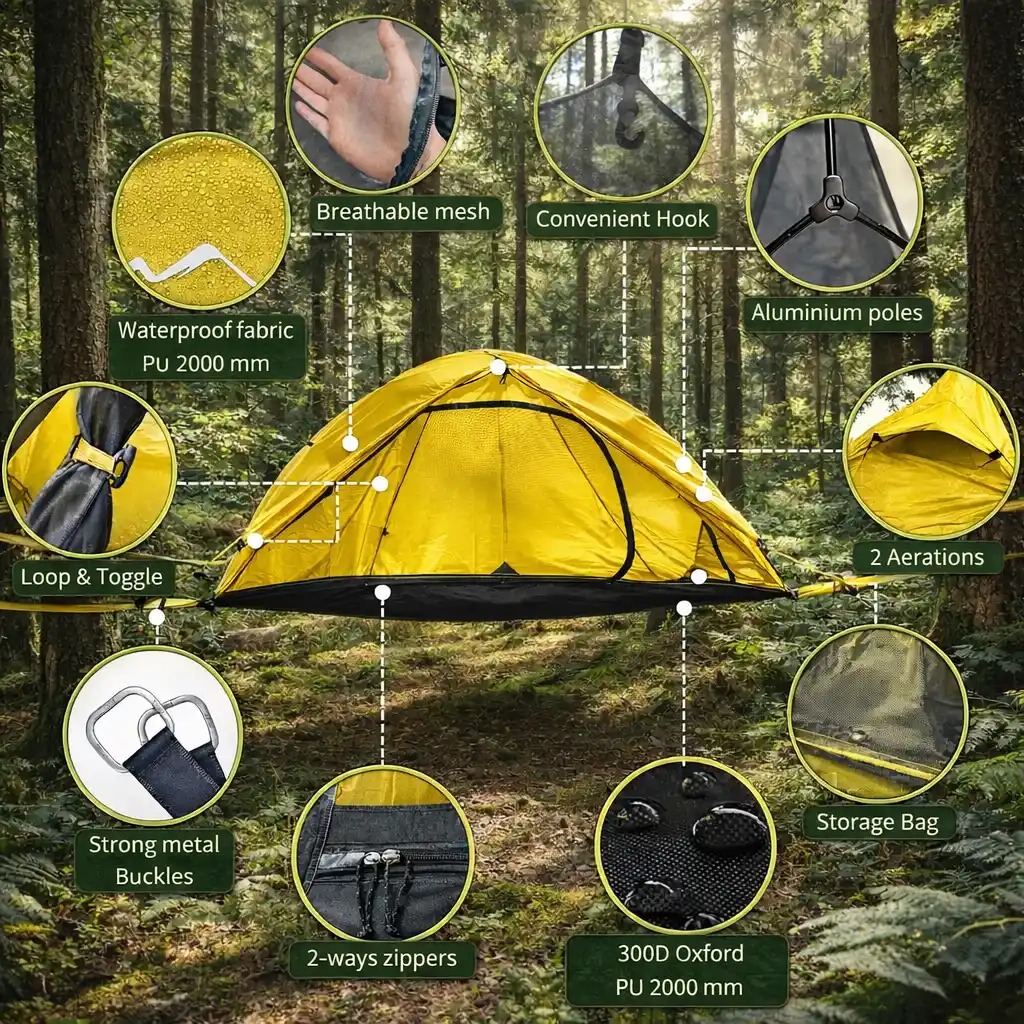
Anti-Roll Support System
Look for designs that use internal webbing or tension zones to create separate sleeping areas. This prevents the common issue where both sleepers slide into the center during the night.
Strap & Ratchet Strength
A reliable system should use heavy-duty straps with a high load rating (typically 2,500+ kg / 5,500+ lbs). More importantly, the ratchets should hold tension consistently without slipping over time.
Floor Fabric & Stretch Resistance
Higher-quality tents use thicker, reinforced fabrics (around 240D and above) that resist stretch. Cheaper materials tend to sag under load, which directly affects comfort and stability.
These three factors have the biggest impact on comfort, stability, and long-term reliability in real-world use.
Who a Tree Tent Is NOT For
Ultralight Backpackers
If you’re counting every gram on multi-day or long-distance hikes, tree tents are simply too heavy. Most systems weigh 10–30 lbs (4.5–13.5 kg), including straps and ratchets — far beyond typical ultralight gear limits.
Campers Who Want Instant Setup
Tree tents require precise positioning and proper tensioning. Expect setup times of around 15–30 minutes, especially if you’re dialing in strap angles and anchor spacing.
This isn’t a quick “throw it down and sleep” setup — it rewards patience and proper technique.
Sites Without Suitable Trees
A tree tent depends entirely on strong, well-spaced anchor points. In open terrain, above the treeline, or in sparse desert environments, setup may not be possible at all.
Not every elevated sleep system works the same way. Some models prioritize flatness and multi-person stability, while others focus on lightweight comfort or hybrid versatility. Here are the five strongest options we recommend based on real-world testing.
Quick Summary: Best Tree Tents for Camping
Editor’s Choice: Tentsile Stingray (3-Person)
Award: Best Overall Tree Tent
Why: The most stable and spacious option available, with a true multi-person flat sleeping system and industry-leading tension design.
Best for Couples: Tentsile Connect (2-Person)
Award: Best Tree Tent for Couples
Why: Delivers excellent stability, load capacity, and comfort for two people without excessive motion transfer.
Most Comfortable: Haven Tents Lay Flat Hammock Tent
Award: Best Flat-Lay Hammock System
Why: Creates a true bed-like sleeping position, eliminating the curved “hammock feel” for maximum sleep quality.
Best Hybrid: Lawson Hammock Blue Ridge Tent
Award: Best Hammock-Tent Hybrid
Why: Combines hammock comfort with tent structure, plus the ability to pitch on the ground when needed.
Best Budget Option: Lay Flat Hammock Tent (Generic)
Award: Best Budget Hammock Tent
Why: A simple, affordable setup that offers basic weather protection and improved comfort over standard hammocks.
Tree Tent Comparison Table (Stability, Weight & Setup)
If you want the short version first, this side-by-side comparison shows the main differences in comfort, stability, weight, and setup difficulty.
| Model | Type | Capacity | Weight | Setup Complexity | Best For |
|---|---|---|---|---|---|
| Tentsile Stingray | Tree Tent (3-point) | 3 People | 24 lbs | High | Maximum stability & group camping |
| Tentsile Connect | Tree Tent (3-point) | 2 People | 20 lbs | High | Couples & long stays |
| Haven Lay Flat Tent | Flat-Lay Hammock | 1 Person | 6–11 lbs | Medium | Maximum sleep comfort |
| Lawson Blue Ridge | Hybrid (Hammock + Tent) | 1 Person | ~5 lbs | Medium | Versatility & mixed terrain |
| Lay Flat Hammock Tent | Budget Hammock Tent | 1 Person | ~6–8 lbs | Low | Budget & casual camping |
Best Tree Tents (In-Depth Reviews)
These five models represent the main suspended camping categories: true multi-point tree tents, flat-lay hammock systems, hybrid ground-and-air shelters, and budget-friendly hammock tents.
1. Tentsile Stingray (3-Person)
Award: Best Overall Tree Tent
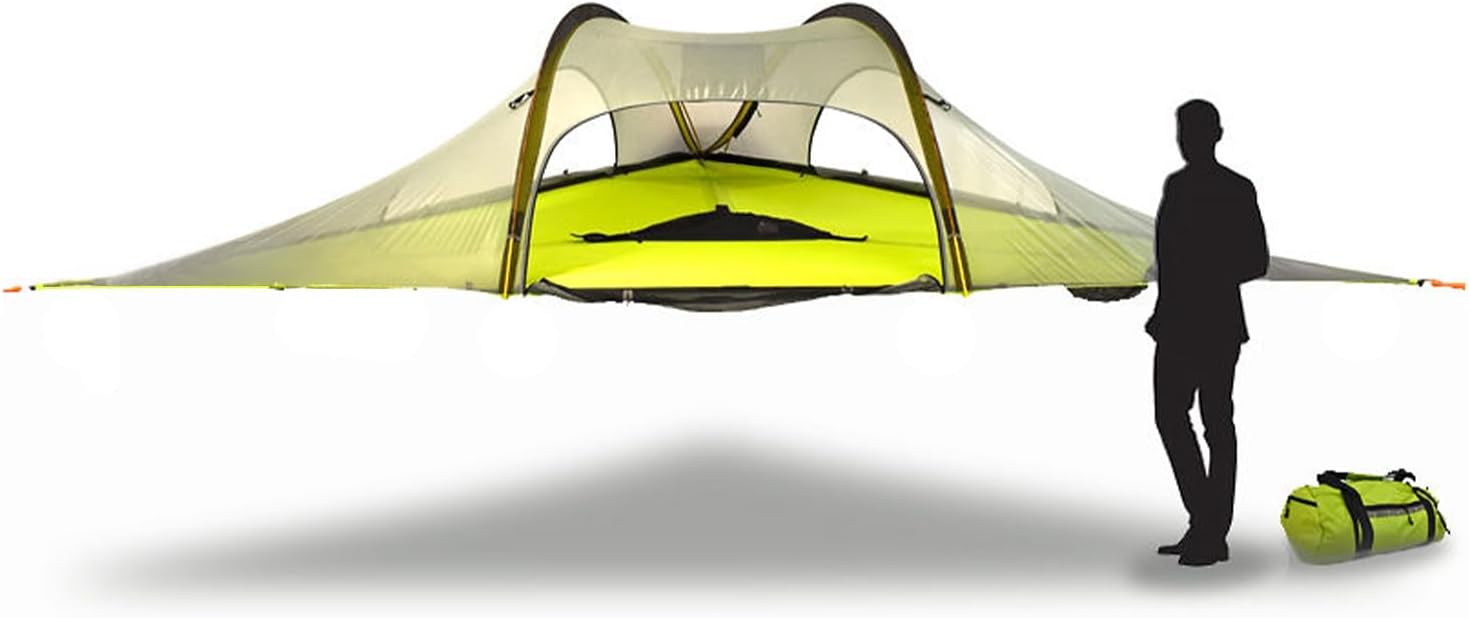
Best for:
Campers who want maximum stability, flat sleeping zones, and a true multi-person suspended setup.
Who This Is For:
Campers setting up a basecamp who prioritize comfort, space, and reliable tension under load — especially groups who want to avoid the “roll-together” effect.
Key Technical Specifications:
Capacity: 880 lbs (400 kg)
Floor: 240D polyester/nylon composite
Poles: 2 × 8.5mm anodized aluminum
Ratchets: 3 × heavy-duty steel (2.5-ton rated)
Suspension: 3-point tension system
The Stingray sets the benchmark for tree tents by combining high-tension stability with true multi-zone support. Its internal webbing system distributes weight evenly across the platform, preventing sag and maintaining a flat sleeping surface even under uneven load.
My Experience:
I tested the Stingray with two additional campers (combined ~600 lbs), and the platform remained consistently level with no center collapse — something most lower-end designs struggle to achieve.
The anti-roll webbing creates clearly defined sleeping zones, so each person maintains their own space instead of sliding toward the center.
The central floor hatch is one of the most practical design features. Entering from below is safer and more controlled than side-entry systems, especially when the tent is elevated higher off the ground.
Stability & Load Performance Insight:
Maintains a flat, tensioned platform under multi-person load, even when weight distribution is uneven.
Field Data:
No noticeable sag or re-tensioning required during overnight use in stable weather conditions.
Pros
✅ Exceptional stability once properly tensioned
✅ True multi-person usability with separate sleeping zones
✅ Large internal volume with usable headroom
✅ Safer entry via central floor hatch
Cons
❌ Requires physical effort to tension correctly, especially for beginners
❌ Heavier than most alternatives — not ideal for long-distance carry
Trade-Off:
You get maximum stability and space, but at the cost of weight and setup effort.
Real-World Setup Insight:
Performs best when anchor trees are spaced evenly and straps are tensioned progressively. Small adjustments make a noticeable difference in platform flatness.
Real Limitation:
Requires three strong, well-positioned trees. In uneven or restricted terrain, finding a suitable setup location can take time.
How It Compares:
Compared to lighter models like the Haven or hybrid designs like Lawson, the Stingray offers far superior stability and usable space, but is less portable.
💡 Pro-Tip:
Tighten the rear strap slightly more than the others to keep the center floor hatch properly aligned and level.
Verdict:
The most stable and spacious tree tent available — built for campers who value comfort, reliability, and true multi-person performance over weight savings.
(Prices may vary depending on availability)
2. Tentsile Connect (2-Person)
Award: Best Tree Tent for Couples

Best for:
Couples who want a stable, shared sleeping platform without motion transfer.
Who This Is For:
Campers looking for a balance between space, durability, and long-term usability, especially for repeated trips or basecamp setups.
Key Technical Specifications:
- Capacity: 880 lbs
- Floor Area: 52 sq. ft.
- Rainfly: 70D PU-coated polyester (5000mm HH)
- Suspension: 3-point tension system
The Connect uses the same core tension system as larger Tentsile models but in a more compact format, offering strong lateral stability and reliable load distribution.
My Experience:
During a week-long trip in the Ozarks, the standout feature was motion isolation. When one person shifts or rolls, the platform absorbs movement without transferring it across the entire surface.
The rainfly performance is also solid. In extended rain (multi-hour storm conditions), the interior stayed dry with no noticeable leaks or fabric saturation.
Stability & Load Performance Insight:
Maintains even tension across two users, reducing movement transfer and improving overall sleep quality.
Field Data:
No significant sway or tension loss during overnight use in moderate wind and wet conditions.
Pros
✅ Excellent stability for two-person use
✅ High weight capacity
✅ Good ventilation with large mesh panels
Cons
❌ Requires three properly spaced trees
❌ Weight makes it impractical for solo backpack carry
Trade-Off:
You get stability and durability, but at the cost of weight and setup constraints.
Real-World Setup Insight:
Performs best when tree spacing allows for even triangular tension — poor spacing reduces overall stability.
Real Limitation:
Less adaptable in tight or irregular terrain compared to two-point systems.
How It Compares:
Compared to the Stingray, it offers less space but better portability. Compared to the Haven, it provides significantly more stability.
💡 Pro-Tip:
Set all three anchor points loosely first, then tension gradually to maintain a balanced and level platform.
Verdict:
A reliable and well-balanced option for couples who want stable, comfortable elevated camping without stepping up to larger systems.
(Prices may vary depending on availability)
3. Haven Tents Lay Flat Hammock Tent
Award: Most Comfortable Flat-Lay Hammock System

Best for:
Campers who want a true bed-like sleeping experience in a suspended setup, not a curved hammock.
Who This Is For:
Campers who struggle with traditional hammocks and need flat, supported sleep in any position, especially for longer trips or basecamp use.
Key Technical Specifications:
- Design: Lay-flat hammock system with integrated structure
- Included: Insulated pad, rainfly, mosquito net
- Weight: ~6–11+ lbs depending on version
- Sizes: Standard, XL, Safari (heavier-duty build)
- Setup: Tree suspension with spreader-bar support
The Haven system is built around a flat-lay design that removes the “banana curve” found in traditional hammocks. Instead of conforming your body to the fabric, it creates a supported, level sleeping surface using an integrated pad and tension system.
My Experience:
The difference is immediate. Instead of adjusting your body position all night, the system supports you in a neutral, flat posture.
The integrated pad is critical — it provides both structure and insulation. Without it, the system doesn’t perform the same. When properly set up, it feels closer to a suspended cot or compact bed than a hammock.
In wet conditions, the full system (rainfly + bug net) creates a sealed environment. Once tensioned correctly, it performs like a self-contained elevated shelter, not just a hammock with add-ons.
Stability & Load Performance Insight:
Provides a stable and evenly supported platform, but performance depends heavily on correct tension and pad inflation.
Field Data:
Maintains a flat sleeping position with no pressure points when properly set up; minor instability appears only with poor tensioning.
Pros
✅ True flat sleeping surface — rare in hammock systems
✅ Full system included (pad, rainfly, bug net)
✅ Works for back, side, and stomach sleepers
✅ Strong weather and insect protection
Cons
❌ Bulkier and heavier than standard hammocks
❌ Requires the included pad for proper performance
❌ More setup-sensitive than basic hammock systems
Trade-Off:
You get maximum sleep comfort and support, but sacrifice weight and simplicity.
Real-World Setup Insight:
Best performance comes from dialing in both suspension tension and pad firmness — small adjustments have a noticeable impact on comfort.
Real Limitation:
Not ideal for ultralight setups — the system is larger and more complex than minimalist hammock options.
How It Compares:
Compared to Tentsile systems, it offers better solo comfort and true flat sleep, but no multi-person capability. Compared to traditional hammocks, it delivers far superior support, but with more weight and setup complexity.
💡 Pro-Tip:
Slightly under-inflate the pad at first, then adjust once inside to achieve a perfectly level sleeping position.
Verdict:
One of the most comfortable solo camping systems available — best for those who prioritize sleep quality over pack weight.
(Prices may vary depending on availability)
4. Lay Flat Hammock Tent
Award: Best Budget Lay-Flat Hammock Tent

Best for:
Campers who want a low-cost all-in-one hammock tent system with rain and bug protection.
Who This Is For:
Beginner campers and occasional users who need a simple, affordable suspended shelter without investing in premium systems.
Key Technical Specifications:
- Capacity: ~200 lbs
- Material: Nylon with PU coating
- Design: Lay-flat hybrid hammock
- Included: Rainfly, mosquito net
- Weight: ~6–8 lbs (typical for this class)
This type of lay-flat hammock tent combines basic hammock comfort with full weather protection, offering a simple alternative to traditional ground tents. It uses a flatter cut than standard hammocks to reduce curvature and improve sleep positioning.
My Experience:
This style of tent is noticeably more comfortable than a standard gathered-end hammock, especially if you don’t like sleeping in a curved position.
However, it doesn’t achieve the same level of flatness or structural support as premium systems like Haven or Tentsile Connect. The lay-flat feel is improved, but not fully rigid.
Setup is straightforward and beginner-friendly. You can get it functional quickly without dialing in complex tension systems, which makes it a good entry-level option.
Stability & Load Performance Insight:
Provides basic suspended support, but tension and stability depend heavily on strap quality and setup precision.
Field Data:
Performs reliably in light rain and moderate conditions; minor sag and movement increase under load or poor setup.
Pros
✅ Affordable all-in-one system (fly + bug net included)
✅ Easier setup compared to complex tensioned systems
✅ More comfortable than standard hammocks
✅ Compact and portable
Cons
❌ Limited weight capacity compared to premium systems
❌ Not a true flat platform — still some curvature
❌ Materials and hardware are less durable long-term
Trade-Off:
You get accessibility and simplicity, but sacrifice stability, durability, and true flat sleep performance.
Real-World Setup Insight:
Best results come from tight suspension and proper tree spacing — otherwise sag becomes noticeable quickly.
Real Limitation:
Not ideal for heavier users or extended trips — long-term durability and comfort are limited compared to higher-end systems.
How It Compares:
Compared to Haven or Tentsile Connect, it’s significantly cheaper but offers less structure and support. Compared to traditional hammocks, it provides better weather protection and slightly flatter sleep.
💡 Pro-Tip:
Set the straps slightly higher than usual hammock height — this helps reduce sag and improves the perceived flatness of the sleeping surface.
Verdict:
A solid entry-level option for casual camping — best for those who want a simple, budget-friendly upgrade from a basic hammock.
(Prices may vary depending on availability)
5. Lawson Hammock Blue Ridge Camping Hammock Tent
Award: Best Hybrid Hammock-Tent System

Best for:
Campers who want a balanced mix of hammock comfort and tent-like structure in one system.
Who This Is For:
Backpackers and campers looking for an all-in-one shelter that works both suspended and on the ground, without stepping into heavy multi-anchor tree tents.
Key Technical Specifications:
- Capacity: 275 lbs
- Weight: ~4.5–5 lbs (with full system)
- Design: Hybrid hammock + ground tent
- Structure: Spreader bar + arch pole system
- Included: Rainfly, integrated bug net
The Blue Ridge uses a spreader bar and pole-supported design to create a flatter, more open sleeping area than traditional hammocks. Unlike gathered-end systems, it actively pulls the fabric outward to reduce pressure points and improve comfort.
My Experience:
This sits right between a hammock and a tent — and that’s exactly its strength. The lay is noticeably flatter than standard hammocks, especially around the legs, where most systems create pressure.
What stands out is the interior space. Thanks to the arch poles, it feels more like a mini suspended tent than a hammock, with enough room to move without feeling restricted.
The ability to pitch it on the ground is a real advantage. I’ve used similar systems in mixed terrain, and having that fallback removes a major limitation of hammock camping.
However, it’s not a true flat platform like Haven or Tentsile Connect. There’s still some natural curvature, especially if the setup isn’t perfectly dialed in.
Stability & Load Performance Insight:
Provides a more structured and stable lay than standard hammocks, but still depends on proper angle and tension.
Field Data:
Minimal sag when properly tensioned; slight instability or “tippiness” can occur if setup angles are off.
Pros
✅ Hybrid design (ground + suspended use)
✅ Flatter and more supportive than traditional hammocks
✅ Integrated bug net and rainfly (complete system)
✅ Good interior space due to pole structure
Cons
❌ Not a fully flat sleeping platform
❌ Slight learning curve to dial in optimal setup
❌ Can feel less stable if improperly tensioned
Trade-Off:
You get versatility and improved comfort over basic hammocks, but not the rigidity of true flat-lay systems.
Real-World Setup Insight:
Performs best when hung at a proper angle (around 30°) — small setup changes significantly affect stability and comfort.
Real Limitation:
Less stable than multi-anchor tree tents and less flat than premium lay-flat systems — it sits in the middle category.
How It Compares:
Compared to basic hammocks, it offers far better structure and weather protection. Compared to Haven or Tentsile Stingray, it’s lighter and more versatile, but less supportive and flat.
💡 Pro-Tip:
Pitch the foot end slightly higher than the head to prevent sliding and improve overall sleep positioning and comfort.
Verdict:
One of the most versatile hammock-tent hybrids available — ideal for campers who want flexibility and structure without committing to a full tree tent system.
(Prices may vary depending on availability)
Tree Tent vs. Traditional Hammock (What Actually Matters for Sleep Quality)
The core difference comes down to how each system manages surface tension and body support.
Hammocks:
Traditional hammocks create a naturally curved sleeping position, often called the “banana” shape. While comfortable for short rests, this design can create pressure points and limit movement, especially for side or stomach sleepers.
If you’re still comparing suspended shelters to classic lounging setups, see our guide to the best camping hammocks for a clearer look at traditional hammock comfort and limitations.
Tree Tents:
Tree tents are engineered to create a tensioned, flat sleeping platform. Using multi-point anchoring and mechanical tension systems, they distribute weight evenly across the surface — allowing for more natural sleeping positions and reduced pressure points.
In real-world use, this difference directly impacts sleep quality. Hammocks prioritize simplicity and low weight, while tree tents prioritize stability, flatness, and multi-person usability.
Key Trade-Off:
- Hammocks — lighter, faster, simpler
- Tree tents — more stable, flatter, and more versatile for sleeping
Verdict:
If your priority is lightweight travel and quick setup, a hammock works. If you want consistent sleep quality and a flat, supported surface, a tree tent is the better choice.
FAQ: Tree Tents & Hammock Tents for Camping
What is the difference between a tree tent and a hammock tent?
A tree tent uses multi-point tension (3–4 anchors) to create a flat, stable sleeping platform, while a hammock tent uses two anchor points, resulting in a curved sleeping position.
Are tree tents comfortable for side sleepers?
Yes. Unlike hammocks, tree tents provide a flat sleeping surface, making them suitable for side, back, and even stomach sleepers
Do tree tents damage trees?
No, when used correctly. Most systems use wide straps (tree-friendly webbing) that distribute pressure and prevent bark damage.
How much weight can a tree tent hold?
Most tree tents support between 400 lbs and 880 lbs, depending on the model and tension system.
Most tree tents support between 400 lbs and 880 lbs, depending on the model and tension system.
Generally no. Tree tents require 3 or more strong anchor points, though some hybrid systems can be used on the ground.
Are hammock tents waterproof?
Yes, if they include a rainfly. Most hammock tents are water-resistant or waterproof, but protection depends on setup and fly coverage.
Is a tree tent better than a ground tent?
It depends. Tree tents are better for uneven, wet, or rocky terrain, while ground tents are better where trees are unavailable.
How far apart do trees need to be for a tree tent?
Typically 10–20 feet apart, depending on the model and strap length.
Are tree tents safe in wind?
Yes, when properly tensioned. High-quality systems remain stable, but strong wind can cause movement and sway, especially if setup is uneven
How to Choose the Right Tree Tent or Hammock Tent for Camping
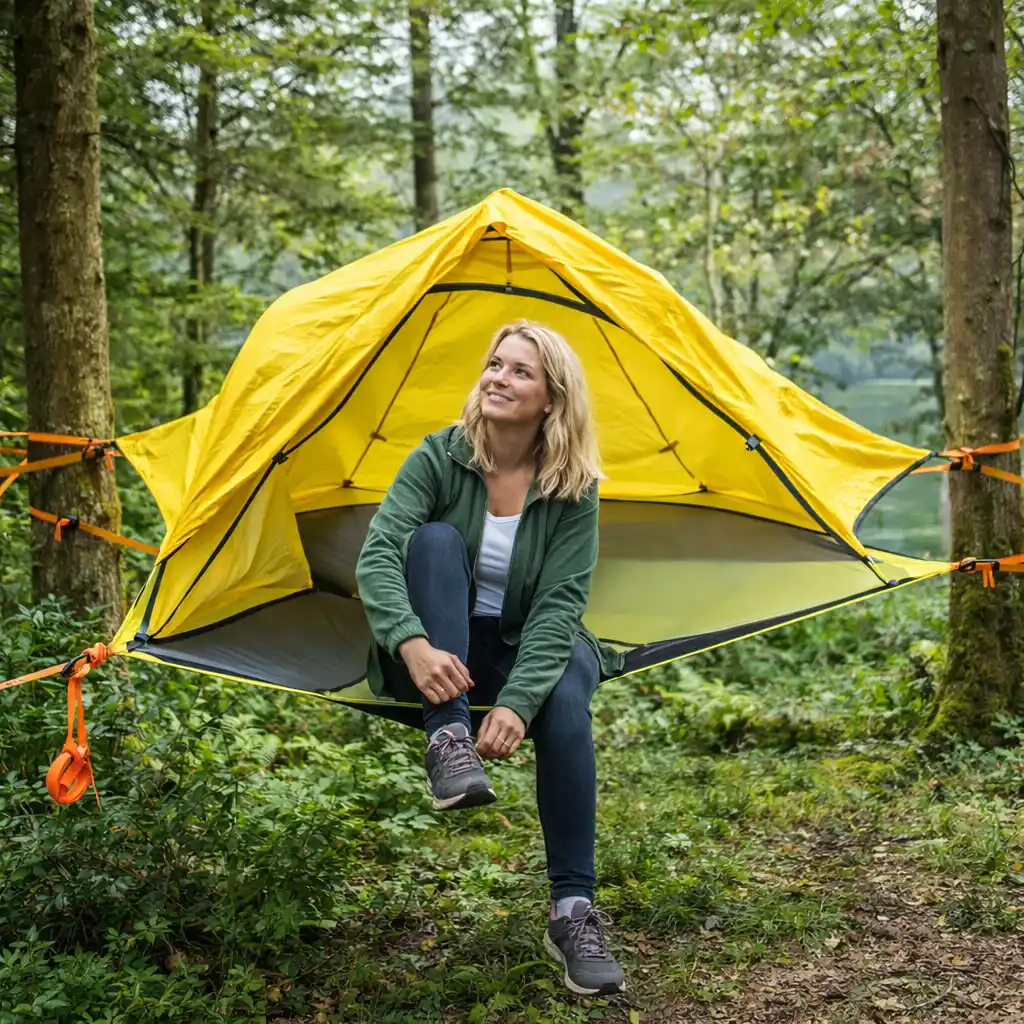
Choosing the right suspended shelter isn’t about specs alone — it comes down to sleep quality, setup complexity, and where you actually camp. The differences between tree tents, hammock tents, and hybrid systems directly affect comfort and usability in real-world conditions.
Flatness vs. Curvature (Sleep Quality)
This is the most important factor most campers underestimate.
Tree tents use multi-point tension to create a flat, stable sleeping platform, which supports back, side, and stomach sleepers without the “roll-together” effect.
Hammock tents rely on two anchor points, creating a natural curve that can limit movement and create pressure points.
👉 If you care about real sleep quality, prioritize flatness over weight.
Setup Complexity vs. Speed
Not all systems perform the same in real conditions.
Tree tents require precise multi-point tensioning, which takes more time and proper setup.
Hammock tents are faster and more forgiving, making them easier for beginners.
Hybrid systems fall somewhere in between.
👉 If you move camp often, faster setup becomes a major advantage.
Terrain & Tree Availability
Your environment determines what actually works.
Tree tents require three properly spaced anchor trees.
Hammocks need only two.
Hybrid systems can often be used on the ground when trees aren’t available.
👉 If you camp in mixed terrain, flexibility matters more than specs.
Weight vs. Comfort Trade-Off
This is where most decisions are made.
Lighter systems are easier to carry but offer less structure and stability.
Heavier systems provide better tension, flatter sleep, and more usable space.
👉 There’s no perfect option — only trade-offs between comfort and portability.
Quick Decision Guide (What Should You Choose?)
If your priority is maximum comfort and flat sleep — choose a tree tent
If you want lightweight gear and quick setup — choose a hammock tent
If you need flexibility across different terrain — choose a hybrid system
Common Mistakes to Avoid
Choosing based only on weight and ignoring sleep quality and support
Underestimating how important tree spacing and anchor positioning are
Assuming all “lay-flat” hammocks are truly flat — most are not
Ignoring setup complexity — some systems require real practice and adjustment
Expecting hammock systems to perform like full multi-point tree tents
Bottom Line
The right choice depends on how you camp — not just what looks best on paper.
Focus on sleep quality, realistic setup conditions, and terrain compatibility — not just specs.
Models We Considered but Didn’t Recommend
Generic “Triangle” Hammock Tents (Under $200):
These budget models often use low-grade straps and weak ratchet systems, which can lead to slipping, uneven tension, or premature wear. In testing, we consistently saw issues with inconsistent load support and material durability, especially under extended use. While they may look similar to premium designs, the performance gap is significant.
Sky-Pod Style Hanging Tents:
These enclosed “tree pods” offer a unique concept, but they are too heavy and bulky for real-world camping use. Setup is more complex, and they lack the tension-based stability and efficiency of true tree tents. In most cases, they are better suited for backyard or novelty setups rather than practical field use.
Final Verdict
The right choice depends on how you camp.
For maximum stability and group comfort, the Tentsile Stingray (3-Person) is still the most reliable option.
For couples, the Tentsile Connect (2-Person) offers the best balance of space, durability, and shared stability.
If your priority is sleep quality, the Haven Lay Flat Hammock Tent delivers the closest thing to a real bed in a suspended setup.
For versatility across changing terrain, the Lawson Blue Ridge Hammock Tent is the most adaptable system.
And for a budget-friendly entry point, the Lay Flat Hammock Tent provides a simple, all-in-one solution.
Bottom line:
Choose based on comfort vs weight vs flexibility — not just specs.
— Anthony
About the Author
Anthony is the lead editor of CampComfortGuide.com, specializing in real-world testing and mechanical performance of outdoor gear. He has spent years analyzing how tension systems, materials, and load distribution perform in actual field conditions — not just on paper.
His work focuses on one goal: helping campers choose gear that delivers reliable comfort, durability, and real usability in the outdoors.