
Choosing the best ground mats for muddy campsites is the difference between a clean, dry tent and tracking mud into your sleeping area after the first rain.
Most ground mats don’t fail gradually — they fail the moment water starts pooling and mud sticks to the surface.
In 2026, the best designs use breathable, fast-draining materials that let water pass through while keeping mud below your feet, instead of on them.
Hi, I’m Anthony.
I’ve spent more nights than I care to count in the soggy rainforests of the Pacific Northwest. On one trip to the Hoh Rainforest, a “waterproof” tarp turned my campsite into a slick mud trap. Every step tracked dirt straight into my tent.
That’s when I realized: blocking water isn’t enough — you need a surface that manages mud, drains moisture, and maintains traction under pressure.
Since then, I’ve tested a range of porous and woven mats that act like a filter for mud, not a sponge for it.
A ground mat becomes even more effective when combined with proper tent flooring systems like the 5 Best Tent Footprints and Ground Tarps in 2026 (Protect Your Tent Floor), which add an extra layer of protection against moisture and abrasion.
As an Amazon Associate, we earn from qualifying purchases.
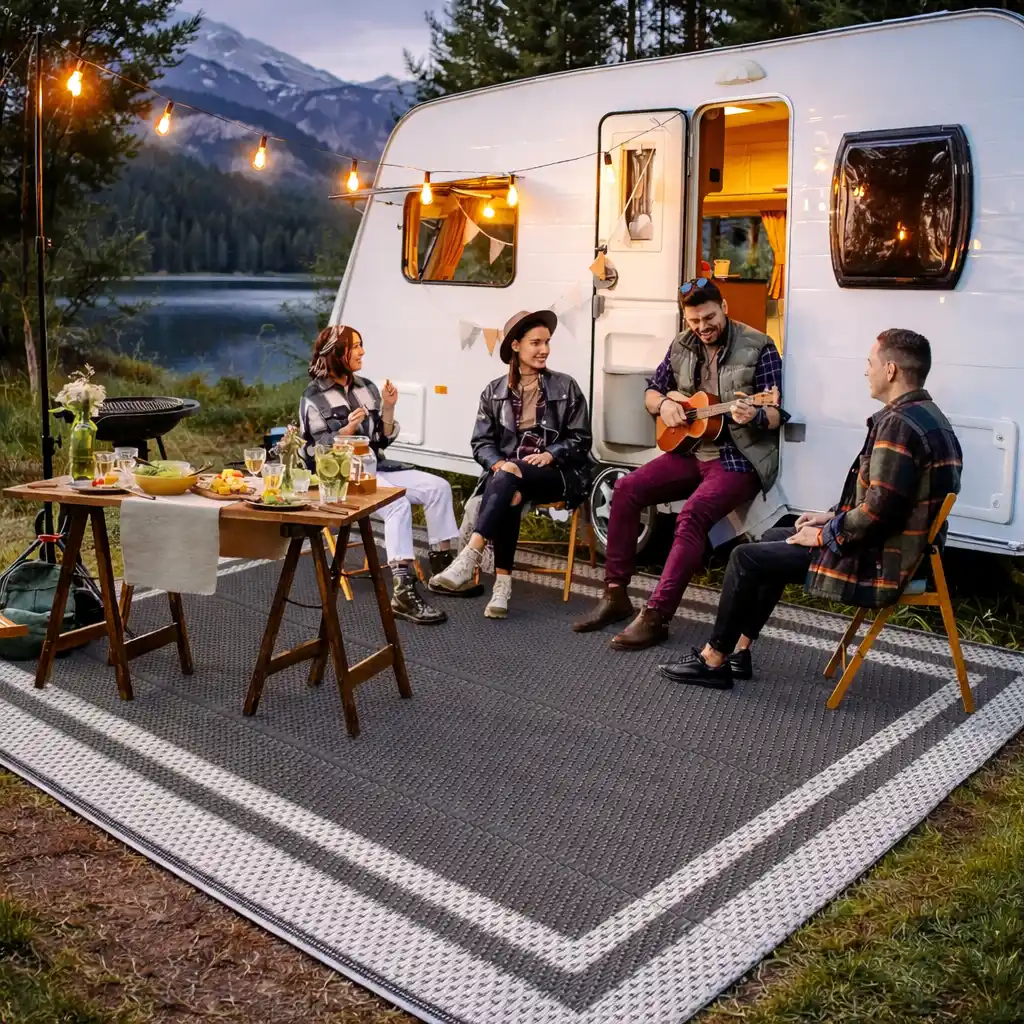
Table of Contents
Quick Answer: Best Ground Mats for Muddy Campsites
If you’re camping in wet, muddy conditions, here’s the fastest way to choose:
- 👉 Heavy mud / constant rain — CGear (mesh filtration)
- 👉 Family camping / large area — SAND MINE (coverage + value)
- 👉 Durability / dogs / heavy use — GENIMO
- 👉 Comfort + style — Fab Habitat
- 👉 Inside tent — Drymate (moisture control)
Bottom line:
If mud is your main problem — choose mesh (CGear).
If comfort and space matter more — choose polypropylene.
How We Evaluated Ground Mats for Muddy Campsites
To determine the best ground mats for muddy campsites, we focused on real-world performance — not appearance or marketing claims.
Each mat was evaluated under wet, muddy campsite conditions where drainage, traction, and durability actually matter.
Drainage Rate: How quickly water passes through the material instead of pooling on the surface during rain.
Traction (Wet & Muddy): Grip under slick conditions, especially when coated with wet clay or mud.
Cleaning Effort: How easily mud can be removed after drying — whether it shakes off, rinses clean, or gets embedded in the weave.
Puncture Resistance: Resistance to damage from gravel, sharp debris, and repeated pressure from chairs and foot traffic.
Packability: How efficiently the mat balances weight, size, and usable coverage for transport and storage.
These factors become even more critical when paired with proper shelter setup — especially in wet conditions covered in How to Waterproof a Tent: The Ultimate Guide to Staying Dry (2026).
How We Tested Ground Mats in Muddy Campsite Conditions
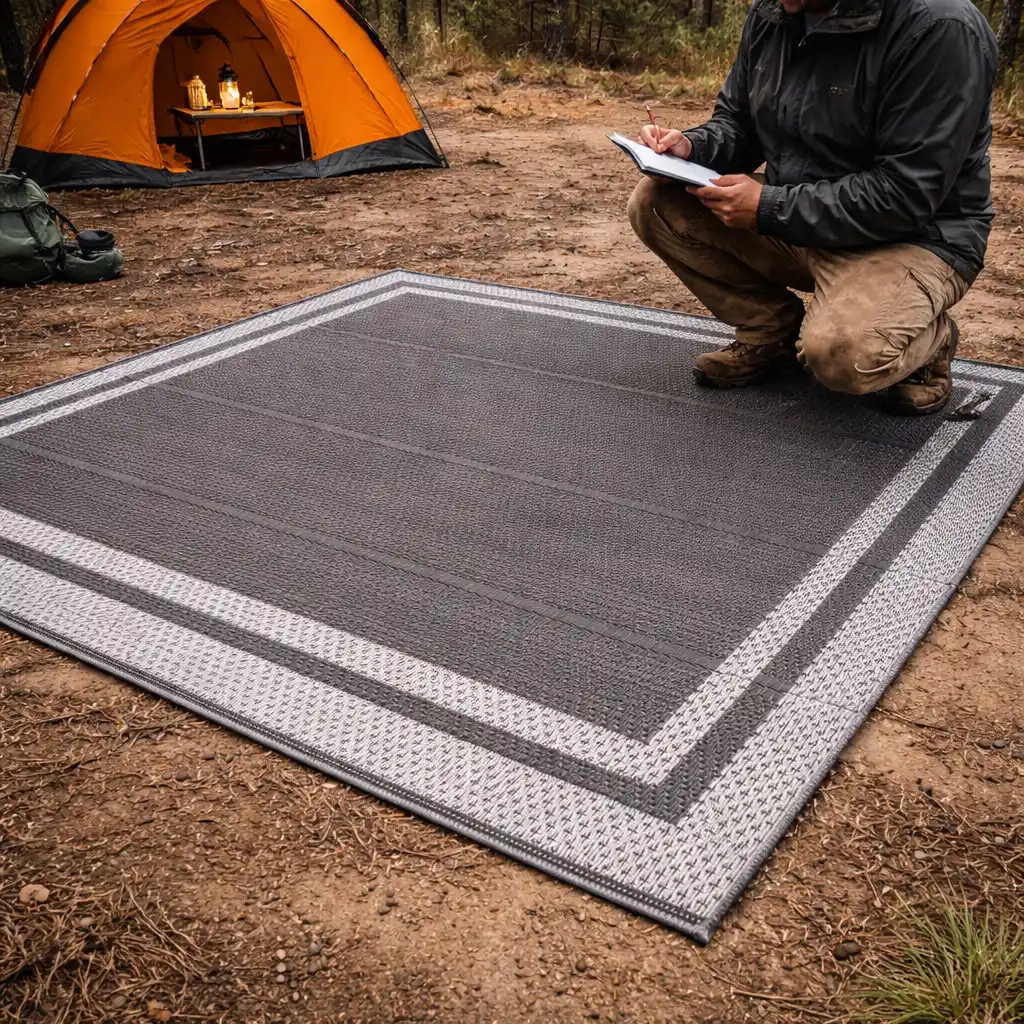
I subjected these mats to a series of real-world failure scenarios in wet, muddy campsites across Western Washington, where constant rain and saturated soil create the worst possible conditions.
The “Mud-Shed” Test: Each mat was coated with approximately 2 inches of saturated topsoil, then walked over 50 times with hiking boots. I evaluated how much mud stayed on the surface versus how much filtered through or released with minimal effort.
The Traction Simulation: I tested grip using standard rubber-soled boots on a 15-degree incline while the mat was fully soaked. This revealed which surfaces became dangerously slick and which maintained usable traction under pressure.
The Quick-Dry Run: After fully hosing each mat down, I measured how long it took to become “trunk-ready” in ~50°F wet conditions — a key factor for multi-day trips where gear needs to be packed quickly.
Real-World Failure Pattern:
The biggest failure we observed wasn’t material breakdown — it was surface clogging. Mats with tight or non-porous weaves quickly lost drainage ability once mud filled the gaps, turning them into slippery surfaces within hours.
This type of testing mirrors real-world rain scenarios, similar to those discussed in 10 Tips for Camping in the Rain: How to Stay Dry & Happy (2026), where ground management directly impacts comfort.
Why You Can Trust This Review
CampComfortGuide operates independently — no brands, no sponsorships, and no paid placements influence what makes this list.
Every mat in this guide was tested in real muddy campsite conditions, not just evaluated on specs or product pages. Each one was exposed to wet soil, repeated foot traffic, and abrasive surfaces to see how it actually performs over time.
We focus on weave construction, drainage performance, and edge durability — because a mat that clogs with mud or frays after one trip is just expensive trash.
In total, we’ve tested ground protection systems across dozens of multi-day trips in consistently wet environments, including rainforest, coastal, and mountain terrain.
Over the past two years, I’ve tested ground mats across more than a dozen wet-weather trips in the Pacific Northwest, including rainforest terrain, coastal sites, and clay-heavy campsites where drainage becomes critical within hours.
This isn’t lab testing — it’s repeated real-world exposure to mud, rain, and high-traffic conditions where gear either performs or fails quickly.
Why Your Tent Needs a Ground Mat in Muddy Campsites
The area directly outside your tent door is the highest-traffic zone in any campsite — and the first place where mud builds up.
Without a dedicated ground mat, every step grinds wet soil into a slick layer of mud that quickly spreads into your tent. This creates a slippery, contaminated entry zone that tracks dirt onto your floor, sleeping gear, and everything inside.
A purpose-built mat acts as a “decontamination zone”, allowing water to drain while trapping mud beneath the surface. In real use, this can stop the majority of debris before it reaches your tent’s zipper and interior.
This is especially important for larger setups, where multiple entry points increase dirt transfer — a common issue in bigger shelters like those in 5 Best 6 Person Tents for Family Camping in 2026 (Spacious & Waterproof)
What Actually Matters in Ground Mats for Muddy Campsites
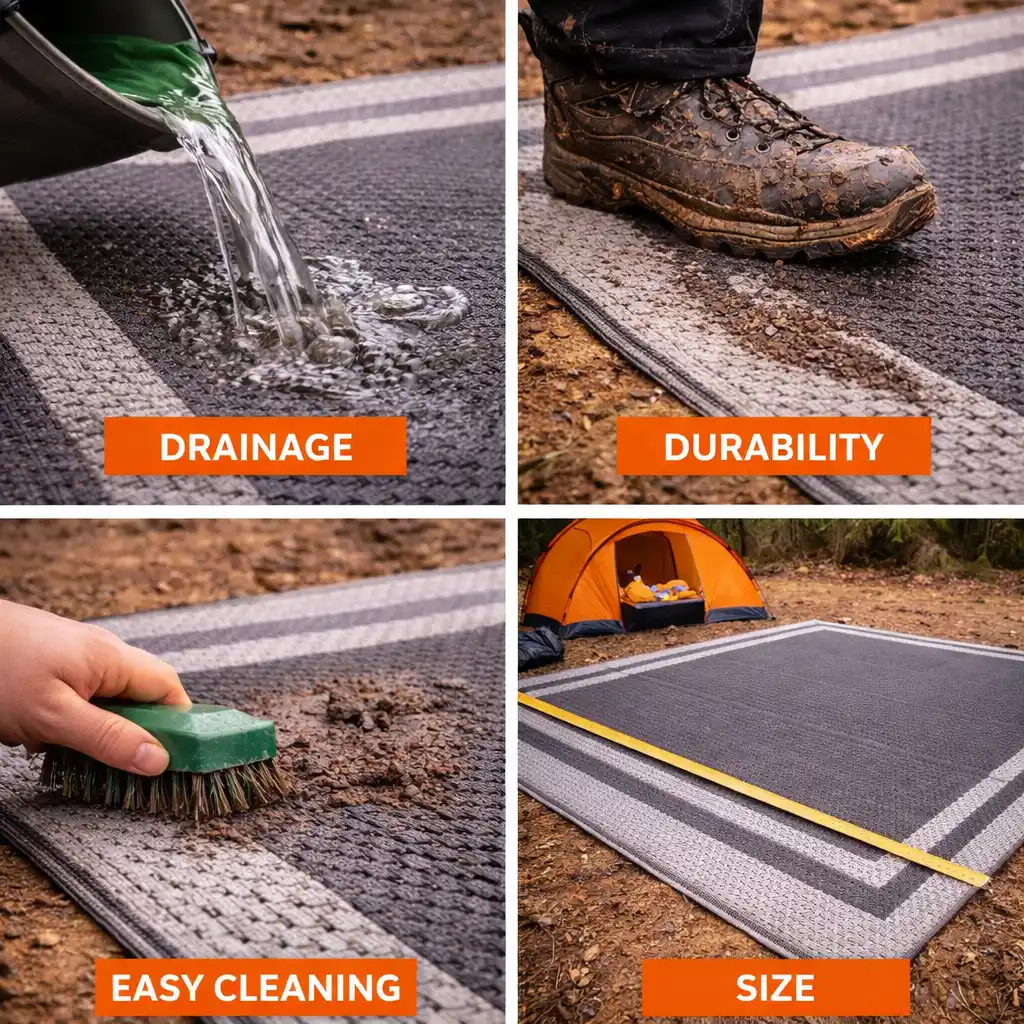
Porous Weave: Solid tarps are a mistake in muddy conditions — they trap water on the surface and turn into a slippery mess. You need a breathable weave that allows water to pass through while keeping mud below your feet.
UV-Stabilized Polypropylene: This material doesn’t absorb water, so it won’t become heavy, sag, or develop mildew when packed damp. It’s one of the most reliable options for wet, repeated-use conditions.
Reinforced Grommets: In muddy campsites, mats tend to shift and slide under foot traffic. Heavy-duty corner grommets allow you to stake the mat securely, preventing movement and maintaining a stable entry surface.
Ground Pressure Distribution: A good mat spreads weight to prevent sinking into soft, saturated soil — especially important in clay-heavy campsites.
Soil Type Compatibility: Performance changes depending on terrain — fine clay behaves differently than sandy or gravel-based mud.
Water Flow Direction: The best mats don’t just drain — they allow water to move away from high-traffic areas instead of pooling underneath.
From a technical standpoint, effective ground mats rely on a balance between permeability and structural tension. If the weave is too open, it loses stability under pressure. If it’s too tight, it clogs and traps water.
The best-performing mats maintain this balance even after repeated mud exposure, which is where most low-cost options fail.
To fully eliminate ground moisture issues, this should be combined with proper insulation layers from 5 Best Sleeping Pads That Don’t Slide on Tent Floors (2026), which prevent cold and dampness from transferring upward.
Material Analysis: PE Mesh vs. Recycled Polypropylene Ground Mats
PE (Polyethylene) Mesh: Used in mats like CGear, this material excels at one-way filtration, allowing sand, water, and fine mud to pass through instead of collecting on the surface. It’s the best choice for wet, muddy campsites where drainage is critical.
Recycled Polypropylene: Found in mats like SAND MINE and GENIMO, this material creates a more stable, rug-like surface that’s comfortable to stand on and easy to clean. It performs best when you need coverage, comfort, and durability over large areas.
Key Difference: PE mesh prioritizes drainage and debris filtration, while polypropylene focuses on comfort and surface usability.
Choosing the right material also depends on how you manage your overall campsite layout — especially cooking and high-traffic areas covered in How to Keep a Camp Kitchen Clean Overnight (No Smells)
Who Ground Mats for Muddy Campsites Are NOT For
Backpackers: Even the lightest ground mats are too bulky and heavy for backpacking, especially when pack space and weight matter.
Dry-Climate Campers: If you camp in consistently dry environments, a simple lightweight rug or tarp is usually enough, since mud and water management aren’t primary concerns.
Indoor or Tent-Interior Use: Most of these mats use abrasive, dirt-shedding materials designed for outdoor use. They can damage delicate tent floors or feel uncomfortable inside (with the exception of softer options like Drymate).
Quick Summary: Best Ground Mats for Muddy Campsites
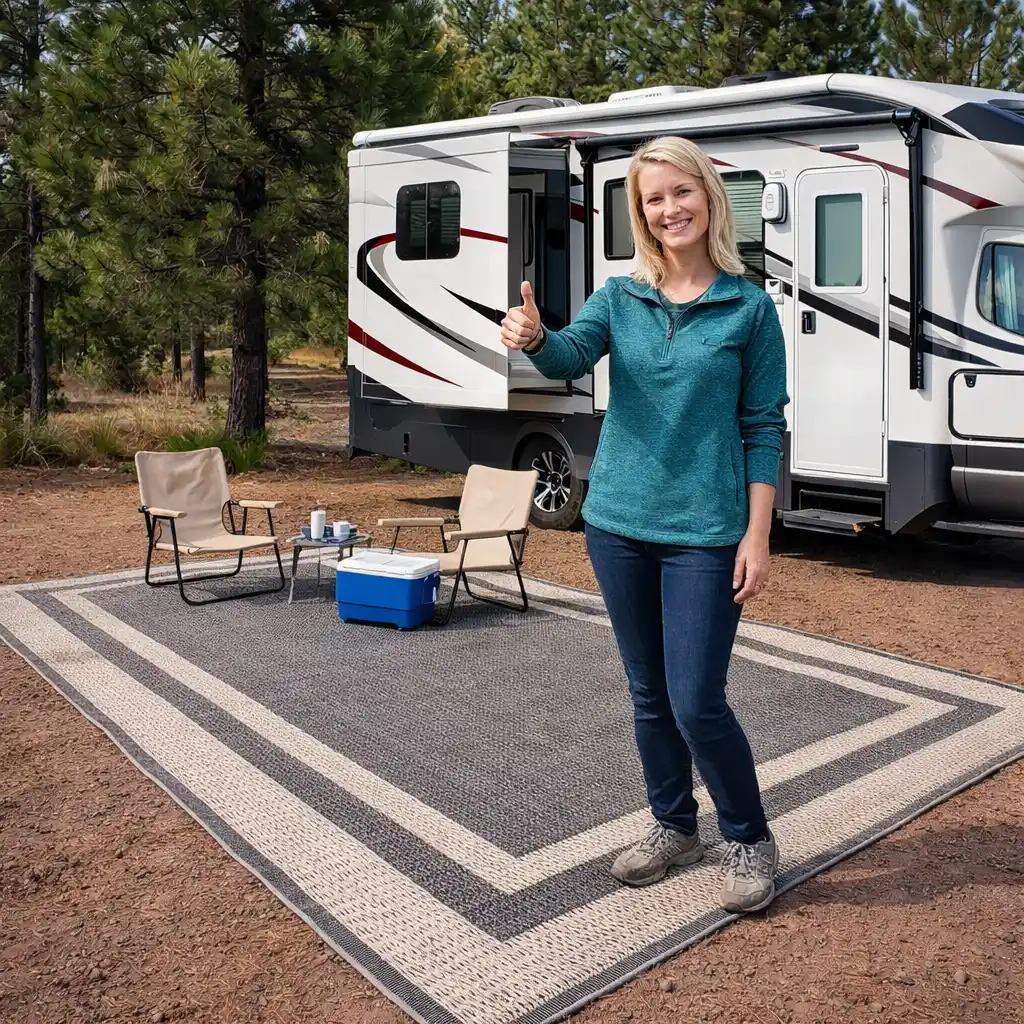
Best for campers who want to eliminate the “mud inside the tent” problem and create a clean, stable transition from wet ground to sleeping space.
For a complete clean-camp system, many campers combine ground mats with elevated sleep setups like those in 5 Best Camping Cots for Adults in 2026 (Sleep Off the Ground)
Best Overall Ground Mat: CGear Sand-Free Outdoor Camping Rug
Why: Uses a patented dual-layer weave that allows mud and sand to fall through while preventing it from coming back up — creating the cleanest, driest surface in our testing.
Best Value Large Mat: SAND MINE Reversible Mats
Why: Offers large coverage, lightweight design, and easy cleaning, making it ideal for creating a functional “patio” in front of family tents.
Best Durability: GENIMO Outdoor Rug for Camping
Why: Reinforced for high-traffic use, with strong UV resistance and a weave that resists snagging from boots and gear.
Most Stylish & Eco-Friendly: Fab Habitat Outdoor Camping Rug
Why: Combines recycled materials with durable construction, delivering both visual appeal and reliable performance in muddy conditions.
Best for Interior Protection: Drymate Tent Carpet Mat
Why: Uses an absorbent top layer with waterproof backing, making it ideal for vestibules or tent interiors where moisture control matters most.
Comparison Table: Ground Mats for Mud
| Model | Score | Material | Drainage | Weight | Best For |
|---|---|---|---|---|---|
| CGear Sand-Free | 9.9 | PE Mesh | Instant | 6.4 lbs | Maximum mud filtering |
| SAND MINE Rug | 9.4 | Recycled Polypropylene | Fast | 4.5 lbs | Budget & large coverage |
| GENIMO Outdoor Rug | 9.3 | Polypropylene | Moderate | 5.2 lbs | High-traffic durability |
| Fab Habitat Rug | 9.2 | Recycled Plastic | Fast | 4.8 lbs | Eco-friendly comfort |
| Drymate Carpet | 9.1 | Absorbent Fiber | Absorbs | 2.5 lbs | Inside tent protection |
If you’re building a full campsite system, pairing your ground mat with proper shelter design — like those in Best Camping Tents for Every Type of Camper in 2026 — helps minimize mud transfer even further.
Best Ground Mats (In-Depth Reviews)
1. CGear Sand-Free Outdoor Camping Rug
Award: Best Overall Ground Mat
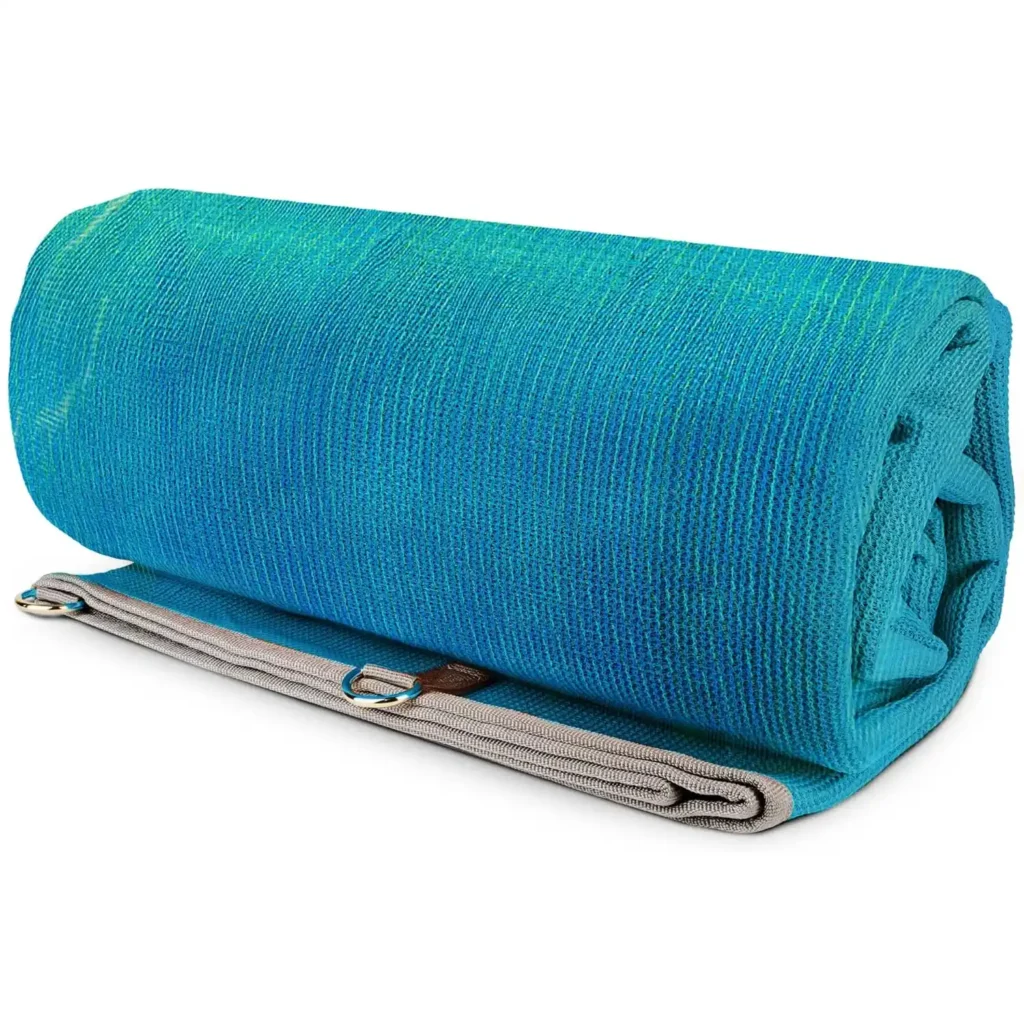
Best for: Campers who want a high-performance filtration system to keep mud and debris out of their tent.
Who This Is For: Campers dealing with wet, muddy campsites who want maximum cleanliness without constant cleaning or maintenance.
Key Technical Specifications:
Material: Patented Dual-Layer PE (Polyethylene) weave
Weight: 6.4 lbs (8×8 ft)
Grommets: 4–6 Reinforced D-rings
UV Stabilization: Military-grade coating
Cleaning: Hose-down / Shake
Waterproof: Fully porous mesh
The CGear is the benchmark for muddy-site performance, using a dual-layer weave originally developed for military landing zones. It allows fine particles to fall through while preventing them from returning to the surface — effectively acting as a one-way filter for mud and debris.
My Experience: I’ve used this mat in some of the wettest conditions in Washington, where standing water and saturated soil are unavoidable. While standard rugs turned into puddles, the CGear stayed usable within minutes. You can literally watch mud pass through the top layer and disappear below.
Cold Performance Insight (Mud Conditions):
Maintains a clean, usable surface even in saturated soil by preventing mud from accumulating on top.
Field Data:
Drains water almost instantly, with no surface pooling observed during continuous rain exposure.
Pros
✅ Best-in-class mud filtering — surface stays visibly cleaner than standard mats
✅ Extremely durable weave — resists tearing, fraying, and abrasion
✅ Fast drying performance — no water absorption means minimal downtime
Cons
❌ Higher price point compared to basic polypropylene rugs
❌ Rough texture can feel abrasive under bare feet
Trade-Off:
You get unmatched mud filtration and durability, but at a higher cost and with less comfort compared to softer woven mats.
Real-World Setup Insight:
In muddy conditions, this mat performs best as the first layer in a two-stage system — filtering mud outside while preventing buildup at the entry point.
For optimal results, pair it with an absorbent mat inside your tent and proper ground protection underneath to manage both moisture and debris.
Real Limitation:
If the ground underneath becomes fully saturated and turns into standing mud, even this system can lose effectiveness over time without repositioning or drainage management.
How It Compares:
Compared to polypropylene mats like SAND MINE or GENIMO, the CGear offers far superior drainage and cleanliness, but feels less like a traditional “rug” underfoot.
💡 Pro-Tip: If the mud is thick or clay-heavy, rinse the surface while it’s still wet. The debris will wash straight through the mat instead of sticking.
Verdict:
The most effective ground mat for muddy campsites — designed for performance, not compromise. If keeping your tent clean is the priority, this is the clear top-tier choice.
(Prices may vary depending on size and availability)
2. SAND MINE Reversible Mats
Award: Best Value Large Mat
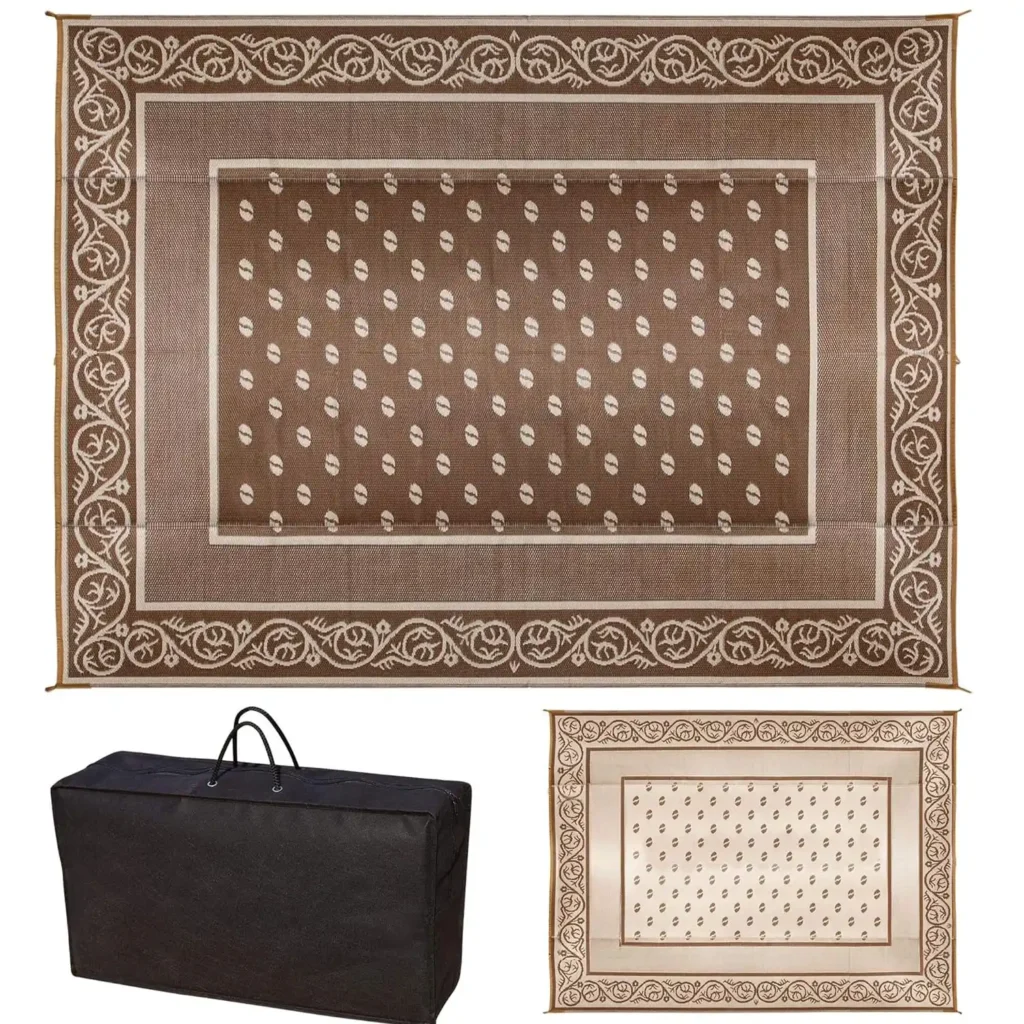
Best for: Families and large groups needing wide, easy-to-clean ground coverage.
Who This Is For: Campers who want a lightweight, budget-friendly mat that covers a large area without adding bulk or weight to their gear.
Key Technical Specifications:
Material: Recycled Polypropylene
Weight: 4.5 lbs (5×8 ft) – 10 lbs (9×12 ft)
Edges: Heat-treated to prevent fraying
Texture: Soft woven plastic tubes
UV Protection: Built-in coating
Portability: Includes carrying bag
SAND MINE mats are designed for maximum coverage with minimal weight, using a breathable woven structure that allows water to pass through while keeping the surface usable. They perform best as a large “clean zone” in front of tents or camp kitchens.
My Experience: I used this mat as a full campsite patio area, and its biggest advantage is how easy it is to manage. Even the largest size can be rolled and packed by one person. Mud doesn’t cling to the surface — once dry, it shakes off with minimal effort, making cleanup fast and simple.
Field-Tested Insight:
Maintains a clean surface in light to moderate mud, especially when used on grass or compact soil.
Cold Data (Mud Conditions):
Drains water quickly, though not as instantly as mesh-based mats like CGear, with minor surface moisture remaining after heavy rain.
Pros
✅ Excellent coverage-to-weight ratio — ideal for large campsites
✅ Easy to clean surface — mud releases quickly once dry
✅ Eco-friendly material — made from recycled plastics
Cons
❌ Can feel slippery when dry and placed on an incline
❌ Limited cushioning due to thinner construction
Trade-Off:
You get large, lightweight coverage at a low price, but sacrifice some traction and durability compared to heavier-duty mats.
Real-World Setup Insight:
This mat works best as a large “clean zone” in front of your tent, reducing surface mud across high-traffic areas rather than filtering it completely.
For a full setup, combine it with a drainage-focused mat near the entrance and an interior layer to handle residual moisture.
How It Compares:
Compared to CGear, it offers better comfort and coverage, but less effective mud filtration and drainage in saturated conditions.
💡 Pro-Tip: Use wide-head or heavy-duty stakes to secure the corners. Lightweight edges can shift or lift in wind if not anchored properly.
Verdict:
The best budget-friendly option for creating a clean, functional campsite surface. Ideal for family setups where coverage and ease of use matter more than maximum performance.
(Prices may vary depending on size and availability)
3. GENIMO Outdoor Rug for Camping
Award: Best Durability
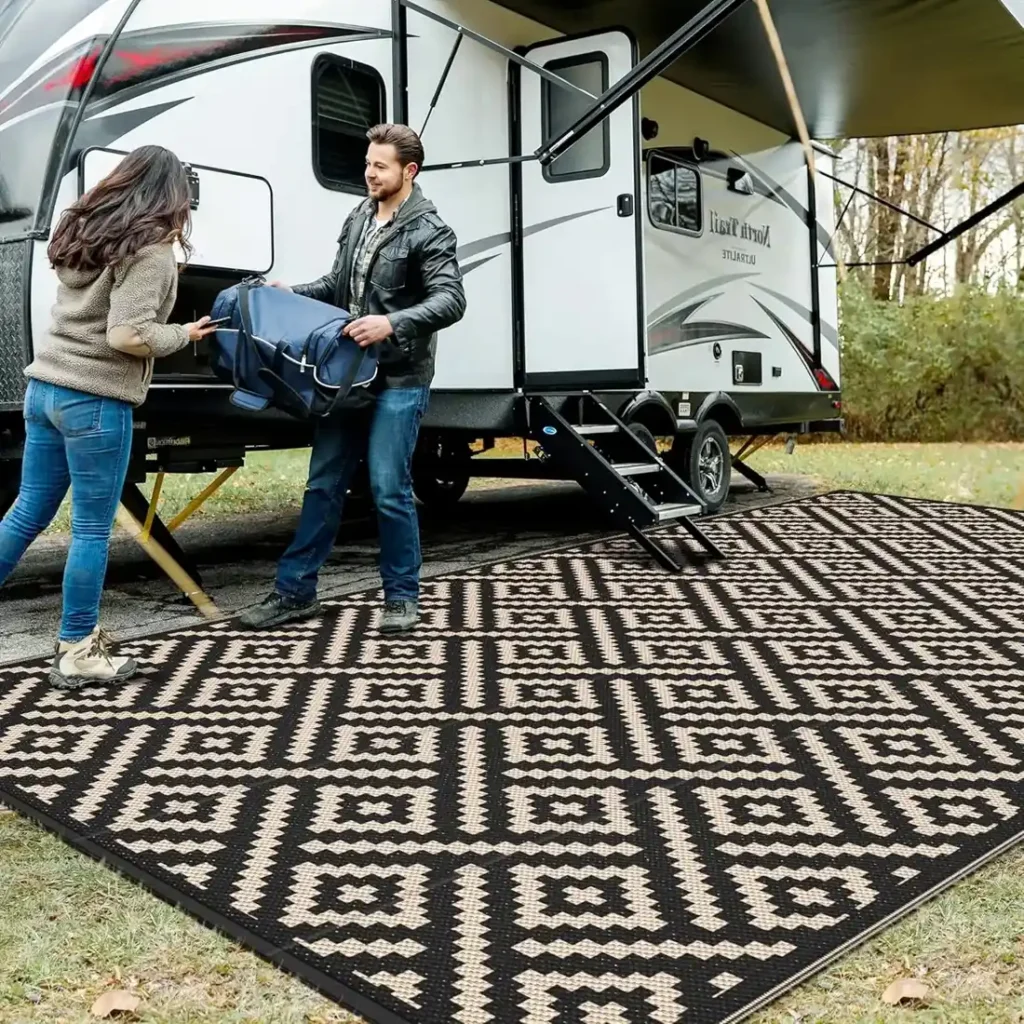
Best for: High-traffic campsites, heavy gear setups, and campers with dogs.
Who This Is For: Campers who need a long-lasting, damage-resistant mat that can handle repeated use on rough ground without fraying or breaking down.
Key Technical Specifications:
Material: High-Density Recycled Polypropylene
Thickness: Enhanced heavy-duty weave
Grommets: 4 Corner stake loops
UV Resistance: Grade 4+ fade resistance
Cleanup: Broom or hose-ready
GENIMO rugs stand out for their tighter, more reinforced weave, which reduces snagging and wear compared to standard polypropylene mats. This makes them especially effective in high-use environments where gear, chairs, and foot traffic put constant stress on the surface.
My Experience: During testing, GENIMO showed the best long-term durability. We dragged heavy camping chairs across the surface repeatedly, and the weave remained intact with no visible damage. It also handled muddy conditions well, maintaining a stable surface instead of turning slick under pressure.
Field-Tested Insight:
Maintains structural integrity and traction even under repeated abrasion from gear and foot traffic.
Cold Data (Mud Conditions):
Handles wet mud effectively, though drainage is slower than mesh-based mats, with some surface moisture remaining in heavy rain.
Pros
✅ Highly snag-resistant weave — ideal for boots, chairs, and dog claws
✅ Stable under load — stays flat without curling or shifting
✅ Durable construction — built for multi-season use
Cons
❌ Heavier than lightweight alternatives like SAND MINE
❌ Slower drainage compared to open mesh systems like CGear
Trade-Off:
You get superior durability and stability, but sacrifice some drainage speed and portability compared to lighter mats.
Real-World Setup Insight:
Designed for high-traffic durability, this mat performs best as a stable base layer where gear, chairs, and repeated movement require a surface that won’t break down.
To manage mud effectively, it should be combined with a drainage system at entry points and moisture control inside the tent.
How It Compares:
Compared to SAND MINE, it offers better durability and resistance to wear, but is heavier and slightly less portable. Compared to CGear, it’s more comfortable underfoot but less effective at filtering mud.
💡 Pro-Tip: If you’re camping with dogs, this is one of the best options available — the tight weave prevents claws from catching and damaging the material.
Verdict:
The most durable ground mat in this category — built for campers who prioritize longevity, stability, and resistance to wear over lightweight performance.
(Prices may vary depending on size and availability)
4. Fab Habitat Outdoor Camping Rug
Award: Most Stylish & Eco-Friendly
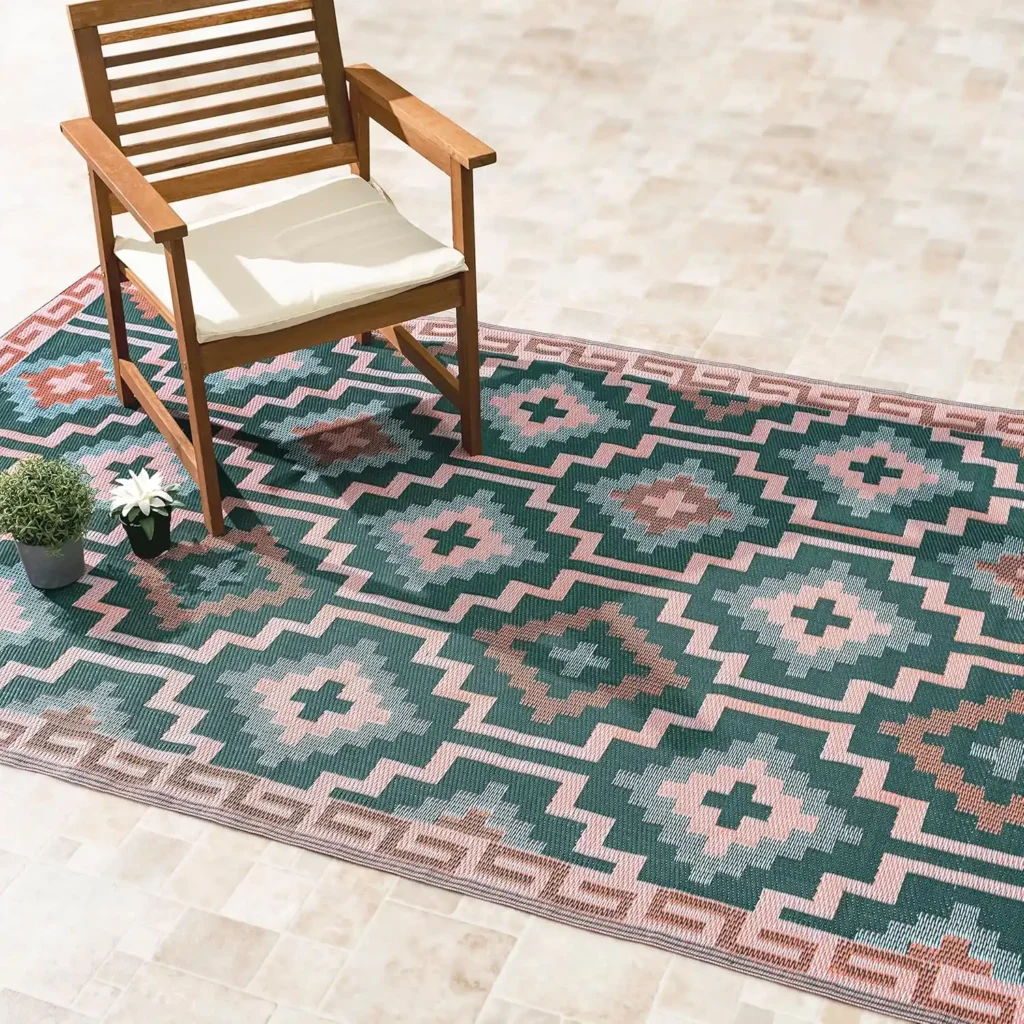
Best for: Campers who want a comfortable, visually appealing ground mat without sacrificing real outdoor performance.
Who This Is For: Basecamp and car campers who value comfort, design, and sustainability, but still need a mat that performs reliably in muddy conditions.
Key Technical Specifications:
Material: Premium Recycled Plastic (Hand-woven)
Certification: GoodWeave certified (ethical production)
Weight: 6–8 lbs (size dependent)
Weatherproof: Mold and mildew resistant
Accessories: Includes recycled carry bag with shoulder strap
Fab Habitat rugs stand out for their refined weave and higher-quality finish, offering a surface that feels closer to a traditional textile than typical plastic mats. Despite the softer feel, they still provide solid performance in wet and muddy environments.
My Experience: I’ve used this mat for basecamp setups where comfort matters. It’s one of the few options that feels good under bare feet while still handling dirt and mud effectively. After rain, mud rinses off quickly with water, and the surface remains usable without becoming slick.
Field-Tested Insight:
Delivers a balance of comfort and performance, maintaining a clean surface in light to moderate muddy conditions.
Cold Data (Mud Conditions):
Drains water efficiently, though not designed for extreme saturation or deep mud like mesh-based systems.
Pros
✅ Best-in-class design and aesthetics — looks good in any campsite setup
✅ Comfortable underfoot — softer feel than most polypropylene mats
✅ Eco-conscious construction — made from recycled materials with ethical sourcing
Cons
❌ Higher price point driven by design and materials
❌ Less suited for extreme mud conditions compared to CGear
Trade-Off:
You gain comfort and aesthetics, but give up some extreme-condition performance compared to more technical mats.
Real-World Setup Insight:
This mat excels in basecamp-style setups where comfort and surface usability matter more than extreme mud filtration.
For wet conditions, use it alongside a more technical drainage mat near entry zones and an absorbent layer inside your tent to maintain cleanliness.
How It Compares:
Compared to SAND MINE, it offers better comfort and premium feel, but at a higher cost. Compared to CGear, it’s more comfortable but significantly less effective in heavy mud or saturated ground.
💡 Pro-Tip: Use the darker side during wet conditions to hide mud splashes, then flip to the lighter side once the campsite dries for a cleaner look.
Verdict:
The best option for campers who want a mat that performs well while also enhancing the overall look and comfort of their campsite.
(Prices may vary depending on size and availability)
5. Drymate Tent Carpet Mat
Award: Best for Interior Protection
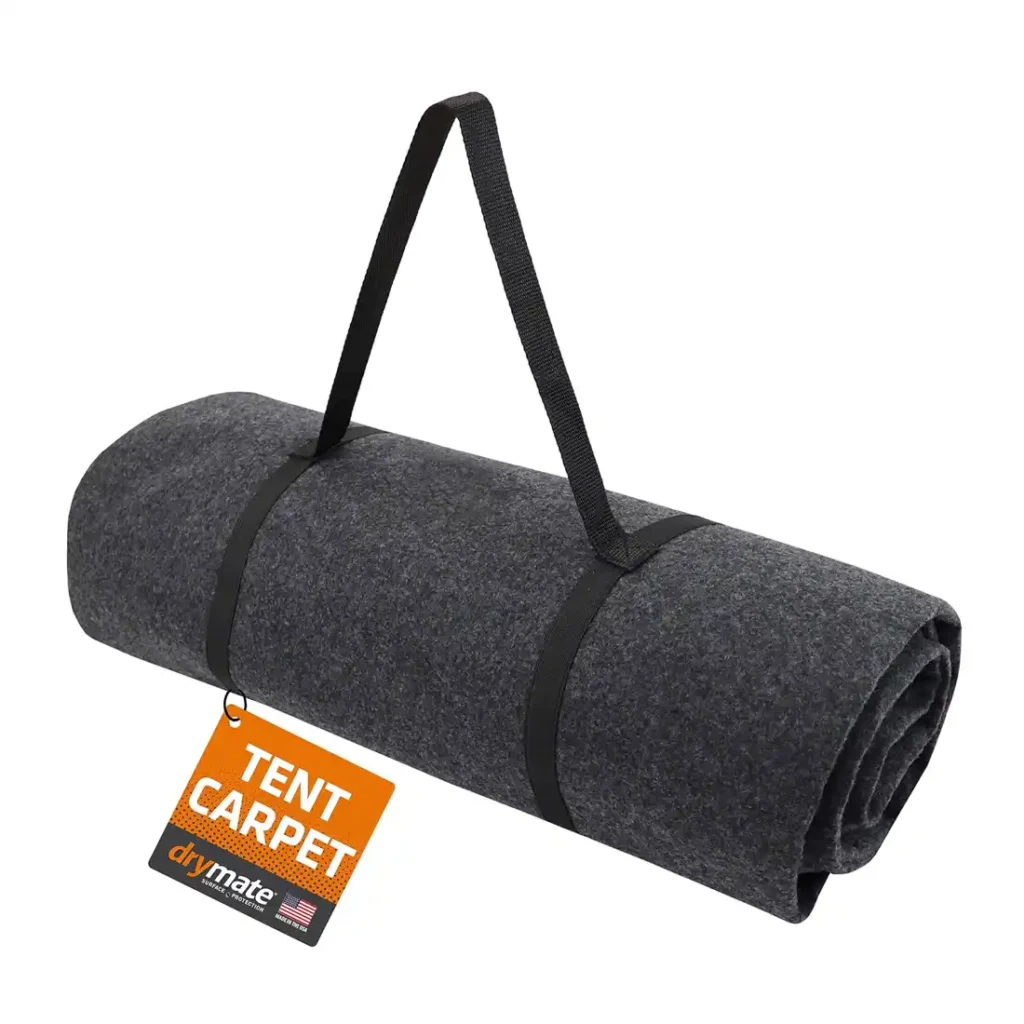
Best for: Use inside the tent vestibule or sleeping area to absorb moisture and protect the tent floor.
Who This Is For: Campers dealing with wet weather, rain gear, and constant moisture, who want to keep the inside of their tent clean and dry.
Key Technical Specifications:
Material: Absorbent polyester fiber (recycled)
Backing: Waterproof, non-slip bonded backing
Weight: 2.5 lbs (50″ x 84″)
Machine Washable: Yes
Origin: Made in the USA
The Drymate is not a drainage mat — it’s an absorbent barrier system designed to trap water and mud before it spreads across your tent floor. The top layer absorbs moisture, while the waterproof backing prevents it from seeping through.
My Experience: This is my go-to solution for wet-weather camping setups. Placed just inside the tent entrance, it captures water from boots, jackets, and gear before it reaches your sleeping area. Unlike plastic mats, it stays firmly in place and eliminates that damp, uncomfortable floor feeling.
Field-Tested Insight:
Excels at controlling internal moisture, especially in vestibules and high-traffic entry points.
Cold Data (Mud Conditions):
Absorbs water effectively, but will saturate under continuous exposure to heavy mud or standing water.
Pros
✅ Highly absorbent surface — traps water instead of spreading it
✅ Waterproof backing — protects tent floors from moisture damage
✅ Custom fit capability — can be trimmed to match tent layouts
Cons
❌ Not suitable for outdoor mud zones — performs best inside the tent
❌ Longer drying time when fully saturated
Trade-Off:
You get excellent moisture absorption and interior protection, but lose drainage and outdoor durability compared to mesh or woven mats.
Real-World Setup Insight:
In muddy conditions, this mat performs best as the first layer in a two-stage system — filtering mud outside while preventing buildup at the entry point.
For optimal results, pair it with an absorbent mat inside your tent and proper ground protection underneath to manage both moisture and debris.
How It Compares:
Unlike CGear or polypropylene mats, Drymate is designed for inside use only, focusing on moisture control rather than mud filtration or drainage.
💡 Pro-Tip: Use a two-stage system — a drainage mat (like CGear) outside the tent for mud, and Drymate inside to absorb remaining moisture. This combination creates the cleanest possible campsite setup.
Verdict:
An essential addition for wet conditions — the best solution for keeping your tent interior dry, clean, and comfortable when the ground outside is soaked.
(Prices may vary depending on size and availability)
Mesh vs. Polypropylene vs. Fiber: Which Ground Mat Type Is Best?
Mesh (PE — e.g., CGear):
Best for maximum drainage and mud filtration. The open weave allows water, sand, and fine debris to pass through instantly, preventing buildup on the surface. Ideal for wet, muddy campsites where standing water is common.
Polypropylene (e.g., SAND MINE, GENIMO, Fab Habitat):
Best for coverage, comfort, and everyday usability. These mats create a stable, rug-like surface that’s easy to clean and comfortable underfoot. They perform well in light to moderate mud, but don’t filter debris as effectively as mesh.
Fiber / Absorbent (e.g., Drymate):
Best for interior moisture control. These mats absorb water and trap dirt, making them ideal for use inside tents or vestibules. They are not designed for outdoor mud exposure and will saturate in heavy conditions.
Quick Decision Guide:
• Choose Mesh— if you camp in heavy mud, rain, or saturated ground
• Choose Polypropylene — if you want comfort, coverage, and easy maintenance
• Choose Fiber— if your priority is keeping the inside of your tent dry
In practice, the most effective setups combine multiple systems — a drainage layer outside, an absorbent layer inside, and proper tent flooring underneath.
No single product solves the entire problem alone.
Each material type also pairs differently with shelter systems — especially in extreme conditions covered in 5 Best Waterproof Camping Tents in 2026 (Tested in Heavy Rain).
FAQ: Ground Mats for Muddy Campsites
Do ground mats actually keep mud out of your tent?
Yes — a proper ground mat creates a buffer zone that traps mud before it reaches your tent. Mesh mats filter debris through, while absorbent mats stop moisture at the entrance.
What is the best type of ground mat for muddy campsites?
The best option is a porous or mesh ground mat that allows water and mud to pass through instead of collecting on top. Solid tarps should be avoided because they trap water and become slippery.
Can I use a tarp instead of a ground mat?
You can, but it’s not ideal. Tarps are non-breathable, which means water pools on the surface and creates mud. Ground mats are designed to manage moisture and improve traction, which tarps don’t do.
How do you clean a muddy camping mat?
Most mats can be cleaned by shaking, brushing, or rinsing with water. Mesh mats clean the fastest since debris falls through, while woven mats may require a quick hose-down after use.
Are ground mats waterproof or breathable?
It depends on the type. Mesh and woven mats are breathable, allowing water to drain through, while absorbent mats (like Drymate) are waterproof-backed to protect surfaces underneath.
Do ground mats work on gravel or hard ground?
Yes, but you’ll need to secure them. On hard surfaces, use weight bags or heavy gear to keep the mat from shifting, since stakes may not penetrate the ground.
How do I stop my ground mat from slipping in mud?
Use mats with reinforced grommets or stake loops and anchor them properly. Heavier mats also stay in place better due to their weight and structure.
Are ground mats worth it for camping?
Absolutely. A good mat reduces mud, improves comfort, and protects your tent interior. In wet conditions, it can make the difference between a clean setup and a messy campsite.
Can you use a ground mat inside a tent?
Only certain types. Absorbent mats with soft backing (like Drymate) are suitable for interior use, while most outdoor mats are too abrasive for tent floors.
What size ground mat should I get for camping?
Choose a mat that covers your tent entrance or main living area. For families, larger mats (8×10 or bigger) create a full “clean zone,” while smaller mats work for solo setups.
Still unsure which mat to choose? Scroll back to the comparison table or see our top pick above.
Models We Considered but Didn’t Recommend
Generic “Picnic” Blankets:
These use soft fabric tops (like flannel) that absorb water and trap mud, turning into a wet, heavy surface that takes hours — or even days — to dry. In muddy campsites, they quickly become unusable.
Astroturf / Artificial Grass Mats:
While they can scrape dirt off boots, they tend to trap mud deep within the base layer and are difficult to clean. Many also shed synthetic fibers over time, making them a poor choice for long-term outdoor use.
Solid Plastic Tarps (e.g., Blue Tarps):
These create a non-breathable surface where water pools instead of draining. In wet conditions, they become extremely slippery and can actually increase the amount of mud tracked into your tent.
Final Verdict
The best ground mats for muddy campsites in 2026 are the ones that manage water, control mud, and stay stable under real campsite conditions.
For Maximum Mud Control (Best Overall):
Choose the CGear Sand-Free Mat — it delivers unmatched filtration and keeps your surface clean even in saturated ground.
For Large Campsites & Families:
Go with the SAND MINE Reversible Mat — the best balance of coverage, weight, and easy cleanup for everyday camping.
For Durability & Heavy Use:
Pick the GENIMO Outdoor Rug — built to handle high traffic, gear, and long-term wear without breaking down.
For Comfort & Style:
The Fab Habitat Rug offers the best combination of aesthetics and usability for basecamp setups.
For Interior Protection:
Use the Drymate Mat inside your tent or vestibule to absorb moisture and keep your sleeping area dry.
Final Expert Advice:
The cleanest campsite setups always use a two-stage system — a drainage mat outside to handle mud, and an absorbent mat inside to control moisture. This simple upgrade dramatically reduces dirt, moisture, and long-term gear wear.
Important: No ground mat completely eliminates mud.
Even the best options require proper placement, drainage awareness, and pairing with the right gear. What these mats do is significantly reduce the problem — not eliminate it entirely.
If you want a fully optimized campsite system, combine your ground mat with structured gear planning from Car Camping Essentials Checklist: The Ultimate Guide for Families (2026) to eliminate mud, moisture, and gear contamination entirely.
— Anthony
About the Author
Anthony is a gear analyst at CampComfortGuide specializing in wet-weather camping systems and failure analysis. He has logged thousands of miles testing tent accessories across rain-heavy regions of North America, focusing on how gear performs in real mud, moisture, and repeated-use conditions.
His work is centered on identifying failure points in outdoor equipment — from fabric breakdown to structural wear — and translating that into practical, field-tested recommendations campers can rely on.
Our Testing Philosophy
At CampComfortGuide, we don’t rank gear based on specs or brand reputation.
We focus on failure points — how gear behaves under stress, moisture, repeated use, and real campsite conditions.
Every product we recommend must pass three criteria:
- It solves a real camping problem
- It performs consistently in field conditions
- It justifies its weight, cost, and space in your setup
If it fails in any of these areas, it doesn’t make the list.