
Why sleeping bags feel colder near morning has less to do with your gear—and more to do with how your body, the ground, and the environment interact over time.
Hi, I’m Anthony.
The first time I really noticed this was on a multi-day trip where everything felt fine at midnight—warm, comfortable, no issues. But around 4–5 AM, I woke up feeling noticeably colder without changing anything.
Same sleeping bag. Same setup. Same conditions.
That’s when it becomes clear:
this isn’t a gear failure—it’s a system problem that shows up late.
Because here’s what most guides don’t explain:
— temperatures don’t just drop—they bottom out right before sunrise
— your body produces less heat after hours of rest
— moisture builds up inside the bag over time
— and most importantly, heat loss into the ground compounds through the night
If your setup isn’t balanced, all of these factors stack at once—right when your body is least prepared to compensate.
👉 If your sleep system already struggles with insulation underneath, it gets worse over time—this is exactly why choosing the right setup matters (see 5 Best Camping Mattresses & Sleeping Mats for Car Camping in 2026).
This guide breaks down what’s actually happening in real conditions—and why even a “warm enough” sleeping bag can feel cold near morning.
As an Amazon Associate, we earn from qualifying purchases.
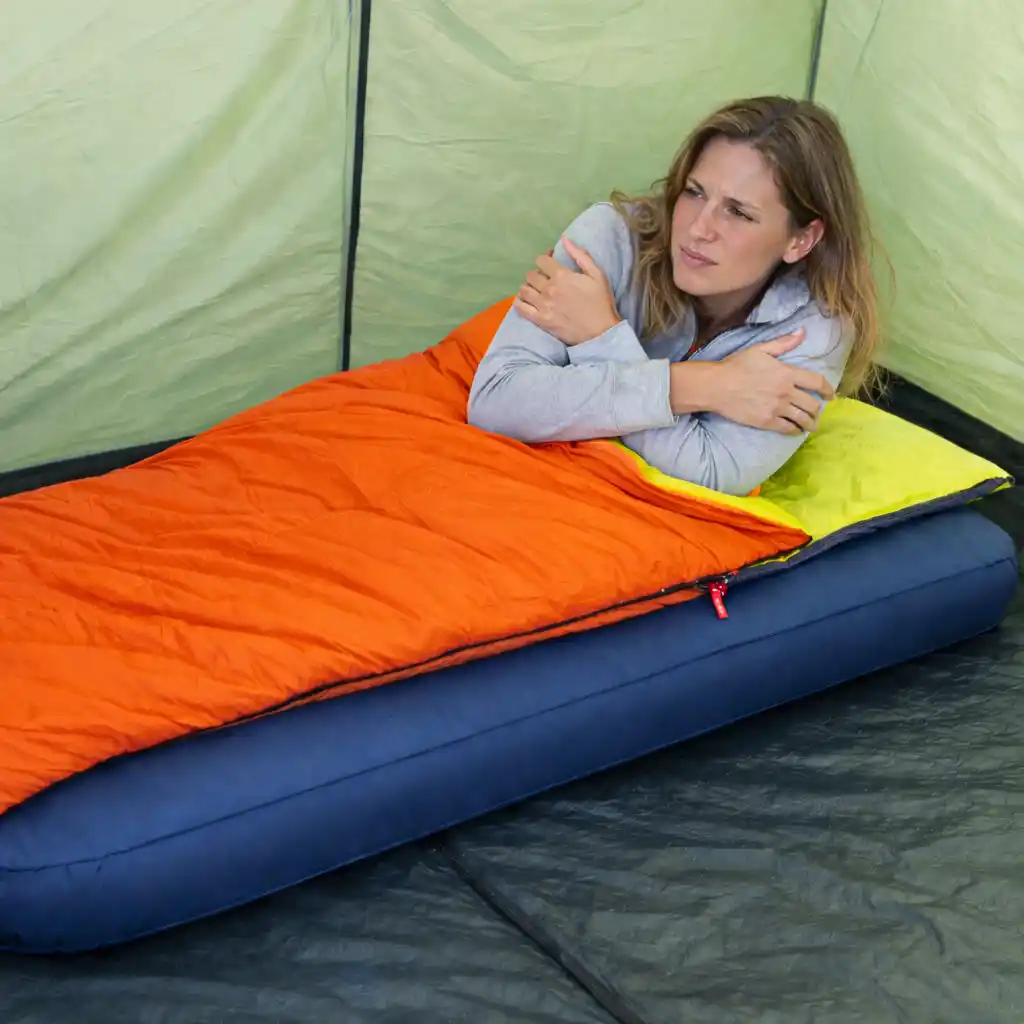
Table of Contents
Quick Answer: Why Sleeping Bags Feel Colder Near Morning
Sleeping bags feel colder near morning because multiple factors combine at the same time: overnight temperatures reach their lowest point before sunrise, your body produces less heat after hours of rest, moisture builds up inside the bag, and heat loss into the ground accumulates over time.
Even if your sleeping bag is rated for the conditions, these combined effects can make it feel noticeably colder in the early morning hours.
Quick Breakdown (What Actually Happens Overnight)
— Temperature drop peaks before sunrise
The coldest part of the night usually happens just before dawn, not at midnight.
— Your body heat output decreases
After several hours of sleep, metabolism slows and heat production drops.
— Moisture reduces insulation efficiency
Breath and sweat gradually dampen insulation, making it less effective.
— Ground heat loss builds over time
Even small heat loss into the ground becomes significant after hours of contact.
— Small setup issues become big problems
Poor insulation, small air gaps, or weak ground insulation become much more noticeable near morning.
💡 Reality Check:
If you only feel cold near morning—not at the start of the night—your gear is usually almost right, but not balanced as a full system.
What Most People Get Wrong
Most people think they need a warmer sleeping bag.
In reality:
— the problem is usually ground insulation
— or system imbalance over time
— not the bag itself
👉 Fix the system—not just the gear.
The Temperature Doesn’t Just Drop — It Bottoms Out Before Sunrise
Most people assume the coldest part of the night happens shortly after sunset.
That’s not how it works.
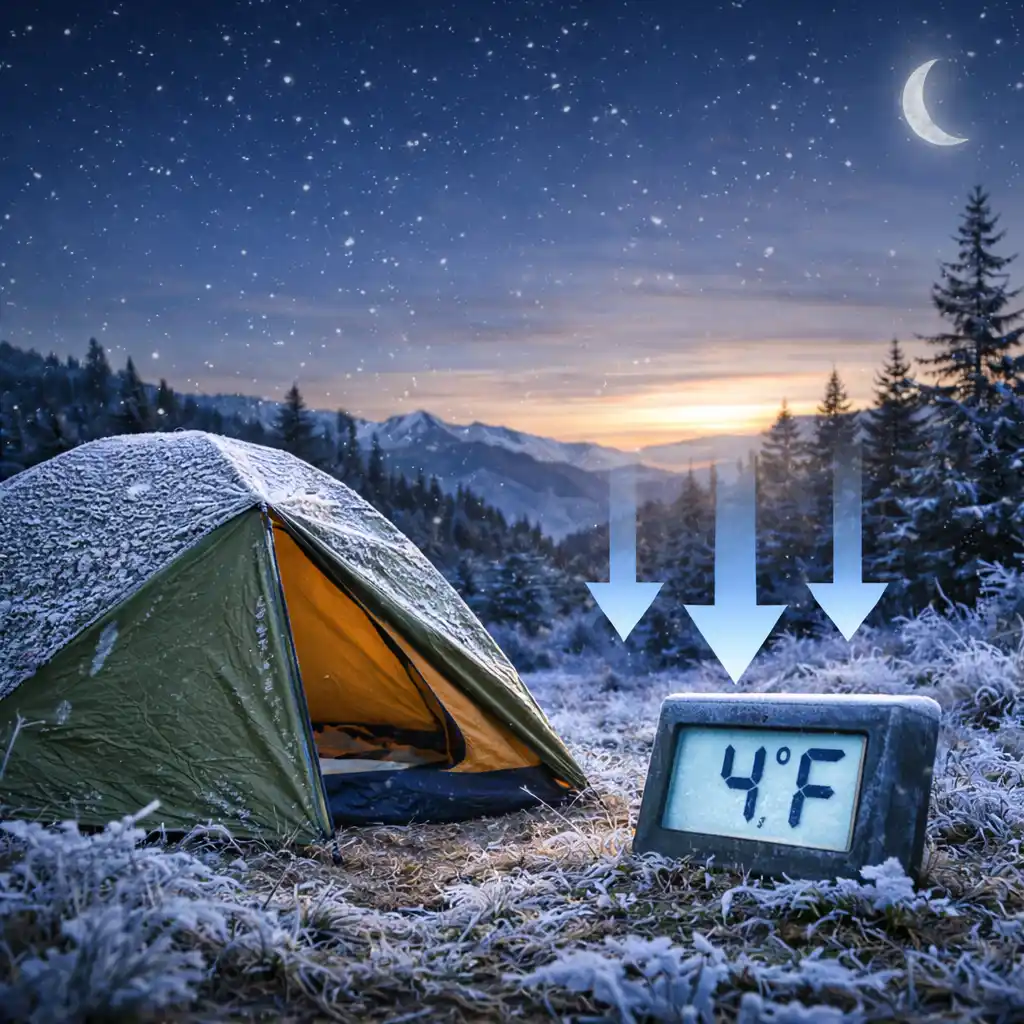
In real conditions, temperature continues to drop gradually throughout the night and typically reaches its lowest point right before sunrise.
What Actually Happens Overnight
After sunset, the ground starts losing heat through radiative cooling.
— heat escapes into the atmosphere
— no solar input replaces it
— the cooling process continues for hours
If the sky is clear and wind is low, this effect becomes even stronger.
By the time early morning approaches:
— the ground has lost heat for 6–10 hours
— ambient air temperature is at its lowest
— your entire environment is colder than it was at midnight
Why It Feels Worse Than the Numbers Suggest
Even a small temperature drop can feel significant at that point in the night.
Because you’re not just dealing with colder air—you’re dealing with:
— already reduced body heat output
— accumulated heat loss from earlier hours
— insulation that’s no longer at peak efficiency
👉 This is where many setups start to fail—not because the sleeping bag rating is wrong, but because the system is no longer balanced.
💡 Real-World Insight
If your setup felt fine at midnight but cold at 4–5 AM,
it doesn’t mean your sleeping bag is inadequate.
It means your setup was operating right at the limit—and early morning conditions pushed it past that threshold.
👉 In many environments, temperatures can drop an additional 3–7°F (2–4°C) between midnight and early morning, even when conditions seem stable.
Cold Air, Clear Skies, and Calm Wind Make the Problem Worse
Even with the same gear and setup, environmental conditions can make early-morning cold feel noticeably worse.
And this is something most guides completely ignore.
Why Clear Nights Feel Colder
On clear nights, heat escapes more efficiently from the ground into the atmosphere.
There are no clouds to trap that warmth.
As a result:
— the ground cools faster
— the air near the surface gets colder
— your entire sleep environment loses heat more aggressively
👉 This makes the temperature drop feel sharper toward morning—even if the forecast doesn’t seem extreme.
Why Calm Air Can Make It Worse
It sounds counterintuitive, but still air can actually increase how cold it feels overnight.
Without wind:
— cold air settles near the ground
— heat doesn’t mix or redistribute
— localized cold pockets form around your sleeping area
👉 This is especially noticeable in valleys, low terrain, or sheltered campsites.
Why Some Nights Feel “Colder Than Expected”
This is why you can have:
— the same sleeping bag
— the same setup
— similar forecast temperatures
…but completely different experiences between nights.
Because:
👉 environmental conditions can accelerate heat loss, even without a major temperature change.
💡 Real-World Insight
If you’ve ever had a night where everything felt fine early on—but much colder before sunrise, despite similar weather—
👉 clear skies and still air were likely part of the reason.
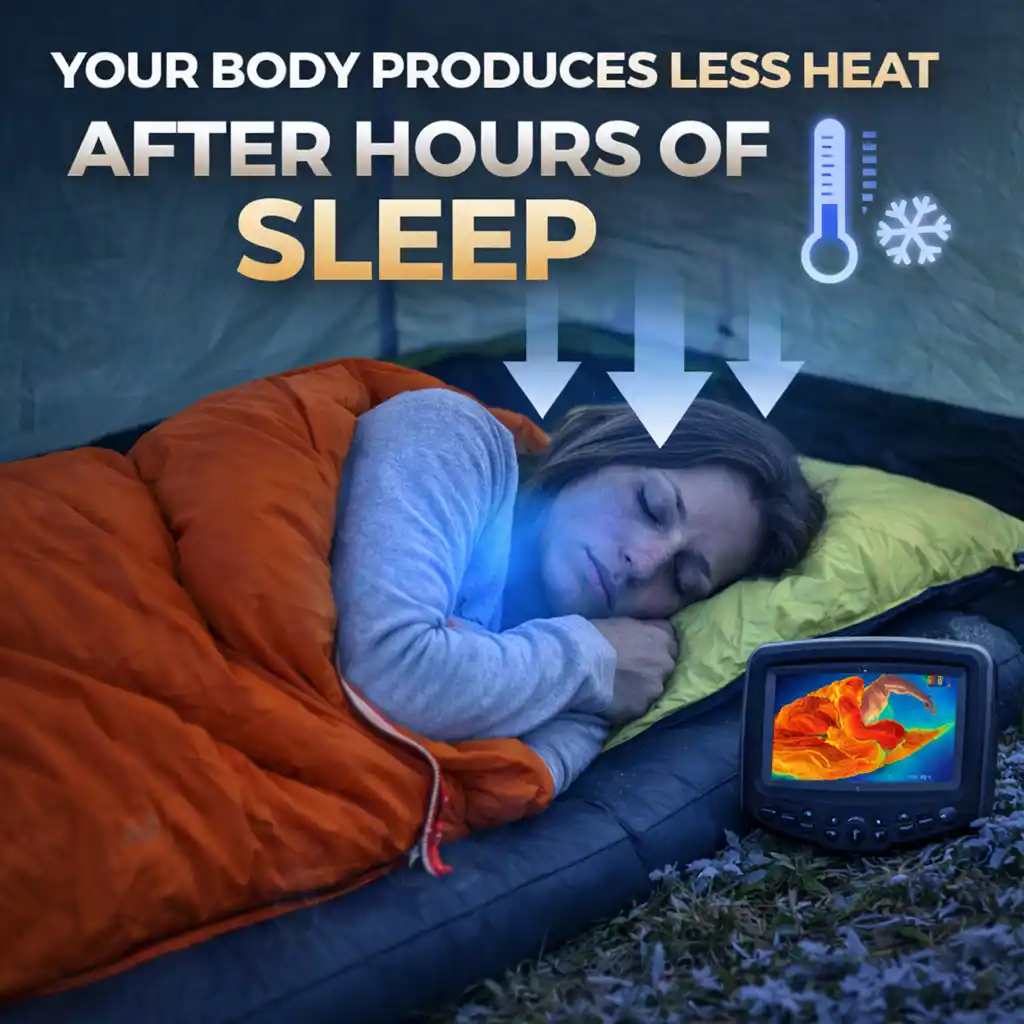
Your Body Produces Less Heat After Hours of Sleep
Even if your sleeping bag stays the same, your body doesn’t.
And that’s a big part of the problem.
At the start of the night, your body is still active:
— metabolism is higher
— circulation is more responsive
— you’re generating enough heat to “fill” the sleeping bag insulation
That’s why most setups feel warm and comfortable early on.
What Changes Overnight
After several hours of sleep, your body shifts into a lower-energy state.
— metabolism slows down
— heat production drops
— blood flow to extremities decreases
This is completely normal—but it directly affects how warm you feel.
Why This Matters Inside a Sleeping Bag
A sleeping bag doesn’t generate heat.
It only traps the heat your body produces.
So when your body starts producing less heat:
— there’s less warmth to retain
— insulation becomes less effective
— cold spots become noticeable
👉 This is why a sleeping bag that felt “perfect” at midnight can feel insufficient near morning.
Where Most Setups Fail
If your system is already close to its limit:
— borderline temperature rating
— minimal layering
— weak insulation underneath
your body can no longer compensate once heat production drops.
And that’s when the cold “suddenly” appears.
💡 Real-World Insight
This is also why:
— eating enough before sleep matters
— staying dry matters
— and having a balanced system matters more than just buying a warmer bag
👉 If your sleep system is already marginal, even small changes in heat production can make a noticeable difference by morning.
Adding an extra insulation layer can make a noticeable difference here, especially if your system is borderline (see 5 Best Camping Blankets in 2026 (Puffy, Wool & Waterproof)).
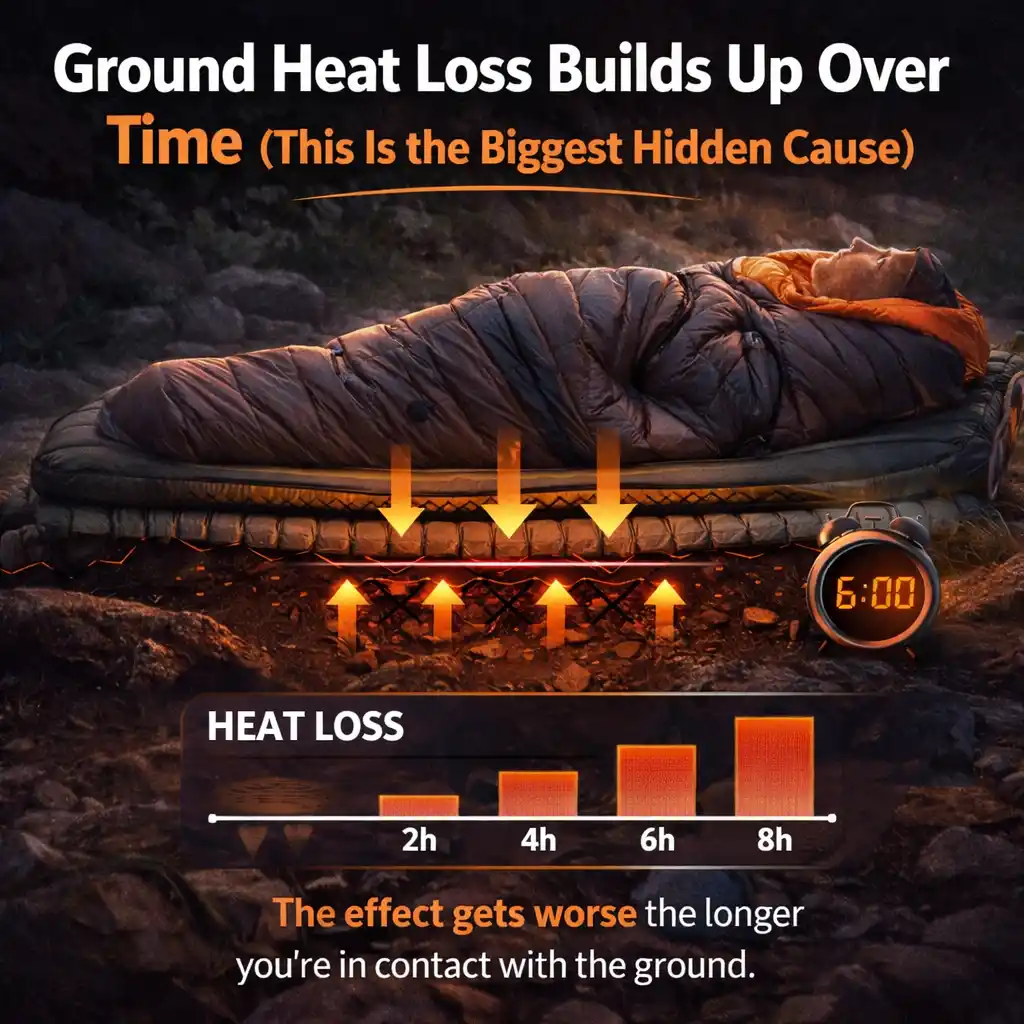
Ground Heat Loss Builds Up Over Time (This Is the Biggest Hidden Cause)
Most people blame the sleeping bag.
In reality, the biggest heat loss often happens under you—not around you.
What’s Actually Happening
When you lie down, your body compresses the insulation beneath you.
That means:
— the sleeping bag loses most of its insulating ability from below
— your body is now in direct thermal contact with the ground
— heat starts transferring downward continuously
And unlike air temperature, this heat loss doesn’t come in waves—it’s constant.
⏳ Why It Gets Worse Near Morning
This is where the timing matters.
Ground heat loss doesn’t feel dramatic at first because:
— your body is still producing enough heat
— the temperature difference is smaller early in the night
But over time:
— heat keeps draining into the ground
— your body loses stored warmth
— insulation underneath is already ineffective
By early morning, this becomes one of the dominant sources of heat loss.
Why Your Sleeping Bag Can’t Fix This
Even a high-quality sleeping bag won’t solve this problem.
Because:
— insulation only works when it’s lofted (fluffy)
— compressed insulation = almost no thermal resistance
👉 That’s why people often say:
“I have a warm sleeping bag, but I still get cold.”
They’re not losing heat to the air—they’re losing it to the ground.
💡 Real-World Insight
If you feel cold specifically:
— in your back
— in your hips
— or along pressure points
this is almost always a ground insulation issue, not a sleeping bag issue.
⚠️ Critical Takeaway
Your sleeping bag handles air temperature.
Your sleeping pad handles ground temperature.
If one fails, the whole system fails—especially near morning.
Moisture Builds Up Inside the Sleeping Bag Overnight
Even if your sleeping bag is warm and properly rated, its performance changes over time.
And one of the main reasons is moisture.
Where the Moisture Comes From
During the night, your body continuously releases moisture through:
— breathing
— sweat (even if you don’t feel it)
— body heat interacting with cooler air inside the bag
This happens slowly but constantly.
What Moisture Does to Insulation
Sleeping bag insulation works by trapping air.
But when moisture builds up:
— insulation starts to lose loft
— trapped air pockets become less effective
— heat retention drops
👉 In simple terms:
a slightly damp sleeping bag is a less efficient one.
⏳ Why You Notice It Near Morning
This is another cumulative effect.
At the beginning of the night:
— the insulation is dry
— performance is at its peak
But after several hours:
— moisture has built up inside the bag
— insulation efficiency drops
— heat loss becomes more noticeable
By early morning, this reduction is enough to make you feel colder—even if nothing else changed.
Down vs Synthetic (Real Difference)
Moisture affects insulation types differently:
— down insulation loses efficiency faster when damp
— synthetic insulation handles moisture better but still degrades over time
👉 This is why some bags feel “fine early, colder later”—especially in humid or cold-damp conditions.
Where Most People Misread the Problem
When this happens, people often assume:
— the sleeping bag is not warm enough
— or the temperature dropped too much
But in reality:
👉 the insulation is no longer performing at full efficiency
💡 Real-World Insight
If your sleeping bag feels:
— warm when you first get in
— but gradually less effective over time
moisture buildup is almost always part of the reason.
Why Sleeping Bag Temperature Ratings Don’t Always Match Real Conditions
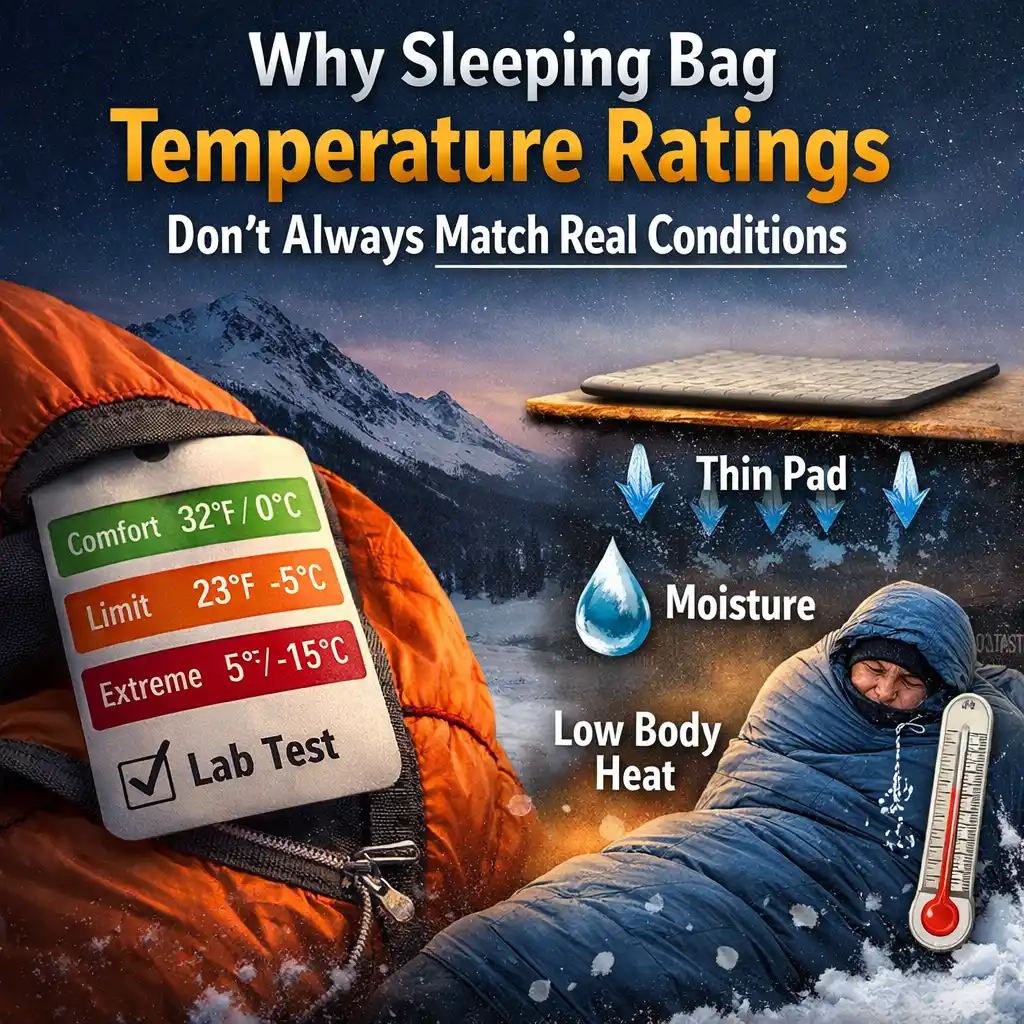
A sleeping bag temperature rating is not a guarantee that you’ll feel warm all night.
It’s a controlled benchmark—not a promise of real-world comfort.
That’s where many campers get misled.
What the Rating Actually Means
Most sleeping bag ratings are based on standardized lab testing.
According to the REI sleeping bag temperature ratings guide, sleeping bag ratings are based on controlled testing conditions and assume proper insulation underneath—something that often doesn’t match real-world setups.
That testing is useful—but it assumes a much more controlled setup than what most people experience outside.
In real conditions, how warm the bag feels also depends on:
— what you’re sleeping on
— how dry the insulation stays
— how much heat your body is producing
— how close the real temperature is to the bag’s limit
👉 A bag can be “rated” for the conditions and still feel cold near morning if the rest of the system is underperforming.
Why Real-World Warmth Feels Different
A sleeping bag rating does not account for every variable that affects overnight warmth.
For example:
— weak ground insulation can make a warm bag feel inadequate
— moisture buildup reduces insulation efficiency over time
— cold sleepers often feel the limit earlier than average sleepers
— small drops in temperature near dawn can push the system past its comfort zone
This is why two people can use the same sleeping bag in the same campsite and feel completely different by early morning.
The Biggest Mistake: Trusting the Bag and Ignoring the System
Many campers assume a colder-than-expected night means:
— the sleeping bag is bad
— the rating is wrong
— or they need a much warmer model
But often the real issue is simpler:
👉 the sleeping bag is being asked to compensate for a weak pad, damp insulation, poor layering, or low body heat output.
That’s not a bag problem.
It’s a setup problem.
Real-World Insight
If your sleeping bag only feels cold in the last part of the night, it usually means you were sleeping close to the edge of its real comfort range—not its lab rating.
And once:
— temperatures bottom out
— body heat drops
— and insulation efficiency slips
the bag no longer feels warm enough.
What to Take From This
Use sleeping bag ratings as a starting point—not the final answer.
Real warmth depends on how well your full sleep system works together through the entire night.
👉 If you want to understand why insulation underneath matters so much, see What is Camping R-Value? The Ultimate Guide to Sleeping Warm (2026).
Small Setup Mistakes Stack Together (And Hit You at the Same Time)
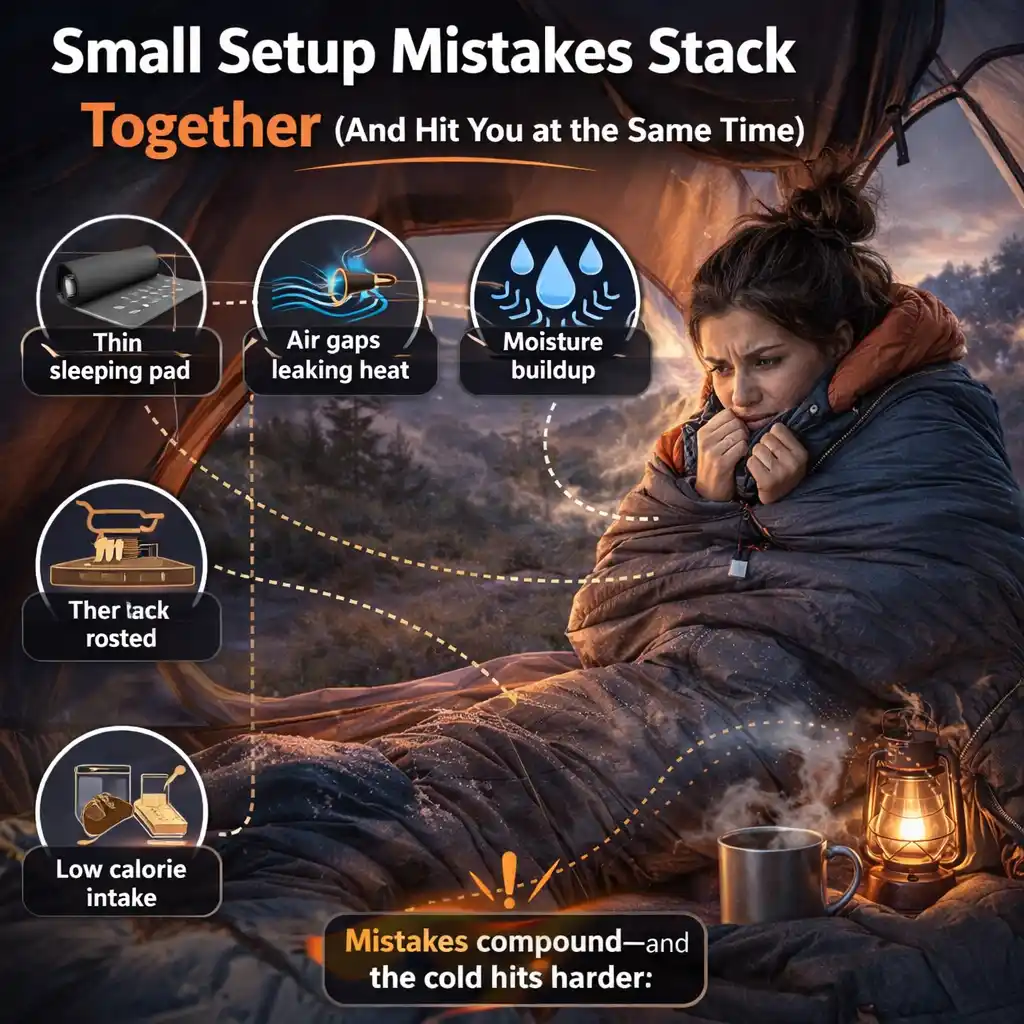
The reason sleeping bags feel colder near morning is rarely one single issue.
It’s a combination of small factors that build up over time—and peak at the same moment.
What Actually Stacks Overnight
By early morning, all of this is happening at once:
— the temperature has reached its lowest point
— your body is producing less heat
— moisture has reduced insulation efficiency
— heat loss into the ground has accumulated
Each of these alone is manageable.
Together—they create a noticeable drop in warmth.
Why It Feels Sudden
Most people describe it the same way:
“I was warm… and then suddenly I wasn’t.”
But nothing sudden actually happened.
👉 The system simply crossed a threshold.
Your setup was:
— just warm enough earlier
— but not resilient enough to handle all factors combined
Where Most People Misdiagnose the Problem
This is where mistakes happen.
People assume:
— they need a warmer sleeping bag
— or that the temperature dropped too much
But in many cases:
👉 the issue is not the bag—it’s the balance of the system
💡 Real-World Insight
If your setup only feels cold near morning:
— your gear is close to correct
— but something is slightly underperforming
That could be:
— insufficient ground insulation
— minor moisture buildup
— low calorie intake before sleep
— small drafts or gaps
Individually, these don’t matter much.
Combined—they do.
🧠 Key Takeaway
Warmth at night is not about one piece of gear.
It’s about how everything works together over time.
👉 Even small inefficiencies become noticeable when your body is at its lowest heat output and the environment is at its coldest.
The “Threshold Effect” (Why It Feels Sudden)
Your setup doesn’t fail gradually—it fails at a threshold.
As long as your body produces enough heat, everything feels fine.
But once:
— heat production drops
— heat loss increases
— insulation efficiency decreases
👉 the system crosses a line
And that’s when you suddenly feel cold.
💡 This is why it feels like:
“I was warm… and then instantly cold.”
How to Tell What’s Causing Your Early-Morning Cold
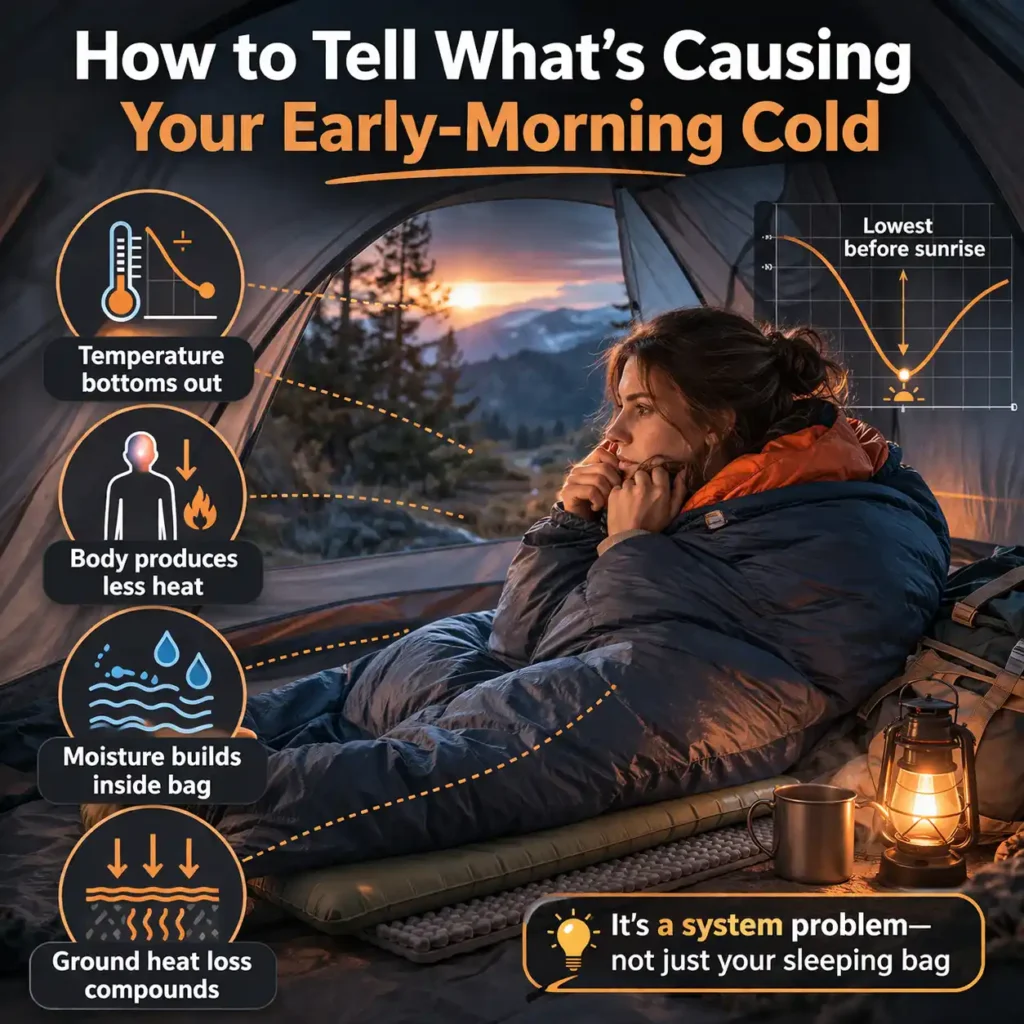
This is where most people get it wrong.
Not all cold feels the same—and where you feel it tells you what’s failing in your setup.
If you feel cold from below (back, hips, shoulders)
👉 Problem: ground insulation
— heat is being pulled into the ground
— your pad R-value is too low
— insulation is compressed
✔ Fix: improve your sleeping pad first
If you feel cold around your upper body or neck
👉 Problem: air gaps / heat escape
— hood not sealed
— gaps around shoulders
— movement opening the bag
✔ Fix: adjust fit and sealing
If you feel gradually colder over time
👉 Problem: moisture buildup
— insulation losing efficiency
— humidity inside the bag
✔ Fix: manage moisture + layering
If you feel generally cold everywhere near morning
👉 Problem: system limit reached
— bag rating too close to actual temperature
— body heat dropped below threshold
✔ Fix: add insulation layer (not replace everything)
👉 This is the difference between guessing and fixing the real issue.
Quick Diagnosis (What’s Actually Failing)
| What You Feel | What It Means | What to Fix |
|---|---|---|
| Cold underneath | Weak ground insulation | Upgrade sleeping pad |
| Warm early, cold later | Moisture + heat drop | Add top layer + stay dry |
| Cold around neck/shoulders | Air gaps | Adjust fit and sealing |
| Cold everywhere near morning | System at limit | Add insulation, not replace everything |
How to Fix It (Real Solutions That Actually Work)
If your sleeping bag feels colder near morning, the goal is not to replace everything—it’s to fix the weak points in your system.
Most of the time, small adjustments make a bigger difference than buying a warmer bag.
1. Improve Ground Insulation First
If you fix only one thing—fix this.
Heat loss into the ground is continuous, and over time it becomes the biggest factor.
👉 What to do:
— use a higher R-value sleeping pad
— add a second pad or foam layer underneath
— avoid direct contact with cold surfaces
👉 Even a small upgrade here can completely change how your setup feels by morning.
2. Add a Simple Top Layer (Instead of Upgrading Your Bag)
Before switching to a warmer sleeping bag, try layering.
👉 What works:
— a camping blanket over your sleeping bag
— an extra insulated layer around your core
— dry base layers for sleep
👉 This increases heat retention without overcomplicating your setup.
A lightweight top layer often solves early-morning cold better than upgrading your entire bag (see 5 Best Camping Blankets in 2026 (Puffy, Wool & Waterproof)).
3. Eat Before Sleep (Seriously Underrated)
Your body needs fuel to generate heat.
👉 If you go to sleep cold or under-fueled:
— your heat output drops faster
— you feel colder earlier
— recovery overnight is worse
👉 Simple fix:
— eat a warm meal or snack before bed
— stay hydrated
This alone can noticeably improve warmth.
4. Reduce Air Gaps and Drafts
Even small airflow leaks reduce efficiency.
👉 Check:
— gaps around your neck and shoulders
— zipper sealing
— hood adjustment
👉 A properly sealed sleeping bag retains heat much more effectively.
5. Stay Dry (More Important Than You Think)
Moisture kills insulation performance over time.
👉 What helps:
— dry clothes before sleep
— avoid overdressing (which can cause sweating)
— ventilate slightly if condensation builds up
👉 Dry insulation = consistent warmth.
6. Balance the System (Don’t Overcorrect One Part)
The biggest mistake is fixing only one element.
👉 Example:
— warm sleeping bag + weak pad → still cold
— good insulation + poor layering → still inefficient
👉 The goal is balance, not extremes.
💡 Real-World Insight
In most real setups, early-morning cold is not solved by buying new gear.
It’s solved by:
— fixing insulation underneath
— adding a small top layer
— managing heat and moisture
🧠 Bottom Line
If your sleeping bag feels cold near morning:
👉 your system is close—but not optimized.
Fix the weak link, and the whole setup improves.
FAQ — Why Sleeping Bags Feel Colder Near Morning
Why do I get cold in my sleeping bag at 4–5 AM?
You get cold in your sleeping bag near morning because that’s when temperatures reach their lowest point, your body produces less heat, and heat loss has accumulated over several hours.
Even if your sleeping bag was warm earlier, these combined effects can make it feel significantly colder before sunrise.
Why is my sleeping bag warm at first but cold later?
Sleeping bags feel warm at first because your body is still producing enough heat and the insulation is fully effective.
Over time, however:
— your heat output decreases
— moisture builds up
— insulation becomes less efficient
This gradual change is why warmth drops later in the night.
Why does my sleeping bag feel colder underneath me?
Your sleeping bag feels colder underneath because the insulation is compressed when you lie on it.
Compressed insulation cannot trap air, which means:
— heat escapes directly into the ground
— your body loses warmth continuously
This is one of the most common causes of feeling cold at night.
Does a sleeping bag lose warmth during the night?
Yes, a sleeping bag can feel less warm over time—not because it “loses heat,” but because its efficiency drops.
This happens due to:
— moisture buildup
— reduced loft
— body heat decreasing
So the bag performs differently after several hours of use.
Why am I cold in a sleeping bag rated for the temperature?
Sleeping bag ratings are based on controlled lab conditions and don’t fully reflect real-world use.
In reality, factors like:
— ground insulation
— moisture
— body metabolism
— airflow
can make a properly rated bag feel colder than expected.
Is it normal to feel colder right before sunrise?
Yes, this is completely normal.
The coldest part of the night typically happens just before sunrise because:
— the ground has been losing heat all night
— there is no solar warming yet
— temperatures reach their lowest point
This affects how your sleeping system performs.
How do I stop getting cold in my sleeping bag at night?
To stay warm through the entire night:
— improve ground insulation (higher R-value pad)
— add a light top layer (blanket or liner)
— eat before sleep to maintain heat production
— stay dry and reduce moisture buildup
Fixing these factors is more effective than simply buying a warmer sleeping bag.
Should I wear more clothes in a sleeping bag to stay warm?
Yes—but only if the clothes are dry and not too tight.
Wearing proper base layers helps retain heat, but:
— damp clothing reduces warmth
— tight layers can compress insulation
The goal is to support your system, not overload it.
Why do I wake up cold even with a good sleeping bag?
If you wake up cold despite having a good sleeping bag, the issue is usually not the bag itself.
Most common causes:
— insufficient ground insulation
— moisture buildup
— reduced body heat
— small air leaks or gaps
👉 In most cases, it’s a system imbalance—not a gear failure.
Final Verdict — Why Sleeping Bags Feel Colder Near Morning
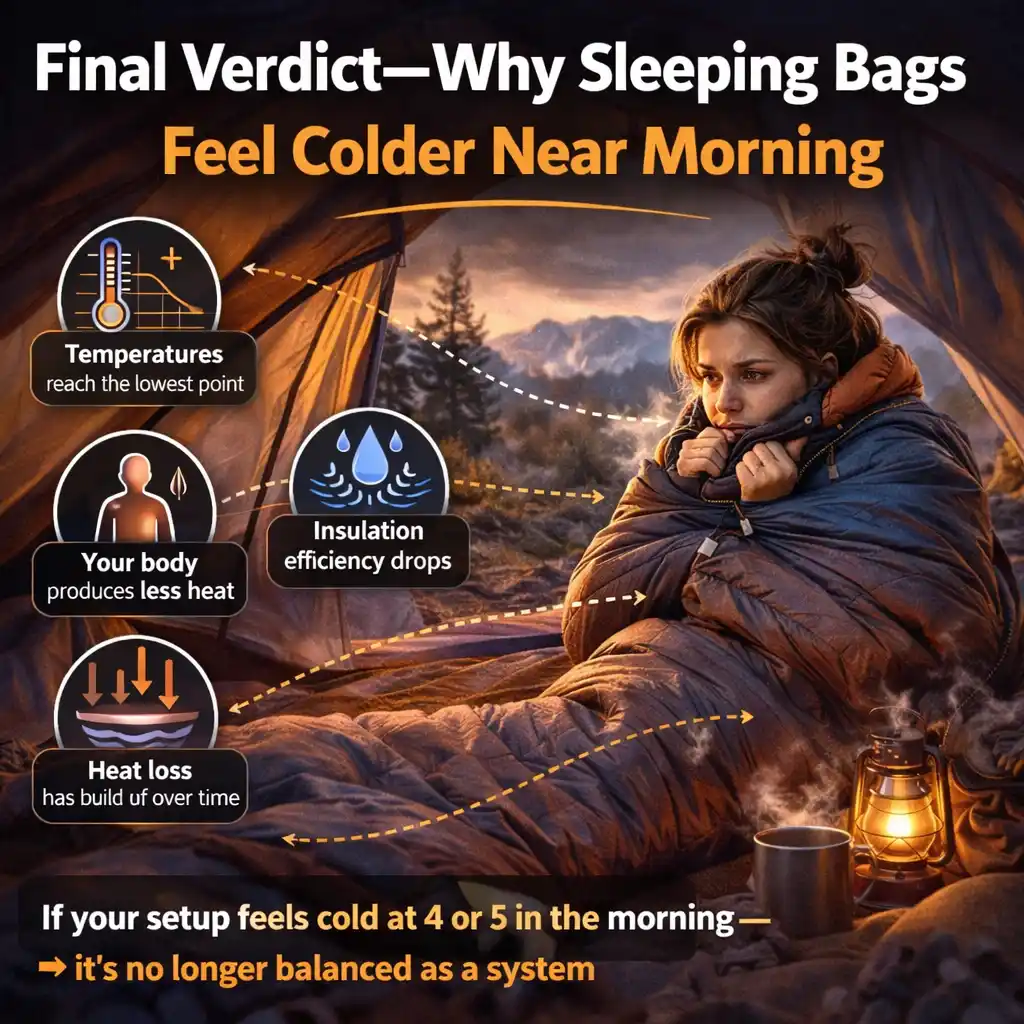
If your sleeping bag feels colder near morning, it’s not a coincidence—and it’s usually not a gear failure.
It’s the moment when everything aligns:
— temperatures reach their lowest point
— your body produces less heat
— insulation is no longer at peak efficiency
— heat loss has built up over time
And if your setup is even slightly unbalanced, this is when it shows.
What Actually Matters
A sleeping bag alone doesn’t keep you warm.
Your warmth depends on a system:
— insulation underneath you
— insulation around you
— how your body generates heat
— how well your setup holds that heat over time
When one part underperforms, the entire system becomes less effective—especially near morning.
⚡ The Simple Truth
If you feel cold only at the end of the night:
👉 your setup is close—but not optimized
And that’s good news.
Because it means you don’t need a complete overhaul—you just need to fix the weak link.
💡 Final Takeaway
The best sleep systems don’t just feel warm when you go to bed.
They stay warm when:
— your body is at its lowest energy
— the environment is at its coldest
— and your gear is no longer performing at its peak
👉 That’s the real test.
And once your setup passes it, you stop thinking about warmth altogether.
About the Author
Anthony is a Senior Gear Analyst at CampComfortGuide, specializing in real-world testing of camping sleep systems and vehicle-based setups.
His work focuses on how gear performs over time—not just when it’s new or used briefly, but after hours of exposure to cold, moisture, and changing conditions. This includes overnight temperature drops, insulation breakdown, and the subtle factors that affect comfort near morning.
Field testing spans multiple environments, from dry high-altitude conditions with rapid temperature swings to damp forest climates where moisture gradually reduces insulation performance. The emphasis is always the same: how a setup behaves after 6–8 hours, when body heat decreases and environmental stress is at its peak.
At CampComfortGuide, all gear is tested independently and purchased at retail. No sponsored placements. No paid rankings.
The goal is simple: identify what actually works in real conditions—and help build systems that stay warm, stable, and reliable through the entire night.