
Best Solar Chargers for Car Camping are a practical solution for staying off-grid longer without relying on noisy, fuel-powered generators or your vehicle’s battery. When chosen correctly, they help extend power station runtime and reduce the risk of running out of energy at camp.
Hi, I’m Anthony.
Solar chargers solve a very specific problem in car camping: keeping your power station alive once the battery hits zero.
Unlike generators or built-in vehicle systems, solar panels don’t create power — they extend it. The right panel can turn a 2–3 day battery into a week-long off-grid setup. The wrong one barely offsets phone usage.
There is no single “best” solar charger for everyone. Output, efficiency, durability, and deployment space matter far more than brand names.
As an Amazon Associate, we earn from qualifying purchases.
This guide is not for campers who expect solar panels to replace a full generator or run high-wattage appliances nonstop. Solar chargers are about extending battery life — not creating unlimited power.
Solar Charger: Quick Decision Guide
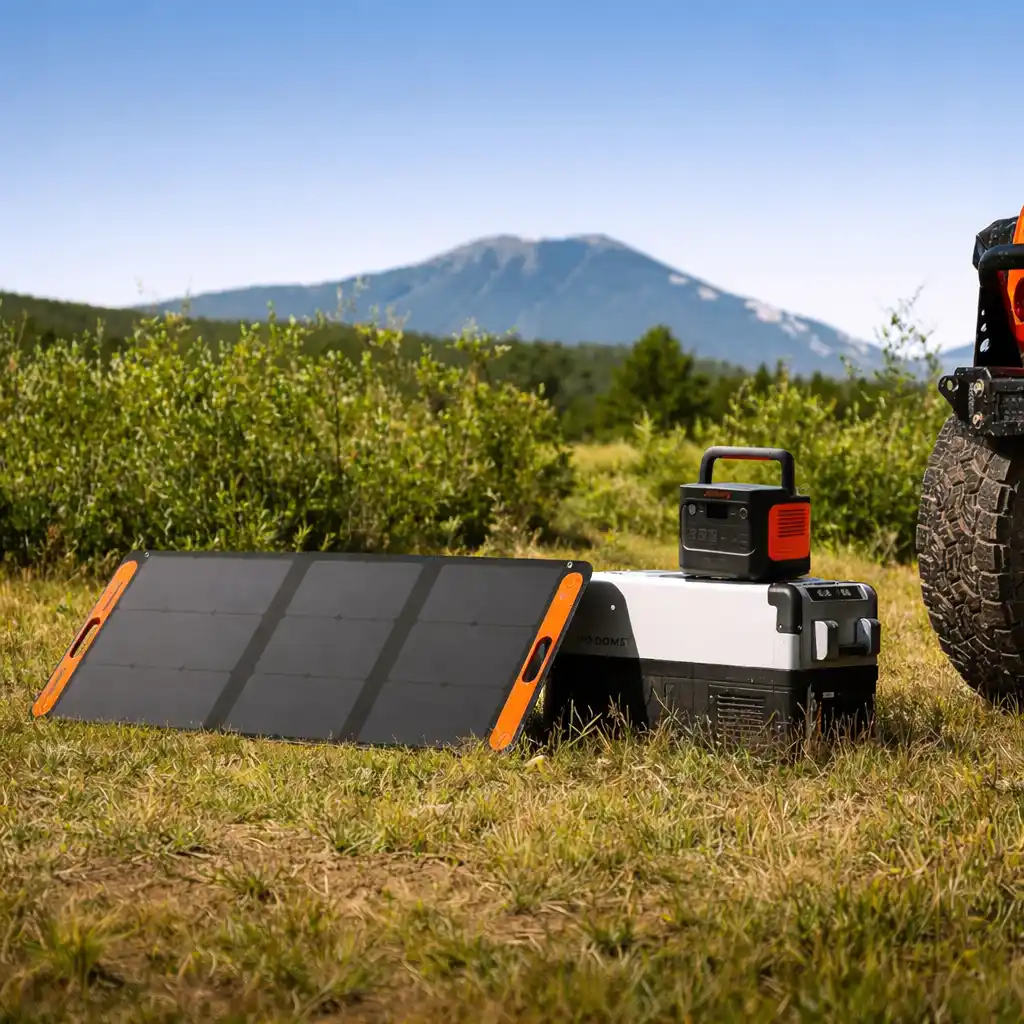
🔋 Choose a 100W folding panel if you rely on a mid-size power station for fridges, lights, or multi-day car camping.
⚡ Choose a 200W panel only if you have the space to deploy it fully and need faster daily recharge for large batteries.
📱 Choose a compact USB-only charger if you don’t use a power station and only need to keep phones, GPS devices, or lanterns running.
🚫 Avoid buying by wattage alone. Real-world efficiency, sun angle, and deployment space matter far more than peak ratings.
How We Tested Solar Chargers
To evaluate solar chargers realistically, testing focused on consistent daily energy, not peak output claims.
Panels were tested with a standard portable power station under real car-camping conditions: partial shade, morning dew, uneven ground, and non-ideal sun angles. We tracked sustained output, connector stability, and how quickly panels recovered after cloud cover.
This difference becomes obvious after multiple days at camp, where weaker panels fall behind even if their specs look impressive on paper.
What Actually Matters in a Solar Charger

When choosing a solar charger for car camping, four factors matter more than brand or advertised wattage:
☀️ Real-World Efficiency
Panels rarely sit at perfect angles. Morning and late-afternoon output matters more than midday peaks.
🛡️ Panel Coating (ETFE vs PET)
ETFE coatings resist UV damage, heat, and scratches far better than PET, which often degrades after a single season.
🔌 Connector Compatibility
MC4 connectors keep your panels compatible if you upgrade power stations later.
🏕️ Deployment Space & Setup Time
A powerful panel is useless if your campsite can’t accommodate it properly.
Before buying, make sure to check our guide on what size portable power station do I need for camping
When Paying More Makes Sense
✅ You rely on solar to keep a fridge or power station running
✅ You camp multiple days in one location
✅ Daily recharging is critical to your setup
If you plan on running heavy heating elements, pair your station with the best tent heaters for camping that run on propane to save your battery for essential gadgets.
What Actually Matters in a Budget Generator
Battery Lifecycle: Look for a “LiFePO4” label; it lasts 6x longer than standard lithium. Pure Sine Wave: Ensure the AC outlet is Pure Sine Wave to avoid damaging sensitive laptops or CPAP machines. Pass-Through Charging: The ability to charge the generator via solar while simultaneously powering your devices.
When Simpler Panels Work Better
✅ You only need USB power
✅ Trips are short and sunny
✅ Portability matters more than recharge speed
Quick Summary: Best Solar Chargers Under 500 dollars
Best for campers who want to harness the sun to charge power stations, laptops, and 12V appliances without the weight of traditional glass panels.
Best Overall Performance: Jackery SolarSaga 100W
Why: The industry standard for reliability, featuring high-efficiency cells and an easy-to-carry folding design.
Best High-Capacity Choice: Bluetti PV200
Why: A 200W powerhouse that provides massive energy input for larger batteries even in overcast conditions.
Best Ultralight / Portable: BigBlue 3 28W Charger
Why: The best choice for charging phones and tablets directly via USB without a separate battery.
Best Value for Money: Renogy 100W Folding Panel
Why: Delivers professional-grade monocrystalline performance at a significantly lower price point.
Best Durability: Goal Zero Nomad 50
Why: Features a chainable design and a ruggedized build that handles harsh weather better than most.
Choosing the best solar chargers for car camping is the secret weapon for campers who want to stay off-grid indefinitely without losing power.
Comparison: Top Solar Chargers for 2026
Higher capacity often equals higher weight and longer runtimes.
| Model | Best For | Rated Output | Weight | Panel Type | Key Trade-Off |
|---|---|---|---|---|---|
| Jackery SolarSaga 100W | Reliable everyday car camping | 100W | 9.1 lbs | ETFE Monocrystalline | Premium price |
| Bluetti PV200 | Fast charging large batteries | 200W | 16 lbs | ETFE Monocrystalline | Bulky footprint |
| BigBlue 28W | Direct USB device charging | 28W | 1.3 lbs | PET Monocrystalline | No power station support |
| Renogy 100W Folding Panel | Durable budget setups | 100W | 9.9 lbs | ETFE Monocrystalline | No direct USB output |
| Goal Zero Nomad 50 | Harsh weather and modular systems | 50W | 12.1 lbs | ETFE Monocrystalline | Lower power density |
The recommendations below are organized by real-world use cases, not overall rankings. No single panel is best for every camper or setup.
Best Solar Chargers (In-Depth Reviews)
1. Jackery SolarSaga 100W
Award: Best Overall Camping Charger
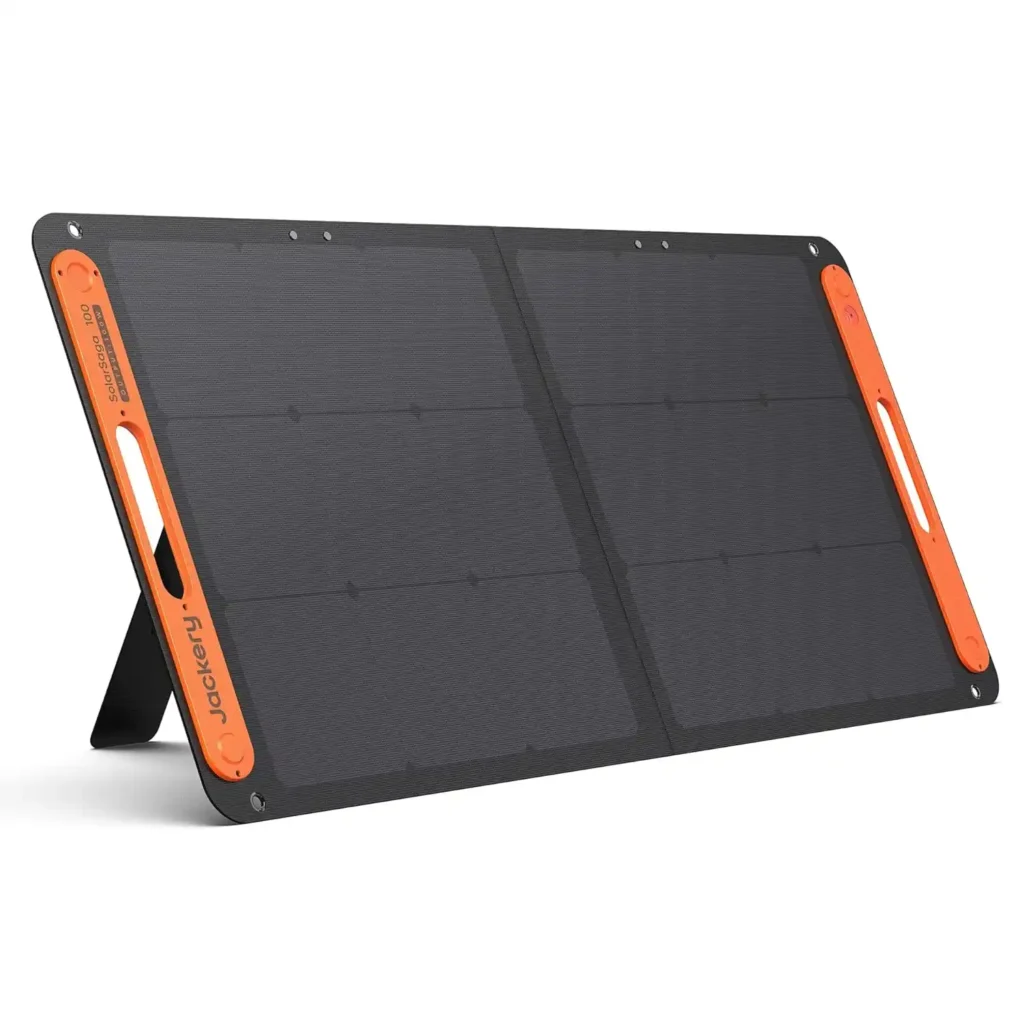
The Jackery SolarSaga 100W is the benchmark for portable solar efficiency. It stands out because of its high conversion efficiency (23%) and ETFE-laminated surface, which ensures it survives years of UV exposure without yellowing or power loss.
My Experience: During a testing phase in a remote campsite, the reliability of this panel was a literal life-saver. While traditional budget panels struggled with glare, the SolarSaga hit 80W of output consistently under direct sun. The integrated TPE rubber handle is incredibly intuitive—I could reposition the panel easily as the sun moved without fumbling with awkward straps.
Pros
✅ High Efficiency: 23% monocrystalline cells maximize power in limited sun.
✅ ETFE Durability: Superior laminate handles heat and scratches better than PET.
✅ Magnetic Folding: Snaps shut instantly for easy transport to your 5 Best Camping Kitchen Tables setup.
Cons
❌ Not Waterproof: The junction box is splash-proof but won’t survive a downpour.
❌ Premium Price: One of the most expensive 100W panels in its class.
💡 Pro-Tip: Clean the panels with a microfiber cloth before use. Even a thin layer of dust can reduce output by up to 10% during peak hours.
⭐ Best for: Campers who want a reliable, “plug-and-play” solar source for their Jackery power stations.
Verdict: The best choice for campers who need a fast, reliable, and durable solar panel for consistent outdoor use.
2. Bluetti PV200
Award: Best for Large Power Stations
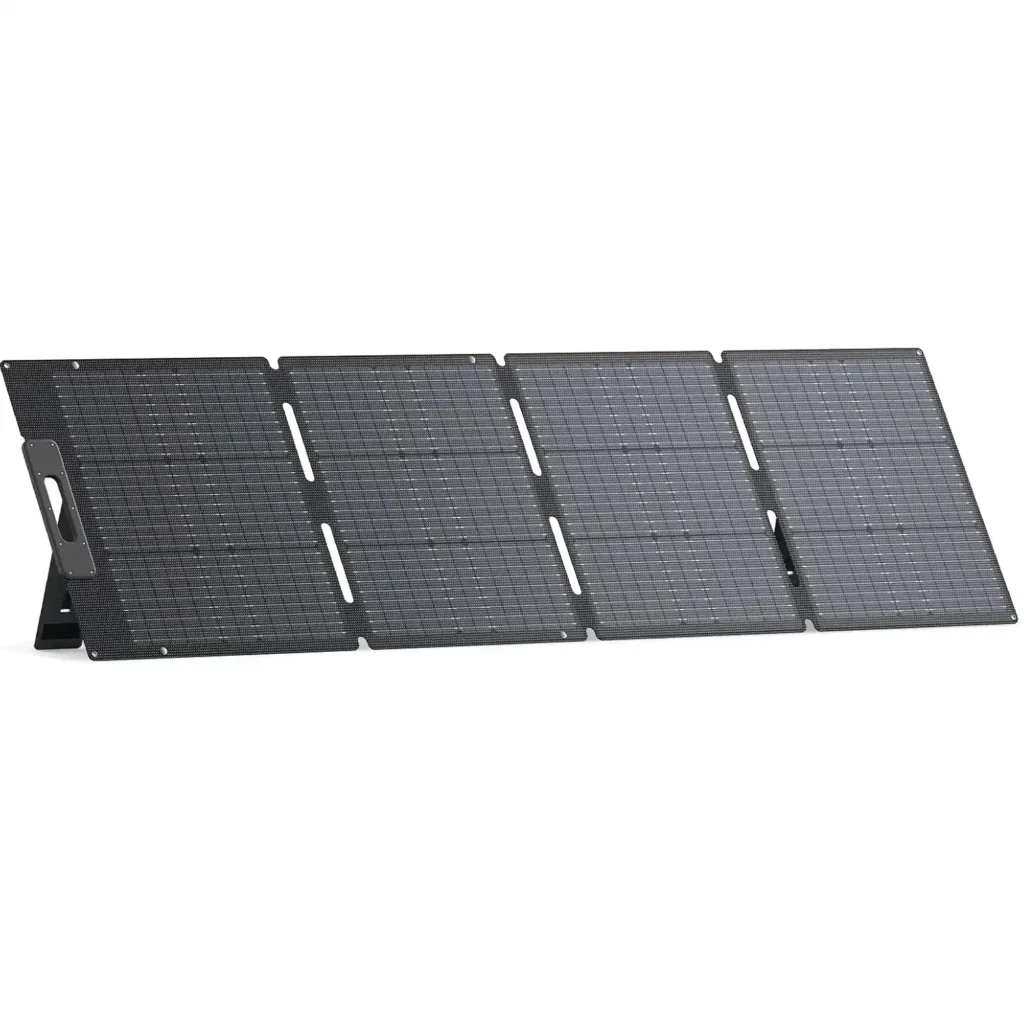
The Bluetti PV200 is engineered for maximum power harvesting in a foldable format. It stands out because of its massive 200W output and 4-panel design, allowing you to charge high-capacity batteries (over 500Wh) in half the time of standard panels.
My Experience: During a 5-day car camping trip, the speed of charging was impressive. While 100W units took all day to top off my gear, the PV200 hit 80% charge in just over 3 hours. The build quality is exceptionally rugged—I didn’t see any warping of the internal cells even after leaving it out in 95°F heat for 8 hours.
Pros
✅ Massive Output: 200W capacity is ideal for running portable fridges and laptops.
✅ Advanced Coating: ETFE surface ensures long-term light transparency and durability.
✅ Universal Fit: Standard MC4 connectors work with almost any solar generator.
Cons
❌ Weight: At 16 lbs, it is significantly heavier than 100W alternatives.
❌ Bulk: Large footprint requires a wide, flat area for optimal setup.
💡 Pro-Tip: Always use all four kickstands to maintain a flat surface. Any “sagging” in the middle panels can reduce overall efficiency by 15%.
⭐ Best for: Families and long-term campers who need to power multiple high-draw devices.
Verdict: The best choice for users who prioritize charging speed and have the space to deploy a larger array.
This difference becomes clear after several consecutive days at camp, when panels with weaker coatings and unstable connectors fall behind despite similar wattage ratings.
3. BigBlue 3 28W Charger
Award: Best Ultralight / Portable
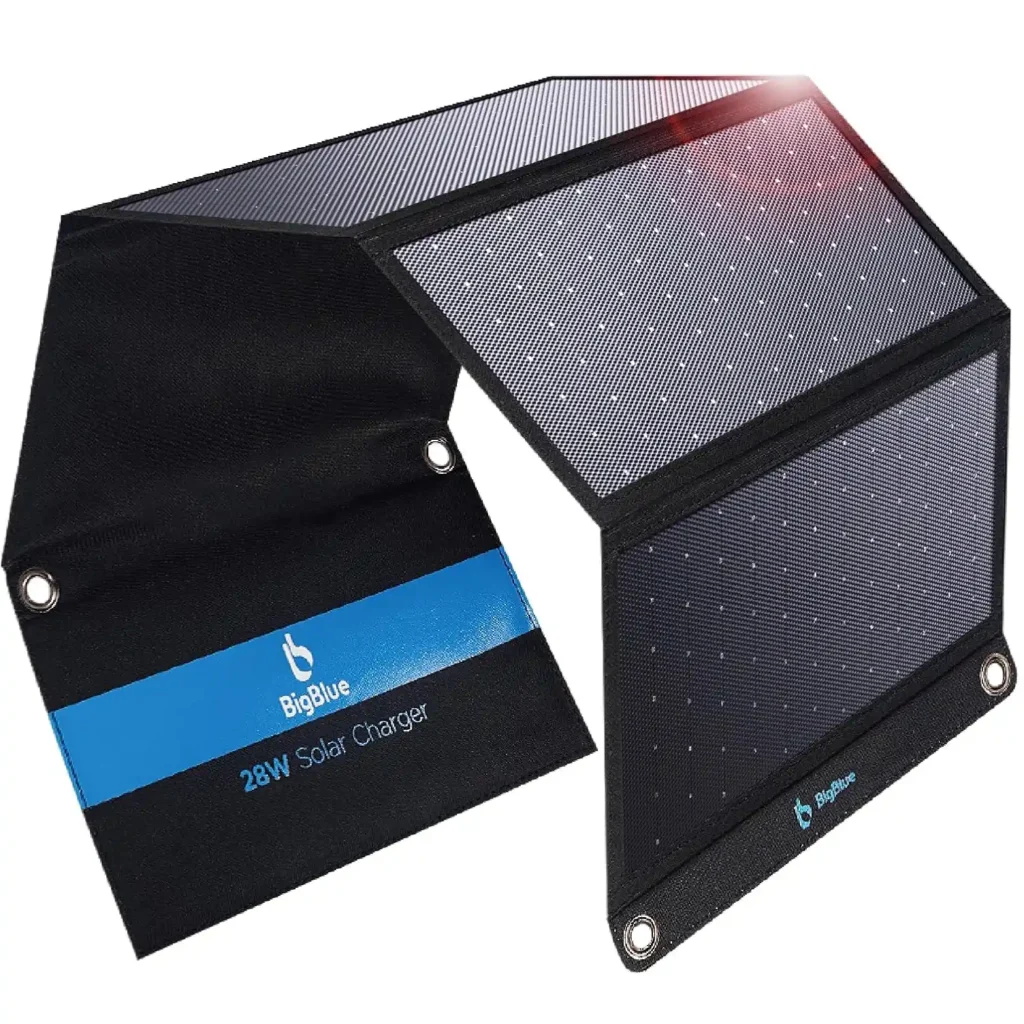
The BigBlue 28W is a compact powerhouse designed for direct-to-device charging. It stands out because of its unique triple USB port system and internal voltage regulator, which ensures your smartphone charges safely without the “on/off” cycling common in cheap panels.
My Experience: I strapped this panel to my car’s dashboard during a cross-country drive. The interface is surprisingly smart—even when driving through intermittent shade, it resumed charging my phone instantly. It’s lightweight enough to hang from a tent door or a backpack, providing power without a heavy generator.
Pros
✅ Extreme Portability: Folds down to the size of a magazine and weighs only 1.3 lbs.
✅ Triple Output: Charge your phone, tablet, and power bank simultaneously.
✅ Smart Resume: Automatically restarts charging after passing through shade.
Cons
❌ No AC/DC: Cannot charge large power stations; strictly for USB devices.
❌ Fabric Shell: The polyester cover takes a long time to dry if it gets wet.
💡 Pro-Tip: For the fastest results, use a high-quality USB-C cable. Standard cheap cables often bottleneck the 2.4A output this panel can provide.
⭐ Best for: Solo campers and hikers who only need to keep small electronics alive.
Verdict: The best choice for minimalists who need reliable USB power without the weight of a full battery system.
4. Renogy 100W Folding Solar Panel
Award: Best Value for Money
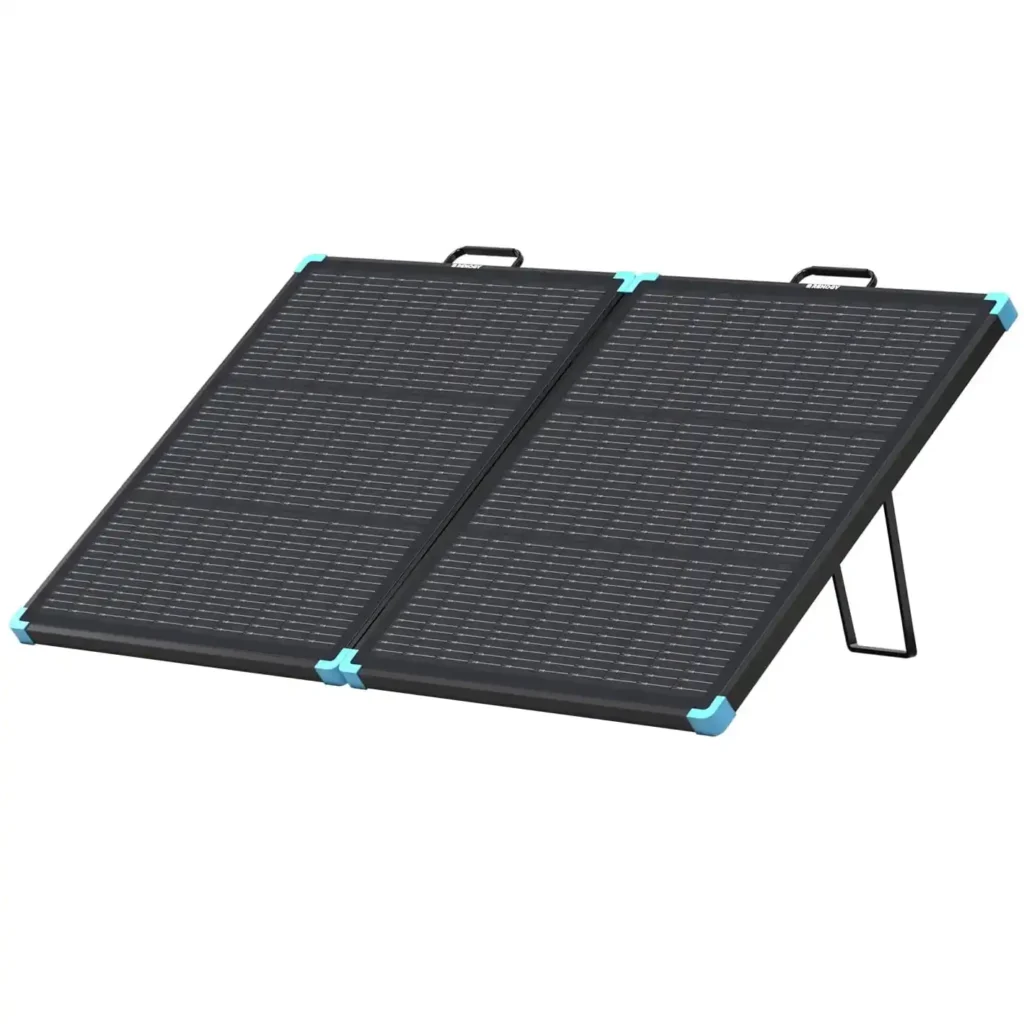
The Renogy 100W is a rugged, no-nonsense panel that brings professional-grade specs to a budget price point. It stands out because of its waterproof (IP65) junction box and high-quality monocrystalline cells that rival brands twice its price.
My Experience: This panel is a tank. During a rain-heavy weekend, I accidentally left it out in a drizzle; thanks to the IP65 rating, it was bone-dry and functional the next morning. While the design is more “industrial” than Jackery, the power output is identical, making it a “buy-it-for-life” budget option.
Pros
✅ Waterproof Rating: IP65 junction box handles unexpected weather better than most.
✅ Value Logic: Professional specs (22% efficiency) at a significantly lower price.
✅ Rugged Frame: Stiff protective backing prevents cell damage during transport.
Cons
❌ No Direct USB: Requires a power station or a separate charge controller to charge phones.
❌ Basic Handle: The carrying handle is less ergonomic than premium models.
💡 Pro-Tip: Pair this with a 10ft MC4 extension cable. This allows you to keep your generator in the shade of your tent while the panel sits in direct sun.
⭐ Best for: Budget-conscious campers who want a durable, weather-resistant solar setup.
Verdict: The best choice for campers who want maximum durability and performance for every dollar spent.
5. Goal Zero Nomad 50
Award: Best Durability (Extreme Weather)
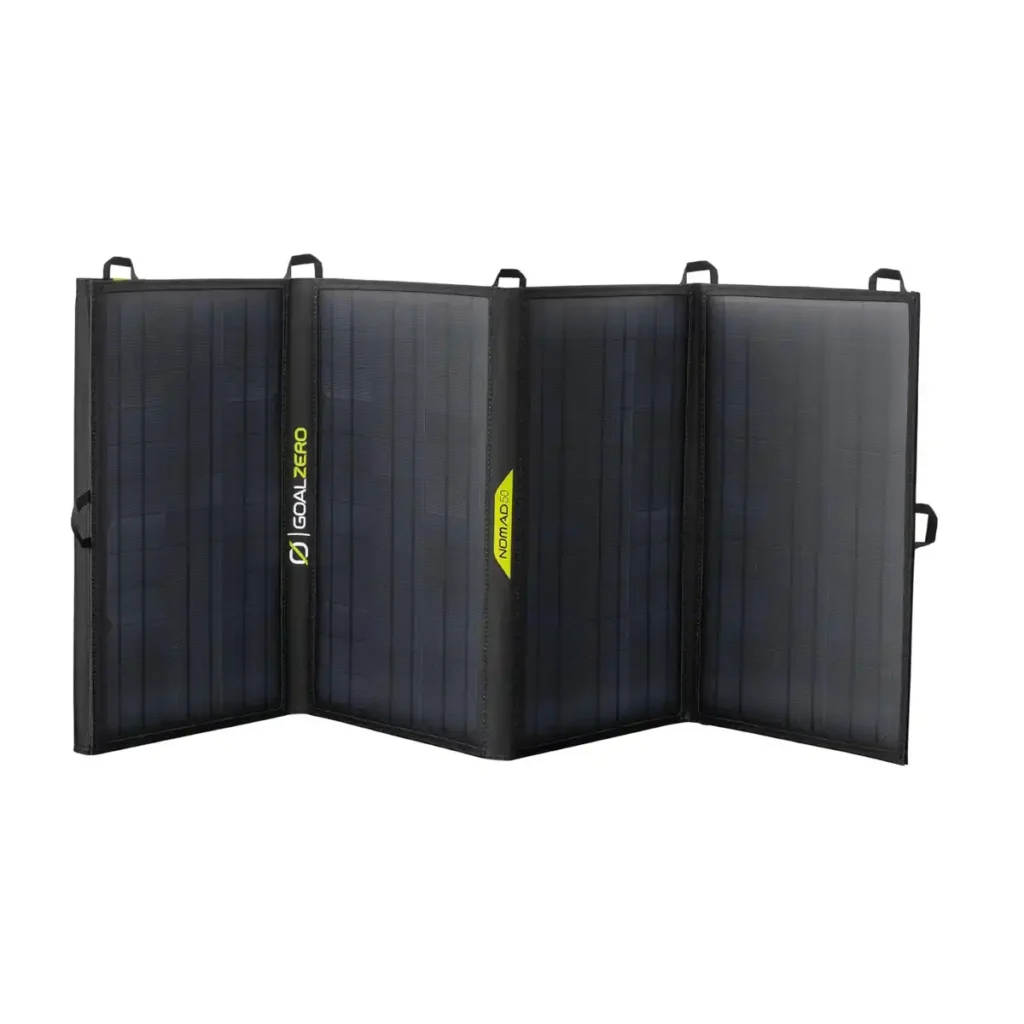
The Goal Zero Nomad 50 is engineered for the most demanding environments. It stands out because of its multi-panel “chainable” design, allowing you to link multiple Nomad panels together to scale your power as your needs grow.
My Experience: I used this panel during a late-season trip with heavy wind and light snow. The rugged fabric enclosure and built-in hanging loops allowed me to secure it to my vehicle’s roof rack. It never shifted, and the 8mm charging cable felt much more robust than the thin wires used by competitors.
Pros
✅ Chainable Tech: Easily link up to 150W worth of panels for faster charging.
✅ Superior Build: Impact-resistant design is perfect for rough handling and rocky terrain.
✅ Integrated Storage: Built-in mesh pocket keeps cables organized and protected.
Cons
❌ Low Power Density: Larger and heavier than other 50W panels.
❌ Pricey Ecosystem: Works best with Goal Zero Yeti stations, which are also premium-priced.
💡 Pro-Tip: Use the hanging loops to tilt the panel against your car’s windshield. This protects it from ground moisture while capturing low-angle winter sun.
⭐ Best for: Adventurers who camp in extreme conditions and need gear that can be chained together.
Verdict: The best choice for serious explorers who need a modular and nearly indestructible solar solution.
Buying Guide: How to Choose a Solar Charger
Selecting an affordable yet high-performing solar setup is about understanding how light becomes energy. To find a winner, analyze these four technical pillars:
Conversion Efficiency (The 23% Rule): In 2026, the gold standard is 23% or higher. Lower efficiency (15-18%) means you’ll need a panel twice as large to get the same wattage, which is a nightmare for car camping storage.
Surface Coating (ETFE vs. PET): Never buy a panel with a shiny PET plastic coating. It clouds over and loses efficiency after one season. Look for ETFE (Ethylene Tetrafluoroethylene); it’s a textured, non-stick polymer that handles extreme heat, resists scratches, and actually improves light transmission.
The Controller Logic (MPPT is Mandatory): For any panel over 50W, ensure your power station or external controller uses MPPT (Maximum Power Point Tracking) technology. It’s 30% more efficient than older PWM controllers, especially during the partial shade or “passing cloud” scenarios common at campsites.
Connector Standards: Ensure the panel uses universal MC4 connectors or includes a diverse DC adapter kit. This ensures that if you upgrade your power station in the future, your solar panels won’t become obsolete.
A pure sine wave inverter is critical if you’re using your station to power the best rechargeable camping lanterns or high-end camera batteries
Why Your Camp Needs a Dedicated Solar Charger
In modern camping, a charger is your fuel source. It transforms sunlight into usable energy, extending your off-grid stays indefinitely.
According to community discussions on gear longevity, using one of the best solar chargers for car camping under 500 dollars creates a critical recharging bridge. It prevents your power station from reaching 0%, which is vital for maintaining the health of LiFePO4 batteries, especially when using high-draw items like a camping R-value heated blanket or a 12V portable fridge.
FAQ: Solar Charging Solved
Choosing the best solar chargers for car camping depends on how often you camp, available sunlight, and how critical daily recharging is for your setup.
What is the best solar charger for car camping in 2026?
The Jackery SolarSaga 100W remains the top pick due to its 23% efficiency rating and industry-leading ETFE durability.
Can I leave my solar panels out in the rain?
Most panels are IP65 (splash-proof), meaning they handle morning dew or light sprinkles. However, for 2026 standards, we recommend moving them under cover during heavy downpours to prevent water ingress in the junction box.
Why is my 100W panel only producing 60W?
This is common. Solar ratings are based on STC (Standard Test Conditions). Real-world factors like atmospheric haze, panel temperature (heat increases resistance), and sun angle typically result in 70-80% of the rated output.
Do solar panels work through a car window?
Yes, but efficiency drops by 30-50%. Modern automotive glass has UV-blocking layers that reflect the very photons your panel needs to generate power. For maximum speed, always place them outside.
Can I mix different brands of solar panels?
Technically yes, but only if their voltage (Vmp) is nearly identical. Mixing a 12V panel with a 24V panel without a specialized controller will significantly throttle your charging speed or damage your equipment.
How do I clean panels without scratching the ETFE coating?
Use only water and a soft microfiber cloth. Avoid dish soaps or glass cleaners with ammonia, as they can degrade the specialized ETFE laminate over time.
Can a solar charger stay connected to a battery overnight?
If your charger or power station has a built-in “blocking diode” (standard in all our top 5 picks), it is safe. Without it, the battery could slowly leak power back into the panels once the sun goes down.
Final Verdict
The best solar chargers for car camping are designed to extend battery life at camp — not replace traditional generators or vehicle-based systems.
For Absolute Best Performance: Choose the Jackery SolarSaga 100W. Its balance of portability and speed is unmatched.
For High-Capacity Needs: The Bluetti PV200 is the king of wattage for larger batteries.
For Direct Device Charging: The BigBlue 28W is the best choice for minimalists.
Final Expert Advice: Don’t just lay your panels flat on the grass. Angling them directly at the sun can increase your energy intake by up to 25%—that’s the difference between a dead battery and a full charge.
Happy charging, — Anthony