
Keeping a campsite clean is much easier when your trash has a proper place to go. A loose garbage bag may work for a short stop, but during a longer camping trip it can quickly become a problem when wind, rain, food odors, or curious animals are involved.
The best camping trash cans give you a more practical way to contain everyday waste while keeping your campsite organized. Collapsible designs are especially useful for car camping because they take up little storage space when packed, while models with secure lids or better waste containment can help reduce odors, limit exposure to insects, and make it easier to keep campsite waste contained.
In this guide, we compare the best camping trash cans for 2026, focusing on durability, capacity, portability, ease of use, odor control, and how well each design fits real-world camping conditions. Whether you need a compact trash can for a weekend campsite or a larger solution for family car camping, we’ll help you choose the right option without paying for features you don’t actually need.
As an Amazon Associate, we earn from qualifying purchases.
Table of Contents
Quick Answer: Which Camping Trash Can Is Best?
Choosing the right camping trash can depends mainly on how much waste you produce, how you travel, and how much space you have available at camp and in your vehicle. For most campers, the best choice is a collapsible model that provides enough capacity for the trip without creating unnecessary storage or transportation problems.
For family camping trips, a larger freestanding model can make it easier to manage several days of food packaging and household waste. If storage space is limited, a compact pop-up design is usually the better choice because it can be folded down when not in use.
The most important features to consider are capacity, stability, weather resistance, odor control, liner compatibility, and ease of storage. A good camping trash can should contain waste securely without becoming another piece of equipment that is difficult to transport or frustrating to use.
Our recommendation: For most campers, Coghlan’s Deluxe Pop-Up Trash Can is the strongest all-around choice, while the CDLXSH is better for compact setups, the Leinoupt is the more portable option, the Bethshaya is better suited to wet conditions, and the GNTR Supply model makes the most sense when large capacity and budget value are the priorities.
Why We Can Trust This Guide
At Camp Comfort Guide, we focus on practical camping gear and real-world campsite needs. Our recommendations consider the features that matter most when managing waste outdoors, including durability, portability, capacity, stability, ease of use, waste containment, and practical storage.
We evaluate camping products independently by comparing their published specifications, construction, design features, intended use, and practical considerations for camping. We look beyond marketing claims to identify where each product is most useful, where its limitations matter, and which type of camper is most likely to benefit from it.
How We Evaluated Camping Trash Cans

A camping trash can has a simple job, but outdoor conditions can make that job surprisingly demanding. A design that works well in a kitchen or garage may become inconvenient at a campsite when it has to handle wind, uneven ground, food waste, limited storage space, and repeated use throughout a trip.
To evaluate the options in this guide, we focused on the characteristics that make a camping trash can genuinely useful for everyday campers rather than simply adding features for the sake of a product specification sheet.
Capacity & Size
Capacity should match the number of people camping and the length of the trip. A compact container may be convenient for a couple on a weekend trip, while families and larger groups generally need more room for food packaging, disposable items, and other campsite waste.
We also consider the packed size. A camping trash can that provides useful capacity but folds or collapses easily can be much more practical for car campers who need to fit several pieces of gear into limited storage space.
Stability & Outdoor Use
A trash container needs to stay where you put it. Lightweight designs can be useful for transportation, but they should still remain reasonably stable when used outdoors.
We look at the overall structure, base design, closure system, and how easily the container can be positioned at a campsite. Stability becomes particularly important when the trash can is placed near a camp kitchen or exposed to wind.
Odor & Waste Containment
Food waste can quickly create unpleasant odors and attract insects or unwanted wildlife. For that reason, we pay attention to how effectively each design contains waste and whether it provides a secure way to close or cover the opening.
A good camping trash can does not necessarily need an elaborate odor-control system. What matters is whether its design helps keep waste contained between disposal runs.
Durability & Weather Resistance
Camping equipment is exposed to conditions that indoor trash cans rarely encounter. Dirt, moisture, sunlight, rough handling, and repeated packing can all affect how long a product remains useful.
We therefore consider materials, construction quality, seams, closures, and other components that can influence durability during repeated outdoor use.
Ease of Cleaning & Liner Compatibility
A camping trash can should not become difficult to clean after dealing with food waste. Designs that work with common trash bags or removable liners can make setup and cleanup considerably easier.
We also consider whether the interior and exterior can be wiped down without unnecessary effort, particularly after spills or leaks.
Portability & Storage
For car campers, portability does not necessarily mean the lightest possible product. It means a trash can that is easy to carry, pack, store, and set up when you arrive.
Collapsible and foldable designs can have a significant advantage here because they take up less space between trips while still providing useful capacity at the campsite.
Value for Money
Finally, we consider whether the features and construction justify the price. The most expensive camping trash can is not automatically the best choice, particularly when a simpler design can perform the same essential job effectively.
Our goal is to identify options that provide a sensible balance of capacity, durability, convenience, portability, and real-world value for the way everyday campers actually use them.
Bottom line: The best camping trash can is not the one with the longest feature list. It is the one that keeps waste contained, fits your camping setup, and remains easy to use from setup to cleanup.
What Makes a Good Camping Trash Can?
A good camping trash can needs to do more than simply hold a garbage bag. At a campsite, wind, rain, insects, food scraps, limited space, and frequent movement can quickly turn an ordinary container into a problem.
The most useful camping trash cans are designed around containment and convenience. A stable base helps prevent the can from tipping when the campsite gets windy, while a secure opening or closure helps keep lightweight waste from blowing away. For campsites where food is prepared, containing scraps and packaging is especially important because exposed waste can attract insects and other unwanted visitors.
Capacity also matters more than it might seem. A container that is too small can require constant bag changes, while an oversized model may take up valuable space around a camp kitchen or inside a vehicle. The right size depends on the number of campers, trip length, and how much cooking you expect to do.
Another important consideration is how easily the trash can works with standard garbage bags. A practical design should make bags easy to install, secure, remove, and replace without turning cleanup into a separate chore. Materials should also be durable enough for repeated outdoor use and simple enough to wipe clean after a messy trip.
For most campers, the goal is not to find the largest or most complicated trash container. It is to find one that keeps waste contained, stays stable, fits the campsite, and makes cleanup easier. Those basic qualities become particularly important when choosing a trash can for car camping, family camping, or a dedicated outdoor kitchen setup.
Who Should Choose a Camping Trash Can?
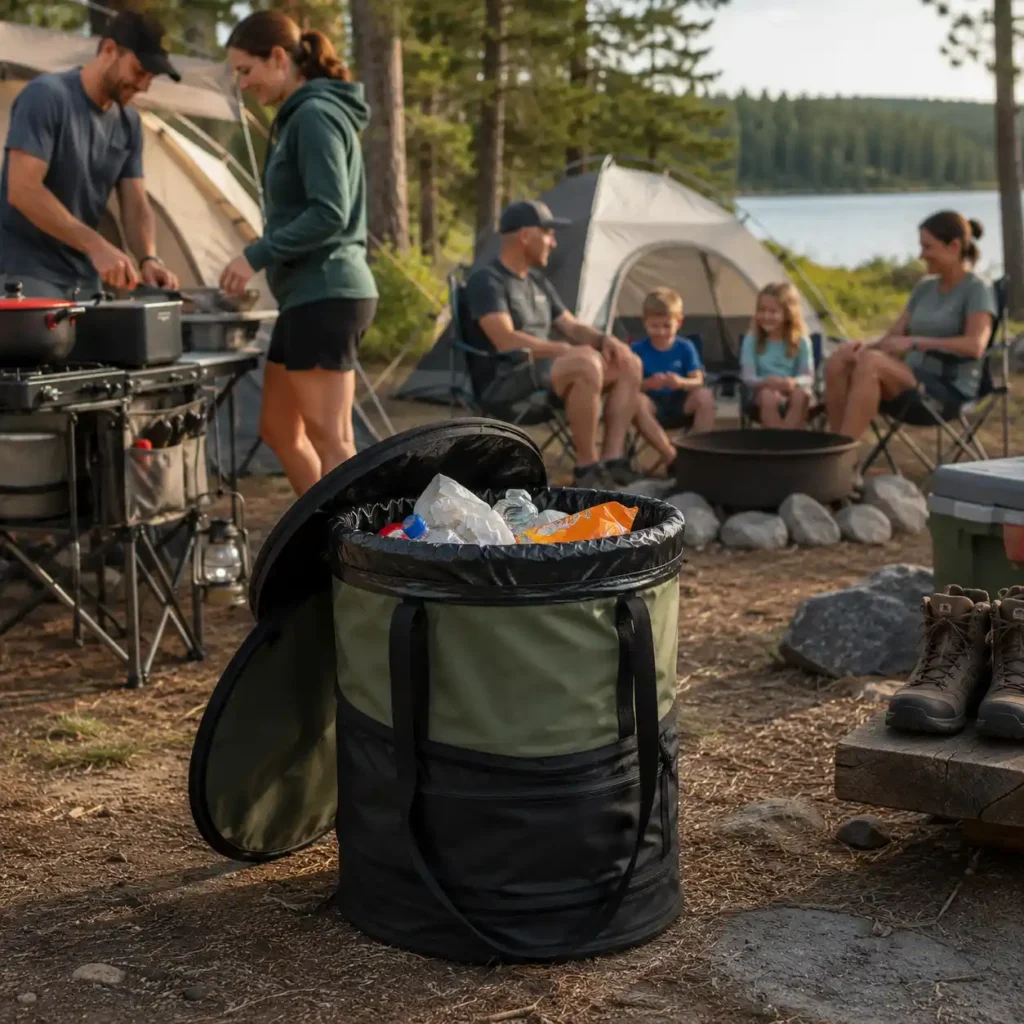
A dedicated camping trash can is especially useful for campers who want to keep waste contained, organized, and easy to manage throughout the trip. It becomes more valuable as the number of people, meals, and days at the campsite increases.
Family Campers
Families can produce a surprising amount of waste from food packaging, drinks, snacks, and everyday campsite activities. A dedicated trash can keeps garbage in one predictable location and makes cleanup easier for everyone.
Car Campers
For car camping, portability and organization are often more important than minimizing every ounce of weight. A camping trash can can provide a designated waste station without taking up unnecessary space around the campsite or inside the vehicle.
Camp Kitchen Setups
If you regularly cook at camp, having a trash container close to the cooking area can make food preparation and cleanup much more efficient. It gives packaging, food scraps, and used disposable items a defined place instead of leaving waste scattered around the kitchen area.
Longer Camping Trips
The longer you stay at a campsite, the more useful organized waste storage becomes. A suitable trash can can reduce loose garbage around camp and make it easier to manage waste before making a trip to the appropriate disposal point.
Campers Who Deal With Wind or Insects
Open garbage bags can be easily disturbed by wind and may attract insects when food-related waste is exposed. A camping trash can with a stable structure and appropriate closure can provide better containment than simply leaving a bag on the ground.
Bottom line: A camping trash can makes the most sense when waste management is becoming part of your campsite setup rather than an afterthought. For minimalist overnight trips, a simple bag may be enough; for family camping, car camping, and organized camp kitchens, a dedicated container can be a much more practical solution.
How to Choose the Right Camping Trash Can
Choosing a camping trash can is less about finding the largest container and more about matching the design to the way you camp. A good option should keep waste contained, stay stable outdoors, and make cleanup simple without taking up unnecessary space in your vehicle.
Capacity
Start with how much waste your group typically produces. A small container can work well for solo trips or short overnight stays, while families and longer camps need more capacity. Avoid choosing an oversized can simply because it holds more—it can become awkward to transport and harder to position at the campsite.
Durability
Camping exposes gear to rougher conditions than a typical household environment. Look for materials that can handle repeated use, outdoor moisture, and occasional contact with rough surfaces. Reinforced construction, reliable seams, and a sturdy frame are more important than unnecessary features.
Odor and Pest Control
A camping trash can should do more than hold a garbage bag. A secure closure can help contain odors and reduce access for insects and curious animals. This becomes particularly important when food packaging and other waste remain at camp overnight.
Stability and Wind Resistance
An empty trash container can be surprisingly easy for wind to move. A stable base, weighted construction, or a way to secure the can to the campsite can prevent it from tipping over and scattering waste. This matters especially in exposed campsites and windy conditions.
Ease of Setup and Cleanup
The best camping trash can should be straightforward to use throughout the trip. Look for designs that open easily, hold a liner securely, and allow the full bag to be removed without spilling its contents. Surfaces that are easy to wipe or rinse are also valuable after messy camping meals.
Portability and Storage
Finally, consider what happens when the trash can is not in use. A collapsible or compact design can save valuable vehicle space, particularly for car campers carrying a lot of equipment. The ideal size is one that provides enough capacity at camp without becoming another bulky piece of gear during transport.
Quick Summary: Our Top Camping Trash Can Picks
If you don’t have time to read the full guide, this quick summary highlights our top camping trash cans for different campsite setups, group sizes, storage needs, and outdoor conditions. Each recommendation below stands out for a different reason, from compact weekend camping to large-capacity family camps and heavy-duty outdoor use.
There isn’t one perfect camping trash can for every camper. The right choice depends on how much waste you generate, how many people are camping, how much storage space you have, and whether you need features such as a zippered lid, anchoring points, a rigid bottom, or a compact collapsible design. Use this shortlist to narrow your options, then read the detailed reviews to see which model best matches your camping setup.
CDLXSH Camping Trash Can, 10 Gallons
Award: Best Compact Camping Trash Can
Why It Won
The CDLXSH combines a practical 10-gallon capacity with a foldable 600D Oxford cloth construction, giving campers a compact waste solution that is easy to store and suitable for a wide range of everyday camping situations.
Choose This If:
- You want a dedicated trash container without taking up much storage space.
- You usually take short camping or weekend trips.
- You prefer a lightweight, foldable design.
- You want a versatile container that can also be useful around the home or garden.
Best For:
- Weekend camping
- Small campsites
- Car camping
- Couples
- Compact gear setups
Leinoupt Collapsible Folding Portable Trash Can
Award: Best Portable Camping Trash Can
Why It Won
The Leinoupt focuses on versatility, combining a collapsible design with a portable format that can be used for camping as well as other storage and waste-management needs. It is particularly appealing to campers who want one compact container with multiple uses.
Choose This If:
- You want a collapsible trash can that can serve more than one purpose.
- Storage space is an important consideration.
- You want something that can move easily between the vehicle and campsite.
- You prefer a simple, flexible design rather than a large dedicated waste station.
Best For:
- Car camping
- Weekend trips
- Multi-purpose outdoor use
- Small families
- Space-conscious campers
Bethshaya Collapsible Pop Up Trash Can, 23 Gallon
Award: Best Camping Trash Can for Wet Conditions
Why It Won
With a 23-gallon capacity, a hard plastic bottom, and drainage holes, the Bethshaya offers substantially more capacity than compact camping trash cans while retaining a foldable pop-up design for easier storage and transport.
Choose This If:
- You need more capacity for family or group camping.
- You expect to generate significant amounts of campsite waste.
- You want a rigid bottom rather than an entirely soft container.
- You regularly camp with an RV or maintain a larger outdoor setup.
Best For:
- Family camping
- Group camping
- RV camping
- Extended trips
- Outdoor kitchens
Coghlan’s Deluxe Durable Pop-Up Trash Can, 29.5 Gallon
Award: Best Overall Camping Trash Can
Why It Won
The Coghlan’s combines a large 29.5-gallon capacity with a zippered lid, bag clips, and anchoring points. That combination gives it a strong balance of capacity, waste containment, campsite stability, and practical usability, making it our best overall choice.
Choose This If:
- You want one well-rounded trash can for regular camping.
- You need enough capacity for family or longer trips.
- Keeping the trash contained is important to you.
- You camp in areas where wind can be a problem.
- You want dedicated camping-oriented features rather than a basic collapsible bin.
Best For:
- Family camping
- Car camping
- Longer camping trips
- Camp kitchens
- Frequent campers
GNTR Supply Deluxe Durable Pop-Up Trash Can, 30 Gallon
Award: Best Budget Large-Capacity Camping Trash Can
Why It Won
The GNTR Supply model provides a full 30-gallon capacity in a collapsible pop-up format, making it a strong choice for campers who prioritize maximum waste capacity while still needing a container that can be folded away after the trip.
Choose This If:
- You regularly camp with larger groups.
- You want maximum capacity from this selection.
- You generate a lot of food and packaging waste at camp.
- You need a large container that can still collapse for storage.
Best For:
- Large families
- Group camping
- Extended stays
- RV camping
- High-volume camp kitchens
Still Not Sure Which Camping Trash Can Is Right for You?
The detailed reviews below examine how each model performs in its intended use case, including capacity, construction, portability, waste containment, stability, storage, and practical campsite usability. Whether you need a compact 10-gallon container for weekend camping or a large 30-gallon bin for a family camp, the detailed comparisons will help you choose the option that fits your setup.
Camping Trash Can Comparison Table
This comparison table gives you a quick overview of the five camping trash cans before you move into the detailed reviews. The models differ mainly in capacity, construction, waste containment, portability, and campsite stability, so the best option depends on how and where you camp.
| Product | Best For | Capacity | Key Feature | Our Award |
|---|---|---|---|---|
| CDLXSH 10-Gallon Pop-Up Trash Can | Compact Camping | 10 gallons | 600D Oxford Cloth | Best Compact Camping Trash Can |
| Leinoupt Collapsible Trash Can | Portable Camping | Not Specified | Lightweight Collapsible Design | Best Portable Camping Trash Can |
| Bethshaya 23-Gallon Pop-Up Trash Can | Yard & Outdoor Camping | 23 gallons | Hard Plastic Bottom with Drain Holes | Best for Wet Conditions |
| Coghlan's Deluxe Pop-Up Trash Can | Overall Camping | 29.5 gallons | Zippered Lid, Bag Clips & Anchoring Points | Best Overall Camping Trash Can |
| GNTR Supply Deluxe Pop-Up Trash Can | Large-Capacity Camping | 30 gallons | Large Collapsible Design with Zippered Lid | Best Budget Large-Capacity Camping Trash Can |
Detailed Reviews: The 5 Best Camping Trash Cans
1. CDLXSH Camping Trash Can, 10 Gallons
Best Compact Camping Trash Can
Not every camping trash can is designed for the same campsite. Some are better suited to compact weekend setups, while others provide the capacity, stability, and waste containment needed for family camping or longer stays. Rather than choosing a model simply because it holds the most garbage, we focused on how each container fits real camping situations, including portability, construction, capacity,
Quick Verdict
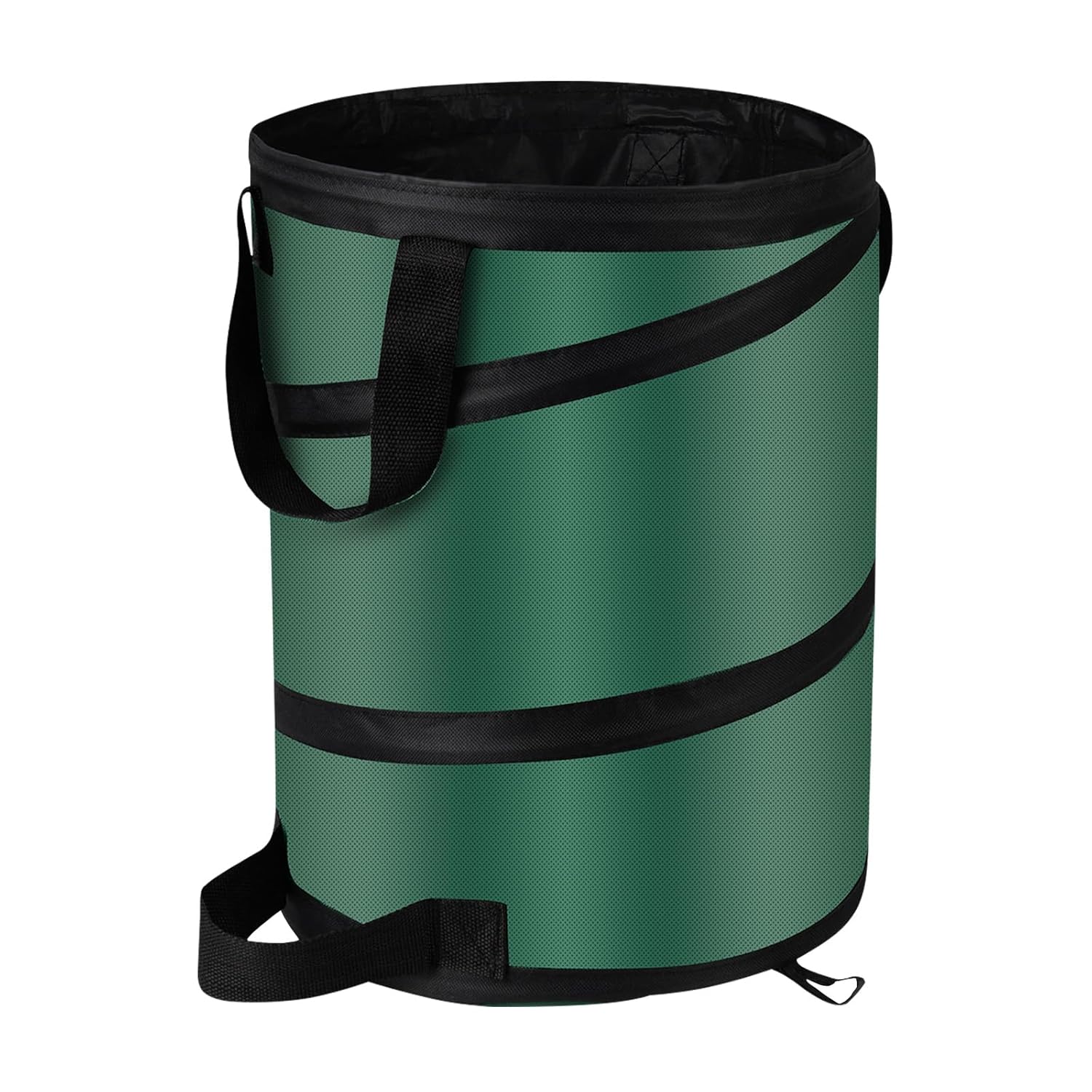
The best camping trash can isn’t necessarily the largest one. For smaller campsites, the ability to provide enough waste capacity while remaining easy to transport and store can be far more valuable. That is where the CDLXSH 10-gallon camping trash can earns its place in this guide.
Its 10-gallon capacity strikes a useful middle ground for couples, small groups, and weekend campers who need something more organized than a loose garbage bag but don’t want to dedicate the storage space required by a 20- or 30-gallon container.
The foldable construction is another important advantage. When the campsite is packed up, the container can be collapsed rather than becoming another rigid piece of equipment competing for space in the vehicle.
For campers who prioritize compact storage, practical capacity, and straightforward campsite organization, the CDLXSH is a particularly sensible starting point.
Camp Snapshot
| Camping Style | Best Fit |
|---|---|
| Camping Style | Compact Camping • Weekend Trips • Car Camping • Outdoor Use |
| Trip Length | Day Trips • Weekend Camping • Multi-Day Adventures |
| Ideal Campsite | Organized Campsites • Picnic Areas • Vehicle-Based Camping |
| Ideal For | Solo Campers • Couples • Small Camping Groups |
| Investment Level | Budget-Friendly • Practical Everyday Value |
| CampComfortGuide Verdict | Best Compact Camping Trash Can |
Why We Chose It
The CDLXSH earned the Best Compact Camping Trash Can award because it addresses a common problem with campsite waste management: having enough room for garbage without turning the container itself into bulky camping equipment.
A 10-gallon capacity is considerably more practical than relying on a small household bag hanging from a tree, table, or vehicle. At the same time, it avoids the footprint of the much larger 23-, 29.5-, and 30-gallon models in this roundup.
The 600D Oxford cloth construction is also appropriate for a reusable camping container. Combined with its foldable format, it gives the CDLXSH a practical advantage for campers who need to pack their entire campsite into a vehicle after every trip.
We also like that its usefulness isn’t limited to one particular type of outdoor setup. It can work as a straightforward campsite waste container while remaining compact enough to make sense for campers who don’t need a large-volume bin.
For a small camping setup, capacity should be proportional to the amount of waste you actually generate. The CDLXSH gets that balance right.
Check today’s price and latest customer reviews on Amazon.

Living With It at Camp
The CDLXSH 10-gallon camping trash can makes the most sense when you want to keep waste management organized without giving up valuable space in your vehicle or campsite. Its collapsible design allows the container to be stored compactly when it is not needed, which is particularly useful for campers who pack and unpack their entire setup for every trip.
At camp, the 10-gallon capacity provides a practical middle ground. It is large enough for the everyday waste generated by a smaller camping group, while remaining more manageable than a full-size outdoor waste container. For a weekend trip, that balance can make the difference between having a dedicated waste station and simply relying on loose garbage bags around the campsite.
The 600D Oxford cloth construction is another reason this model fits a reusable camping setup. Instead of treating the trash container as disposable equipment, you can keep it with the rest of your camping organization gear and bring it back for future trips. When the campsite is clean and everything is packed away, its foldable format helps prevent the empty container from taking unnecessary space.
Placement also matters. We recommend positioning a camping trash can in a convenient but controlled area of the campsite, ideally close enough to the cooking and eating area that campers will actually use it. This works particularly well alongside an organized camp kitchen, where waste can be managed as part of the overall setup rather than becoming an afterthought.
For campers building a more complete campsite organization system, the CDLXSH can also complement our Car Camping Essentials Checklist: The Ultimate Guide for Families, particularly when planning where waste storage fits into the overall vehicle-camping setup.
CampComfortGuide Evaluation
| Evaluation Category | Editorial Assessment |
|---|---|
| Waste Containment | ★★★★☆ Practical pop-up design for keeping campsite waste contained during everyday outdoor use. |
| Portability | ★★★★★ Lightweight collapsible construction makes it easy to transport and store between trips. |
| Ease of Use | ★★★★★ Simple setup and straightforward everyday operation at camp. |
| Durability | ★★★★☆ Fabric construction is practical for regular camping use when handled and stored properly. |
| Overall Value | ★★★★★ A practical choice for campers who want a compact waste solution without adding a rigid container to their gear. |
Who Should Buy This
- Campers who need a compact camping trash can for weekend and short camping trips.
- Couples and small groups that do not need a 20- or 30-gallon waste container.
- Car campers who want a reusable garbage container that stores compactly between trips.
- Campers who prefer organized waste storage instead of using loose garbage bags around the campsite.
- Anyone looking for a 10-gallon collapsible camping trash can made from 600D Oxford cloth.
Who Should Skip This
- Large families or groups that regularly generate enough waste to require a higher-capacity container.
- Campers specifically looking for a rigid trash can rather than a collapsible fabric design.
- Users who need a much larger 23-, 29.5-, or 30-gallon waste container for extended stays.
- Campers who rarely generate enough waste to justify carrying a dedicated camping trash container.
- Anyone looking for specialized features beyond a straightforward collapsible campsite waste bin.
Final Verdict
The CDLXSH 10-gallon collapsible camping trash can earns our Best Compact Camping Trash Can recommendation because it focuses on the things that matter most for smaller camping setups: practical capacity, portability, and efficient storage.
Its 10-gallon size avoids the unnecessary bulk of larger outdoor waste containers, while the collapsible construction makes it easier to integrate into a vehicle-based camping system. The 600D Oxford cloth construction further supports its role as a reusable piece of camping equipment rather than a disposable solution.
It is not the right choice for every camper. Larger families, extended camping trips, and high-volume campsites may benefit from a larger-capacity model. But for campers who want a dedicated waste container without sacrificing valuable storage space, the CDLXSH offers a well-balanced solution.
Check today’s price and latest customer reviews on Amazon.
Related Guide
Managing campsite waste becomes much easier when cleanup has its own system. Our 5 Best Camping Dishwashing Stations in 2026 (Clean & Smell-Free Camps) guide covers practical ways to handle dirty dishes, wastewater, and food residue while keeping your outdoor kitchen cleaner.
2. Leinoupt Collapsible Folding Garbage Can
Best Portable Camping Trash Can
If you want a portable camping trash can that is easy to carry, collapse, and store between trips, the Leinoupt Collapsible Folding Garbage Can is a practical option for campers who value flexibility over maximum capacity. Its pop-up design makes it particularly suitable for temporary campsite setups where the trash container needs to be brought out when needed and packed away when the campsite is being cleared.

Quick Verdict
Camping waste management becomes much easier when the trash container itself doesn’t create another storage problem. The Leinoupt Collapsible Folding Garbage Can is designed around exactly that principle: provide a dedicated place for campsite waste while remaining easy to fold and transport.
Its collapsible format makes it especially appealing for car campers, weekend campers, and anyone who frequently changes campsite locations. Instead of carrying a rigid garbage bin that occupies valuable vehicle space throughout the entire trip, you can collapse the container when it is not being used.
The portable design also gives campers more flexibility when organizing the campsite. It can be positioned where waste is actually generated and then folded away when the campsite is packed up. That makes it a useful choice for campers who prioritize portability, simple setup, and efficient storage.
For campers who don’t need a large-capacity outdoor waste container but still want something more organized than loose garbage bags, the Leinoupt offers a straightforward alternative.
Camp Snapshot
| Camping Style | Weekend Camping • Car Camping • Portable Campsites |
|---|---|
| Trip Length | Overnight Trips • Weekend Getaways • Short Camping Trips |
| Ideal For | Couples • Small Groups • Space-Conscious Campers |
| Design | Collapsible • Folding • Pop-Up |
| Primary Use | Campsite Waste Collection |
| Storage | Folds Down for Compact Storage |
| CampComfortGuide Verdict | Best Portable Camping Trash Can |
Why We Chose It
The Leinoupt earned our Best Portable Camping Trash Can award because portability is its strongest practical advantage. When camping equipment has to be transported in a vehicle, every bulky item competes for the same limited storage space. A collapsible waste container solves part of that problem by allowing the bin to be stored compactly when it isn’t needed.
We also considered how a trash can fits into the rhythm of an actual camping trip. A useful campsite waste container needs to be simple enough to deploy when cooking, eating, or relaxing, but it shouldn’t become an unnecessary obstacle when packing up. The Leinoupt’s folding format makes that transition considerably more convenient.
This makes the model particularly relevant to campers who move frequently between campsites or maintain a relatively compact vehicle-camping setup. Rather than treating a trash can as permanent campsite furniture, you can think of it as another piece of portable equipment that comes out when the campsite is established and gets folded away when you leave.
The Leinoupt is therefore less about maximum capacity or specialized waste-management features and more about keeping the basic job of collecting campsite garbage simple, portable, and space-efficient. For the right camping setup, that simplicity is a genuine advantage.
Check today’s price and latest customer reviews on Amazon.

Living With It at Camp
The Leinoupt Collapsible Trash Can makes the most sense when your camping setup needs a simple waste container without adding another bulky item to the gear pile. Its folding design is particularly useful for campers who want to keep trash organized during the day and reclaim storage space once camp is packed up.
At a campsite, the practical advantage is its flexibility. You can keep it open near the cooking area for food packaging, cans, and other everyday waste, then collapse it when you are breaking down camp. That makes it a natural fit for weekend car camping, family trips, and campsites where gear space is limited.
It also works well when different types of waste need to stay contained in one predictable location rather than ending up around the campsite. Keeping the trash container close to the camp kitchen can make cleanup considerably easier, especially after meals when wrappers, food containers, and disposable items accumulate quickly.
What separates this model from a rigid outdoor garbage bin is that it does not need to occupy permanent storage space in your vehicle. When the campsite disappears, the trash can can disappear with it. That simple characteristic is what makes the Leinoupt a practical choice for campers who value compact, uncomplicated gear.
CampComfortGuide Evaluation
| Evaluation Category | Editorial Assessment |
|---|---|
| Portability | ★★★★★ Lightweight, collapsible design makes it convenient to transport and reposition around camp. |
| Storage Efficiency | ★★★★★ Folds down substantially when not in use, helping conserve vehicle storage space. |
| Capacity | ★★★★☆ Its capacity is not clearly specified in the available product information, so we would treat it as a practical option for smaller camping setups rather than choosing it primarily for maximum waste capacity. |
| Versatility | ★★★★★ Can be used for campsite waste as well as temporary outdoor storage when needed. |
| Overall Value | ★★★★☆ A practical choice for campers who prioritize portability and compact storage over maximum capacity. |
Who Should Buy This
- Campers who prioritize portability and compact storage.
- Couples and small groups taking weekend or short camping trips.
- Car campers with limited storage space in their vehicle.
- Campers who want a pop-up waste container that is easy to move around camp.
- Anyone who wants a versatile collapsible bin that can also serve as temporary outdoor storage.
Who Should Skip This
- Large families that regularly generate more than 10 gallons of campsite waste.
- Campers planning extended trips where substantially greater waste capacity is required.
- Users who specifically want a rigid, heavy-duty garbage container.
- Campers looking for advanced waste-containment features such as a dedicated secure lid or specialized odor control.
- Anyone whose camping setup already includes a sufficiently large outdoor waste-management system.
Final Verdict
The Leinoupt Collapsible Folding Garbage Can earns our Best Portable Camping Trash Can award because it solves a very specific problem well: providing dedicated waste storage without becoming another bulky item to transport.
Its approximately 10-gallon capacity is appropriate for smaller camping groups, while the pop-up construction makes storage significantly easier than with a rigid container. The integrated handles and versatile design add practical flexibility around camp.
It isn’t the strongest choice for large groups or extended trips where maximum capacity is the priority. But for campers who want a simple, space-conscious trash can that can be opened when needed and folded away when the trip is over, the Leinoupt is a sensible choice.
Check today’s price and latest customer reviews on Amazon.
Related Guide
A portable trash can works best when it is part of an organized campsite rather than an isolated piece of gear. Our How to Organize a Campsite (Efficient Setup That Actually Works) guide covers how to position cooking, storage, waste, and other essential equipment for a more functional campsite.
3. Bethshaya Collapsible Pop Up Trash Can
Best Camping Trash Can for Wet Conditions
If your camping trips generate more waste than a compact 10-gallon bin can comfortably handle, the Bethshaya Collapsible Pop Up Trash Can takes a very different approach. With a 23-gallon capacity, hard plastic bottom, and drain holes, it is designed for campers who need substantially more room while still wanting a container that can be folded away when the trip is over.

Quick Verdict
The biggest reason to consider the Bethshaya is its larger capacity. A 23-gallon container gives families and larger camping groups considerably more room for accumulated campsite waste, reducing the need to constantly replace smaller bags or improvise additional garbage storage.
The hard plastic bottom is also an important distinction. It gives the container a more defined base than a simple fabric-only pop-up bin, which can make it easier to position on the ground and keep the bottom separated from wet campsite surfaces.
The drain holes add another practical consideration for outdoor use. Rain and accidental moisture are inevitable at many campsites, and allowing water to escape from the bottom can be preferable to leaving standing water inside or underneath the container.
For campers who routinely deal with larger amounts of garbage during family camping, RV trips, or extended outdoor stays, the Bethshaya is therefore less about minimal storage and more about having enough capacity to make campsite waste management easier.
Camp Snapshot
| Camping Style | Family Camping • RV Camping • Extended Campsites • Group Camping |
|---|---|
| Trip Length | Weekend Trips • Extended Stays • Multi-Day Camping |
| Ideal For | Families • Groups • High-Waste Campsites |
| Capacity | 23 Gallons |
| Key Outdoor Feature | Hard Plastic Bottom • Drain Holes |
| Primary Advantage | Large Waste Capacity Without a Rigid Permanent Bin |
| CampComfortGuide Verdict | Best Camping Trash Can for Wet Conditions |
Why We Chose It
The Bethshaya earned its place in our lineup because it fills a gap that smaller collapsible trash cans cannot. When several people are sharing one campsite, capacity quickly becomes more important than having the smallest possible container.
Its 23-gallon size provides a meaningful increase over compact camping bins, while the collapsible construction keeps the container practical to transport between trips. The hard plastic bottom further distinguishes it from simpler fabric pop-up designs, giving this model a more substantial foundation for outdoor use.
Another reason we included it is its suitability for environments where moisture is a consideration. The drainage holes are a useful outdoor-oriented feature, particularly when the container is positioned on grass, soil, or another surface where rainwater can accumulate.
This makes the Bethshaya particularly interesting for campers who want a large-capacity waste container without committing to the permanent bulk of a rigid outdoor garbage can.
Check today’s price and latest customer reviews on Amazon.

Living With It at Camp
The Bethshaya is built for a different kind of camping situation than the smaller pop-up bins in this guide. With 23 gallons of capacity, it becomes useful when waste accumulates steadily throughout a longer stay and you don’t want the garbage container to become the limiting factor.
Imagine a family arriving at a campsite for several days. Cooking supplies, food packaging, drink containers, paper products, and everyday campsite waste can add up surprisingly quickly. A smaller bin may require frequent bag changes or a second container. The Bethshaya gives that waste a much larger dedicated space from the beginning, making it particularly practical for busy family campsites and group trips.
The hard plastic bottom is especially useful in this type of environment. When a large waste container is sitting outside for hours or days, a defined base helps keep the bottom of the bin supported rather than allowing it to simply collapse against the ground as waste accumulates.
The drainage holes are another feature that makes sense outdoors. If rain reaches the container, water has a route to escape rather than remaining trapped around the base. That makes the design better suited to an outdoor campsite than a conventional indoor storage bin.
The collapsible construction also changes what happens after the trip. A 23-gallon container would normally be awkward to transport when empty, but the Bethshaya can be folded down once the campsite has been cleared. For campers who want large capacity during the trip without permanently dedicating a large amount of vehicle storage space, that combination is its main appeal.
CampComfortGuide Evaluation
| Evaluation Category | Editorial Assessment |
|---|---|
| Capacity | ★★★★★ 23-gallon capacity provides substantial room for waste during family camping and longer outdoor stays. |
| Outdoor Design | ★★★★★ Hard plastic bottom and drainage holes make the container particularly practical for outdoor environments. |
| Portability | ★★★★☆ Collapsible construction makes a large-capacity container easier to transport and store between trips. |
| Stability | ★★★★☆ The hard plastic base provides a more defined foundation than a simple fabric-bottom waste bag. |
| Overall Value | ★★★★☆ A strong option for campers who need significantly more capacity without carrying a rigid 23-gallon bin. |
Who Should Buy This
- Families who generate substantial amounts of waste during multi-day camping trips.
- Groups looking for one large-capacity container instead of several small camping trash cans.
- RV and vehicle campers who want a dedicated outdoor waste station.
- Campers who frequently deal with rain or wet ground and value drainage at the bottom of the container.
- Anyone who needs 23 gallons of camping waste capacity but still wants a collapsible design for transportation.
Who Should Skip This
- Solo campers and couples who generate very little waste during short trips.
- Backpackers who need an ultralight waste solution that occupies virtually no space.
- Campers who specifically prefer a small 10-gallon container for compact campsites.
- Users looking for a rigid garbage can with the structure of a conventional household or outdoor bin.
- Anyone who has no need for the additional capacity of a 23-gallon container.
Final Verdict
The Bethshaya Collapsible Pop Up Trash Can earns our Best Camping Trash Can for Wet Conditions recommendation because it addresses the problem of campsite waste volume without forcing campers to transport a permanently rigid container.
Its 23-gallon capacity is the defining advantage. Add the hard plastic bottom, drainage holes, and collapsible construction, and the result is a camping waste container designed around the realities of larger and longer outdoor stays.
It won’t be the most sensible choice for a solo weekend camper, and its larger capacity is unnecessary when waste production is minimal. For families, groups, RV campers, and extended campsites, however, having substantially more room for waste can make campsite cleanup considerably easier.
Check today’s price and latest customer reviews on Amazon.
Related Guide
A larger camping trash can is especially useful when preparing meals for a family or group. Our Camping Food Storage Guide: How to Keep Bears & Critters Away (2026) explains how to store food and manage campsite waste responsibly to help keep unwanted animals away from your camp.
4. Coghlan's Deluxe Durable Pop-Up Trash Can
Best Overall Camping Trash Can
If you want a camping trash can that feels more purpose-built for outdoor use, the Coghlan’s Deluxe Durable Pop-Up Trash Can takes a more structured approach than a basic collapsible garbage bag. With a 29.5-gallon capacity, zippered lid, bag clips, and anchoring points, it is designed for campers who need a dedicated waste station that can remain in place throughout the trip.

Quick Verdict
The Coghlan’s stands out because it combines large capacity with campsite-specific features. A 29.5-gallon interior gives families and groups considerably more room for accumulated waste, while the zippered lid helps keep the contents contained when the container is sitting outdoors.
The integrated bag clips are another practical detail. Rather than relying entirely on the garbage bag to stay positioned inside the container, the clips help hold the liner in place as the bin is being filled and used.
Its anchoring points are particularly relevant for outdoor camping. A lightweight pop-up container can be vulnerable to movement when exposed to wind, so having a way to secure the bin to the campsite gives it a more deliberate outdoor setup than a simple freestanding waste bag.
The result is a camping trash can aimed at campers who want high capacity and better campsite control, rather than simply the smallest possible container for transporting waste.
Camp Snapshot
| Camping Style | Family Camping • Group Camping • RV Camping • Car Camping |
|---|---|
| Trip Length | Weekend Trips • Multi-Day Camping • Extended Stays |
| Ideal For | Families • Groups • High-Volume Campsites |
| Capacity | 29.5 Gallons |
| Key Features | Zippered Lid • Bag Clips • Anchoring Points |
| Primary Advantage | Large Capacity With Secure Outdoor Waste Containment |
| CampComfortGuide Verdict | Best Overall Camping Trash Can |
Why We Chose It
The Coghlan’s earned its position in our lineup because it addresses a problem that becomes increasingly important as the campsite gets busier: keeping a large amount of waste contained and under control outdoors.
At nearly 30 gallons, this is not a minimalist camping accessory. It is better suited to a campsite where multiple people are producing waste throughout the day and where constantly changing small bags would become inconvenient.
The zippered lid gives the container another layer of practical containment. When the campsite is active, it keeps the waste area covered between uses, while the bag clips help maintain the liner’s position inside the bin. The anchoring points then add another outdoor-specific advantage by giving campers a way to secure the container rather than simply leaving a lightweight pop-up bin exposed to the elements.
That combination is what separates the Coghlan’s from a basic collapsible trash container. It is designed not merely to hold garbage, but to function as a dedicated waste station within a busy outdoor campsite.
For families, larger groups, and campers who establish a base camp for several days, that distinction can make everyday cleanup noticeably more manageable.
Check today’s price and latest customer reviews on Amazon.

Living With It at Camp
The Coghlan’s Deluxe Pop-Up Trash Can makes the most sense once you treat campsite waste as a permanent part of the camp setup rather than something you temporarily hide in a spare bag. Its nearly 30-gallon capacity gives a family or group enough room to manage several days of everyday waste without constantly stopping to replace a liner. Coghlan’s lists the capacity at 29.5 gallons, with a 19-inch diameter and 24-inch height when deployed.
What makes it particularly practical at a busy campsite is the way the container is secured. The three lower grommets allow you to stake the bin to the ground, which matters when wind can turn an empty lightweight trash can into a campsite nuisance. Once positioned and secured, it can remain in the same location throughout the trip rather than being moved every time the weather changes.
The four interior bag clips are another small feature that becomes more useful during everyday camp cleanup. They are designed to hold the garbage bag in position, so the liner doesn’t simply slide down into the container as more waste is added.
The zippered top also gives the Coghlan’s a more deliberate outdoor-waste setup. When the container isn’t being used, the top can be closed rather than leaving the contents completely exposed. That is particularly useful around a campsite where insects and other outdoor nuisances can quickly become a problem. Coghlan’s specifically describes the zip closure as helping keep wasps and insects away.
And when the trip is finished, the whole container folds flat for storage. That combination of full-size capacity during the trip and compact storage afterward is ultimately what makes the Coghlan’s different from carrying a conventional rigid garbage can.
CampComfortGuide Evaluation
| Evaluation Category | Editorial Assessment |
|---|---|
| Capacity | ★★★★★ 29.5-gallon capacity provides substantial room for family camping, group trips, and extended outdoor stays. |
| Outdoor Stability | ★★★★★ Three lower grommets allow the container to be secured to the ground with stakes. |
| Waste Containment | ★★★★★ Zippered top helps keep the waste area covered when the container is not being accessed. |
| Bag Management | ★★★★☆ Four interior clips help keep the garbage liner positioned around the upper edge. |
| Portability & Storage | ★★★★★ Spring-loaded construction pops open quickly and folds flat for transport and compact storage. |
| Overall Value | ★★★★★ A highly practical choice for campers who need a large-capacity waste station with purpose-built outdoor features. |
Who Should Buy This
- Families who need a large-capacity camping trash can for several days of accumulated waste.
- Group campers who want one dedicated waste station rather than multiple small containers.
- RV and car campers who can transport a full-size 29.5-gallon bin.
- Campers who regularly deal with windy conditions and want the ability to stake the container down.
- Anyone who values a zippered top, integrated bag clips, and compact folded storage.
Who Should Skip This
- Backpackers who need an ultralight waste solution for carrying long distances.
- Solo campers who are unlikely to generate enough waste to justify a 29.5-gallon container.
- Campers with extremely limited vehicle storage space.
- Anyone looking for a rigid garbage can rather than a collapsible fabric design.
- Users who prefer a smaller and simpler camping trash container for short overnight trips.
Final Verdict
The Coghlan’s Deluxe Durable Pop-Up Trash Can earns its place as one of our strongest choices for campers who need a large, secure, purpose-built outdoor waste container. Its 29.5-gallon capacity, zippered top, bag clips, and ground-anchoring points work together to solve several problems that appear when a campsite becomes busy.
Its biggest strength isn’t simply its size. It’s the way that size is combined with features specifically intended for outdoor use. You can secure it to the ground, keep the liner positioned, cover the opening when necessary, and then fold the entire container flat when the trip is over.
For family camping, group trips, RV adventures, and longer stays, that makes the Coghlan’s a particularly well-rounded solution. It is more substantial than a minimalist pop-up bin, but that extra structure and capacity are exactly what make it useful when campsite waste becomes a daily management issue.
Check today’s price and latest customer reviews on Amazon.
Related Guide
Keeping campsite waste under control is only one part of maintaining a clean outdoor kitchen. Our How to Keep a Camp Kitchen Clean Overnight (No Smells) guide covers practical ways to prevent food residue, odors, and overnight messes from building up around your cooking area.
5. GNTR Supply Deluxe Durable Pop-Up Trash Can
Best Budget Large-Capacity Camping Trash Can
If you want the capacity of a full-size outdoor trash container without moving up to a more expensive specialty model, the GNTR Supply Deluxe Durable Pop-Up Trash Can is an interesting budget-focused option. Its 30-gallon capacity, zippered lid, collapsible spring-loaded frame, and 600D polyester construction make it particularly suitable for campers who need substantial waste capacity but still want the convenience of a container that folds down for transport and storage. Current listings identify the model as a 30-gallon collapsible camping and outdoor trash can.

Quick Verdict
The GNTR Supply takes a straightforward approach: give campers a lot of usable space without turning the trash container into another bulky piece of camping equipment.
Its 30-gallon capacity is the main reason to consider it. For family camping, larger groups, tailgates, and extended outdoor stays, that extra room means fewer interruptions to replace bags or move overflowing waste into secondary containers.
The zippered lid also gives it a more campsite-oriented design than an open-top collapsible bag. When the container is not being actively used, the top can be closed, helping keep the waste area contained rather than leaving everything exposed.
The spring-loaded construction makes setup simple: the bin pops into shape when needed and collapses when the trip is over. Its 600D polyester construction is intended for repeated outdoor use, while the collapsible format keeps storage requirements relatively low.
For campers who don’t need premium extras but do need maximum practical capacity at a reasonable price, that’s where the GNTR Supply makes the most sense.
Camp Snapshot
| Camping Style | Family Camping • Group Camping • RV Camping • Car Camping |
|---|---|
| Trip Length | Weekend Trips • Multi-Day Camping • Extended Stays |
| Ideal For | Families • Groups • High-Volume Campsites |
| Capacity | 30 Gallons |
| Construction | 600D Polyester • Spring-Loaded Frame |
| Key Feature | Zippered Lid • Collapsible Design |
| CampComfortGuide Verdict | Best Budget Large-Capacity Camping Trash Can |
Why We Chose It
The GNTR Supply earned its place in this guide because capacity doesn’t always have to come with a complicated design or a premium price.
At 30 gallons, it gives campers enough room to function as the primary waste container for a busy campsite rather than simply serving as a small backup bin. That’s particularly valuable when several people are sharing one campsite and food preparation, packaging, drinks, and general camp cleanup create waste throughout the day.
Its design also keeps transportation in mind. A rigid 30-gallon garbage can would take up considerable space in a vehicle even when completely empty. The GNTR Supply’s collapsible construction changes that equation: you get the volume when you’re camping, but a much flatter package when you’re packing the vehicle or storing your gear at home.
The zippered lid adds another practical layer for outdoor use, while the spring-loaded frame means setup doesn’t require assembling separate pieces. Current product descriptions also emphasize its versatility for camping, outdoor gatherings, storage, and yard use.
What ultimately makes this model worth considering is its simplicity. It doesn’t try to be an elaborate waste-management system. It focuses on giving campers a large, portable, collapsible place to put their garbage—and doing that without requiring a rigid bin.
Check today’s price and latest customer reviews on Amazon.
Living With It at Camp
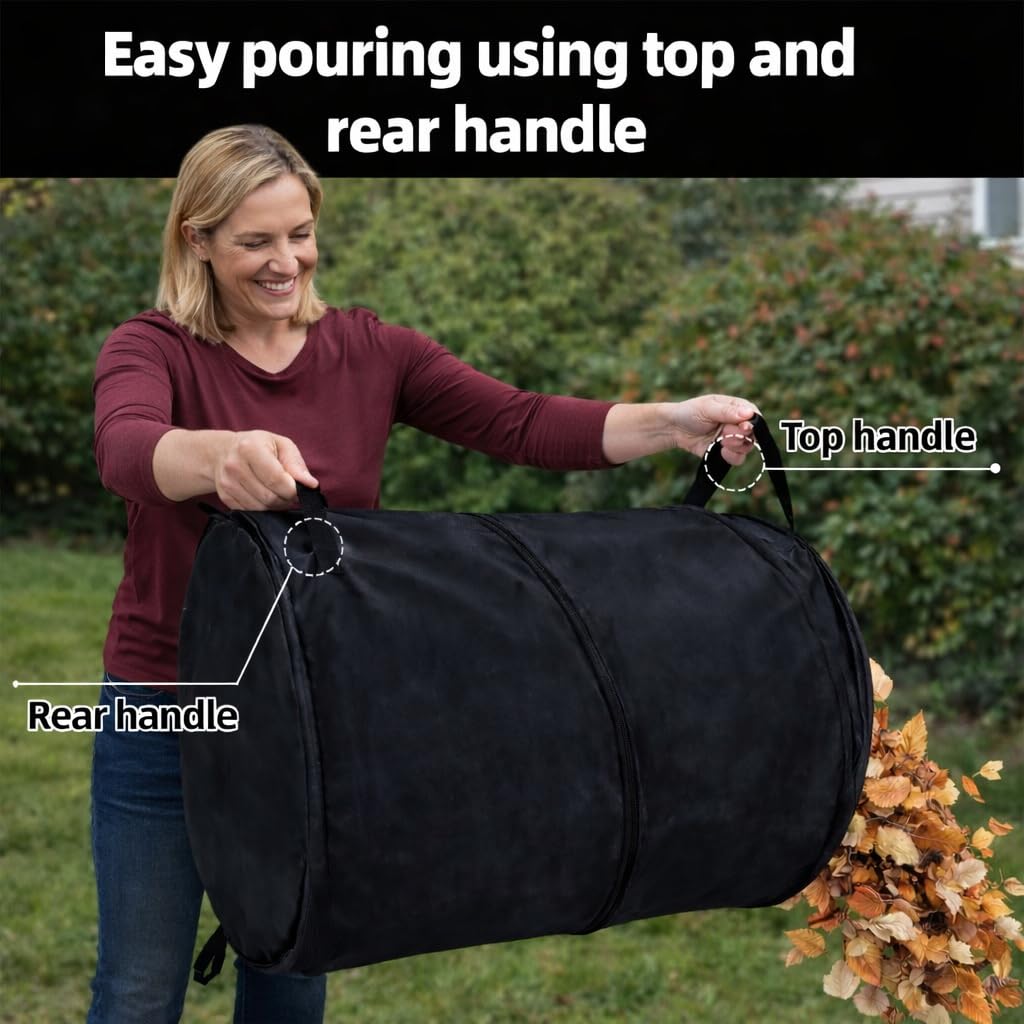
The GNTR Supply Deluxe Durable Pop-Up Trash Can is most useful when the campsite needs a dedicated waste area rather than a small container that gets emptied repeatedly throughout the day. With 30 gallons of capacity, it gives families and groups enough room to collect everyday campsite waste in one central location.
The large capacity is particularly practical during meals. Food packaging, paper products, cans, bottles, and other disposable items can accumulate quickly when several people are cooking and eating at the same campsite. Instead of placing smaller garbage bags around the cooking area, the GNTR Supply gives the camp a single, clearly defined place for waste.
Its spring-loaded frame is another feature that becomes noticeable during setup. There is no rigid container to assemble or multiple pieces to connect. The bin pops into its working shape, and when the campsite is packed up, it collapses again for easier transportation and storage. Product listings describe the frame as spring-loaded and the construction as 600D polyester.
The zippered lid also changes how the container works around camp. Rather than leaving the contents completely exposed between uses, campers can close the top when the trash can is not being accessed. That is useful when the campsite is unattended for periods of time or when you simply want the waste area to look more contained.
One thing to keep in mind is that this model is primarily about capacity, portability, and simplicity. Unlike the Coghlan’s model above, the GNTR Supply listing does not emphasize the same integrated anchoring and bag-clip system. That makes it a better fit for campers who want a straightforward large-capacity pop-up bin rather than a more feature-heavy campsite waste station.
CampComfortGuide Evaluation
| Evaluation Category | Editorial Assessment |
|---|---|
| Capacity | ★★★★★ 30-gallon capacity provides plenty of room for family camping, group trips, and extended outdoor stays. |
| Portability | ★★★★★ Collapsible construction makes a large-capacity container much easier to transport and store than a rigid garbage can. |
| Setup | ★★★★★ Spring-loaded frame allows the container to pop open quickly without complicated assembly. |
| Construction | ★★★★☆ 600D polyester provides a practical fabric construction for repeated camping and outdoor use. |
| Waste Containment | ★★★★☆ Zippered lid helps keep the waste area covered when the container is not being accessed. |
| Overall Value | ★★★★☆ A practical choice for campers prioritizing large capacity and collapsible storage over specialized extras. |
Who Should Buy This
- Families who need a 30-gallon camping trash can for multi-day trips.
- Groups that want one large central waste container instead of several small bins.
- RV and car campers with enough vehicle space for a full-size pop-up container.
- Campers who prioritize easy setup and compact storage after the trip.
- Buyers looking for a straightforward large-capacity camping trash can without unnecessary complexity.
Who Should Skip This
- Backpackers who need equipment small enough to carry in a backpack.
- Solo campers who produce very little waste during short trips.
- Campers who specifically need integrated ground anchoring for windy campsites.
- Users who want built-in bag clips as a primary feature.
- Anyone who prefers a rigid outdoor garbage can with a hard-sided construction.
Final Verdict
The GNTR Supply Deluxe Durable Pop-Up Trash Can earns our Best Budget Large-Capacity Camping Trash Can award because it focuses on the feature many larger campsites need most: plenty of usable waste capacity without the storage penalty of a rigid container.
Its 30-gallon size makes it particularly useful for families, groups, RV campers, and longer stays where a small camping trash can can quickly become inconvenient. The spring-loaded construction keeps setup simple, while the collapsible design makes storage and transportation considerably easier.
It does not offer every specialized feature found on more elaborate camping trash cans, but that is also part of its appeal. If your priority is straightforward, high-capacity waste collection in a container that folds away when you’re finished, the GNTR Supply is a sensible option. Current product listings identify it as a 30-gallon collapsible bin made from 600D polyester and designed for camping and other outdoor uses.
Check today’s price and latest customer reviews on Amazon.
Related Guide
A large camping trash can works best as part of an organized camp kitchen, especially when food preparation and cleanup generate waste throughout the day. Our 5 Best Camping Kitchen Organizers & Chuck Boxes in 2026 (Tame the Chaos) guide covers practical storage solutions that help keep cooking gear, food supplies, and cleanup essentials organized around the campsite.
How to Use a Camping Trash Can Properly
A camping trash can is most useful when it becomes part of your campsite’s waste-management system rather than simply a place to throw everything away. Where you position it, how you contain the waste, and what you do with the full bag all matter, especially when camping with food, children, or a larger group.
Keep the trash can in a convenient location for everyday cleanup, but avoid placing it directly beside your cooking or sleeping area. Food scraps, packaging, grease, and other scented waste can attract wildlife, and several National Park Service sites specifically require campers to secure food, trash, and other scented items in approved storage rather than leaving them exposed.
Use a durable liner inside the camping trash can and close the container whenever it is not being actively used. A pop-up camping trash can is not automatically bear-resistant or wildlife-proof simply because it has a lid or zipper. In areas with wildlife-storage regulations, follow the specific rules for that campground or park rather than relying on the camping trash can as secure food or garbage storage.
For campsites with recycling facilities, separate recyclable materials according to the local campground system. Some campgrounds provide dedicated containers for packaging, paper, glass, and organic waste, while other locations require campers to pack everything out.
The final step is just as important as the first: never leave a full garbage bag behind when you leave the campsite. If there is no designated campground waste service, pack the waste out and dispose of it according to local regulations. Public-land guidance commonly emphasizes removing trash, food scraps, grease, and other waste rather than leaving it at the campsite.
Camping Trash Can Buying Guide: How to Choose the Right One

Choosing a camping trash can is less about finding the largest container and more about matching capacity, construction, portability, closure, stability, and campsite conditions to the way you actually camp. A 30-gallon bin may be excellent for a family staying at one campsite for several days but unnecessarily bulky for a couple on a weekend trip.
The five models in this guide cover different priorities, so use the factors below to determine which type makes the most sense for your camping setup.
1. Choose the Right Capacity
Capacity should be your starting point because the amount of waste produced at camp changes dramatically with group size, trip length, and how much food you prepare at the campsite.
For a short trip with one or two campers, a smaller 10-gallon container can be sufficient. Families and larger groups generally benefit from 20- to 30-gallon models, particularly when the campsite does not have convenient waste collection nearby.
However, bigger is not automatically better. A larger container takes up more space in the vehicle and can become extremely heavy when filled. Choose enough capacity to avoid constant bag changes without creating a waste container that is unnecessarily difficult to transport or empty.
2. Look at the Construction and Material
Camping trash cans are exposed to conditions that indoor garbage bins never have to deal with. Dirt, moisture, abrasion, wind, and repeated folding can all affect how long a collapsible container remains useful.
Fabric models made from materials such as Oxford cloth or polyester are popular because they combine relatively low weight with flexible storage. The thickness and construction of the fabric matter, however, especially if you expect to use the container frequently or place it on rough ground.
A hard or reinforced bottom can also be valuable. It gives the container a more defined base and can make it easier to keep upright when waste is accumulating.
3. Decide Whether You Need a Lid
A lid is more than a convenience when you’re camping outdoors.
An open-top camping trash can provides the fastest access when you’re constantly throwing away packaging and other waste. For a busy camp kitchen, that simplicity can be useful.
A zippered or enclosed top provides better containment when the container is not being used. It can help keep the waste area covered from insects and weather, although a camping trash can with a lid should never automatically be considered wildlife-proof storage.
If you’re camping in bear country or another area with wildlife-storage requirements, follow the specific rules of the campground or land manager rather than relying on a fabric trash can.
4. Check How the Garbage Bag Is Held
A camping trash can is much easier to use when the liner stays where it belongs.
Some models rely simply on the rim of the container to hold the bag in place, while others include integrated bag clips or other liner-retention features. This becomes particularly useful when the container is large and the bag becomes heavier as the day progresses.
When comparing models, don’t look only at gallon capacity. Check the actual opening dimensions and how the liner is secured. Standard liner sizes can vary, and the gallon rating alone does not always guarantee the correct fit.
5. Consider Wind and Campsite Stability
A lightweight pop-up trash can is convenient until the wind catches it.
If you regularly camp in exposed areas, look for anchoring points, stake loops, or a design that allows the container to be secured. This is one of the more important differences between a simple collapsible garbage bag and a purpose-built camping trash container.
Even a large container can become unstable when it is empty, so positioning and anchoring matter particularly during windy weather.
6. Think About Portability Before Buying
The whole point of a collapsible camping trash can is that it should be easier to transport than a rigid garbage bin.
Before choosing a model, consider how small it becomes when collapsed, where it will travel in your vehicle, and where you will store it between trips.
A 30-gallon container can provide excellent capacity at camp but still be a poor choice if it takes up valuable cargo space during transportation. For car camping, RV camping, and base camps, capacity may matter more; for smaller vehicles, the folded dimensions become much more important.
7. Match the Trash Can to Your Camping Style
Your camping style should ultimately determine the type of trash can you buy.
Solo and couple campers can usually get away with a smaller, simpler container because waste volume is relatively low.
Family campers benefit from more capacity because food preparation and packaging create considerably more waste.
Group campers and extended-stay campers should prioritize large capacity and a stable setup so the container can remain functional throughout the trip.
RV and car campers have more flexibility because they don’t have to carry the trash can on their backs. For them, a larger 20- to 30-gallon collapsible model can be a practical choice.
Backpackers are a different case entirely. A full-size camping trash can is generally unnecessary when every ounce and cubic inch matters. A lightweight packable waste bag is more appropriate for carrying waste out of the backcountry. Big Agnes, for example, offers packable trash containers specifically designed for backpacking and car camping in different capacities.
8. Don’t Confuse Capacity With Wildlife Protection
This is one of the most important buying considerations.
A camping trash can is a waste-management tool, not automatically a bear-resistant container. A zipper, drawstring, or fabric lid may help contain ordinary campsite waste, but it does not make the container suitable for storing food or garbage where wildlife-resistant storage is required.
In bear country and other wildlife-sensitive areas, check local regulations before deciding where and how your trash should be stored. National Park Service campground guidance specifically recognizes the need for bear-resistant waste receptacles in bear country.
9. Choose Features That Solve Your Actual Problem
More features do not necessarily mean a better camping trash can.
If your biggest problem is capacity, prioritize gallon size.
If wind is your biggest concern, prioritize anchoring points.
If insects and exposure are the issue, consider a zippered lid.
If bags constantly fall into the container, look for bag clips or a reliable liner-retention system.
If vehicle storage is limited, prioritize collapsed dimensions and portability.
The best camping trash can is ultimately the one whose features solve the specific problem you encounter at camp rather than the model with the longest feature list.
Quick Buying Decision
If you want to narrow the choice down quickly:
- Choose CDLXSH if you want a compact 10-gallon collapsible option for general camping and smaller waste volumes.
- Choose Leinoupt if you want a straightforward folding trash container with a simple, portable design.
- Choose Bethshaya if you need 23 gallons plus a hard plastic bottom and drainage holes for larger outdoor use.
- Choose Coghlan’s if you want 29.5 gallons with a zippered lid, bag clips, and anchoring points.
- Choose GNTR Supply if your priority is maximum 30-gallon capacity in a simple collapsible design.
The goal isn’t to buy the biggest camping trash can available. It’s to choose the smallest, most practical container that comfortably handles your group’s waste for the duration of your trip.
Common Mistakes When Choosing a Camping Trash Can
Lorem ipsum dolor sit amet, consectetur adipiscing elit. Ut elit tellus, luctus nec ullamcorper mattis, pulvinar dapibus leo.
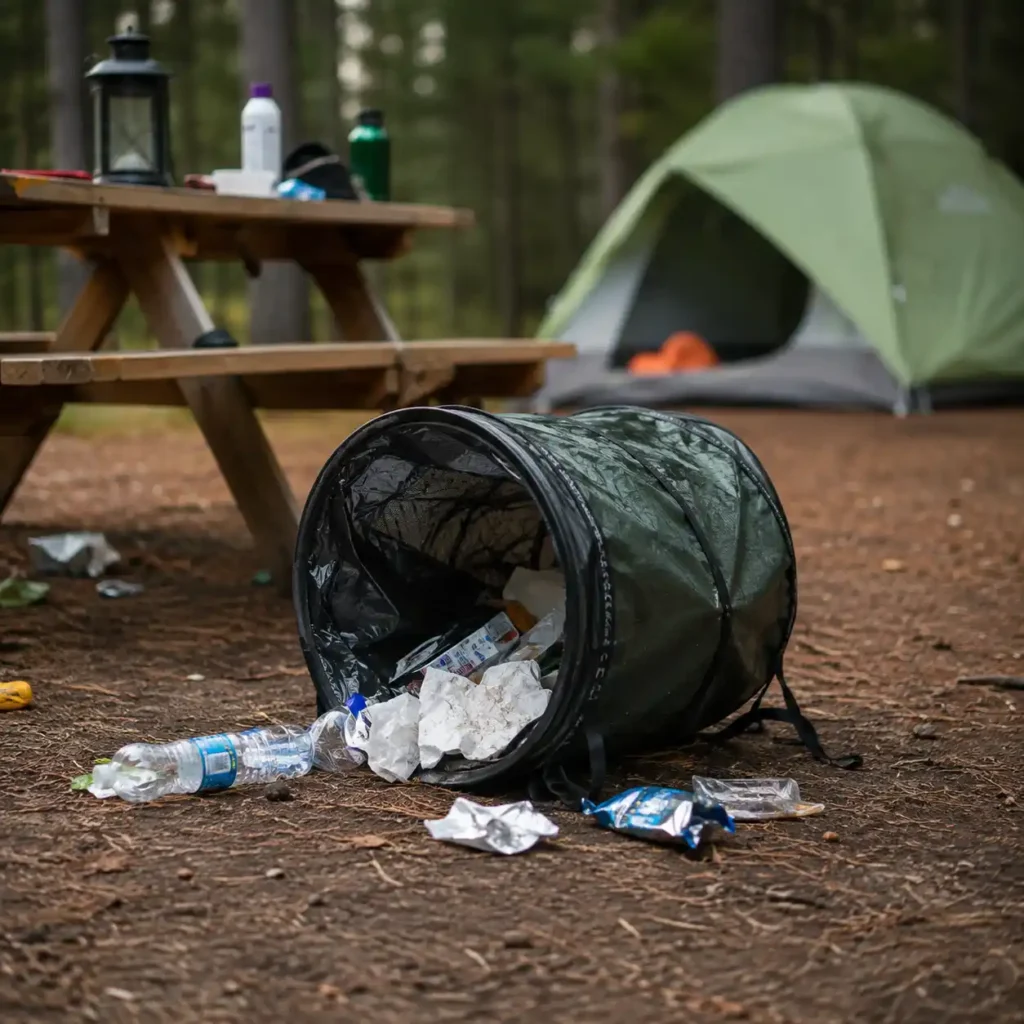
Choosing a camping trash can is fairly simple, but a few common mistakes can make an otherwise useful container frustrating to live with. Most problems come from choosing based on capacity or appearance alone without considering how the trash can will actually be transported, positioned, filled, and stored during a camping trip.
Choosing More Capacity Than You Actually Need
A larger trash can is not automatically a better trash can. A 30-gallon container may be useful for a family staying at one campsite for several days, but it can be unnecessary for a couple taking a short weekend trip.
An oversized container also takes up more vehicle space and becomes heavier to move once it contains waste. Choose enough capacity to avoid constant bag changes, but avoid carrying additional bulk simply because a larger number looks more appealing.
Ignoring How the Trash Can Is Secured
A lightweight pop-up trash can can be surprisingly easy for wind to move, especially when it is empty or only partially filled.
If you regularly camp in exposed locations, pay attention to anchoring points, stake loops, or other ways to keep the container in position. A trash can that works perfectly in calm weather may become inconvenient if it repeatedly tips or moves around the campsite.
Assuming a Lid Makes the Container Wildlife-Proof
A zipper, lid, or enclosed top can help keep ordinary campsite waste contained, but it does not automatically make a camping trash can bear-resistant or wildlife-proof.
This is particularly important in bear country and other areas with specific food-storage or waste-storage regulations. Always follow the rules of the campground or land manager rather than treating a fabric camping trash can as approved wildlife-resistant storage.
Forgetting About Liner Compatibility
Not every camping trash can works equally well with every garbage bag. A container may have plenty of advertised capacity but still be inconvenient if the opening is difficult to fit with the liners you normally use.
Before buying, consider the shape of the opening, how the bag is held in place, and whether the container includes clips or another liner-retention system. This can make everyday cleanup much easier.
Choosing Features Instead of Solving a Problem
It is easy to assume that the camping trash can with the most features must be the best choice. In reality, extra features only matter when they solve a problem you actually encounter.
If storage space is your biggest concern, prioritize a compact collapsible design. If wind is a recurring problem, anchoring points may matter more. If waste exposure is your main concern, an enclosed or zippered top can be more useful than additional capacity.
Forgetting Where the Trash Can Will Be Stored
A camping trash can may work perfectly at the campsite but become annoying if it takes up too much room during transportation or between trips.
Think about where the container will go in your vehicle, how small it becomes when collapsed, and where you will keep it at home. The best camping trash can is one that fits naturally into your entire gear system rather than creating a new storage problem.
Treating the Trash Can as the Entire Waste-Management System
A dedicated camping trash can helps organize ordinary campsite waste, but it is only one part of responsible waste management.
Food scraps, grease, scented items, and full garbage bags may require additional handling depending on the campground and local regulations. Keep waste contained, follow site-specific wildlife rules, and pack out or dispose of garbage according to the requirements of the area you are visiting.
Bottom line: The most common mistake is buying a camping trash can based on one attractive feature instead of considering the complete camping setup. Capacity, portability, stability, closure, liner compatibility, storage, and local waste rules all matter—but the right combination depends on how and where you camp.
Camping Trash Can FAQ: Your Most Important Questions Answered
What size camping trash can should I get?
For most car-camping families, 20 to 30 gallons is the most practical range. A 10-gallon container works well for solo campers, couples, and shorter trips, while 20- to 30-gallon models are better suited to families and groups producing more waste.
For longer stays or larger groups, going beyond 30 gallons can make sense, but remember that a larger container also becomes heavier and more difficult to transport when full. Current 2026 buying guidance similarly recommends matching capacity to group size, trip length, and how often you can dispose of the waste.
How do I keep animals out of my camping trash?
Do not rely on a normal camping trash can as bear-proof or wildlife-proof storage. A zippered lid can help contain ordinary campsite waste, reduce exposure, and discourage insects or curious animals, but it does not replace an approved bear-resistant container where one is required.
In bear country, follow the specific regulations for the campground or park and use designated bear boxes, bear-resistant containers, or vehicle storage when required. Recent camper discussions also show how quickly food scraps and scented items can become a problem when ordinary trash is left exposed overnight.
Should a camping trash can have a lid?
Yes, if you’re camping with food or staying for several days, a lid is a valuable feature. A zippered lid helps contain the waste area, reduces the chance of lightweight trash blowing away, and provides a barrier against insects and curious animals.
However, the lid should be viewed as a convenience and containment feature—not as wildlife-proof protection. For bear country, follow local storage requirements instead of assuming that a zippered camping trash can is sufficient.
How do I keep my camping trash can from blowing away?
Choose a model with anchoring points, stake loops, or another method of securing the container to the ground. This is particularly important for lightweight pop-up models because an empty fabric container can be surprisingly easy for wind to move.
You can also position the trash can in a naturally sheltered location, but anchoring is the more reliable solution when the design allows it. Current camping-trash guidance specifically identifies stake loops and similar features as useful for keeping collapsible bins upright outdoors.
Can I use regular trash bags in a camping trash can?
Usually, yes. Many collapsible camping trash cans are designed around standard household or outdoor garbage-bag sizes, but the correct bag depends on the container’s capacity and opening dimensions.
For a 10-gallon camping trash can, a smaller kitchen-size liner is generally appropriate. Larger 20- to 30-gallon containers commonly work with 30-gallon bags, while oversized 40-gallon-plus containers may require contractor or lawn-and-leaf bags. Always check the manufacturer’s dimensions rather than choosing a liner based only on the advertised gallon capacity.
Where should I put my trash can at a campsite?
Place it in a convenient but controlled location away from your sleeping area, while keeping it accessible from the cooking and eating area. You want people to use the trash can without carrying food waste through the sleeping area.
More importantly, do not assume that the ideal physical location makes ordinary trash safe from wildlife. Where wildlife is present, follow the campground’s rules for storing garbage and food attractants. Current camping guidance emphasizes separating waste management from sleeping areas and keeping waste properly contained.
How do you keep a camping trash can from smelling?
The most effective approach is to remove food waste regularly rather than trying to mask the odor. Use a strong liner, keep the container closed when possible, and avoid allowing wet food scraps or liquids to accumulate at the bottom.
For longer trips, empty the bag before it becomes heavily saturated with food waste. If the container itself becomes dirty, wash it with mild soap and water and allow it to dry completely before folding it for storage. This prevents trapped moisture from turning into persistent odors or mold.
How do you clean a collapsible camping trash can?
Empty the container completely, remove the liner, and clean the interior with water and mild soap. Use a soft brush or cloth for material stuck to the interior, then rinse thoroughly.
The most important step is drying. Never fold and store a damp camping trash can. Allow the fabric and bottom to dry completely first; otherwise, moisture trapped in the folded material can contribute to mildew, mold, and unpleasant odors.
Is a collapsible camping trash can better than a regular trash can?
For car camping, RV camping, and organized campsites, a collapsible model is usually more convenient because it provides substantial capacity while taking very little space when stored.
The trade-off is rigidity. A conventional hard-sided trash can generally provides a more stable structure, while a collapsible camping model is easier to transport and store. For campers with limited vehicle space, the ability to fold a 20- or 30-gallon container down after the trip can be a major advantage.
Can I leave a camping trash can outside overnight?
Only if doing so complies with the rules and wildlife conditions of your campsite. Closing a camping trash can can help contain ordinary waste, but it does not make the container wildlife-proof.
If you’re camping in bear country or another area with active wildlife, food scraps, garbage, toiletries, and other scented items may need to be stored in a vehicle, bear box, or approved animal-resistant container. When in doubt, follow the local campground regulations rather than relying on the trash can’s lid.
How much trash does a family produce while camping?
There is no reliable single number because waste volume depends heavily on number of campers, trip length, meal preparation, packaging, and whether you bring prepackaged food.
As a practical buying rule, families should generally choose more capacity than they expect to need rather than operating a container at its absolute limit. Current 2026 camping-trash guidance places typical family and group needs in the roughly 20- to 45-gallon range, depending on the number of campers and nights spent at the campsite.
Is a camping trash can bear-proof?
No—not unless it is specifically designed, tested, and approved as a bear-resistant container under the relevant regulations.
A pop-up camping trash can with a zipper is useful for ordinary campsite waste management, but its fabric construction and flexible closure are fundamentally different from a purpose-built bear-resistant container. In bear country, use the storage system required by the land manager.
Final Verdict: Which Camping Trash Can Should You Choose?
After comparing all five models, the strongest choice depends less on maximum capacity and more on how well each trash can fits the way you actually camp. The right choice depends on how many people you camp with, how much waste you generate, how much vehicle space you have, and whether you need features such as a zippered lid, anchoring points, or a reinforced bottom.
After comparing these five models, each one makes the most sense for a different camping situation.
The CDLXSH 10-Gallon Camping Trash Can is the most practical choice for campers who want a smaller, lightweight solution for weekend trips, couples, or lower-volume waste. Its 600D Oxford cloth construction and collapsible design make it easy to store when you’re finished camping.
The Leinoupt Collapsible Trash Can is another straightforward option for campers who prioritize portability and simple storage. It makes the most sense when you don’t need the capacity or specialized features of the larger models.
The Bethshaya 23-Gallon Collapsible Pop-Up Trash Can sits in the middle, offering substantially more capacity while adding a hard plastic bottom and drainage holes. That makes it particularly interesting for campers who expect heavier outdoor use or want a container that can handle wet conditions more practically.
The Coghlan’s Deluxe Durable Pop-Up Trash Can is the strongest choice when campsite usability matters more than simply having a large container. Its 29.5-gallon capacity, zippered lid, bag clips, and anchoring points give it a more complete camping-oriented feature set. These types of features are also consistently emphasized in current 2026 camping-trash comparisons as important differences between basic collapsible bins and purpose-built camping models.
Finally, the GNTR Supply Deluxe Durable Pop-Up Trash Can is the option to consider when maximum capacity is the priority. At 30 gallons, it gives families and larger groups plenty of room for campsite waste while retaining the main advantage of a collapsible design: compact storage between trips.
One important distinction applies to all five models: a camping trash can is a waste-management solution, not automatically a bear-resistant or wildlife-proof container. A zippered lid can help contain ordinary waste and reduce exposure, but campers in bear country or other wildlife-sensitive areas should follow the specific storage requirements of the campground or land manager. Current camping guidance continues to make this distinction clear.
For most family and car campers, we’d prioritize capacity and convenient containment. For couples and shorter trips, a 10-gallon model can be easier to live with. For windy campsites, anchoring points become especially valuable. And for campers with limited vehicle storage, the ability to collapse the container flat can be more important than having the largest possible capacity.
Ultimately, the best camping trash can is the one that fits your camping style without creating another storage or transportation problem. Choose the capacity you genuinely need, look for construction that can withstand repeated outdoor use, and prioritize the features that solve the problems you actually encounter at camp.
If you want the most complete feature set from these five options, Coghlan’s Deluxe Durable Pop-Up Trash Can is our overall recommendation. If capacity comes first, choose the GNTR Supply 30-Gallon model. For smaller trips and lower waste volumes, the CDLXSH 10-Gallon model is the more practical approach.
A good camping trash can may seem like a small piece of gear, but it can make a noticeable difference to campsite organization. When waste has a dedicated, portable place from the moment you arrive, cleanup becomes easier, the cooking area stays more orderly, and packing up at the end of the trip becomes considerably less frustrating.
The CampComfortGuide Promise
At CampComfortGuide, we believe good camping gear should make outdoor life simpler, more comfortable, and more dependable—not add unnecessary complications to your trip.
Our recommendations are built around real camping needs rather than marketing claims. We look at how equipment fits into actual outdoor use, where it performs well, where its limitations become important, and which type of camper is most likely to benefit from it.
We also believe that the best product is not always the most expensive one. A well-designed budget option can be a better choice than a premium product when it delivers the right combination of performance, durability, and practical value for your particular camping style.
Our goal is simple: help you buy less, choose better, and bring gear you can genuinely rely on when you’re away from home.
Because when you know why you’re buying a piece of camping gear—and understand exactly what it can and cannot do—you can spend less time worrying about equipment and more time enjoying the campsite.