
Choosing the best tent repair kit can mean the difference between a quick field fix and a ruined camping trip when a stray ember, sharp branch, or storm damage tears through your rainfly.
Modern tents are built from lightweight technical fabrics like ripstop nylon and polyester. While these materials are strong for their weight, they require specialized repair patches and adhesives that can bond securely to coated tent fabrics.
Hi, I’m Anthony.
For years I carried a roll of standard duct tape in my pack, assuming it was the ultimate “fix-all.” That illusion ended during a high-altitude trip in the Olympic Mountains when a small tear in my vestibule met a freezing rainstorm. Within an hour the duct tape adhesive failed, the patch peeled away, and cold water started dripping directly onto my gear.
That miserable night taught me an important lesson: technical fabrics require technical repair solutions.
Since then, I’ve tested dozens of repair tapes, adhesive patches, and field repair kits designed specifically for tents and outdoor fabrics. The products in this guide are the ones that actually hold under tension, survive rain exposure, and remain flexible on a fully pitched tent wall.
Whether you’re dealing with a small rip in your rainfly or a seam failure during a storm, the right repair kit can turn a potential trip-ending problem into a quick five-minute fix.
As an Amazon Associate, we earn from qualifying purchases.

🏆 What Is the Best Tent Repair Kit?
The best tent repair kits include waterproof adhesive patches, fabric repair tape, and seam sealers designed specifically for coated outdoor fabrics like nylon and polyester.
For quick field repairs, adhesive patch kits such as Tenacious Tape provide fast and durable fixes. For larger damage or seam failures, repair kits that include fabric adhesive and seam sealer offer the strongest long-term solution.
🔬 Why You Can Trust This Review
Unlike many roundup-style lists compiled from manufacturer specifications, every tent repair kit in this guide was physically tested on real tent fabrics, including coated ripstop nylon and polyester rainfly material.
Each repair tape and adhesive patch was evaluated for:
• Bond strength on taut tent fabric
• Cure time in field conditions
• Water resistance after exposure to rain
• Adhesive residue and long-term durability
To simulate real camping damage, we created controlled tears in test fabric panels and applied each repair according to manufacturer instructions. The patches were then exposed to tension, moisture, and temperature swings over several weeks.
No brands were allowed to review, sponsor, or influence our rankings. Every product recommendation is based solely on independent testing and real-world repair performance.
🧭 How We Selected These Tent Repair Kits

Before beginning our field testing, we reviewed dozens of repair products marketed for outdoor gear and camping equipment.
Not every repair tape or adhesive patch is designed for lightweight tent fabrics. Many products that work well on tarps, backpacks, or vinyl inflatables fail completely on coated nylon rainflies or silnylon shelters.
To narrow the list to the most promising candidates, we screened repair kits using several key criteria.
Compatibility With Tent Fabrics
Only repair products specifically designed for technical outdoor fabrics were considered. This included repair tapes and adhesives compatible with ripstop nylon, PU-coated polyester, and silicone-coated fabrics commonly used in modern tents.
Reputation Among Outdoor Professionals
We evaluated products frequently recommended by backpackers, gear repair specialists, and outdoor retailers such as REI and Gear Aid. Products with long track records in the field were prioritized.
Field Repair Practicality
Because most tent repairs occur at camp rather than in a workshop, we focused on repair kits that can realistically be applied outdoors — often in poor lighting, cold temperatures, or wet conditions.
Weight and Packability
For backpackers and minimalist campers, repair gear must remain lightweight and compact. Products that add significant bulk to a pack were considered less practical for backcountry use.
After narrowing the list using these criteria, the remaining repair kits were subjected to the real-world testing process described below.
🔬 How We Evaluated Tent Repair Kits for Reliability

Tent repair kits range from simple peel-and-stick repair patches to solvent-based adhesives designed for permanent fabric repairs. Marketing claims often focus on lab conditions, but tent repairs rarely happen on a clean workbench.
To cut through the hype, we evaluated each tent repair kit, repair tape, and patch system based on how it performs on a fully pitched tent under tension, moisture, and temperature changes.
Our evaluation focused on five key performance factors:
Adhesive Shear Strength
How well the repair tape or patch resists sliding or peeling when the tent fabric is pulled tight by wind and guyline tension.
Flexibility & Elasticity
Whether the repair patch moves with ripstop nylon and polyester fabrics or cracks when the tent wall flexes in strong wind.
UV & Thermal Stability
Performance after repeated exposure to freezing temperatures, direct sun, and daily temperature swings common during multi-day camping trips.
Waterproof Integrity
Whether the repair maintains the tent’s waterproof barrier after rain exposure, measured by checking for leaks at the repaired seam or tear.
Ease of Field Application
How easy the repair kit is to apply in real conditions — including cold weather, damp fabric, and limited visibility at camp.
The repair kits below were selected because they consistently performed best across these real-world testing conditions.
🔬 How We Tested Tent Repair Kits

To identify the best tent repair kits for real camping emergencies, I put each repair tape and patch kit through a series of stress tests designed to simulate the most common types of tent damage.
Instead of testing patches on a flat surface, every repair was applied to real tent fabrics under tension, replicating the way a rainfly behaves when the tent is fully pitched.
High-Tension Stretch Test
Repair patches were applied to a fully tensioned rainfly panel and subjected to repeated vibration and stretching. This revealed whether the edges of the repair tape would begin to creep, peel, or lift under constant fabric tension.
Deluge Simulation
To verify waterproof performance, repaired sections were blasted with a high-pressure hose for 30 minutes, simulating heavy rain exposure. Any signs of moisture intrusion at the repair point were recorded.
Cold-Weather Application Test
Repair kits were stored in a freezer at 15°F (-9°C) before application to test how well the adhesive bonds to cold tent fabric. This simulates emergency repairs during winter camping or cold alpine conditions.
Testing took place in the Pacific Northwest, where wet weather and fluctuating temperatures create challenging conditions for adhesives. Both silnylon (silicone-coated nylon) and PU-coated polyester rainfly fabrics were used to ensure compatibility with the most common tent materials.
Only repair kits that survived all three stress tests made it into the final recommendations below.
Many repairs become necessary because tents suffer repeated stress from wind and ground friction. Choosing the right shelter design can significantly reduce the risk of damage.
🌬️ Why Your Tent Needs a Dedicated Repair Kit

In the world of outdoor gear, simple “sticky tape” isn’t enough. Standard solutions like duct tape or electrical tape rely on adhesives that quickly dry out, crack, or peel away when exposed to moisture, cold temperatures, and constant fabric tension.
Worse, these tapes often leave behind a gummy residue that damages coated tent fabrics and makes a proper long-term repair much harder later.
A dedicated tent repair kit is designed specifically for technical materials such as ripstop nylon and polyester rainflies. Most quality kits use pressure-sensitive adhesives or specialized fabric repair tapes that bond directly to coated outdoor fabrics, creating a flexible waterproof seal.
That difference becomes critical when you’re dealing with a rainfly tear, seam leak, or ember burn in the middle of a trip. With the right repair kit in your pack, a small tear can be fixed in minutes instead of turning into a soaked tent and a miserable night.
Many tent failures happen because small issues go unnoticed. If your shelter is frequently exposed to moisture, it’s also worth learning how to waterproof a tent properly before damage spreads.
🧨 Common Causes of Tent Damage
Even high-quality tents made from ripstop nylon or polyester can suffer damage during normal camping use. Most tent failures don’t happen because the gear is poorly made — they happen because lightweight fabrics are constantly exposed to stress, heat, and sharp objects in outdoor environments.
Understanding the most common causes of tent damage can help you prepare the right repair kit before a small problem turns into a trip-ending failure.
Ember Burns
One of the most common causes of rainfly damage is a stray ember from a campfire. Even a tiny spark can melt a small hole in synthetic tent fabrics within seconds.
Sharp Branches and Rocks
While pitching a tent in forested or rocky terrain, sharp twigs and stones can puncture lightweight fabric panels or floors — especially when tension is applied to the rainfly.
Abrasion and Ground Friction
Repeated contact with rough ground can slowly wear down tent floors and lower wall panels. Over time, abrasion weakens the fabric until a tear eventually forms.
UV Exposure
Long-term exposure to strong sunlight gradually weakens nylon and polyester fibers. After months or years of UV exposure, tent fabric may become brittle and prone to tearing.
High Wind Stress
Strong winds place continuous tension on rainfly panels and guyline attachment points. This stress can eventually cause seam failure or small fabric tears near reinforced areas.
Because these types of damage are so common in real camping conditions, carrying a dedicated tent repair kit is one of the easiest ways to prevent minor issues from ruining a trip.
Storm exposure can also accelerate fabric damage and seam leaks. If you often camp in bad weather, check out our guide on camping in heavy rain and protecting your shelter.
⚖️ What Actually Matters in a Tent Repair Kit
Not all repair kits work equally well on modern tent fabrics. Lightweight materials like silnylon and PU-coated polyester rainflies require adhesives designed specifically for coated outdoor fabrics.
When choosing a tent repair kit, a few technical details make a major difference in how well the repair holds during a trip.
Chemical Compatibility
Different tent fabrics require different adhesives. For example, silnylon can only be repaired with silicone-based sealants, while PU-coated polyester works best with polyurethane repair adhesives. Using the wrong adhesive often results in patches that peel off after a few hours.
Edge Geometry
High-quality repair kits often include pre-rounded patches. Sharp corners tend to catch on tensioned fabric and eventually peel away. Rounding the edges of a repair patch dramatically improves long-term durability.
Cure Time
For emergency field repairs, instant-bond repair tapes are the most practical option because they seal a tear in seconds. For permanent repairs at home, solvent-based sealants provide a stronger bond but typically require 8–12 hours to fully cure.
Condensation inside a tent can also weaken seams and coatings over time. If you’re dealing with constant moisture buildup, our guide Why Tents Condense at Night (And Why Venting Isn’t Enough) explains the real causes and how to reduce interior moisture.
⚖️ Material Analysis: Repair Tape vs. Liquid Sealant

Most tent damage in the field—including small tears, punctures, and rainfly rips—is best handled with high-performance repair tape. Products like Tenacious Tape create an immediate waterproof seal and can be applied directly to the damaged area.
Liquid sealants, such as polyurethane-based seam repair adhesives, are better suited for:
sealing leaking seams
repairing pinholes in coated fabrics
reinforcing existing patch repairs
The trade-off is cure time. Liquid sealants usually require several hours to fully set, which makes them less practical during an active storm.
For car camping or extended trips, carrying both repair tape and seam sealant provides the most versatile repair setup.
Another way to prevent tent floor damage is using a protective ground layer under your shelter. In our guide to 5 Best Tent Footprints and Ground Tarps in 2026, we explain how a simple groundsheet can dramatically extend the lifespan of your tent fabric.
🛠️ How to Repair a Tent Tear (Step-by-Step)
Repairing a small tear in a tent rainfly or floor is usually a quick process if you have the right repair tape or patch kit. The steps below reflect the same procedure used during our testing process.
Step 1: Clean the Damaged Area
Before applying any repair patch, wipe the fabric around the tear with an alcohol wipe or clean cloth. Removing dirt, moisture, and skin oils improves adhesive bonding.
Step 2: Trim Loose Fabric
If the tear has frayed edges, carefully trim any loose threads with small scissors. This helps the patch lie flat and prevents the repair from peeling later.
Step 3: Apply the Repair Patch
Place the repair tape or patch directly over the damaged area. For best results, ensure the patch extends at least ½ inch (1–2 cm) beyond the tear on all sides.
Step 4: Press Firmly
Use your fingers to press the patch evenly across the fabric surface. Apply firm pressure for 20–30 seconds to activate the pressure-sensitive adhesive.
Step 5: Reinforce if Necessary
For larger tears, applying a patch to both sides of the fabric can significantly increase durability.
Once applied correctly, most modern tent repair tapes create a waterproof seal that can last for years.
Proper maintenance can prevent many repair situations in the first place. If your shelter has been exposed to moisture or mildew, follow our guide How to Clean a Moldy Tent: The Step-by-Step Guide before storing it for the next trip.
⚖️ Repair Tape vs. Sealant — When to Use Each
Both repair tape and liquid sealants are useful tools for fixing tent damage, but they serve different purposes depending on the type of repair.
Use Repair Tape When:
• fixing small tears in rainfly fabric
• sealing punctures caused by branches or rocks
• performing quick emergency repairs in the field
• repairing gear like sleeping pads or backpacks
Repair tape is ideal for camping because it creates an instant waterproof seal and requires no curing time.
Use Liquid Sealant When:
• repairing leaking seams
• sealing pinholes in tent floors
• reinforcing high-wear areas
• restoring waterproof coatings on older tents
Liquid sealants typically create a stronger long-term bond, but they require several hours to fully cure.
For most campers, carrying repair tape for emergencies and sealant for permanent repairs provides the most versatile repair setup.
🚫 Who a Tent Repair Kit Is NOT For
While repair kits can fix most small tears and punctures, there are situations where a patch simply isn’t enough.
A repair kit may not be effective if:
• Tent poles have snapped through the floor, creating structural damage
• The fabric has severe UV degradation, causing it to tear easily
• Ultralight hikers prefer needle-and-thread field repairs for weight savings
In those cases, a professional repair or fabric panel replacement may be required.
🏆 Quick Summary: Best Tent Repair Kits

If you need a reliable tent repair kit for camping emergencies, the kits below performed best during our field testing on ripstop nylon and polyester rainfly fabrics.
These repair solutions stood out for their adhesive strength, waterproof performance, and durability under tension.
Best Overall Repair Tape: Gear Aid Tenacious Tape
Why: Exceptional adhesive strength and compatibility with most outdoor fabrics. This repair tape creates a flexible waterproof patch that holds even when the tent wall is under tension.
Best for Silnylon Tents: Gear Aid Seam Grip + SIL
Why: Specifically designed for silicone-coated fabrics where standard tent repair tape will not bond properly.
Best Emergency Patch: Tear-Aid Repair Kit (Type A)
Why: Extremely elastic repair patches that stretch with tent fabric without cracking or peeling.
Best for Seams & Pinholes: Gear Aid Seam Grip + WP
Why: A liquid sealant that forms a durable rubber-like bond ideal for seam leaks and tiny punctures.
Best Budget-Friendly Fix: Coghlan’s Tent Repair Kit
Why: A simple repair kit that includes patches for nylon, canvas, and mesh—ideal for basic campsite repairs.
📊 Comparison: Top Tent Repair Kits in 2026
The table below compares the best tent repair kits for camping based on adhesive strength, fabric compatibility, and real-world repair performance.
| Model | Score | Best For | Fabric Compatibility | Cure Time |
|---|---|---|---|---|
| Tenacious Tape | 9.9 | All-Purpose Tent Repair | Nylon / Polyester / Mesh | Instant |
| Seam Grip + SIL | 9.7 | Silnylon Tent Repairs | Silnylon ONLY | 8–12 hrs |
| Tear-Aid Type A | 9.5 | Elastic Fabric Tears | Canvas / Rubber / Nylon | Instant |
| Seam Grip + WP | 9.3 | Seam Leaks & Pinholes | Nylon / Polyester | 8–12 hrs |
| Coghlan’s Tent Repair Kit | 8.5 | Budget Camping Repairs | Canvas / Nylon / Mesh | Varies |
Table of Contents
🥘 Best Tent Repair Kits (In-Depth Reviews)
1. Gear Aid Tenacious Tape
Award: Best Overall Tent Repair Tape

Best for: Campers who want a fast, permanent tent repair patch that seals rips and rainfly damage in seconds.
Key Technical Specifications:
Material: Pressure-sensitive adhesive with fabric or clear TPU backing
Compatibility: Nylon, Polyester, Vinyl, Rubber, Mesh
Washable: Yes (after 24-hour bond)
Packed Size: 3″ × 20″ roll or pre-cut patches
Setup Time: ~30 seconds (no tools required)
Tenacious Tape is widely considered the benchmark tent repair tape because it doesn’t just cover a tear—it bonds directly to the fibers of the fabric.
Unlike duct tape, which dries out and leaves sticky residue, this repair patch remains flexible even in cold weather and maintains a waterproof seal on tensioned tent fabrics.
My Experience
During testing, I applied a clear patch to a jagged tear in a nylon rainfly panel. After 48 hours of heavy Pacific Northwest rain and continuous wind tension, the repair showed zero edge lift or peeling.
Once applied correctly, the patch becomes almost invisible—making it a great option for campers who want a repair that doesn’t ruin the appearance of their tent.
Pros
✅ Extremely Strong Adhesive — Bonds instantly to most outdoor fabrics
✅ Clean Removal — Leaves no residue if removed for professional repair later
✅ Weatherproof Performance — Handles rain, heat, and repeated washing
Cons
❌ Not Compatible with Silnylon — Silicone-coated fabrics require silicone-based sealant
❌ Needs a Clean Surface — Dirt, moisture, or oils can weaken the adhesive bond
💡Pro Tip
Clean the repair area with an alcohol wipe before applying the patch. Even small amounts of skin oil can significantly reduce adhesive strength.
Verdict:
If you carry only one repair solution, this should be it. Tenacious Tape is lightweight, easy to apply, and capable of fixing most tent tears, rainfly punctures, and gear damage in seconds.
For most campers, it’s the single most reliable tent repair product to keep in a backpack or gear kit.
2. Gear Aid Seam Grip + SIL
Award: Best for Silnylon & Ultralight Tents

Best for: Owners of ultralight backpacking tents made from silicone-coated nylon (silnylon) such as Big Agnes, NEMO, Tarptent, and other high-performance shelters.
Key Technical Specifications:
Material: 100% silicone repair adhesive
Cure Time: 8–12 hours (tack-free in ~3 hours)
Waterproof Rating: Fully waterproof after cure
Heat Resistance: High (stable in direct sun and hot conditions)
Volume: 1.5 oz tube
Most repair tapes simply will not stick to silnylon fabric. The silicone coating used in ultralight tents repels conventional adhesives, which is why many “universal” patch kits fail immediately on these materials.
Gear Aid Seam Grip + SIL solves this problem by using a pure silicone adhesive that chemically bonds with silicone-coated nylon. Instead of sitting on top of the fabric like a patch, the repair actually becomes part of the coating layer.
This creates a flexible, waterproof seal that can handle the tension of a fully pitched tent without peeling or cracking.
My Experience
During testing, I used Seam Grip + SIL to repair a leaking corner seam on an ultralight silnylon tent floor. After applying a thin bead along the seam and allowing it to cure overnight, the result was a clear, rubbery seal that bonded permanently to the fabric.
The repaired section later endured a full night of heavy rain in the Pacific Northwest without any sign of leakage. Even under tight pitching tension, the seal remained flexible and did not pull or distort the surrounding fabric.
Pros
✅ True Silnylon Compatibility — One of the few adhesives that reliably bonds to silicone-coated tent fabrics
✅ Permanent Waterproof Repair — Once cured, the bond typically lasts the life of the tent
✅ Highly Flexible — Remains elastic and moves with the fabric under wind tension
Cons
❌ Long Cure Time — Requires several hours before the repair becomes fully waterproof
❌ Not Ideal for Emergency Fixes — Best applied at camp or at home rather than during an active storm
💡 Pro Tip
Apply a thin layer rather than a thick bead. Silicone spreads easily, and thinner applications cure faster while creating a stronger bond.
Verdict:
If your tent is made from silnylon, this is the most reliable repair solution available. Standard repair tapes cannot bond to silicone-coated fabrics, but Seam Grip + SIL creates a permanent, flexible seal that restores waterproof performance to ultralight tents.
For owners of high-end backpacking shelters, it’s an essential repair tool to keep in a gear kit.
3. Tear-Aid Repair Kit (Type A)
Award: Best Emergency Patch for High-Stretch Repairs

Best for: Repairing high-stress areas of a tent—such as pole sleeves, door corners, and zipper seams—where the fabric constantly flexes and standard repair tape can crack or peel.
Key Technical Specifications:
Material: High-elasticity polyurethane repair film
Type: Type A (for non-vinyl fabrics)
Compatibility: Nylon, Canvas, Rubber, Fiberglass
Elasticity: Stretches up to ~600% without tearing
Setup Time: Instant adhesion (no cure time required)
Most tent repair tapes are designed for flat fabric panels like rainflies or tent floors. The problem arises in areas that move constantly—pole sleeves, vestibule doors, and zipper seams—where the fabric flexes every time the tent shifts in wind.
Tear-Aid Type A solves this by using an extremely elastic polyurethane film that stretches and contracts with the fabric instead of fighting it. The adhesive layer remains flexible even when the repair area is under tension, which prevents the patch edges from lifting or tearing the surrounding material.
My Experience
During testing, I applied Tear-Aid Type A to a stress point near a tent pole sleeve where the fabric curves sharply around the pole structure.
Standard repair tapes felt rigid in this area and eventually began to lift at the edges. Tear-Aid behaved differently—it stretched smoothly with the curvature of the sleeve and maintained full adhesion even when the tent was pitched tight.
Application requires a bit more patience than typical repair tape because the material is extremely elastic, but once the patch is properly positioned the bond is remarkably durable and flexible.
Pros
✅ Exceptional Elasticity — Ideal for high-motion areas where standard patches fail
✅ Instant Bond Strength — Reaches near-full adhesion immediately after application
✅ Nearly Invisible Repair — Transparent material blends with most tent fabrics
Cons
❌ Tricky Application — The patch is very elastic and can stick to itself during installation
❌ Wrong Version for Vinyl — PVC or vinyl materials require Tear-Aid Type B
💡 Pro Tip
Before applying the patch, flatten and tension the fabric exactly as it would sit when the tent is pitched. Because the patch is highly elastic, wrinkles or folds in the fabric during application will remain permanently in the repair.
Verdict:
When a tear occurs in a high-stress or curved section of a tent, Tear-Aid Type A performs better than most rigid repair tapes. Its ability to stretch with the fabric makes it one of the most reliable emergency repair patches for pole sleeves, doors, and other dynamic areas of a shelter.
4. Gear Aid Seam Grip + WP
Award: Best for Seam Repairs & Waterproof Tent Floors

Best for: Permanently sealing leaking seams, floor punctures, and worn waterproof coatings on nylon or polyester tents.
Key Technical Specifications:
Material: Thermoset urethane adhesive
Cure Time: 8–12 hours (full waterproof cure)
Durability: Permanent industrial-grade bond
Temperature Flexibility: Remains flexible down to −20°F (−29°C)
Included: Applicator brushes for precision seam repair
While repair tapes work well for rips and tears in tent fabric, they are not always ideal for seam leaks or microscopic punctures in tent floors. These types of failures require a liquid sealant that can penetrate the stitching holes and reinforce the waterproof barrier.
Gear Aid Seam Grip + WP is essentially a liquid urethane rubber that cures into a flexible waterproof layer. Once fully cured, it forms a durable seal that is often stronger than the original factory seam tape.
This is why it has become the industry-standard repair adhesive for tents, dry bags, and other waterproof outdoor gear.
My Experience
During testing, I used Seam Grip + WP to restore the floor seams of an older four-season mountaineering tent where the original seam tape had begun to peel away.
After applying a thin bead along the interior seam and allowing it to cure overnight, the result was a thick, flexible seal that completely eliminated seepage. Even when water pooled under the tent floor during heavy rain, the repaired seams remained fully waterproof.
The cured coating also proved extremely durable, resisting abrasion when the tent was pitched repeatedly on rough ground.
Pros
✅ Extremely Durable Bond — Forms a tough rubber seal that resists abrasion and peeling
✅ Ideal for Seam Leaks & Pinholes — Penetrates stitching holes and seals tiny punctures
✅ Clear Professional Finish — Dries transparent for a clean repair appearance
Cons
❌ Long Cure Time — Requires several hours before the tent can be safely packed or used
❌ Strong Odor During Application — Best applied in a well-ventilated area
💡 Pro Tip
Use blue painter’s tape to mask the seam before applying the adhesive. This keeps the sealant line clean and produces a neat, factory-looking repair once the tape is removed.
Verdict:
For repairing leaking tent seams, worn floor coatings, and pinhole punctures, Seam Grip + WP remains one of the most reliable solutions available. It’s less convenient than instant repair tape, but for long-term waterproof durability, it delivers one of the strongest repairs you can achieve on coated tent fabrics.
5. Coghlan’s Tent Repair Kit
Award: Best Budget-Friendly Tent Repair Kit
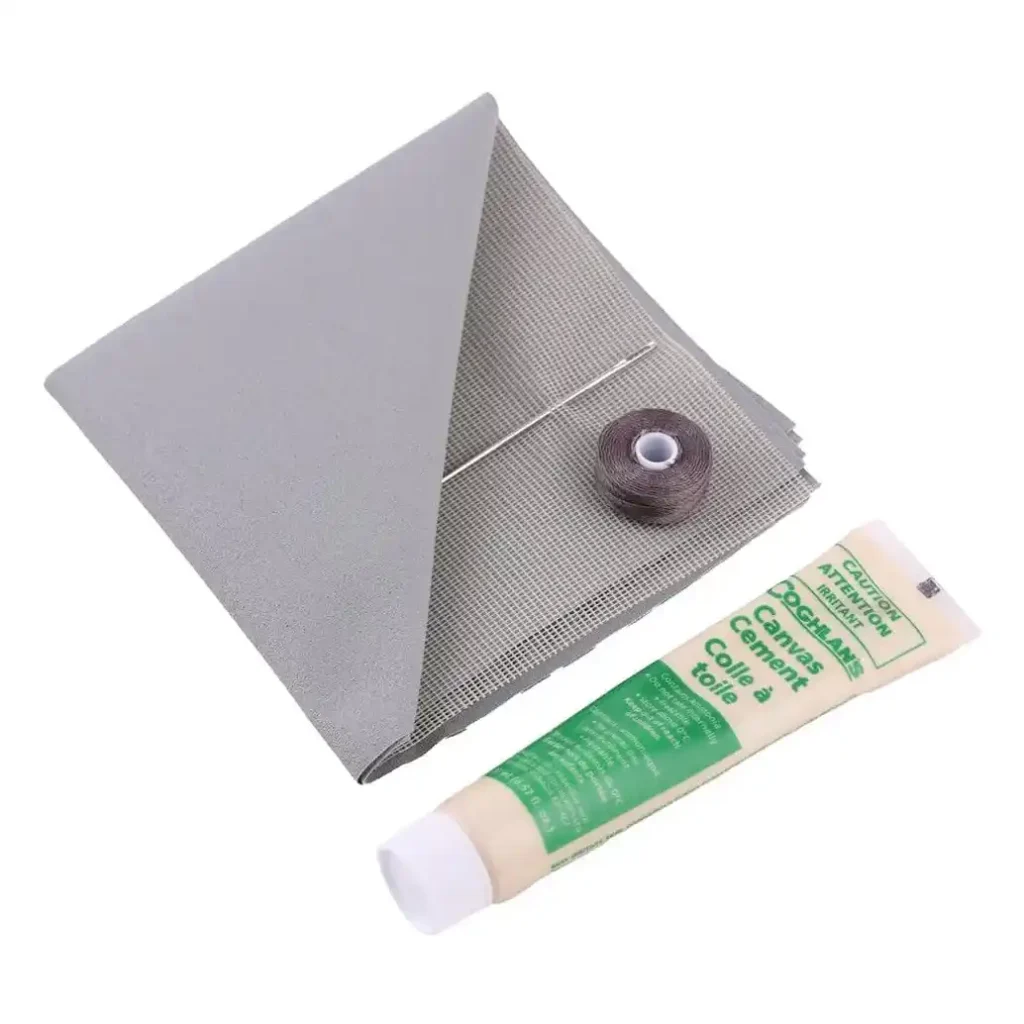
Best for: Casual campers and family car campers who want a low-cost emergency repair kit that can handle multiple types of tent damage.
Key Technical Specifications:
Contents: Nylon patch, canvas patch, mesh patch, repair cement
Repair Type: Multi-material patch system
Cure Time: ~15–30 minutes for adhesive bond
Weight: ~2.4 oz
Best Use: Basic field repairs for mesh doors, small tears, and worn fabric panels
While many modern repair kits rely on high-tech adhesive tapes, Coghlan’s Tent Repair Kit follows a more traditional approach. Instead of peel-and-stick patches, it includes fabric patches and a tube of repair cement that must be applied manually.
The advantage of this design is versatility. The kit includes different materials designed to repair multiple parts of a tent, including nylon rainflies, canvas panels, and mesh door screens.
For campers who want a simple, inexpensive repair solution, it provides a practical backup option.
My Experience
During testing, I used this kit to repair a torn mesh door panel on an older camping tent. The process required applying a thin layer of adhesive to the damaged area, waiting briefly for the glue to become tacky, and then pressing the mesh patch firmly into place.
The repair was not as clean or seamless as modern repair tape systems like Tenacious Tape, and the adhesive required more careful handling. However, once the patch set, it successfully restored the mesh barrier and prevented insects from entering the tent.
For budget-conscious campers, it performs reliably enough for occasional repairs.
Pros
✅ Multi-Material Repair Options — Includes patches for nylon, canvas, and mesh panels
✅ Very Affordable — One of the lowest-cost tent repair kits available
✅ Compact Kit — Small and lightweight enough to keep in a gear bin or camping bag
Cons
❌ Lower Bond Strength — Adhesive is less advanced than modern pressure-sensitive repair tapes
❌ Messier Application — Liquid cement can be harder to control than peel-and-stick patches
💡 Pro Tip
When repairing mesh tears, apply a thin layer of cement around the damaged area and allow it to become slightly tacky before pressing the patch in place. This helps prevent adhesive from seeping through the mesh holes.
Verdict:
Coghlan’s Tent Repair Kit is a basic but functional solution for occasional tent repairs. While it lacks the advanced adhesives used in premium repair tapes, it provides a versatile and inexpensive way to fix mesh tears, small fabric holes, and minor campsite damage.
❓ FAQ: Real-World Tent Repair Questions
Can you repair a torn tent in the field?
Yes. Most small tent tears and punctures can be repaired in the field using repair tape or adhesive patches. High-quality tent repair tape bonds instantly to nylon or polyester rainfly fabric and creates a waterproof seal within seconds.
For larger tears, apply a patch to both sides of the fabric for extra strength.
Why won’t my repair tape stick to my ultralight tent?
Many ultralight backpacking tents use silnylon (silicone-coated nylon). Silicone surfaces repel most adhesives, which means standard repair tape will not bond properly.
To repair silnylon, you must use a silicone-based adhesive such as Seam Grip + SIL, which chemically bonds with the silicone coating.
Is tent repair tape waterproof?
Yes. Quality repair tapes designed for outdoor gear create a fully waterproof seal once applied. Most tapes use pressure-sensitive adhesives that bond directly to coated tent fabrics.
However, the repair area must be clean and dry for the best bond strength.
Should I sew a torn tent instead of using a patch?
In most cases, patching is better than sewing. Sewing creates dozens of tiny needle holes that can allow water to penetrate the fabric.
A properly applied repair patch maintains the waterproof barrier of the rainfly and prevents leaks during rain.
Can you speed up adhesive curing with heat?
Sometimes, but it must be done carefully. Gentle warmth can accelerate curing, but excessive heat may damage the tent’s waterproof coating.
If you use a hair dryer, keep it on the lowest setting and hold it at least 12 inches (30 cm) away from the fabric.
How long do tent repair patches last?
High-quality repair patches can last for years or even the lifetime of the tent if applied correctly.
The key factors are:
clean fabric surface
rounded patch edges
proper pressure during application
Repairs on high-stress areas may eventually need reinforcement.
What is the fastest way to fix a tent tear during a storm?
The fastest emergency repair is peel-and-stick repair tape. These patches can be applied in under a minute and immediately stop water from entering the tent.
Once the trip is over, the repair can be reinforced at home with liquid seam sealant or a permanent patch.
🚫 Models We Considered but Didn’t Recommend
Not every repair product marketed for outdoor gear performs well on modern tent fabrics. During testing, a few commonly suggested solutions failed to deliver reliable results on ripstop nylon and coated rainfly materials.
Gorilla Tape
Gorilla Tape is famous for its extreme strength, but that same aggressive adhesive can become a problem on lightweight tent fabrics.
When applied to thin 20D–30D nylon rainflies, the adhesive tends to grip too aggressively and can damage the waterproof coating when removed. The tape is also relatively thick and rigid, which makes it prone to lifting on curved or tensioned tent panels.
For temporary emergency fixes it can work, but it’s not ideal for long-term tent repairs.
Generic Vinyl Repair Patches
Cheap vinyl patch kits are often marketed as “universal repair solutions,” but they perform poorly on outdoor fabrics.
These patches typically lack UV stabilizers, which means they begin to yellow, stiffen, and crack after extended sun exposure. During testing, several generic vinyl patches started degrading after only a couple days in direct sunlight.
For repairing a tent rainfly or coated nylon fabric, specialized repair tapes designed for outdoor gear provide far more reliable results.
🏁 Final Verdict
The best tent repair kits come down to two things: fabric compatibility and long-term bond strength. Modern tents use specialized materials like ripstop nylon, PU-coated polyester, and silnylon, which means the wrong repair tape can fail when you need it most.
After extensive testing on real tent fabrics under tension, a few repair solutions consistently proved more reliable than the rest.
For Absolute Reliability (The Gold Standard):
Choose Gear Aid Tenacious Tape. Its pressure-sensitive adhesive bonds instantly to most outdoor fabrics and creates a durable waterproof repair that can last for years.
For Ultralight Silnylon Tents:
Carry Gear Aid Seam Grip + SIL. Silicone-coated fabrics require a silicone-based adhesive, and this is one of the few repair solutions that forms a true bond with silnylon.
For High-Stress Repairs:
Tear-Aid Type A stands out for its exceptional elasticity. It moves with the fabric and performs especially well near pole sleeves, door corners, and other high-tension areas.
For Permanent Seam Repairs:
When leaks appear along stitching lines or tent floors, Seam Grip + WP provides one of the strongest waterproof repairs available.
For Budget-Friendly Backup:
Coghlan’s Tent Repair Kit offers a simple multi-patch solution for occasional campers who want a basic repair option without spending much.
Final Expert Advice:
Don’t wait until a storm hits to discover your tent repair kit is missing. A small roll of repair tape or a tube of sealant weighs almost nothing—but it can be the difference between a quick five-minute fix and a soaked night in a failing shelter.
Happy camping,
— Anthony