

The best camping tents for hot weather focus on airflow, ventilation, and heat management to keep sleep comfortable in summer conditions.
Hi, I’m Anthony.
Hot-weather camping exposes problems that don’t show up on cooler trips. A tent that feels fine in spring can become unbearable once temperatures stay high overnight. Poor airflow, limited mesh, and trapped heat quickly turn sleep into a sweaty, restless experience.
Most campers assume heat problems come from daytime temperatures, but the real issue usually appears after sunset. This is when trapped heat and moisture have nowhere to escape, and even warm nights become uncomfortable inside poorly ventilated tents.
After multiple summer trips, I learned that staying cool at camp isn’t about thin fabric alone. It’s about how air moves through the tent — where heat escapes, how cross-ventilation works, and whether moisture can dissipate instead of building up inside.
This became especially obvious during warm, still nights when fans helped, but only if the tent itself allowed air to circulate properly — something also discussed in 5 Best Camping Fans for Tents in 2026 (Keep Cool & Sleep Better).
If you’re looking for the best camping tents for hot weather, this guide focuses on designs that actually stay breathable in real summer conditions — not just tents marketed as “lightweight.”
Choosing the right hot-weather tent is less about brand names and more about airflow design, mesh coverage, and how efficiently heat escapes overnight.
This guide focuses specifically on tents that stay comfortable in heat, not general summer camping or ventilation-only comparisons.
As an Amazon Associate, we earn from qualifying purchases.
🌡️ Are There Truly “Hot Weather” Tents?
Yes — but not because of thinner fabric.
Hot weather tents stay comfortable due to:
• Extensive mesh panels
• Efficient cross-ventilation
• Breathable canopy materials
• Low heat retention design
Comfort in heat depends more on airflow than tent weight or price.
🏆 What Makes a Tent Good for Hot Weather?
A tent suitable for hot weather focuses on ventilation and airflow rather than insulation.
Key characteristics include:
• Extensive mesh panels
• Efficient cross-ventilation
• Breathable inner canopy
• Proper rainfly venting
• Low heat retention design
Tents built for cold or stormy conditions often trap heat, while ventilation-focused designs improve comfort during warm nights.
🧪 How We Evaluated Ventilation
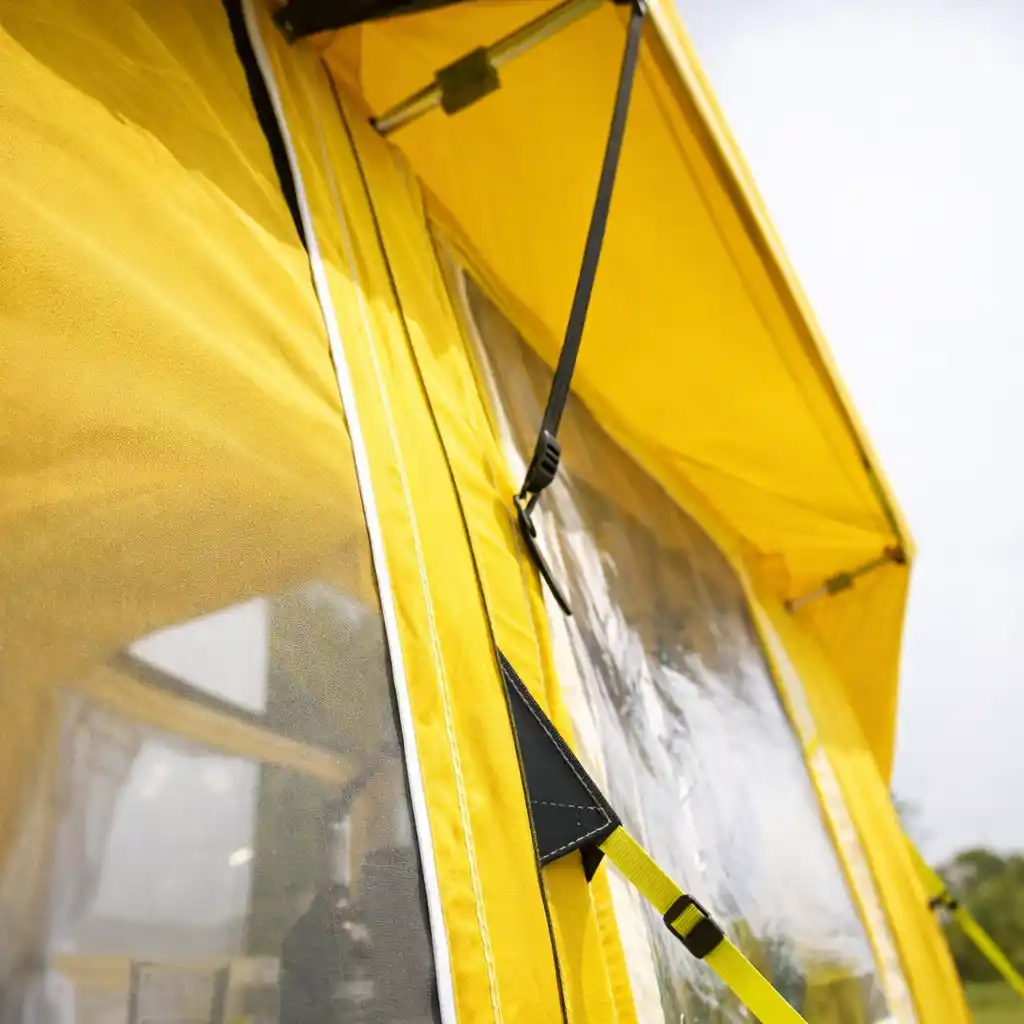
To compare tents fairly, ventilation was assessed using real-world comfort factors:
• Mesh panel coverage
• Cross-ventilation efficiency
• Ceiling heat dissipation
• Rainfly airflow design
• Fabric breathability
These factors affect how hot, stuffy, or comfortable a tent feels during warm nights.
🏆 Quick Summary: Best Camping Tents for Hot Weather
Best for campers who want cooler sleep, strong airflow, and less trapped heat during warm summer nights.
Best Overall Hot Weather Tent:
MSR Hubba Hubba NX 2-Person Tent
Why: Excellent mesh coverage, smart vent geometry, and balanced airflow keep heat and moisture from building up on warm nights.
Best Maximum Ventilation Tent:
Big Agnes Copper Spur HV UL2
Why: Mesh-heavy interior and excellent cross-ventilation make it one of the most breathable tents for hot and humid conditions.
Best Hot Weather Tent for Families:
CORE 6 Person Instant Cabin Tent
Why: Tall interior, large mesh windows, and open layout allow heat to rise and disperse instead of trapping it near sleepers.
Best Lightweight Summer Tent:
ALPS Mountaineering Lynx 2
Why: Mesh-forward design and simple structure provide good airflow at a lower weight than most budget summer tents.
Best Budget Hot Weather Tent:
Coleman Sundome 4-Person Tent
Why: Large mesh ceiling and simple dome design help hot air escape while keeping the price affordable.
🌬️ Quick Comparison: Ventilation vs Heat Retention
Not all well-built tents stay comfortable in summer heat. Designs that prioritize airflow and mesh coverage regulate temperature far better than tents focused on insulation or storm protection.
📊 Hot Weather Tent Comparison (Quick View)
Ventilation ratings reflect nighttime comfort rather than daytime shade performance.
| Tent | Ventilation | Mesh Coverage | Weight | Best For |
|---|---|---|---|---|
| Coleman Sundome | ★★★☆☆ | Basic | ~7.5 lbs | Budget summer camping |
| Big Agnes Copper Spur HV UL2 | ★★★★★ | Extensive | ~3.1 lbs | Backpacking & airflow |
| MSR Hubba Hubba NX 2 | ★★★★★ | High | ~3.8 lbs | Hot & humid trips |
| CORE Instant Cabin | ★★★★☆ | Moderate | ~17 lbs | Comfortable car camping |
| ALPS Mountaineering Lynx 2 | ★★★★☆ | Moderate | ~5.9 lbs | Affordable warm-weather trips |
⭐ Ventilation ratings reflect real-world airflow behavior, not manufacturer marketing claims.
⚖️ Quick Verdict Based on Ventilation & Comfort

If maximum airflow is your priority → Big Agnes Copper Spur HV UL
If you want balance between ventilation & durability → MSR Hubba Hubba
If budget matters most → Coleman Sundome
If you need family space with decent airflow → CORE Instant Cabin
If you want compact simplicity → ALPS Mountaineering Lynx 2
🌡️ Why Hot Weather Tents Are Different From Regular Tents
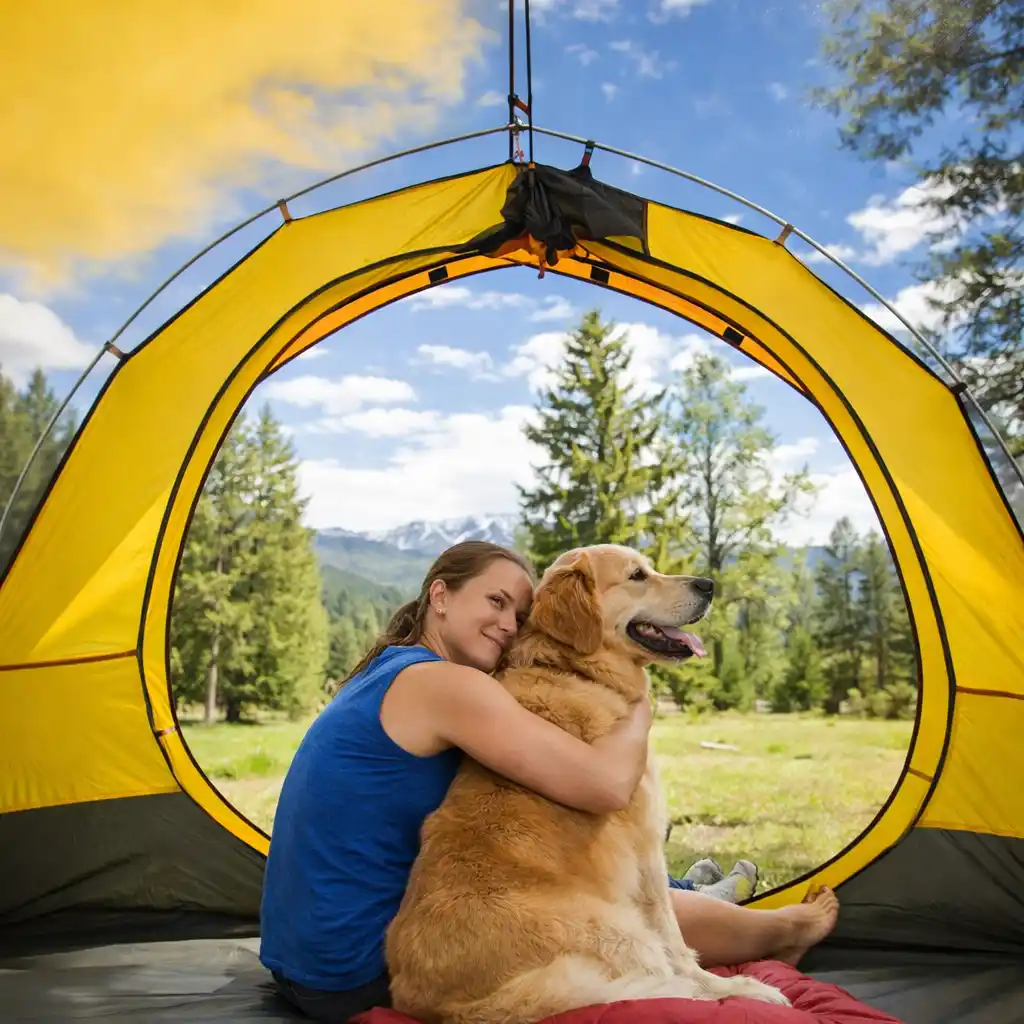
Hot-weather camping exposes tent design limitations that rarely appear in cooler conditions. Many tents marketed as “3-season” are still optimized for heat retention, weather protection, or structural rigidity — not airflow.
In warm conditions, the main enemy isn’t rain or wind. It’s trapped heat and moisture. When warm air can’t escape and fresh air can’t circulate, even moderate nighttime temperatures feel unbearable. This is why tents that perform well in spring or fall often fail during summer trips.
Another common mistake is assuming thin fabric equals cool sleep. Fabric thickness matters less than vent placement, mesh coverage, and airflow paths. A tent with large mesh panels but poor vent geometry can still trap heat, while a well-designed tent with strategic openings stays comfortable even on still nights.
🧠 What Actually Keeps a Tent Cool (Myths vs. Reality)
❌ Myth: “Lighter fabric always means cooler”
Reality: Fabric weight affects pack size more than airflow. Vent layout and mesh coverage matter far more.
❌ Myth: “Just add a fan”
Reality: Fans help only if the tent allows air to move. Without proper ventilation, fans simply circulate warm air — a point expanded in 5 Best Camping Fans for Tents in 2026 (Keep Cool & Sleep Better).
✅ What Actually Works
Large mesh panels on multiple sides
Roof vents that release rising hot air
Cross-ventilation (openings on opposite sides)
High ceilings that reduce heat concentration
Minimal solid fabric above sleeping height
This is where many campers get it wrong. They focus on fabric weight or brand reputation, only to realize too late that poor airflow matters far more once the tent is fully closed at night.
A tent designed for hot weather behaves more like a screened shelter with structure, rather than a sealed sleeping pod.
🌙 Why Tents Feel Hotter at Night

Many campers expect relief once the sun goes down, but tents often feel hotter at night.
Without sunlight, ambient air cools — yet trapped heat and moisture inside poorly ventilated tents remain. Body heat, limited airflow, and condensation buildup combine to create a stuffy interior environment.
This is why ventilation design matters more than daytime shade. A tent that breathes well continues to regulate temperature long after sunset.
Different tent designs handle heat very differently.
Dome tents usually ventilate well due to curved airflow paths and mesh-heavy ceilings.
Cabin tents provide volume and headroom, allowing heat to rise away from sleepers, but require strong mesh coverage to avoid trapping warm air.
Ultralight backpacking tents often excel in hot weather because of extensive mesh panels and minimal solid fabric.
Choosing the right tent type often matters more than choosing a specific brand.
😴 Sleep Comfort in Hot Weather
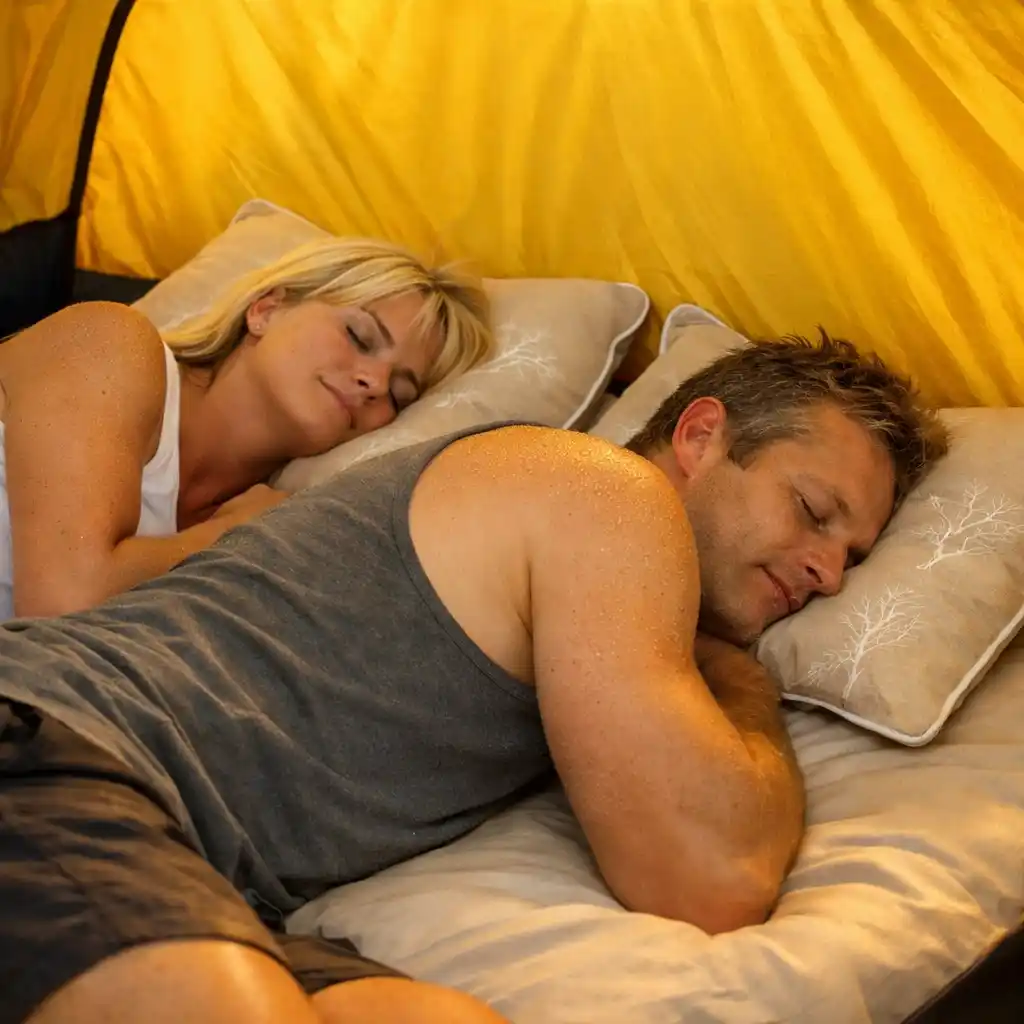
Heat discomfort rarely feels dramatic — it feels exhausting.
Poor ventilation leads to sticky air, restless sleep, repeated wake-ups, and early-morning fatigue. Campers often blame weather conditions when the real problem is trapped heat inside the tent.
Well-ventilated tents feel noticeably different at night:
✅ Less stuffy air
✅ Reduced condensation buildup
✅ More stable interior temperature
✅ Better overall sleep quality
🌡️ How Much Difference Does Ventilation Really Make?
While a tent cannot lower outside temperatures, effective airflow can dramatically improve perceived comfort.
In real summer conditions, campers often report:
• Less heat buildup near the ceiling
• Reduced “sauna effect” at night
• Faster cooling after sunset
• Less moisture trapped inside
Ventilation doesn’t change the weather — it changes how the tent feels to sleep in.
🏆 Best Camping Tents for Hot Weather (In-Depth Reviews)
1. Coleman Sundome 4-Person Tent
🏆 Award: Best Budget Hot Weather Tent
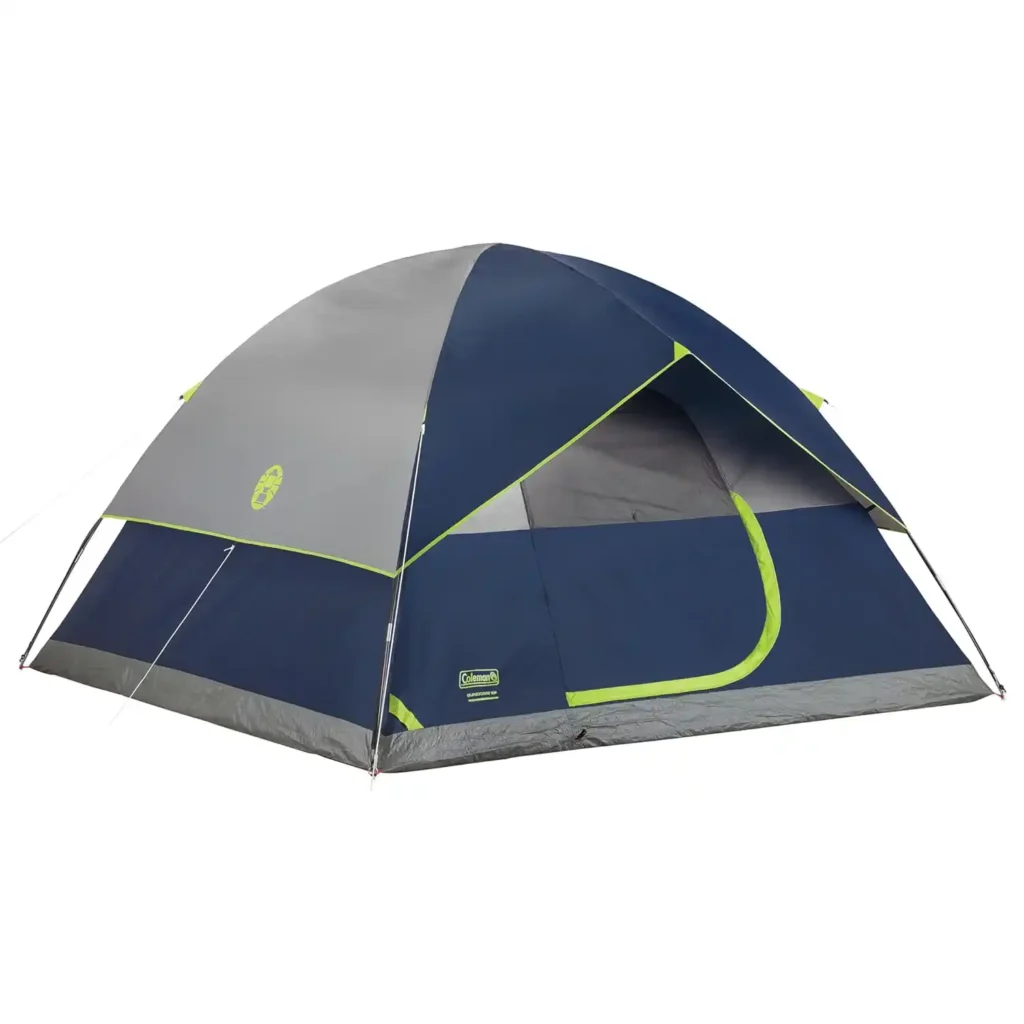
Testing Insight: Ventilation proved adequate for casual warm-weather trips when windows and vents were fully opened.
Hot Weather Performance: Good basic ventilation suitable for warm weather, though limited compared to mesh-heavy designs.
The Coleman Sundome is a classic budget tent that performs surprisingly well in warm conditions thanks to its generous mesh panels and simple dome design. While it isn’t marketed specifically as a summer tent, its airflow often outperforms more complex models.
In real hot-weather use, the mesh ceiling allows rising heat to escape instead of pooling above sleepers. When paired with proper site selection and open rainfly vents, the Sundome stays noticeably cooler than many cabin-style tents.
Pros
✅ Large mesh ceiling for airflow
✅ Simple structure allows heat to escape
✅ Very affordable
Cons
❌ Limited weather protection in storms
❌ Shorter interior height
Who Should Avoid This Tent:
❌ Campers in extreme heat & humidity
❌ Exposed windy campsites
❌ Heavy rain / storm-prone trips
Best for: Budget campers who want better airflow without paying for premium materials.
Ideal For:
✔ Casual summer camping
✔ Beginners & occasional campers
✔ Sheltered campsites & fair weather trips
2. Big Agnes Copper Spur HV UL2
🏆 Award: Best Maximum Ventilation Tent
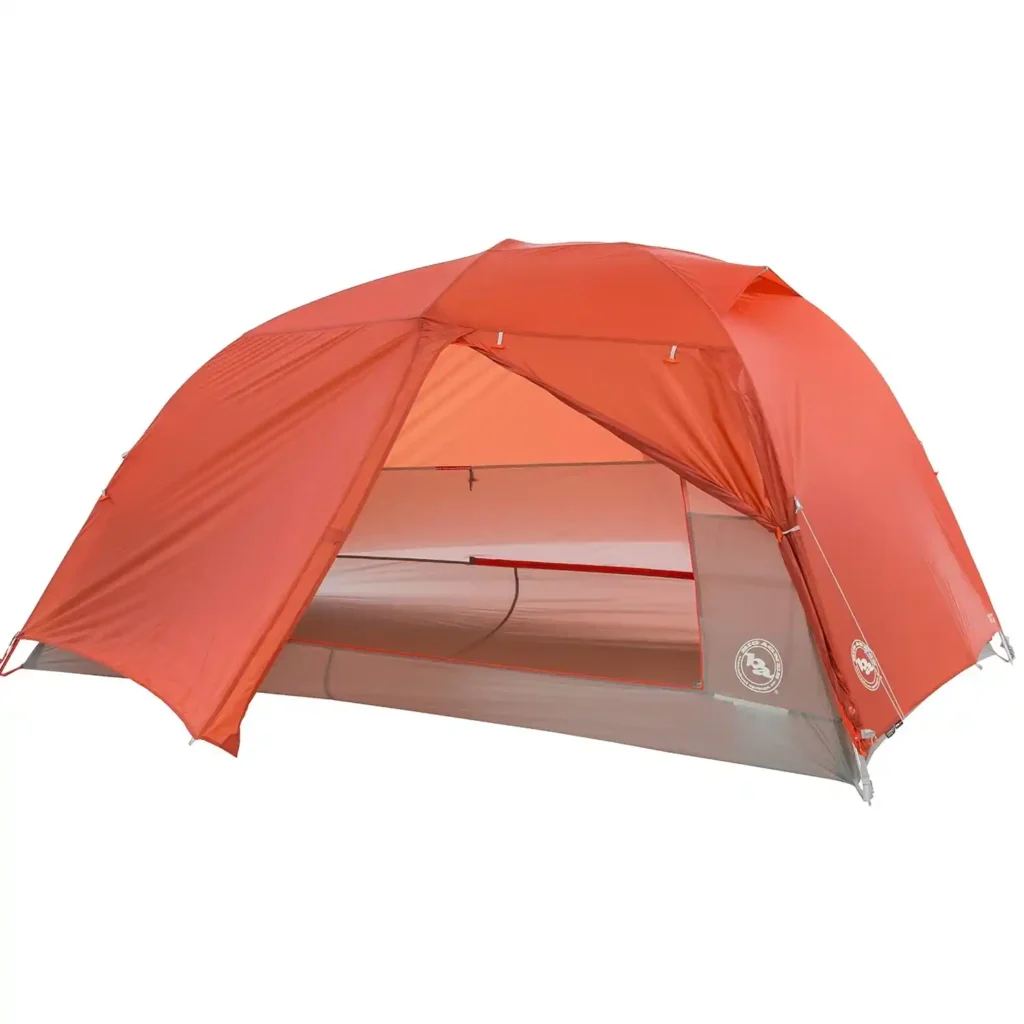
Testing Insight: During warm overnight conditions, this tent maintained excellent airflow with minimal heat buildup, even when wind was limited.
Hot Weather Performance: Excellent airflow with extensive mesh panels and a highly breathable canopy.
This tent is a benchmark for airflow in warm conditions. Its mesh-heavy interior and elevated venting create excellent cross-ventilation, especially when doors are partially open.
The Copper Spur excels on hot, dry nights where breathability matters more than insulation. Heat dissipates quickly, and moisture rarely builds up — even in humid environments.
Pros
✅ Exceptional mesh coverage
✅ Excellent airflow geometry
✅ Lightweight and breathable
Cons
❌ Expensive
❌ Less privacy due to mesh
Who Should Avoid This Tent:
❌ Budget-focused campers
❌ Rough car-camping environments
❌ Users needing heavy-duty durability over weight savings
Best for: Campers prioritizing airflow and breathability over insulation or storm resistance.
Ideal For:
✔ Hot-weather backpacking
✔ Lightweight-focused campers
✔ Maximum ventilation & airflow lovers
3. MSR Hubba Hubba NX 2-Person Tent
🏆 Award: Best Overall Hot Weather Tent
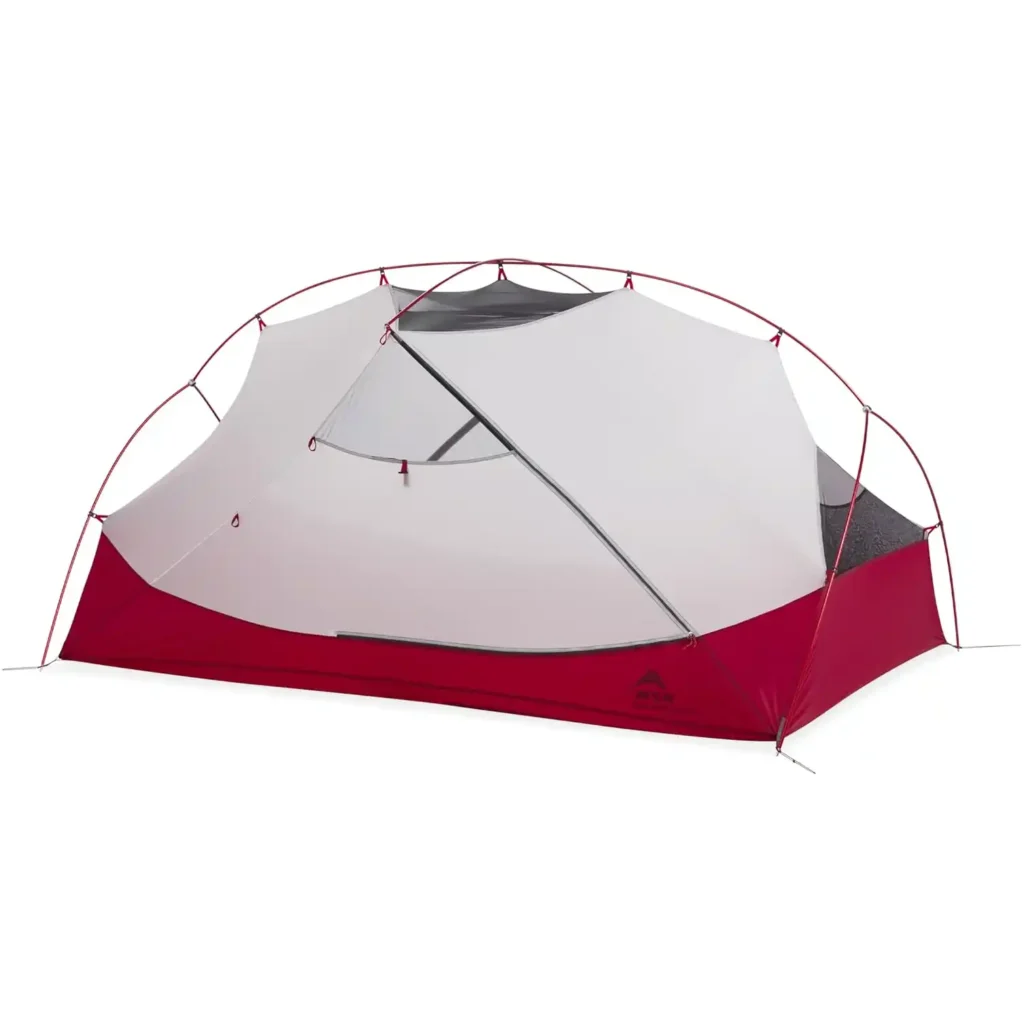
Testing Insight: In summer heat, cross-ventilation remained consistent, preventing the stuffy interior common in less breathable dome tents.
Hot Weather Performance: Excellent ventilation and moisture management, especially in hot and humid conditions.
The MSR Hubba Hubba NX 2 is one of the most reliable choices for hot-weather camping when airflow matters more than insulation. Its mesh-heavy inner body allows warm air to escape quickly, while the tent’s geometry promotes consistent cross-ventilation.
In real summer conditions, this tent stays noticeably less stuffy than solid-wall designs. Heat doesn’t pool near the ceiling, and moisture dissipates efficiently — especially on still, warm nights where poor airflow usually ruins sleep.
What makes the Hubba Hubba NX stand out is balance. It ventilates extremely well without feeling fragile or overly exposed, making it suitable for extended summer trips where conditions can vary.
Pros
✅ Excellent airflow and mesh coverage
✅ Smart vent and door layout
✅ Reliable performance in warm conditions
Cons
❌ Premium price
❌ Not designed for cold or winter use
Who Should Avoid This Tent:
❌ Campers needing large interior space
❌ Family or group camping
❌ Strict budget setups
Best for: Campers who want maximum summer comfort without sacrificing overall tent quality.
Ideal For:
✔ Warm & humid climates
✔ Campers prioritizing ventilation balance
✔ Lightweight comfort seekers
4. CORE 6 Person Instant Cabin Tent
🏆 Award: Best Hot Weather Tent for Families
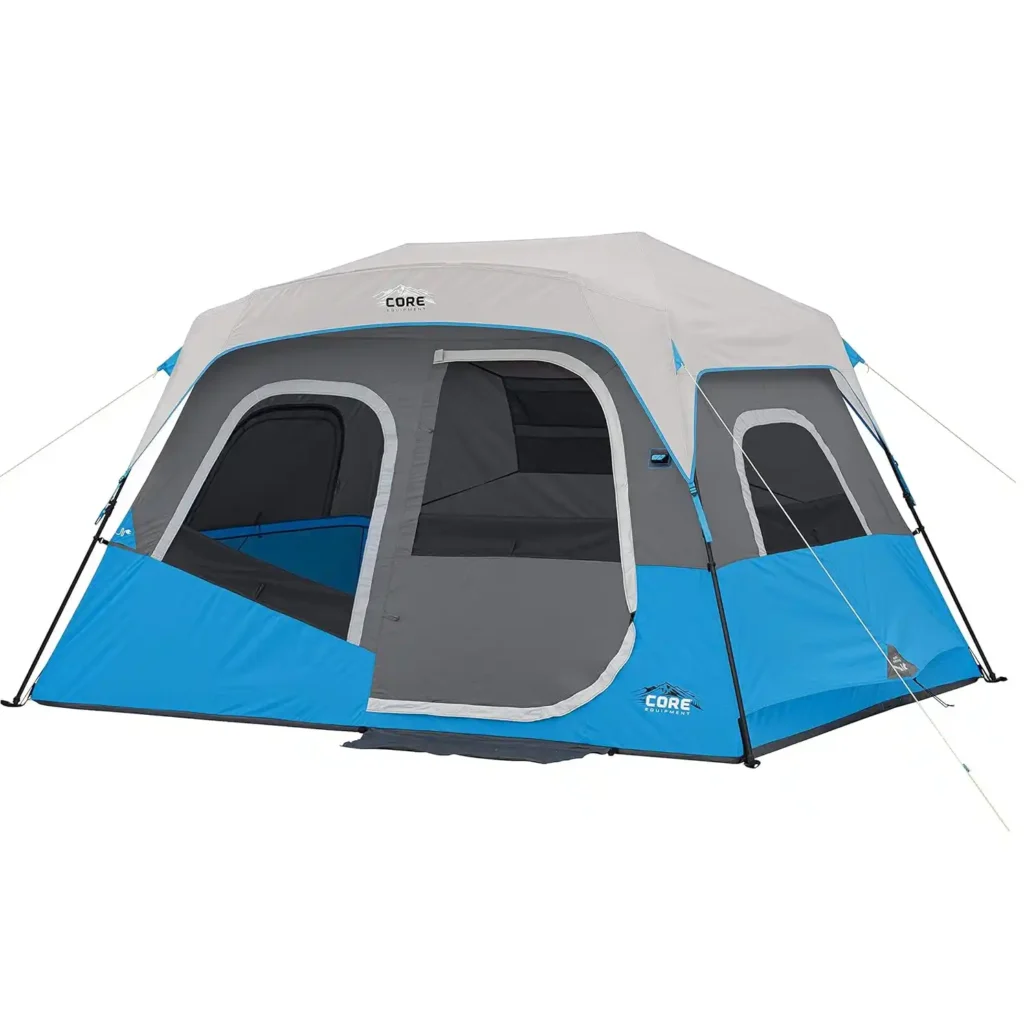
Testing Insight: The tall interior improved comfort perception in warm weather, though airflow depended on keeping multiple panels open.
Hot Weather Performance: Very Good ventilation for a cabin-style tent, with strong airflow when vents and windows are fully opened.
Tall cabin tents often trap heat — but this one avoids that pitfall with large mesh walls and high ceilings that allow heat to rise away from sleepers.
The real advantage here is volume. Heat disperses better in tall interiors, especially when paired with open windows and optional fans. Families camping in hot weather benefit from the added airflow and reduced claustrophobia.
Pros
✅ High ceiling reduces heat buildup
✅ Large mesh windows
✅ Fast setup
Cons
❌ Bulky packed size
❌ Less effective in strong wind
Who Should Avoid This Tent:
❌ Campers on exposed windy terrain
❌ Backpacking or weight-sensitive trips
❌ Minimalist / compact setups
Best for: Families car camping in warm climates who value space and airflow.
Ideal For:
✔ Fast setup situations
✔ Family car camping
✔ Campers valuing convenience & interior space
5. ALPS Mountaineering Lynx 2
🏆 Award: Best Affordable Summer Backpacking Tent
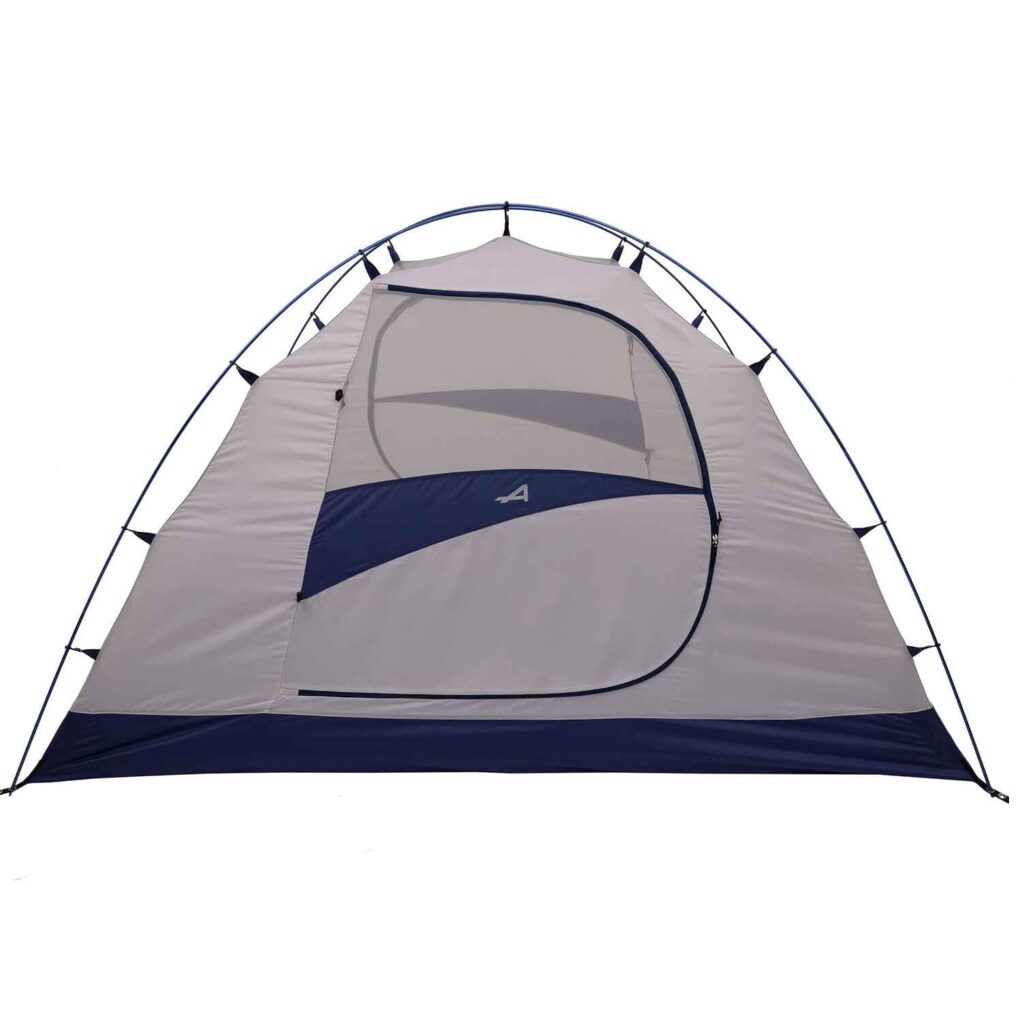
Testing Insight: Mesh-heavy construction reduced heat retention, delivering better nighttime airflow than typical entry-level tents.
Hot Weather Performance: Very Good airflow with a mesh-heavy inner body that helps reduce heat buildup on warm nights.
The Lynx 2 offers a mesh-forward interior at a price that undercuts most premium summer tents. While heavier than ultralight models, it ventilates well and handles heat better than many tents in its price range.
This is often the tent campers choose after learning that heavier, solid-wall designs trap heat far more than expected. It may not look “summer-focused” on paper, but its mesh-forward interior makes a noticeable difference once temperatures stay high overnight.
This tent is often chosen after campers realize that cheaper solid-wall designs become unbearable in summer.
Pros
✅ Good airflow for the price
✅ Durable materials
✅ Affordable
Cons
❌ Heavier than competitors
❌ Basic vent design
Who Should Avoid This Tent:
❌ Campers needing standing height
❌ Family or multi-person comfort
❌ Extreme ultralight backpacking priorities
Best for: Campers who want summer ventilation without premium pricing.
Ideal For:
✔ Budget backpacking
✔ Wind-stable compact shelter
✔ Solo or minimalist campers
🛒 Buying Guide: How to Choose a Tent for Hot Weather
When choosing a hot-weather tent, prioritize airflow over features.
Campers comparing ventilation-focused designs may also find it helpful to review Dome vs Cabin Tent: Which is Better for Camping?
Most hot-weather discomfort comes from choosing tents based on specs instead of airflow behavior. Once the tent is zipped up at night, ventilation design matters far more than fabric thickness or advertised season ratings.
Look for mesh above sleeping height
Ensure vents can stay open without rain
Avoid heavy solid fabric walls
Taller interiors disperse heat better
Consider pairing with fans only after airflow is addressed
Campers who struggle with heat often solve the problem more effectively by changing tent design rather than adding accessories — a theme also reflected in Best Camping Tents for Every Type of Camper in 2026.
🌬️ Hot Weather Tent Setup Tips
Even a well-ventilated tent can feel hot if pitched poorly.
✅ Maximize cross-breeze exposure
✅ Avoid low, stagnant air pockets
✅ Use partial rainfly coverage when conditions allow
✅ Keep vents fully open overnight
✅ Choose shaded campsites carefully
Site selection and airflow orientation often influence sleep comfort as much as tent design.
⚠️ Common Mistakes When Choosing a Tent for Hot Weather
Many campers assume any “summer tent” will stay comfortable in heat. In reality, poor choices often lead to hot, stuffy, and sleepless nights.
❌ Prioritizing price over ventilation
❌ Ignoring mesh coverage and vent placement
❌ Choosing oversized tents with poor airflow
❌ Assuming rain protection equals breathability
❌ Underestimating nighttime heat buildup
A tent that performs well in storms may still trap heat. For hot weather camping, airflow design matters more than heavy fabrics or marketing claims.
❓ FAQ: Best Camping Tents for Hot Weather
🌡️ What type of tent is best for hot weather camping?
Tents designed for hot weather prioritize ventilation, airflow, and mesh coverage. Dome and ultralight tents with large mesh panels typically perform best because they allow heat to escape instead of trapping warm air inside.
🌬️ Does mesh really make a tent cooler?
Yes. Mesh panels dramatically improve airflow and reduce heat buildup. While mesh does not actively cool the air, it allows warm air, moisture, and body heat to escape, which significantly improves comfort in hot conditions.
☀️ Are cabin tents good for summer heat?
They can be. Cabin tents offer more interior volume, allowing heat to rise away from sleepers. However, without sufficient mesh windows and roof ventilation, they may retain heat more than low-profile dome tents.
💧 Why does my tent feel hot and damp at night?
This is often caused by poor ventilation and condensation buildup. Body heat and humidity accumulate inside tents with limited airflow, creating a stuffy and uncomfortable sleeping environment even after sunset.
🎒 Are backpacking tents better in hot weather?
Often yes. Many backpacking tents use lightweight fabrics and extensive mesh, which improves airflow. However, ventilation design matters more than tent category alone.
🌙 How can I keep my tent cooler in hot weather?
Proper setup makes a major difference:
✅ Maximize cross-breeze exposure
✅ Keep vents fully open
✅ Use partial rainfly coverage when possible
✅ Avoid pitching in stagnant air pockets
✅ Choose shaded campsites carefully
🌡️ Can a tent really stay cool in hot weather?
A tent cannot actively cool air like an AC unit, but proper ventilation, mesh coverage, and airflow design significantly reduce heat buildup and improve sleep comfort.
💨 Do rainflies make tents hotter?
Rainflies can trap heat if ventilation is poor. However, well-designed rainflies with venting allow airflow while still protecting against condensation and light rain.
🏕️ Do expensive tents stay cooler?
Not necessarily. Price does not guarantee better ventilation. Mesh coverage, tent geometry, vent placement, and fabric tension influence hot weather comfort far more than cost alone.
🏆 Final Verdict
Choosing the best camping tent for hot weather is less about luxury features and more about airflow, ventilation efficiency, and thermal comfort.
If you want maximum ventilation and ultralight performance → Big Agnes Copper Spur HV UL
If you camp in warm, humid climates and want balanced comfort → MSR Hubba Hubba
If you need a reliable budget tent for casual summer trips → Coleman Sundome
If fast setup and interior space matter most → CORE 6 Person Instant Cabin
If you want affordable wind stability for solo trips → ALPS Mountaineering Lynx 2
No tent is perfect for everyone. The right choice depends on climate, camping style, and comfort priorities.
Focus on airflow. Focus on ventilation. Focus on realistic conditions — not marketing claims.
Happy camping,
— Anthony