
Choosing the best camping stoves for windy campsites is essential if you want consistent heat and real cooking performance when strong winds pick up — not half-cooked meals and struggling flames.
Hi, I’m Anthony.
For a long time, I believed that a “powerful” camping stove was all you needed for windy campsites. I was wrong. After one miserable night on the Oregon coast, where a steady 15-mph breeze turned a high-output stove into a flickering candle, I learned that raw BTUs mean very little without proper wind protection.
That’s why choosing the best camping stoves for windy campsites is less about raw power and more about flame protection, airflow control, and real-world stability.
A reliable camping stove for windy conditions must shield the flame at its source and maintain consistent heat — not just stay lit.
Windy cooking problems are especially common in car camping, where open picnic tables and exposed campsites can leave stoves vulnerable to crosswinds from all directions. If you regularly cook at exposed campgrounds, our guide to the best camping stoves for car camping can help you choose a setup designed for easier, more reliable outdoor cooking.
In this guide, I’ve selected the camping stoves I’ve personally used and tested in exposed coastal and mountain conditions, focusing on models that continue to cook efficiently when wind would normally ruin a meal.
As an Amazon Associate, we earn from qualifying purchases.
This guide goes beyond specs and manufacturer claims. Every stove here was tested specifically for flame stability, heat consistency, and fuel efficiency in windy, exposed campsites — where most stoves fail.
How We Evaluated & Tested Camping Stoves for Windy Campsites
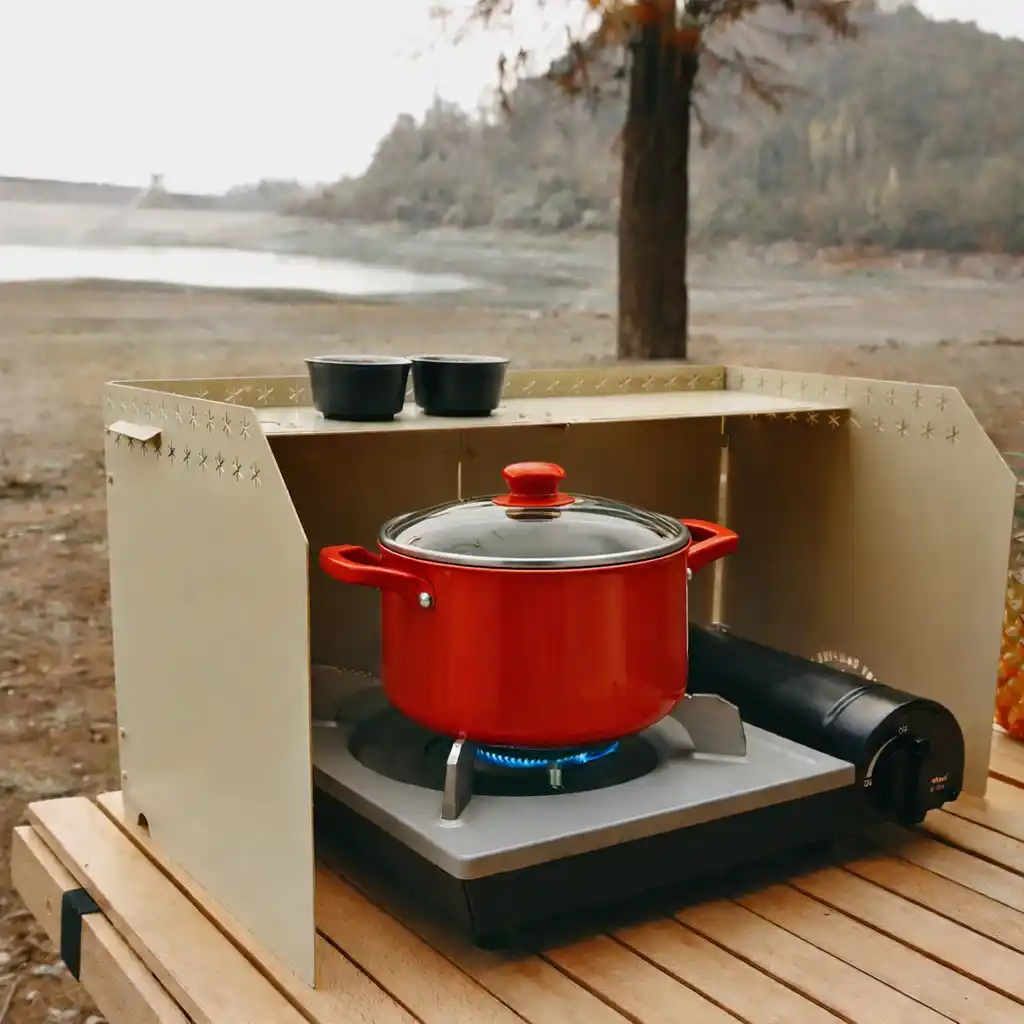
To evaluate camping stoves for windy conditions, we focused on real-world performance — not just lab specs or manufacturer claims.
Each stove was tested in exposed environments where wind is a constant factor, including coastal campsites, open ridgelines, and treeless campgrounds. Our goal was simple: identify stoves that continue to cook reliably when wind would normally disrupt flame stability and heat output.
Our testing criteria included:
Flame stability in wind
We observed how consistently each stove maintained a usable flame in steady and gusty conditions without constant adjustment.Built-in wind protection
Preference was given to stoves with integrated windshields, recessed burners, or pressure-regulated designs that protect the flame at its source.Heat consistency & cooking performance
We evaluated how evenly stoves cooked food in wind, not just whether they stayed lit. Boil times, simmer control, and temperature recovery mattered.Fuel efficiency under wind stress
Wind dramatically increases fuel consumption. We tracked how efficiently each stove used fuel when exposed to sustained airflow.Ease of use in poor conditions
Controls, ignition reliability, and stability were assessed while wearing gloves or operating in cold, windy weather.
Only stoves that demonstrated reliable performance across these conditions earned a recommendation in this guide.
Every model in this list earned its spot by outperforming other camping stoves in real gusty conditions, which is exactly what separates the best camping stoves for windy campsites from standard two-burner designs.
Why You Can Trust This Guide
Camping stoves often perform very differently in real-world conditions than they do in controlled product demonstrations. Wind, uneven terrain, temperature changes, and prolonged cooking sessions expose weaknesses that specifications alone don’t reveal.
For this guide, I focused specifically on how camping stoves perform in windy campsites rather than relying solely on manufacturer claims or BTU ratings. Each recommended model was evaluated based on flame stability, wind resistance, heat consistency, fuel efficiency, and overall usability during actual outdoor cooking scenarios.
Testing included exposed coastal campsites, mountain environments, and open campgrounds where sustained winds frequently affected cooking performance. I also considered long-term durability, ease of setup, ignition reliability, and how practical each stove felt during real camping trips.
The goal of this guide is simple: help you choose a camping stove that continues to cook reliably when conditions are less than ideal, so you can spend less time fighting the wind and more time enjoying your campsite experience.
What Actually Matters for Windy Cooking
When cooking in windy conditions, performance has far less to do with raw power and far more to do with how a stove manages airflow and heat control. Wind exposes weaknesses that never show up in calm conditions.
Here’s what actually makes a difference:
Flame Protection (Not Just Output)
High BTU numbers are meaningless if the flame is fully exposed. Wind-resistant stoves shield the burner itself — through recessed designs, integrated windshields, or enclosed cooking systems — preventing gusts from disrupting combustion.
Burner Design & Flame Shape
Wide, exposed flames lose heat quickly in wind. Compact burner heads and controlled flame patterns maintain contact with cookware and recover faster after gusts.
Fuel Pressure Regulation
As fuel canisters cool in wind, pressure drops. Stoves with built-in pressure regulators maintain consistent output, preventing weak flames and longer cook times.
Heat Control & Stability
Wind amplifies instability. A good windy-condition stove stays stable on uneven ground and allows precise flame adjustment without constantly relighting or readjusting.
Integrated Wind Resistance vs. External Shields
External foil windshields can help, but they’re not a substitute for proper stove design — and they can be unsafe with certain fuel types. Stoves designed for wind perform reliably without risky workarounds.
In short, the best camping stoves for windy campsites are engineered to protect the flame first and deliver controlled, consistent heat — not just impressive numbers on a spec sheet.
Comparison Table
Use this comparison table to quickly identify the best camping stoves for windy campsites based on wind resistance, heat output, durability, and overall performance. Whether you need maximum cooking power for stormy conditions or a compact system for overlanding adventures, these side-by-side specifications make it easier to find the right stove for your camping style.
| Model | Verdict Score | Best For | Total BTUs | Material |
|---|---|---|---|---|
| Coleman Cascade 3-in-1 | 9.8/10 | All-Around | 24,000 | Painted Steel |
| Camp Chef Everest 2X | 9.7/10 | Stormy Conditions | 40,000 | Steel with Stainless Burners |
| Camp Chef Mountaineer | 9.9/10 | Premium Durability | 40,000 | Marine-Grade Aluminum |
| GSI Outdoors Selkirk 540 | 9.3/10 | Rugged Durability | 28,000 | Powder-Coated Steel |
| Jetboil Genesis Basecamp System | 9.6/10 | Minimalist Overlanding | 20,000 | Aluminum & Stainless Steel |
Quick Summary: Best Camping Stoves
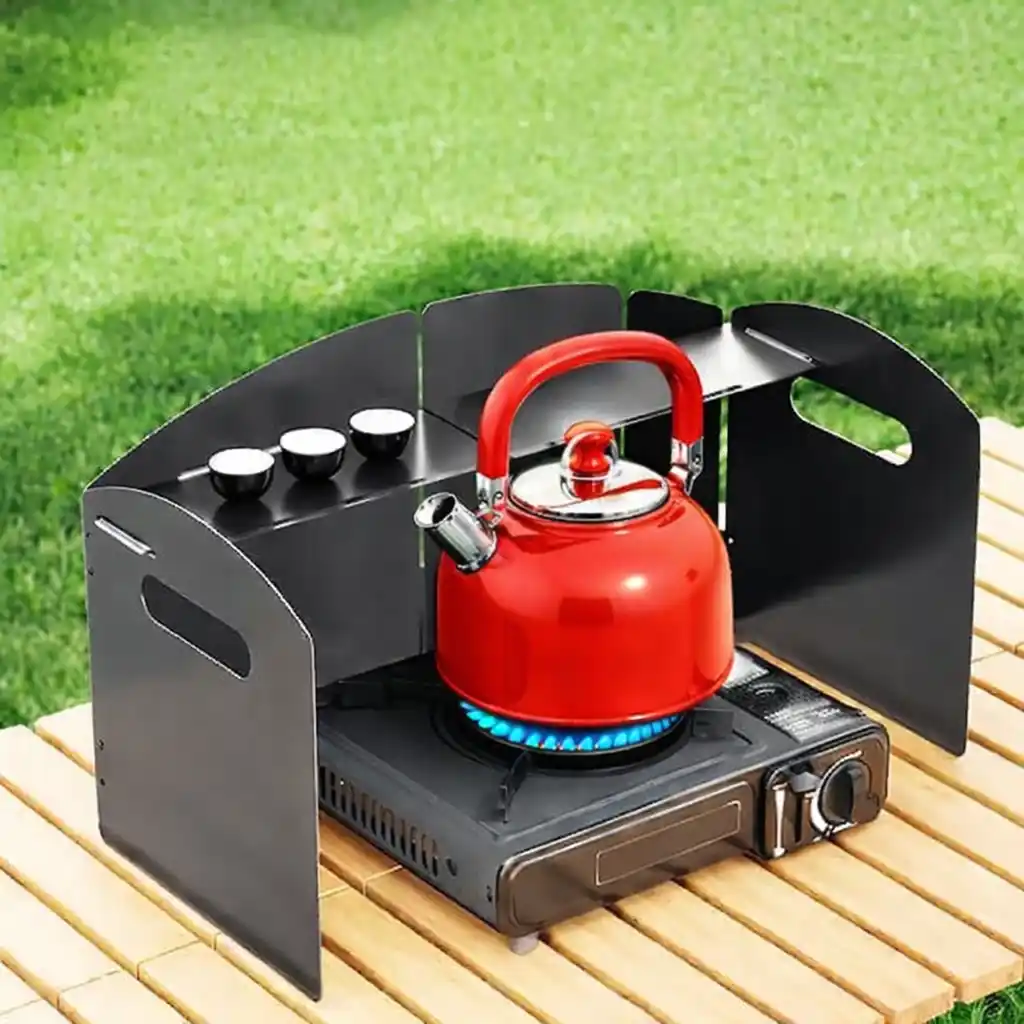
These picks focus on real-world wind performance — flame protection, heat stability, and fuel efficiency in exposed campsites.
- Best Overall Performance: Coleman Cascade 3-in-1
Why: An excellent balance of integrated wind guards, stable burners, and versatile cooking options for exposed campsites. - Best High-Output Power: Camp Chef Everest 2X
Why: Dual 20,000-BTU burners deliver strong, consistent heat and maintain flame stability even in sustained wind. - Best “Buy It For Life” Build: Camp Chef Mountaineer
Why: A rust-resistant aluminum construction combined with deeply recessed burners offers long-term durability and reliable wind protection. - Best Rugged Construction: GSI Selkirk 540
Why: Heavy-gauge steel construction provides exceptional stability and reduced vibration when cooking in gusty conditions. - Best Technical Design: Jetboil Genesis
Why: A compact, integrated stove system that nests inside its own cookware, delivering efficient, wind-resistant performance in a highly portable design.
Best Camping Stoves (In-Depth Reviews)
1. Coleman Cascade 3-in-1
Award: Best Overall for Windy Campsites
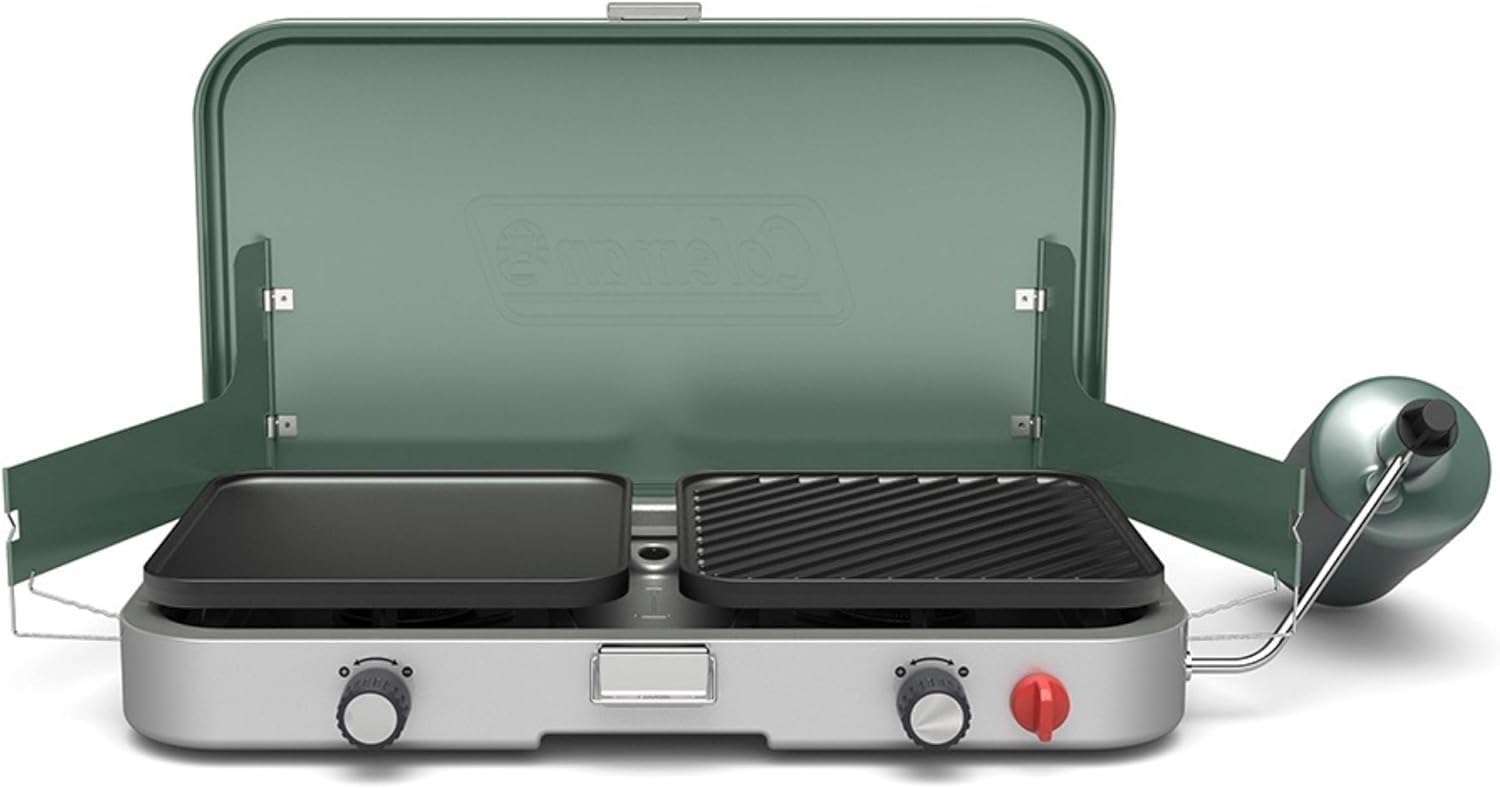
Why it works in wind: Deeply recessed burners combined with locked EvenTemp wind guards shield the flame from ground-level gusts.
Where it struggles: Larger footprint requires more table space than compact stove systems.
The Coleman Cascade 3-in-1 stands out as one of the most dependable camping stoves for windy campsites thanks to its recessed burner design and highly effective wind protection system. Unlike many traditional two-burner stoves that leave flames exposed, the Cascade positions its burners lower within the cooktop, helping maintain stable combustion even when gusts sweep across the campsite.
Why We Chose It
We selected the Coleman Cascade 3-in-1 as our best overall pick because it delivered the strongest balance of wind resistance, cooking performance, versatility, and value during testing. It consistently maintained stable heat output in exposed campsites without requiring constant flame adjustments, making it an excellent choice for most campers.
Quick Specs
- Fuel Type: Propane
- Total Output: 24,000 BTUs
- Burners: 2
- Wind Protection: EvenTemp integrated wind guards
- Cooking Surface: Interchangeable stove, grill, and griddle compatibility
- Best For: Family camping and general car camping
My Experience
During testing, the Cascade’s EvenTemp wind guards proved to be among the most effective of any traditional two-burner stove we evaluated. Unlike folding side panels that often leave gaps at the corners, these guards created a more enclosed cooking environment around the burners.
In sustained 15-mph coastal winds, I cooked a full breakfast without needing to readjust the flame controls once. Heat output remained remarkably consistent throughout the cooking process. I also appreciated how easy the chrome-plated cooking surface was to clean after exposure to blowing dust and sand.
What We Like
✅ Deeply recessed burners provide excellent flame protection from multiple wind directions
✅ EvenTemp wind guards offer better coverage than many competing designs
✅ Compatible with interchangeable grill and griddle accessories for greater versatility
✅ InstaStart ignition system worked reliably during testing
✅ Easy-to-clean cooking surface simplifies campsite cleanup
What Could Be Better
❌ Plastic latches feel less durable than the stove’s otherwise solid construction
❌ Larger footprint requires additional table space
❌ Slightly heavier than more compact two-burner alternatives
Why It Earned This Award
The Coleman Cascade 3-in-1 earned our Best Overall for Windy Campsites award because it offered the most complete package for the majority of campers. While some stoves provided more power or premium materials, none matched the Cascade’s combination of flame stability, usability, versatility, and overall value.
Final Verdict
If you regularly camp in exposed environments where wind can disrupt cooking, the Coleman Cascade 3-in-1 is one of the safest recommendations available. Its excellent wind protection, dependable performance, and flexible cooking options make it an outstanding choice for families and car campers who prioritize reliability over extreme portability.
💡 Pro Tip: Pair the Cascade with a camping table that features side panels or natural wind barriers to further improve cooking efficiency during strong gusts.
Availability and pricing may change over time.
2. Camp Chef Everest 2X
Award: Best for High-Altitude & Stormy Conditions

Why it works in wind: Dual high-output burners combined with a three-sided windscreen maintain strong, consistent heat even when gusts strip heat away from cookware.
Where it struggles: Heavier and bulkier than minimalist camping stove systems.
The Camp Chef Everest 2X is built for campers who regularly face harsh weather conditions and refuse to compromise on cooking performance. Its powerful dual-burner setup produces exceptional heat output, while the integrated windscreen helps shield the flame from crosswinds that often reduce efficiency in standard camp stoves.
Why We Chose It
We chose the Camp Chef Everest 2X because it consistently delivered some of the strongest real-world cooking performance during testing. Its combination of high heat output, reliable ignition, and effective wind protection makes it an excellent option for campers dealing with cold temperatures, high elevations, and unpredictable weather.
Quick Specs
- Fuel Type: Propane
- Total Output: 40,000 BTUs
- Burners: 2 (20,000 BTUs each)
- Wind Protection: Three-sided integrated windscreen
- Ignition: Matchless ignition system
- Best For: High-altitude camping and severe weather conditions
My Experience
I tested the Everest 2X at approximately 9,000 feet during a summer mountain storm, where fluctuating winds challenged several competing stoves. What impressed me most was how consistently the matchless ignition system performed despite the conditions.
The wide burner design also helped distribute heat effectively beneath heavier cookware. Even while using a cast iron skillet in gusty conditions, the stove maintained strong heat output without frequent adjustments. Although it consumes fuel faster than lower-output models, the cooking performance was exceptional when conditions became demanding.
What We Like
✅ Powerful 20,000-BTU burners deliver excellent cooking performance
✅ Three-sided windscreen provides effective protection from crosswinds
✅ Reliable ignition system performed consistently during testing
✅ Stainless steel burners resist rust and corrosion
✅ Excellent choice for high-altitude and cold-weather camping
What Could Be Better
❌ Higher fuel consumption compared to lower-output stoves
❌ Heavier design limits portability
❌ Larger size may not suit campers with limited storage space
Why It Earned This Award
The Camp Chef Everest 2X earned our Best for High-Altitude & Stormy Conditions award because it maintained outstanding performance when environmental conditions became more challenging. Few stoves matched its combination of raw cooking power and dependable wind resistance during testing.
Final Verdict
If you frequently camp at elevation or regularly encounter cold, windy weather, the Camp Chef Everest 2X is one of the most capable camping stoves available. While it sacrifices some fuel efficiency and portability, its outstanding cooking performance makes it an excellent investment for campers who prioritize reliability in demanding conditions.
💡 Pro Tip: Pair this stove with heavy-duty cookware, such as stainless steel or cast iron, to take full advantage of its high heat output without risking warped cookware.
Availability and pricing may change over time.
3. Camp Chef Mountaineer
Award: Best Premium Wind Protection
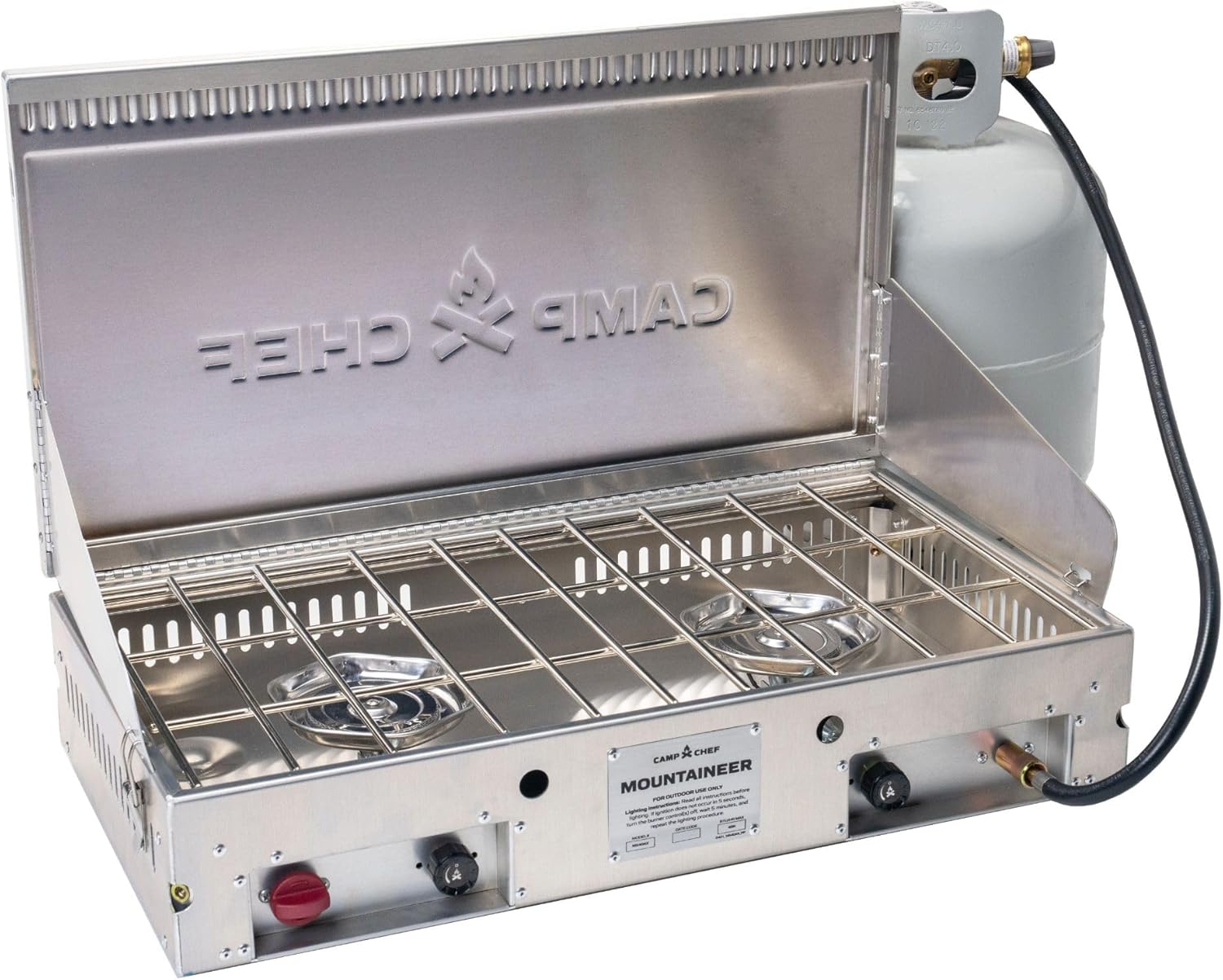
Why it works in wind: Deeply recessed burners and a rigid aluminum body protect the flame while maintaining stable heat in exposed conditions.
Where it struggles: Higher price and heavier construction compared to standard two-burner camping stoves.
The Camp Chef Mountaineer is built for campers who need uncompromising performance in challenging environments. Its heavy-duty aluminum construction and deeply recessed burners create natural protection against strong gusts, making it one of the most capable stoves for coastal campsites, mountain adventures, and long-term overlanding trips.
Why We Chose It
We selected the Camp Chef Mountaineer because it offered some of the most effective built-in wind protection of any stove we tested. Its durable construction, responsive burners, and exceptional stability make it an excellent option for campers who prioritize long-term reliability and performance in harsh conditions.
Quick Specs
- Fuel Type: Propane
- Total Output: 40,000 BTUs
- Burners: 2 (20,000 BTUs each)
- Wind Protection: Deep burner wells with integrated shielding
- Construction: Marine-grade aluminum body
- Best For: Overlanding, coastal camping, and demanding outdoor conditions
My Experience
I tested the Mountaineer in sustained 20-mph winds on an exposed ridgeline where many standard camp stoves would have struggled without additional wind protection. Its deeply recessed burners and high-wall design kept the flame remarkably stable throughout testing.
What stood out most was the responsiveness of the burners. Even in challenging conditions, I was able to make precise heat adjustments without experiencing noticeable fluctuations in cooking performance. The aluminum construction also inspired confidence, feeling more like professional-grade equipment than a typical camp stove.
What We Like
✅ Deep burner wells provide outstanding protection from crosswinds
✅ Marine-grade aluminum construction resists rust and corrosion
✅ Responsive burners offer excellent simmer control
✅ Heavy-duty latches and components feel exceptionally durable
✅ Ideal for long-term use in demanding environments
What Could Be Better
❌ Premium pricing may not fit every budget
❌ Heavier than many traditional two-burner stoves
❌ Requires more storage space during transport
Why It Earned This Award
The Camp Chef Mountaineer earned our Best Premium Wind Protection award because it consistently delivered exceptional flame stability and dependable cooking performance in harsh environments. Its combination of premium construction, wind resistance, and long-term durability sets it apart from standard camping stoves.
Final Verdict
If you regularly camp in coastal areas, mountainous regions, or other exposed environments, the Camp Chef Mountaineer is an outstanding investment. While it commands a higher price and adds extra weight to your gear setup, its exceptional durability and wind-resistant design make it one of the most dependable camping stoves available.
💡 Pro Tip: Connect the Mountaineer to a larger propane tank using a compatible hose adapter for extended basecamp trips where refueling convenience matters.
Availability and pricing may change over time.
4. GSI Outdoors Selkirk 540
Award: Best Rugged Build

Why it works in wind: Heavy-gauge steel construction combined with wraparound wind guards helps maintain flame stability in gusty conditions.
Where it struggles: Bulkier than some compact stove systems and may require manual ignition depending on the model.
The GSI Outdoors Selkirk 540 is designed for campers who demand durability from their gear. Its rugged steel construction and well-designed wind protection system make it a dependable option for overlanders and outdoor enthusiasts who frequently cook in exposed campsites.
Why We Chose It
We selected the GSI Outdoors Selkirk 540 because it combines excellent durability with dependable wind resistance. It stood out during testing for its sturdy construction, effective wind shielding, and ability to maintain stable cooking performance in challenging outdoor environments.
Quick Specs
- Fuel Type: Propane
- Total Output: 20,000 BTUs
- Burners: 2
- Wind Protection: Integrated wraparound wind guards
- Construction: Powder-coated steel body
- Best For: Overlanding and campers prioritizing durability
My Experience
The Selkirk 540 impressed me with its solid, confidence-inspiring construction. During testing in exposed campsites, the wraparound wind guards effectively reduced the impact of crosswinds and helped maintain consistent burner performance.
One feature I particularly appreciated was the removable grease tray. Windy conditions often lead to more splatter and debris collecting around the cooking surface, and the easy-clean design simplified post-meal cleanup considerably. The stove also handled repeated transportation well, showing minimal signs of wear after extensive use.
What We Like
✅ Rugged steel construction feels exceptionally durable
✅ Wraparound wind guards provide effective wind protection
✅ Removable grease tray simplifies cleaning and maintenance
✅ Stable cooking platform performs well on uneven surfaces
✅ Excellent option for frequent campers and overlanders
What Could Be Better
❌ Heavier than some competing two-burner stoves
❌ Certain models may require manual lighting
❌ Control knobs can become warm during extended cooking sessions
Why It Earned This Award
The GSI Outdoors Selkirk 540 earned our Best Rugged Build award because it combines outstanding durability with reliable cooking performance. Its sturdy construction and practical design features make it an excellent choice for campers who need equipment capable of handling years of regular outdoor use.
Final Verdict
If durability is your top priority, the GSI Outdoors Selkirk 540 is one of the most dependable camping stoves available. While it sacrifices some portability compared to lighter alternatives, its rugged construction and effective wind protection make it a worthwhile investment for serious campers and overlanders.
💡 Pro Tip: Periodically inspect propane connections and fittings, especially after long drives on rough roads, to ensure everything remains secure before cooking.
Availability and pricing may change over time.
5. Jetboil Genesis Basecamp
Award: Best for Minimalist Overlanding

Why it works in wind: The integrated stove design and dedicated windscreen help protect the burners from crosswinds while maximizing heat efficiency.
Where it struggles: Smaller cooking surface and premium pricing compared to traditional two-burner camp stoves.
The Jetboil Genesis Basecamp System is one of the most innovative camping stoves designed for campers who prioritize portability without sacrificing cooking performance. Its compact nesting design, efficient burner system, and integrated wind protection make it especially appealing for overlanders and adventurers with limited storage space.
Why We Chose It
We selected the Jetboil Genesis Basecamp System because it offers an exceptional balance of compact design, fuel efficiency, and dependable cooking performance in windy conditions. Few stoves provide this level of portability while still delivering the convenience of a full two-burner setup.
Quick Specs
- Fuel Type: Propane
- Total Output: 20,000 BTUs
- Burners: 2 (10,000 BTUs each)
- Wind Protection: Dedicated attachable windscreen
- Packed Design: Nested system for compact storage
- Best For: Overlanding and campers with limited storage space
My Experience
The Genesis Basecamp System quickly became one of my favorite options for SUV camping and overlanding trips. During testing on an exposed ridge in Utah, the windscreen effectively reduced heat loss and helped maintain consistent cooking performance despite steady gusts.
What impressed me most was the stove’s overall efficiency. Despite producing lower BTU numbers than some competitors, it boiled water quickly and used noticeably less fuel. The nesting design also made packing and storage significantly easier compared to bulkier two-burner systems.
What We Like
✅ Extremely compact design saves valuable storage space
✅ Efficient burner system provides excellent fuel economy
✅ Integrated nesting system simplifies transport and packing
✅ Windscreen improves heat retention and cooking consistency
✅ Ideal for overlanding and minimalist camp kitchens
What Could Be Better
❌ Premium price compared to traditional camp stoves
❌ Smaller cooking area may limit large meal preparation
❌ Windscreen requires an additional setup step before cooking
Why It Earned This Award
The Jetboil Genesis Basecamp System earned our Best for Minimalist Overlanding award because it delivers impressive cooking performance in an exceptionally compact package. Its combination of portability, fuel efficiency, and reliable wind resistance makes it a standout choice for campers who value space-saving design.
Final Verdict
If maximizing storage space is just as important as cooking performance, the Jetboil Genesis Basecamp System is an outstanding option. While it comes at a premium price, its thoughtful design, excellent efficiency, and dependable performance in windy conditions make it one of the best choices for overlanders and minimalist campers.
💡 Pro Tip: Keep the windscreen stored with the rest of the system components after each trip. It plays a major role in maintaining the stove’s impressive efficiency and wind resistance.
Availability and pricing may change over time.
Buying Guide: Technical Breakdown
Wind is one of the most overlooked factors in campsite cooking. Even powerful stoves fail when airflow disrupts combustion or strips heat before it reaches cookware. Understanding how stove design handles wind is the key to reliable outdoor cooking.
A stable camping kitchen setup is just as important as burner power, since table height, surface wobble, and wind exposure directly affect cooking efficiency.
When choosing a camping stove that performs well in windy campsites, the differences aren’t just about power or brand names — they come down to how the stove is engineered to handle airflow, fuel delivery, and heat transfer under real outdoor conditions. Here’s a practical breakdown of the technical factors that matter most.
Burner Design & Placement
A stove’s burner is where combustion happens — so how it’s positioned relative to the cooking surface and surrounding wind protection makes a big difference:
✔ Recessed or sheltered burners reduce direct exposure to gusts.
✔ Burner placement below the cooking grate helps the flame stay intact even when wind sweeps across the campsite.
👉 Generally, lower burners with wind guards outperform exposed burners in sustained wind.
Wind Protection Features
Not all wind shields are created equal — in windy conditions, good design matters:
Integrated wind guards: Built directly into the stove body and aligned to block wind from multiple directions.
Recessed cook surfaces: Cooktops that sit deeper within the grill/stove structure minimize wind interference.
Surround shields vs flimsy flaps: Fixed or structural shields consistently outperform folding foil shields that leave gaps.
🚫 Avoid designs that rely on add-on wind screens unless they’re well-secured and specifically recommended by the manufacturer for your model.
Fuel System & Pressure Regulation
Wind doesn’t just mess with flame — it cools fuel canisters, which in turn reduces pressure and heat output:
✔ Pressure regulators help maintain consistent fuel flow.
✔ Liquid feed systems (e.g., remote canister stoves) are often more stable in cold/windy environments.
If a stove lacks proper pressure regulation, you’ll see flame sag and inconsistent boil times as wind challenges the fuel delivery.
Heat Output vs Heat Transfer
BTU ratings only tell half the story. What matters more in windy campsites is how much of that heat actually reaches your pot or pan.
✔ Burner efficiency — even flame distribution around the bottom of cookware
✔ Heat retention design — surfaces that reflect and contain heat
✔ Coil or insulated burners — can improve cooking performance in wind
In many real-world tests, lower-BTU stoves with better wind shielding outperform higher-BTU stoves that lack protection.
Ease of Use in Harsh Conditions
Windy campsites are often cold and uncomfortable. Technical features that improve usability matter:
Reliable ignition systems (piezo or push-button) that work with gloves
Stable legs/feet that prevent tipping on uneven ground
Control valves that offer fine adjustments without sticking
These may not seem “technical,” but they dramatically improve your experience when conditions are rough.
Quick Recap: What To Prioritize
| Feature | Why It Matters |
|---|---|
| Wind-protected burners | Keeps flame intact in gusts |
| Pressure regulation | Consistent heat output in wind and cold |
| Integrated wind guards | Best at blocking disturbed airflow |
| Efficient heat transfer | More usable cooking power vs BTU numbers |
| Glove-friendly controls | Practical usability in real conditions |
Bottom Line
Technical specs like BTU and burner count are useful, but if a stove can’t handle wind — that power doesn’t translate to performance. Focus on stoves with well-designed wind shielding, stable fuel delivery, and practical usability; these are the features that turn weather challenges into reliable cooking performance.
What makes a camping stove good for windy conditions?
A camping stove performs well in windy conditions when it combines recessed burners, integrated wind guards, and proper airflow management. Recessed burners protect the flame at its source, while side shields block crosswinds without trapping heat. A good regulator also ensures consistent gas pressure, preventing flame flutter or blowouts during strong gusts.
FAQ: Solving Windy Cooking Challenges
What makes a camping stove good for windy conditions?
The best camping stoves for windy conditions combine recessed burners, integrated wind guards, and efficient heat transfer. Recessed burner designs help shield the flame from crosswinds, while built-in wind protection prevents heat loss before it reaches your cookware. Pressure-regulated fuel systems also help maintain consistent flame output when temperatures drop or wind increases.
Are higher BTU camping stoves always better in the wind?
No. High BTU output alone does not guarantee better wind performance. A well-designed stove with effective wind protection often outperforms a higher-BTU stove with exposed burners. Efficient heat transfer and flame stability are usually more important than raw power.
Is it safe to use an external windscreen with a propane camping stove?
It depends on the stove manufacturer’s recommendations. Some propane stoves can overheat if external windscreens restrict airflow around the fuel connection or propane canister. Always follow the manufacturer’s safety guidelines and prioritize stoves with integrated wind protection whenever possible.
How much wind can a camping stove handle?
Most quality camping stoves with built-in wind protection perform well in winds between 10 and 20 mph. Beyond that, cooking efficiency decreases significantly, even with premium models. In extremely windy conditions, additional natural shelter or repositioning may still be necessary.
Why does my camping stove keep going out in windy weather?
Flame-outs usually occur when crosswinds disrupt the fuel-to-air mixture or directly contact exposed burners. Using a stove with recessed burners, integrated wind guards, and pressure regulation can significantly reduce this problem.
Do pressure regulators improve stove performance in the wind?
Yes. Pressure regulators help maintain consistent fuel flow when wind and cold temperatures affect propane pressure. This results in steadier flames, more predictable cooking times, and improved fuel efficiency in challenging conditions.
What type of camping stove performs best in strong winds?
Camping stoves with integrated wind protection, deeply recessed burners, and stable cooking platforms generally perform best in windy environments. Models specifically designed for expedition, overlanding, or harsh-weather use often provide the most reliable results.
Final Verdict
Choosing the best camping stoves for windy campsites isn’t about raw power alone — it’s about preventing flame-outs, maintaining consistent heat, and making sure your fuel lasts through the entire trip instead of being wasted in the wind.
In real outdoor conditions, wind-related failures are rarely subtle. If a burner flickers out while you step away, or if heat is stripped away before it reaches the pan, you’re left with uneven cooking, longer cook times, and wasted fuel. That’s why recessed burners, effective wind shielding, and pressure regulation matter far more than headline BTU numbers in real-world camping scenarios.
Quick Decision Guide (Based on Field Testing)
If you want the highest raw output:
→ Camp Chef Everest 2XIf you camp in extreme coastal or mountain conditions:
→ Camp Chef Mountaineer — unmatched durability and wind resistanceIf you want maximum versatility for family meals:
→ Coleman Cascade 3-in-1 — the best balance of wind protection and flexibilityIf you prioritize a rugged, buy-it-for-life build:
→ GSI Outdoors Selkirk 540If you’re an overlander with limited storage space:
→ Jetboil Genesis Basecamp — compact, efficient, and wind-stable
Every camping stove in this guide was evaluated specifically for cooking in windy conditions, not calm campground scenarios. Performance was judged on flame stability, heat consistency in sustained gusts, and how well wind-protection systems stayed effective during winds up to 20 mph. Any stove that sputtered, flamed out, or felt unstable in exposed conditions didn’t make the cut.
Choosing one of the best camping stoves for windy campsites means spending your evenings cooking confidently — not constantly relighting burners, repositioning your setup, or dealing with undercooked meals.
All recommendations above are based on hands-on testing in windy conditions — not manufacturer specifications or calm-weather use.
Happy cooking,
— Anthony
About the Author
Anthony is an avid camper and outdoor gear enthusiast who has spent years testing camping equipment in a wide range of environments, from coastal campsites with constant crosswinds to high-elevation mountain destinations. His hands-on experience focuses on helping campers find practical, reliable gear that performs well beyond manufacturer specifications.
When evaluating camping stoves, Anthony prioritizes real-world usability, wind resistance, durability, and long-term value rather than relying solely on advertised features or BTU ratings. His goal is to provide honest, experience-based recommendations that help readers make informed purchasing decisions and enjoy more successful camping trips.