
Finding the best portable shade canopies for camping isn’t about comfort — it’s about avoiding heat, glare, and sudden wind failure when you need shelter most.
Most canopies don’t fail gradually — they fail instantly when wind hits.
Hi, I’m Anthony.
I learned this the hard way on a three-day trip to the high desert of Oregon. I brought a cheap “heavy-duty” pop-up from a big-box store. By midday on day two, a 15 mph gust snapped a plastic joint instantly — and within seconds, my canopy turned into a twisting frame of metal and fabric.
That moment changed how I evaluate shade completely.
Because most canopies don’t fail gradually — they fail all at once.
Over the past two years, I’ve tested everything from ultralight tarp systems to reinforced steel-frame pop-ups in real campsite conditions. This guide focuses on what actually matters: frame strength, anchoring reliability, UV protection, and how fast you can deploy solid shade when conditions turn.
If you’re building a complete setup, start with the right shelter — here’s a breakdown of the best camping tents for every type of camper to pair with your canopy.
Quick Answer:
The best portable shade canopies for camping are steel-frame models with vented tops and strong anchoring systems. They provide the most reliable stability, heat protection, and real-world usability in changing conditions.
As an Amazon Associate, we earn from qualifying purchases.
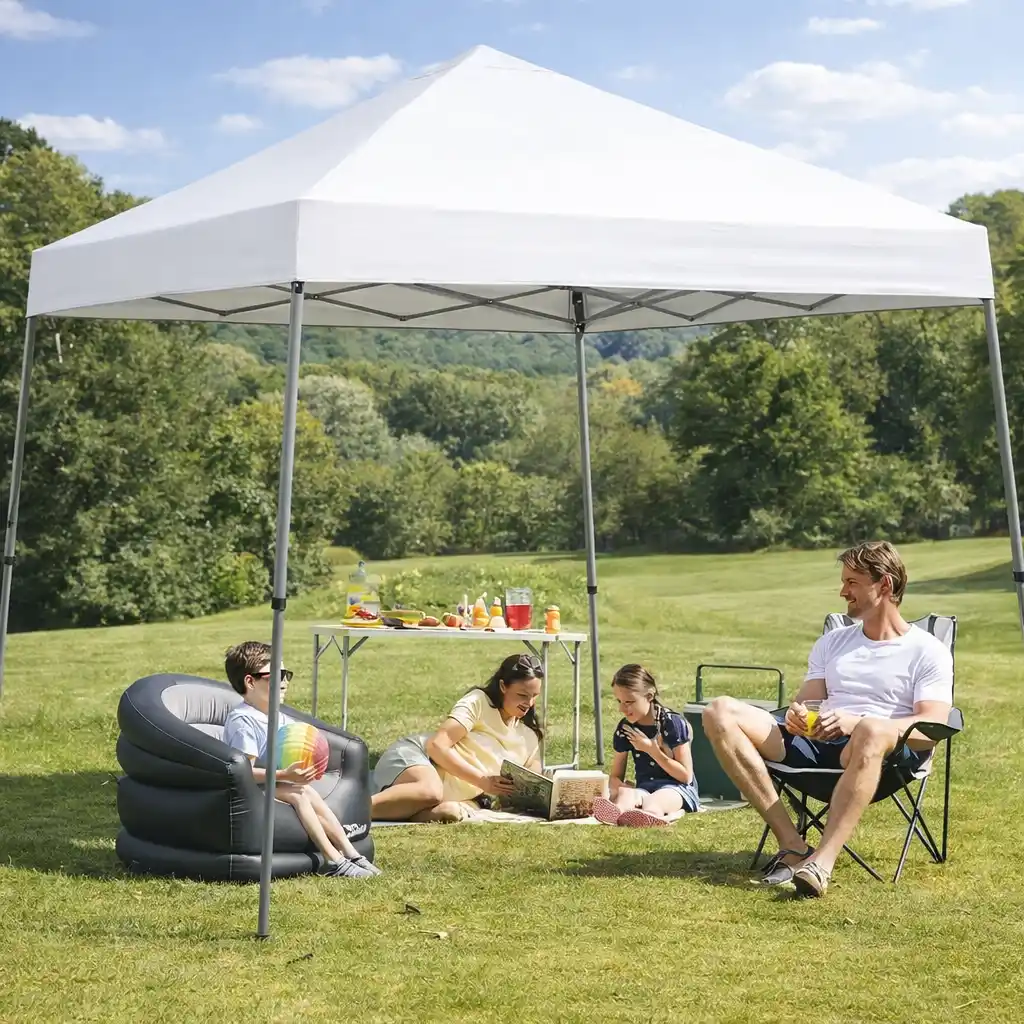
How We Evaluated
Most canopy reviews focus on specs. I focused on what actually happens when wind picks up, the sun is overhead, and setup time matters.
Each canopy was evaluated based on real-world performance, not manufacturer claims:
Structural Rigidity: How much the frame flexes and sways under lateral wind pressure — because instability is the first sign of failure.
Thermal Performance: The measurable temperature difference under the canopy versus direct sun exposure during peak heat.
Joint Integrity: Whether critical stress points use reinforced metal components or weak plastic connectors that fail under load.
Portability vs. Usable Shade: Not just packed weight, but how much functional shade you actually get once deployed.
UV Durability: Fabric thickness, coating quality, and resistance to long-term sun degradation — not just advertised UPF ratings.
How We Tested
To find the best portable shade canopies for camping, I didn’t rely on specs — I pushed each model into real-world failure scenarios in the Pacific Northwest.
The Gust Test: Each canopy was set up on an exposed coastal bluff in sustained winds of 18–22 mph. I measured frame deflection, joint stress, and whether the canopy began to “walk” or lift at the base — the earliest sign of structural failure.
The Thermal Probe: Using an infrared thermometer, I measured both fabric surface temperature and ambient air temperature at head height (approx. 6 feet) at peak sun (2 PM). This revealed which materials actually reflect heat — and which simply trap it.
The Solo Setup Test: I timed full solo setup under realistic conditions. Many canopies claim “one-person setup,” but in practice require force, leverage, or extra hands. I simulated late campsite arrival where speed and simplicity matter.
Ground Stability Testing: I tested each canopy across sand, gravel, and damp forest soil to evaluate leg grip, foot design, and anchoring reliability — especially under shifting or soft terrain.
These tests revealed a clear pattern: most canopy failures aren’t gradual — they happen suddenly under stress, often when conditions are at their worst.
Why You Can Trust This Review
Most “best canopy” lists are built from spec sheets and product pages. This one isn’t.
I’ve spent hours under these canopies in direct sun, dealt with frames bending in gusty wind, and reset anchors after they started lifting out of loose ground. I’ve packed them wet, dragged them across gravel, and set them up solo when speed actually mattered.
No brands sponsored this review or influenced the rankings. Every recommendation here is based on how these canopies perform when conditions aren’t ideal — because that’s when the differences actually show.
Why Your Campsite Needs a Dedicated Shade Canopy
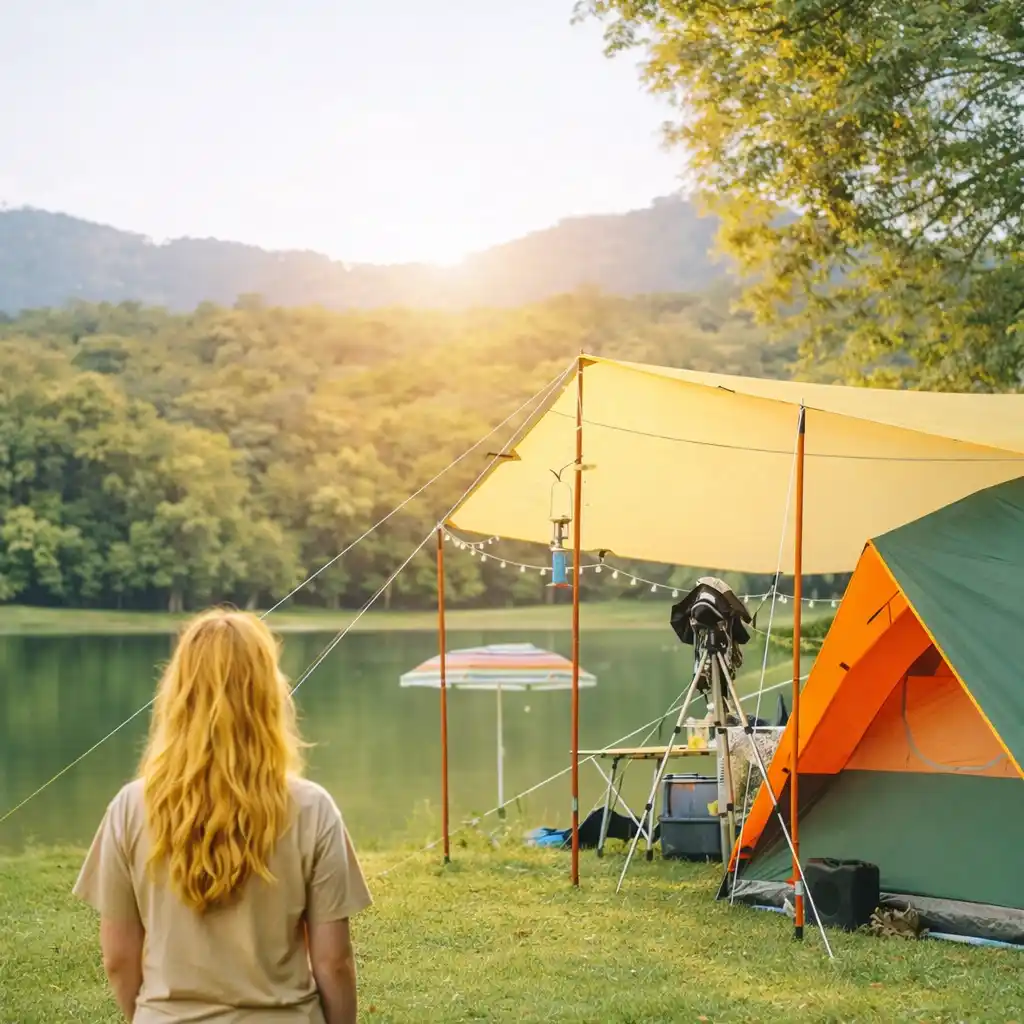
A tent alone isn’t enough once the sun is overhead.
Without proper shade, heat builds fast — especially on exposed campsites like beaches, deserts, or open clearings. By mid-day, your tent turns into a heat trap, forcing you to either sit in direct sun or retreat inside with almost no airflow.
A dedicated shade canopy changes how your campsite actually functions.
It creates a ventilated, usable space where you can cook, eat, and recover out of direct sun. Unlike a tent vestibule, it allows continuous airflow while blocking overhead radiation — which makes a measurable difference in comfort during peak heat.
In the field, this becomes your basecamp “living area” — not just an optional add-on.
For full campsite comfort, combine your shade setup with proper airflow inside your shelter — here are the best camping fans for tents to keep heat under control.
What Actually Matters in a Portable Shade Canopy
Most canopy buyers focus on size and price. During testing, those don’t determine whether your shelter holds up — these factors do:
Frame Material & Coating: Powder-coated steel offers strength, while aircraft-grade aluminum reduces weight without sacrificing rigidity. Weak coatings lead to rust, and cheap plastic sliders are the most common failure point under stress.
Fabric Denier & UV Protection: 150D is the bare minimum. Serious canopies use 300D–500D polyester with reflective or coated layers that block UV and reduce heat buildup — not just shade it.
Vented Peak Design: Without a vent, a canopy traps air and behaves like a sail in wind. A well-designed vent allows pressure to escape, dramatically improving stability in gusts.
Anchoring System: Stakes alone aren’t enough. Look for reinforced guy-out points and compatibility with sandbags or weighted anchors — especially for beaches or hard-packed ground.
Leg Design & Foot Stability: Wide footplates or reinforced base points prevent sinking and shifting. Narrow legs tend to dig into soft ground or slide on gravel.
Setup Mechanism: “One-person setup” only matters if it’s actually achievable. Smooth-sliding joints, minimal resistance, and intuitive locking points make a huge difference when you’re setting up alone.
Packed Size vs. Usability: Lightweight isn’t always better. A slightly heavier canopy with a stronger frame is often more usable in actual campsite setups than an ultralight model that struggles in wind.
If you’re setting up on hard or rocky terrain, your anchoring system matters even more — here are the best tent stakes for hard ground tested in real conditions.
Steel vs Aluminum Frames
Frame material directly affects how a canopy behaves under stress — especially in wind.
Steel frames are heavier, but that weight translates into stability. They resist flexing, hold their shape under load, and are far less likely to twist when gusts hit. In real-world conditions, This reduces heat buildup and improves comfort during peak sun exposure.
Aluminum frames reduce carry weight and are easier to transport, but they tend to flex more under pressure. That flex isn’t always a problem in mild conditions, but in sustained wind, it can lead to joint stress and eventual frame deformation.
The real trade-off comes down to use case:
If you’re car camping, setting up on beaches, or expecting wind, steel is the more reliable choice.
If you prioritize portability, shorter trips, or calm-weather setups, aluminum can be a practical option — as long as the frame design is reinforced.
In testing, the most stable canopies consistently used steel or hybrid-reinforced frames rather than ultralight aluminum builds.
Who a Portable Shade Canopy Is NOT For
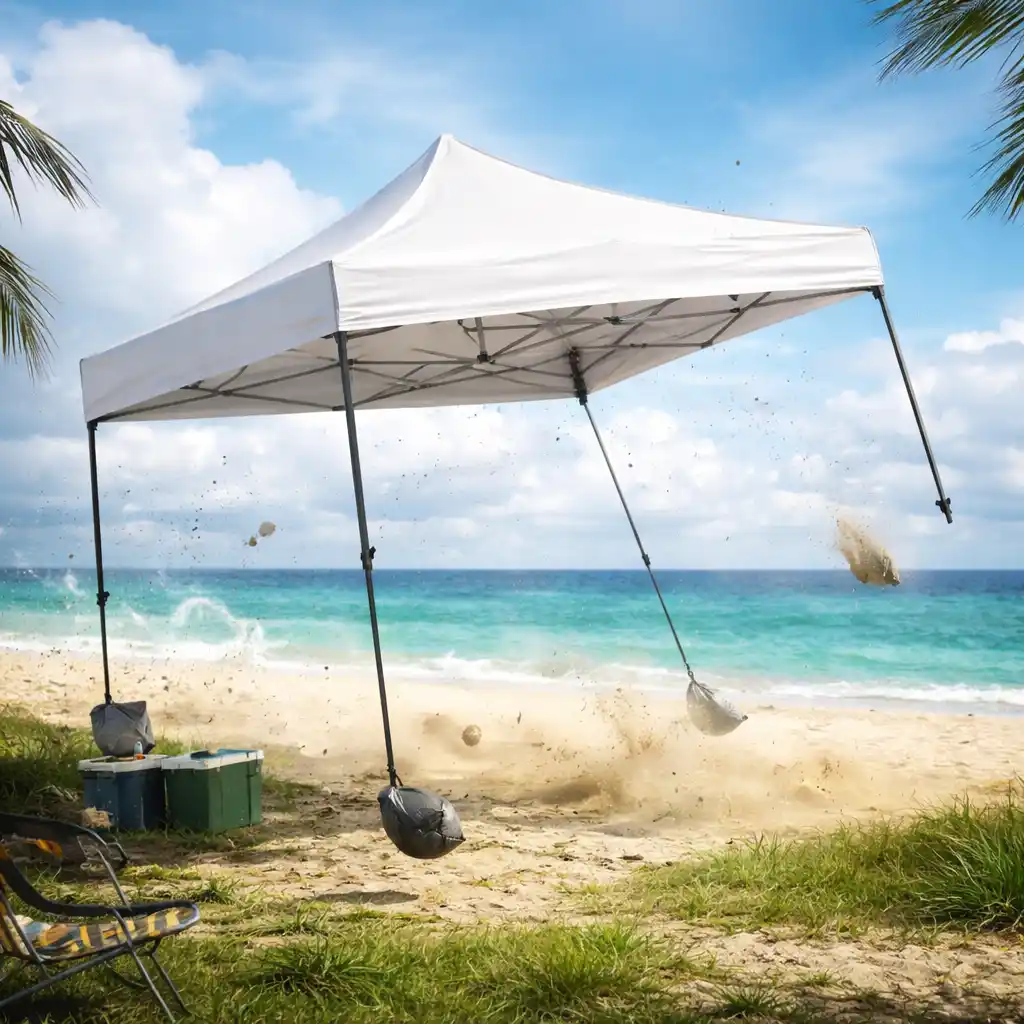
Portable shade canopies solve a specific problem — but they’re not for every type of camping.
Backpackers: Even the lightest canopy systems are bulky and heavy compared to tarp setups. If you’re carrying everything on your back, a canopy simply isn’t practical.
Extreme Wind or High-Altitude Camping: In exposed alpine environments or sustained gale conditions, canopies become unstable. A properly anchored tent or low-profile shelter is a safer and more reliable option.
Permanent Backyard Use: Most portable canopies aren’t designed for long-term outdoor exposure. Constant UV, moisture, and wind will degrade both the fabric and frame over time.
Quick Summary: Best Portable Shade Canopies
If you want to stop dealing with unstable shade, overheating, or canopies collapsing in wind — these are the models that actually held up in testing.
Best Overall Camping Canopy: ABCCANOPY Patio Pop-Up
Why it wins: A commercial-grade cross-truss steel frame that minimizes sway and stays stable even during extended use on exposed campsites.
Best for Wind Resistance: Eurmax Standard 10×10
Why it wins: Heavy-duty 500D fabric combined with reinforced steel joints that handled sustained coastal winds without structural failure.
Best Lightweight & Fast Setup: Coleman Oasis with OnePeak
Why it wins: A central hub design that allows true one-person setup in under a minute — no force, no frustration.
Best for Beach Camping: Neso Tents Gigante
Why it wins: Sand anchor system and flexible Lycra fabric that adapts to wind instead of resisting it — ideal for unstable terrain.
Best Budget-Friendly Option: MasterCanopy 10×10
Why it wins: A solid steel frame with a heat-reflective roof that delivers reliable shade without overspending.
Comparison Table: Portable Shade Canopies
| Model | Best For | Weight | Frame | Setup | Wind Stability | Fabric |
|---|---|---|---|---|---|---|
| ABCCANOPY Pop-Up | Best Overall | 48 lbs | Powder-Coated Steel | ~5 min | High (low sway) | 300D Polyester |
| Eurmax Standard 10x10 | Best for Wind | 54 lbs | Steel Truss | ~8 min | Very High | 500D Polyester |
| Coleman Oasis OnePeak | Fast Setup | 42 lbs | Steel Frame | ~2 min | Moderate | 150D Polyester |
| Neso Tents Gigante | Beach Camping | 6.5 lbs | Aluminum Poles | ~5 min | Flexible (wind-adaptive) | Lycra Blend |
| MasterCanopy 10x10 | Budget Option | 46 lbs | Steel Frame | ~6 min | Moderate | Silver-Coated Polyester |
Quick Comparison:
• Steel frames = maximum stability
• Aluminum frames = easier transport
• Tension systems = best for sand and beach setups
Table of Contents
Best Portable Shade Canopies (In-Depth Reviews)
1. ABCCANOPY Patio Pop-Up
Award: Best Overall Camping Canopy
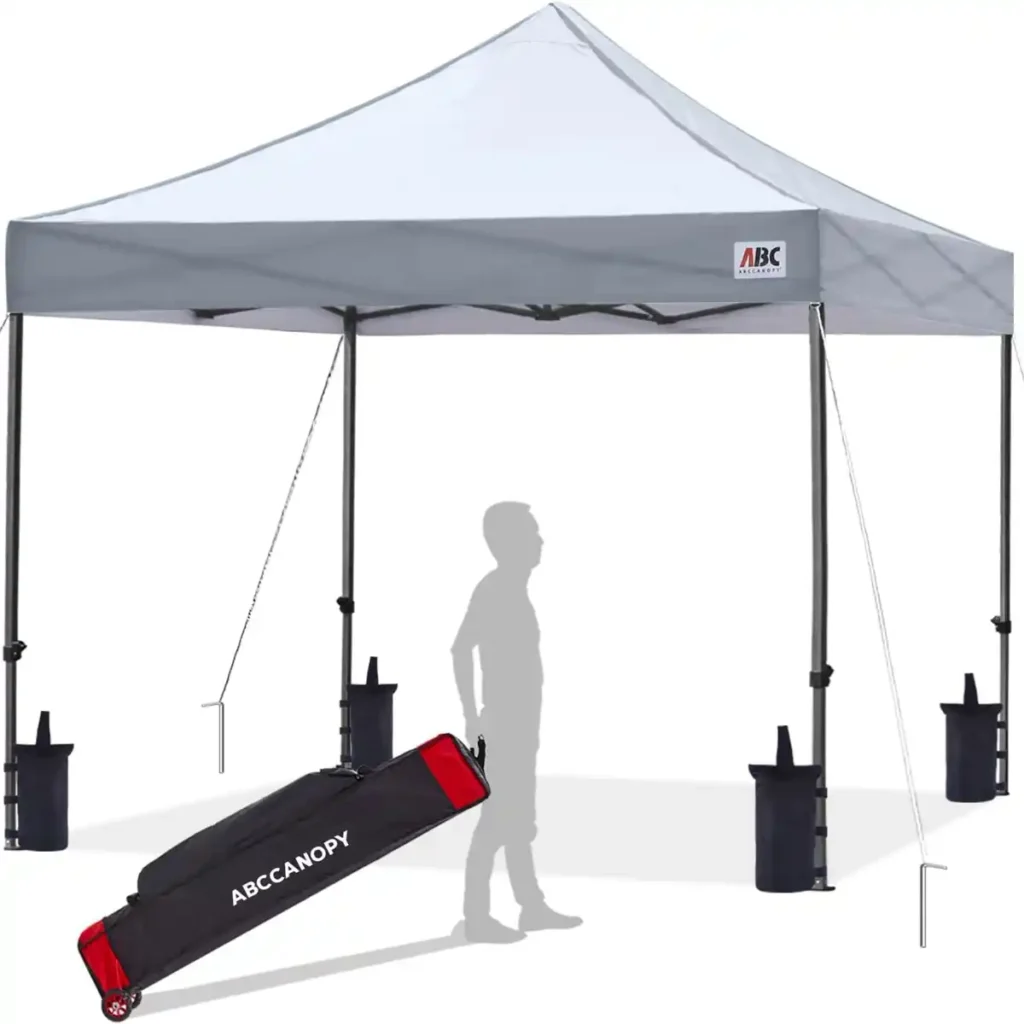
Best for: Campers who want maximum stability and a canopy that doesn’t shift, sway, or collapse when wind picks up.
Key Technical Specifications:
Dimensions: 10×10 ft
Fabric: 300D Polyester (PU-coated)
Frame: Commercial-grade powder-coated steel
UV Protection: UPF 50+
Weight: 48 lbs
Setup Time: ~5 minutes
The ABCCANOPY stands out because it behaves like a reinforced structure, not a typical recreational canopy. The cross-truss frame design significantly reduces lateral movement — which is exactly where most cheaper models fail.
My Experience: In a gusty valley test, I watched lighter canopies start to lean and flex within minutes. The ABCCANOPY stayed stable and upright the entire time — no visible sway, no joint stress. The oversized leg adjustment buttons are also a small but important detail. When you’re tired, cold, or setting up solo, that usability matters more than you think.
If you’re setting up a full basecamp, pairing a stable canopy with a proper cooking station makes a huge difference — check out the best camping kitchen tables for cooking.
Pros
✅ Frame Stability: Minimal sway even under sustained wind
✅ Durable Fabric: Thick 300D material noticeably reduced heat during mid-day testing
✅ Transport Bag: Large wheels handle gravel, sand, and uneven ground well
Cons
❌ Heavy: At ~48 lbs, transport requires effort — especially for solo campers
❌ Velcro Stress Points: Over-tightening can strain stitching at corner seams over time
💡 Pro Tip: Always add weight at the base. Sandbags filled with rocks or dirt dramatically improve stability and reduce lift in gusty conditions.
Verdict: If you want a canopy that feels solid, predictable, and built for repeated use — this is the one. It’s heavier than most, but that weight translates directly into real-world stability.
2. Eurmax Standard 10x10
Award: Best for Wind Resistance
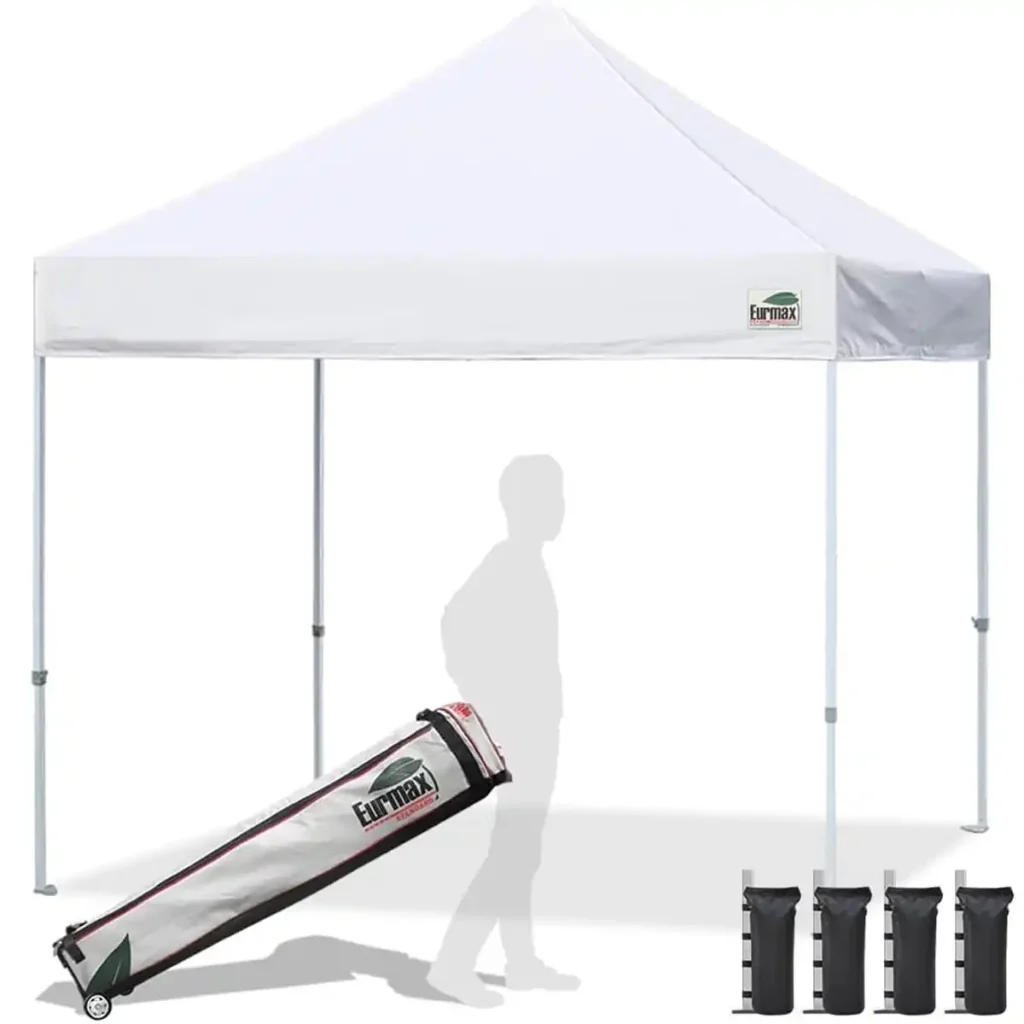
Best for: Campers exposed to consistent wind — coastal sites, open plains, and elevated terrain.
Key Technical Specifications:
Dimensions: 10×10 ft
Fabric: 500D Polyester (commercial-grade)
Frame: Reinforced steel with thumb-lock sliders
UV Protection: UPF 50+
Weight: 54 lbs
Setup Time: ~8 minutes
The Eurmax stands out because it prioritizes structural strength over portability. The thicker steel frame and dense 500D fabric create a canopy that resists flex, twisting, and fabric deformation under load.
My Experience: During our coastal bluff test, most canopies started to flex or shift within minutes. The Eurmax held its shape noticeably longer — even without guy-lines in steady ~20 mph wind. The thumb-lock system is also one of the smoothest I’ve used, with no pinching or resistance when adjusting height under tension.
For extreme wind setups, your shelter matters just as much — here are the best camping tents for windy conditions tested for stability.
Pros
✅ High-Density Fabric: 500D material resists stretching and handles wind pressure well
✅ Stable Frame: Minimal flex even under sustained gusts
✅ Reliable Adjustment System: Smooth, no-pinch sliders that are easy to use under load
Cons
❌ Heavy & Bulky: Takes up space and isn’t ideal for frequent transport
❌ Tight Initial Setup: Fabric tension is high out of the box, requiring effort during first assembly
💡 Pro Tip: Always tension the canopy roof properly. Loose fabric allows water pooling, which adds downward load and can stress even reinforced frames.
Verdict: If wind is your main concern, this is the most dependable canopy on the list. It’s heavier and less convenient — but significantly more stable when conditions get unpredictable.
3. Coleman Oasis with OnePeak Technology
Award: Best Lightweight & Quick Setup
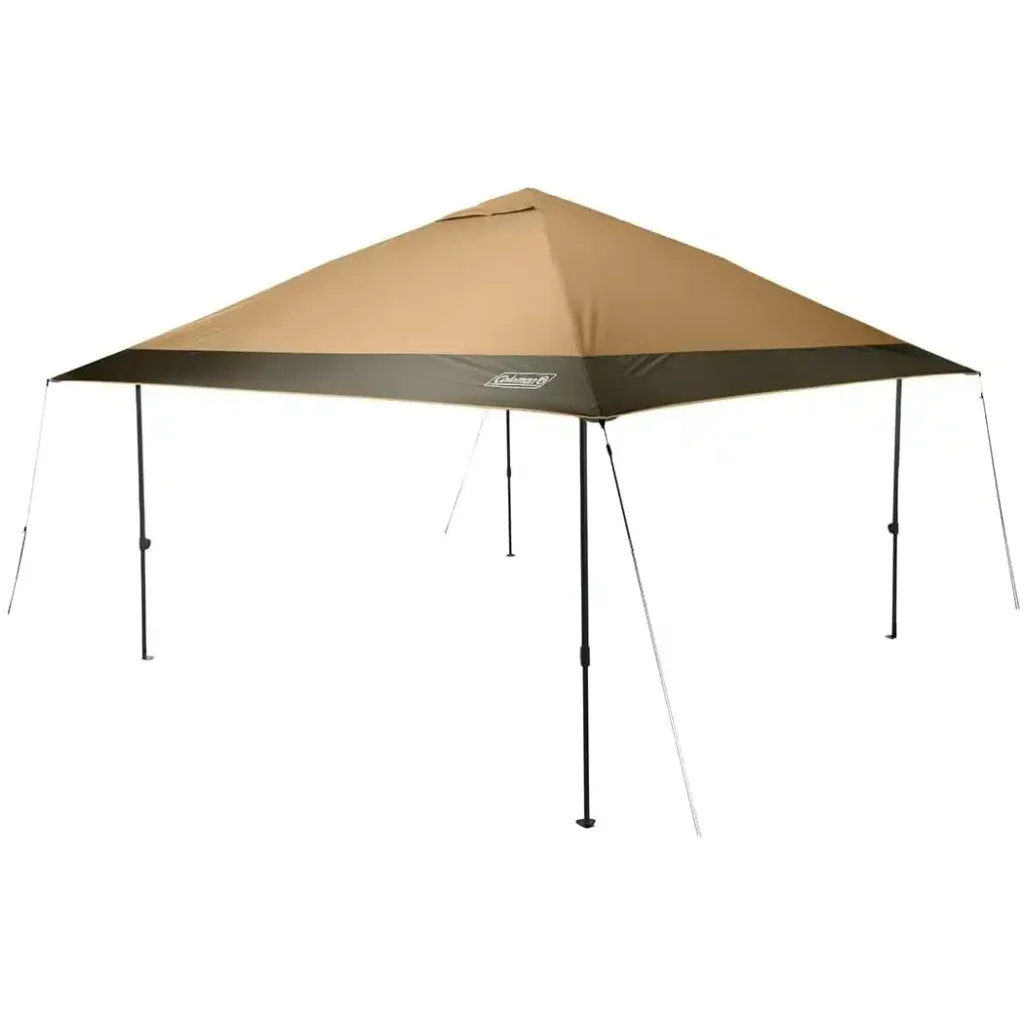
Best for: Solo campers or small groups who want fast, frustration-free setup without dealing with heavy frames.
Key Technical Specifications:
Dimensions: 10×10 ft
Fabric: 150D Polyester
Frame: Lightweight steel
Setup Time: ~1–2 minutes
Weight: 42 lbs
The Coleman Oasis is built around a central hub system — instead of pulling four corners, you simply push up from the center. This design removes the most frustrating part of canopy setup and makes solo pitching realistic.
My Experience: This is the canopy I reach for on short trips or quick setups. In real use, I can have it fully deployed in under two minutes — often faster than unloading the rest of my gear. The trade-off is noticeable: the thinner 150D fabric doesn’t block as much heat, and the lighter frame allows more movement in wind.
If fast setup matters to you, your tent should match that speed — here are the best easy setup camping tents for stress-free pitching.
Pros
✅ Fast Setup: One of the few canopies that truly works solo without effort
✅ Manageable Weight: Easier to transport than heavy-duty steel models
✅ Ventilation: Vented top improves airflow and reduces heat buildup
Cons
❌ Less Wind Stability: Frame flex is noticeable in gusty conditions
❌ Thinner Fabric: Provides shade, but less heat reduction compared to 300D+ canopies
💡 Pro Tip: Always use guy-lines with this model. The lighter frame makes it more vulnerable to sudden wind lift, especially on open terrain.
Verdict: If setup speed and convenience matter more than maximum stability, this is the most practical option. For windy conditions, you’ll need to trade up to a heavier frame.
4. Neso Tents Gigante
Award: Best for Beach Camping
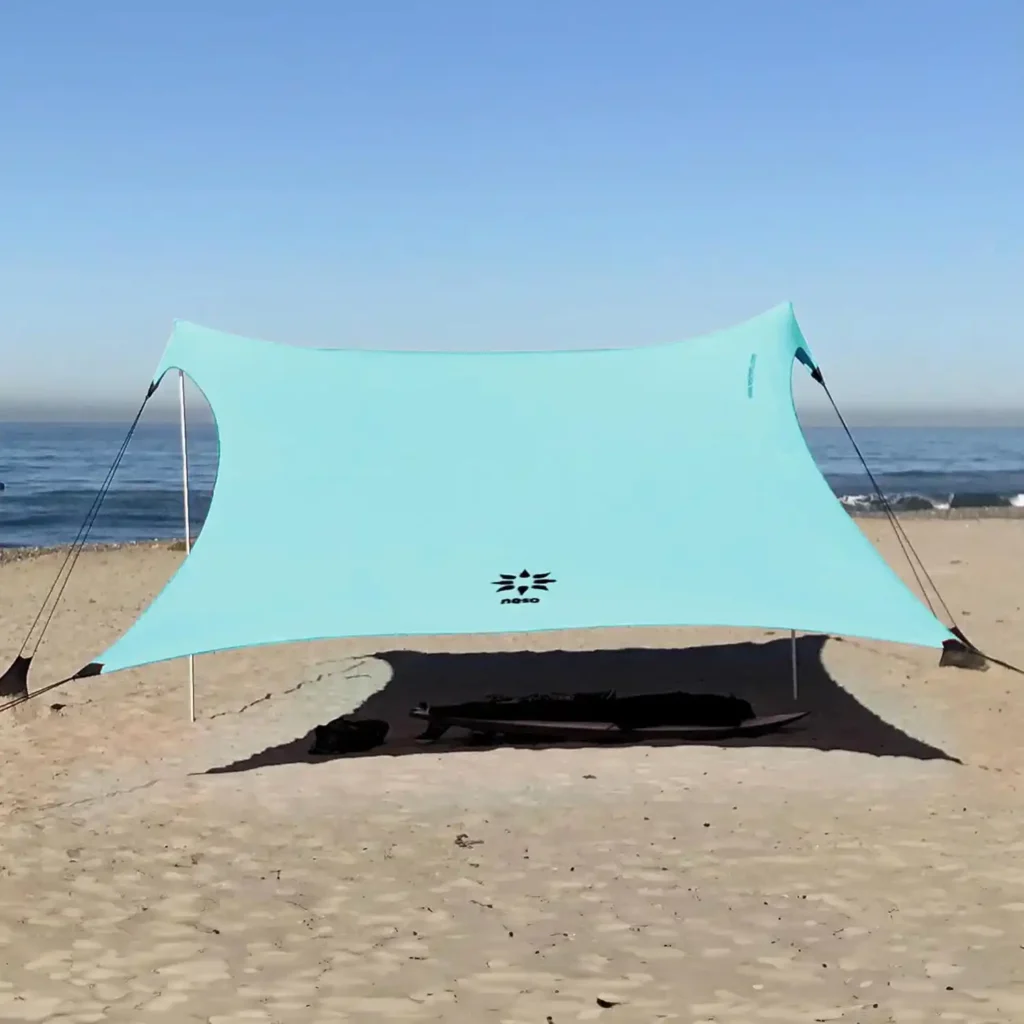
Best for: Beach campers and coastal setups where traditional canopies fail due to loose sand and shifting wind.
Key Technical Specifications:
Dimensions: 11×11 ft
Fabric: Lycra/Nylon blend
Frame: Aluminum poles (2–4 depending on setup)
Anchoring: Sand-fill anchor bags
Weight: ~9 lbs
The Neso Gigante isn’t a traditional pop-up canopy — it’s a tension-based sunshade system. Instead of resisting wind with a rigid frame, it adapts to it. The Lycra fabric stretches under load, reducing the risk of sudden structural failure.
My Experience: On a Pacific beach with soft, shifting sand, standard canopies struggled to stay anchored. The Neso held steady because the anchor bags distribute weight instead of relying on stake penetration. As wind direction changed, the canopy flexed and rebalanced rather than fighting the force.
Beach camping also changes your sleep setup — here’s how to choose the right tent size so you don’t overheat or run out of space.
Pros
✅ Ultralight & Packable: Fits easily in a small bag and is effortless to carry
✅ Sand-Compatible Anchoring: Works where stakes completely fail
✅ Wind-Adaptive Design: Flexible fabric reduces lift and sudden collapse
Cons
❌ Learning Curve: Proper tensioning takes practice for optimal setup
❌ Not Rain-Ready: Fabric will sag and collect water in sustained rain
💡 Pro Tip: Bury the anchor bags slightly below the surface. This creates a stronger “deadman” anchor and significantly improves hold in loose sand.
Verdict: If you’re camping on sand, this is often a better solution than a traditional canopy. But for mixed terrain or wind-heavy inland sites, a rigid frame still offers more predictable performance.
5. MasterCanopy 10x10 Pop-Up
Award: Best Budget-Friendly Option
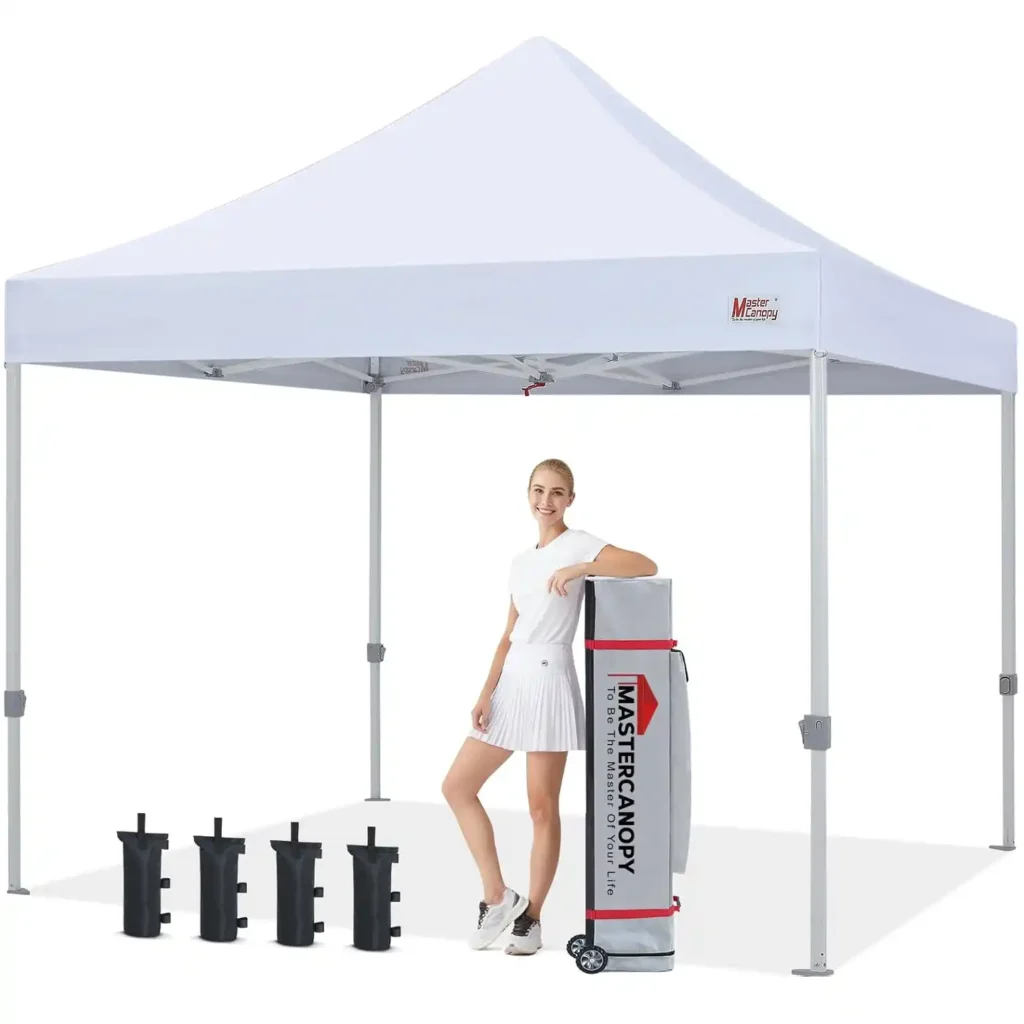
Best for: Casual campers who want functional shade without investing in a heavy-duty frame.
Key Technical Specifications:
Dimensions: 10×10 ft
Fabric: 150D Polyester with silver reflective coating
Frame: Alloy steel
Setup Time: ~5 minutes
Weight: 38 lbs
The MasterCanopy follows a standard X-frame design but uses lighter materials to reduce cost. It doesn’t compete with commercial-grade builds, but it covers the essentials well for occasional use.
My Experience: The silver-coated underside was the biggest surprise. In direct sun, it reflected heat more effectively than expected — close to thicker fabrics during short exposure. Over time, though, the differences show: the frame flexes more under wind, and the fabric begins to loosen after repeated setups.
If you’re building a budget-friendly setup, your tent matters just as much — here are the best budget camping tents that actually hold up.
Pros
✅ Effective Heat Reflection: Silver coating noticeably improves shade comfort
✅ Budget-Friendly: One of the best value options for casual use
✅ Lightweight for Its Class: Easier to handle than heavier steel models
Cons
❌ Reduced Frame Strength: More flex and less stability in wind
❌ Lower Durability: Fabric and joints show wear faster with repeated use
💡 Pro Tip: Upgrade the stakes immediately. The included ones are too light — using proper ground anchors makes a noticeable difference in stability.
Verdict: A practical entry-level canopy that delivers real shade at a low cost. Just don’t expect it to handle strong wind or heavy, repeated use like higher-end models.
Pop-Up Canopy vs. Camping Tarp
When choosing the best portable shade canopies for camping, many campers consider using a tarp instead. In practice, these two systems solve very different problems.
Pop-Up Canopies (ABCCANOPY, Eurmax):
These are freestanding structures with built-in tension. They don’t rely on trees, perfect ground conditions, or complex setup. In real use, they provide consistent overhead shade, stable headroom, and a defined “living space” — especially valuable for car camping or group setups.
Camping Tarps:
Tarps are lighter and more compact, but they depend entirely on how well they’re pitched. Without proper tension and anchor points, they flap in wind, sag under moisture, and lose usable space quickly. They also require trees, trekking poles, or careful anchor placement — which isn’t always available.
Key Differences in actual campsite setups:
– Wind: Canopies resist or vent wind; tarps deflect it but require perfect tension
– Setup: Canopies are fast and repeatable; tarps require skill and adjustment
– Terrain: Canopies work almost anywhere; tarps depend on anchor points
– Usable Space: Canopies maintain full headroom; tarps often lose space when pitched low
Verdict: If you’re car camping or setting up a basecamp, a pop-up canopy is the more reliable and user-friendly option. Tarps make sense for ultralight setups — but require more skill and offer less consistency in changing conditions.
Common Mistakes That Cause Canopy Failure
• Not using enough weight or anchors
• Setting up on uneven ground without adjusting leg height
• Ignoring wind direction and vent orientation
• Leaving fabric loose, which increases lift
Fixing these issues can dramatically improve performance — even on budget models.
FAQ: Solving Real-World Shade Challenges
Are portable shade canopies waterproof in heavy rain?
Most quality canopies (300D+ fabric) are water-resistant, not fully waterproof. The main risk is water pooling in the roof, which adds weight and can bend the frame. Always tilt one side to allow runoff.
How do I stop my canopy from moving on gravel or hard ground?
Use weight bags instead of stakes. Filling them with rocks or sand on-site adds enough downward force to prevent “walking” or lifting in wind.
Do canopy fabrics degrade in the sun over time?
Yes. UV exposure slowly breaks down polyester fabrics, even with coatings. To extend lifespan, avoid long-term sun exposure and never store the canopy while damp.
Can one person set up a 10x10 canopy alone?
Some models allow it. Center-hub designs (like Coleman Oasis) are built for solo setup. Heavier steel-frame canopies are possible but require more effort and time.
What wind speed can a portable canopy handle?
Most standard canopies handle around 15–20 mph winds when properly anchored. Above that, frame stress increases quickly, and failure becomes more likely without additional support.
If wind is a serious concern, your entire shelter system should be optimized — here’s a guide to the best camping stoves for windy campsites that won’t fail in gusts.
Is a canopy better than a tarp for camping?
For car camping, yes. Canopies are faster to set up, more stable, and provide consistent headroom. Tarps are lighter but require skill and ideal anchor conditions.
What is the best canopy for beach camping?
Tension-based systems like Neso work best on sand because they use anchor bags instead of stakes. Traditional canopies struggle to stay secure in loose ground.
How long should a canopy last with regular use?
A good canopy can last 2–5 seasons depending on use and exposure. Frequent sun, wind stress, and improper storage will shorten its lifespan.
Models We Considered but Didn’t Recommend
Not every canopy performs well during testing. These categories consistently failed during testing and didn’t make the final list:
Generic Budget Pop-Ups ($40–$60 Range):
These typically use thin 90D fabric that lets heat pass through and weak plastic sliders that fail under light wind stress. In testing, these models showed early signs of frame instability and joint failure.
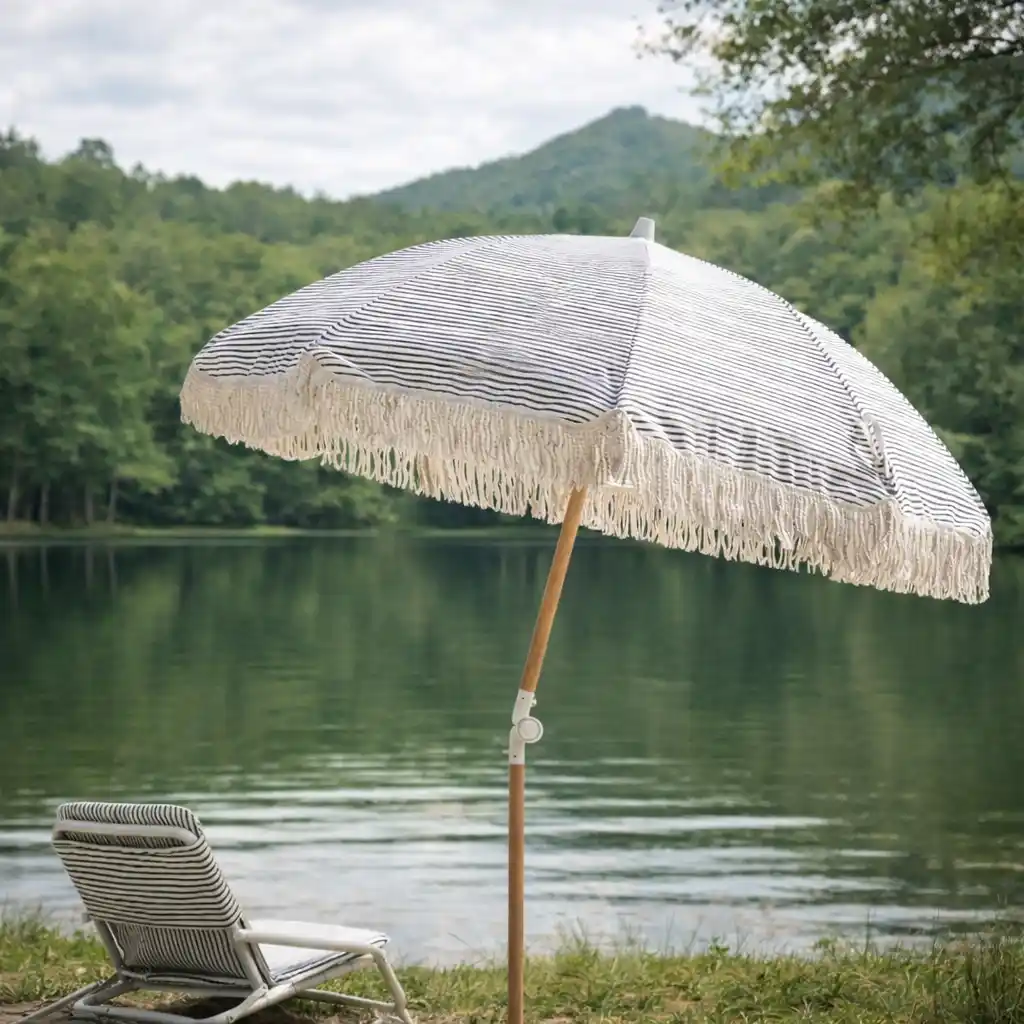
Traditional Beach Umbrellas:
While easy to carry, they offer minimal wind resistance and limited shade coverage. As wind direction shifts, the usable shade moves constantly, making them unreliable for extended use.
Slant-Leg Canopies:
Often marketed as more stable, but in practice they reduce usable shade area — especially at standing height. Compared to straight-leg designs, you lose a significant portion of functional coverage without gaining real structural strength.
Final Verdict: Which Shade Canopy Should You Actually Choose?
The best portable shade canopies for camping aren’t defined by price or brand — they’re defined by how they perform when conditions aren’t ideal.
Here’s the quick decision breakdown:
If you want maximum stability and long-term reliability → Choose the ABCCANOPY Patio Pop-Up
This is the most stable, least “fussy” canopy on the list — ideal for repeated use and exposed campsites.
If you camp in wind-prone or coastal areas → Choose the Eurmax Standard 10×10
Heavier and bulkier, but significantly more resistant to frame flex and structural failure.
If you prioritize fast, frustration-free setup → Choose the Coleman Oasis
Best option for solo campers or short trips where speed matters more than brute strength.
If you camp on sand or beaches → Choose the Neso Gigante
A completely different system that works with wind and loose terrain instead of fighting it.
If you want a solid budget option → Choose the MasterCanopy 10×10
Covers the essentials well, but best suited for occasional use in mild conditions.
To complete your campsite setup, make sure your sleep system matches your shade — here are the best camping mattresses and sleeping mats for car camping.
Final Expert Advice:
A canopy doesn’t fail because of the roof — it fails at the ground.
Upgrade your anchors. Replace the included stakes with 10–12 inch steel spikes or filled weight bags. It’s the simplest way to dramatically improve stability.
Bottom line:
A good canopy gives you shade.
A great canopy gives you a usable space you can rely on — even when conditions change.
If your canopy isn’t anchored properly, even the best model will fail.
— Anthony
Quick Decision Guide
• Windy conditions → Eurmax
• Family / basecamp → ABCCANOPY
• Fast setup → Coleman Oasis
• Beach → Neso Gigante
• Budget → MasterCanopy
About the Author
Anthony is a gear analyst and field tester with over 15 years of hands-on experience camping in the Pacific Northwest. His work focuses on failure analysis — understanding how and why outdoor gear breaks under real conditions.
He has tested everything from ultralight tarps to heavy-duty canopy systems across coastal winds, damp forests, and exposed terrain. Rather than relying on specs or brand claims, his reviews are based on real-world performance, durability, and usability over time.
At CampComfortGuide, Anthony focuses on practical, data-driven recommendations that help campers choose gear that actually holds up — not just looks good on paper.