
Hi, I’m Anthony.
On one of my first trips, I left a bag of marshmallows on the picnic table overnight. I woke up to the sound of a raccoon party. They ate everything and shredded the bag.
It was funny, but it could have been dangerous if it were a bear. Since then, I treat my campsite like a fortress.
Proper food storage protects wildlife and ensures you actually have breakfast in the morning.
As an Amazon Associate, we earn from qualifying purchases.
Are you worried about bears or raccoons raiding your supplies? Mastering camping food storage is the most important safety skill you can learn.
Animals have a sense of smell hundreds of times stronger than ours. They can smell a candy bar wrapper inside your tent. To keep them away, you need to seal scents in and lock food up.
Here are the essential rules for keeping your food safe and your campsite critter-free.
Proper food storage while camping is one of the most important skills every camper should learn, regardless of experience level. Animals are attracted by smells, not just food itself, which is why bear safe food storage focuses on eliminating all scent sources around your campsite.
Understanding how to store food when camping helps protect wildlife, keeps your camp secure, and prevents dangerous encounters. By following proven camping food storage tips—such as separating cooking, sleeping, and storage areas, using hard-sided containers, and securing food overnight—you significantly reduce the risk of attracting bears and other critters.
1. The "Bear Triangle" Rule
Before we talk about containers, let’s talk about layout. Never sleep next to your food. Use the “Triangle” method:
- Point 1: Cooking/Eating Area.
- Point 2: Food Storage Area (100 yards away).
- Point 3: Your Tent (100 yards away from both, upwind).
This ensures that if an animal smells dinner, it investigates the kitchen, not your pillow.
According to the National Park Service, proper food storage is essential to prevent bears and other wildlife from associating campsites with food.
Following established food storage practices significantly reduces wildlife encounters and helps protect both campers and animals.
You can review the official recommendations in the
National Park Service food storage guidelines.
2. Use a Bear-Resistant Cooler
For car camping, your cooler is your first line of defense. However, a cheap plastic cooler won’t stop a bear (they can crush it).
You need a Rotomolded Cooler that is certified “Bear Resistant” (usually requires padlocks on the corners).
Need a Tough Cooler? Check out our review of the Best Camping Coolers to find certified bear-proof models like Yeti.
3. The Locked Vehicle Method
If you are car camping in bear country, the safest place for food is often inside a hard-sided vehicle.
- Tip: Cover your food with a blanket so bears can’t see it through the window.
- Warning: Do not do this in areas with extreme bear activity (like Yosemite), as bears can break car windows. Always check local ranger rules.
4. Hard-Sided Storage Bins
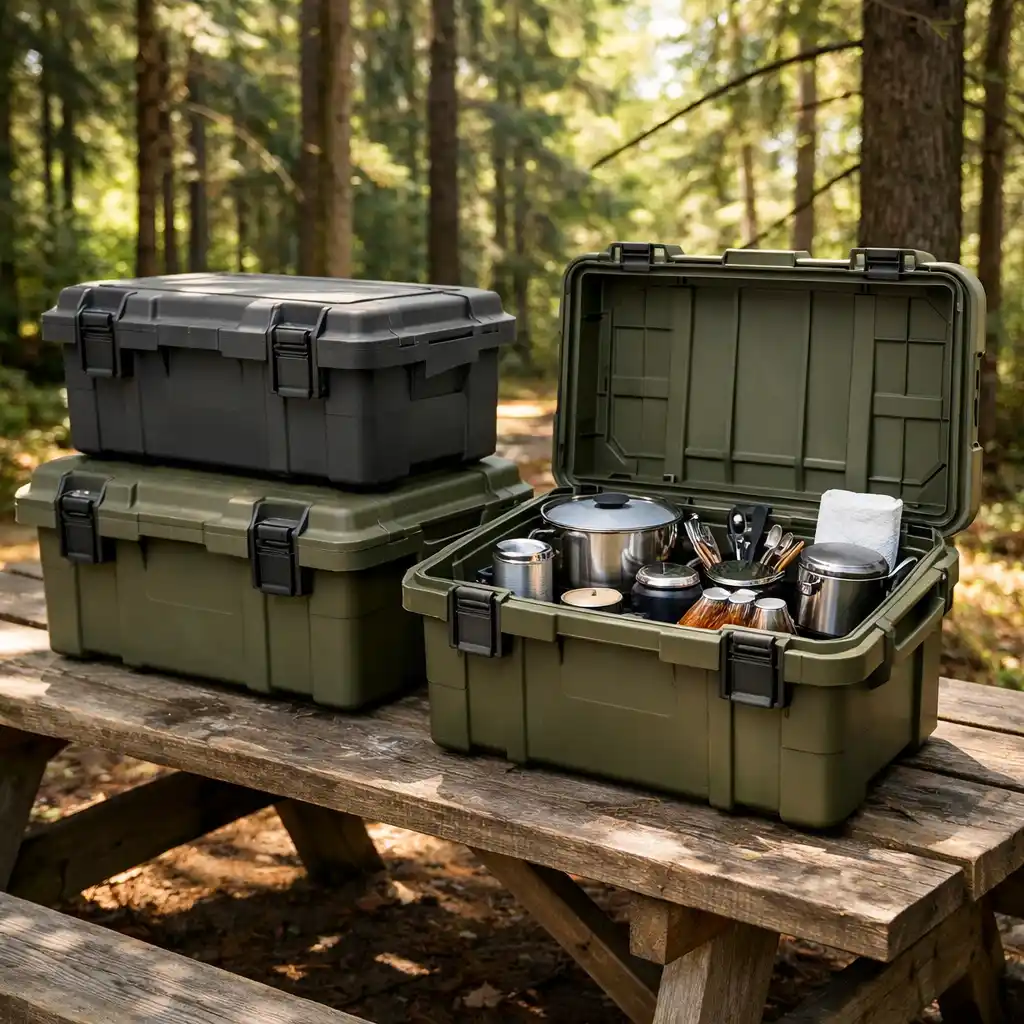
For dry food (chips, bread), don’t leave bags lying around. Store them in heavy-duty plastic bins with latching lids.
While not fully bear-proof, proper camping food storage bins stop raccoons, mice, and squirrels from chewing through your supplies.
Get Organized: See our top picks for Best Camping Kitchen Organizers and Chuck Boxes to keep your dry goods secure.
5. Bear Canisters (For Wild Camping)
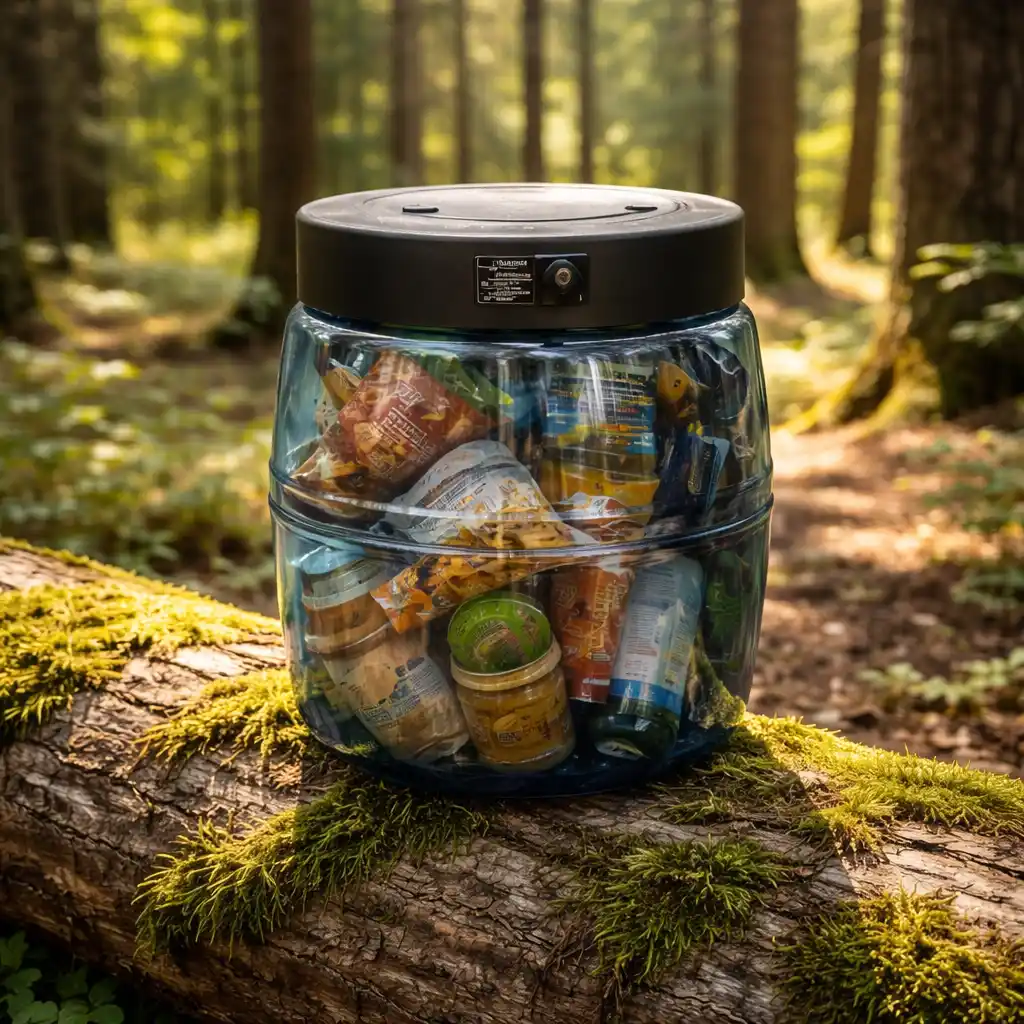
If you are away from your car, you need a Bear Canister. It is a hard plastic cylinder that bears cannot grip or open. You simply leave it on the ground 100 yards from your tent. It is easier than hanging a bag from a tree and much safer.
6. What Counts as "Food"?
Animals are attracted to anything with a scent. Your camping food storage plan must include:
- Toothpaste and deodorant.
- Sunscreen and lip balm.
- Dish soap and sponges.
- Trash (never burn trash in the fire pit!).
Camping Food Storage: Frequently Asked Questions
What is considered food when camping?
When it comes to camping food storage, anything with a smell counts as food. This includes:
– Snacks and meals
– Toothpaste and deodorant
– Trash and food wrappers
– Cookware with food residue
Proper camping food storage means storing all scented items, not just what you eat.
Can I keep food in my tent?
No. Keeping food in your tent is one of the most common camping mistakes. Even sealed packaging can attract animals. For safe camping food storage, always store food:
– In bear-resistant containers
– In a locked vehicle (where permitted)
– In campground-provided bear lockers
How far should food be stored from camp?
The recommended camping food storage distance follows the “Bear Triangle Rule”:
– Food storage: ~100 feet from camp
– Cooking area: ~100 feet from camp
– Sleeping area: separate from both
Are bear canisters required everywhere?
Not everywhere, but many national parks and wilderness areas require approved bear canisters. Even where they are not mandatory, using one is a best practice for camping food storage in bear country.
What’s the safest camping food storage method?
The safest option depends on your location:
– Developed campgrounds: Bear lockers or locked vehicles
– Backcountry camping: Bear canisters
– Car camping: Bear-resistant coolers + vehicle storage
Final Verdict
Responsible camping means protecting wildlife from human food. Once an animal learns that tents equals food, it becomes dangerous.
By following these camping food storage rules and using the right gear, you sleep better knowing your camp is safe.
Keep it locked, keep it clean!