
How to build a vehicle camping setup is not about adding more gear — it’s about building a system that works together in real conditions.
Hi, I’m Anthony.
After years of testing vehicle-based camping setups on highways, forest roads, and multi-day trips, I’ve learned that most bad setups fail for the same reasons: too much loose gear, poor weight distribution, wasted space, and no clear system for sleeping, storage, or power.
A good vehicle camping setup should make camp life easier, not more complicated.
That means thinking beyond individual products and building around the things that actually matter:
— where you sleep
— how you store gear
— how you manage roof load
— how you access essentials quickly
— how you power what you actually use
In this guide, I’ll walk through how to build a vehicle camping setup step by step, based on real-world usability — not fantasy overlanding layouts or gear-heavy setups that look good online but fall apart on actual trips.
If you want to know how to build a vehicle camping setup that actually works, the key is to focus on structure, access, and reliability before adding more gear.
The goal is simple: build a setup that feels organized, comfortable, and reliable every time you head out.
As an Amazon Associate, we earn from qualifying purchases.
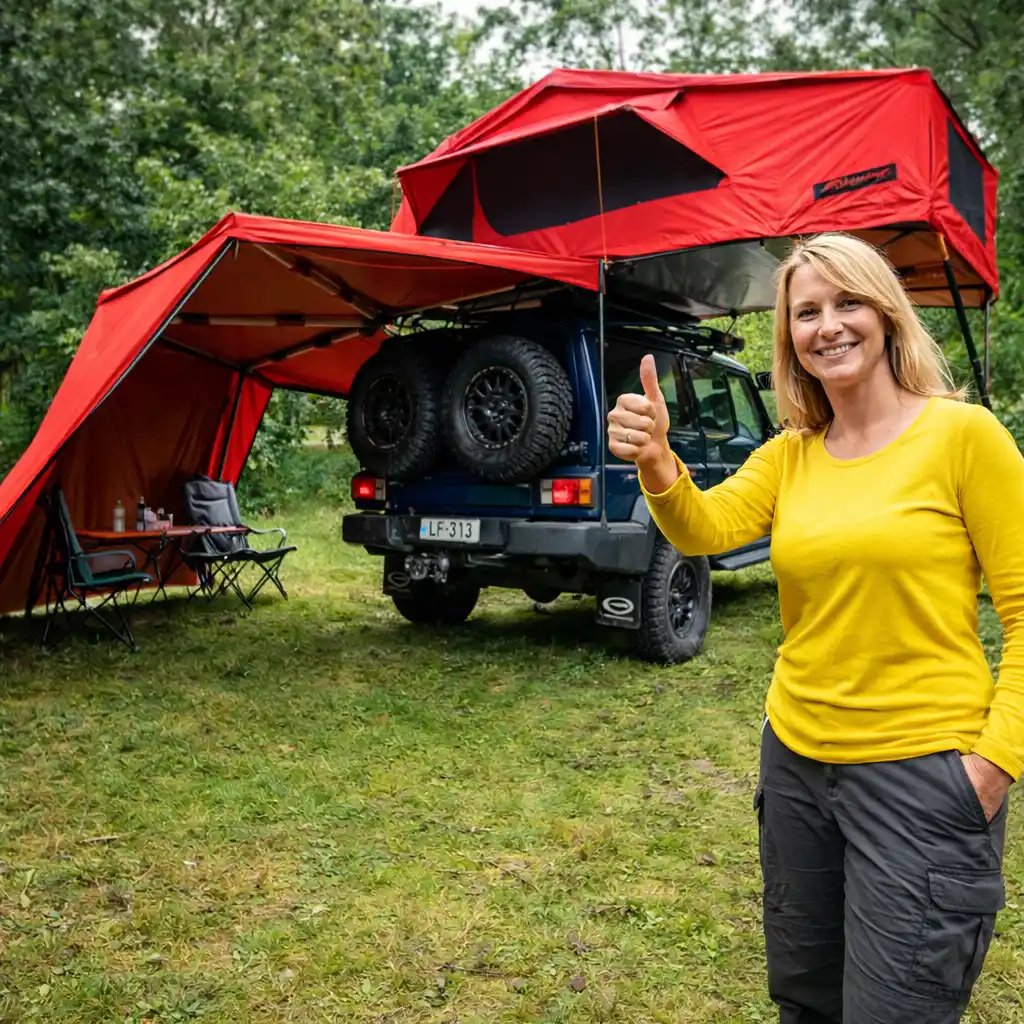
What Is a Vehicle Camping Setup?
A vehicle camping setup is a complete system that allows you to sleep, store gear, and operate comfortably using your vehicle as a base.
It’s not just about having equipment — it’s about how everything works together.
A proper setup typically includes:
— a sleeping system (inside the vehicle or rooftop tent)
— a storage system for organized gear access
— a roof system for carrying additional load
— a power system for lighting, devices, and off-grid use
Each part plays a role, but the real difference comes from how well they are integrated.
👉 A good vehicle camping setup feels simple, fast, and efficient.
👉 A bad one feels cluttered, slow, and frustrating.
In real conditions, you don’t notice individual gear pieces — you notice whether your setup works or not.
A well-designed setup is part of a larger vehicle camping sistem, where each component — from storage to sleeping — works together as one structure.
That’s why building a vehicle camping setup is less about buying more gear and more about creating a system that matches how you actually camp.
Understanding how to build a vehicle camping setup starts with knowing how sleeping, storage, roof load, and power all connect into one usable system.
Quick Answer:
A vehicle camping setup should include a sleeping system, storage system, roof system, and a simple power solution that work together in real conditions. The best setups are organized, balanced, and easy to use, not overloaded with unnecessary gear.
Table of Contents
Step 1: How to Build a Vehicle Camping Setup for Your Travel Style
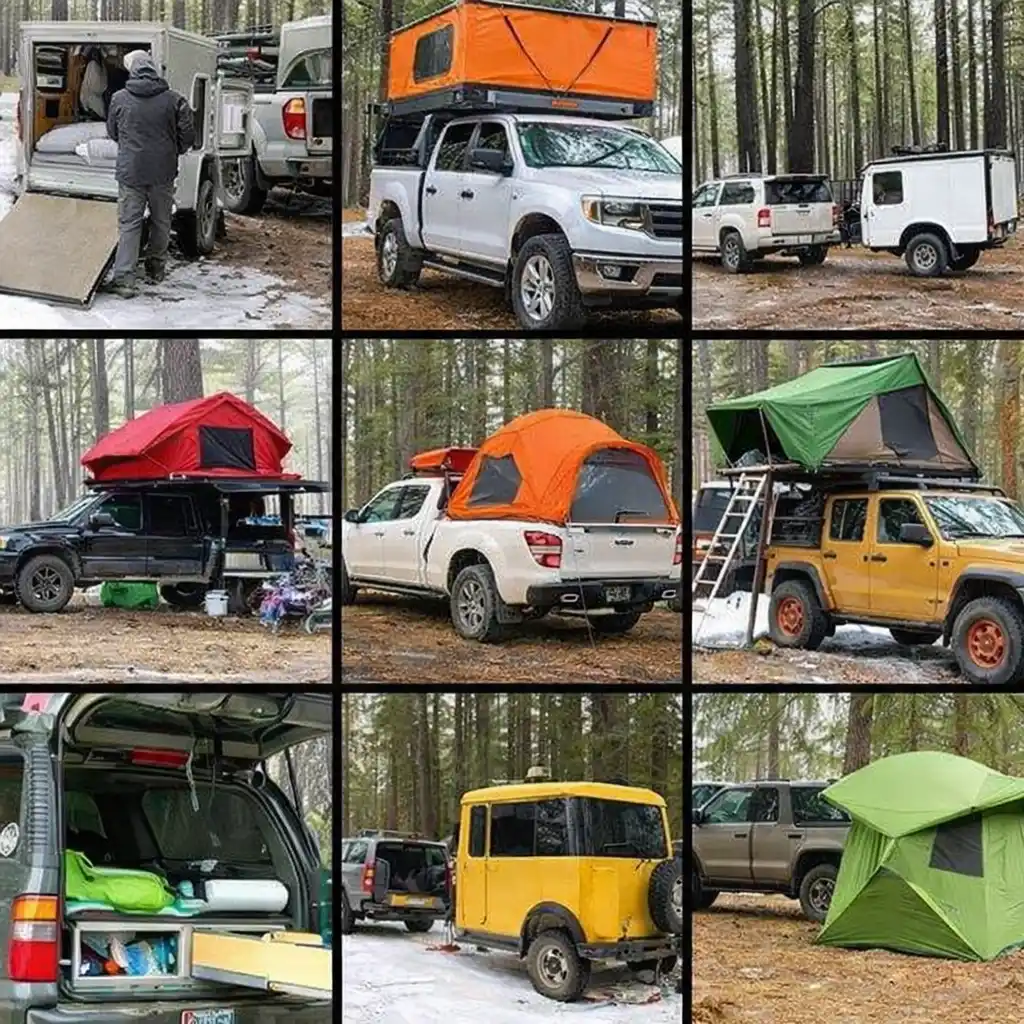
Before choosing gear, you need to define your vehicle camping style — because every setup depends on how you actually camp.
This is where most people make their first mistake.
They start buying equipment without understanding their needs, which leads to wasted space, poor organization, and a setup that doesn’t work in real conditions.
A well-built vehicle camping setup always starts with clarity.
The right setup style determines how much gear you actually need, how much roof capacity matters, and whether your system should prioritize mobility, comfort, or storage efficiency.
Here are the three most common setup styles:
Minimal Setup (Inside the Vehicle)
This approach uses the interior of your car, SUV, or van as your primary sleeping and storage space.
It works best for:
— solo campers or couples
— short to mid-length trips
— people who prioritize simplicity and mobility
👉 Pros:
— fast setup and teardown
— no external gear required
— better fuel efficiency
👉 Cons:
— limited space
— can feel cramped on longer trips
Rooftop Setup (Rooftop Tent + Roof System)
This setup uses a rooftop tent combined with crossbars or a full roof rack system.
It works best for:
— campers who want comfort and separation from gear
— multi-day trips
— more structured camping setups
👉 Pros:
— elevated sleeping space
— more interior storage
— better overall organization
👉 Cons:
— higher cost
— added wind resistance
— requires proper roof load setup
Full Vehicle System (Advanced Setup)
This is a complete system that combines:
— roof storage
— sleeping system
— interior organization
— power setup
It works best for:
— long trips
— overlanding-style travel
— people who want a fully optimized system
👉 Pros:
— maximum efficiency
— better comfort on longer trips
— full control over space and organization
👉 Cons:
— more complex to build
— higher cost
— requires planning
👉 Key takeaway:
Your setup should match how you actually travel — not what looks good online.
A simple, well-matched setup will always outperform a complex one that doesn’t fit your needs.
Step 2: Build Your Roof System (Racks, Crossbars, Load Capacity)
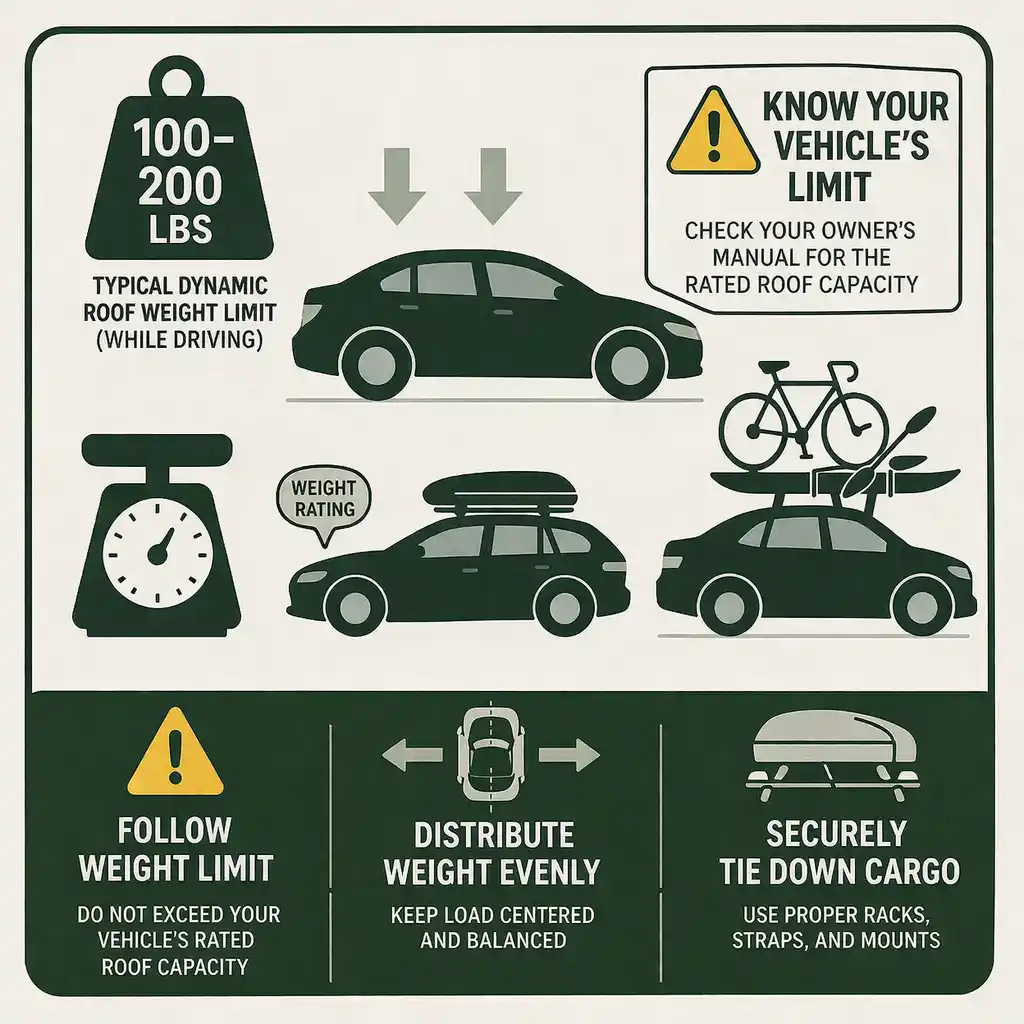
Your roof system is one of the core elements of a complete vehicle camping system, directly affecting how much gear you can carry and how efficiently your setup performs on the road.
This is where structure begins.
A proper roof system allows you to:
— safely carry additional gear
— mount a rooftop tent or cargo box
— free up interior space
— improve overall organization
But most setups fail here because people underestimate one critical factor:
👉 load capacity and compatibility
Crossbars vs Full Roof Rack
There are two main approaches:
Crossbars (most common setup)
— attach directly to factory rails
— lightweight and easy to install
— ideal for cargo boxes and light rooftop tents
👉 This is the best starting point for most setups.
If you’re choosing crossbars, make sure they match:
— your vehicle type
— load rating
— mounting system
👉 For a detailed breakdown, see Best Crossbars for Roof Racks (Weight Capacity, Noise & Fit Tested)
Full Roof Rack Systems
— platform-style systems
— higher load capacity
— more mounting flexibility
👉 Best for:
— heavy gear
— overlanding setups
— complex builds
Static vs Dynamic Load (CRITICAL)
This is one of the most misunderstood parts of any vehicle camping setup.
— Dynamic load = weight while driving
— Static load = weight when parked (important for rooftop tents)
👉 Example:
A roof rated for 165 lbs dynamic can often support 500+ lbs static.
For official vehicle safety guidance and load-related recommendations, it’s worth checking manufacturer documentation and resources from NHTSA.
That’s why rooftop tents are possible — but only if your system is properly rated.
Real-World Insight
In real use, problems don’t come from lack of gear — they come from poor weight distribution and unstable mounting.
A badly mounted roof system can:
— create wind noise
— reduce fuel efficiency
— become unsafe at highway speeds
👉 A well-built system feels stable, quiet, and predictable — even on long drives.
But that stability depends heavily on how the system is installed. If you’re not sure what proper mounting and alignment should look like, see How to Install a Roof Rack on Your Car (Step-by-Step Safe Setup Guide) to avoid common setup mistakes.
👉 Key takeaway:
Your roof system is not just a place to put gear — it’s what determines how stable, efficient, and safe your entire setup will be.
Build it right first, and everything else becomes easier.
Step 3: Rooftop Tent vs Sleeping Inside
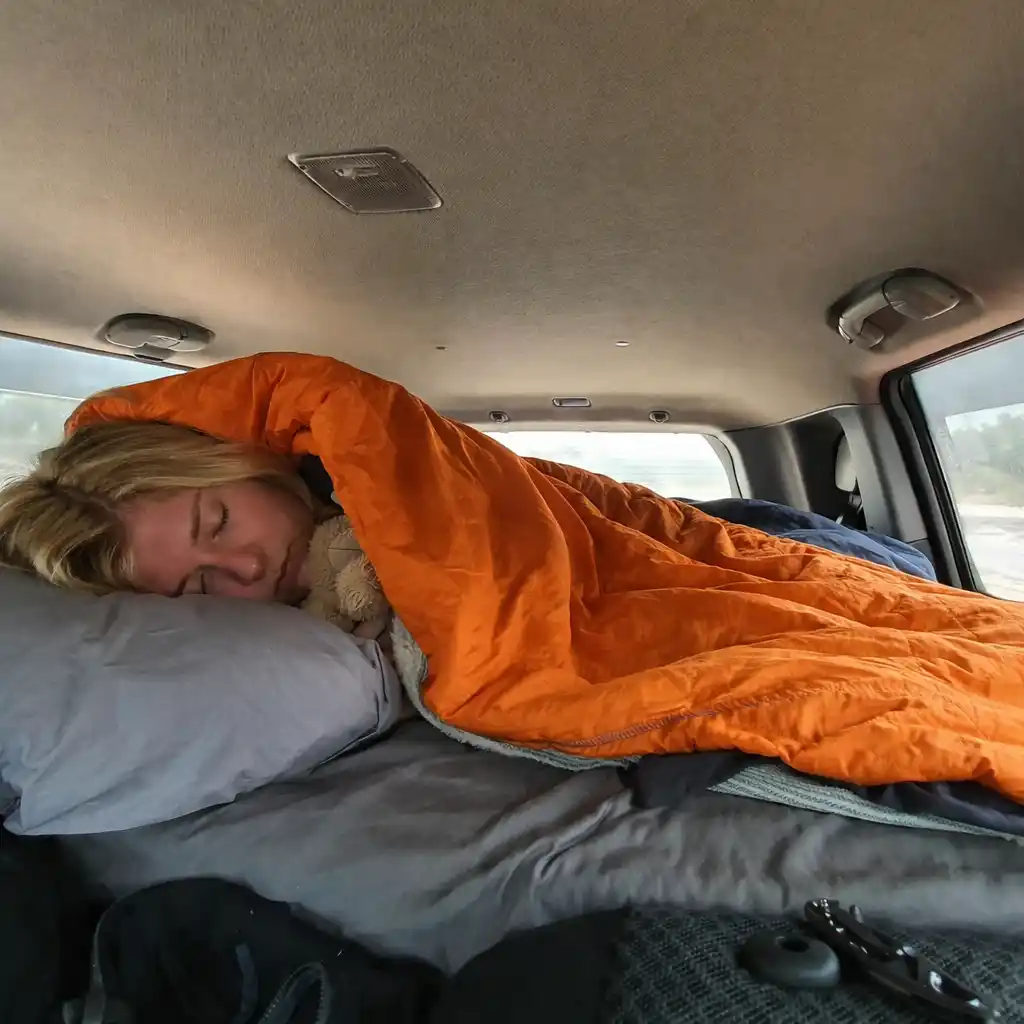
One of the most important decisions in building a vehicle camping setup is where you actually sleep.
This choice affects everything:
— how much space you have
— how you organize your gear
— how fast you can set up camp
— how comfortable your nights will be
There are two main approaches — and each works differently in real conditions.
Sleeping Inside the Vehicle
Sleeping inside your car, SUV, or van is the simplest and most efficient option.
It works best for:
— minimalist setups
— solo travelers or couples
— short and flexible trips
👉 Advantages:
— maximum simplicity (no external setup required)
— faster transitions between locations
— better fuel efficiency and aerodynamics
— more stealth when needed
👉 Limitations:
— limited space for gear
— requires careful organization
— can feel restrictive on longer trips
Rooftop Tent Setup
A rooftop tent moves your sleeping system onto the roof, freeing up interior space and creating a more structured setup.
It works best for:
— longer trips
— comfort-focused setups
— organized vehicle systems
👉 Advantages:
— separate sleeping space from gear
— improved organization inside the vehicle
— more comfort for multi-day camping
👉 Limitations:
— higher cost
— increased wind resistance
— requires a proper roof system and load rating
And once the roof system is sorted out, How to Mount a Rooftop Tent Safely (Weight, Balance & Positioning Guide) shows how positioning, bar spacing, and load balance affect real-world stability, noise, and driving comfort.
Which One Is Better?
There is no universal “best” option — only what fits your setup.
👉 If you value speed, simplicity, and mobility, sleeping inside the vehicle is often the better choice.
👉 If you want comfort, structure, and separation of space, a rooftop tent creates a more refined system.
👉 Key takeaway:
Your sleeping setup defines how your entire vehicle camping setup feels in real use.
Choose based on how you travel — not what looks better online.
Step 4: Add Storage Without Creating Chaos
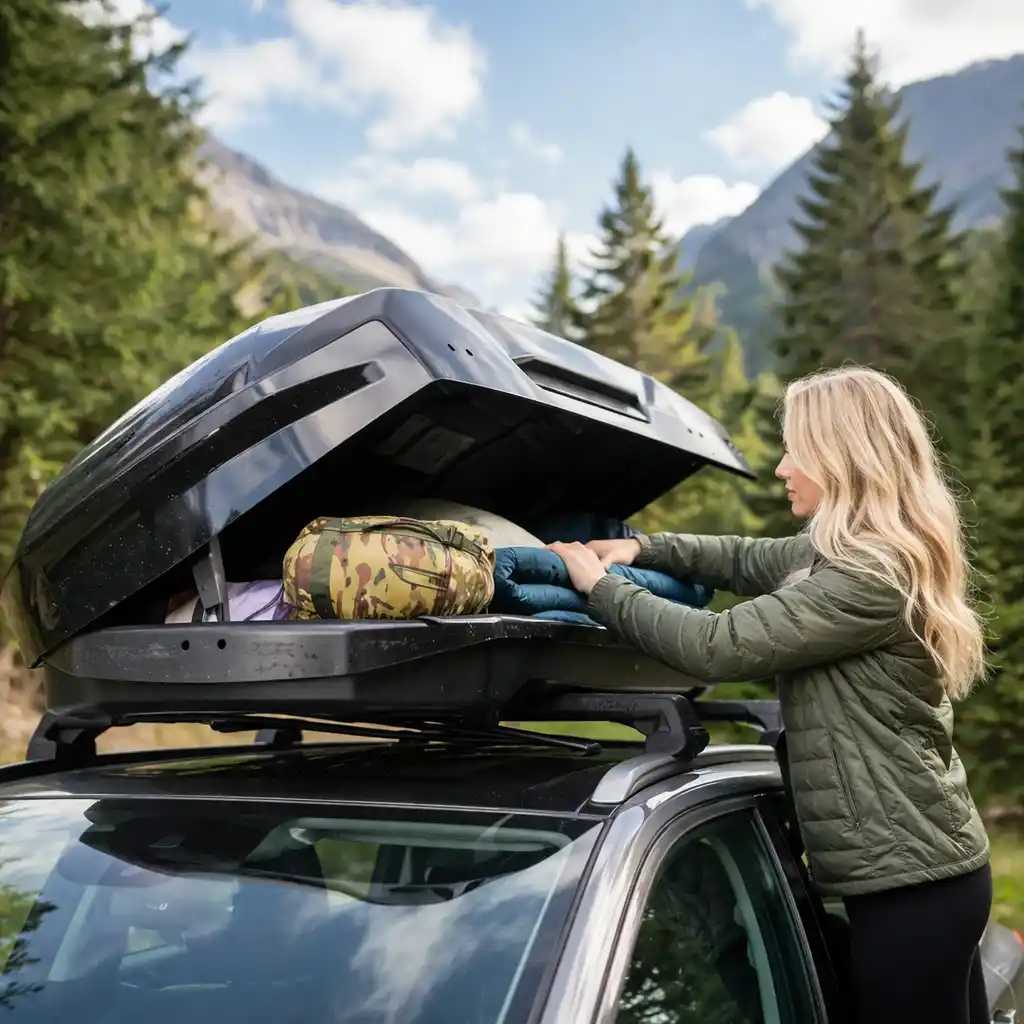
Storage is where most vehicle camping setups either become efficient — or completely fall apart.
It’s not about how much gear you carry, but how accessible and organized it is when you actually need it.
In real conditions, bad storage creates constant friction:
— digging through gear
— unpacking everything to find one item
— wasting time at camp
— creating unnecessary stress
👉 A good storage system eliminates all of this.
Interior Storage (Fast Access System)
Keeping essential gear inside your vehicle gives you speed and convenience.
Best for:
— frequently used items
— cooking gear
— daily essentials
👉 Works best when:
— everything has a fixed location
— gear is grouped by function
— access is quick and predictable
👉 The goal is simple:
no searching, no unpacking, no chaos
Roof Storage (Cargo Boxes & External Load)
Roof-mounted storage expands your capacity without cluttering the interior.
Best for:
— bulky items
— seasonal gear
— less frequently used equipment
👉 A hard-shell cargo box is the most efficient solution because it:
— protects gear from weather
— reduces wind drag compared to open loads
— keeps your setup clean and organized
👉 For real-world tested options, see
Best Rooftop Cargo Boxes for Camping Gear (2026 Field-Tested: Quiet, Durable, Spacious)
Balance Is Everything
The biggest mistake is overloading one area.
👉 Too much inside → cramped space
👉 Too much on the roof → reduced efficiency and stability
A well-balanced vehicle camping setup:
— keeps daily-use gear inside
— moves bulk storage to the roof
— maintains easy access at all times
Real-World Insight
In real trips, the best setups are not the ones with more gear —
they’re the ones where everything is easy to reach and quick to use.
If your system forces you to constantly reorganize or search for items, it’s not optimized.
👉 Key takeaway:
A good storage system doesn’t just hold your gear —
it makes your entire vehicle camping setup faster, cleaner, and easier to use.
Step 5: Build a Simple Power System
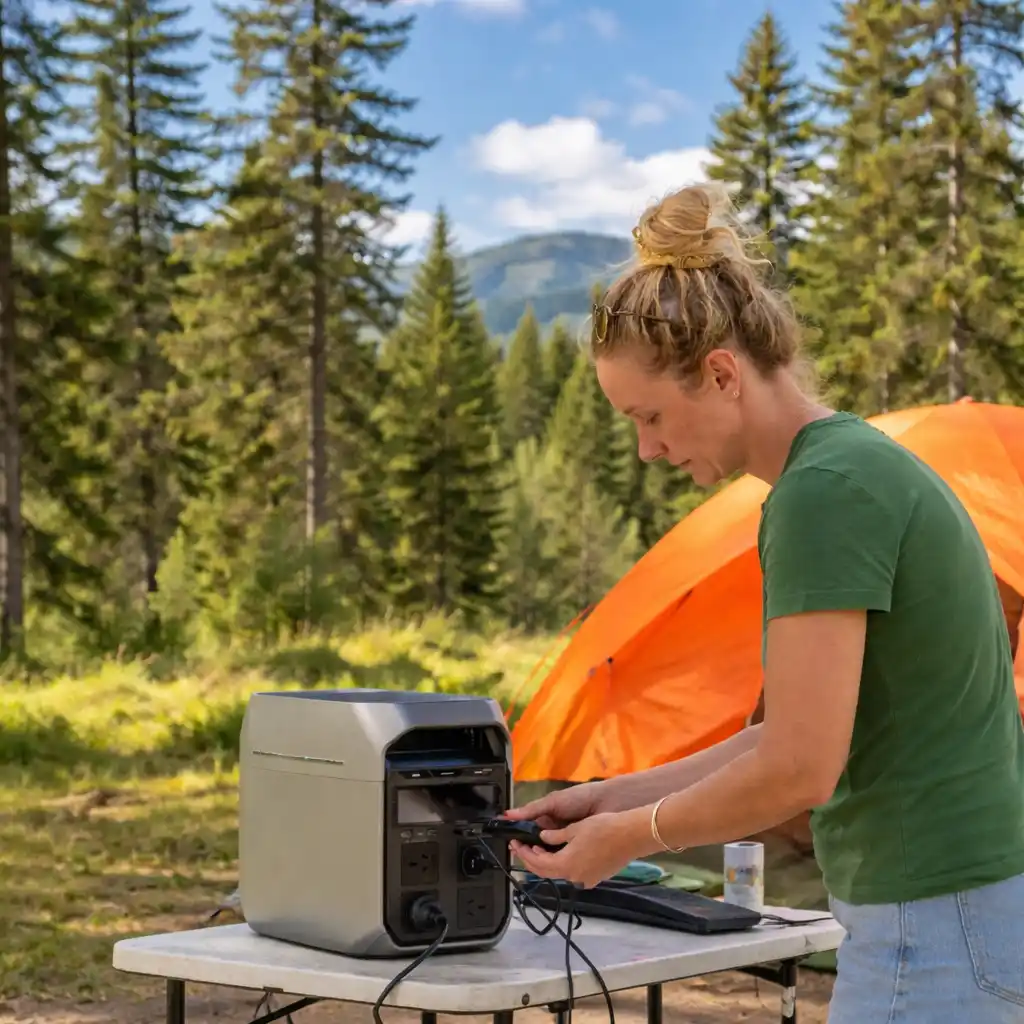
A reliable power system makes your vehicle camping setup more comfortable and functional, but it should stay as simple as possible.
Most people make the same mistake here: they build for imagined needs instead of real ones.
Start With Actual Power Use
Before buying anything, define what you really need to power:
— lighting
— phones and cameras
— small devices like a fan, fridge, or laptop
👉 A good setup is built around real usage, not theoretical worst-case scenarios.
Portable Power Stations Are the Best Starting Point
For most campers, a portable power station is the most practical option because it gives you:
— simple plug-and-play use
— no complicated wiring
— enough capacity for typical trips
— easy compatibility with solar charging
👉 For tested options, see
Best Portable Power Stations for Camping in 2026 (Laptops & CPAP)
Solar Is a Support System, Not the Foundation
Solar panels extend your setup for longer trips.
Best for:
— multi-day camping
— off-grid travel
— reducing reliance on car charging
👉 The key is realistic expectations:
Solar is great for maintaining power,
but not always for fully recharging large batteries quickly.
👉 For real-world options, see
Best Portable Solar Panels for Camping in 2026 (Off-Grid Power)
Real-World Insight
The best power systems are the ones you barely notice.
If your setup needs constant monitoring, troubleshooting, or adjustment, it is too complicated for real-world camping use.
👉 Key takeaway:
A strong vehicle camping setup power system should be simple, reliable, and easy to scale later — not overloaded from the start.
Step 6: Pack for Real-World Use
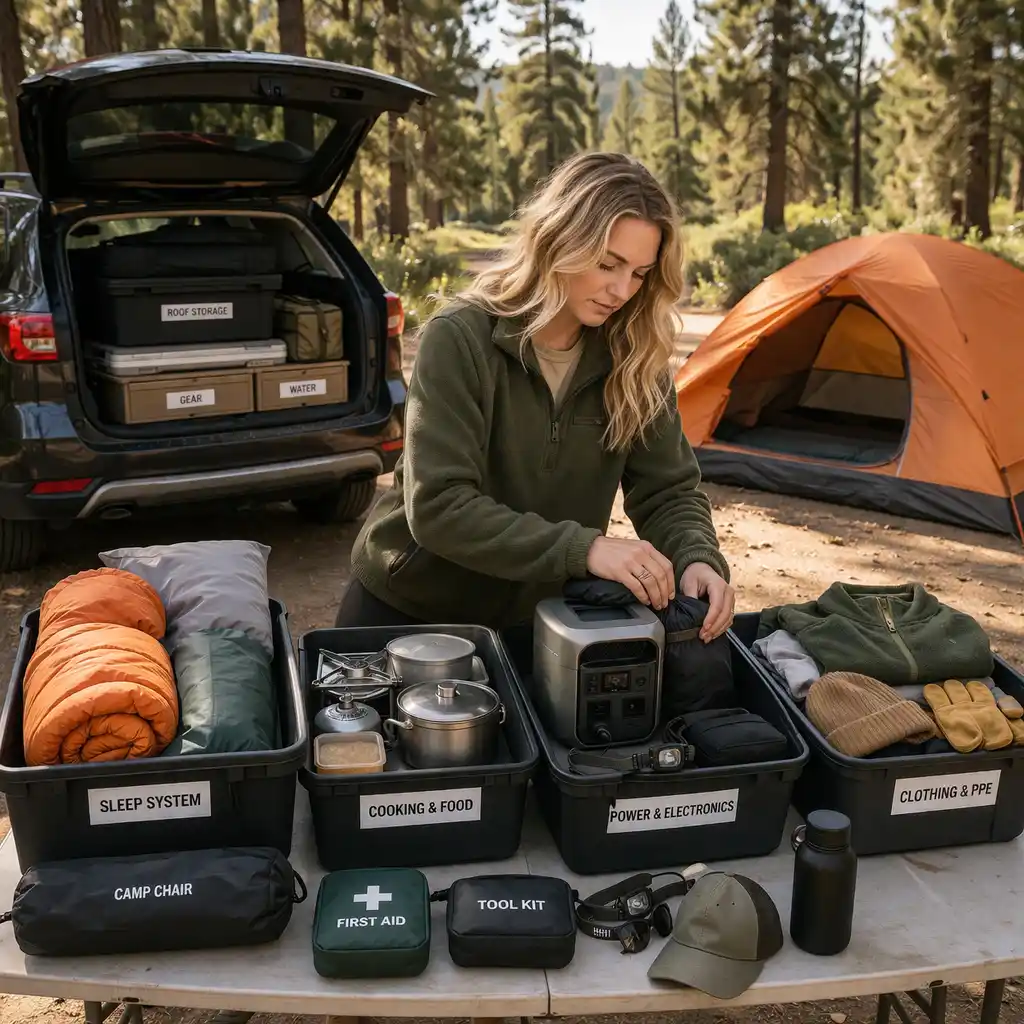
Even a well-designed vehicle camping setup can fail in real conditions if your gear is not packed with a clear system.
This is where most setups break down.
On actual trips, the problem is rarely missing gear — it’s slow access, constant repacking, and lack of structure.
A strong setup is not just built — it is organized for repeatable use every day.
Pack by Function, Not by Item
Instead of packing randomly, group your gear into functional systems:
— sleep system (sleeping pad, bag, pillow)
— cooking system (stove, fuel, utensils, food)
— daily-use gear (headlamp, layers, hygiene, tools)
👉 This reduces friction and eliminates unnecessary movement inside your setup.
When everything is grouped by function, your camp routine becomes faster and more predictable.
Accessibility Is More Important Than Space
One of the biggest mistakes is optimizing for space instead of access.
A compact setup is useless if:
— you need to unpack multiple layers
— essential items are buried
— gear has no fixed location
In real trips, the most useful test is simple: if you stop late, tired, or in bad weather, can you still reach the items you need immediately? If the answer is no, the setup is not packed well enough.
👉 In a real vehicle camping setup, every frequently used item should be:
— reachable within seconds
— easy to return to its place
— visible without digging
Weight Distribution Affects Performance
Packing also impacts how your vehicle behaves on the road.
— heavy gear should stay low and centered
— roof storage should be limited to light or bulky items
👉 Poor distribution leads to:
— increased body roll
— higher wind resistance
— more noise and instability
A well-balanced setup feels stable, quiet, and predictable, even at highway speeds.
Real-World Insight
The difference between a good setup and a frustrating one is not gear quality — it’s consistency.
If your system changes every time you camp, you will:
— waste time
— forget gear placement
— constantly reorganize
👉 The best setups are repeatable and automatic.
You know exactly where everything is, every time.
👉 Key takeaway:
A high-performing vehicle camping setup is not defined by how much gear you carry,
but by how efficiently you can access, use, and reset it in real conditions.
Common Vehicle Camping Setup Mistakes to Avoid
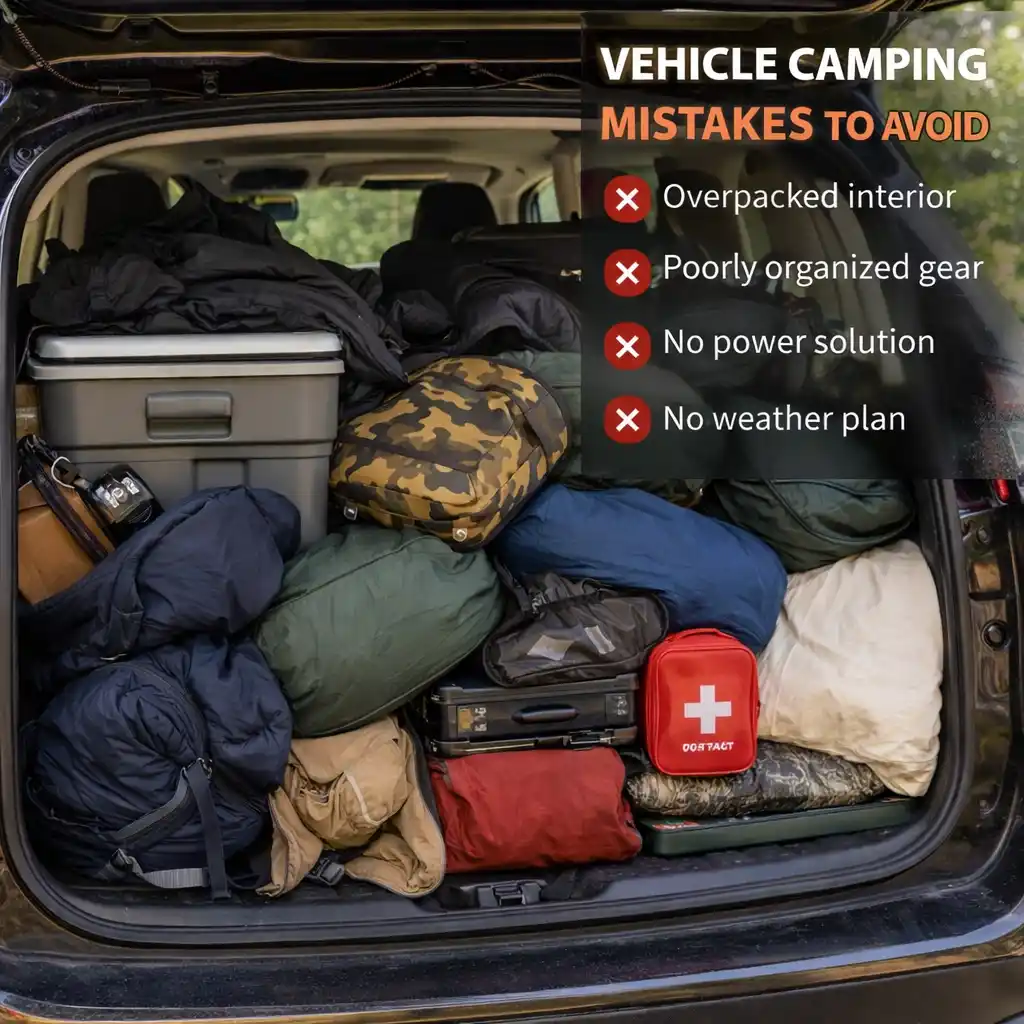
Even a well-planned vehicle camping setup can fail if you make a few critical mistakes.
Most problems don’t come from bad gear — they come from poor decisions during setup design.
Avoid these common mistakes if you want a system that actually works in real conditions.
Overloading the Setup
Adding too much gear is one of the fastest ways to ruin a setup.
— reduces available space
— increases setup time
— creates constant clutter
👉 A better approach is to focus on essential gear only and build around efficiency, not quantity.
Ignoring Weight Distribution
Poor weight placement affects both comfort and driving safety.
— too much weight on the roof → instability and drag
— uneven load inside → reduced comfort and poor balance
👉 A balanced vehicle camping setup keeps heavy items low and centered, with lighter gear stored above.
No Defined Storage System
When gear has no fixed place, everything becomes slower.
— you waste time searching
— setup and teardown take longer
— your space becomes chaotic
👉 Every item should have a clear, repeatable location.
Choosing Gear Before Defining the Setup
This is one of the most common beginner mistakes.
People buy:
— rooftop tents
— storage systems
— accessories
👉 without understanding how everything fits together.
Result:
— incompatible gear
— wasted space
— inefficient setup
Overcomplicating the Power System
Trying to build a complex electrical setup too early often creates more problems than it solves.
— unnecessary components
— harder troubleshooting
— more points of failure
👉 Start with a simple, reliable power system and scale only if needed.
Real-World Insight
In real trips, the best setups are not the most expensive —
they are the ones with the fewest points of friction.
If something slows you down, complicates access, or requires constant adjustment, it’s a problem.
The most effective setups are not the ones with the most gear — they are the ones with the fewest friction points during daily use.
Key takeaway:
A strong vehicle camping setup is not about adding more —
it’s about removing friction and keeping your system simple, balanced, and reliable.
FAQ: Vehicle Camping Setup Questions Answered
What is the best vehicle camping setup for beginners?
The best vehicle camping setup for beginners is a simple interior-based setup with minimal gear.
Start with:
— a sleeping platform or flat surface
— basic storage organization
— essential gear only
— Avoid complex systems early — a simple setup is easier to manage and improve over time.
Is it better to sleep inside your car or use a rooftop tent?
It depends on your priorities.
Sleeping inside the vehicle is better for simplicity, speed, and fuel efficiency, while a rooftop tent offers more comfort and better space separation.
— For most beginners, sleeping inside the vehicle is the easier and more practical starting point.
What do you actually need for a vehicle camping setup?
A functional vehicle camping setup requires only four core components:
— sleeping system
— storage system
— roof system (optional but useful)
— power system (for longer trips)
— Everything else is optional and should only be added if it improves your setup.
How do you organize gear for car or vehicle camping?
The most effective method is organizing gear by function, not by item.
Group everything into:
— sleep system
— cooking system
— daily essentials
— This reduces setup time and eliminates constant searching.
Are rooftop tents worth it for vehicle camping?
Rooftop tents are worth it if you prioritize comfort, organization, and multi-day camping.
However, they:
— add cost
— increase drag
— require a proper roof system
— They are not necessary for beginners, but valuable for long-term setups.
How much power do you need for vehicle camping?
Most setups require less power than expected.
For typical use:
— 300–500Wh → short trips
— 500–1000Wh → multi-day setups
— Power needs depend on devices, not trip length.
What is the biggest mistake in a vehicle camping setup?
The biggest mistake is overcomplicating the setup too early.
This leads to:
— wasted space
— inefficient organization
— harder setup and teardown
— The best setups are simple, structured, and easy to use.
For campers trying to learn how to build a vehicle camping setup from scratch, real-world simplicity always beats a gear-heavy system that creates friction at camp.
Final Verdict: What a Good Vehicle Camping Setup Actually Needs
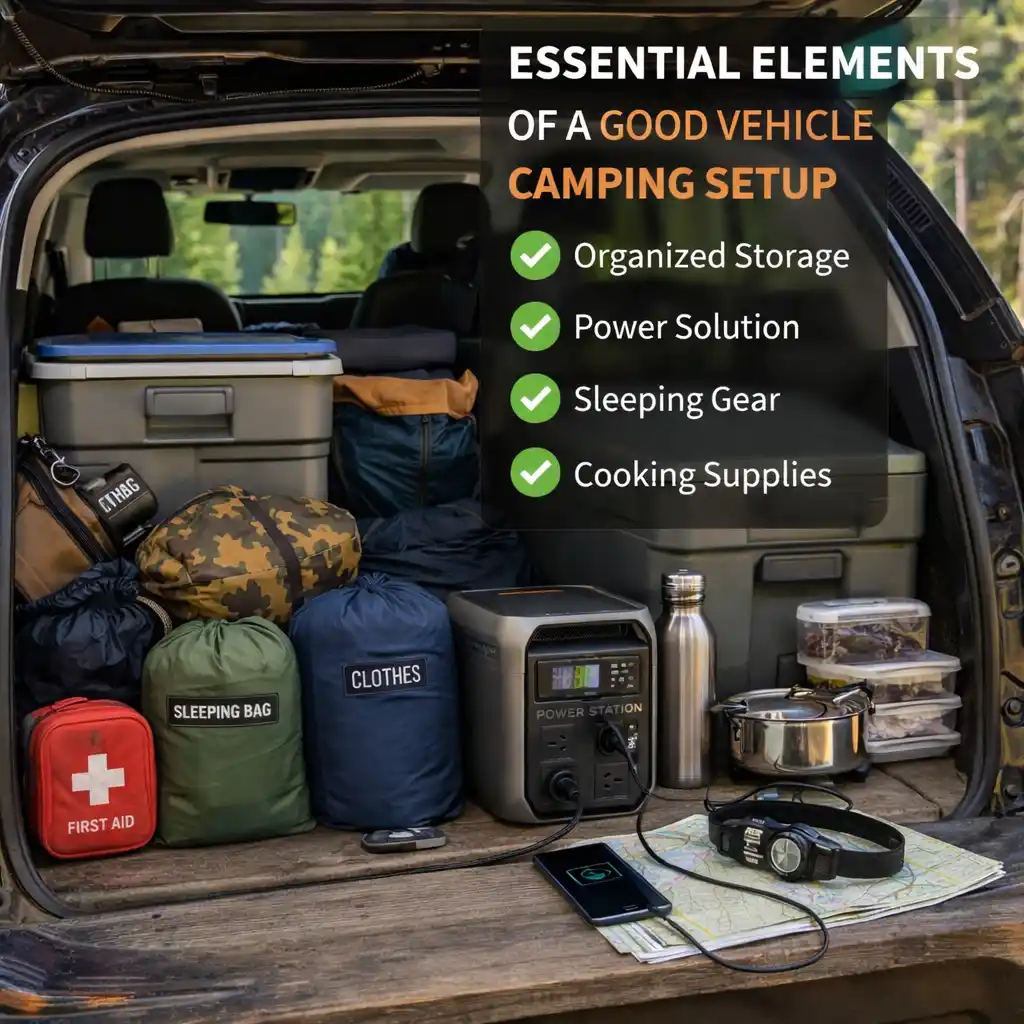
A good vehicle camping setup is not defined by how much gear you carry —it’s defined by how well everything works together in real conditions.
That’s exactly how to build a vehicle camping setup that stays efficient, comfortable, and reliable over time.
After testing different setups on highways, forest roads, and multi-day trips, the difference always comes down to the same factors:
— clarity of structure
— ease of access
— balanced weight distribution
— reliability over time
The best setups are not the most complex — they are the most intentional.
They are built around how you travel, how you sleep, what you carry, and how quickly you need your system to work when conditions are not ideal.
What Actually Matters
A high-performing vehicle camping setup should:
— be simple to use every day
— allow fast setup and teardown
— keep essential gear easy to access
— maintain comfort without unnecessary complexity
👉 If your setup slows you down or forces constant adjustments, it’s not optimized.
System Over Gear
Individual products don’t create a great setup —
the system does.
You can have the best rooftop tent, the best storage solution, and the best gear,
but if they don’t work together, your setup will still feel inefficient.
👉 A well-designed system always outperforms expensive gear without structure.
Real-World Perspective
In real trips, what matters most is not how your setup looks —
it’s how it performs when:
— you arrive tired
— weather conditions change
— you need quick access to gear
👉 This is where a true vehicle camping setup proves its value.
👉 Final takeaway:
Build your vehicle camping setup around how you actually travel —
keep it simple, structured, and reliable.
Because in the end, the best setup is the one that works every time you use it.
About the Author
Anthony is a Senior Gear Analyst at CampComfortGuide, specializing in vehicle-based camping systems and real-world gear performance.
His work focuses on how equipment performs outside of ideal conditions — where weight distribution, storage efficiency, and system design directly impact comfort and usability.
Field testing includes thousands of miles across North America, covering:
— long-distance highway driving with roof-mounted systems
— multi-day trips with limited access to power and organized storage
— exposure to real weather conditions, from sustained rain to alpine cold
All recommendations are based on independent testing and real-world use, with gear purchased at retail price — no sponsored placements or manufacturer bias.
👉 The goal is to help readers build a vehicle camping setup that performs consistently in real conditions, not just on paper.