
The best camping tents for humid conditions are designed to manage condensation, trapped moisture, and airflow in tropical and high-humidity environments.
Hi, I’m Anthony.
Over the past decade, I’ve camped in Southeast Asia, Florida wetlands, coastal Europe, and rain-soaked mountain valleys — environments where humidity, not rain, becomes the real challenge.
This guide isn’t based on manufacturer claims. These tents were evaluated in repeated high-humidity nights where condensation control, airflow, and drying behavior actually matter.
Camping in humid or tropical conditions teaches you a lesson very quickly: staying dry is harder than staying cool. Even without rain, tents often feel damp inside. Sleeping bags absorb moisture, walls feel wet, and nothing fully dries until long after sunrise.
Early on, I assumed this was unavoidable — just part of camping in humidity. Over time, I realized it wasn’t. The real issue wasn’t the weather itself, but tent design. In humid environments, moisture comes from everywhere: your breath, your body, the ground, and the air. If a tent can’t release that moisture efficiently, it gets trapped inside.
In this guide, I’ll break down the best camping tents for humid conditions, explain why many tents fail in tropical environments, and show what actually works when condensation is constant and unavoidable.
As an Amazon Associate, we earn from qualifying purchases.
✅ Why You Can Trust This Guide

This review is based on real-world humid-weather camping experience, not manufacturer descriptions or spec sheets.
Tents were evaluated with a focus on:
• Overnight condensation behavior
• Airflow with rainfly deployed
• Drying speed after sunrise
• Ventilation effectiveness in still, humid air
• Comfort at sleeping height
Unlike lab-based comparisons, humid camping exposes design weaknesses very quickly. Poor ventilation, bad airflow paths, and trapped moisture become obvious after just one night.
Every recommendation in this guide reflects how these tents actually behave when humidity is constant and condensation is unavoidable.
🏆 What Is the Best Tent for Humid Conditions?
The best tent for humid conditions is a double-wall design with high mesh coverage, functional roof vents, and airflow that continues even when the rainfly is deployed. In consistently humid or tropical climates, tents like the Big Agnes Copper Spur HV UL2 perform best because they allow moisture to escape instead of trapping condensation inside overnight.
🏆 Quick Summary: Best Camping Tents for Humid Conditions
Best for campers who need strong airflow, reduced condensation, and drier sleep in humid or tropical environments where moisture builds up overnight.
Best Overall Tent for Humid Conditions:
Big Agnes Copper Spur HV UL2
Why: Mesh-heavy interior and excellent airflow allow moisture to escape instead of pooling, keeping the tent noticeably drier by morning.
Best for Humidity + Frequent Rain:
MSR Hubba Hubba NX 2
Why: Smart vent geometry maintains airflow even with the rainfly fully deployed, preventing heavy condensation during warm, rainy nights.
Best Value Tent for Humid Conditions:
NEMO Aurora 2
Why: Large mesh panels and generous interior space improve airflow and reduce condensation without premium pricing.
Best Family Tent for Humid Climates:
CORE 6 Person Instant Cabin Tent
Why: Tall ceilings and large mesh windows let warm, moist air rise away from sleepers, reducing that heavy, stagnant feeling overnight.
Best Budget Backpacking Option:
ALPS Mountaineering Lynx 2
Why: Mesh-forward design improves airflow and drying compared to solid-wall budget tents that trap moisture.
🎯 Quick Decision Guide
If you camp mostly in hot, sticky, high-humidity climates →
👉 Choose Big Agnes Copper Spur HV UL2
If you deal with humidity + frequent rain →
👉 Choose MSR Hubba Hubba NX 2
If you want best value without premium pricing →
👉 Choose NEMO Aurora 2
If you camp with family in humid regions →
👉 Choose CORE 6 Person Instant Cabin
If you need budget backpacking airflow →
👉 Choose ALPS Mountaineering Lynx 2
🧪 Testing Methodology

To evaluate how tents perform in humid conditions, I focused on moisture behavior rather than lab specs.
Each tent was assessed across:
• Condensation buildup overnight
• Drying speed after sunrise
• Airflow with rainfly deployed
• Moisture transfer at sleeping height
• Ventilation adjustability
Testing environments included coastal humidity, post-rain saturation, and still-air tropical nights where airflow is naturally limited.
The goal: identify tents that remain livable when everything feels damp.
🌴 Why Humid Camping Feels Worse Than Hot Camping
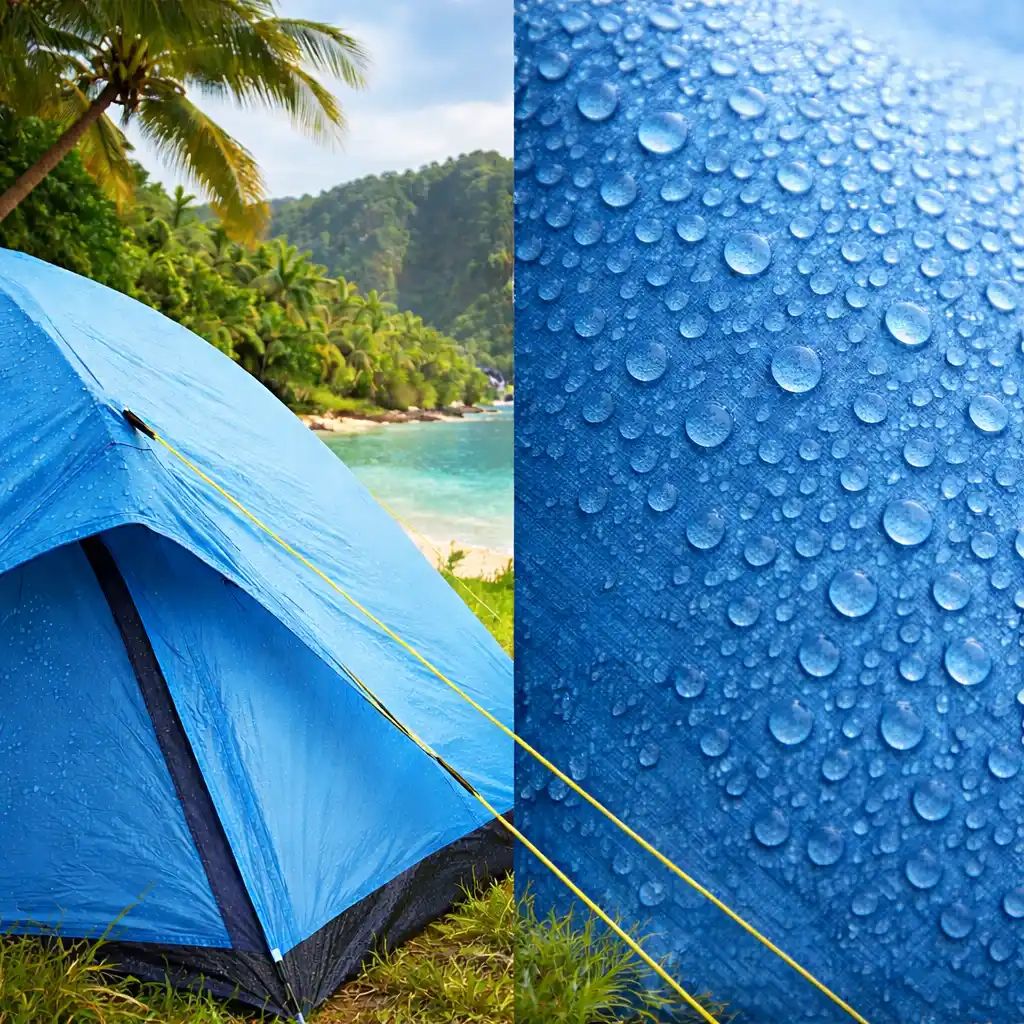
Humidity creates a fundamentally different problem than dry heat.
In hot, dry climates, airflow alone can keep a tent comfortable. In humid climates, airflow must also move moisture out before it condenses. When warm, moist air cools overnight, it turns into liquid water that settles on tent walls, ceilings, and gear.
This is why campers often wake up wet even when it never rained.
Tents that perform well in spring or summer heat often fail in humidity because they prioritize insulation or weather sealing over ventilation. Without continuous airflow paths, moisture has nowhere to go.
If your main issue is dry heat rather than moisture, the design priorities are different, which is covered in 5 Best Camping Tents for Hot Weather in 2026 (Cool & Ventilated).
⚠️ Common Mistakes Campers Make in Humid Conditions
❌ Choosing “waterproof” over breathable
Heavy fabrics and limited vents keep rain out — but they also trap moisture inside. Waterproof alone is not enough.
❌ Sealing the tent overnight
Closing every door and vent guarantees condensation. Even small openings dramatically improve moisture escape.
❌ Assuming mesh alone solves the problem
Mesh helps, but without proper vent placement and airflow geometry, moisture still builds up.
Most campers experience humidity discomfort not because of the climate, but because of design mismatches.
🌬 What Actually Matters in Humid Conditions
In humidity, comfort is controlled by moisture physics, not just ventilation claims.
1️⃣ Air Exchange vs Air Movement
A tent may have mesh panels yet still trap moisture if airflow paths are blocked.
2️⃣ Condensation Management (Not Prevention)
No tent “eliminates” condensation. Good designs control where moisture forms and how it disperses.
3️⃣ Mesh Placement
Mesh above sleeping height matters more than mesh near the floor.
4️⃣ Vent Geometry
Roof vents that function with the rainfly on are critical in tropical rain + humidity cycles.
5️⃣ Interior Volume
More airspace reduces moisture density and that clammy feeling overnight.
Humidity performance is about how moisture behaves, not waterproof ratings.
💧 Condensation Reality Check
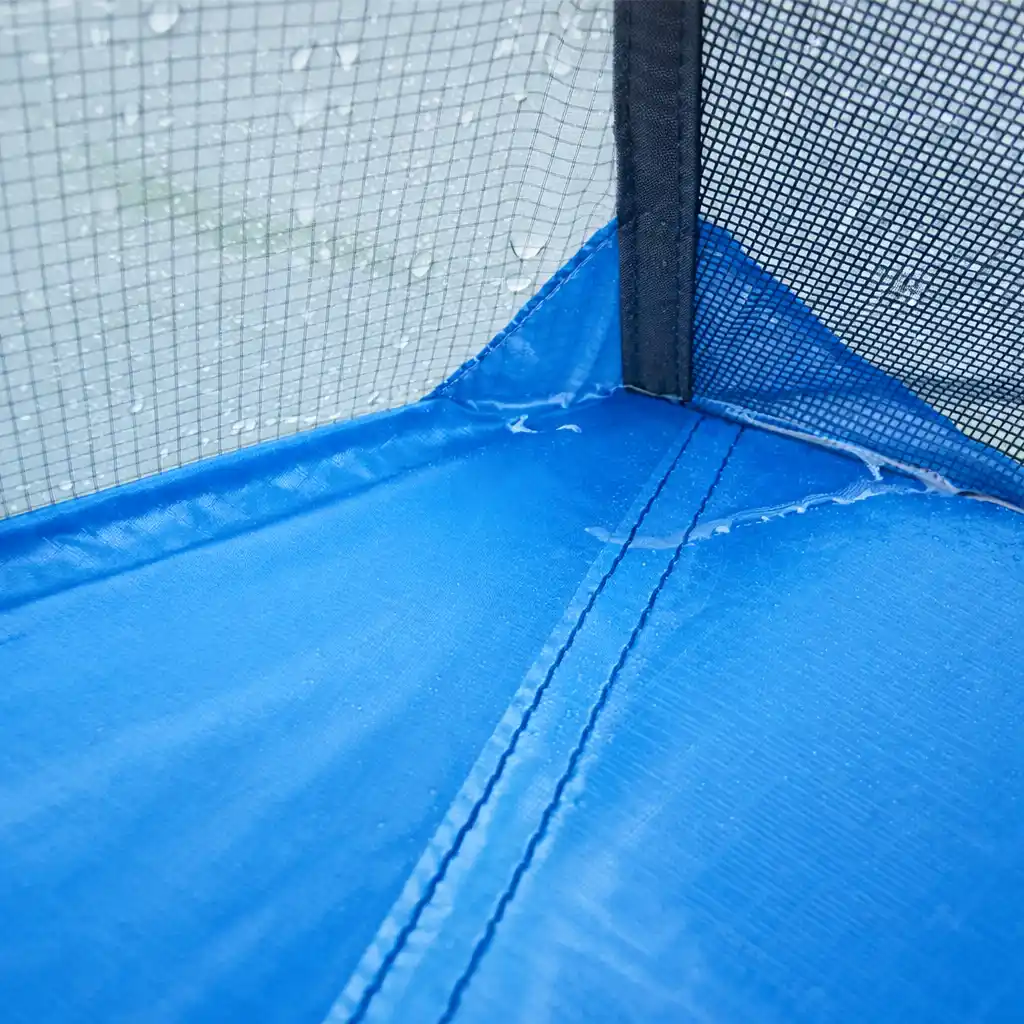
Even the best tent will show moisture in humid conditions.
The difference is how it behaves:
• Bad designs → dripping walls, damp gear, wet sleeping bags
• Good designs → light surface moisture, faster drying, less internal dampness
Managing expectations is part of comfortable humid-weather camping.
🧠 How Tent Design Controls Moisture Movement
In humid environments, condensation is controlled by airflow paths — not fabric thickness.
Double-wall tents create a separation layer between the inner mesh and the rainfly. When designed correctly, warm, moist air rises through the mesh and escapes through roof vents or fly gaps instead of condensing directly above sleeping height.
Single-wall tents often trap vapor because there is no secondary airflow channel. Even if they use breathable fabric, moisture has fewer escape routes in still, humid air.
Vent geometry also matters. Roof vents that remain functional with the rainfly fully deployed allow continuous air exchange during tropical rain cycles. Without this, moisture builds up rapidly overnight.
Interior volume plays a role as well. More airspace reduces vapor density, which slows condensation formation and improves comfort.
📊 Comparison: Which Tent Handles Humidity Best?
| Tent | Mesh Coverage | Ventilation With Fly On | Drying Speed | Best For |
|---|---|---|---|---|
| Big Agnes Copper Spur HV UL2 | Very High | Excellent | Fast | Consistent tropical humidity |
| MSR Hubba Hubba NX 2 | High | Very Good | Moderate–Fast | Humidity + frequent rain |
| NEMO Aurora 2 | High | Good | Moderate | Value & comfort balance |
| CORE 6 Person Instant Cabin | Moderate–High | Good | Moderate | Family humid camping |
| ALPS Mountaineering Lynx 2 | Moderate | Fair | Moderate–Slow | Budget backpacking |
🏆 Best Camping Tents for Humid & Tropical Conditions
1. Big Agnes Copper Spur HV UL2
Award: Best Overall Tent for Humid Conditions
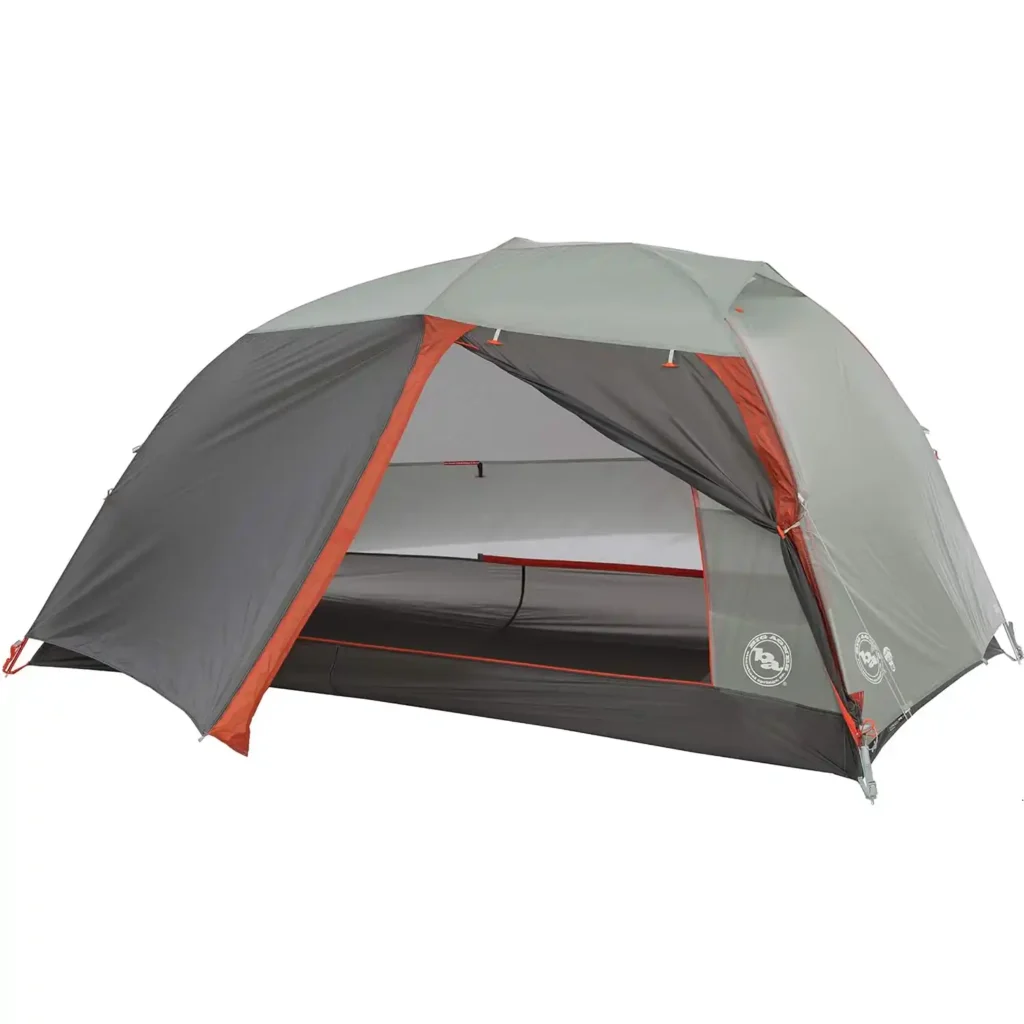
The Copper Spur HV UL2 consistently performs well in humid environments because it prioritizes airflow and moisture release over insulation. Its mesh-heavy interior allows warm, moist air to rise and escape instead of condensing overhead.
Where this tent really proves itself is overnight. Condensation still forms — that’s unavoidable in humidity — but instead of pooling and dripping, moisture spreads thinly and evaporates quickly once airflow resumes. Campers often notice that sleeping bags feel dry again by morning, even after damp nights.
This tent works especially well in tropical conditions where humidity is constant and drying windows are short.
That said, in completely still jungle air with zero wind movement, condensation can still accumulate on the rainfly overnight. While it rarely drips directly inside, moisture management still depends on keeping vents open and maximizing cross-breeze whenever possible.
This is also the tent where small design details start to matter. The way moisture moves upward instead of collecting at sleeping height becomes noticeable after multiple humid nights in a row, especially when compared side by side with less breathable designs.
Campers who deal with heavy rain in addition to humidity may also want to compare these designs with the options tested in 5 Best Waterproof Camping Tents in 2026 (Tested in Heavy Rain).
Pros
✅ Excellent airflow and mesh coverage
✅ Fast moisture evaporation
✅ Lightweight and breathable
Cons
❌ Premium price
❌ Less privacy due to mesh
Best for: Campers who prioritize dryness and airflow in consistently humid climates.
If consistent airflow and condensation control are your priority, this is the model that performed best in repeated humid conditions.
Pricing and availability may change.
2. MSR Hubba Hubba NX 2
Award: Best Balanced Tent for Humidity & Rain
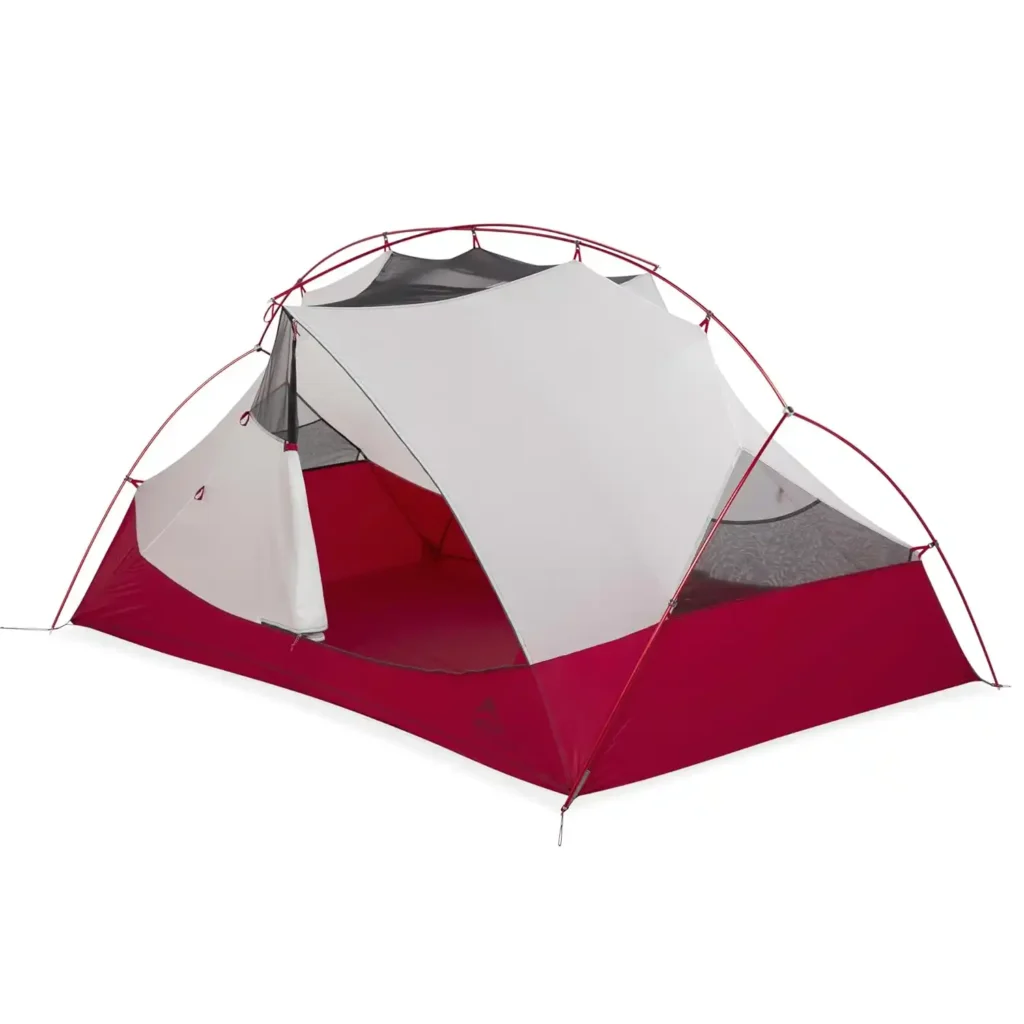
Humid regions often come with frequent rain, and the Hubba Hubba NX handles this balance better than most tents. Its vent geometry allows airflow to continue even when the rainfly is fully deployed.
This matters during warm, rainy nights when many tents trap moisture inside. Here, condensation has a path to escape instead of soaking the interior. Campers who have struggled with waking up to dripping walls often notice a difference after just one night.
It’s a strong choice for tropical environments where storms and humidity overlap.
Pros
✅ Smart vent placement
✅ Manages humidity and rain well
✅ Reliable construction
Cons
❌ Expensive
❌ Not designed for cold conditions
Best for: Campers facing humid climates with unpredictable rain.
If you camp in humid climates with frequent rain, this model maintained ventilation better than most tents with the rainfly fully deployed.
Pricing and availability may change.
3. NEMO Aurora 2
Award: Best Value Tent for Humid Conditions
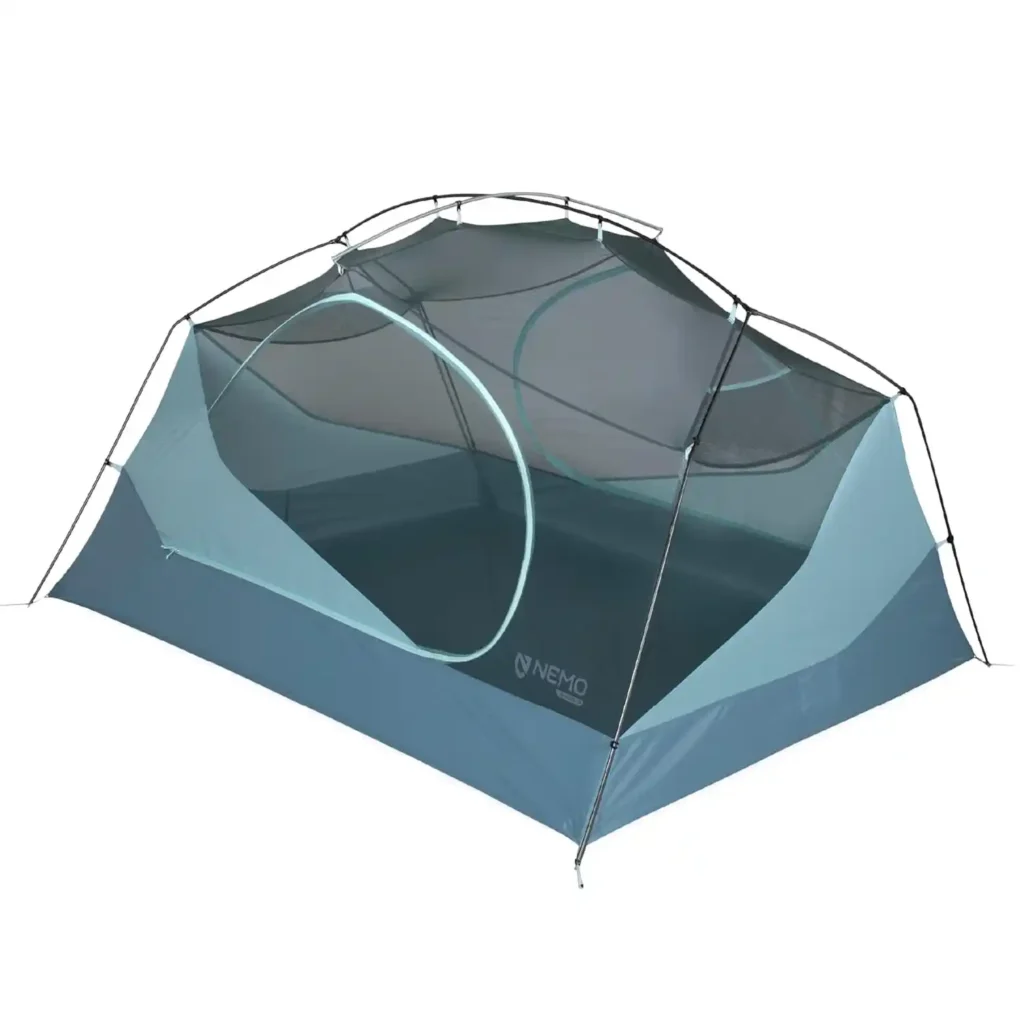
The NEMO Aurora 2 stands out in humid environments because it combines strong ventilation with a noticeably roomier interior than most tents in its class. Large mesh panels allow moist air to escape instead of lingering around sleeping height.
Where this tent performs best is during warm, sticky nights when airflow usually feels restricted.
This is often the tent campers move to after realizing that cheaper solid-wall tents never fully dry once humidity sets in.
Pros
✅ Excellent mesh coverage for airflow
✅ Spacious interior reduces moisture buildup
✅ Good balance of comfort and price
Cons
❌ Heavier than ultralight models
❌ Not designed for cold-weather camping
Best for: Campers who want reliable condensation control and comfort without paying ultralight prices.
If you want strong humidity performance without paying ultralight prices, this model offers a well-balanced airflow design.
Pricing and availability may change.
4. CORE 6 Person Instant Cabin Tent
Award: Best Family Tent for Humid Conditions
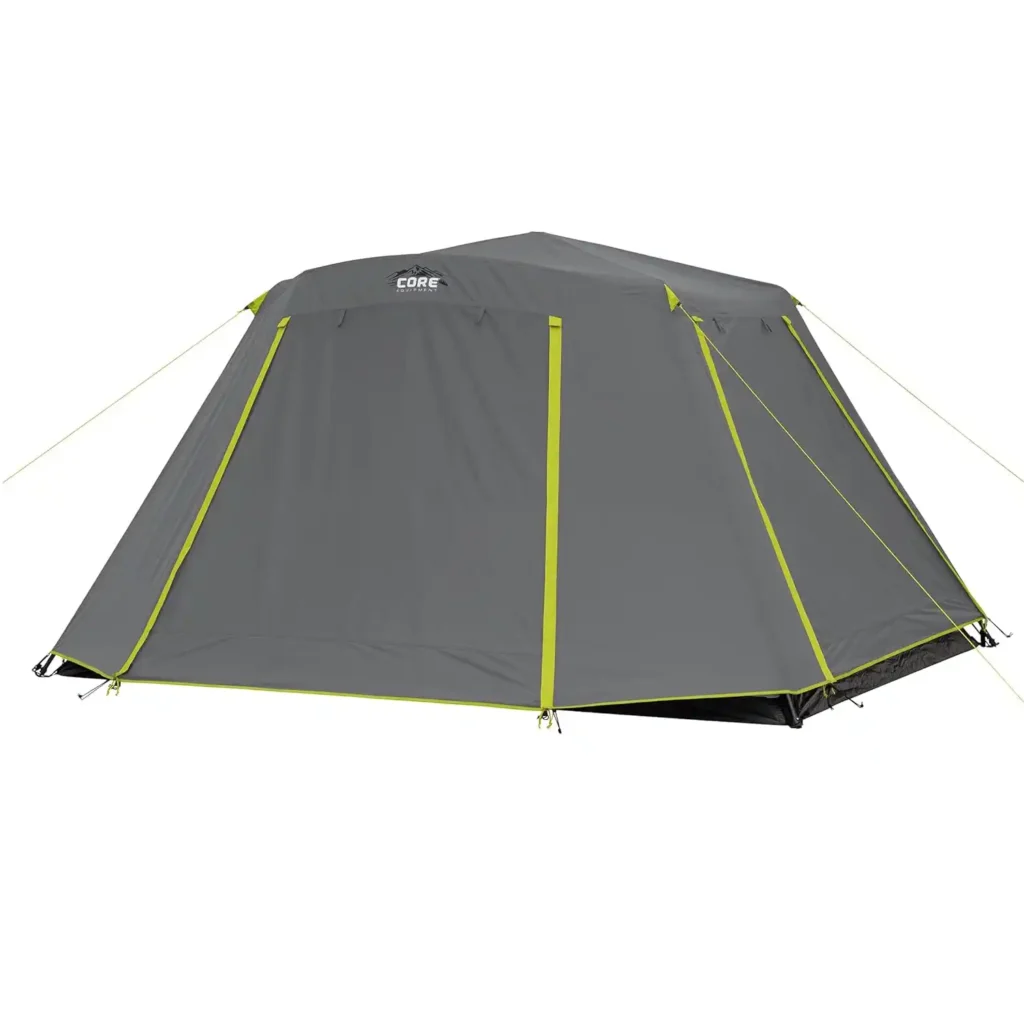
Interior volume matters more in humidity than most people expect. The tall ceilings in this cabin-style tent allow warm, moist air to rise away from sleepers instead of settling at sleeping level. This extra volume changes how humidity behaves inside the tent overnight.
In practice, families often report better sleep simply because the air feels less stagnant. Large mesh windows and an open layout reduce that heavy, sticky feeling common in smaller tents.
Pros
✅ High ceiling reduces condensation
✅ Large mesh panels
✅ Fast setup
Cons
❌ Bulky packed size
❌ Requires good site selection
Best for: Families camping in humid regions who need space and airflow.
If interior space and reduced overnight dampness are priorities for family camping, the added volume makes a noticeable difference.
Pricing and availability may change.
5. ALPS Mountaineering Lynx 2
Award: Best Budget Backpacking Tent for Humidity
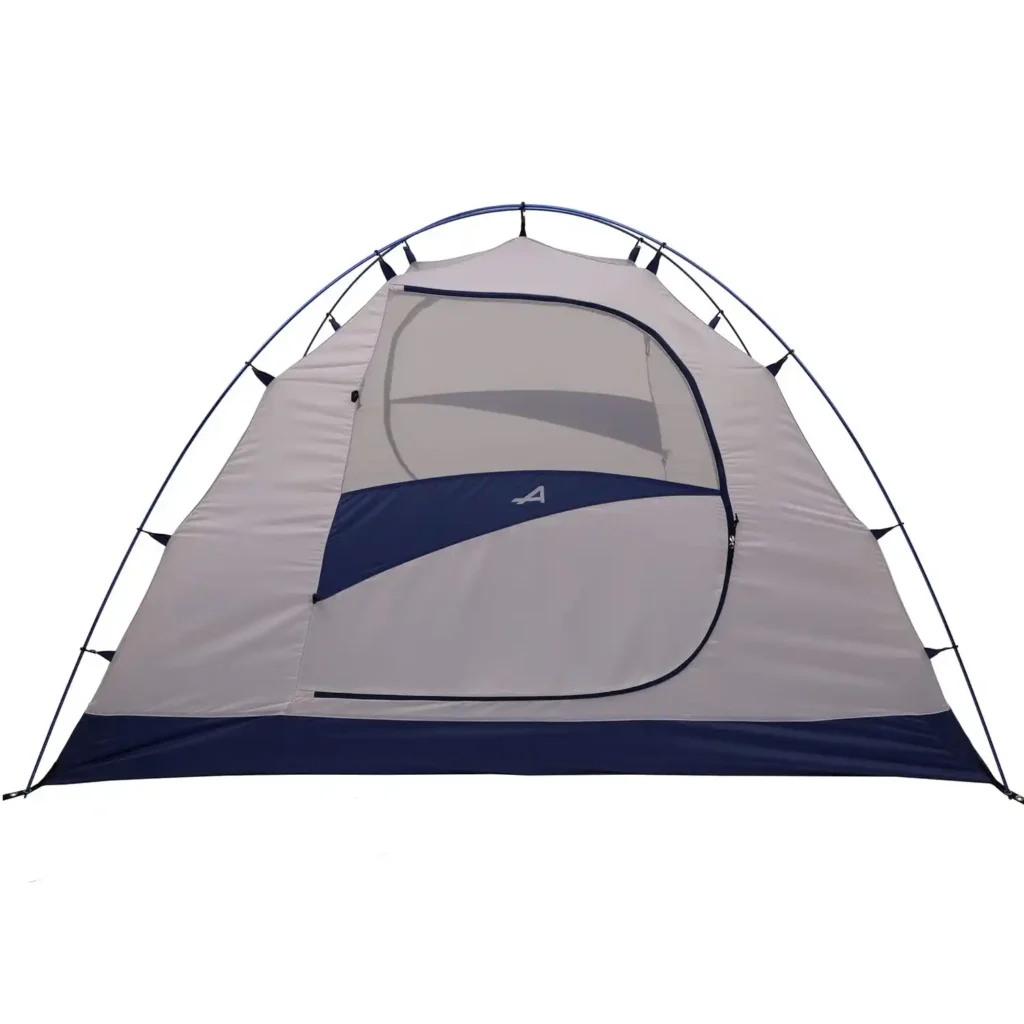
The Lynx 2 is frequently chosen after campers realize how badly solid-wall budget tents trap moisture. Its mesh-forward interior significantly improves airflow in humid conditions.
Condensation still happens, but it doesn’t linger as long, and the tent dries faster once vents are opened. That difference becomes obvious after a few humid nights in a row.
Pros
✅ Good ventilation for the price
✅ Durable materials
✅ Affordable
Cons
❌ Heavier than premium options
❌ Limited vent adjustability
Best for: Budget-conscious campers dealing with persistent humidity.
If you’re on a budget but still need better airflow than solid-wall tents provide, this is the most practical entry-level option.
Pricing and availability may change.
🏕 Field Tips for Camping in Humidity
• Pitch your tent where air can move, not in dead-air pockets
• Avoid camping directly beside water-saturated ground
• Keep vents slightly open overnight whenever possible
• Don’t let wet gear dry inside a sealed tent
• Separate rain protection strategy from condensation strategy
🛒 Buying Guide: How to Choose a Tent for Humid Conditions
If you regularly wake up to damp tent walls even when it didn’t rain, the issue isn’t waterproofing — it’s how your tent handles overnight moisture buildup.
If condensation is your main frustration, you may also want to read:
• How to Reduce Tent Condensation (Real Field Techniques)
• Best Camping Mats That Don’t Trap Moisture
When choosing a tent for humidity, prioritize moisture management, not just weather resistance.
Look for:
• Mesh above sleeping height
• Roof vents that function with the rainfly on
• Cross-ventilation on opposite sides
• Interior volume that reduces moisture density
Avoid tents that focus only on waterproof ratings without addressing airflow.
For broader comparisons, see Best Camping Tents for Every Type of Camper in 2026.
❓ FAQ: Camping Tents for Humid Conditions
Why is my tent wet inside even when it didn’t rain?
Your tent is wet because of condensation. Warm, moist air from your breath and body cools overnight and turns into water when it touches the tent walls or ceiling. In humid climates, the air already contains high moisture levels, so condensation forms more quickly and more heavily — even without rain.
Can any tent completely prevent condensation in humid weather?
No tent can completely prevent condensation in humid weather. The goal is not elimination but management. Well-designed double-wall tents reduce how much moisture builds up and control where it forms, preventing dripping and soaked gear.
Does more mesh always mean less condensation?
Not always. Mesh improves airflow, but condensation control also depends on vent placement, rainfly design, and overall air exchange. A tent with poor vent geometry can still trap moisture even if it has large mesh panels.
Are waterproof tents bad for humid climates?
They can be. Tents that prioritize heavy fabrics and tight sealing often trap moisture unless ventilation is well designed.
How do I reduce condensation inside my tent at night?
Keep vents partially open, avoid sealing the rainfly completely, improve cross-ventilation, and choose campsites with natural airflow.
Does tent size affect humidity and moisture buildup?
Yes. Larger tents reduce moisture density and feel less damp because humid air has more space to disperse.
Is condensation worse in cold or warm humid conditions?
Usually worse when warm, humid air cools rapidly overnight, causing moisture to condense on cooler tent surfaces.
What type of tent is best for hot and humid climates?
A double-wall tent with high mesh coverage and roof vents that work with the rainfly on is best for hot and humid climates. This design allows moisture to escape overnight instead of condensing above sleeping height.
🏁 Final Verdict
If you regularly camp in humid or tropical climates, choosing a tent with proper airflow and condensation management will have a bigger impact on comfort than waterproof ratings alone.
After testing tents across repeated humid nights, the differences were not subtle — some designs consistently stayed drier and more comfortable.
Best overall: Big Agnes Copper Spur HV UL2
Best for humidity + rain: MSR Hubba Hubba NX 2
Best value option: NEMO Aurora 2
Best for families: CORE 6 Person Instant Cabin Tent
Best budget option: ALPS Mountaineering Lynx 2
Humidity doesn’t have to ruin your sleep — the right tent design changes everything.
About the Author
Anthony is an outdoor gear tester and long-term camper focusing on real-world equipment performance in difficult environments, including humid, tropical, and high-condensation conditions.
— Anthony