
Why camp kitchens get dirty is rarely about laziness — it’s usually about missing systems, limited water, and poor workflow design.
Hi, I’m Anthony.
After years of camping trips, one thing became obvious very quickly: camp kitchens get dirty faster than any other part of camp. Not because people don’t care — but because most of us bring home-kitchen habits into an environment that simply doesn’t support them.
Understanding why camp kitchens get dirty helps explain why traditional home-style cleanup habits fail so quickly outdoors.
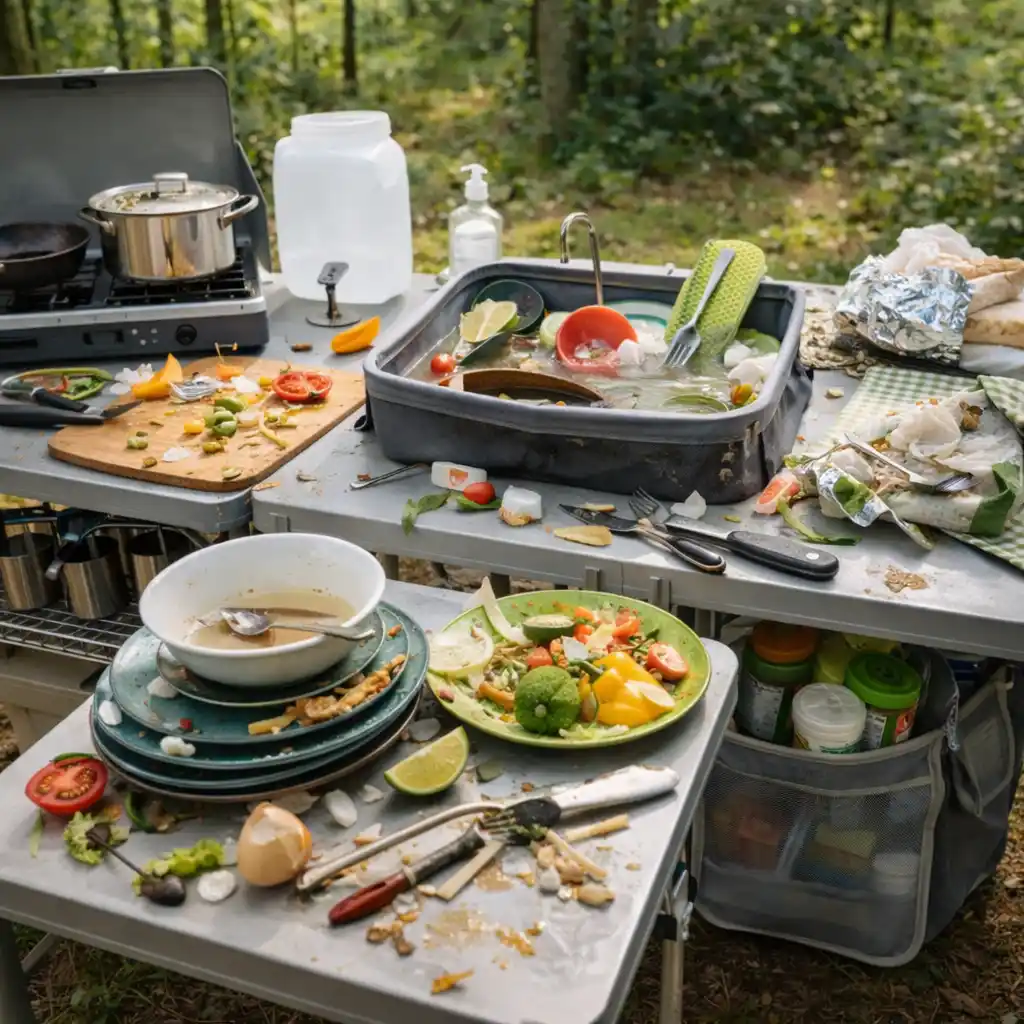
I’ve watched clean campsites turn chaotic after just one meal. Dirty dishes pile up, food scraps spread across the table, and suddenly the whole camp smells off. At that point, cleanup feels bigger than it actually is — so it gets delayed, and the mess only grows.
What I learned over time is that a clean camp kitchen has very little to do with effort or discipline. It’s about systems — how you organize prep, washing, drying, and waste when water, space, and time are limited.
In this guide, I’ll break down why camp kitchens get dirty so fast, the most common mistakes campers make, and how to prevent the mess with simple, realistic setups that actually work in the real world.
Why Camp Kitchens Get Dirty So Fast: The Real Reason
The core problem isn’t dirt.
It’s lack of workflow.
Most camp kitchens fail because they don’t separate tasks. Cooking, prep, washing, and waste all happen in the same small area, often on one table. Once that surface gets contaminated, everything else follows.
At home, kitchens are clean because they are designed around flow:
raw → prep → cook → eat → wash → dry → store
At camp, that flow collapses into:
cook → eat → “deal with it later”
And “later” almost never happens cleanly.
Common Camp Kitchen Mistakes (Experience-Based)
Treating dishwashing as a single task
Campers often think dishwashing means “rinse everything at once.” In reality, food residue, grease, and bacteria require separation — wash, rinse, and dry need different spaces.
This is why articles like 5 Best Camping Dishwashing Stations in 2026 (Clean, Organized & Smell-Free Camps) focus on workflow rather than just containers.
Mixing food prep and dirty dishes
Using the same surface for cutting food and stacking dirty plates guarantees cross-contamination. This is especially common when campers skip dedicated prep boards or clean zones — an issue also discussed in 5 Best Camping Cutting Boards in 2026 (Clean & Safe Food Prep).
Underestimating smells
Food smells don’t just attract animals — they make campsites feel dirty even when they aren’t. Grease residue, damp sponges, and food scraps left overnight compound quickly.
The National Park Service explicitly warns against leaving food residue at campsites due to wildlife attraction and sanitation risks (see Leave No Trace principles on nps.gov).
For official guidance on food waste and sanitation at camp, see the National Park Service Leave No Trace guidelines
Why Camp Kitchens Get Dirty When Cleaning Is Delayed
At camp, cleanup debt accumulates faster than motivation.
Limited water, fading daylight, and fatigue all work against delayed cleaning. Once dishes sit long enough, grease hardens, food dries, and smells intensify. What could have been a 3-minute rinse becomes a 15-minute chore — which often gets postponed again.
This is why experienced campers clean immediately, even if imperfectly. Momentum matters more than thoroughness.
How to Prevent a Dirty Camp Kitchen (Simple Systems)
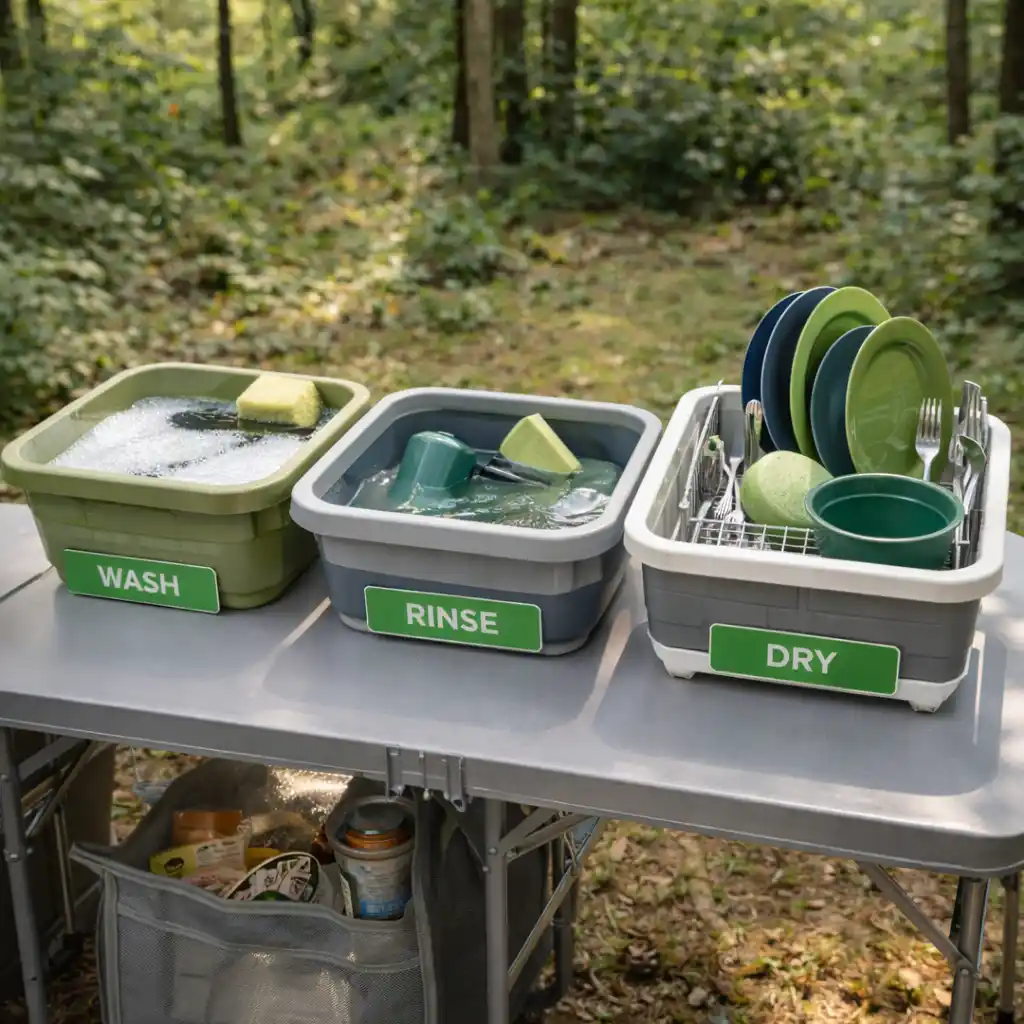
1 Separate zones — even if they’re small
You don’t need more gear; you need clear roles:
one zone for food prep
one for dirty dishes
one for washing
Even collapsible setups work if they’re consistent.
2 Control water usage, not perfection
Camp kitchens fail when people try to wash dishes like they’re at home. Instead:
scrape first
wipe grease
wash efficiently
This approach is detailed in How to Keep Your Camp Kitchen Clean Without Running Water (related guide).
3 Drying matters more than washing
Wet dishes attract dirt, insects, and bacteria. If dishes can’t dry properly, they stay “dirty” even after washing.
This is why drying racks and airflow are more important than extra soap or scrubbing.
Decision Value: What to Fix First
If your camp kitchen keeps getting messy, fix this order:
workflow
separation
drying
storage
Most campers do it backwards.
Once the system works, cleanliness becomes automatic — not a chore.
Internal Linking (Natural, Limited)
5 Best Camping Dishwashing Stations in 2026 (Clean, Organized & Smell-Free Camps) — for structured wash systems
5 Best Camping Cutting Boards in 2026 (Clean & Safe Food Prep) — for food safety
Camping Food Storage Guide: How to Keep Bears & Critters Away (2026) — for smell control
Final Takeaway
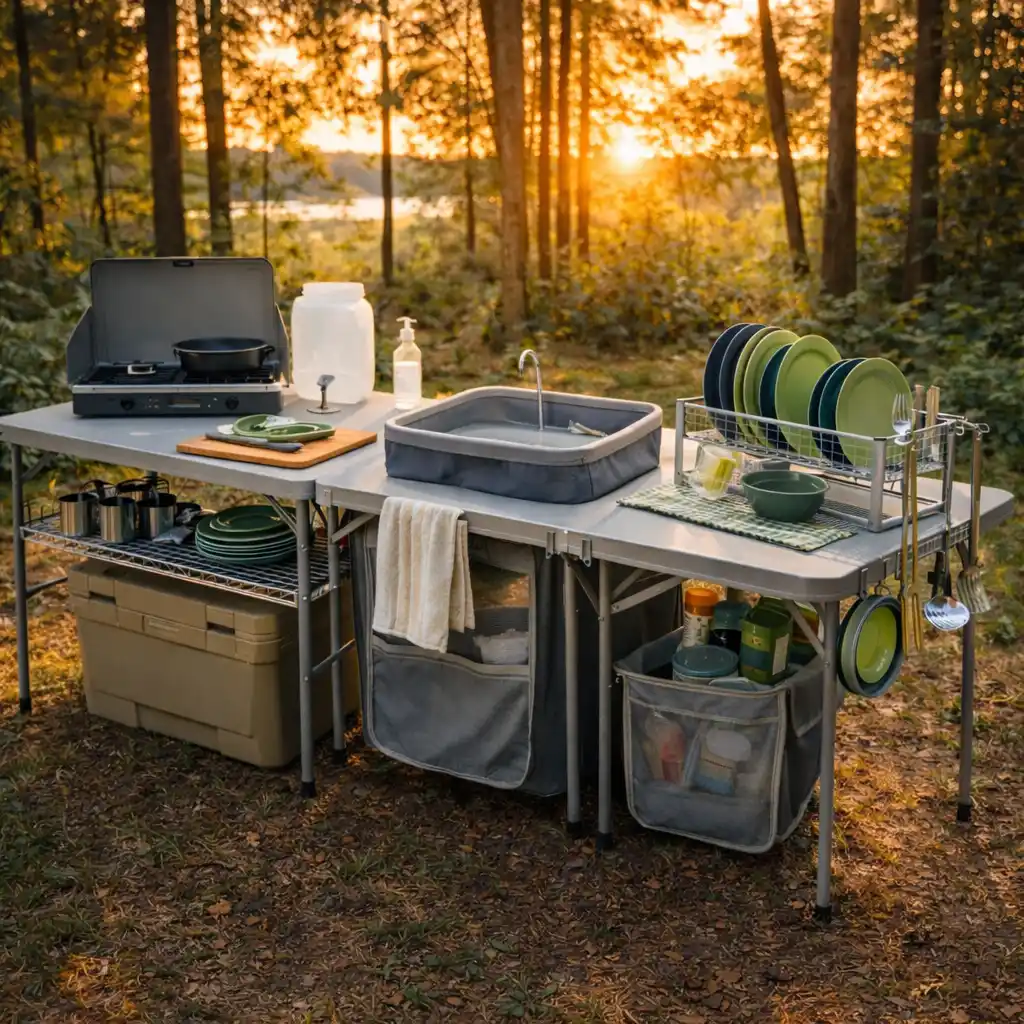
Camp kitchens get dirty fast because most setups ignore flow, separation, and timing. Clean camps aren’t about effort — they’re about systems that work with limited water, space, and energy.
Camp kitchens get dirty fast because most campers don’t understand why camp kitchens get dirty in the first place.
— Anthony