
Hi, I’m Anthony.
When I bought my first solar generator, I made a mistake: I bought the cheapest one. It died halfway through charging my laptop, leaving me without movies for the rainy night.
Then I overcompensated and bought a giant unit I could barely lift.
Finding the “Goldilocks” size is tricky because the math can be confusing. I wrote this guide to save you from doing the math yourself.
As an Amazon Associate, we earn from qualifying purchases.
Are you asking yourself: “What size portable power station do I need for my camping trip?” It is the most common question we get.
Portable power stations are expensive. You don’t want to overpay for capacity you won’t use, but you definitely don’t want to run out of juice at 2 AM when your CPAP machine shuts off.
To find the right size, you need to understand one simple concept: Watt-Hours (Wh).
Here is the simple guide to calculating your energy needs.
1. Watts vs. Watt-Hours (The Basics)
Before we calculate, you need to know the difference:
- Watts (W): How much power a device uses right now (Speed).
- Example: A hair dryer uses 1500W (fast/high power). A phone charger uses 10W (slow/low power).
- Watt-Hours (Wh): The total size of the battery tank (Capacity).
Example: A Jackery 1000 has roughly 1000Wh. This means it can run a 100W device for about 10 hours (100W x 10h = 1000Wh).
2. The Magic Formula
To answer “what size portable power station do I need,” use this formula:
(Device Watts x Hours of Use) / 0.85 = Required Capacity (Wh)
Note: We divide by 0.85 because power stations are only about 85% efficient. Some energy is lost as heat.
Example: Running a CPAP Machine
- Your CPAP uses 40 Watts.
- You sleep for 8 hours.
- Math: (40W x 8h) / 0.85 = 376Wh.
- Result: You need a 500Wh station (like a Bluetti EB55) for one night. For a weekend (2 nights), you need 750Wh+.
3. Common Camping Scenarios
The "Digital Nomad" (Laptop & WiFi)
You just want to keep your phone charged for photos and maybe run a small USB fan.
- Devices: iPhone (12Wh), LED Lantern (10Wh), GoPro (5Wh).
- Daily Usage: ~50Wh per day.
- Recommended Size: 200-300Wh.
- Perfect Choice: Jackery Explorer 300.
The “Digital Nomad” (Laptop & WiFi)
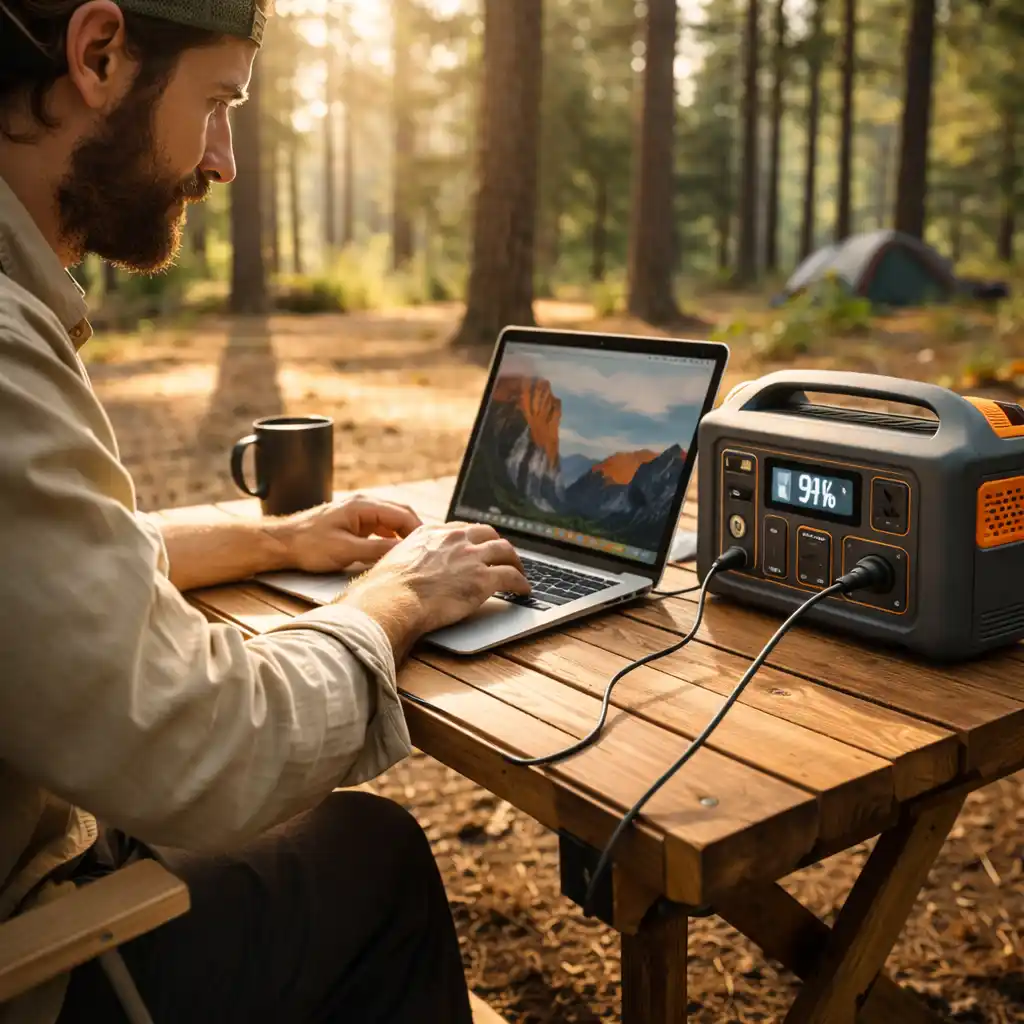
You need to work from the woods.
- Devices: MacBook Pro (60Wh per charge), Starlink (50W constant), Phone.
- Daily Usage: ~300-500Wh per day.
- Recommended Size: 500-700Wh.
- Perfect Choice: EcoFlow RIVER 2 Pro.
The "Glampers" (Electric Cooler & CPAP)
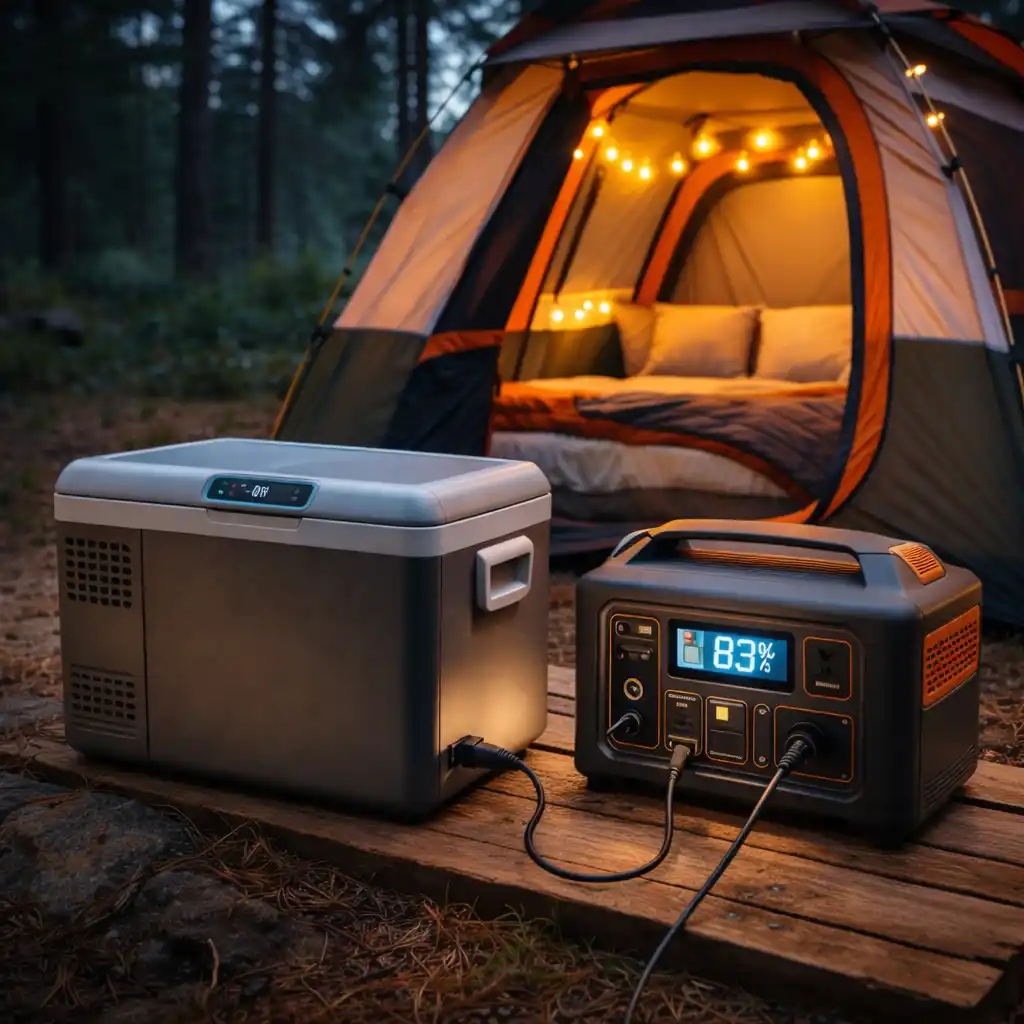
This is the heavy-duty category. Electric coolers must run 24/7.
- Devices: 12V Fridge (uses ~20W average/hour), CPAP (40W), Lights.
- Daily Usage: ~800-1000Wh per day.
- Recommended Size: 1000Wh – 2000Wh.
Perfect Choice: See our guide to the Best Portable Solar Panels for Camping.
Quick Answer: What Size Portable Power Station Do I Need?
If you just want a clear recommendation without doing all the math, use this quick guide. These ranges cover most real-world camping situations.
300–500Wh Portable Power Station Best for light use and short trips.
– Phone charging
– Camera batteries
– Small LED lights
– Occasional laptop use
Ideal for: weekend campers, minimalist setups
500–1000Wh Portable Power Station The sweet spot for most campers.
– Laptop + phone charging
– Portable fridge (short runtime)
– Wi-Fi hotspot
– CPAP (1 night)
Ideal for: car camping, digital nomads, solo campers
1000–2000Wh Portable Power Station Designed for comfort-focused camping.
– Electric cooler or fridge
– CPAP (multiple nights)
– Coffee maker
– Lights and multiple devices
Ideal for: glamping, couples, longer stays
2000Wh+ Portable Power Station For extended trips and high-demand gear.
– Full-size electric coolers
– Power tools
– Multiple-day CPAP use
– Off-grid setups with solar
Ideal for: overlanding, family camping, off-grid living
From Anthony:
When I first started using portable power stations for camping, I made the mistake of buying too small and running out of power on the second night. Since then, I always recommend sizing your power station based on real usage — not just manufacturer claims. It’s better to have a little extra capacity than to spend your trip rationing power.
4. Don't Forget Solar Charging
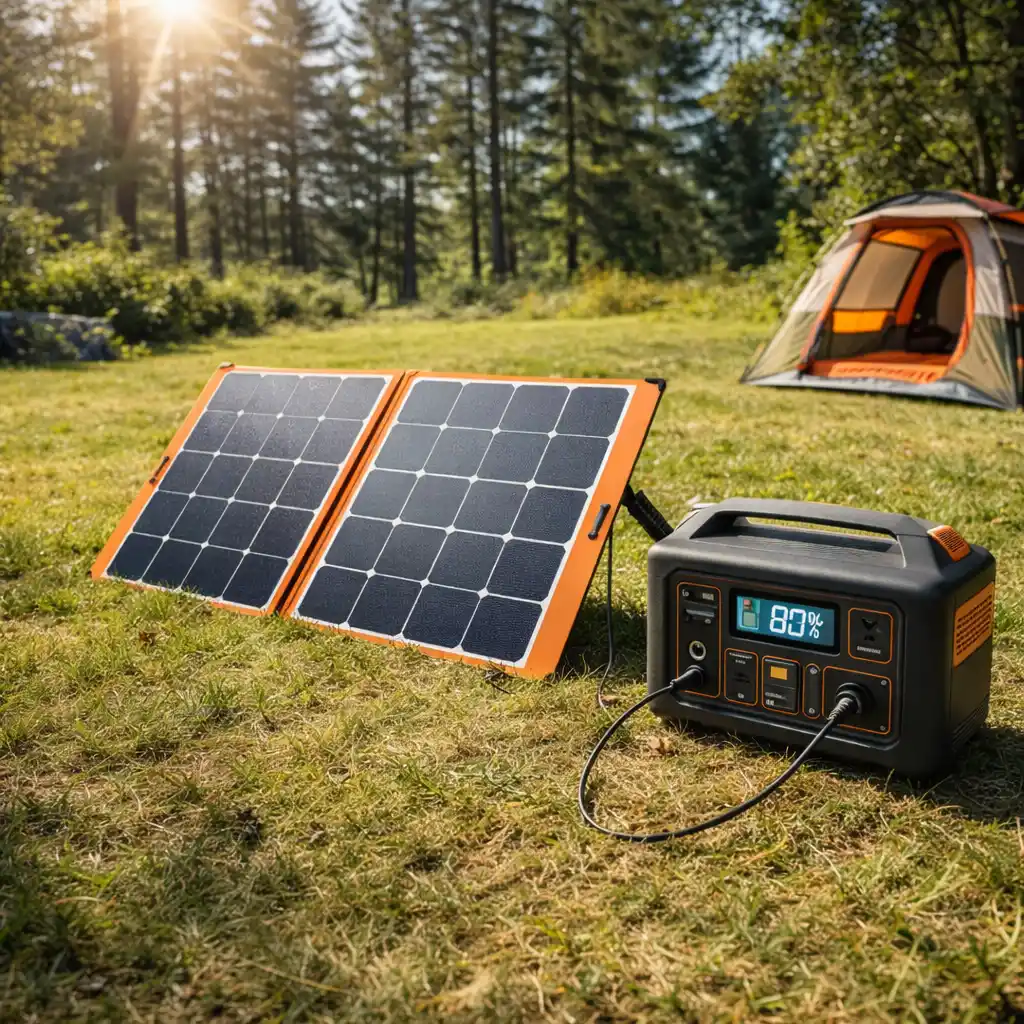
If you buy a smaller battery, you can extend its life with solar panels.
If you have a 100W Solar Panel and get 5 hours of good sun, you can put ~400Wh back into your battery.
Strategy: Buy a medium battery + Solar Panel instead of a giant heavy battery.
For a deeper technical explanation of power usage and energy capacity, the U.S. Department of Energy provides a clear overview of how electricity consumption is measured. You can read their guide on how watt-hours relate to real-world energy use to better understand portable power station sizing.
FAQ: Frequently Asked Questions
Can I run a heater with a power station?
No, usually not. Electric space heaters use massive amounts of power (1500W). Even a huge 2000Wh battery will be drained in 1 hour. For heat, use a propane heater or learn How to Keep a Tent Warm naturally.
Can I take a power station on a plane?
Only small ones. The FAA limit is usually 100Wh (sometimes up to 160Wh with permission). Anything larger (like a Jackery 240) is strictly forbidden on airplanes.
Does a power station lose charge when not in use?
Yes. They lose 1-2% per month. Always charge it to 100% before you leave for your trip.
Can I power a coffee maker?
Only if your station has a high “Inverter Rating” (AC Output). A standard coffee maker needs 1000W+. Small stations (300W) cannot run it. Check our Best Camping Coffee Makers guide for non-electric options.
Final Thoughts
Calculating what size portable power station do I need comes down to your biggest appliance. If you have an electric cooler or CPAP, go big (1000Wh). If you just need to charge phones, save your money and back, and go small (300Wh).
Ready to buy? Compare the top models in our full review of Best Portable Power Stations for Camping