
Hi, I’m Anthony.
I once opened a storage bin after winter only to find a mouse nest inside my favorite sleeping bag. It was heartbreaking (and expensive).
Proper storage isn’t just about being tidy; it’s about protecting your investment. Moisture, heat, and pests are the enemies.
Here is the system I use to ensure my gear is fresh and ready to go the moment spring arrives.
As an Amazon Associate, we earn from qualifying purchases.
Are you wondering how to store camping gear so it doesn’t get ruined by mold, mildew, or pests during the off-season? Storage is key.
Many campers make the mistake of leaving their gear compressed in stuff sacks or damp in the trunk. This destroys insulation and waterproofing.
We have compiled the best practices for organizing and protecting your equipment at home.
1. The Golden Rule: Clean and Dry
Never store camping gear while it’s dirty or damp. Food crumbs attract mice, dirt breaks down fabrics, and moisture creates the perfect environment for mold and mildew.
Before putting anything into storage, take the time to clean and dry every item properly. Set up your tent outdoors or hang it over a line to air dry completely. Wash cookware with warm, soapy water and let it dry fully. Sleeping bags and clothing should be shaken out, aired, and stored only when completely dry.
Skipping this step is the fastest way to ruin otherwise good gear. Clean, dry equipment not only lasts longer but is also ready to use the moment your next camping trip begins.
2. Storing Sleeping Bags (Don't Compress!)
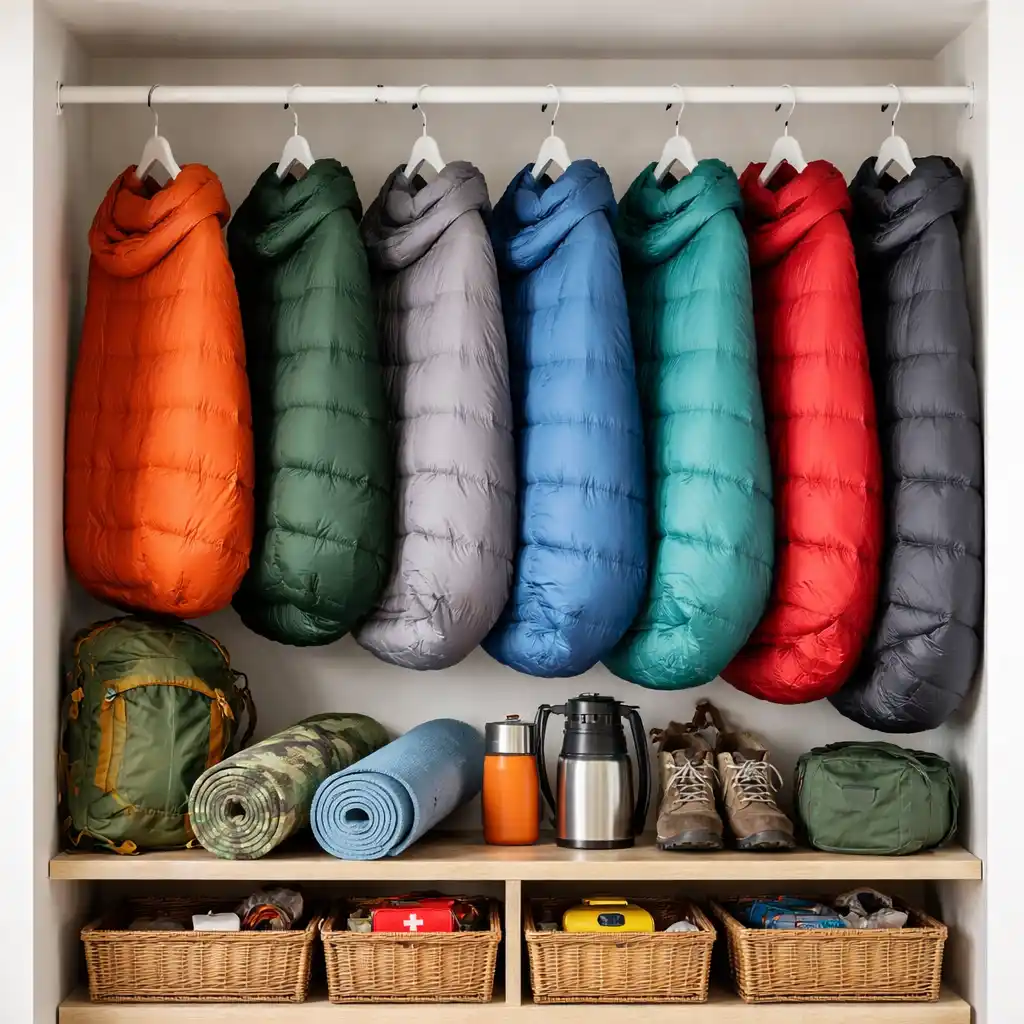
This is the #1 mistake. Storing a sleeping bag in its small compression sack crushes the insulation fibers. Over time, it loses its “loft” and won’t keep you warm.
- The Fix: Hang it up in a closet or store it loosely in a large cotton storage sack (often included with the bag). It needs to breathe.
3. How to Store Camping Gear: Tents
Your tent needs proper airflow during storage to prevent mildew and fabric damage. Instead of stuffing it tightly into the original bag, fold it loosely or store it in a breathable sack. Always choose a cool, dry location away from direct heat sources. Hot attics and damp basements can quickly degrade tent fabrics, seam tape, and waterproof coatings.
Before storing your tent for the off-season, make sure it’s completely clean and dry. Even small amounts of trapped moisture can lead to musty odors and reduced weather protection over time. If your tent smells stale or no longer repels water effectively, this usually means the coating needs to be refreshed before your next camping trip.
4. Electronics and Batteries
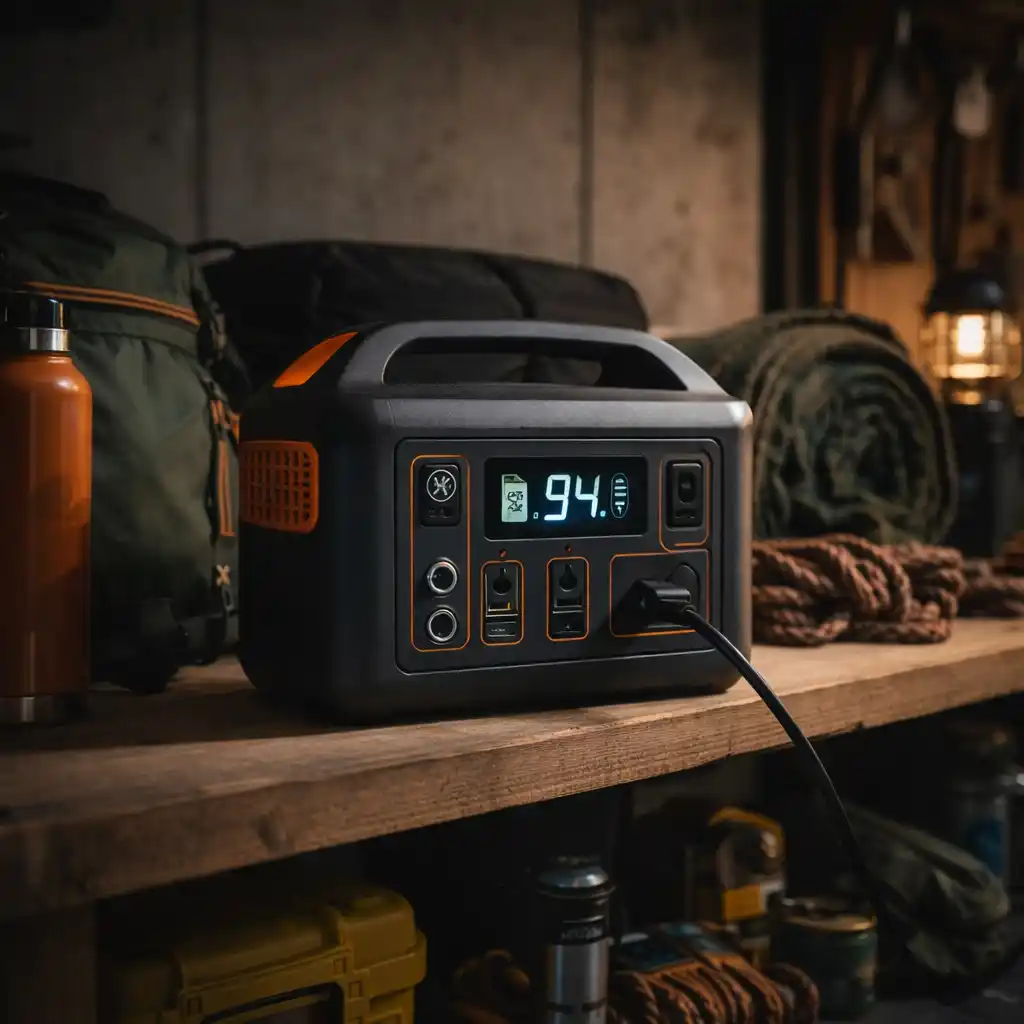
Portable Power Stations and headlamps hate extreme temperatures.
- Batteries: Remove alkaline batteries from lanterns (they can leak and ruin the device).
- Lithium: Charge your power station to about 60-80% before long-term storage. Check it every 3 months.
5. Use Clear Plastic Bins (The Box System)
The best way to stay organized is to use heavy-duty plastic totes.
- Kitchen Bin: Stove, fuel, plates, mugs.
- Comfort Bin: Pillows, blankets, lights.
- Tools Bin: Hammer, axe, rope, tape.
Get Organized: See our review of the Best Camping Kitchen Organizers for portable storage solutions that go from garage to car instantly.
Proper storage also makes packing faster before each trip. If you want to double-check that nothing gets left behind, use our car camping essentials checklist before hitting the road.
6. Pest Control
Mice love tent fabric and sleeping bag insulation.
- Seal it: Use bins with tight latches.
- Scent: Don’t store food with your gear. Even a wrapper can attract pests.
- Elevate: Keep bins off the floor on shelves.
Keeping pests away isn’t just about clean gear. Food storage plays a huge role too, especially in bear country. We explain this in detail in our camping food storage guide.
How to Store Camping Gear Long-Term (Off-Season Storage Tips)
When it comes to how to store camping gear during the off-season, long-term storage requires a slightly different approach than short breaks between trips. Proper preparation not only extends the lifespan of your gear but also ensures everything is ready to use when the next adventure begins.
Start by choosing a cool, dry, and well-ventilated space. Basements and garages are acceptable only if humidity is controlled. Moisture is the number one enemy of camping equipment, leading to mold, corrosion, and fabric breakdown over time.
For fabrics like tents, sleeping bags, and clothing, breathable storage is essential. Avoid airtight compression for long-term storage. According to guidance from outdoor equipment experts at REI, storing sleeping bags loosely helps preserve insulation loft and performance over the years. You can read more about their official recommendations in this sleeping bag care guide from REI.
Hard goods such as stoves, cookware, and tools should be cleaned thoroughly and stored in labeled bins. Remove batteries from any devices to prevent leakage, and keep electronics away from extreme temperatures.
If you’re serious about mastering how to store camping gear properly, treating off-season storage as part of your regular gear maintenance routine will save you money and frustration in the long run.
Proper storage helps preserve insulation and coatings, which directly affects cold-weather performance. For winter trips, check our tips on how to keep a tent warm in cold weather.
Final Verdict
Mastering how to store camping gear will save you hundreds of dollars in replacement costs. Treat your gear with respect, and it will take care of you for years.
The next time you want to go camping, you won’t have to search for hours—you just grab your bins and go!
Well-stored gear is only one part of staying comfortable outdoors. Skills matter too, especially in colder conditions. Beginners can start with our campfire safety and setup guide.