
Hi, I’m Anthony.
I’ve seen too many families miserable in a storm because they bought a tall cabin tent for a windy ridge. And I’ve seen tall campers hurting their backs trying to change clothes in a low-profile dome tent.
Choosing the right shape isn’t just about looks—it’s about physics. Let me break down the differences so you buy the right one the first time.
As an Amazon Associate, we earn from qualifying purchases.
Are you stuck in the dome vs cabin tent debate and don’t know which one to choose? The answer depends on the weather.
Tents come in two main shapes: the aerodynamic Dome (curved walls) and the spacious Cabin (vertical walls). One is built to survive storms, and the other is built for luxury living. Buying the wrong one can lead to broken poles or a sore back.
Here is the ultimate breakdown of pros, cons, and which one you should buy.
1. What is a Dome Tent?

This is the classic shape. Two poles cross in the middle, creating a curved “X” structure. The walls slope inward immediately from the floor.
The Pros:
- Wind Resistance: The curved shape sheds wind effortlessly. If you camp in exposed areas, a dome is safer.
- Lighter Weight: Uses fewer poles and less fabric.
- Easy Setup: Usually just two main poles.
- Warmer: Less dead air space to heat up in winter.
The Cons:
- Low Headroom: The only place you can stand is in the dead center.
- Sloping Walls: If you put a cot against the wall, the fabric will touch your face.
Best For: Stormy weather, smaller families, and campers on a budget.
Check out our favorite dome models in the Best 6-Person Tents guide.
2. What is a Cabin Tent?
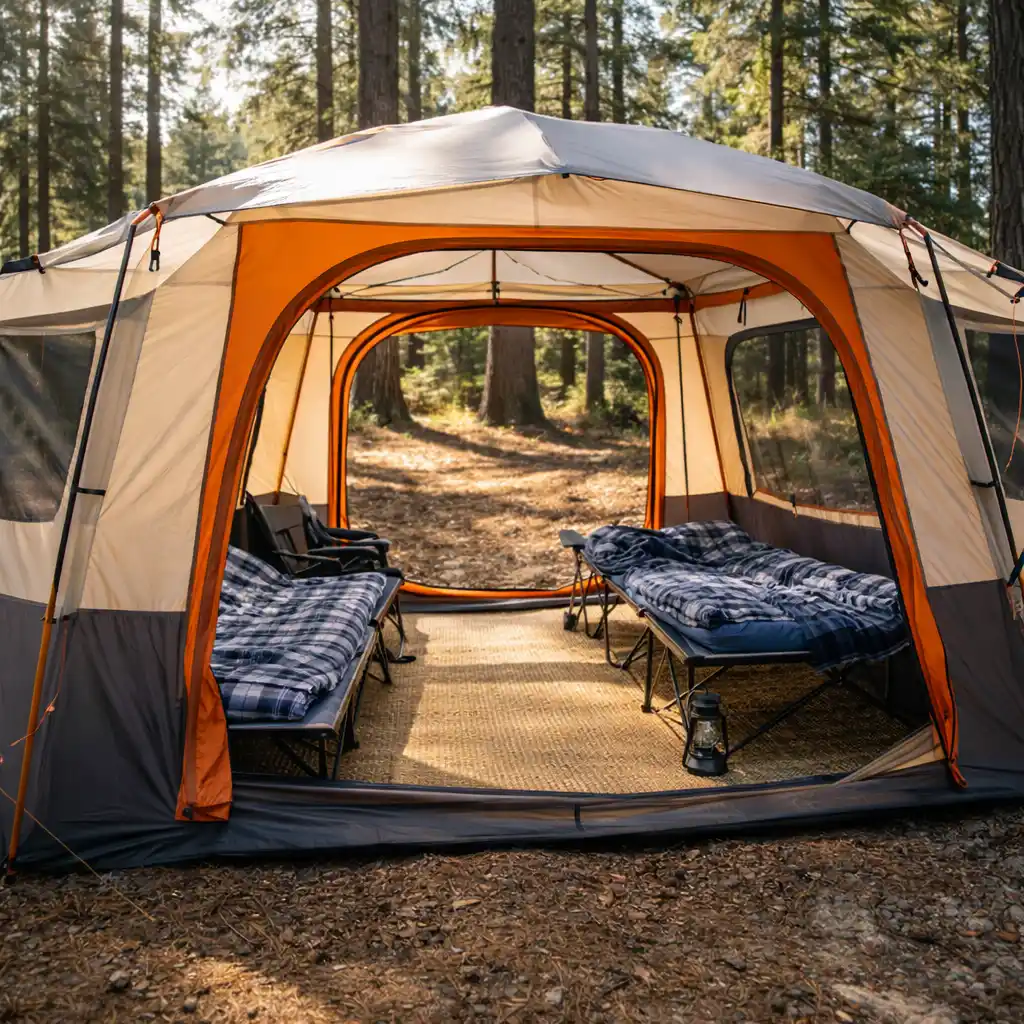
A cabin tent looks like a small house. It uses strong, upright steel poles to create vertical walls and a high, flat ceiling.
The Pros:
- Massive Headroom: You can stand up and walk around. Great for tall people.
- Vertical Walls: Use every inch of floor space. You can push cots right to the edge.
- Windows: Usually has huge windows for 360-degree views.
- Room Dividers: Often comes with curtains to create separate bedrooms.
The Cons:
- Wind Sail: The flat walls catch the wind. In a bad storm, they can collapse if not staked out perfectly.
- Heavy: Steel poles make them heavy to carry.
Best For: Tall campers, families who want luxury, and glamping in good weather.
See the giants of the campground in our review of Best Tents for Tall People.
3. Dome vs. Cabin Tent: The Showdown
Round 1: Weather Protection
- Winner: Dome.
- The aerodynamic shape allows wind and rain to slide off. Cabin tents can collect water on the flat roof if not pitched tightly.
Round 2: Comfort & Livability
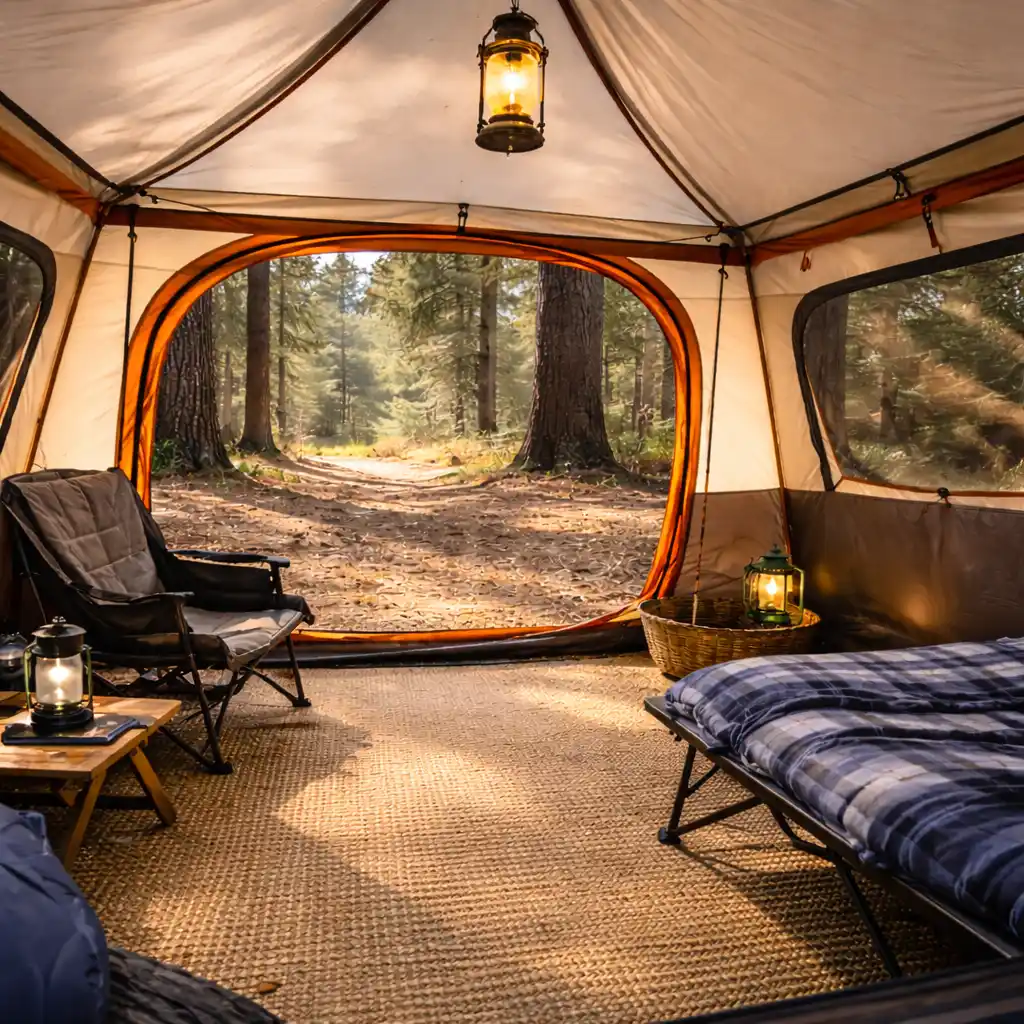
- Winner: Cabin.
- It feels like a room. You can change clothes standing up, set up a table inside, and walk around without hunching.
Round 3: Setup Time
- Winner: Tie (Depends on model).
- A simple dome is easy. But modern Instant Cabin Tents (like the Gazelle T4) pop up in 90 seconds. Don’t let the size scare you; cabin tents can be very fast to pitch.
Dome vs Cabin Tent: Quick Decision Guide
If you’re still deciding between a dome and a cabin tent, this quick guide can help you make the final call without overthinking it.
Choose a dome tent if you:
– Camp in windy or unpredictable weather
– Move campsites often
– Prefer lighter, more compact gear
– Spend most of your time outdoors rather than inside the tent
Choose a cabin tent if you:
– Camp with family or a group
– Value standing height and interior space
– Stay at one campsite for multiple nights
– Use camp furniture like cots or large air mattresses
In short, the dome vs cabin tent decision comes down to weather resistance and portability versus comfort and livable space.
4. Which One Should You Buy?
Choose a Dome Tent if:
- You camp in windy or stormy locations.
- You want a lighter, smaller package for your trunk.
- You prioritize heat retention on cold nights.
Choose a Cabin Tent if:
- You are over 6 feet tall (Headroom is crucial).
- You use camping cots (Vertical walls fit cots better).
- You camp with a large family and need privacy dividers.
You mostly camp in summer/fair weather.
❓FAQ: Dome vs Cabin Tent
Dome vs cabin tent: which is better for camping?
Neither option is universally better. Dome tents are ideal for weather resistance and portability, while cabin tents are better for comfort, space, and family camping.
Is a dome tent warmer than a cabin tent?
In most cases, yes. Dome tents retain heat better due to their shape and smaller interior volume, making them a better choice for cold or windy conditions.
Is a cabin tent good for bad weather?
Cabin tents can handle mild to moderate weather, but they are generally less wind-resistant than dome tents because of their vertical walls.
Which is easier to set up: dome vs cabin tent?
Dome tents are usually faster to set up, especially for solo campers. Cabin tents often take longer but offer more interior comfort once pitched.
Dome vs cabin tent for family camping — which should I choose?
For family camping, a cabin tent is often the better choice thanks to its standing height, room dividers, and space for multiple sleepers.
For additional guidance on choosing the right tent design for different weather conditions, REI provides a detailed breakdown of tent shapes and performance in their guide on how tent design affects stability and comfort.
Final Verdict
The dome vs cabin tent choice comes down to this: Do you fear the wind, or do you fear back pain?
- If you want a fortress against the elements, stick with a Dome.
- If you want a vacation home with room to breathe, get a Cabin.
Still not sure? Compare the top models side-by-side in our Best Family Camping Tents review.